
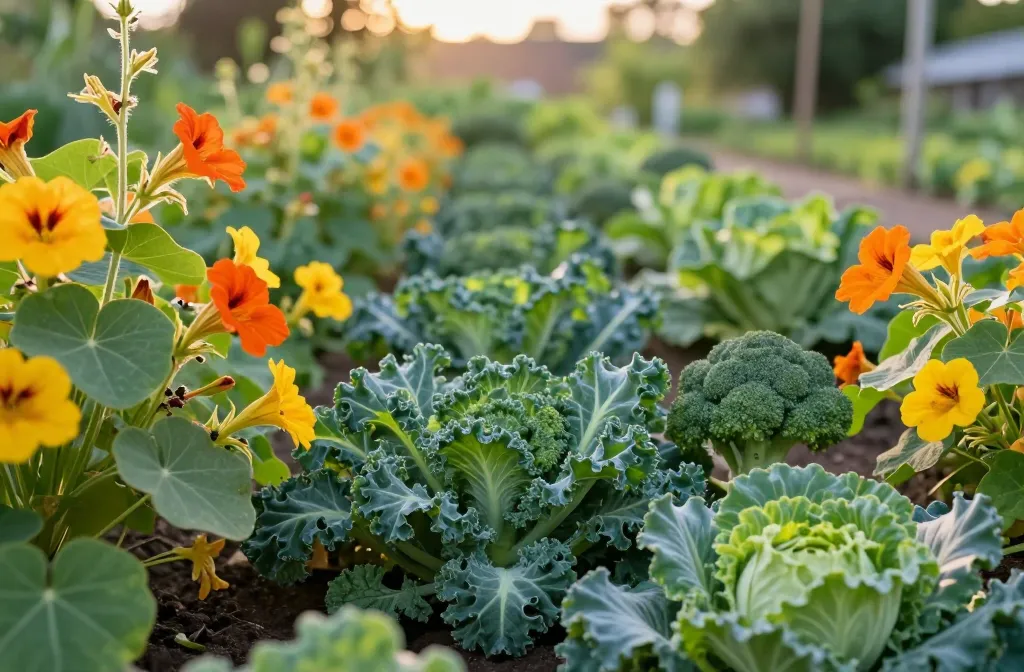
Want fewer pests without nuking your garden with chemicals? You need decoys and bodyguards. Companion plants can lure bugs away from your crops or repel them entirely, and the best combos work like a charm. Grab a trowel—these strategic pairings will make pests pick the wrong fight.
We’re mixing “trap crops” that sacrifice themselves with protective herbs and flowers that keep the good stuff safe. Ready to outsmart aphids, beetles, and moths? Let’s set the bait and seal the perimeter.
1. Nasturtiums + Brassicas: The Aphid And Cabbage Moth Diversion
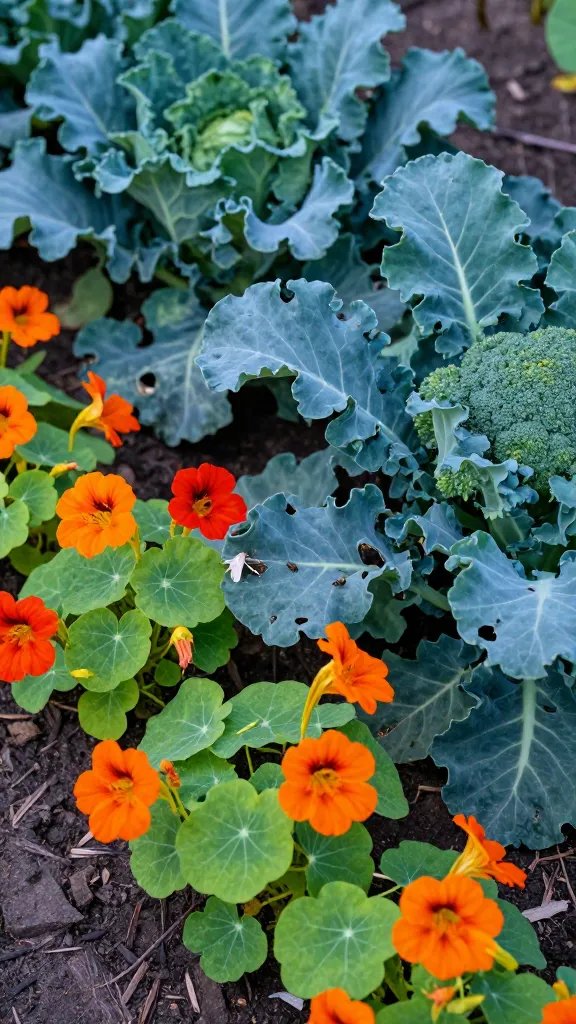
Plant nasturtiums as a neon “Eat Me” sign for aphids and cabbage moths, and your kale and broccoli will breathe easier. These playful, peppery blooms pull pests away while their trailing habit covers ground and suppresses weeds. Bonus: you can eat the flowers and leaves.
How To Plant It
- Spacing: Tuck nasturtiums 12–18 inches from kale, cabbage, broccoli, and cauliflower.
- Timing: Direct-sow nasturtiums when soil warms; set brassicas out early under light row cover.
- Layout: Edge the bed with nasturtiums or dot them every 2–3 feet between brassicas.
Why It Works
- Aphid magnet: Nasturtiums pull aphids off tender brassica leaves.
- Visual confusion: Their bright blooms and scent help disrupt cabbage moth egg-laying.
- Ladybug buffet: Aphid clusters on nasturtiums attract ladybugs and lacewings that stick around.
Pro tip: When nasturtiums get aphid-loaded, hose them off or remove the worst vines. Your brassicas stay photogenic, and you keep beneficials fed.
Use this when aphids and cabbage worms always show up like clockwork. It’s low effort, high payoff.
2. Marigolds + Tomatoes: Root Guards And Whitefly Patrol
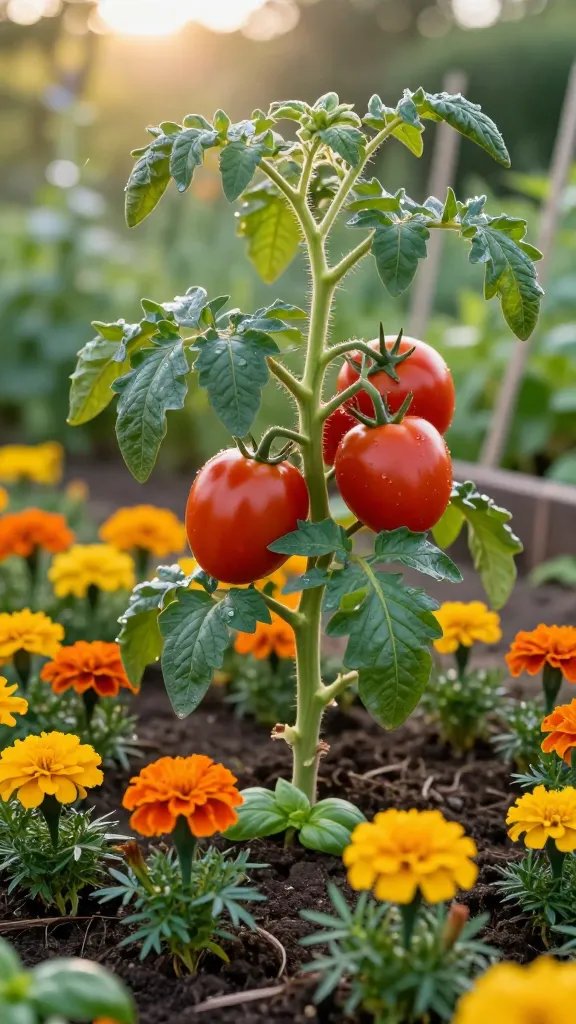
Marigolds don’t just look cheerful—they help block nematodes and shoo away whiteflies around your tomatoes. Certain varieties even release root exudates that discourage soil nasties. It’s armor with a side of color.
Key Points
- Best marigolds: French marigolds (Tagetes patula) for broader pest benefits; avoid scented imposters.
- Spacing: One marigold every 18–24 inches around tomato plants.
- Timing: Transplant marigolds with tomatoes so they grow together.
Added Muscle
- Basil bonus: Slip in basil to confuse pests and bump tomato flavor (IMO, it’s real).
- Airflow: Keep marigolds slightly offset so they don’t crowd tomato stems—disease hates airflow.
Why it’s awesome: You reduce whitefly and thrips pressure above ground while creating an unfriendly scene for root pests. Plus, your tomato bed looks like a mini fiesta—seriously.
Use this when you deal with persistent whiteflies, thrips, or nematodes, or you want a low-maintenance perimeter defense.
3. Dill/Parsley + Brassicas: Decoy Buffet, Predator Nursery
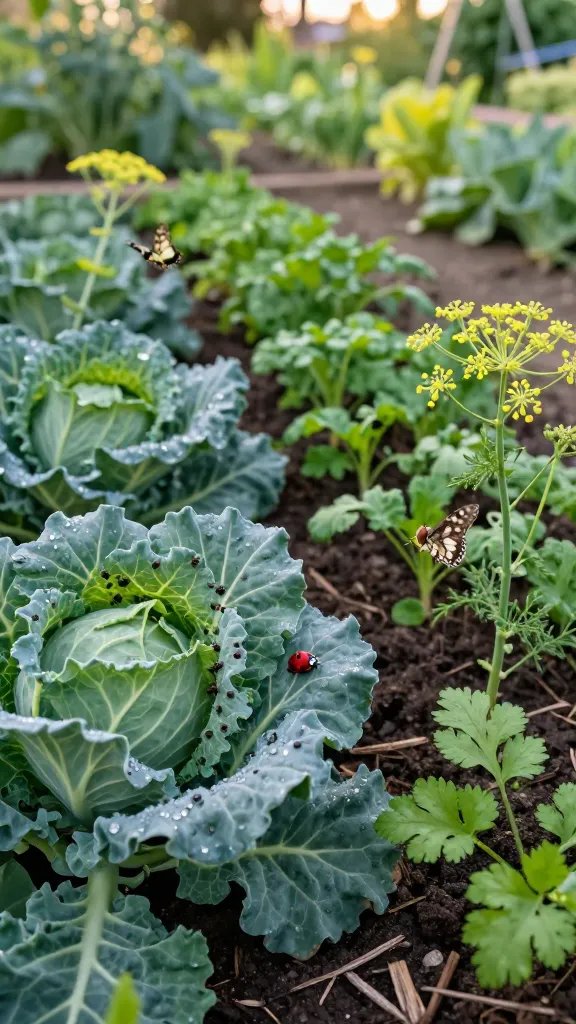
Soft herbs like dill and parsley pull in swallowtail butterflies and aphids—but that’s the bait. The real win? Those herbs attract hoverflies, parasitic wasps, and ladybugs that hunt on nearby cabbage, kale, and broccoli. You’re basically setting up a natural pest-control HQ.
How To Set It Up
- Planting: Interplant dill or parsley every 2–3 feet among brassicas.
- Successive sowing: Resow dill every few weeks for continuous blooms (predators love tiny flowers).
- Don’t harvest all: Let some herb umbels flower and “seed out” to keep beneficials around.
What It Controls
- Aphids: Hoverfly larvae devour them on brassicas.
- Cabbage worms: Tiny parasitic wasps target eggs and larvae.
- General nuisance bugs: Diverse predators means better balance.
FYI: If swallowtail caterpillars nibble parsley, that’s normal—and a sign your predator network thrives. Your brassicas get the indirect protection while dill plays crowd control.
Use this when you want long-game, low-spray protection and a pollinator-friendly bed.
4. Blue Hubbard Squash + Cucumbers/Melons: The Squash Bug Lightning Rod
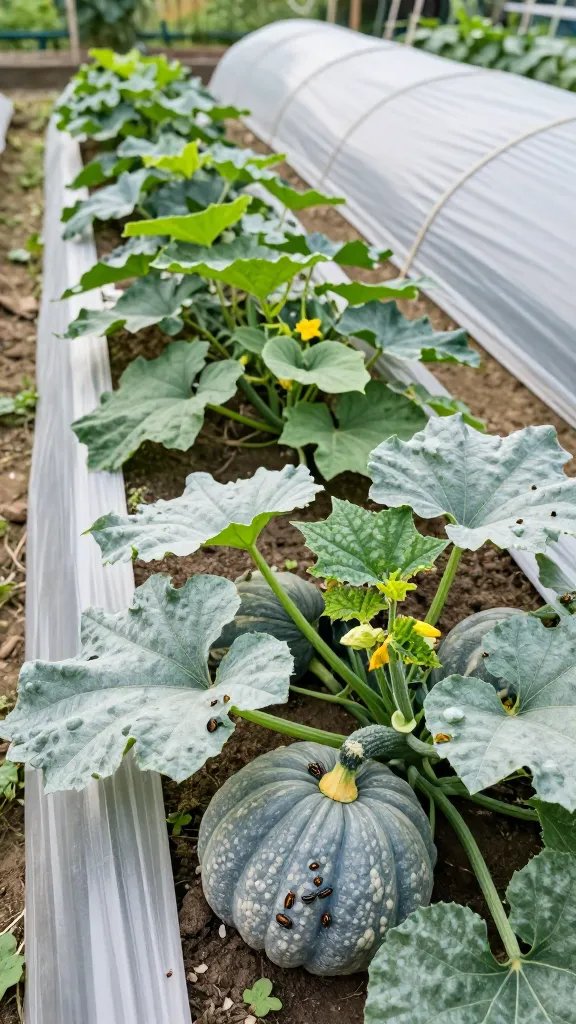
Squash bugs and cucumber beetles can wreck melons and cukes fast. Blue Hubbard squash acts as a magnet trap, pulling bugs to its massive leaves while your main crop gets a breather. It’s the sacrificial bodyguard of the cucurbit world.
Planting Strategy
- Positioning: Plant one Blue Hubbard for every 6–8 cucumbers or melons, 6–10 feet upwind.
- Timing: Set the trap crop 1–2 weeks earlier so it’s more attractive at pest arrival.
- Barrier assist: Use row cover on cucumbers/melons until they flower; leave the Hubbard uncovered as bait.
Control Tactics
- Morning patrol: Hand-pick squash bugs and egg clusters from the Hubbard leaves.
- Yellow sticky traps: Place near the Hubbard to snag cucumber beetles.
- Neem or pyrethrin (targeted): If needed, treat the Hubbard only to keep beneficials on the main crop safer.
Why it works: Pests prefer the larger, earlier, more aromatic Blue Hubbard leaves, so you protect yield on your cucumbers and melons with fewer interventions. Trust me, this one feels like a cheat code.
Use this in hot, dry summers when squash bugs explode or you’ve had bacterial wilt from beetles in past seasons.
5. Radishes + Cucumbers/Spinach: Flea Beetle And Leaf Miner Decoy Duo
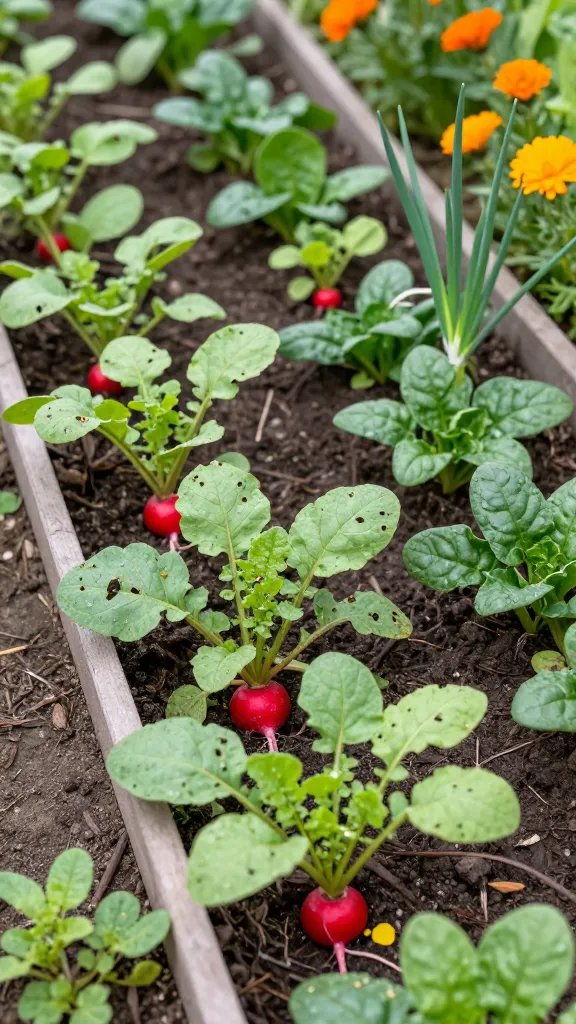
Radishes grow fast and attract flea beetles that would otherwise perforate tender cucumbers and spinach. Meanwhile, strategically placed alliums or calendula add extra protection to keep chewing and mining damage in check. It’s a quick-and-dirty shield you can reseed all season.
Pairing Options
- Radishes + Cucumbers: Sow a border of radishes 3–6 inches from cucumber rows to draw flea beetles away.
- Radishes + Spinach: Interplant scatter-sown radishes among spinach to take the brunt of early-season bites.
- Add-ons: Slip in green onions or garlic chives for scent-based deterrence; calendula helps distract sap-suckers.
Maintenance Tips
- Fast turnover: Harvest or pull ragged radishes every 25–35 days and resow immediately.
- Row cover: Float cover over spinach early; leave the radish border partly exposed to keep the trap active.
- Moisture control: Keep soil evenly moist to help spinach outgrow minor damage.
Why it’s great: You get edible decoys that cost pennies, and you reduce cosmetic damage on delicate greens. It’s budget-friendly IPM at its finest.
Use this in spring when flea beetles and miners show up hungry and fast.
Quick Reference: 11 Sacrificial/Protective Pairings Mentioned
- Nasturtiums → Lure aphids/cabbage moths off kale, cabbage, broccoli, cauliflower
- Marigolds → Deter whiteflies/nematodes around tomatoes
- Basil → Confuse pests, complement tomatoes
- Dill → Attract predator insects for brassicas
- Parsley → Host beneficials protecting brassicas
- Blue Hubbard Squash → Trap squash bugs for cucumbers, melons
- Yellow Sticky Traps Near Hubbard → Catch cucumber beetles protecting cukes/melons
- Radishes → Trap flea beetles from cucumbers
- Radishes → Trap flea beetles from spinach
- Green Onions/Garlic Chives → Repel pests around spinach/cucumbers
- Calendula → Distract sap-suckers near greens and cukes
Ready to play garden chess instead of whack-a-mole? Mix these trap crops and protectors, observe who shows up, and tweak as you go. The best part: your garden starts to manage itself while you harvest prettier produce. Happy plotting—literally.