
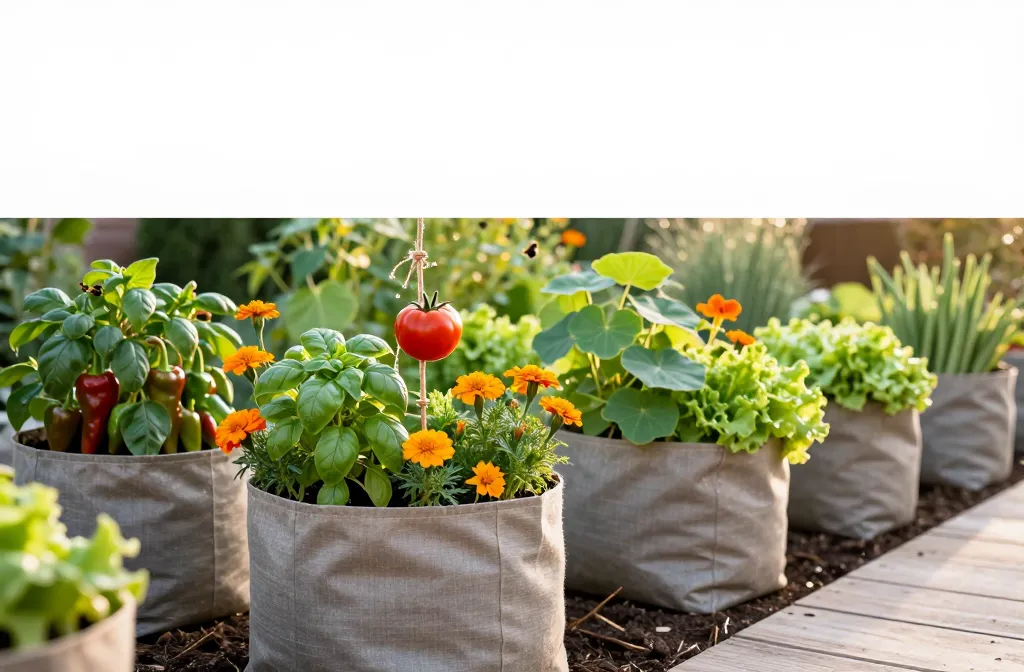
Grow bags make plants happy because roots can breathe, excess water escapes, and you can move them like furniture on a whim. Now pair that with smart companion planting and you’ll squeeze crazy productivity from small spaces. Think fewer pests, better flavors, and prettier pots. Ready to turn those floppy felt bags into mini ecosystems that actually work?
1. Tomatoes + Basil + Marigold: The Classic Caprese Power Trio

This combo tastes like summer and looks like a bouquet. Tomatoes love the airy root zone in grow bags, and basil and marigolds team up to deter pests while boosting flavor. You get pollinator appeal, pest pressure down, and a bag that smells like a garden dream.
Bag Size & Setup
- Grow bag: 15–20 gallons for one indeterminate tomato, 7–10 gallons for determinate
- Spacing: Tomato centered, 2–3 basil plants around the edge, 2 dwarf marigolds tucked in
- Support: Cage or stake tied to the bag handles
Tips
- Soil: Rich mix with compost; add slow-release organic fertilizer at planting
- Water: Tomatoes drink a lot; add mulch to cut evaporation
- Pruning: Remove lower tomato leaves for airflow; harvest basil often to prevent flowering
Use this when you want reliable tomatoes with fewer hornworm sightings and marinara-grade basil all season.
2. Peppers + Onions + Oregano: The Sassy, Low-Maintenance Heat Pack
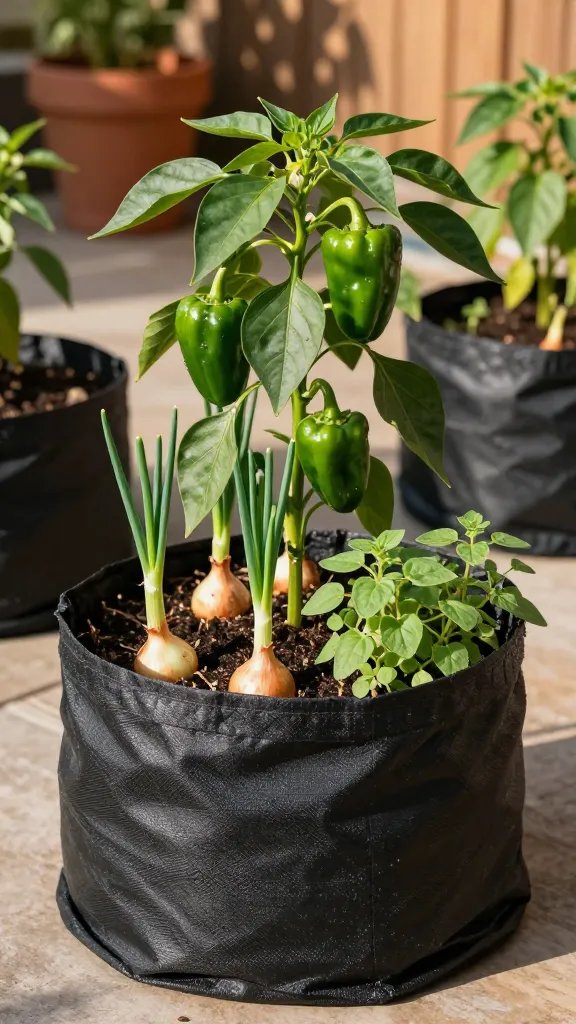
Peppers thrive in warm, well-drained grow bags, and onions don’t hog space or nutrients. Oregano sprawls as a living mulch, discouraging weeds and holding moisture. The trio looks tidy, smells incredible, and tastes like you planned dinner already.
Bag Size & Setup
- Grow bag: 10–15 gallons
- Spacing: 1–2 pepper plants in the middle, 4–6 bunching onions around, 1 oregano near the rim
- Sun: Full sun, bare minimum 6 hours
Tips
- Fertilizer: Peppers love potassium—use a balanced organic feed or add kelp meal
- Water: Consistent moisture prevents blossom end rot and bitter peppers
- Pest watch: Onion scent helps, but check for aphids; a quick water blast or neem does wonders
Deploy this when you crave colorful peppers and a low-fuss, Mediterranean vibe that doubles as a garnish station.
3. Cucumbers + Dill + Nasturtiums: The Sprawling, Snackable Jungle
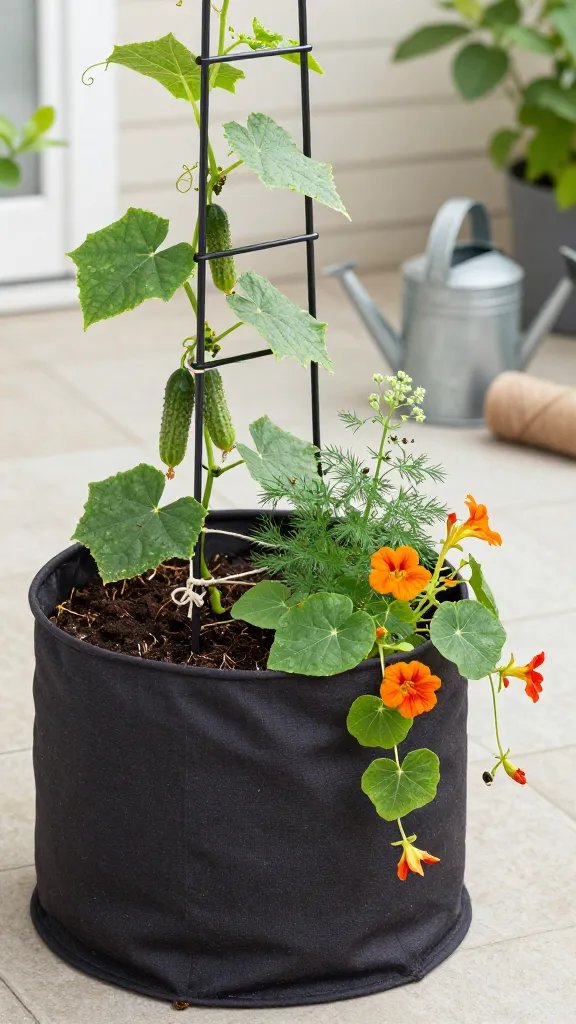
Cucumbers in breathable bags grow fast, and dill brings beneficial insects that patrol for pests. Nasturtiums trail prettily, trap aphids, and give you peppery edible flowers. It’s a crunchy, snack-ready combo that keeps itself charming.
Bag Size & Setup
- Grow bag: 15–20 gallons for vining types; 10–15 for bush cucumbers
- Structure: Add a trellis or obelisk; tie vines early
- Spacing: 1 cucumber, 1 dill, 1–2 nasturtiums near the edge so they spill
Tips
- Soil: Cukes are hungry—mix compost and a handful of worm castings
- Water: Keep it steady; bitter cucumbers scream drought stress
- Harvest: Pick small and often to push more fruit
Choose this when you want crispy cucumbers, a pollinator magnet, and a bag that looks like garden art.
4. Carrots + Radishes + Chives: The Root-and-Shoot Speed Team
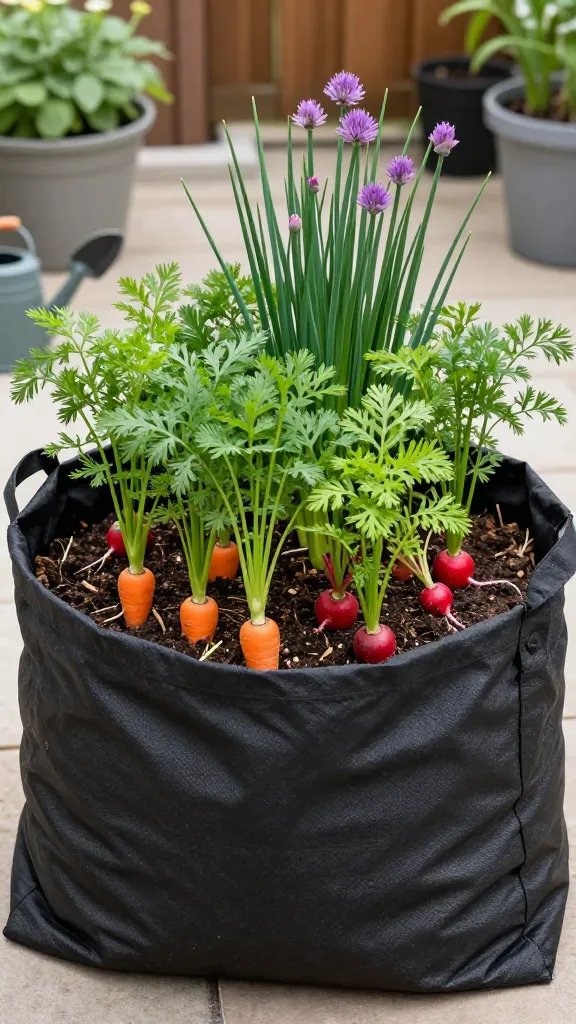
Grow bags’ loose, airy fill gives carrots the straight roots they dream of. Radishes finish fast, breaking up soil for carrots, while chives add pest resistance and culinary flair. It’s the stir-fry-and-salad duo with a side of oniony magic.
Bag Size & Setup
- Grow bag: 7–10 gallons, at least 12 inches deep for full-length carrots
- Spacing: Sow carrots densely, intersow radishes between rows, plant a clump of chives at the rim
- Varieties: Try shorter carrots (Parisian, Danvers) if your bag is shallow
Tips
- Soil: Fluffy mix, no big chunks; avoid heavy manure to prevent forked roots
- Thinning: Thin carrots early; pull radishes in 25–30 days
- Moisture: Even moisture keeps roots sweet and straight
Perfect when you want quick wins (radishes), steady payoffs (carrots), and a year-round garnish (chives). IMO, this is the best beginner root bag.
5. Lettuce + Spinach + Calendula: The Cut-and-Come-Again Salad Bar
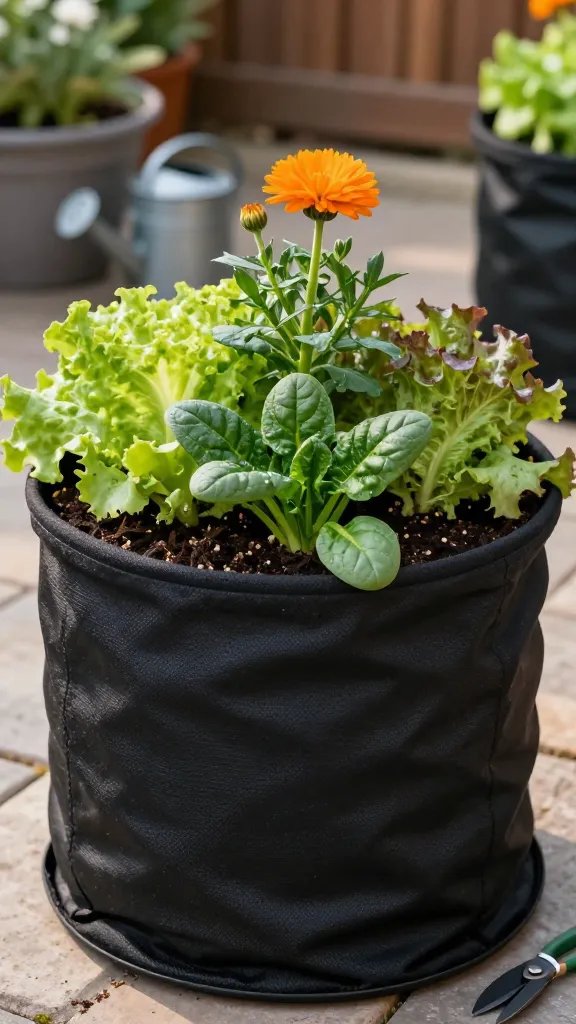
Leafy greens adore the cooler, evenly moist microclimate that fabric bags create. Calendula brings beneficial insects and edible petals while shading soil like a living mulch. You get a steady stream of greens without the slug drama of in-ground beds.
Bag Size & Setup
- Grow bag: 10–15 gallons, wider is better
- Spacing: Ring the edge with loose-leaf lettuce, dot spinach through the center, tuck 1 calendula near the rim
- Light: Full sun in cool seasons; partial shade in heat
Tips
- Successions: Sow new greens every 2–3 weeks for non-stop harvests
- Water: Shallow roots dry fast—mulch with shredded leaves or straw
- Heat hack: Move the bag to afternoon shade or use a shade cloth in summer
Use this when you want grab-and-go salads with minimal effort and major color. Seriously, you’ll feel fancy with edible petals on Tuesday.
Ready to roll these combos out onto your patio? Start with one bag, then stack wins and scale. The breathable magic of fabric plus smart plant buddies equals less fuss, more harvest, and a garden that looks like you meant it. Go get those bags growing—your future self (and your dinner) will thank you.