
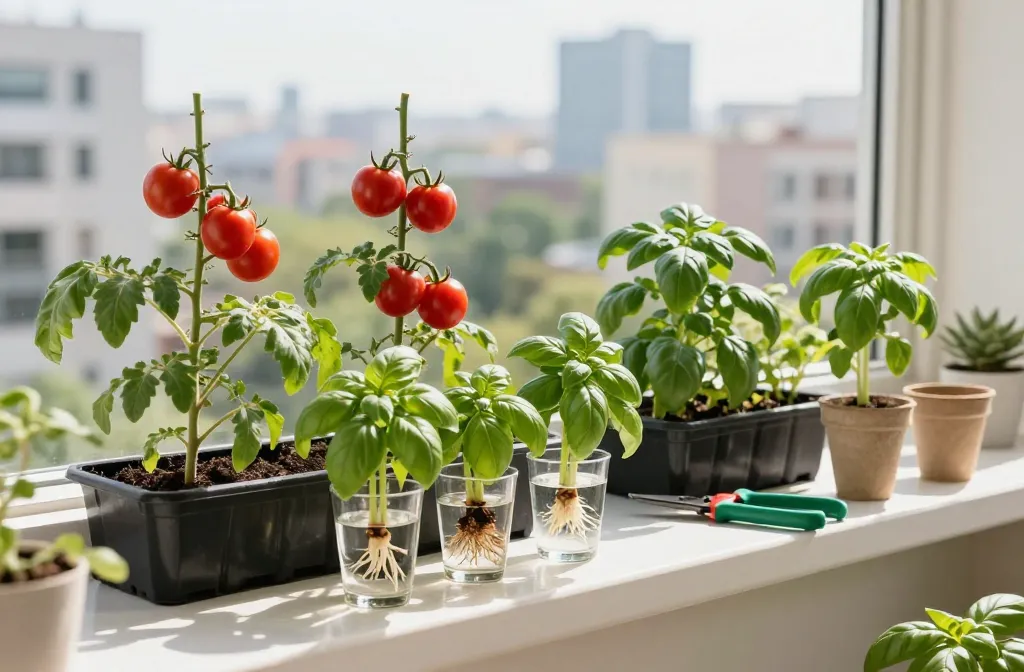
Apartment gardeners, rejoice: you don’t need a backyard or a big budget to grow more, faster. Companion planting turns tiny spaces into productivity machines, and propagation makes your plant bills basically vanish. Pair the right buddies, snip the right cuttings, and boom—fresh harvests and free plant clones. Ready to turn your windowsill into a powerhouse?
Below, you’ll find five strategy-packed sections with 12 affordable propagation pairings that fit balconies, fire escapes, and sunny sinks. We’ll keep it punchy, practical, and seriously doable—even if your “garden” is a shoebox.
1. Basil + Tomatoes: The Classic Balcony Duo That Doubles Itself
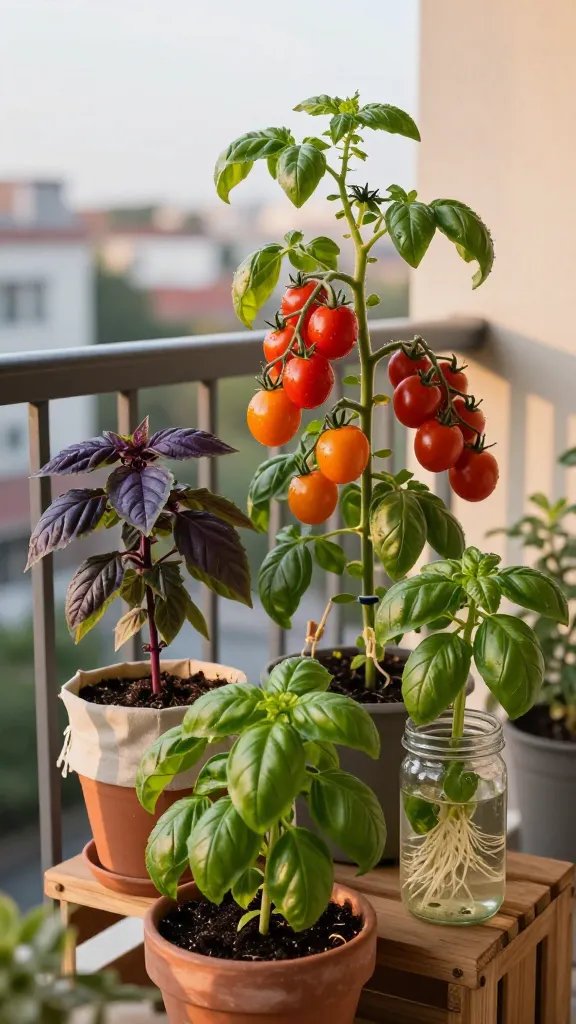
This pair deserves the hype. Basil boosts tomato flavor and helps deter pests, while tomatoes offer partial shade and a trellis-worthy vertical vibe. The best part? Both propagate easily—so once you buy one plant each, you can multiply them all season.
Propagation Pairings (2):
- Sweet Basil + Cherry Tomato: Basil cuttings root in water in 7–10 days. Cherry tomatoes thrive in containers and fruit fast.
- Thai Basil + Roma Tomato: Thai basil laughs at heat, and Roma harvests make weeknight pasta sauce feel gourmet.
Quick How-To:
- Plant tomatoes in a 5+ gallon container with a stake or cage.
- Tuck basil around the base, 6–8 inches away to avoid overcrowding.
- Snip 4–6 inch basil tips below a node and root in water, then pot up.
- Bottom-water to avoid splashing tomato leaves. Mulch with shredded paper if you’re on a budget.
Why this works: Basil’s scent confuses pests and attracts pollinators. You get flavor synergy, fewer bugs, and essentially endless basil, FYI.
2. Green Onion Regrow Bar + Leafy Lettuce: The Cut-And-Come-Again Combo
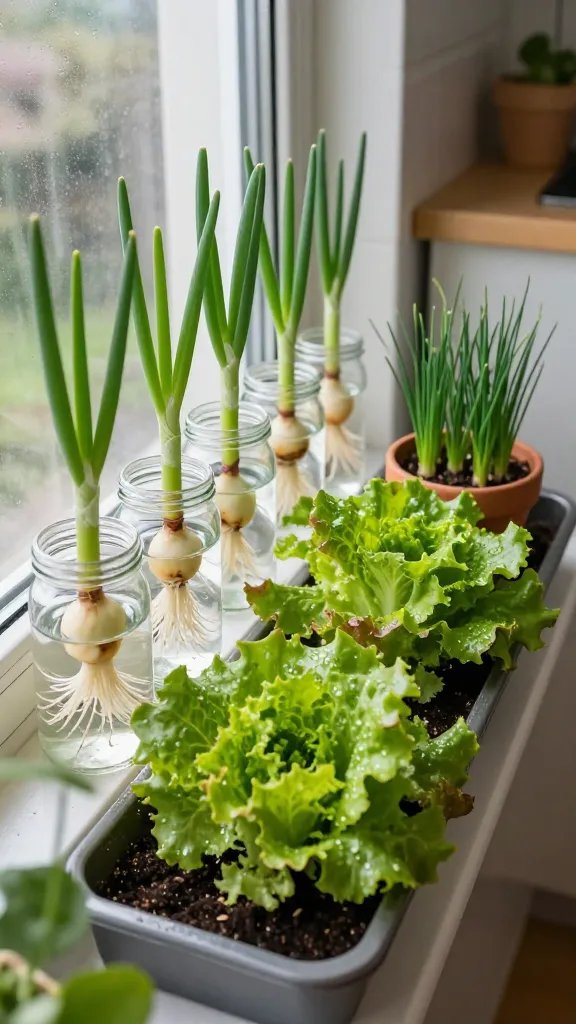
You know those sad green onion nubs after taco night? Don’t toss them. Stand them in water and they sprint back to life. Pair them with loose-leaf lettuce, which you can harvest leaf-by-leaf, and you’ll have toppings forever.
Propagation Pairings (2):
- Grocery Green Onion Nubs + Loose-Leaf Lettuce: Free onions! Lettuce thrives in shallow trays and prefers cooler windows.
- Chives (Division) + Butterhead Lettuce: Divide a pot of chives into smaller clumps and interplant around a butterhead for edging and pest deterrence.
Setup Tips:
- Root green onion nubs in a jar of water. Change water every 2–3 days. Pot up once roots are 1–2 inches.
- Use a shallow box or tray (3–6 inches deep) for lettuce. Sow thickly for baby greens.
- Keep both out of harsh afternoon sun. Morning light is perfect.
- Harvest lettuce outer leaves first; snip onion tops as needed.
Why this works: Onions discourage aphids, and lettuce likes the light shade they throw. Cheap, fast, and basically foolproof—seriously.
3. Mint + Strawberries: The Fragrant Groundcover That Pays Rent
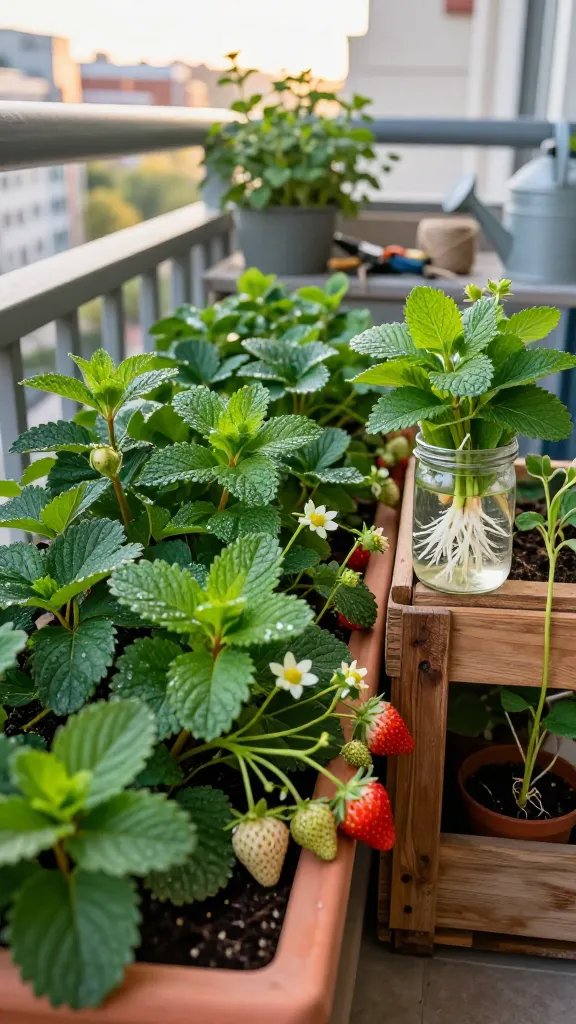
Mint gets bossy, but in containers you’re in charge. Strawberries crawl and fruit, mint spreads and perfumes—together they form a lush, edible carpet. Bonus: both propagate like they’re trying to win a race.
Propagation Pairings (3):
- Peppermint (Stolons) + Alpine Strawberries: Peppermint spreads quickly; alpine strawberries fruit in partial shade and don’t mind a crowd.
- Spearmint (Cuttings) + Everbearing Strawberries: Spearmint roots in water in a week; everbearing gives you multiple harvest waves.
- Chocolate Mint + Fragaria ‘Yellow Wonder’ (Alpine): A quirky, scented combo that wows on a windowsill.
Control & Care:
- Use a wide, shallow container (12–16 inches). Mint along edges, strawberries toward the center.
- Pinch mint often to prevent legginess and to keep strawberries from getting smothered.
- Root mint cuttings in water; lay strawberry runners on the soil and pin with a paperclip until rooted.
- Water consistently; drought makes mint bitter and strawberries sulk.
Why this works: Mint’s scent helps confuse pests, and strawberries appreciate the cooling groundcover. Use this on balconies where you want fragrance AND snacks.
4. Nasturtium + Kale/Arugula: The Trap-Crop Tango With Edible Flowers
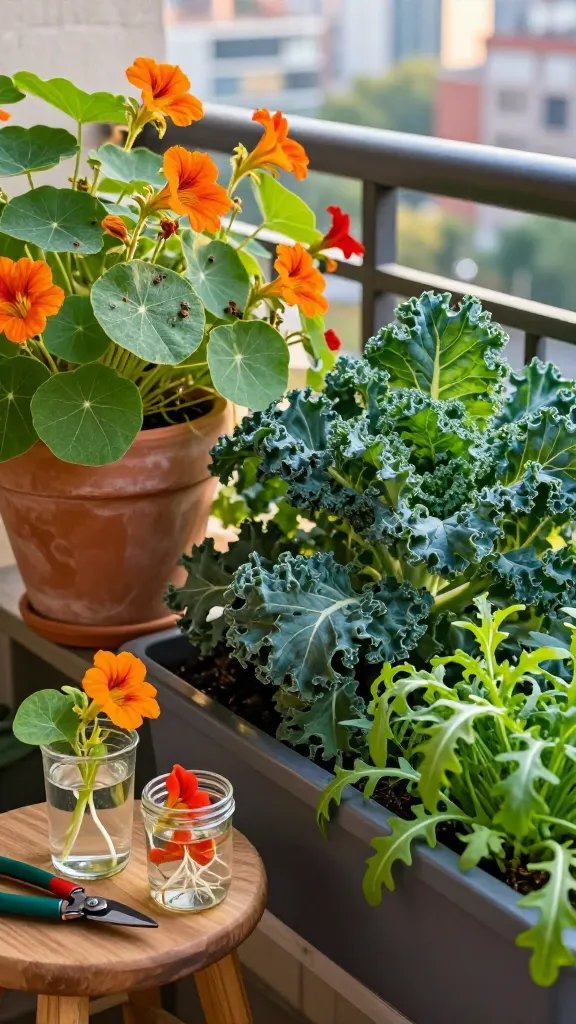
Nasturtiums look cute and act strategic. They lure aphids away from your brassicas, and you can eat the flowers and leaves. Pair them with kale or arugula for a steady salad pipeline and easy propagation.
Propagation Pairings (3):
- Nasturtium (Seeds) + Dwarf Kale: Nasturtium germinates fast and spills over pot edges; dwarf kale fits small containers.
- Nasturtium (Cuttings) + Arugula (Succession Sowing): Yes, nasturtiums root from cuttings; arugula reseeds and matures lightning fast.
- Nasturtium (Trailing) + Mizuna: Peppery greens with edible flowers equals fancy salad energy on a budget.
How-To Without Drama:
- Use a 10–12 inch pot with kale or mizuna centered. Plant nasturtium around the rim.
- Soak nasturtium seeds overnight for faster sprouting, then direct sow.
- Take 4–6 inch nasturtium cuttings, strip lower leaves, root in water or damp mix.
- Harvest kale lower leaves regularly; pinch nasturtiums to keep blooms coming.
Why this works: Nasturtiums act as a decoy for pests and attract pollinators. You get big color, big flavor, tiny price tag—IMO, the best beginner combo.
5. Marigold + Peppers + Oregano: The Balcony Pest Patrol That Multiplies
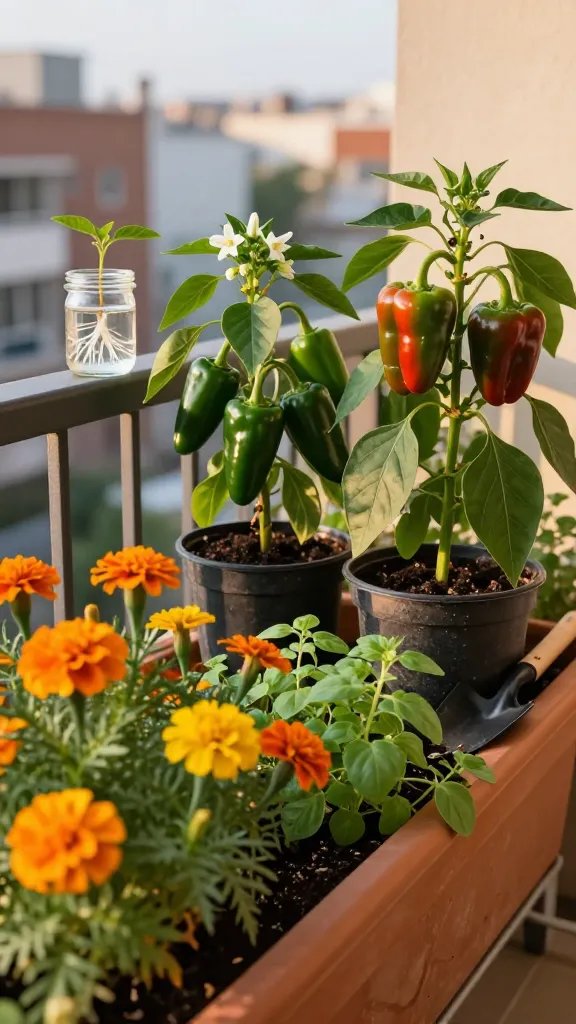
Think of this trio as your spicy security system. Marigolds make nematodes and gnats rethink their life choices, peppers bring the heat, and oregano creates a low, fragrant understory. All three propagate easily, so you’ll never run out.
Propagation Pairings (2 core + 2 bonus):
- Tagetes (Marigold) + Jalapeño: Start marigolds from seed for pennies; peppers root from cuttings under bright light.
- Oregano (Division) + Bell Pepper: Split a small oregano pot into clumps; peppers love the company.
- Bonus: Tagetes + Oregano as a pest-and-fragrance border in a rectangular planter.
- Bonus: Marigold + Shishito for continuous small harvests perfect for quick sautés.
Container Game Plan:
- Choose a 5–7 gallon pot for peppers with a stake. Add 1–2 marigolds and an oregano clump around the edges.
- Keep soil warm and evenly moist. Peppers hate cold feet and tantrum when overwatered.
- Root pepper cuttings in a perlite/peat mix under bright light. Oregano divisions settle fast with minimal fuss.
- Deadhead marigolds to extend blooms and pest protection.
Why this works: The scent blend deters pests and pulls in beneficial insects. You get steady peppers, fresh herbs, and fewer problems—trust me, it’s a set-and-sizzle combo.
Quick Reference: All 12 Affordable Propagation Pairings
- Sweet Basil + Cherry Tomato
- Thai Basil + Roma Tomato
- Grocery Green Onion Nubs + Loose-Leaf Lettuce
- Chives (Division) + Butterhead Lettuce
- Peppermint + Alpine Strawberries
- Spearmint + Everbearing Strawberries
- Chocolate Mint + Alpine Strawberries
- Nasturtium (Seeds) + Dwarf Kale
- Nasturtium (Cuttings) + Arugula
- Nasturtium (Trailing) + Mizuna
- Tagetes (Marigold) + Jalapeño
- Oregano (Division) + Bell Pepper
Light, Water, and Space: Mini Cheatsheet
- Sun Lovers: Tomatoes, peppers, strawberries, basil.
- Partial Shade Champs: Mint, lettuce, arugula, mizuna, nasturtium.
- Containers: 5–7 gallons for tomatoes/peppers; 10–12 inch for kale/mint mixes; shallow trays for lettuce/arugula.
- Budget Boosters: Reuse takeout containers with drainage holes, root herbs in water, and divide clumping perennials.
Common Mistakes (So You Don’t Make Them)
- Overcrowding: Plants still need airflow. Stagger heights and give roots room.
- Too Much Water: Use your finger as a moisture meter. Top inch dry? Then water.
- Wrong Light: South-facing window for sun lovers; east-facing for greens and herbs.
- No Feeding: Use a diluted balanced fertilizer every 2–3 weeks in containers.
Ready to build your tiny jungle? Start with one container, pick a pairing, and propagate as you go. You’ll save cash, dodge pests, and snack better—without leaving your apartment. Seriously, your windowsill is about to become the most productive square foot you own.