
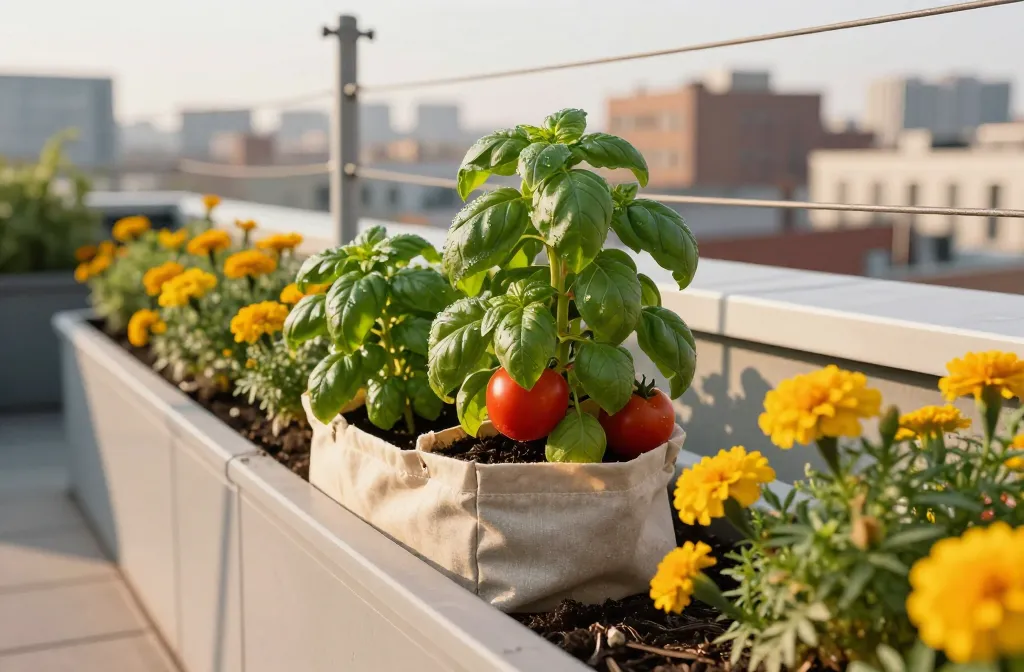
Rooftop gardens take a beating—wind tunnels, blazing sun, heat-baked containers, and surprise dry spells. The hack? Pair plants that protect, cool, and feed each other like tiny roommates who actually clean up. These combos thrive in ridiculous conditions and give you herbs, veggies, and pollinator magic without babying. Ready to stack the odds in your favor?
We’ll cover five powerhouse pairings designed for rooftop extremes. You’ll get shade makers, windbreakers, heat tamers, and pest distractors—all in containers you can drag around. Let’s plant smarter, not harder.
1. Sun-Survivor Salsa: Tomatoes + Basil + Marigold
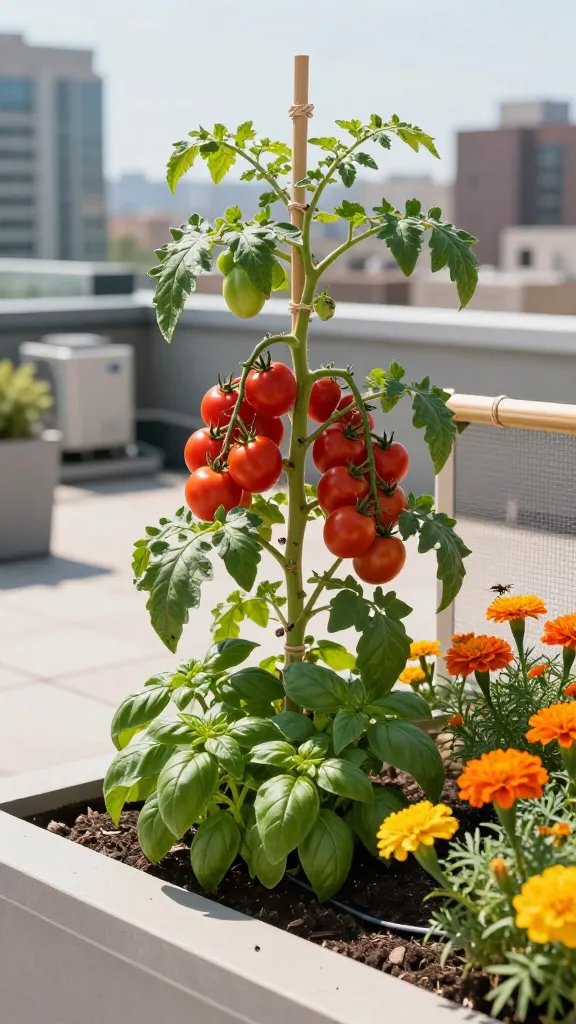
Full-sun roof frying your plants? This trio loves heat and helps each other shine. Tomatoes soak up rays, basil boosts flavor and repels pests, and marigolds help deter root nematodes and attract beneficial insects.
Why It Works
- Tomatoes handle rooftop sun but need wind buffering—basil and marigolds fill space and reduce soil splash.
- Basil shades soil, slows evaporation, and messes with aphid and whitefly hangouts.
- Marigolds lure hoverflies and parasitic wasps—free pest control, yes please.
Container Setup
- Use a 15–20 gallon fabric pot for tomatoes with a sturdy cage.
- Plant 2–3 basil around the tomato base; tuck 2 marigolds at the edge.
- Add 2–3 inches of compost-rich potting mix and mulch with shredded leaves or coco coir.
Keep the soil evenly moist and prune tomato suckers for airflow. Benefits? Heat tolerance, fewer pests, and a literal salsa bowl on your balcony.
2. Wind-Warrior Greens: Kale + Chives + Nasturtium
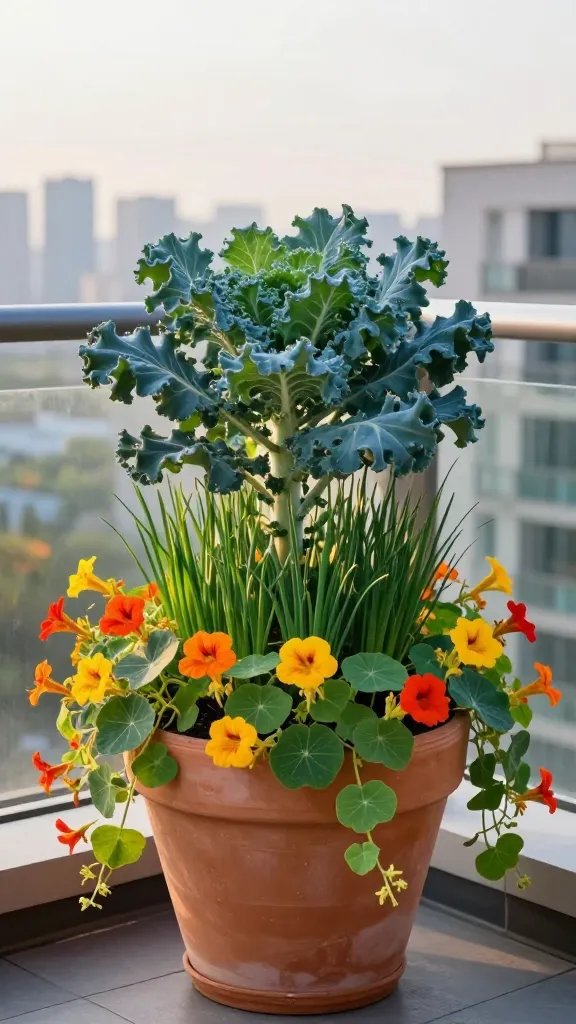
High-rise winds can shred tender greens. This combo bends, bounces back, and keeps growing. Kale anchors the pot, chives repel pests, and nasturtiums spill over as edible wind buffers.
Why It Works
- Kale prefers cool roots and steady moisture—nasturtium foliage shades the soil like a living mulch.
- Chives deter aphids and improve flavor (IMO, kale needs friends).
- Nasturtiums act as a sacrificial trap crop for aphids, plus they’re peppery and gorgeous.
Container Setup
- 10–15 gallon container with composty potting mix.
- Center 1–2 kale plants, ring with a clump of chives, trail 2–3 nasturtiums over the rim.
- Place near a parapet or railing for slight wind protection.
Harvest nasturtium flowers and baby kale without mercy. You’ll get steady greens even when the wind tries to clap your garden off the roof.
3. Heat-Dome Coolers: Eggplant + Oregano + Thyme
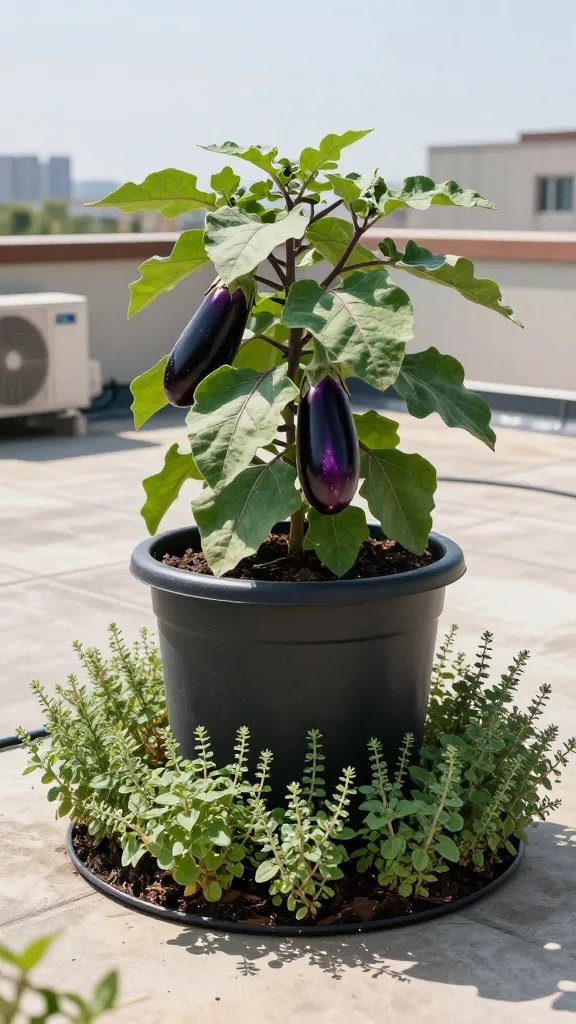
When the rooftop turns into a skillet, Mediterranean plants step up. Eggplant thrives in heat, while oregano and thyme sprawl to shade soil and block weeds. It’s drought-tolerant, aromatic, and incredibly low-maintenance.
Why It Works
- Eggplant needs warmth, deep soil, and steady moisture to fruit well.
- Oregano and thyme handle dry edges and confuse pests with strong scents.
- The herbs’ groundcover effect keeps root zones cooler—clutch for black containers that cook.
Container Setup
- 15–20 gallon pot, preferably light-colored or wrapped in burlap to reduce heat absorption.
- 1 eggplant in the center; 1 oregano and 1 thyme around the edges.
- Mulch lightly—don’t smother the woody herbs.
Water deeply, then let the top inch dry before watering again. Expect shiny fruits, pollinator traffic, and zero stress during heat waves, FYI.
4. Shade-Casters For Scorching Decks: Cucumbers + Dill + Lettuce
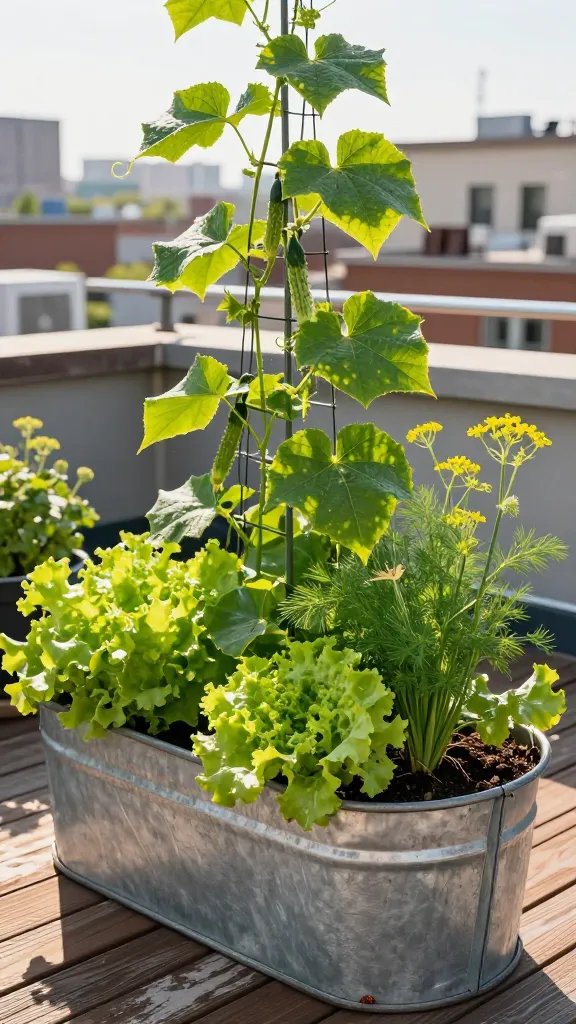
No natural shade? Make your own. Vertical cucumbers cast dappled shadows that keep lettuce crisp, while dill attracts ladybugs and lacewings to patrol for aphids and mites.
Why It Works
- Cucumbers hate hot roots—companion foliage shades the soil and stabilizes moisture.
- Lettuce bolts slower in light shade from cucumber vines.
- Dill lures beneficials and pairs flavor-wise with both cucumber and lettuce. Win-win-win.
Container Setup
- 20–25 gallon trough or wide pot with trellis or netting attached to railing.
- Plant 2 cucumber starts at the trellis base.
- Underplant a zigzag of cut-and-come-again lettuces; tuck 1 dill at one end.
- Top-dress with compost midseason to keep cucumbers cranking.
Harvest lettuce often and train the vines upward fast. You’ll get a cool microclimate and crunchy salads even under brutal sun. Seriously, it’s garden air-conditioning.
5. Dry-Spell Defenders: Chili Peppers + Basil (Thai) + Sweet Alyssum
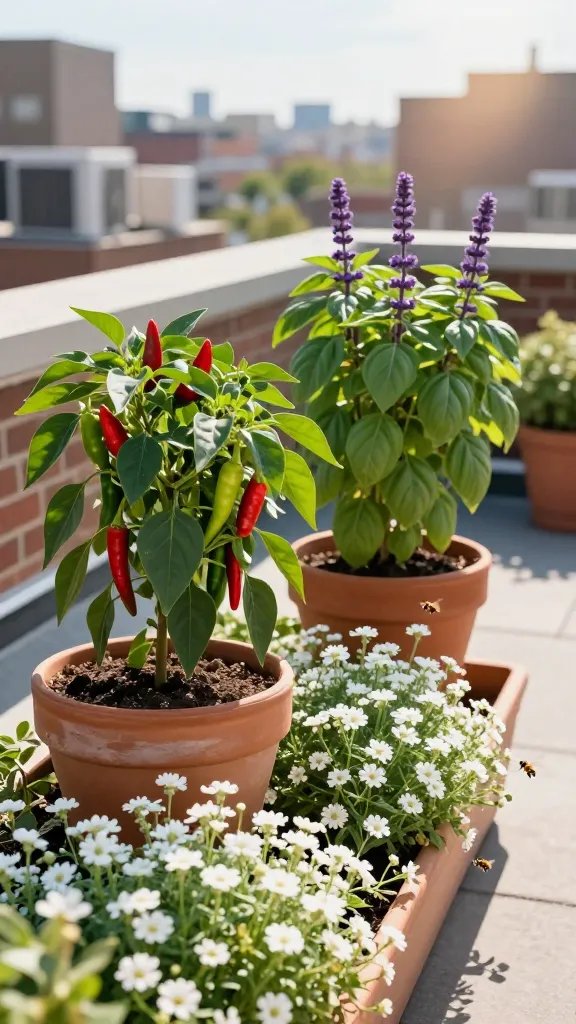
Forgot to water? Or the building shuts off the hose mid-July? This trio handles short droughts and still delivers wild flavor. Chili peppers blaze through heat, Thai basil tolerates lean watering, and sweet alyssum creates a fragrant, pollinator-magnet carpet.
Why It Works
- Chili peppers prefer consistent moisture but won’t sulk like tomatoes if you miss a day.
- Thai basil stands up to sun and wind, with tougher leaves than Genovese basil.
- Sweet alyssum feeds beneficials and cools the soil surface with dense bloom clusters.
Container Setup
- 12–15 gallon pot with excellent drainage (add extra perlite or pumice).
- 1–2 pepper plants center; 1 Thai basil to the south side; 2–3 alyssum plugs around the rim.
- Mulch with straw or pine fines to slow evaporation.
Fertilize lightly—overfeeding causes leafy plants with fewer fruits. The payoff: reliable peppers, steady pollinator visits, and fewer wilt drama episodes.
Bonus Rooftop Survival Tips
- Soil Mix: Use a high-quality potting mix with 20–30% compost and 10–20% perlite or pumice.
- Mulch: Always. It cools soil and slashes watering by up to a third.
- Irrigation: Drip lines with a timer save your weekends and your plants.
- Wind: Cluster pots, use trellises as windbreaks, and choose fabric pots that won’t topple.
- Reflect Heat: Light-colored containers or shade cloth on heatwave days can prevent blossom drop.
- Feeding: Slow-release organic fertilizer at planting; supplement with fish/seaweed every 2–3 weeks.
Quick Reference: What To Plant When
- Early Spring: Kale + chives + nasturtium; lettuce under future cucumber trellis.
- Late Spring: Tomatoes + basil + marigold; peppers + Thai basil + alyssum.
- Early Summer: Eggplant + oregano + thyme; cucumbers + dill + lettuce succession.
Ready to turn your rooftop into a resilient mini farm? Start with one combo and scale as you learn your roof’s quirks—every building has microclimates. Plant tough, plant smart, and enjoy brag-worthy harvests all summer long, trust me.