
Your containers don’t have to hemorrhage soil every time it rains or you water a little too enthusiastically. With smart companion planting, you can knit the potting mix together, slow runoff, and keep roots exactly where they belong. These plant pairings lock down soil, look great, and make watering less chaotic. Ready to turn your pots into mini fortresses? Let’s do it.
1. The Cascade And The Anchor: Creeping Jenny + Dwarf Switchgrass
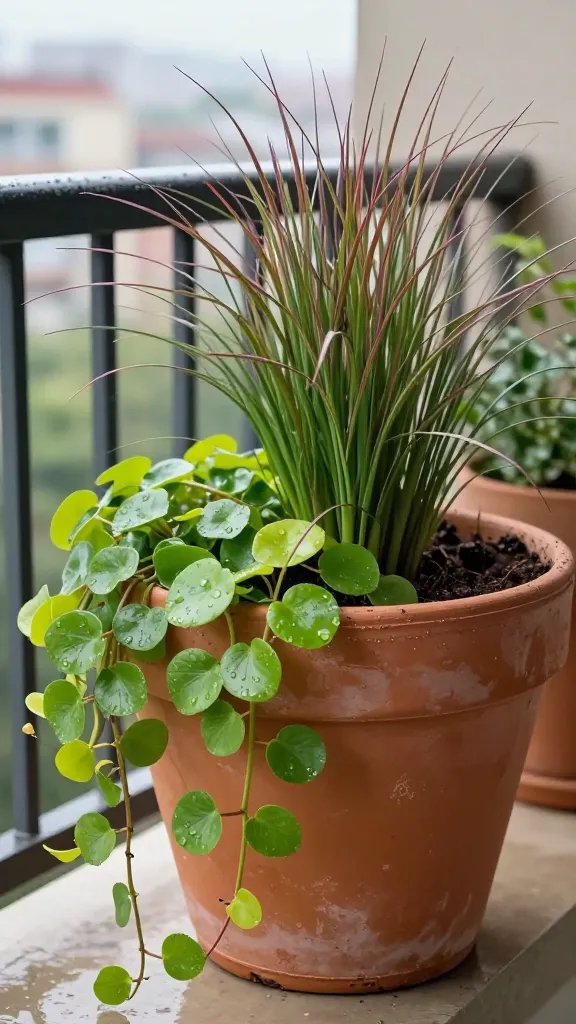
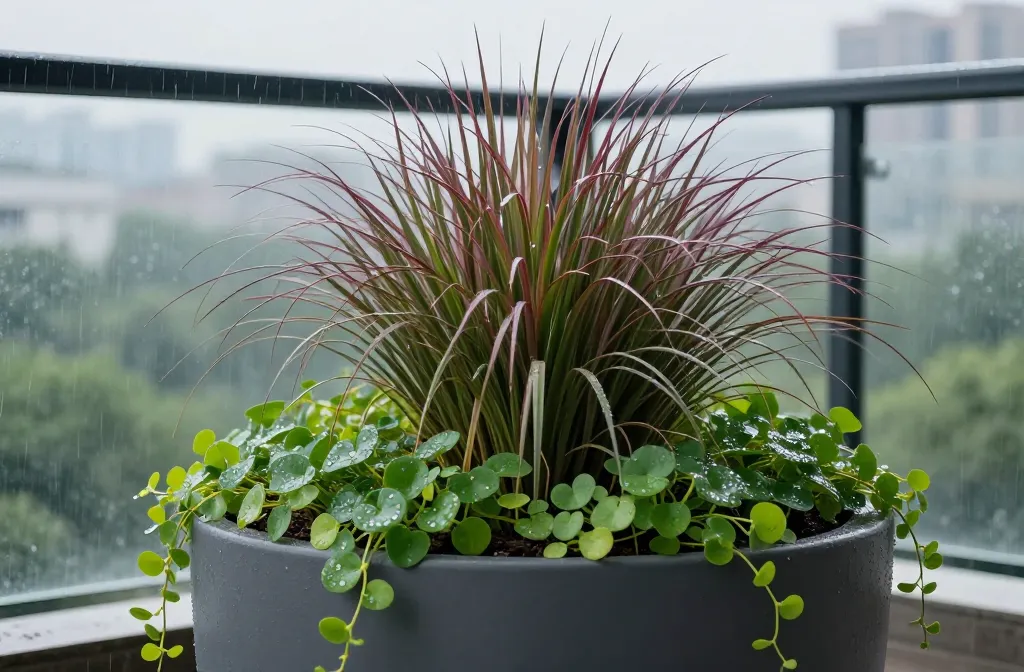
This duo balances drama and discipline. Creeping Jenny (Lysimachia nummularia) spills over the rim, shielding soil from splash erosion, while dwarf switchgrass (Panicum virgatum ‘Shenandoah’ or compact varieties) roots deeply and holds the core together.
Why It Works
- Surface coverage: Creeping Jenny creates a living mulch that slows water and blocks evaporation.
- Deep hold: Dwarf switchgrass drives fibrous roots down, stabilizing the potting mix.
- All-season interest: Switchgrass offers color shifts; Creeping Jenny stays bright and cheerful.
Plant the grass in the center or back as the structural anchor. Tuck Creeping Jenny around the edges and let it drape. Bonus: fewer weeds, because who needs that chaos?
Best for balcony planters and tall urns where runoff gets aggressive. Use where you want texture and movement without sacrificing stability.
2. The Mediterranean Mat: Thyme Carpet + Rosemary Standard
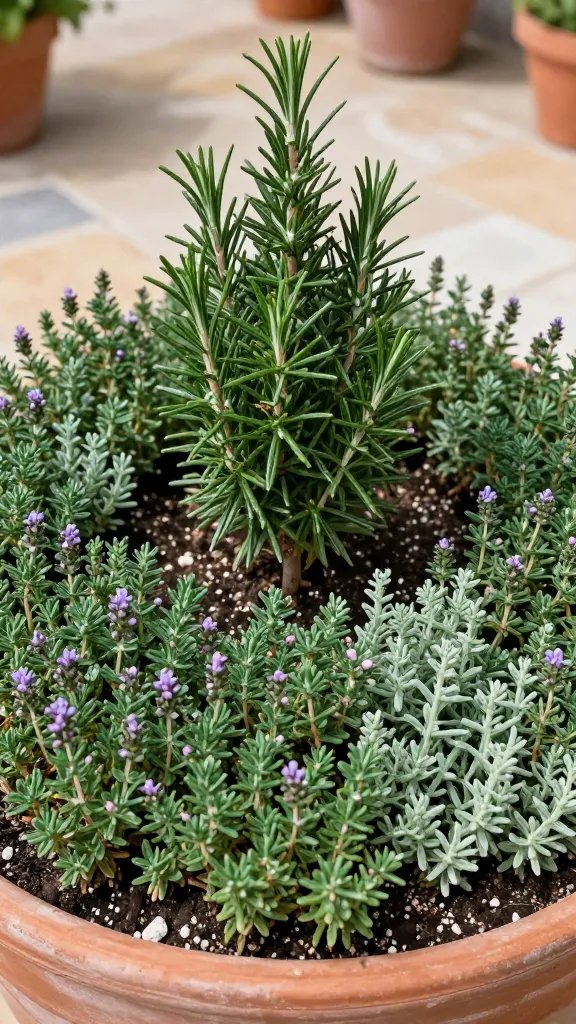
Want fragrance and erosion control in one? A rosemary (upright or standard form) paired with a low-growing thyme (creeping thyme or woolly thyme) creates a drought-tolerant, soil-hugging combo that laughs at splash erosion.
How To Plant
- Centerpiece: Plant rosemary in the middle or slightly off-center for height.
- Rim runners: Fill the exposed surface with thyme starts 6–8 inches apart.
- Soil mix: Use a gritty, fast-draining mix with added perlite or pumice.
Thyme knits the top layer, slowing water, while rosemary’s deep, woody roots anchor the entire pot. It smells amazing and you can snip both for the kitchen—seriously, zero downside.
Ideal for sunny decks with heat and wind. Great where you want an edible that doubles as a soil stabilizer.
3. The Pollinator Blanket: Strawberries + Compact Bee Balm
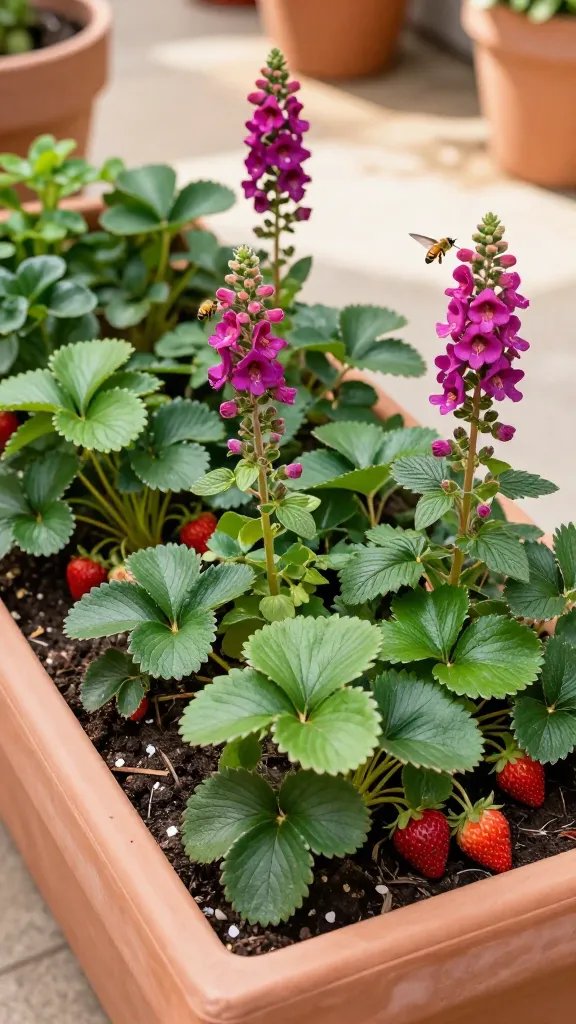
Edible, beautiful, and practical—this pair does it all. Strawberries spread a dense mat that shields the soil, while compact bee balm (Monarda ‘Petite’ or other dwarf varieties) sends up strong stems that keep the mix from shifting.
Key Points
- Surface stabilization: Strawberry runners grab the potting mix and prevent slumping.
- Root diversity: Bee balm’s clumping roots interlock with the strawberry mat for added hold.
- Beneficials: Flowers pull in pollinators, which means better fruit. FYI, hummingbirds love bee balm.
Space bee balm in the center or in two back corners of a rectangular planter. Plant strawberries everywhere else and let them knit together. Keep pruning runners if they swamp the bee balm—boundaries matter.
Perfect for railing boxes and patio troughs. Use this when you want erosion control plus snacks. IMO, it’s the happiest-looking pot you’ll grow all season.
4. The Shade Net: Sweet Potato Vine + Dwarf Sedge
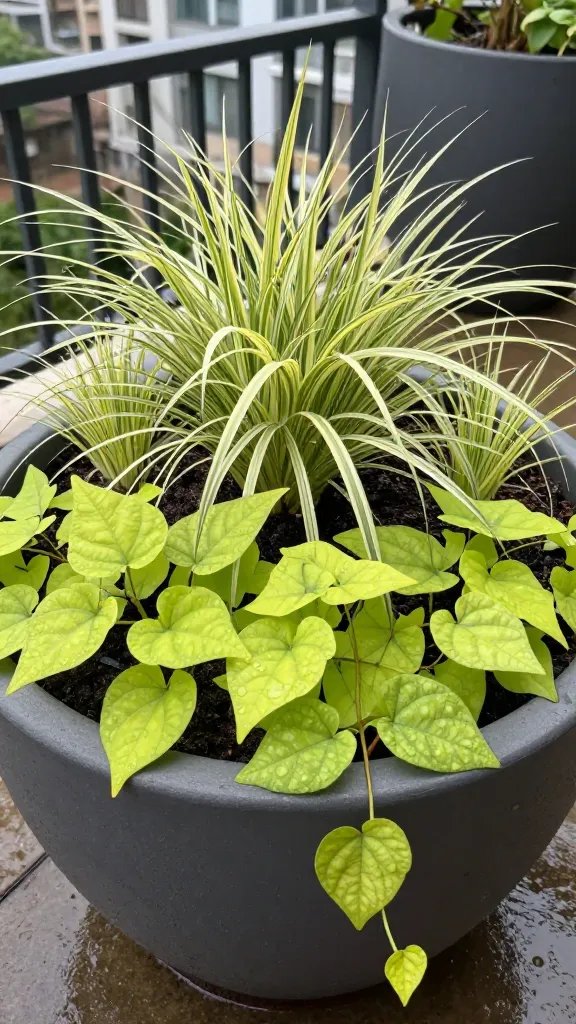
When you get heavy summer downpours, this combo refuses to let soil escape. Ornamental sweet potato vine (Ipomoea batatas) spreads fast and shades the mix, while dwarf sedge (Carex oshimensis ‘Evergold’ or similar) knits fine roots through the profile.
Planting Tips
- Arrangement: One sedge in the center, two more at back corners for balance. Fill the front and sides with sweet potato vine.
- Watering: Water deeply but less frequently. The leaf cover reduces evaporation.
- Pruning: Trim vines to keep air moving and prevent soggy crowns.
Sweet potato vine acts like a living tarp, which means less compaction from raindrops and fewer washouts over the rim. Dwarf sedge adds four-season root structure so the pot holds together even in shoulder seasons.
Best for big bowls and whiskey barrels. Use in part sun to bright shade where you want lush cover fast.
5. The Storm-Proof Herb Pot: Parsley Ring + Chives + Compact Kale
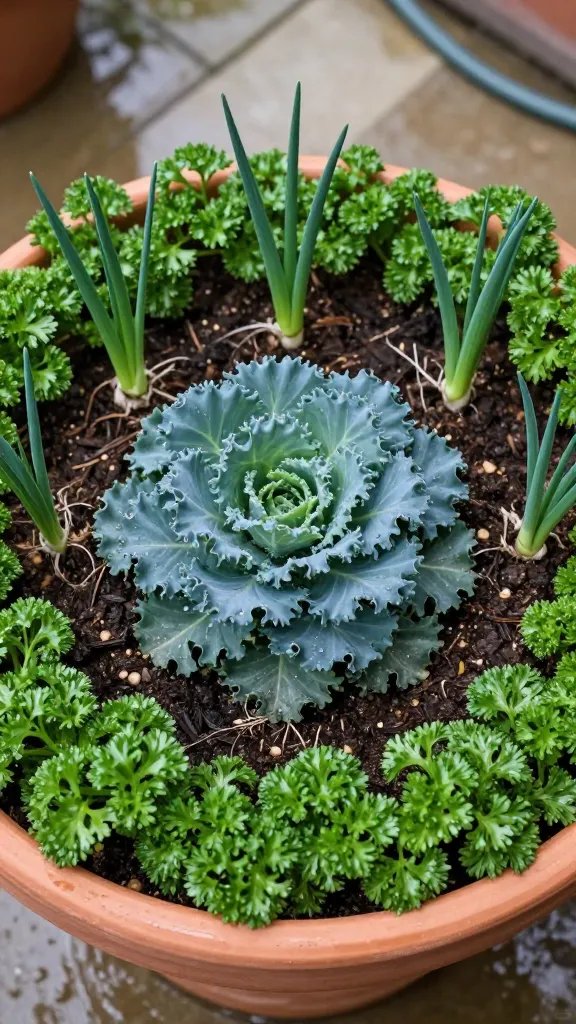
If your herb pot keeps losing soil every time you hose it down, build layers. Curly parsley forms a dense, frilly ring that intercepts splash. Chives add upright, fibrous roots that pin the mix, and a compact kale (e.g., ‘Dwarf Blue Curled’) acts as a sturdy anchor.
Layout That Works
- Center anchor: One compact kale in the middle.
- Vertical stitching: 3–5 chive clumps spaced around.
- Living edge: A continuous ring of curly parsley at the rim.
The frilly parsley edge reduces overflow, chives stitch the soil vertically, and kale’s taproot-plus-fibers keep the whole container from slumping. Bonus: endless garnishes and a pot that looks full and intentional.
Great for apartment gardeners who want culinary value with a side of erosion control. Works spring through fall; swap kale for dwarf rosemary in hot summers if needed.
Extra Erosion-Smart Moves (Because You’re Here For Wins)
- Topdress strategically: Add a 0.5–1 inch layer of fine pine bark, cocoa hulls, or composted leaf mold under your trailers. It slows splash without suffocating roots.
- Use a heavier base: Mix in 10–20% pumice or coarse sand to add weight and reduce soil float. Avoid pea gravel mixed into soil—it settles and creates drainage issues.
- Right-sized drainage: One big hole beats ten tiny ones. Cover it with a shard or mesh to stop mix loss while keeping flow.
- Water like you mean it: Slow, even watering lets soil absorb instead of flush. A watering wand set to “shower” helps. Trust me, your pot won’t geyser soil anymore.
- Trim, don’t scalp: Maintain your groundcovers just enough to keep airflow and light—over-thinning invites erosion again.
Soil And Container Notes
- Pot depth matters: Deep-rooted anchors (grasses, kale, rosemary) prefer at least 12–14 inches of depth.
- Windy sites: Choose sturdier anchors like dwarf switchgrass or rosemary and heavier containers (ceramic, concrete, or thick resin).
- Sun vs. shade: Thyme/rosemary love full sun; sedges and sweet potato vine tolerate part shade; strawberries/bee balm enjoy full sun with steady moisture.
There you go—five container combos that lock down soil, look gorgeous, and make watering less stressful. Pick one, plant it this weekend, and watch your pot go from messy to mighty. Your future self (and your patio) will thank you, seriously.