
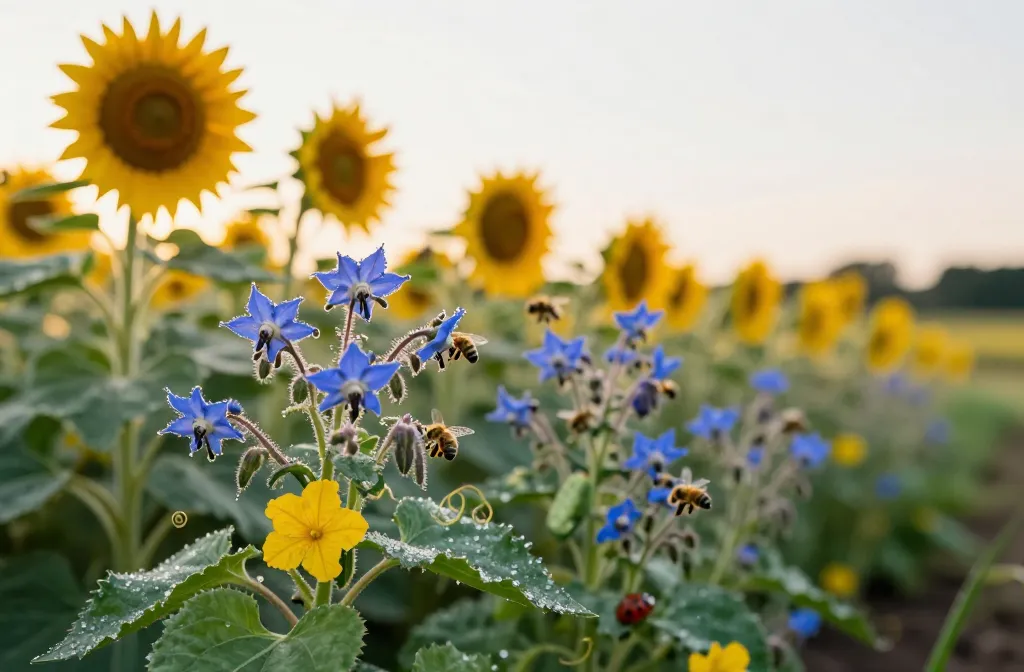
Pest problems got you rage-Googling at midnight? Bring in the tiny cavalry. These companion plant pairings attract beneficial insects that patrol your garden like superheroes with wings.
Get ready for flowers that double as bug buffets, herbs that lure pest assassins, and veggies that dodge drama. Plant these combos, sit back, and watch nature handle the heavy lifting.
1. Pollinator Party: Sunflowers + Borage + Cucumbers
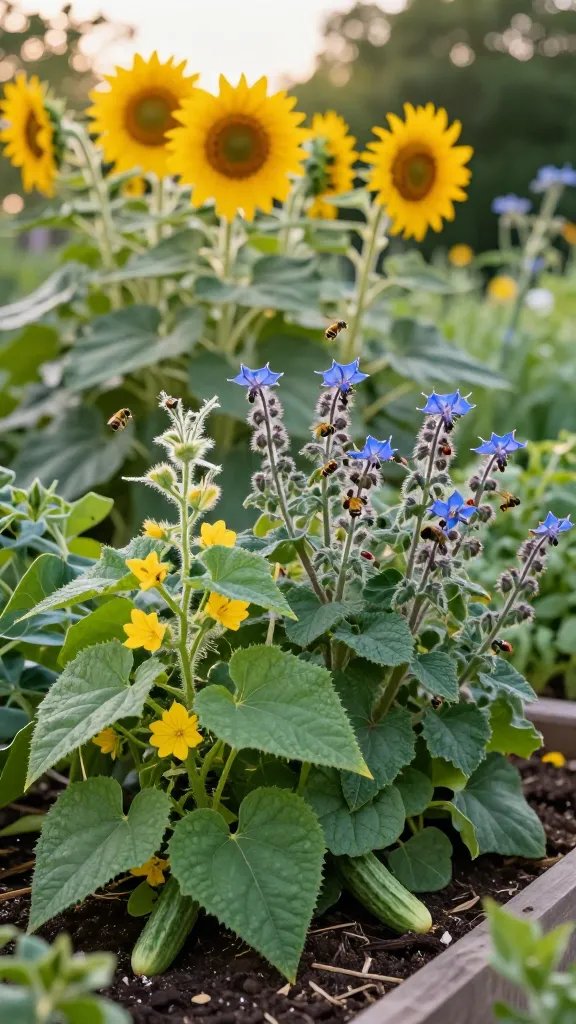
This trio turns your garden into a buzzing block party. Sunflowers act like neon signs for bees, borage keeps them hanging around, and cucumbers give them plenty to pollinate. More pollinators equals more fruit, fewer failed blossoms, and happier plants.
Why It Works
- Sunflowers tower up and shout “Free nectar!” all season.
- Borage produces nonstop blue starry blooms bees obsess over.
- Cucumbers need abundant pollination for straight, full fruits.
Plant sunflowers on the north side so they don’t shade everything else. Tuck borage between cucumber hills or trellis rows. FYI, borage self-seeds, so you’ll get free plants next year.
Quick Tips
- Direct sow borage and cucumbers after frost; transplant sunflowers if needed.
- Mulch heavily—borage keeps soil cool and brings in earthworms.
- Skip pesticides here; you don’t want to nuke your pollinator squad.
Best for: Boosting cucumber yields, supporting bee populations, and creating a cheerful, high-traffic pollinator lane.
2. Aphid Annihilators: Dill + Fennel (separate) + Brassicas
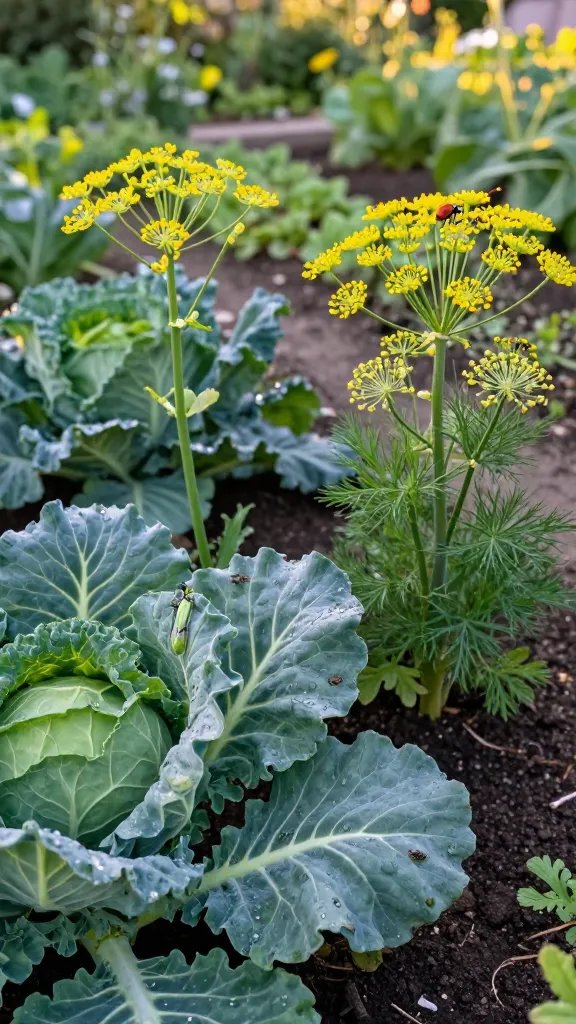
Aphids fear this combo. Dill and fennel lure lacewings, lady beetles, and parasitic wasps—the elite squad that treats aphids like snacks. Pair them with cabbage, kale, broccoli, and you’ll see fewer sticky leaves and more healthy heads.
Key Points
- Dill draws lady beetles and hoverflies to chow down on aphids.
- Fennel attracts parasitic wasps that target aphids and caterpillars.
- Brassicas usually get hammered by pests—so they appreciate the backup.
Important: don’t plant dill and fennel right next to each other—they inhibit each other’s growth. Space them out as “sentinel” plants at bed edges, and place brassicas in the center like VIPs.
Placement Tips
- Stagger plantings of dill every 2–3 weeks for continuous blooms.
- Let a few dill plants bolt—those flowers are irresistible to beneficials.
- Fennel works best at corners or in a separate pot.
Best for: Organic aphid control, balanced predator–prey cycles, and sturdier brassica harvests. IMO, this is the easiest way to rescue kale.
3. Tomato Bodyguards: Sweet Alyssum + Basil + Tomatoes
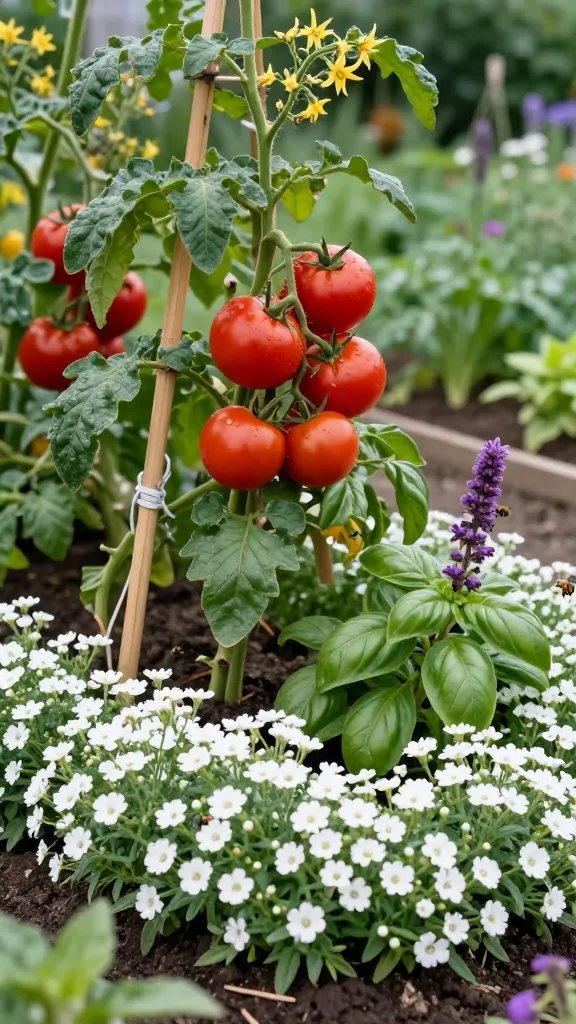
Tomatoes attract drama. Sweet alyssum brings hoverflies that target aphids, and basil confuses pests with strong scent while improving flavor (fight me on that). Together, they create a perimeter defense that keeps your tomato jungle happier.
How It Helps
- Sweet Alyssum blooms forever with tiny flowers that feed small predators.
- Basil attracts bees, repels thrips (somewhat), and looks gorgeous under tomato canopies.
- Tomatoes get fewer aphid flare-ups and better fruit set.
Plant alyssum as a living mulch at the base of tomatoes. Add basil every 12–18 inches along the row. The fragrance mash-up smells like summer and deters a mix of pests—seriously, it’s a vibe.
Grower Notes
- Water deeply but less often to push tomato roots down.
- Pinch basil frequently to keep it bushy and blooming.
- Trim alyssum lightly midseason to trigger another flush of flowers.
Best for: Thriving tomato beds with pollinator traffic, quicker aphid cleanup, and pesto on tap.
4. Carrot Air Patrol: Yarrow + Cosmos + Carrots
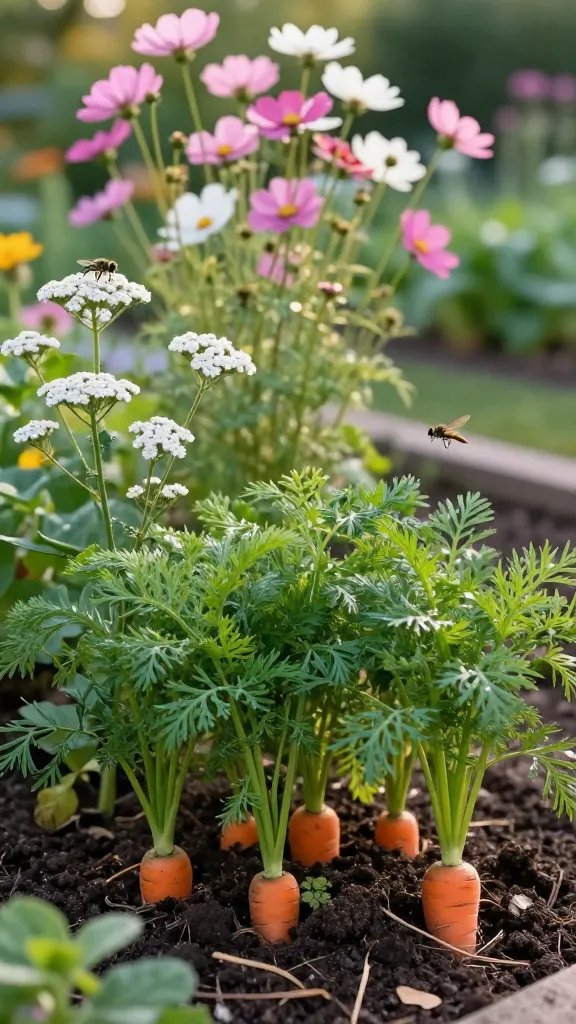
Carrot flies and aphids don’t stand a chance with this airy duo on watch. Umbel-style and daisy-like flowers bring in predatory wasps and hoverflies that patrol low over carrot beds. It looks wild and whimsical while working hard behind the scenes.
The Sciencey Bit (But Make It Fun)
- Yarrow offers flat landing pads and nectar for tiny beneficials.
- Cosmos adds height and constant blooms that keep predators around.
- Carrots appreciate fewer pests and improved pollinator activity nearby for companion crops.
Stagger yarrow and cosmos along the bed edges. Thin carrots aggressively—crowded roots beg for disease and pest issues. If you’re sowing in heat, toss a board over the row for 3–4 days to help germination. Trust me, it works.
Smart Add-Ons
- Interplant with scallions to confuse carrot fly.
- Use light row cover early, then remove once flowers kick in.
- Deadhead cosmos to keep blooms coming nonstop.
Best for: Low-maintenance pest control, cottage-garden vibes, and straighter, sweeter carrots.
5. Squash Squad: Nasturtium + Marigold + Winter/Summer Squash
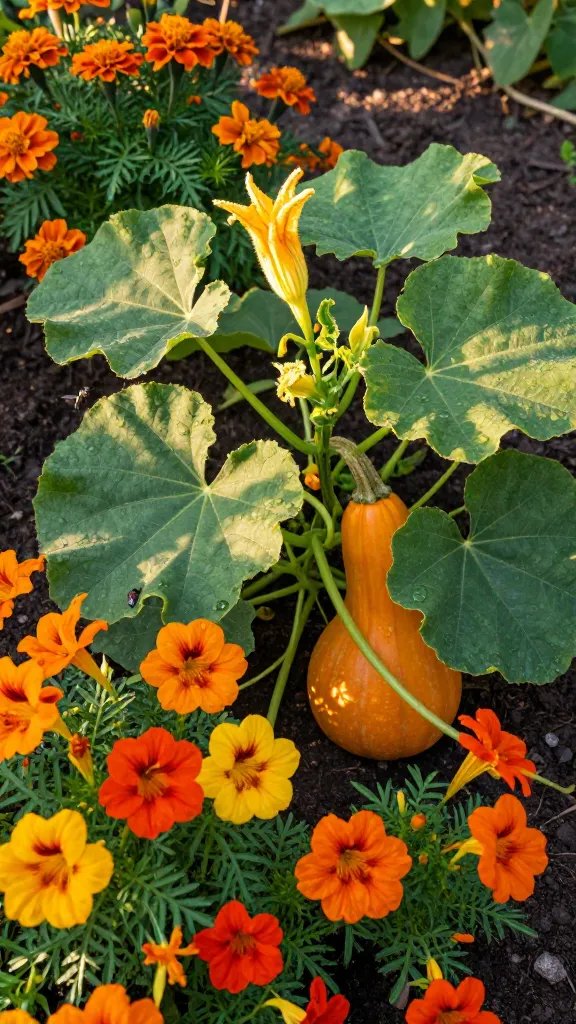
Squash bugs and cucumber beetles can wreck your mood and your vines. Nasturtiums lure aphids away and attract predatory insects, while marigolds bring in parasitic wasps and help suppress soil nematodes. The result: less leaf carnage, more pie pumpkins and zucchinis.
Why Gardeners Swear By It
- Nasturtiums sprawl, shade soil, and act as a tasty decoy for pests.
- Marigolds (especially French types) support beneficials and have root compounds that deter some nematodes.
- Squash benefits from ground cover, extra pollinators, and distracted pests.
Plant nasturtiums at the edges so they cascade and don’t smother vines. Tuck marigolds every few feet along the row or at mound corners. Hand-pick squash bug egg clusters early; your beneficials will handle the rest once blooms surge.
Pro Moves
- Water at soil level to avoid powdery mildew drama.
- Use a trellis for cucumbers or small-fruited squash to improve airflow.
- Stagger plantings to spread risk; pests can’t mob everything at once.
Best for: Abundant squash harvests, prettier beds, and fewer frantic pest panics mid-July.
Ready to build a garden that basically defends itself? Start with one of these pairings, then stack another next season. You’ll grow more food, use fewer sprays, and feel like the benevolent overlord of a tiny, thriving ecosystem. Go plant some allies—your future self will brag about it later.