

Late spring doesn’t whisper—it waltzes in with Aquilegia, then bows out as columbines take center stage. These airy, nodding blooms bring drama without the drama queen maintenance. You get color, movement, and pollinator buzz, all while your neighbors ask where you hid the secret gardener. Ready to make your beds look like a watercolor painting come to life?
1. Let Color Echoes Steal the Show
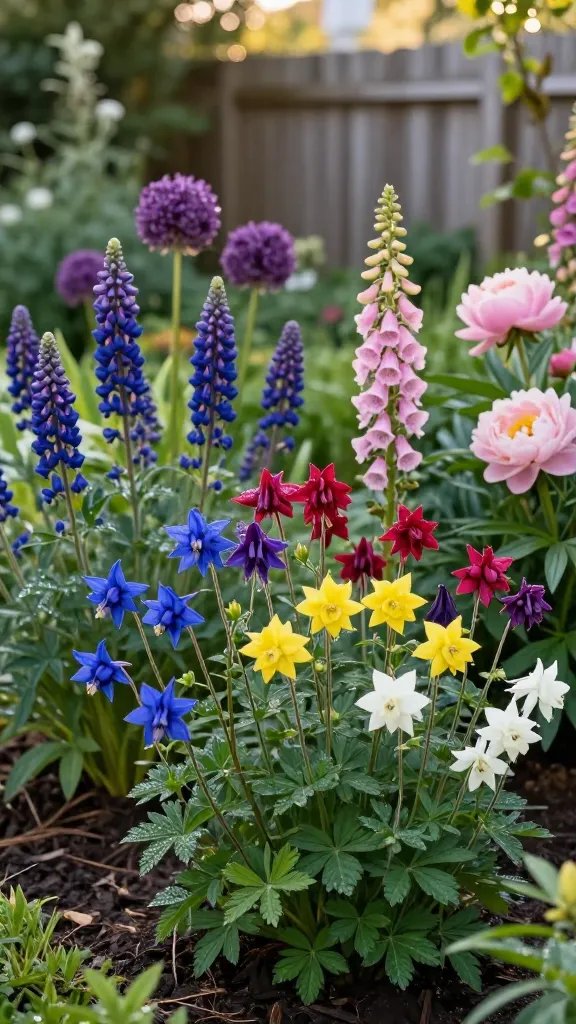
Columbines throw out jewel tones like they’re hosting a runway: sapphire, ruby, lemon, and smoky purple. When Aquilegia fades, keep the vibe by pairing with plants that echo those hues so your garden reads as intentional, not oops-I-forgot-to-weed.
Tips
- Match deep purple columbines with salvias or alliums to extend the moody theme.
- Pair soft pinks with pale peonies and foxgloves for a cottage-core flex.
- Use white columbines as a reset between bold blocks of color.
Use color echoes when you want a calm, curated look that still feels wild and painterly—seriously, it works every time.
2. Stagger Bloom Times Like A Maestro
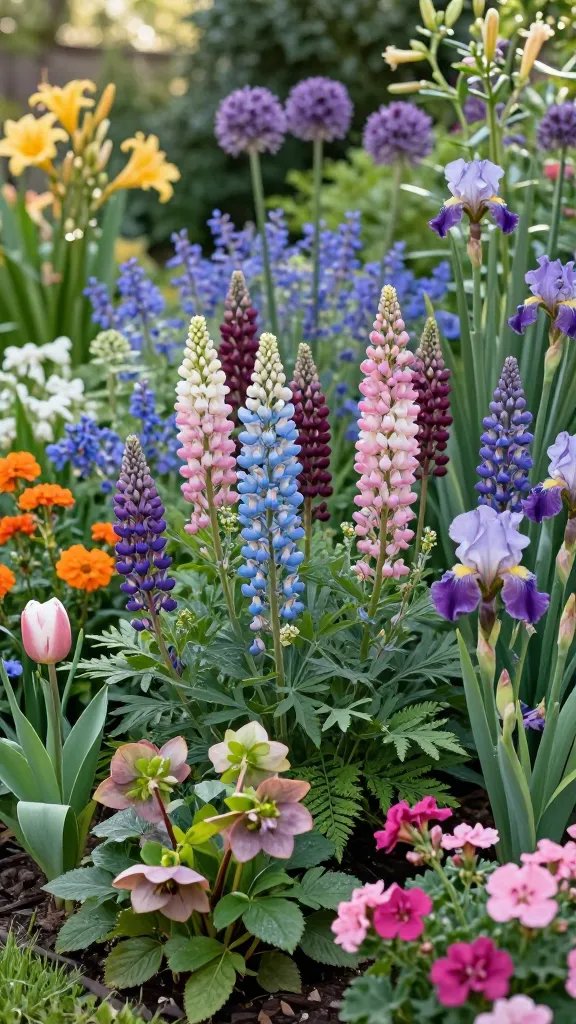
Columbines arrive in late spring and bow politely by early summer. Keep the music playing with a relay team of plants that fire before and after, so your borders never hit that awkward quiet.
Key Pairings
- Before: Hellebores and species tulips for the pre-show.
- During: Aquilegia mixed with geums, bearded iris, and alliums.
- After: Catmint, hardy geraniums, and daylilies to catch the baton.
Plant this way when you crave seamless transitions—your garden will look “always on,” FYI.
3. Play With Heights For That Layered, Lush Look
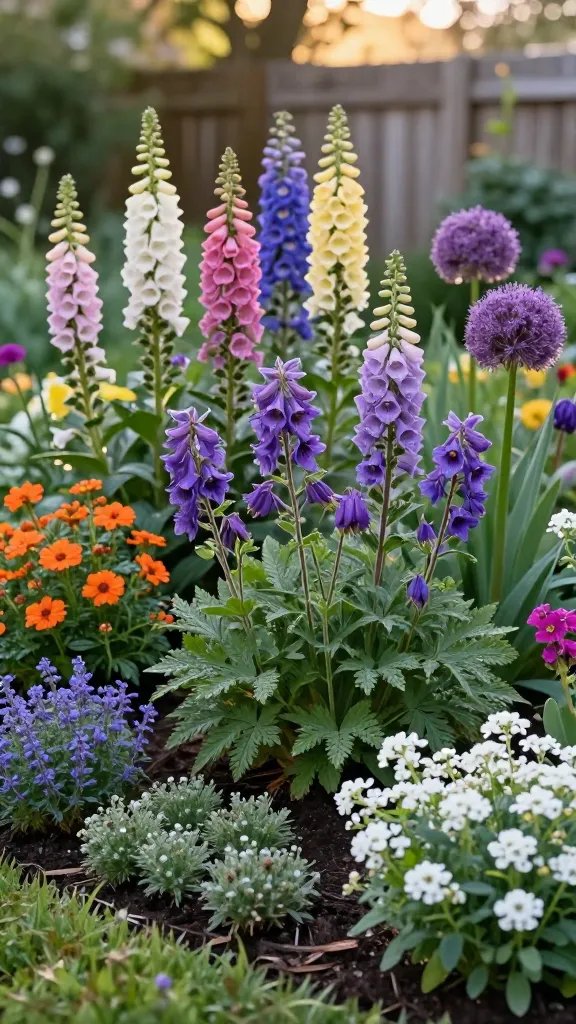
Columbines send up elegant spurs above ferny foliage. They love company at different heights, which makes your beds look deep and expensive (without the expensive part).
Layering Guide
- Back Row: Foxglove, delphiniums, and tall alliums (instant drama).
- Middle: Columbines with geum and hardy geraniums.
- Front: Creeping thyme, dwarf catmint, and sweet alyssum.
Use layered heights when you want that magazine-worthy “how did they do that?” effect.
4. Go Textural: Ferns, Grasses, And Fluffy Foliage
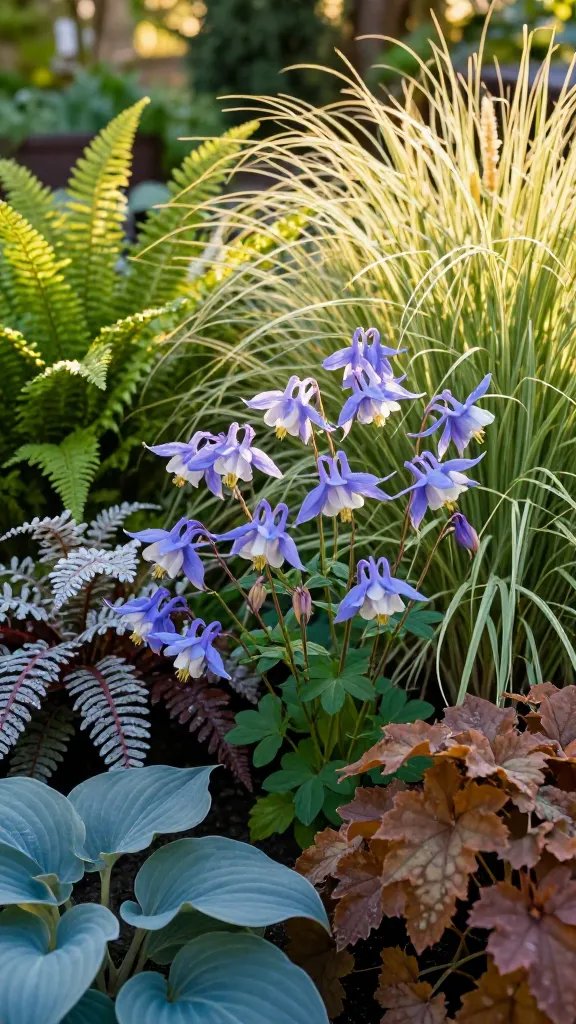
Those delicate columbine petals sing louder when you pair them with contrasting textures. Think feathery, spiky, mounded—basically a tactile buffet for your eyes.
Great Combos
- Ferns (lady fern, Japanese painted fern) bring soft movement.
- Grasses (deschampsia, hakonechloa) add airy volume.
- Leafy Anchors like hosta or heuchera ground the show.
Choose texture play when your bed looks flat—you’ll add dimension and make every bloom pop.
5. Build A Pollinator Buffet (Butterflies Approved)
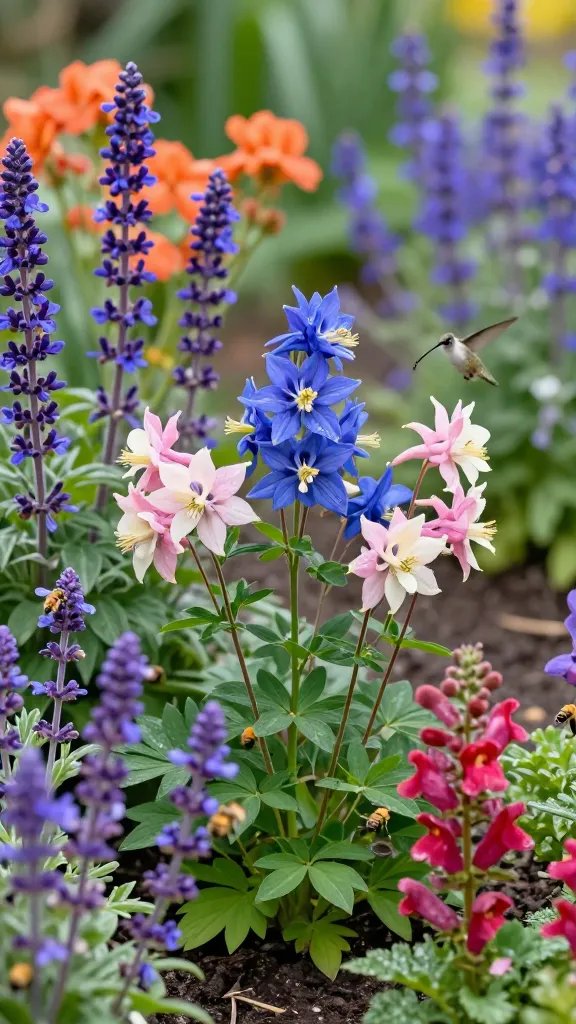
Columbines serve nectar like a five-star brunch, especially for hummingbirds and long-tongued bees. Lean in, and you’ll get a garden that hums—literally.
Pollinator All-Stars
- Columbine + Salvia for hummingbirds.
- Geum + Catmint for bees that never RSVP but always show up.
- Penstemon to keep the party going into summer.
Plan a buffet when you want life, movement, and fewer pest problems—nature handles the balance, trust me.
6. Choose The Right Columbine Types (And Why It Matters)
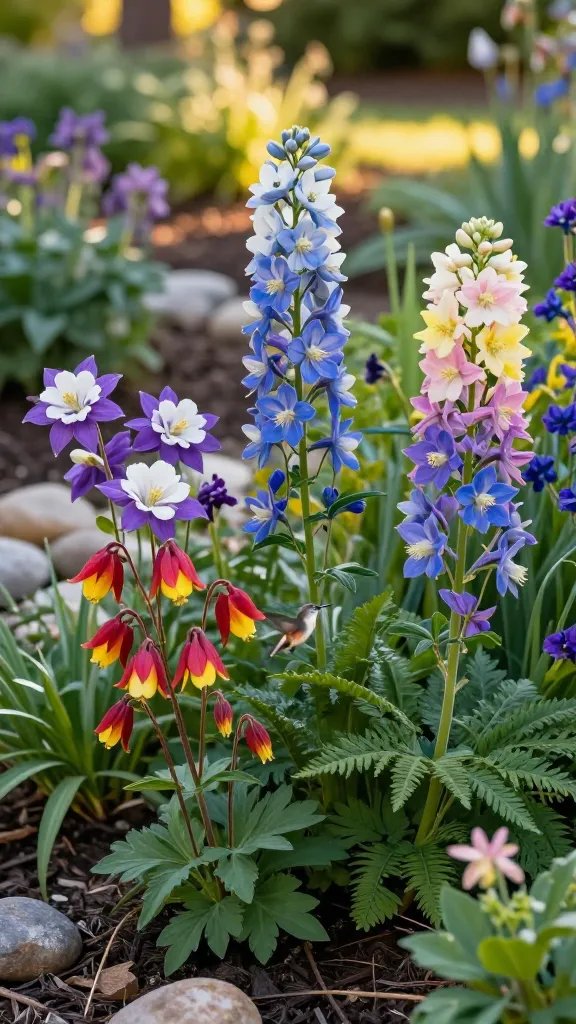
Not all columbines perform the same. Some bloom bigger, some handle heat better, and some reseed like social butterflies—cute until they aren’t.
Quick Picks
- Aquilegia caerulea (Rocky Mountain): Tall, dramatic spurs, loves cooler summers.
- Aquilegia canadensis: Native charm, red-and-yellow blooms, hummer magnet.
- McKana Giants: Hybrid dazzlers with long spurs and strong stems.
- Barlow Series: Double, ruffly blooms that feel a little extra (in the best way).
Choose types based on climate and vibe—go native-heavy if you want easy care and reliable pollinator action.
7. Master The Fade: Deadhead, Don’t Dread
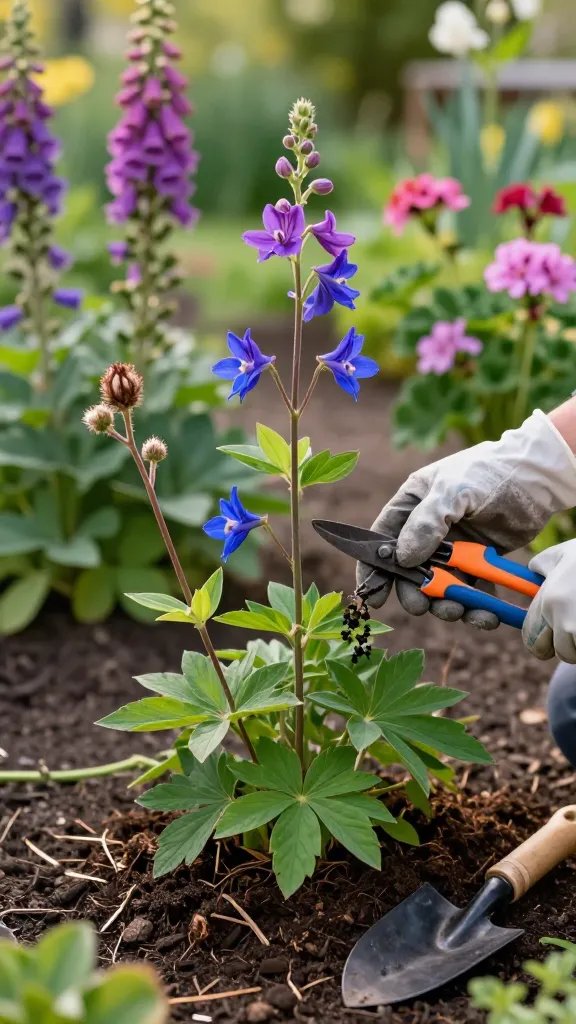
When Aquilegia starts to fade, don’t panic—pivot. A quick deadhead session keeps things tidy and channels energy back into foliage or a sneaky second flush.
How-To
- Snip spent blooms down to a fresh leaf node.
- Leave a few seed heads if you enjoy surprises (and don’t mind renegades).
- Top-dress with compost to pep them up for round two.
Do this when you want a smoother handoff into early summer and fewer “meh” moments in the border.
8. Create Shady Nooks That Still Glow
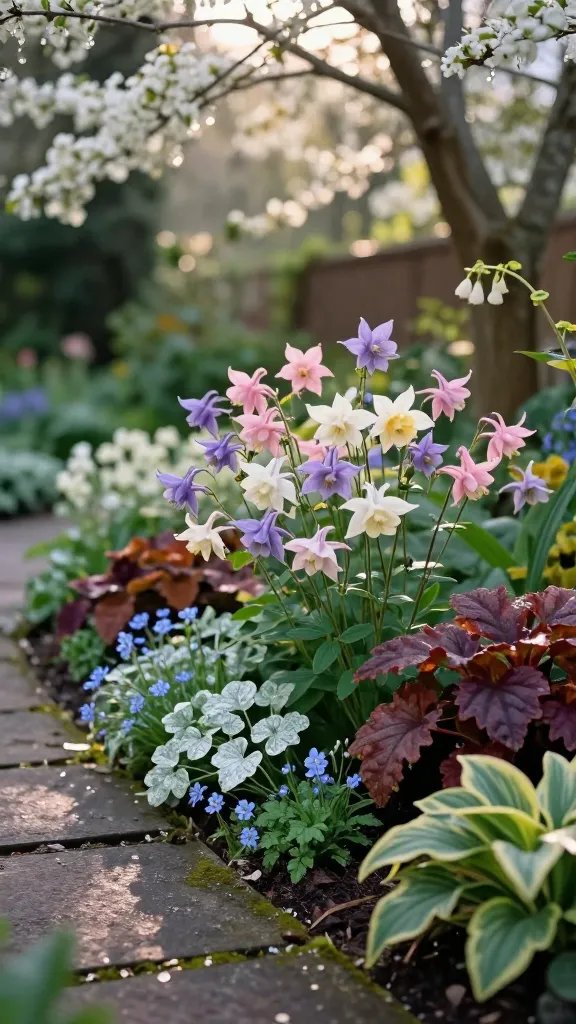
Columbines adore dappled light—like sun through a lace curtain. Use them to brighten woodland edges or the awkward side yard that refuses to cooperate.
Shade Partners
- Brunnera for sky-blue dots beneath.
- Heuchera for jewel-toned leaves that never quit.
- Solomon’s seal for elegant arcs and subtle fragrance.
Plant this combo when you want shade that reads as intentional and romantic, not just “where the lawn died.”
9. Reseeding Without Regret (Contain The Chaos)
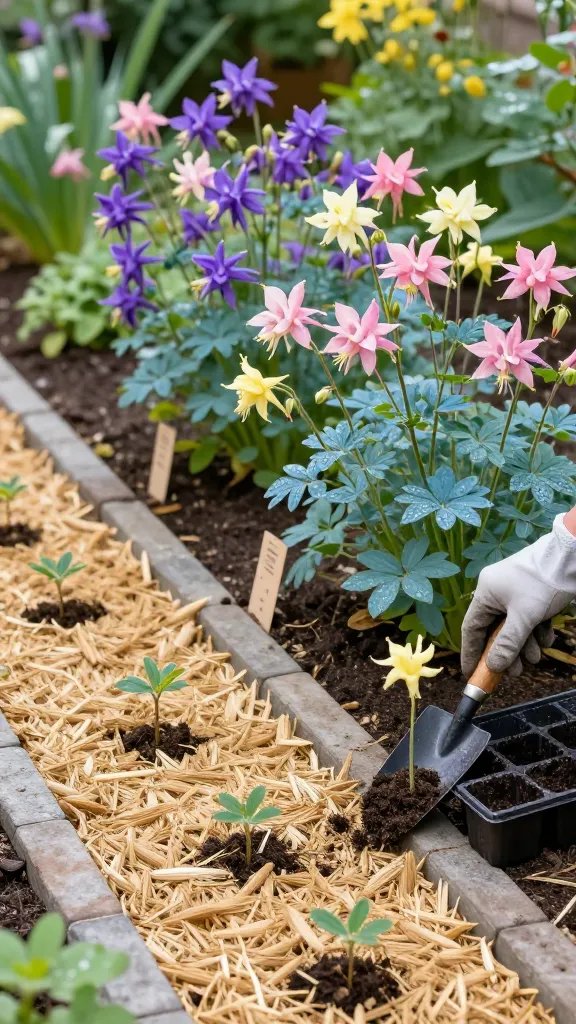
Columbines love to mingle and make adorable, unexpected seedlings. Cute, until your paths become nurseries. Manage it with a plan, not a flamethrower.
Control Moves
- Mulch lightly where you don’t want babies; leave bare pockets where you do.
- Tag colors you love and let those seed heads ripen.
- Uproot volunteers when soil is moist—gift them to friends and become a hero.
Use this approach when you want that romantic, self-seeded vibe without losing walkways, IMO.
10. Style A Columbine-Centric Container (Yes, It Works)
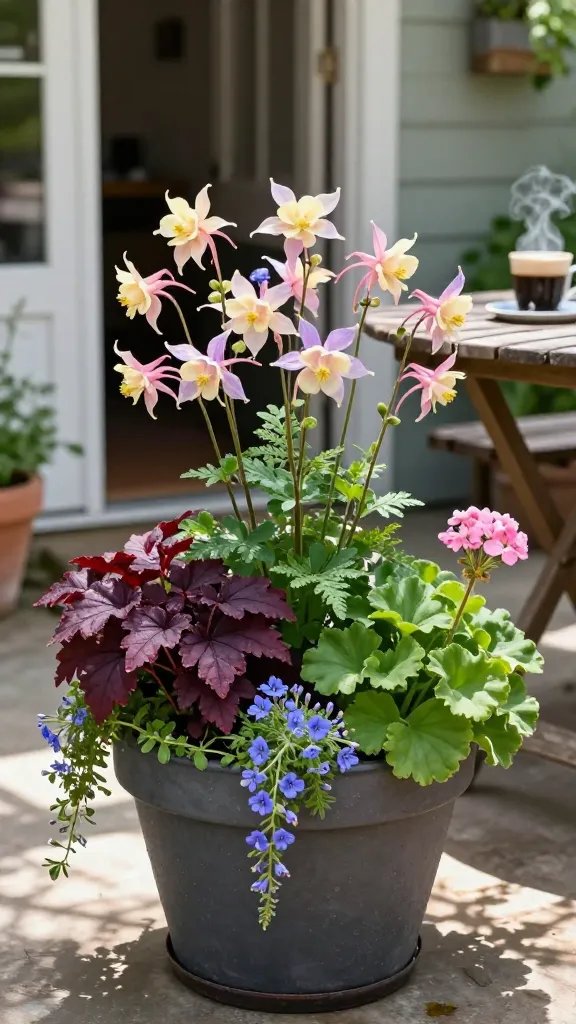
No space? Pots to the rescue. Columbines thrive in containers for a season, and they bring all the drama to patios and doorways.
Container Recipe
- Thriller: A tall columbine like ‘McKana Giants.’
- Filler: Hardy geranium or heuchera for foliage contrast.
- Spiller: Creeping thyme or lobelia to soften edges.
- Use a well-draining mix, morning sun, and consistent moisture.
Go this route when you want instant cottage charm within arm’s reach of your morning coffee—seriously, it slaps.
Ready to let late spring strut through your beds with Aquilegia and ease into pure columbine grace? Mix colors, stack heights, and invite every pollinator in the zip code. Plant a few, edit lightly, and watch your garden glow like golden hour—no filter needed.