
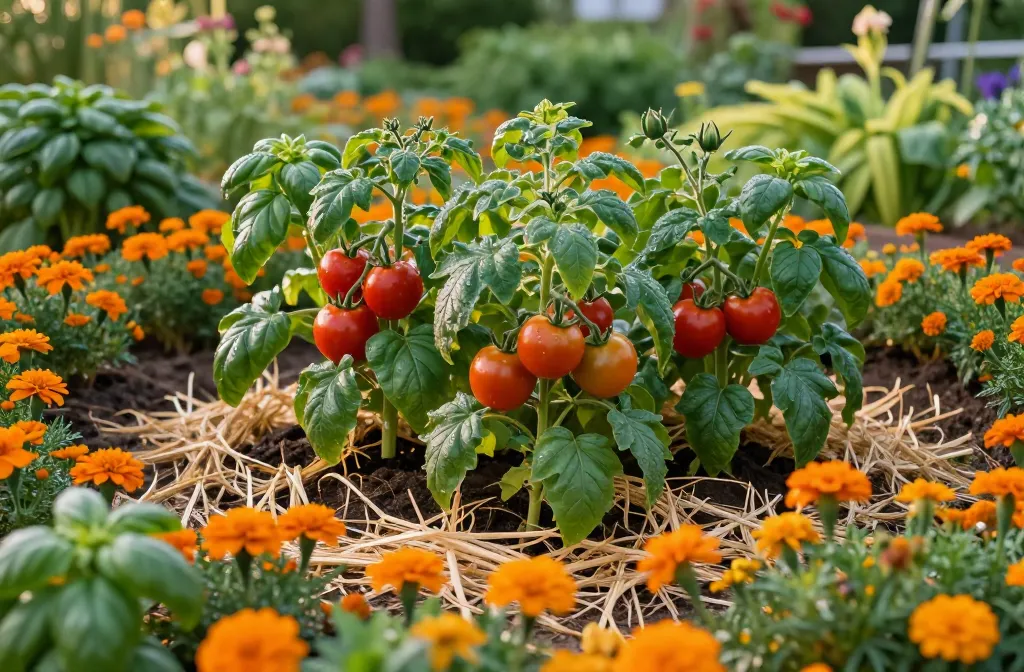
Want fewer sick plants and more brag-worthy harvests? Pair the right crops, and your beds basically police themselves. These companion combos boost resilience, confuse pests, and keep fungal drama to a minimum—no hazmat suit required. Let’s plant smart and watch the garden thrive, like, actually thrive.
1. Tomatoes + Basil + Marigolds: The “Sauce Squad” That Dodges Blight
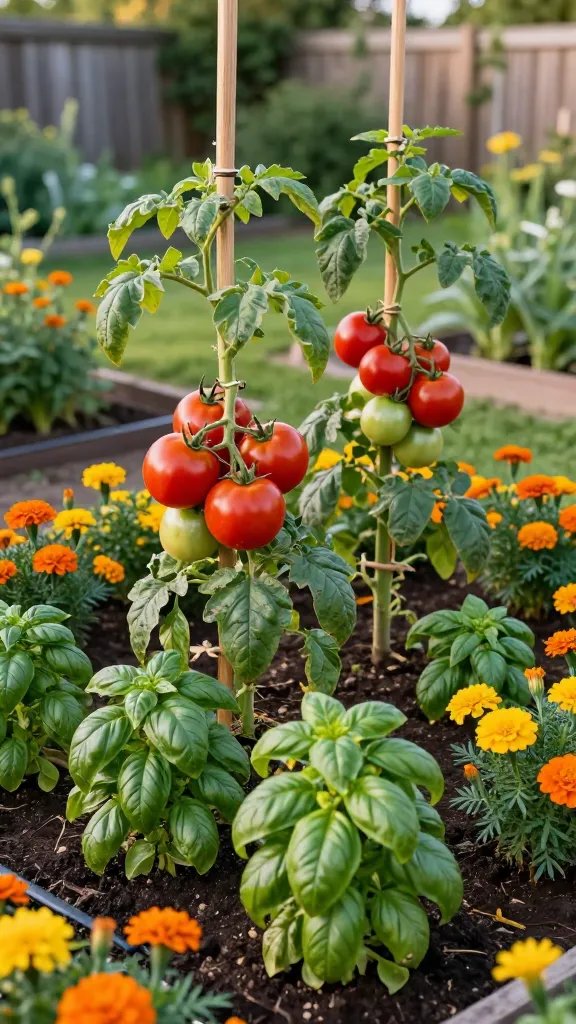
Tomatoes hate drama, but they still attract it. Basil and marigolds step in like calm, herbal bouncers. Basil improves airflow with its upright habit and repels pests, while marigolds help suppress soil-borne nasties and distract root-knot nematodes.
Why It Works
- Basil releases aromatic compounds that deter thrips and whiteflies, two carriers of viral headaches.
- French marigolds (Tagetes patula) produce thiophenes that reduce certain nematode populations over time.
- Spacing keeps foliage dry, which matters for blight-prone tomatoes.
How To Plant
- Tomatoes 24–30 inches apart; stake or cage for airflow.
- Basil 10–12 inches from stems, around the perimeter.
- Marigolds every 18 inches along the row edges.
Keep mulch under tomatoes to prevent soil splash. You’ll get fewer fungal issues and better flavor—yes, basil makes tomatoes taste more “tomato.” Benefit: a healthier canopy and a harvest that doesn’t crash mid-season, FYI.
2. Cucumbers + Dill + Nasturtiums: The Mildew-Resistant Trellis Trio
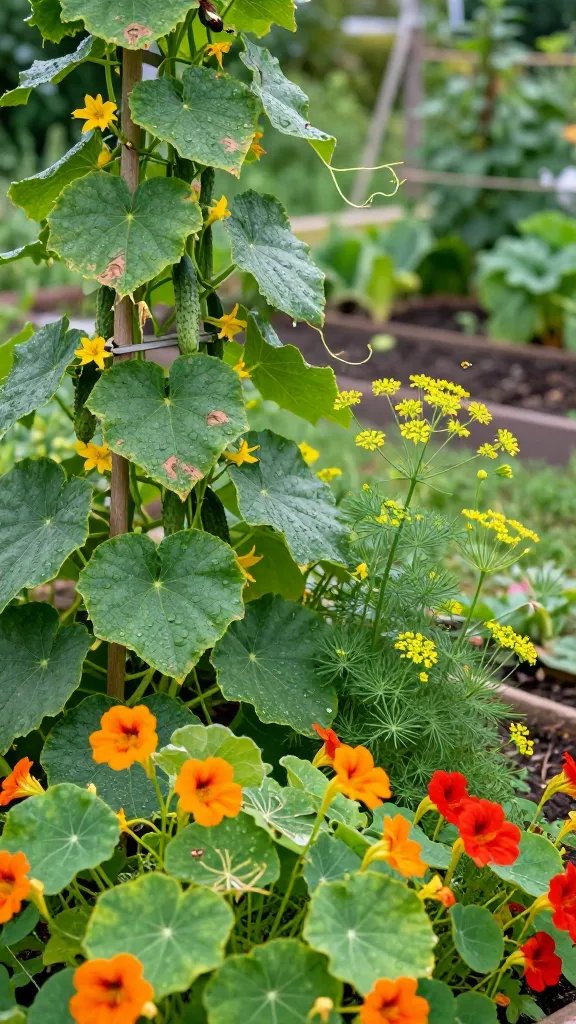
Powdery mildew loves cukes like bees love gossip. But you can make that love one-sided. Dill brings beneficial insects that eat aphids, while nasturtiums act as a decoy snack and groundcover to reduce splash and humidity spikes.
Why It Works
- Dill invites lacewings and hoverflies that hunt aphids, which often spread virus problems.
- Nasturtiums intercept cucumber beetles and create a living mulch that dries quickly after rain.
- Vertical trellising improves air movement and speeds leaf drying.
Planting Tips
- Train cucumbers up a trellis spaced 12 inches per plant.
- Interplant dill every 2–3 feet behind the trellis to avoid shading.
- Dot nasturtiums at the base, 12–18 inches apart.
Spritz in the morning if you foliar-feed so leaves dry fast. End result: fewer mildew outbreaks and cleaner, straighter cukes. Bonus: edible nasturtium flowers for your salads, because why not?
3. Brassicas + Alliums + Calendula: The Cabbage Row That Stays Clean
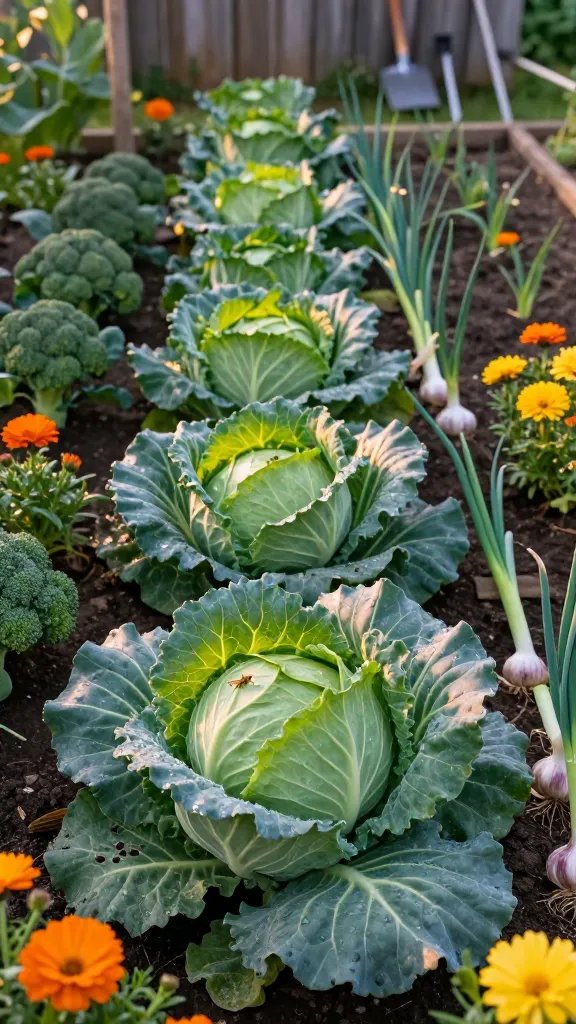
Cabbage, kale, and broccoli invite disease when stressed, especially clubroot and black rot. Flank them with alliums for antimicrobial mojo and calendula to concentrate beneficial insects where you need them most. It’s like a neighborhood watch for your slaw.
Why It Works
- Alliums (onions, garlic, chives) exude sulfur compounds that can help suppress some soil pathogens around roots.
- Calendula lures syrphid flies and parasitic wasps that clear aphids and caterpillars that wound leaves and open doors for disease.
- Brassica spacing reduces leaf-to-leaf moisture transfer—critical for bacterial issues.
Layout
- Brassicas 18 inches apart in rows 24 inches apart.
- Thread onion sets or garlic between plants every 6–8 inches.
- Calendula every 2–3 feet along borders.
Keep pH near neutral and rotate beds to dodge clubroot. Benefit: sturdier brassicas with fewer bacterial flare-ups and less chewing damage, which, IMO, makes winter soups taste that much smugger.
4. Squash + Corn + Beans + Borage: The Fortified “Three Sisters” Remix
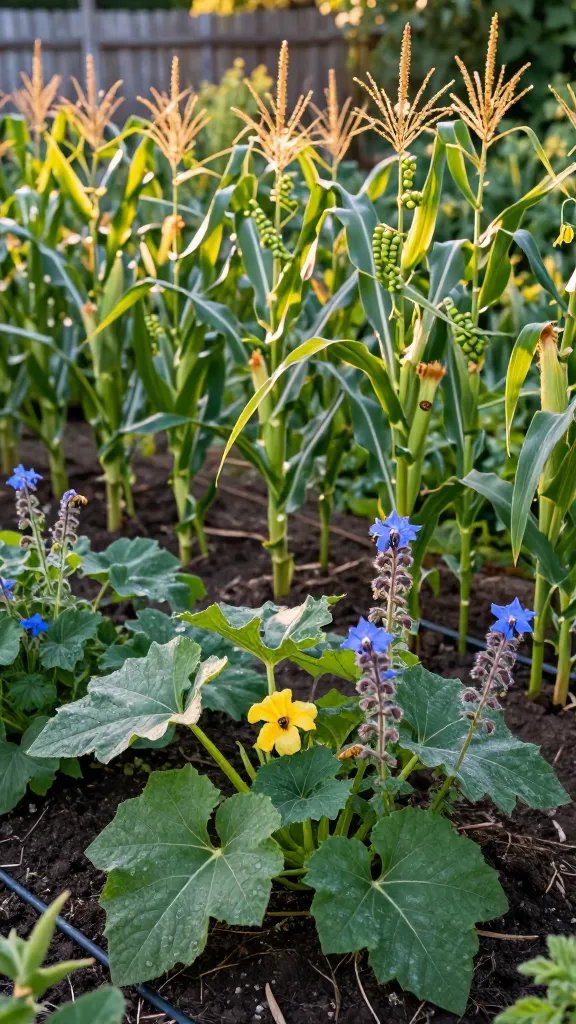
The classic Three Sisters gets an immunity upgrade with borage. Corn breaks wind (the gusty kind), beans feed the soil, squash shades weeds, and borage helps repel pests while drawing pollinators that keep flowers fruiting. It’s a cooperative guild that shrugs off stress.
Why It Works
- Corn creates vertical structure that boosts airflow at the leaf level.
- Pole beans fix nitrogen, keeping plants resilient against opportunistic pathogens.
- Squash covers soil, reducing splash-borne spores and moisture swings.
- Borage attracts bees and predatory insects; its hairy leaves can deter some pests.
Planting Guide
- Form a 3–4 foot mound or block. Plant corn in a 3×3 grid, 12 inches apart.
- When corn hits 6–8 inches, sow two pole beans per corn plant.
- Plant 2–3 squash at the mound’s perimeter, 3 feet apart.
- Add borage every 3–4 feet around the outside.
Keep watering consistent to avoid powdery mildew creep on squash. The payoff? Resilient vines, steady pollination, and fewer fungal panics when weather gets weird—seriously, this combo handles chaos.
5. Lettuce + Carrots + Scallions + Chives: The Salad Bed That Shrugs Off Rot
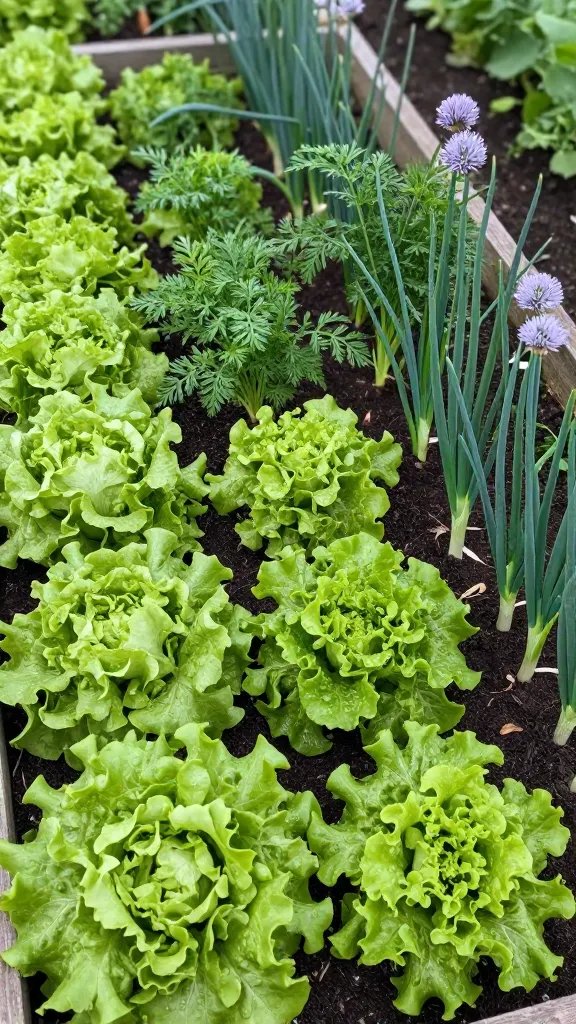
Leafy beds can turn into disease buffets if they stay damp and crowded. Mix root crops and slim alliums to open the canopy and clean the zone with light sulfur scents. You’ll harvest longer with fewer slimy surprises.
Why It Works
- Lettuce benefits from airflow gaps created by upright scallions and fine carrot foliage.
- Chives and scallions help deter thrips and fungal spread, and they’re easy to snip without disturbing neighbors.
- Staggered maturity means continuous harvests and less overpacked foliage.
How To Arrange
- Alternate bands: 6-inch-wide lettuce strip, 3-inch carrot strip, single row of scallions.
- Space lettuce 8–10 inches; thin carrots to 1–2 inches; scallions every inch and harvest thickly.
- Mulch lightly with shredded leaves or straw to reduce splash.
Water early, never late. You’ll see less damping-off and leaf rot and more crisp, happy greens. It’s the low-maintenance salad bar of your dreams.
Quick Add-Ons Across All Sections
- Healthy soil first: Compost and good drainage build natural disease resistance.
- Rotate families: Move nightshades, brassicas, cucurbits, and legumes yearly to break pathogen cycles.
- Prune for airflow: Fewer wet leaves, fewer problems—it’s that simple.
- Water the soil, not the leaves: Drip or soaker hoses keep foliage dry and drama low.
- Clean tools: Wipe pruners with alcohol between plants to avoid accidental pathogen Uber duties.
Ready to plant smarter and chill more? These disease-resistant companion combos make your garden tougher, tastier, and less work. Try one bed this weekend and watch the “before and after” do the talking—your future self will be harvesting with a smug grin.