
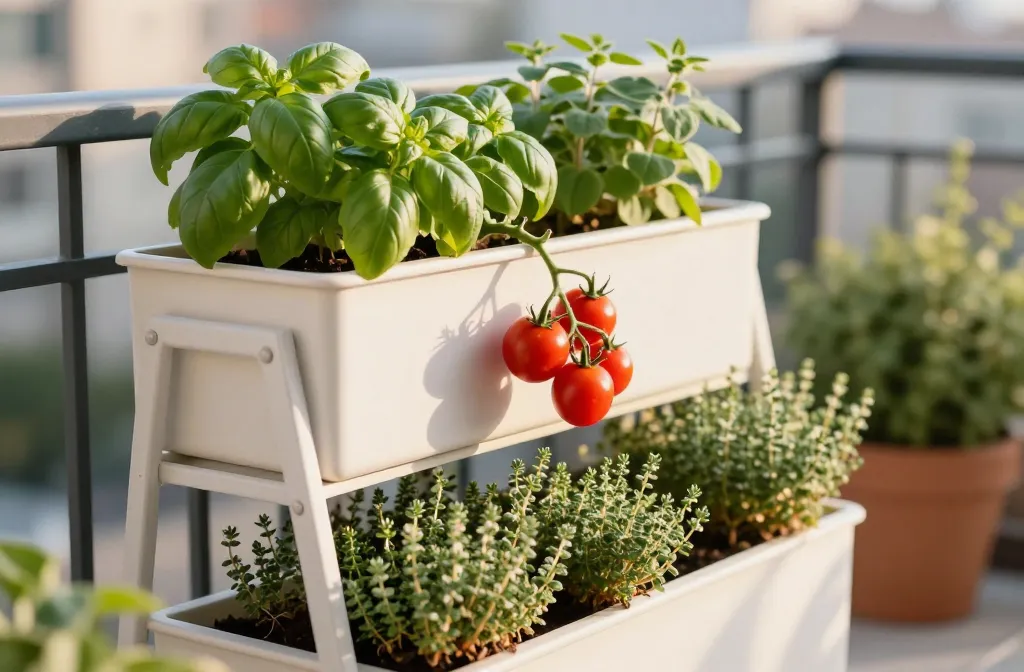
Tiered planters don’t just save space—they create tiny ecosystems that help plants thrive. Stack the right neighbors and you’ll supercharge growth, reduce pests, and harvest more from every square inch. Ready to build a living, layered masterpiece on your porch or balcony? Let’s pair plants like a pro and make your tiers do overtime.
1. The Pizza Garden Power Stack
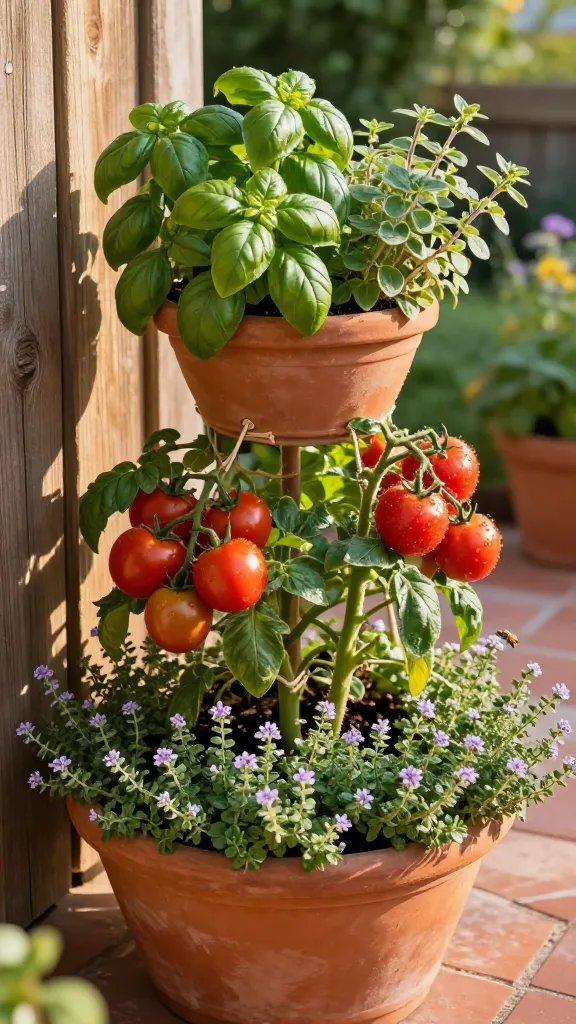
You love pizza, your planter loves balance. This trio combines sturdy roots, aromatic defenders, and trailing filler that covers soil and saves water. It looks gorgeous and tastes even better—what’s not to love?
Pairing:
- Top Tier: Basil (Genovese or Sweet), Oregano
- Middle Tier: Roma Tomatoes or Cherry Tomatoes
- Bottom Tier: Creeping Thyme
Basil boosts tomato flavor and helps deter pests. Oregano adds extra fragrance and resilience. Creeping thyme cascades and keeps soil cool—bonus points for adorable purple blooms bees adore.
Tips:
- Use a 14–18 inch top tier for tomatoes with a small cage or stake anchored to the planter’s frame.
- Pinch basil regularly to prevent flowering and keep those leaves coming.
- Water deeply at the base—wet basil leaves sulk and invite disease.
Best for sunny patios that get 6–8 hours of light. You’ll harvest sauce-worthy tomatoes and pesto-ready basil all summer. Seriously, the smell alone is worth it.
2. The Pollinator Cascade That Also Feeds You
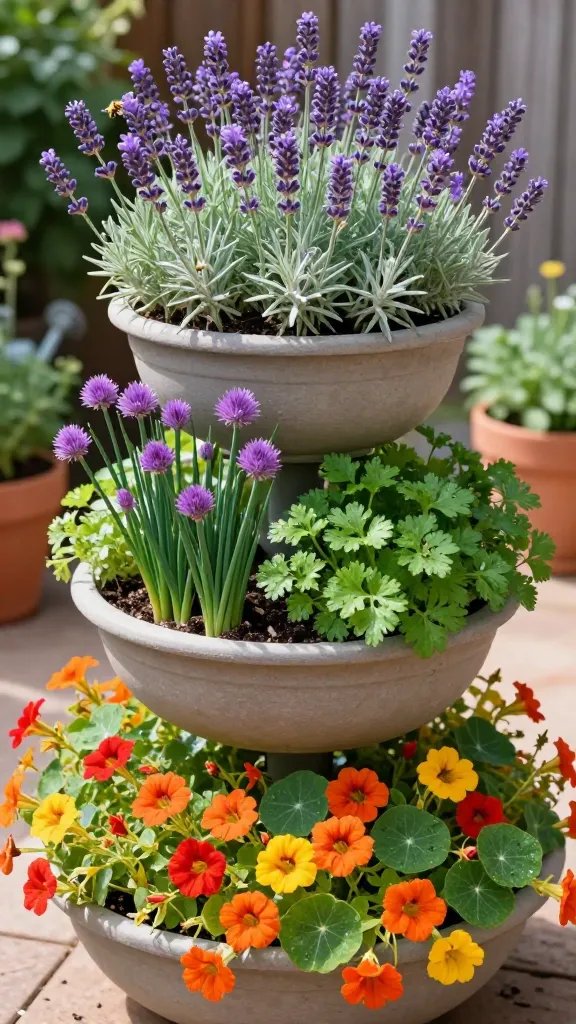
Want constant blooms, happy bees, and snackable herbs? Stack nectar magnets over leafy herbs and trailing flowers. It’s color, aroma, and dinner—layered.
Pairing:
- Top Tier: Lavender or Calendula
- Middle Tier: Chives and Parsley
- Bottom Tier: Nasturtium (trailing varieties)
Lavender draws pollinators and repels some pests. Chives add sulfur-rich scent that confuses aphids. Nasturtiums trail, trap aphids, and gift you edible flowers with a peppery crunch.
Key Points:
- Soil: Well-draining mix with a bit of compost; lavender hates wet feet.
- Water: Water lower tiers slightly more; nasturtiums appreciate consistent moisture.
- Pruning: Deadhead calendula and nasturtiums to keep blooms coming.
Perfect for porch planters near seating where you want fragrance and color all season. FYI, bees will send thank-you notes (in the form of better fruit set nearby).
3. The Salsa Staircase (Heat Optional)
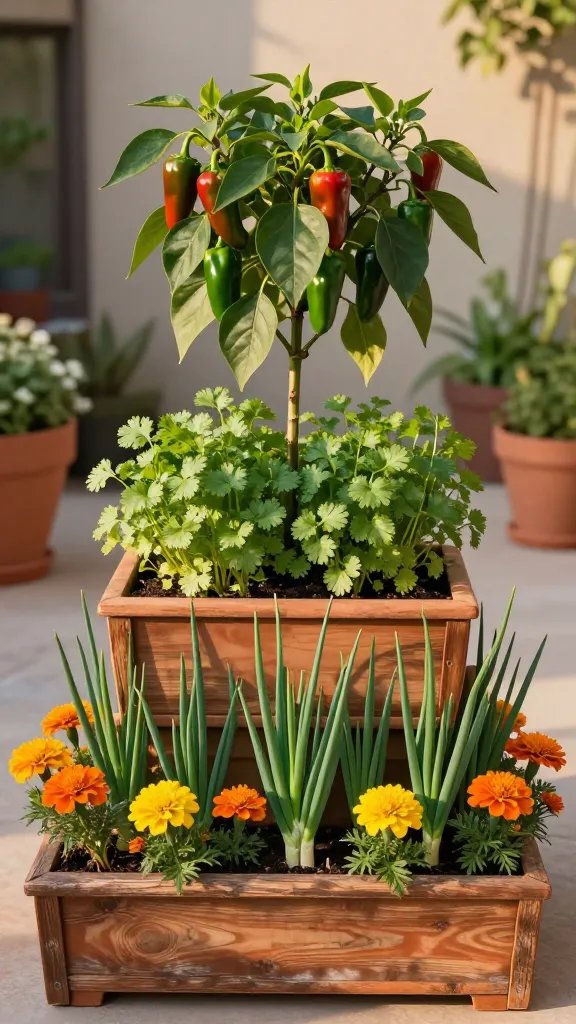
Grow your own chips-and-salsa bar in one planter—no kidding. This stack uses height for peppers, edges for cilantro, and understory space for onions and marigolds. It’s productivity and pest control in one cute tower.
Pairing:
- Top Tier: Jalapeño or Sweet Bell Pepper
- Middle Tier: Cilantro (succession plant every 3–4 weeks)
- Bottom Tier: Green Onions (Scallions) and French Marigolds
Peppers love sun and warmth. Cilantro prefers slightly cooler soil, which the upper tiers shade a bit. Marigolds help deter nematodes and bring in pollinators with cheerful color.
Tips:
- Choose compact pepper varieties (look for “patio” or “container” on the label).
- Harvest scallions frequently to encourage new shoots.
- When cilantro bolts, yank and replant—no hard feelings.
Great for small spaces where you want fast, frequent harvests. IMO, this is the tastiest way to flex your container gardening skills.
4. The Mediterranean Mezze Tower
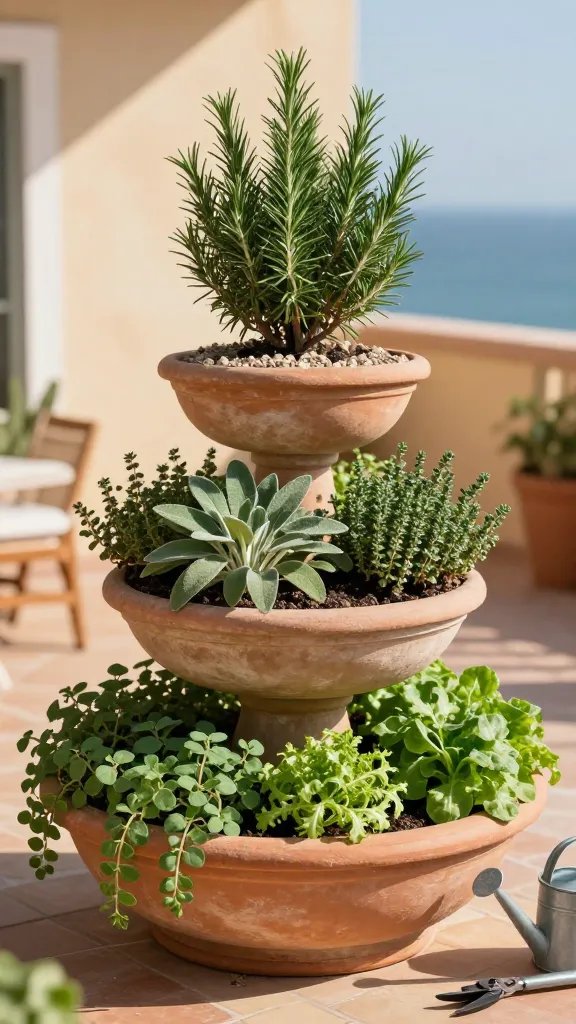
Heat-loving herbs, textured foliage, and a drape of edible greens—this combo screams summer dinners and zero-fuss care. It’s drought-tolerant, fragrant, and ridiculously pretty.
Pairing:
- Top Tier: Rosemary (upright) or Dwarf Olive (if your planter is sturdy)
- Middle Tier: Sage and Thyme (upright)
- Bottom Tier: Greek Oregano and Arugula (as a quick-cut filler)
These herbs thrive in lean, well-drained soil and full sun. Arugula grows fast in the coolest, shadiest lower tier, making it a perfect short-term understory crop. The scent cocktail? Chef’s kiss.
Materials:
- Terracotta or well-draining planter tiers
- Gritty potting mix with added perlite or pumice
- Mulch: fine gravel for a clean, Mediterranean look
Use this set when you crave low-maintenance, high-flavor herbs with year-round appeal in mild climates. It doubles as decor and dinner—trust me, it’s a crowd-pleaser.
5. The Shade-Ninja Salad Stack
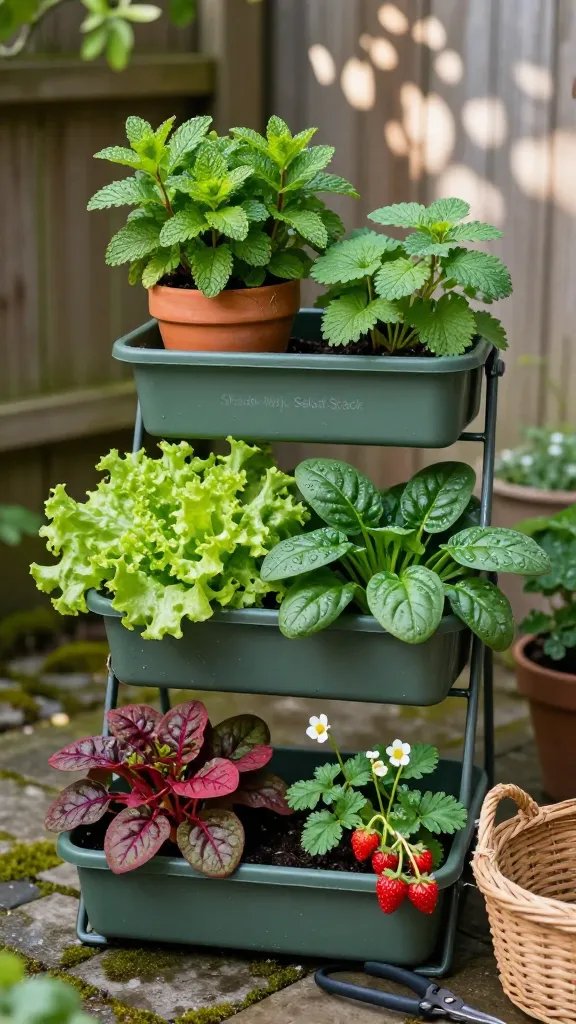
No blasting sun? No problem. Build a cool-toned, leafy tower that pumps out greens with a hit of brightness. You’ll harvest constantly without fighting scorch or bolting.
Pairing:
- Top Tier: Mint (in a buried pot to contain roots) or Lemon Balm
- Middle Tier: Looseleaf Lettuce Mix and Spinach
- Bottom Tier: Red Veined Sorrel and Alpine Strawberries
Mint shades and cools the tiers below while aromatics discourage pests. Lettuce and spinach love the dappled light and steady moisture. Alpine strawberries add sweetness and tiny jewels of fruit along the edges.
Tips:
- Plant mint in its own nursery pot and sink it into the top tier to avoid takeover.
- Harvest lettuce with the “cut-and-come-again” method to keep the salad bar rolling.
- Keep soil evenly moist—shade gardens sulk when they dry out.
Ideal for covered patios, north-facing balconies, or under a pergola. You get steady greens and adorable berries without sun stress. Seriously, it’s low drama gardening.
How to Master Tiered Companion Planting (Quick Guide)
- Think Microclimates: Top tier = hottest and driest. Bottom tier = coolest and moistest. Match plants accordingly.
- Root Depth Matters: Deep roots up top, shallow and fibrous roots below to avoid competition.
- Drainage First: Add 1–2 inches of coarse material at the base of each tier and ensure overflow holes don’t clog.
- Stagger Planting Dates: Succession sow quick crops (lettuce, cilantro) between slower growers.
- Feed Smart: Herbs prefer lean diets; fruiting crops need extra potassium and calcium. Use targeted liquid feeds every 10–14 days for tomatoes and peppers.
- Mulch Wisely: Use straw or fine gravel depending on the theme. Mulch reduces watering needs and keeps soil temps stable.
Watering & Sunlight Cheatsheet
- Morning sun + afternoon shade: Best for leafy stacks and bloom-heavy combos.
- Full sun (6–8 hours): Go for tomatoes, peppers, Mediterranean herbs.
- Water from the top, check the bottom: Gravity moves water down; the bottom tier often stays wetter. Adjust accordingly.
- Self-watering inserts: Great for consistency, but use a gritty mix to avoid waterlogging.
Soil Mix That Actually Works
- 50% high-quality potting mix
- 25% compost (screened)
- 25% perlite or pumice for airflow
- Optional: a handful of worm castings per tier for steady nutrients
Skip garden soil—it compacts and chokes roots in containers. Your plants want air pockets, not concrete.
Common Mistakes (So You Don’t Make Them)
- Overcrowding: Leave adult plant room even if the babies look spaced out at first.
- Love equals overwatering: More plants do not mean more water. Test soil with your finger.
- One-size-fits-all fertilizing: Herbs get bitter if overfed. Fruiting crops get hungry if underfed.
- Forgetting to prune: Pinch basil, trim thyme, and top peppers for bushier growth.
Bonus Mini-Pairings You Can Swap In
- Top: Eggplant (compact) | Middle: Basil | Bottom: Trailing Rosemary
- Top: Dwarf Cucumber in a cage | Middle: Dill | Bottom: Borage
- Top: Swiss Chard | Middle: Beets (for greens) | Bottom: Creeping Jenny (ornamental)
Mix and match based on your sun and taste. The concept stays the same; the flavors change.
Ready to build your tiered garden dream team? Pick one stack, plant it this weekend, and watch your planter turn into a tiny, high-performing ecosystem. You’ll harvest more, water less, and—bonus—your patio will look like you hired a garden stylist. Go get those tiers thriving!