
If your terrarium suddenly looks foggy, moldy, or just “off”, you are not alone, and humidity is usually the first suspect since the U.S. EPA notes that keeping indoor humidity below 60 percent is key to avoiding mold explosions in tiny ecosystems like terrariums.
Key Takeaways
| Question | Short Answer |
|---|---|
| How do I read early warning signs in my terrarium? | Look for subtle shifts like yellowing tips, persistent condensation, or tiny moving dots on leaves. Our detailed checklist in this troubleshooting guide walks you through each sign. walks you through each sign. |
| What are the most common terrarium mistakes? | Overwatering, wrong plants, poor lighting, and ignoring open vs closed differences, as broken down in our 5 mistakes guide. |
| Is my terrarium type causing my issues? | Maybe. Closed terrariums trap humidity, open ones dry out faster. We compare both in our open vs closed explainer. |
| Why does mold keep coming back? | Because the underlying conditions never changed. Check humidity, airflow, and substrate as outlined in our disease management guide. |
| How should I water and clean a problem terrarium? | Adjust watering frequency, clean glass, and refresh water features using the routines in this maintenance guide. |
| What if my issue is humidity related? | Use hygrometers and vents to stay in a safe band, step by step in our humidity control guide. |
1. Reading Early Warning Signs Before Problems Take Over
Most terrarium issues do not start with drama, they start with tiny clues that are easy to miss. We always teach new keepers to treat their terrarium like a daily 30 second “health check”.
Here is a quick interactive checklist you can mentally run through every time you walk past your glass:
- Fog level: Is condensation light and patchy, or is the glass fully fogged all day?
- Leaf color: Any new yellow, brown, or black spots since last week?
- Soil surface: Do you see white fuzz, slime, or algae film developing?
- Movement: Tiny specks moving on leaves or soil usually mean pests.
- Smell: Fresh and earthy is fine, sour or swampy means trouble.
Pro tip: Take a photo of your terrarium once a week from the same angle.
Flipping through them makes slow changes like mold spread or plant decline very obvious.
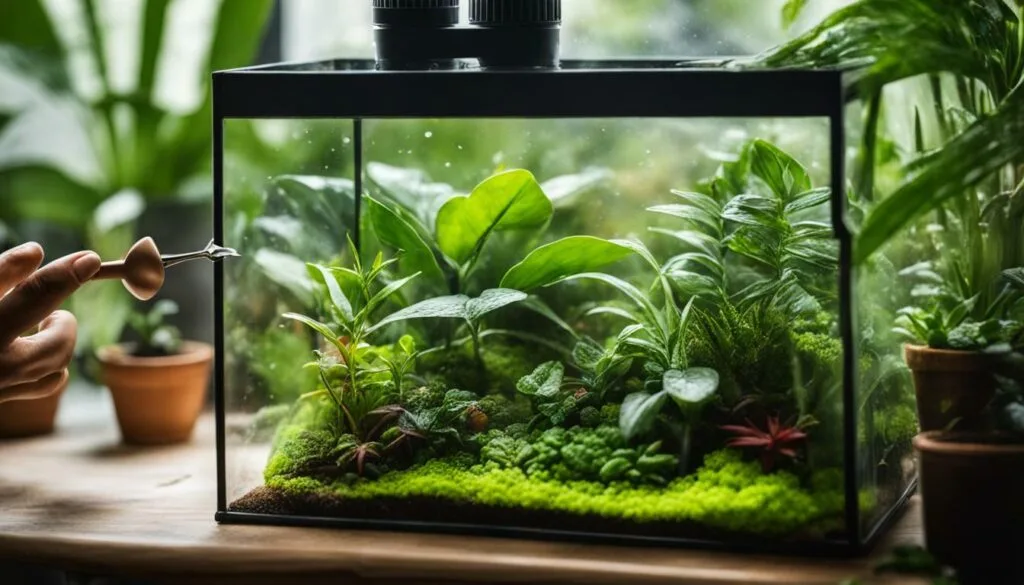
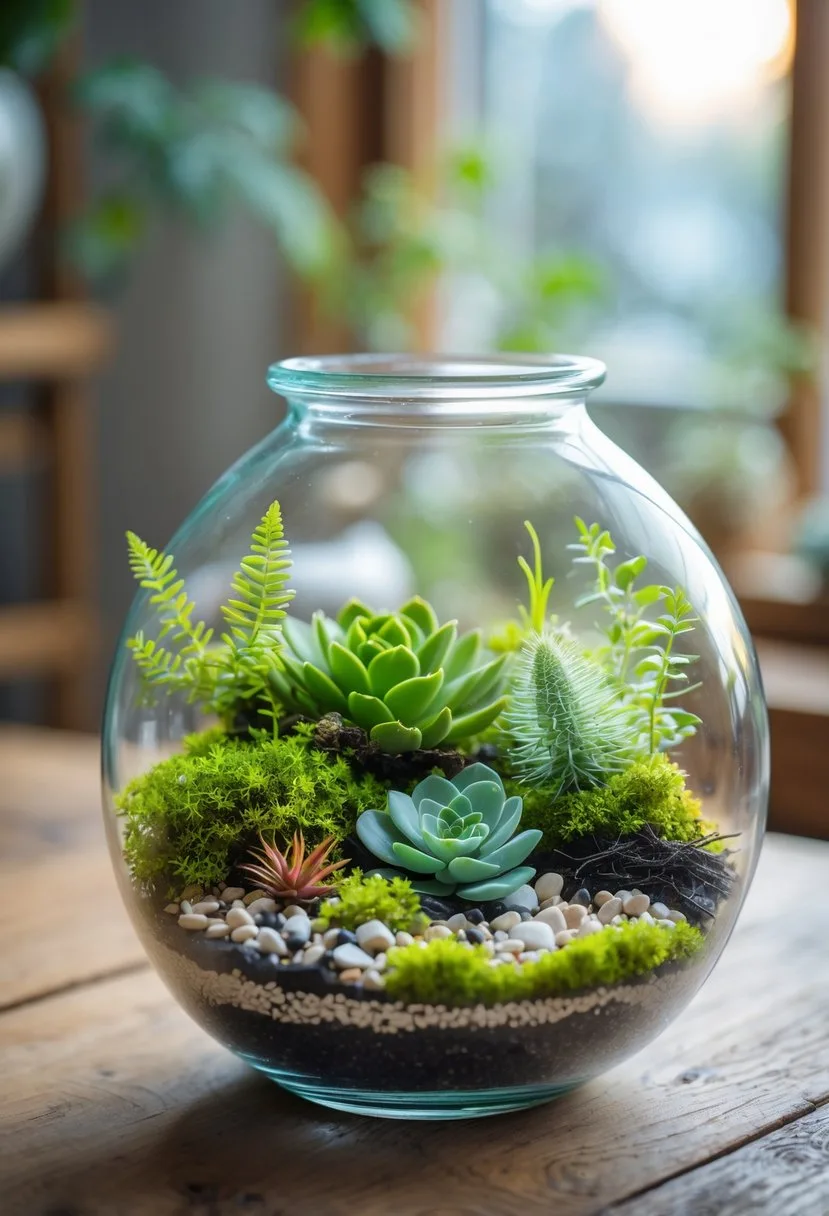
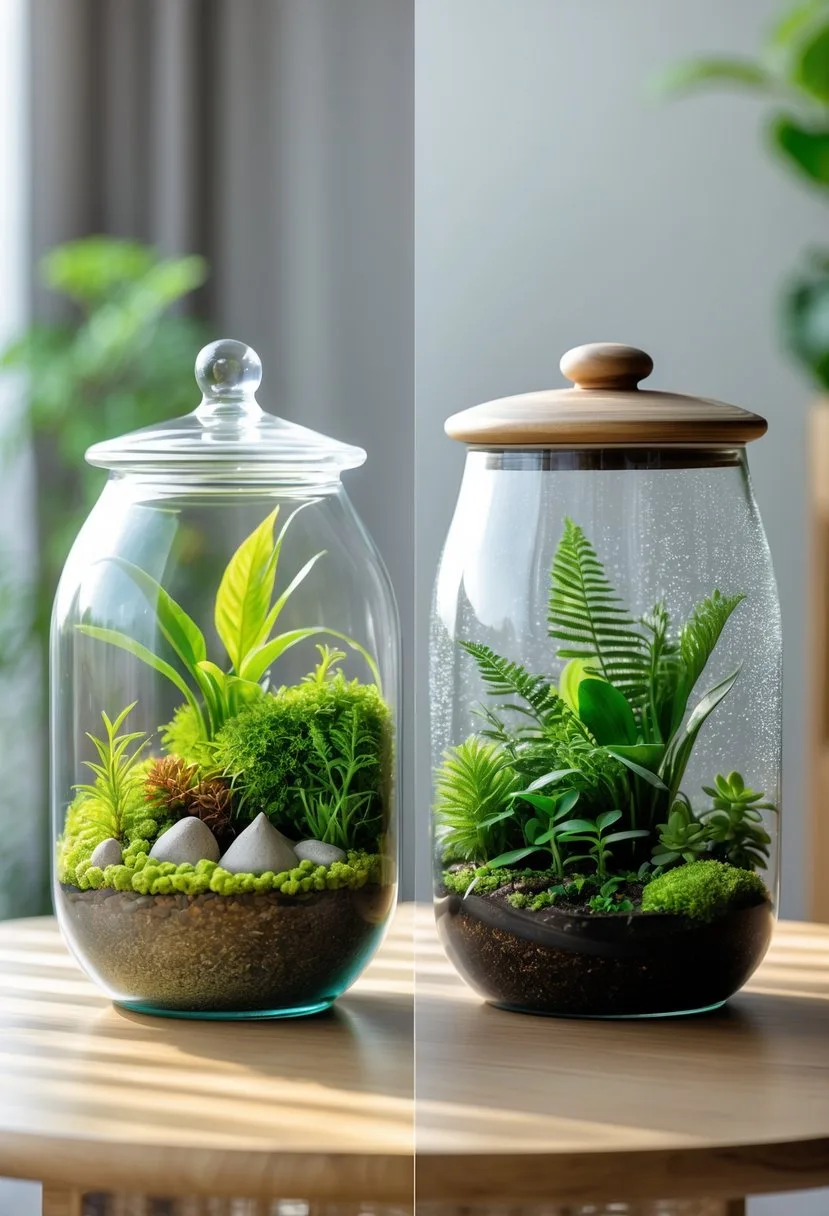
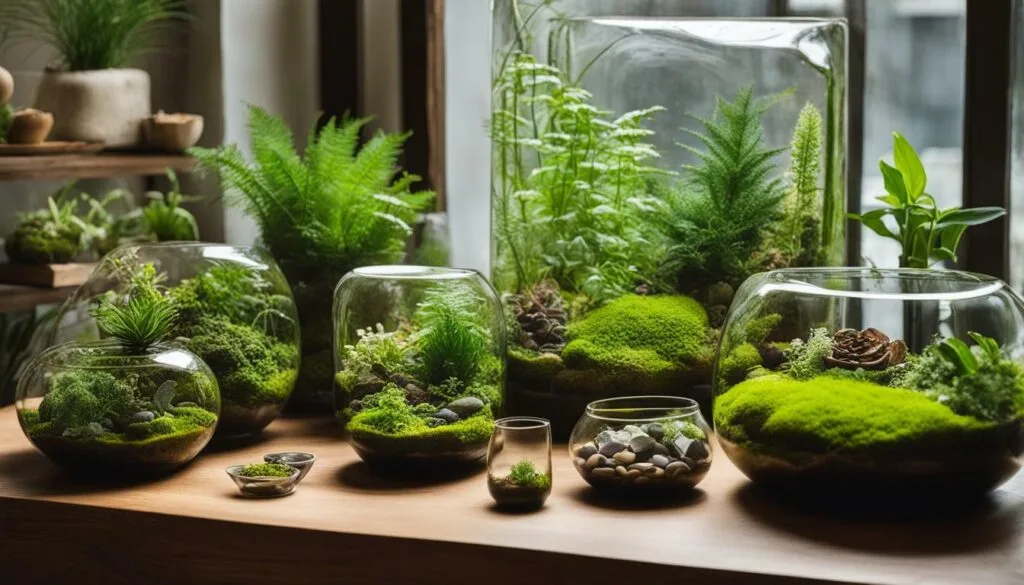
Visual cues of a healthy vs struggling terrarium
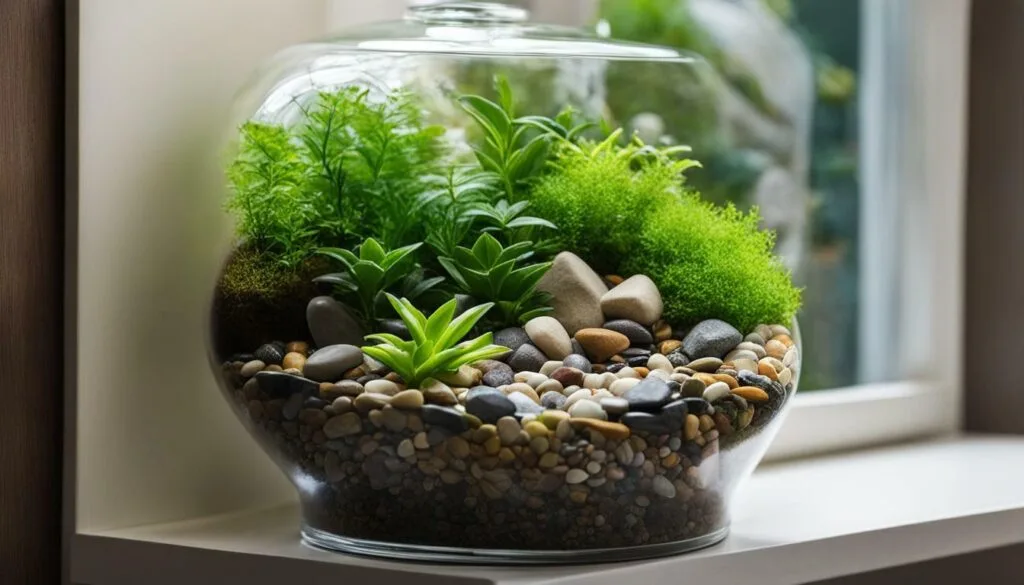
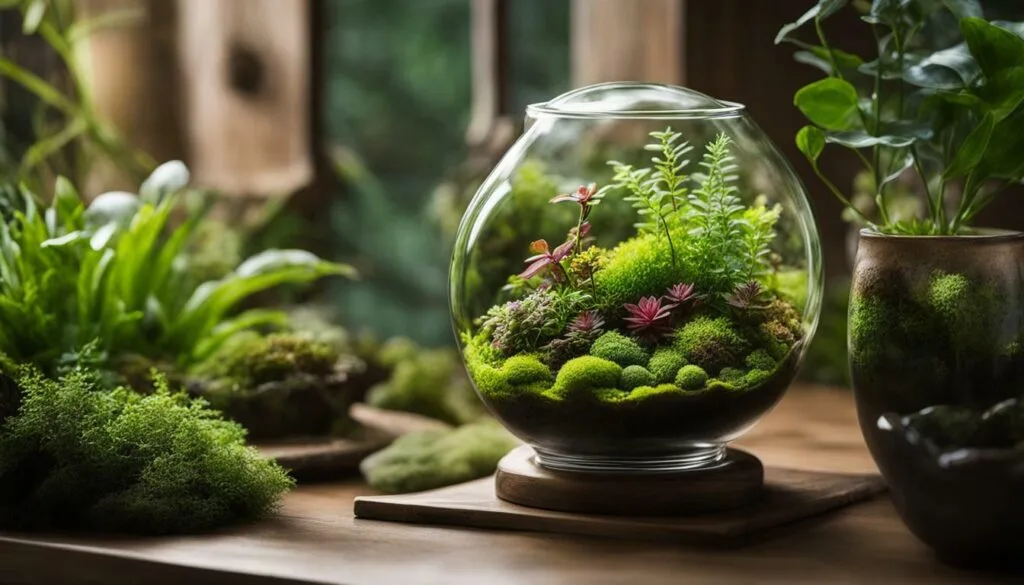
A stable terrarium has bright foliage, a mostly clear glass, and soil that looks moist but not soggy. If it feels like you are wiping the glass every day or leaves feel limp, your ecosystem is asking for help.
We focus on catching these mild changes, so we can correct conditions before things snowball into rot or pest outbreaks.
2. Diagnosing Mold: Harmless Fuzz Or Serious Outbreak?
Some growths in a terrarium are totally normal, like small white fungal threads in the soil that recycle organic matter. The real danger is aggressive mold carpets covering leaves, decorations, or creeping up the glass.
We like to sort mold issues into three levels, so it is easier to decide how hard to intervene.
Quick mold diagnosis checklist
- Location: Only in soil and stays tiny, usually less serious.
- Color: Bright white or gray that spreads in patches is a warning sign.
- Speed: If it doubles in size in a day or two, conditions are way too favorable.
- Plant impact: Mold sitting on leaves, stems, or moss will eventually suffocate them.
According to indoor air research, mold can start growing within 24 to 48 hours when moisture is present, so any sudden spill, heavy watering, or condensation spike should put you on high alert. In practice, this means we act quickly when we see mold, not “check back next week”.
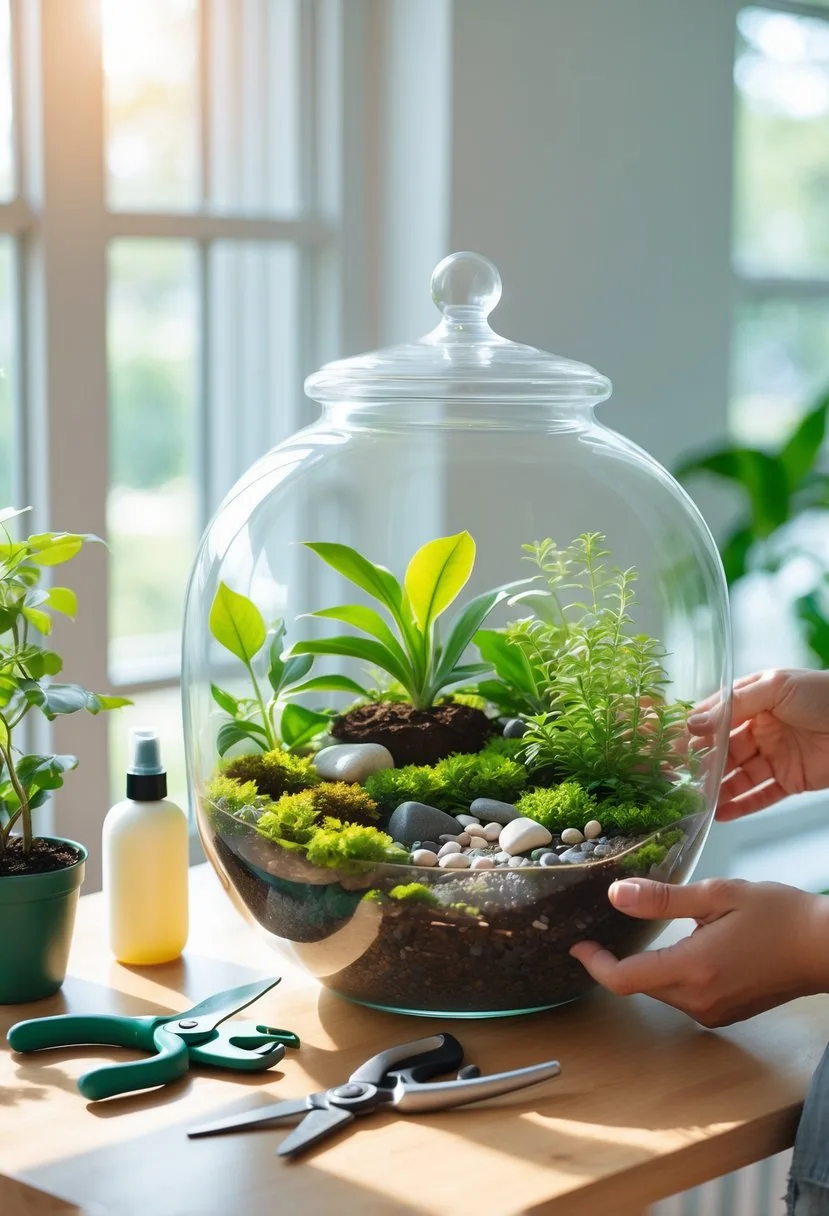
For light patches, we usually scrape off the top layer of soil, reduce watering, and open the container longer each day. For heavier outbreaks, we remove affected plants, replace substrate in that area, and reset humidity with more ventilation.
3. Pest Problems: Spotting Tiny Invaders Before They Spread
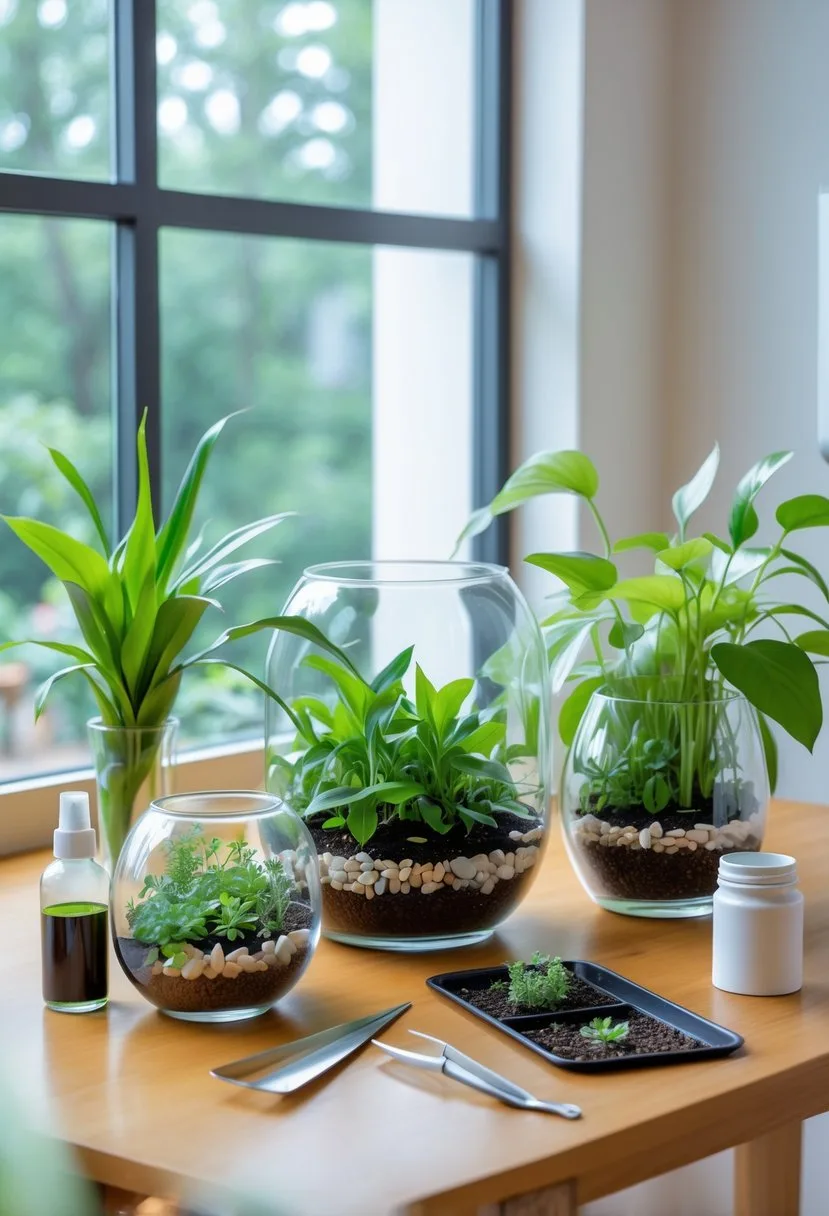
Pests in terrariums are sneaky, because the ecosystem is small and stable enough that a few hitchhikers can suddenly become a swarm. We rely on magnified observation and pattern spotting more than sprays or chemicals.
Common terrarium pests include springtails (often harmless), fungus gnats, aphids, mealybugs, and mites, and each leaves different “signatures” on your plants.
Simple interactive pest check
- Tap the glass or moss and watch closely. Do tiny white dots jump around the soil surface? Those are usually springtails, which are generally helpful decomposers.
- Check leaf undersides with a phone macro lens. Webbing, clusters of eggs, or cottony blobs suggest mites or mealybugs.
- Watch for slow, soft-bodied insects on stems and fresh growth. These are often aphids sucking sap and causing curling or distorted leaves.
Our usual response ladder starts with physical removal and environmental tweaks, not harsh chemicals. We prune heavily infested leaves, wipe glass and decor, and adjust humidity or airflow so the pests no longer have ideal conditions.
If we catch pests early and remove their hiding spots, most terrariums bounce back without needing systemic treatments.
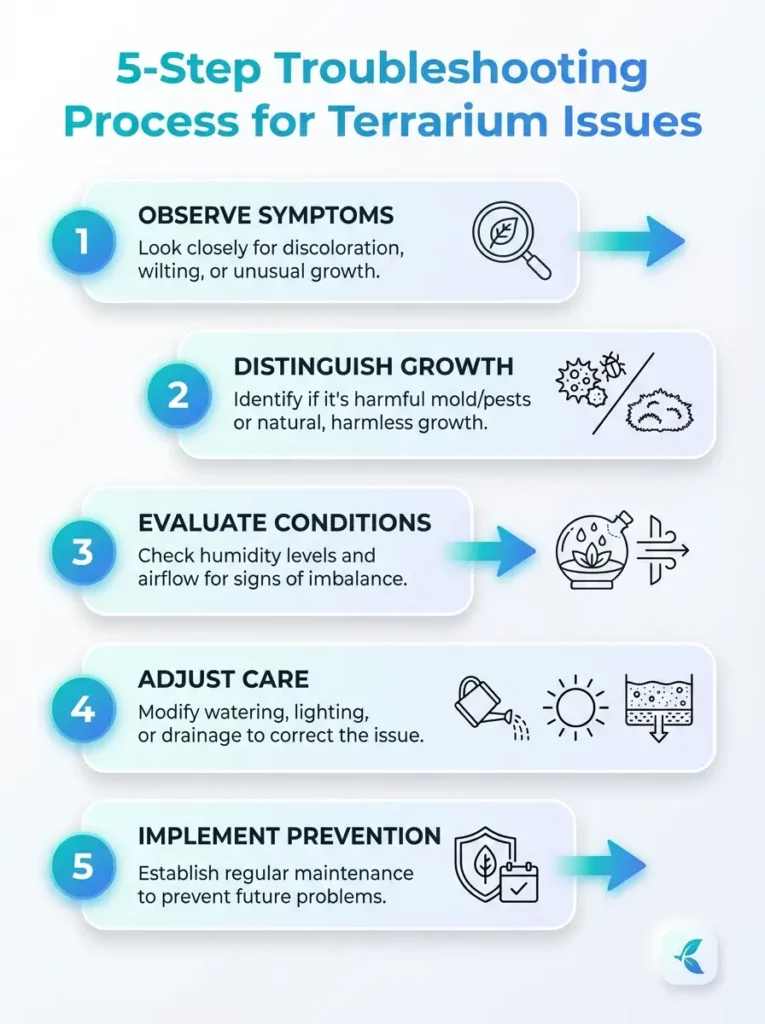
Five-step troubleshooting guide for diagnosing and solving common terrarium issues. Use this process to keep your terrarium healthy.
4. Humidity Control: Fixing Foggy Glass And Drooping Plants
Humidity is the backbone of your terrarium’s health, and it is also the number one source of ongoing problems when it is off. Too high and you get mold, rot, and algae, too low and foliage dries, curls, and stalls.
Indoor research points to a 40 to 60 percent relative humidity range as ideal for limiting mold without drying out most houseplants, and we aim for a similar sweet spot in many terrariums, adjusted for plant type.
How to diagnose humidity problems fast
| Symptom | Likely Cause | Quick Fix |
|---|---|---|
| Glass fogged all day | Humidity too high, poor ventilation | Open lid daily, wipe glass, reduce watering |
| No condensation ever | Humidity too low | Mist lightly, partially cover opening, add water feature |
| Leaves drooping and translucent | Too wet and humid around roots | Improve drainage, reduce watering, vent more |
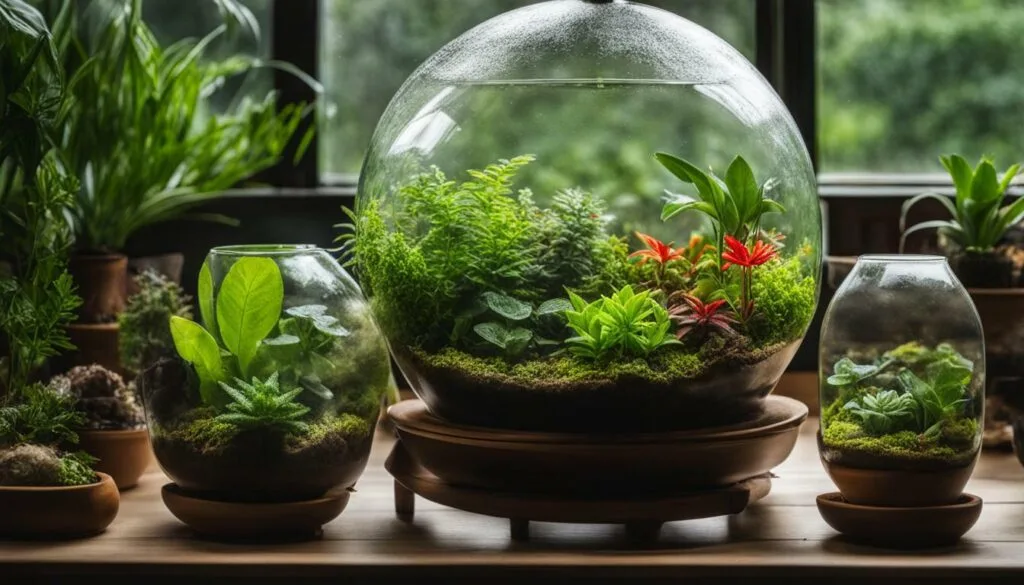
We like to pair a cheap digital hygrometer with observation of condensation patterns, because glass behavior often tells you as much as the numbers. If the glass clears for a few hours each day but never fully dries, you are usually in a happy range.
Did You Know?
Source: PubMed Indoor Air study (2024)
40–60% relative humidity is associated with reduced mold growth and lower risk of viral transmission in indoor environments, a practical target band for small closed ecosystems like terrariums.
5. Overwatering, Underwatering, And Drainage Problems
Water issues are behind a surprising number of terrarium “mysteries”. Overwatering in closed systems quickly leads to mold, root rot, and a sour smell, while underwatering in open systems leaves plants crispy and stunted.
We always start by asking three questions: what type of terrarium is it, what plants are inside, and what drainage layers were built at the start.
Simple soil moisture test
- Press a clean finger or wooden stick into the substrate to mid depth.
- If it comes out shiny and soggy, you are likely overwatering.
- If it comes out dusty or only barely damp, you probably need a careful top up.
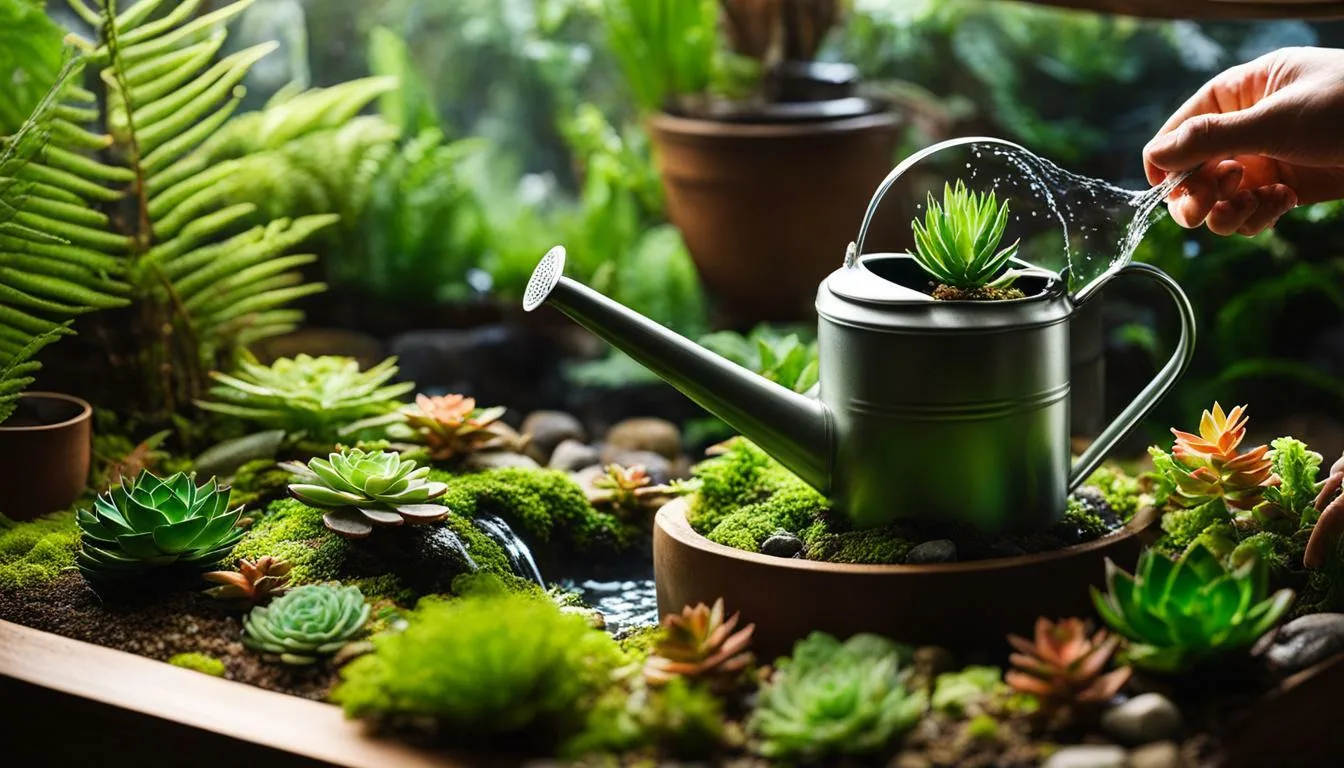
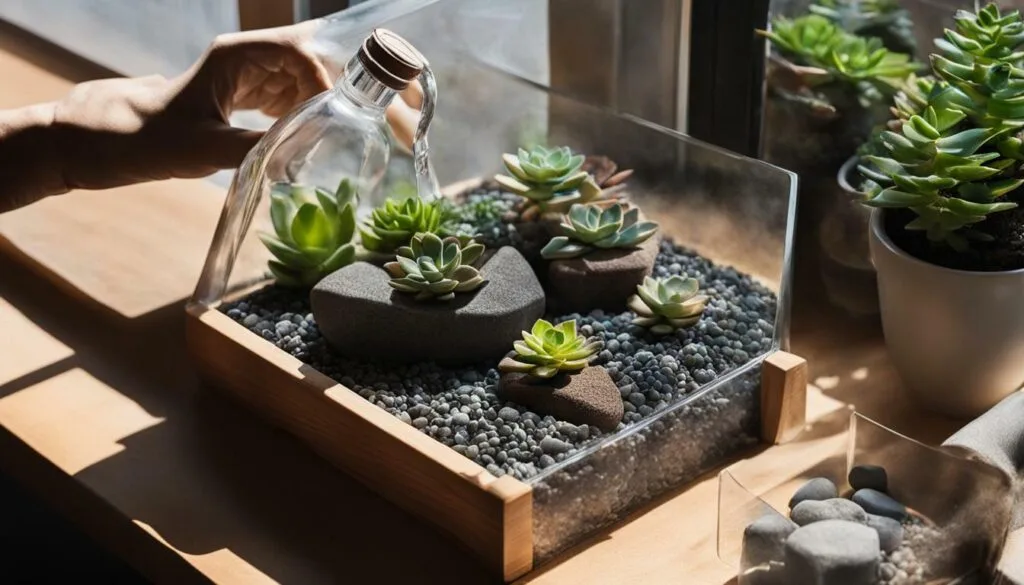
In closed terrariums, we often water only a few times a year once the balance is set. In open terrariums, especially with succulents, we let the top layer dry completely between waterings and rely on drainage layers to whisk away extra moisture.
6. Open vs Closed Terrariums: Diagnosing Type-Specific Issues
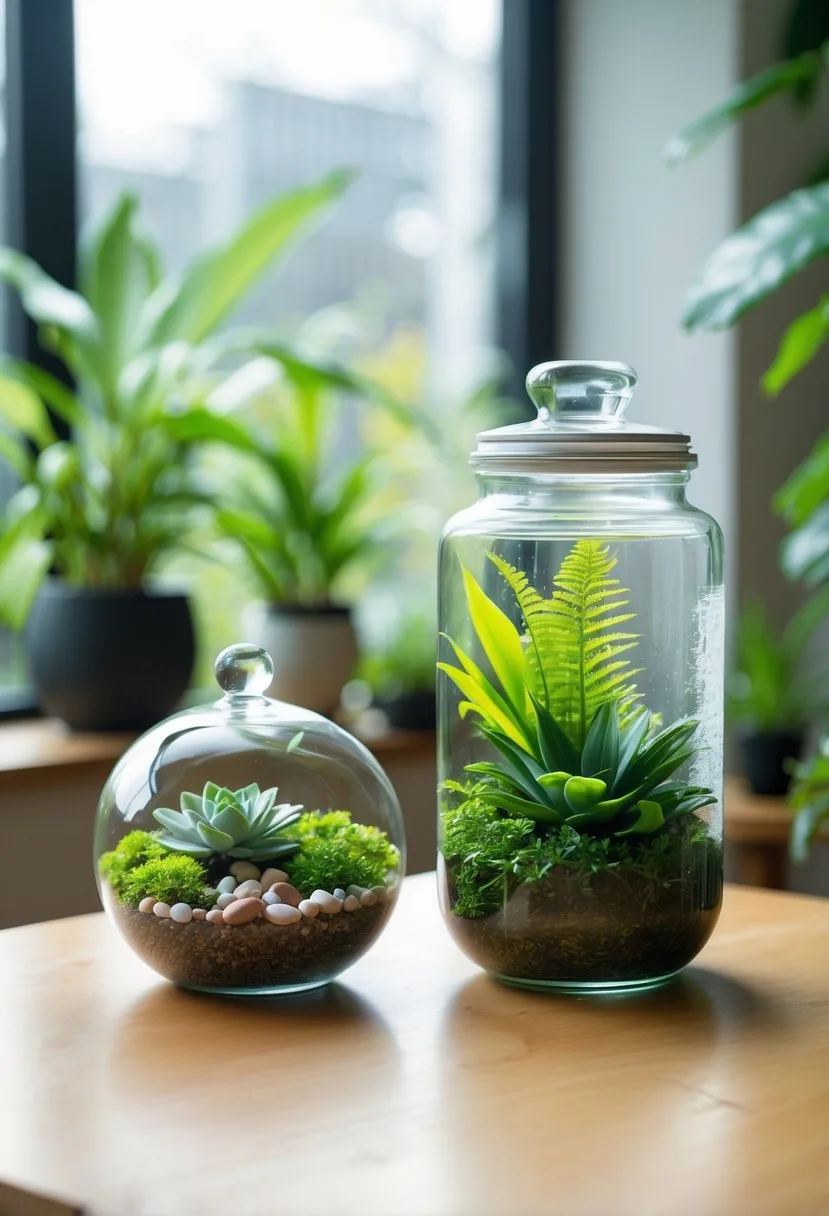
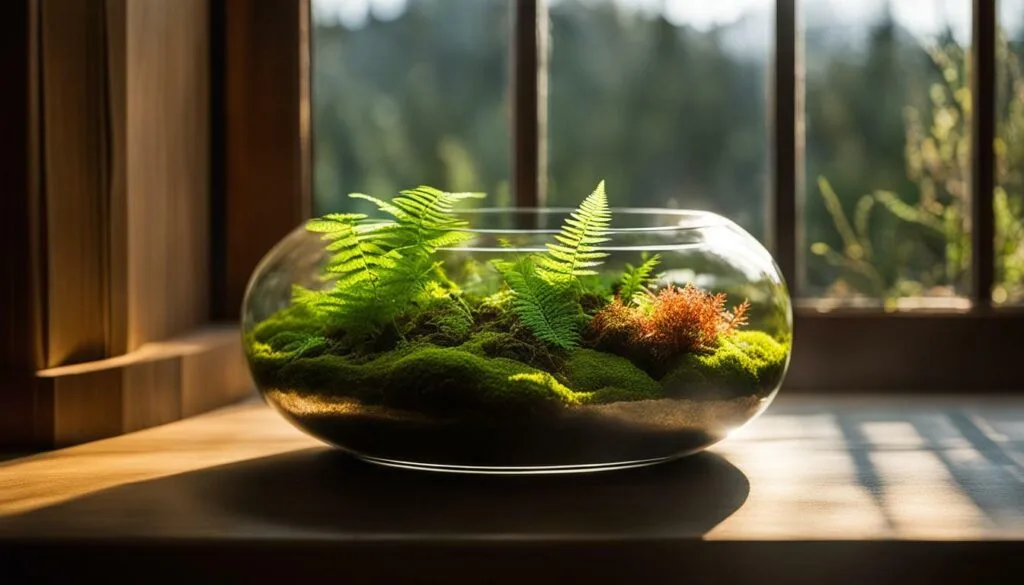
A lot of problems come down to using the wrong care habits for your terrarium type. Open terrariums behave more like houseplants in pots, while closed terrariums are closer to bottled ecosystems.
We always tailor our troubleshooting to whether the container is vented or sealed, since airflow and water cycling are totally different.
Typical issues by terrarium type
| Terrarium Type | Common Issues | Diagnostic Clues |
|---|---|---|
| Open | Dry soil, leaf crisping, slow growth | No condensation, soil light and crumbly |
| Closed | Constant fog, mold carpets, algae | Glass wet all day, smell turning sour |
Open terrariums usually prefer bright light and careful, regular watering with excellent drainage. Closed terrariums rely on light, minimal watering, and controlled ventilation to keep the internal water cycle stable.
Once you match your troubleshooting plan to the container style, things like “permanent foggy glass” or “plants always dry” start making a lot more sense.
7. Plant Selection Mistakes: When Species Choices Cause Issues
Sometimes the terrarium is “set up right” but the plants were mismatched from the start. Tropical humidity lovers forced into dry, open succulent bowls will suffer, and desert cacti in sealed jars will slowly rot.
We always start diagnosis with a plant profile check, so care aligns with what each species actually wants.
Common mismatch scenarios
- High humidity plant in open bowl: Leaves wilt, edges crisp, growth stops.
- Succulent in closed terrarium: Base turns mushy, black spots appear, roots rot.
- Moss with strong direct sun: Turns pale, patchy, and eventually brown.
Our general rule is to group plants with similar light and humidity needs into the same container. That alone prevents a huge number of “mystery” declines where one plant thrives while its neighbor dies for no obvious reason.
If you suspect a mismatch, the best fix is usually to relocate the struggling plant to a more suitable setup rather than forcing the whole terrarium to match its preferences.
Did You Know?
Source: US EPA Mold – Ten Things You Should Know about Mold
The U.S. EPA recommends keeping indoor humidity below 60% (ideally 30–50%) to minimize mold growth, a benchmark many hobbyists adapt when tuning their closed terrarium environments.
8. Moss Terrarium Issues: Browning, Slime, And Stagnant Air
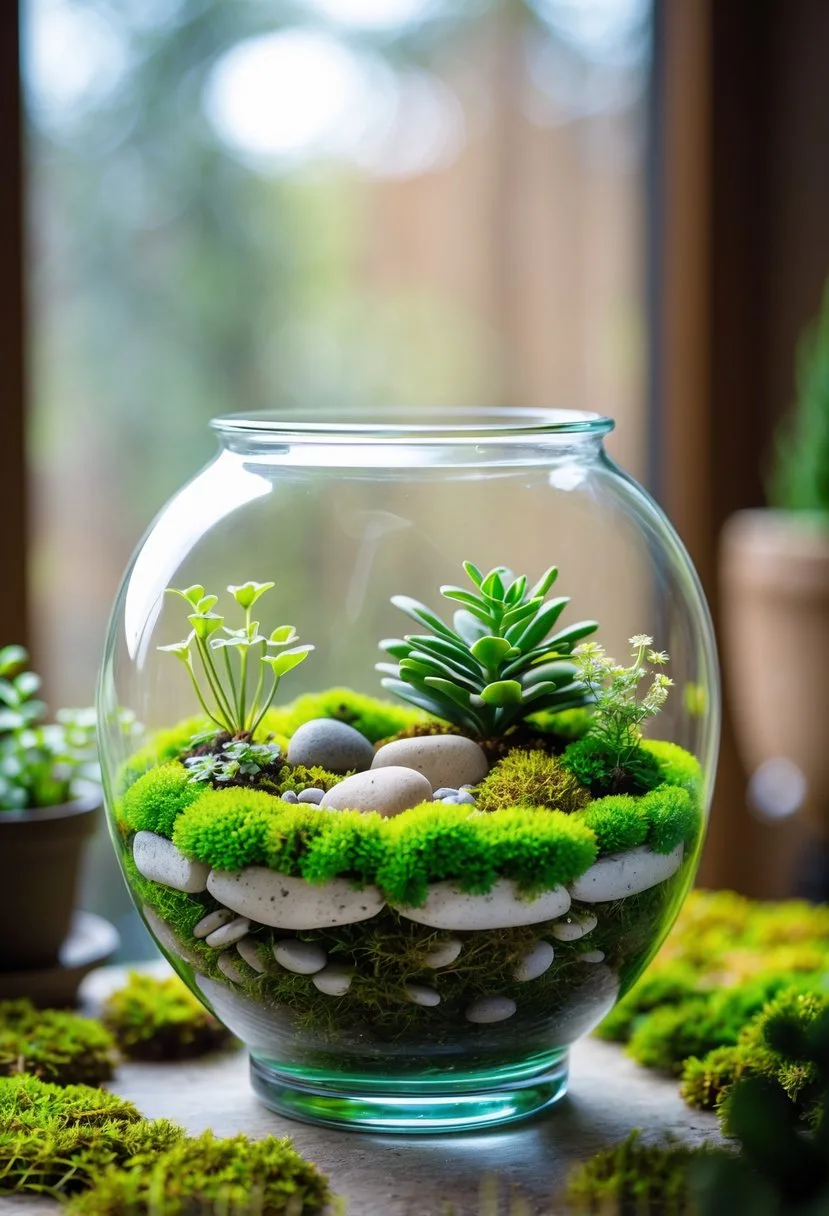
Moss terrariums look simple, but they highlight issues fast because moss reacts quickly to light and moisture changes. Brown patches, slimy surfaces, and stale air are three of the main problems we see.
Healthy moss should feel spongy and spring back when you touch it, not crunch or squish.
Diagnosing common moss problems
- Brown and crispy: Usually too much light or not enough moisture.
- Yellow and mushy: Too much water, poor air circulation, and possibly mold.
- Surface slime or algae film: Overwatering plus excess light on constantly wet surfaces.
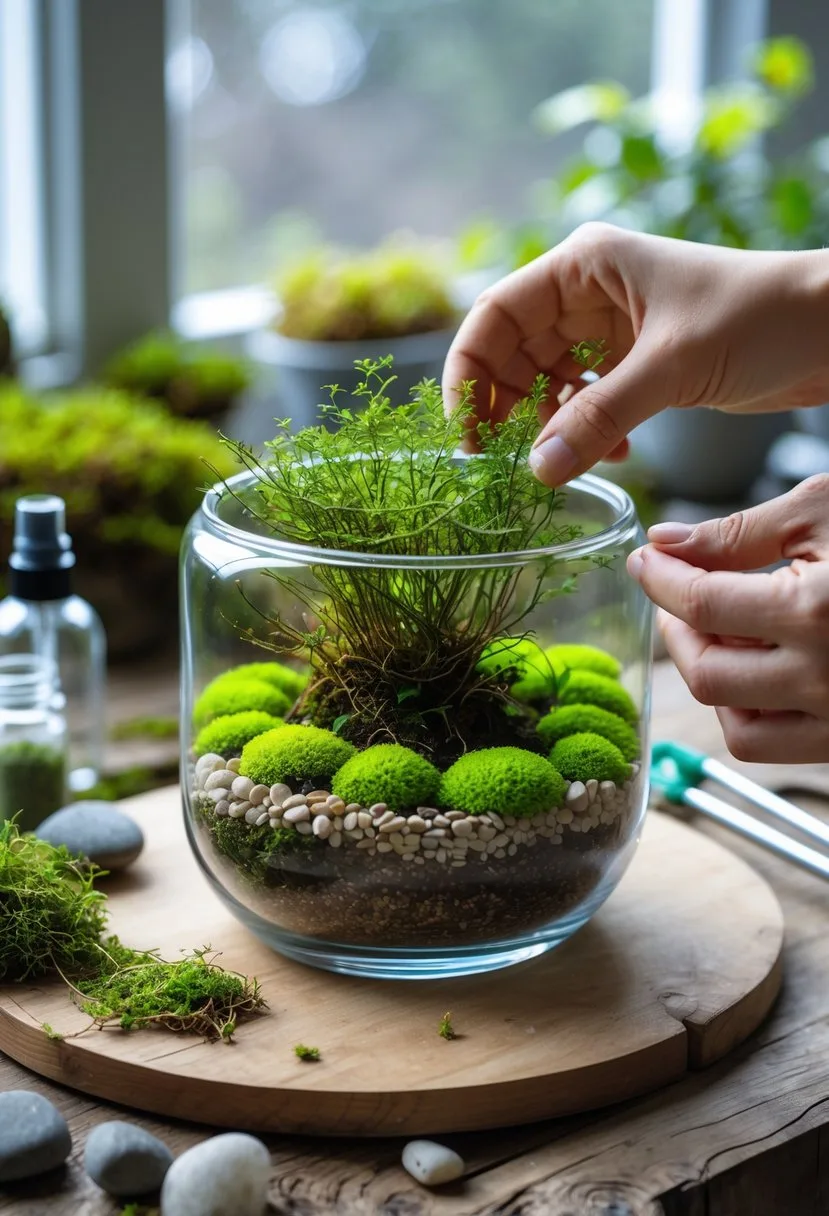
We often refresh moss by lifting it gently, trimming dead areas, and rinsing it in clean water as shown in our moss cleaning tutorial. Then we reset the substrate so that water can drain and air pockets remain under the moss layer.
A light, regular misting schedule paired with bright, indirect light usually keeps moss vibrant without tipping it into either drought or swamp mode.
9. Seasonal Shifts: Why Your Terrarium Acts Different In Winter And Summer
Even though your terrarium sits in the same spot, the room around it changes through the year. Heating in winter and cooling in summer both shift humidity, light intensity, and airflow, and your mini ecosystem responds to all of that.
We like to make small seasonal adjustments rather than waiting for plants to complain loudly.
Seasonal troubleshooting checklist
- Winter: Indoor air is drier, so open terrariums may need more frequent watering, but growth slows so we still avoid soaking soil.
- Summer: Higher humidity and stronger sun mean closed terrariums fog more and can overheat, so we vent more often and pull them back from hot windows.
- Transitional months: Watch for sudden condensation swings as heating or cooling systems start running.
A quick way to “season proof” your terrarium is to move it slightly as the sun angle changes, keeping it in the bright but not baking zone year round. Our experience is that a few centimeters on the shelf can be the difference between happy moss and scorched foliage.
We also adjust watering routines seasonally, using less water in cooler, darker months when evaporation slows and plants are less active.
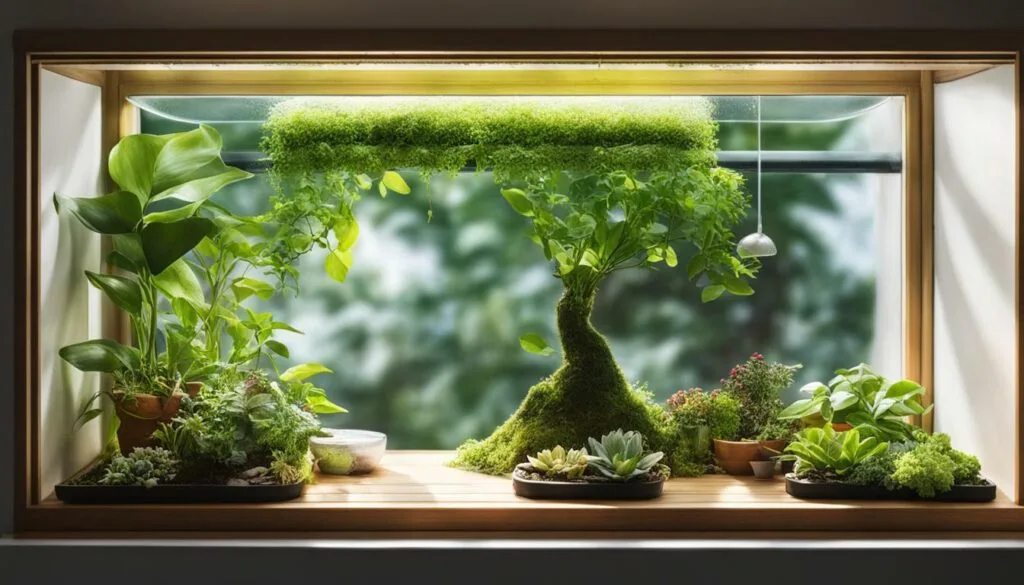
10. Interactive Troubleshooting Flow: From Symptom To Solution
When you are staring at a sad-looking terrarium, it helps to have a simple flow to follow instead of guessing. We often use a five step process that walks from observation to targeted action.
You can treat the flow below as a mini “choose your own adventure” when things look off.
5 step terrarium troubleshooting flow
- Identify the main symptom: Foggy glass, mold, pests, yellow leaves, or bad smell.
- Check recent changes: New location, watering, or plants added in the last two weeks.
- Test humidity and soil: Look at condensation, feel the substrate, and note air movement.
- Match to a fix: Vent more, water less or more, prune, repot, or adjust light.
- Monitor for a week: Take photos and compare, then refine your adjustments.
We encourage you to treat each intervention like a small experiment. Make one change at a time, such as reducing watering or opening the lid longer each day, then watch how plants and glass react.
Over a few cycles, you will learn how your specific terrarium “talks” to you, and future problems will be much easier to spot and solve.
Conclusion
Diagnosing and solving common terrarium issues comes down to paying attention to small signals and responding with precise, gentle changes. When we read condensation, leaf color, smells, and soil feel together, the terrarium stops being a mystery and becomes a conversation.
If you use the checklists, tables, and troubleshooting flow above, you will catch mold, pests, and water problems early and keep your miniature ecosystem stable for the long term.