Most terrarium owners do not realize that pruning more than 25% of a plant at once can shock the whole mini ecosystem, not just the plant. In this guide, we break down exactly how we trim terrariums gently so everything inside keeps growing, breathing, and cycling like normal.
Key Takeaways
Question
Short Answer
How much can I safely trim at once?
Never remove more than 25% of a single plant at one time to avoid shock to the plant and the ecosystem.
How often should I prune moss and ferns?
Moss every 1–2 months and ferns monthly keeps growth controlled so you never need drastic cuts. Learn more plant rhythms in our terrarium pruning guide.
Do open and closed terrariums need different trimming strategies?
Yes, closed systems react more strongly to sudden changes in leaf mass and moisture, so trims must be smaller and followed by humidity checks, as discussed in our open vs closed terrarium overview.
How do I avoid mold after trimming?
Remove all clippings, crack the lid for airflow, and watch condensation patterns, which act like a built-in humidity meter.
When should I refresh or replant instead of just trimming?
If plants are blocking all light or pressing against glass everywhere, follow a partial refresh process like we outline in the planted terrarium ecosystem guide.
What tools do I really need to prune safely?
Fine scissors, long tweezers, and a soft brush, plus a basic cleaning routine like in our terrarium maintenance guide.
1. Read Your Mini Ecosystem Before You Touch The Scissors
Before we trim anything, we treat the terrarium like a tiny habitat checkup, not a houseplant makeover. The goal is to understand how light, humidity, and plant growth are working together so we do not rip out the wrong thing.
We start by looking for three signs: plants pressing hard on the glass, leaves shading everything below, and thick moss blocking airflow. In closed terrariums, we also watch condensation patterns, because heavy dripping or totally dry glass both tell us that trimming will change the humidity balance even more.
We always say: observe first, trim second. Each terrarium has its own climate, even if the glass jars look identical.
For complex or bioactive setups, we also check the soil surface for springtails, isopods, and fungal growth. If the cleanup crew is active and there is only light leaf litter, we know the system can handle a small trimming session without a big shock.
2. Open Vs Closed Terrariums: Adjust Your Trimming Strategy
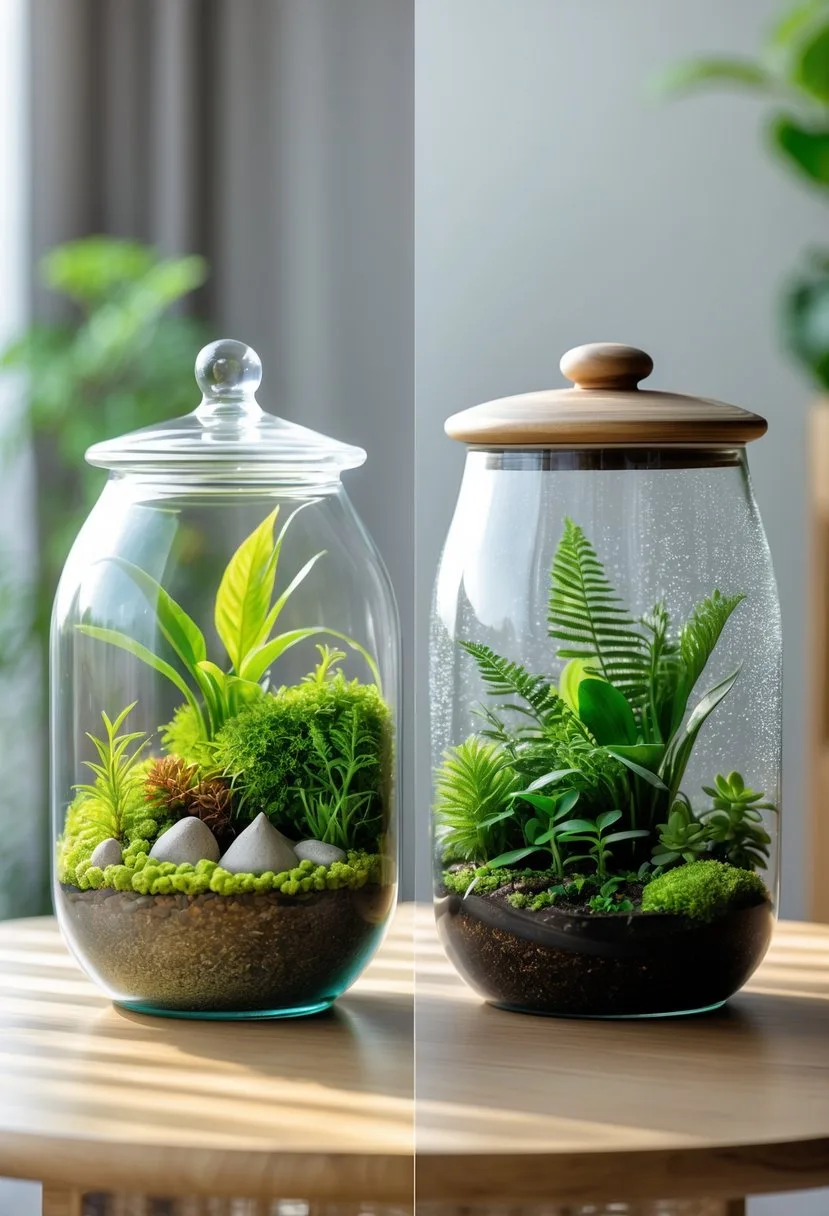
Open and closed terrariums react very differently when we reduce plant mass, so we tailor our techniques for each type. Open setups breathe freely, which makes them more forgiving when we thin out foliage or shorten leggier stems.
Closed terrariums, on the other hand, are sealed microclimates where every leaf helps control humidity and gas exchange. Removing a lot of foliage at once can drop humidity, change condensation patterns, and stress humidity loving plants inside.
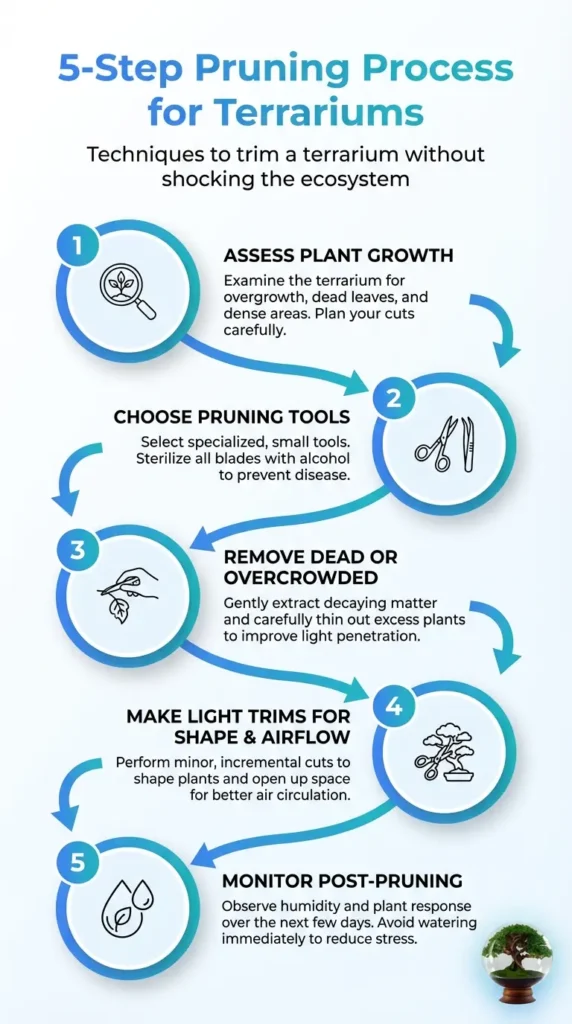
In open terrariums we are comfortable doing light shaping trims on succulents and ferns in a single session. In closed terrariums, we split pruning into small rounds, with a few days of monitoring in between so the ecosystem can settle after each change.
As a quick habit, we also crack the lid of a closed terrarium for 1–3 hours after a trim. This lets gases rebalance and prevents freshly cut foliage from raising humidity to mold friendly levels.
3. The “25 Percent Rule”: Safe Cutting Limits For Each Session
We follow one simple rule for almost every terrarium trimming job: never prune more than 25% of a plant at one time. That limit keeps roots, leaves, and the overall metabolism of the plant stable, which keeps the entire terrarium from reacting too strongly.
Inside a closed ecosystem, each plant is part of a moisture and gas loop. If we strip too many leaves off a key plant, we can suddenly change transpiration rates, humidity, and temperature, which may shock more sensitive neighbors.
Fine leafy plants like Fittonia or baby ferns: take just the top 10–20% first.
Woody or thick stemmed plants: cut a few stems entirely and leave the rest untouched.
Moss carpets: trim height lightly instead of shaving whole areas bare.
Trim like a series of haircuts, not a one time buzz cut. If in doubt, cut less and come back next week.
We schedule follow up micro trims rather than big cleanouts whenever possible. That rhythm lets you guide growth slowly while the ecosystem keeps its usual airflow, humidity, and bacterial balance.
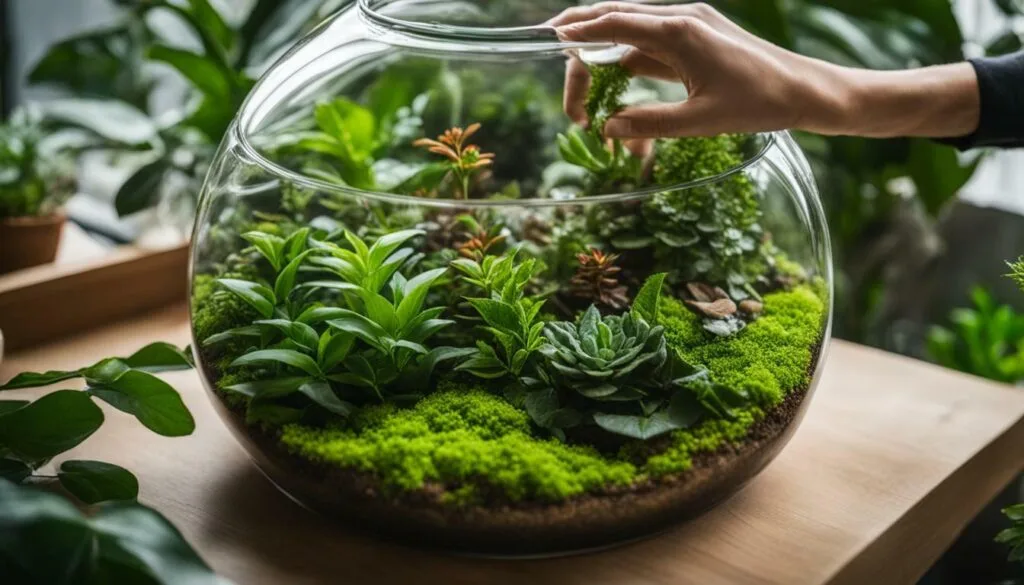
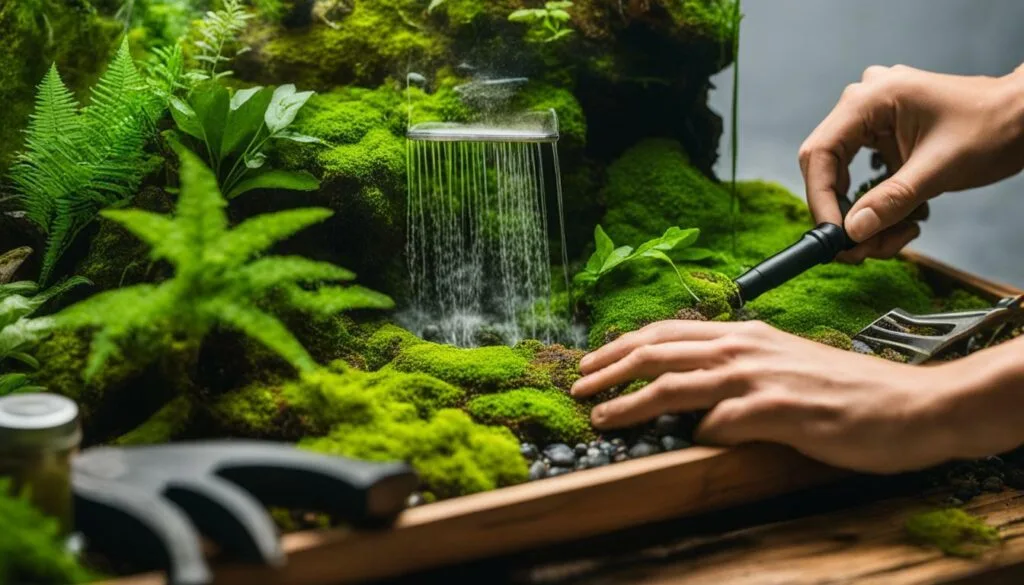
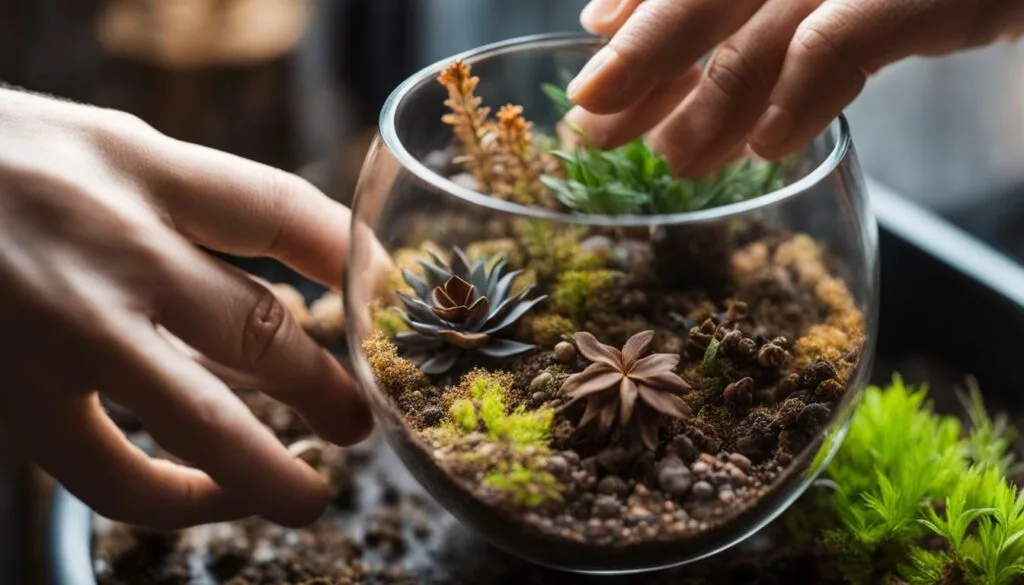
5-step visual guide to trimming a terrarium safely. Learn how to maintain balance and avoid shocking the ecosystem.
4. Moss, Ferns, And Ground Covers: Gentle Carpet Trimming
Did You Know? A humidity target of about 60–80% supports moss and many tropical ferns in micro terrariums, keeping them healthy after trimming without encouraging mold.
Moss and low ferns are the lungs and sponge of many terrariums, so we trim them with extra care. When moss gets too tall, it traps old moisture against the glass and can smother low lying plants, but cutting it back harshly can suddenly lower humidity.
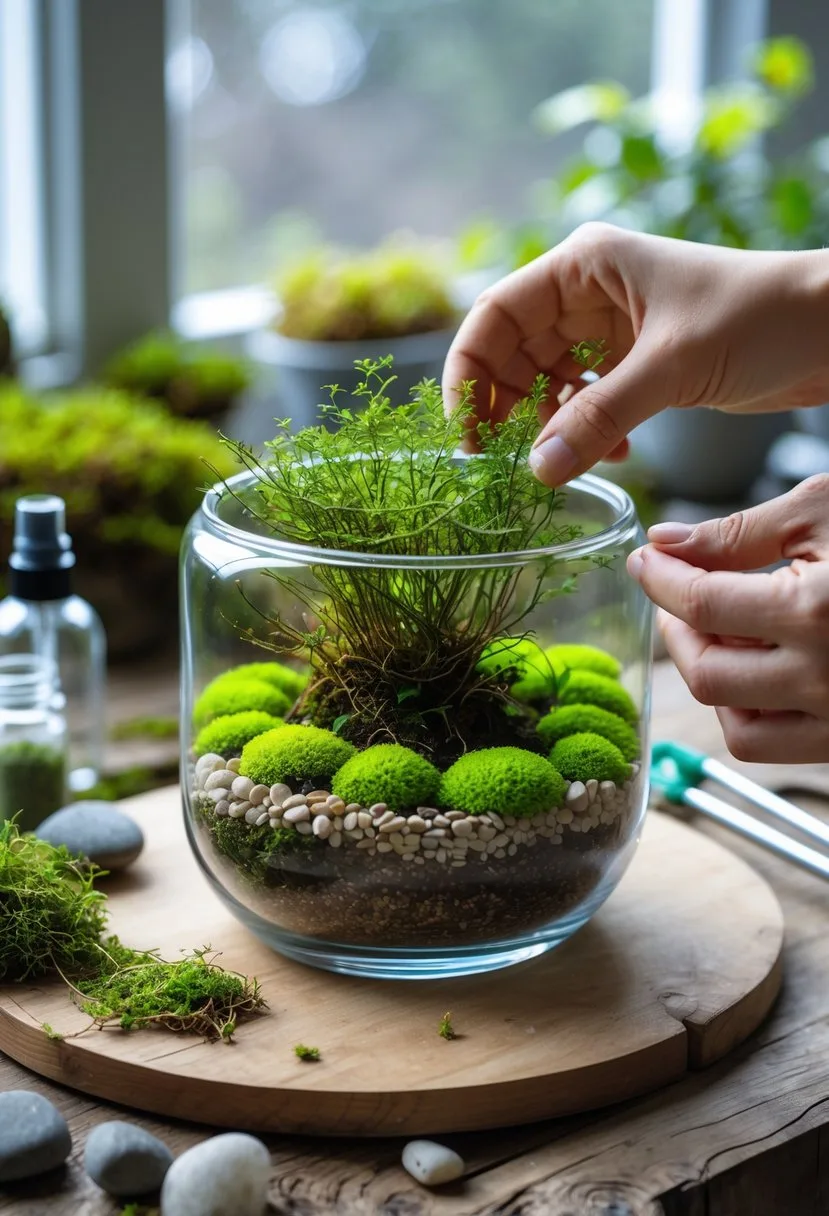
We work in patches, not across the entire carpet. Trimming one third of the moss surface at a time keeps some of the original humidity buffering in place while new growth catches up.
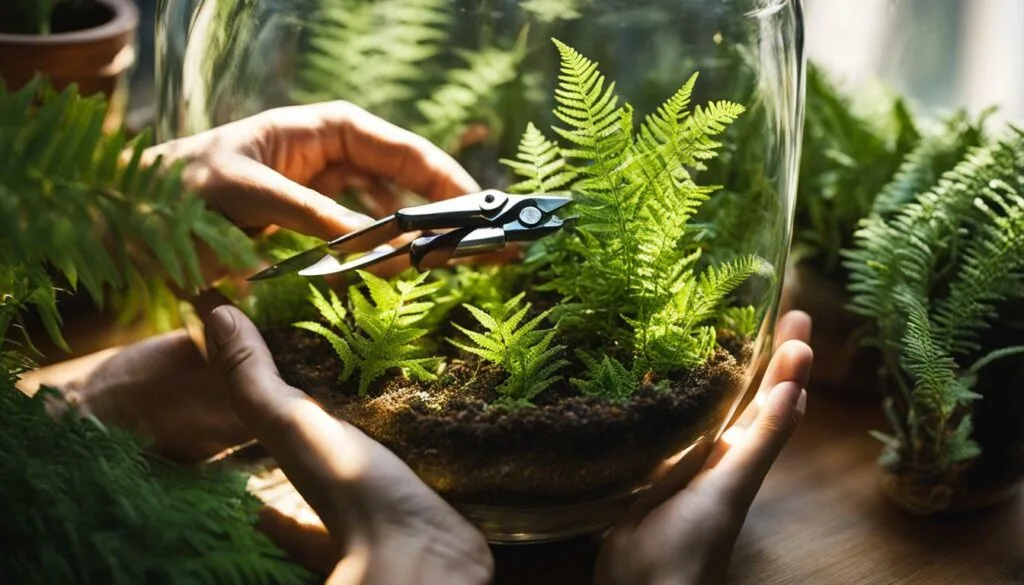
For ferns, we remove individual fronds at the base instead of shearing the top. This keeps the crown intact so the plant can grow back steadily without dumping a lot of decaying material into the soil all at once.
After trimming moss and ferns, we always do a quick clean with tweezers to collect loose bits. Leaving those clippings on the surface in a humid, closed terrarium is almost an invitation for mold outbreaks.
Did You Know? Mosses should be pruned or trimmed every 1–2 months to keep humidity levels stable and prevent overcrowding.
5. Trimming Air Plants, Succulents, And Desert Terrarium Setups
Air plants and succulents handle pruning differently from leafy tropicals, and we adjust our approach so drought tolerant setups do not crash. In desert terrariums that use cacti and succulents, trimming is mostly about removing damaged or stretched growth, not constant shaping.
We avoid major pruning during a heat spike, because cutting tissue in hot, dry environments can stress plants and quickly change evaporation rates inside the glass. Instead, we trim early in a stable temperature window, then monitor how the soil and air dry afterwards.
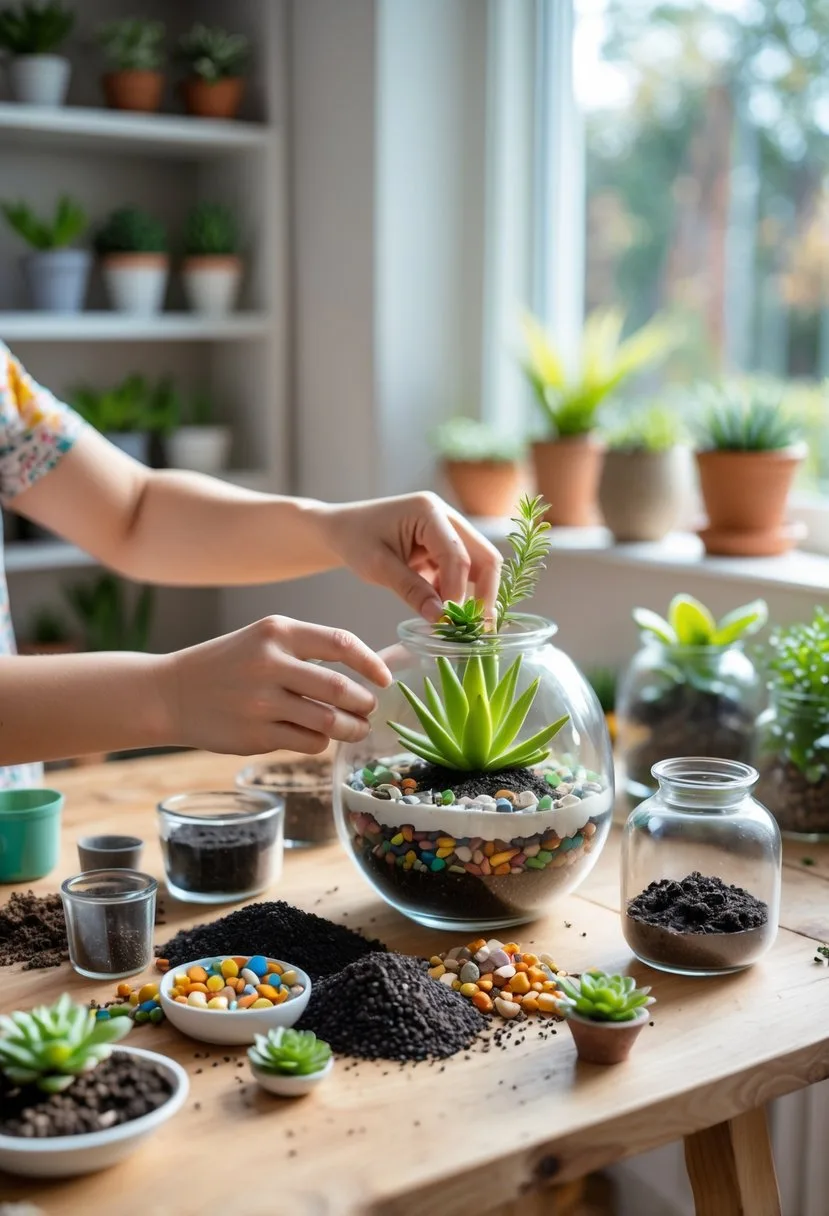
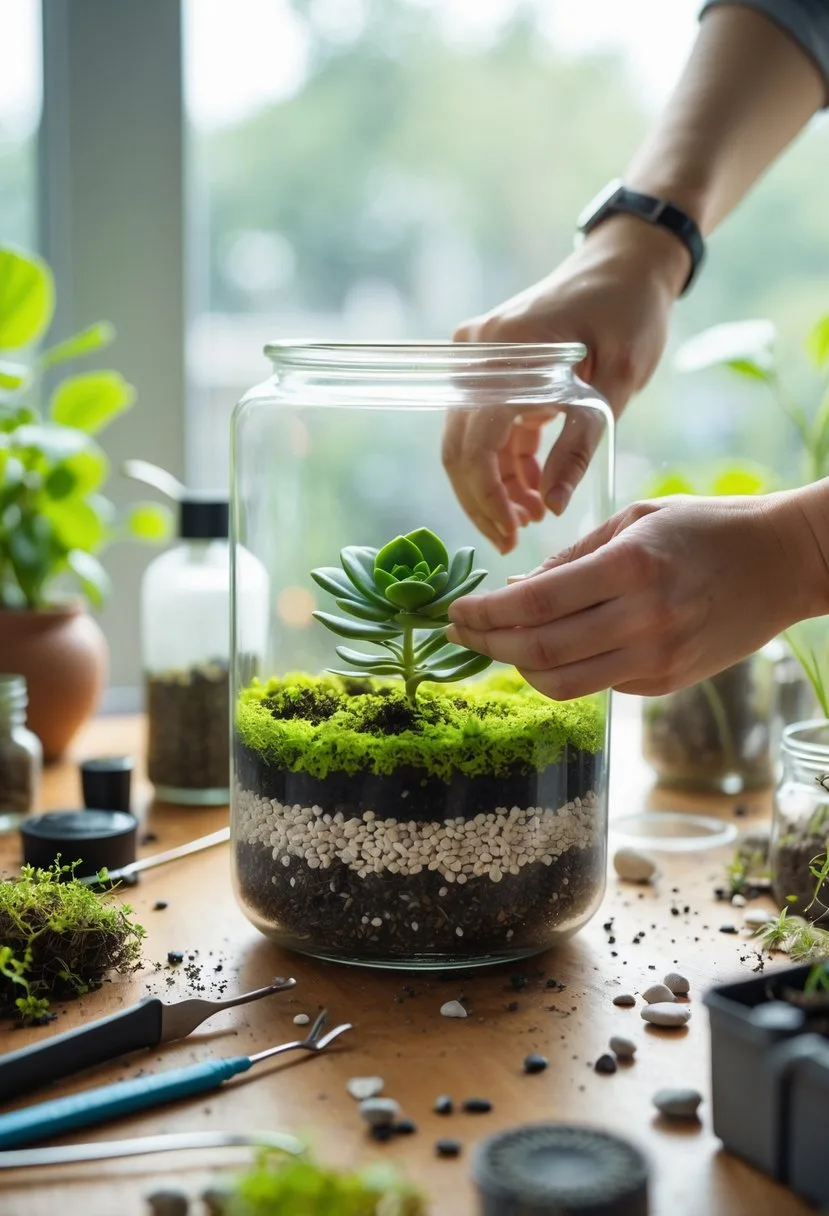
With Tillandsia air plants, we only remove dead tips or fully browned leaves, because most shaping can be done by repositioning instead of cutting. For succulents, we cut leggy tops, let them callus outside the terrarium, and then replant or reuse them to avoid rotting freshly cut material in a closed space.
Desert terrariums in particular rely on very controlled moisture, so after trimming we resist the urge to mist heavily. We keep the same watering rhythm to avoid suddenly pushing a dry loving ecosystem into fungus territory.
6. Preparing Tools And Cleaning Glass To Reduce Shock
Clean, precise tools are one of the easiest ways we protect the terrarium ecosystem while trimming. Dirty scissors can introduce pathogens and bruised cuts often rot faster, which both stress the system and invite mold.
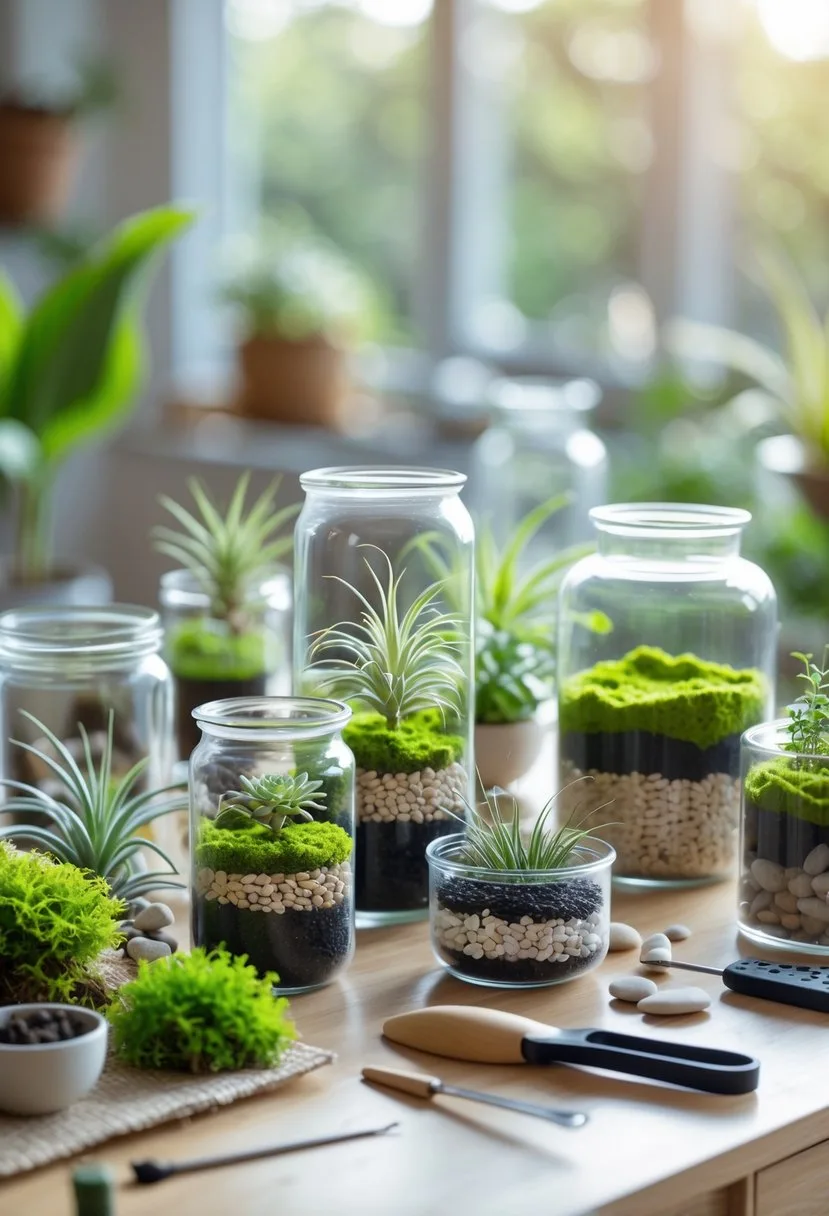
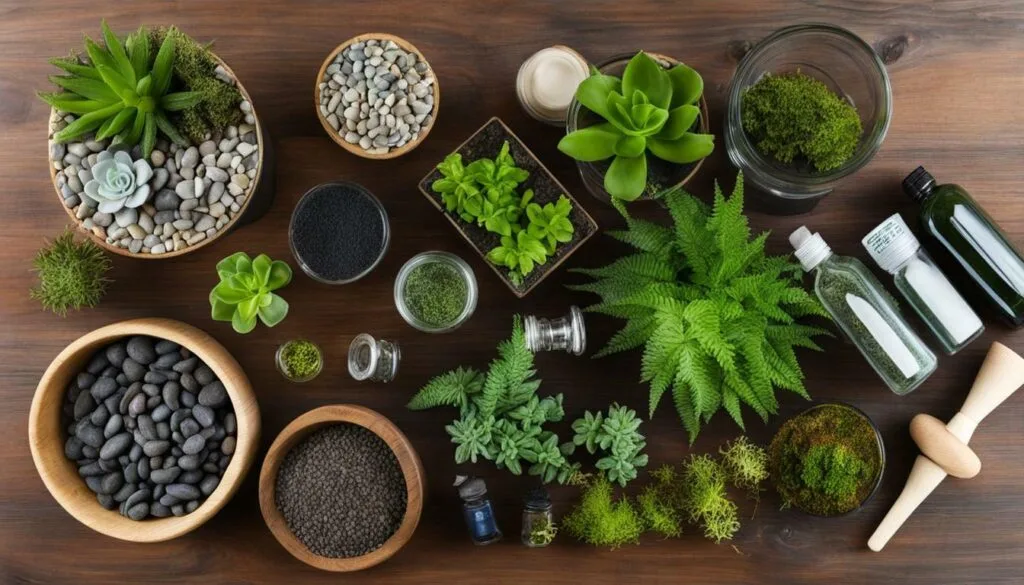
We keep a small kit just for terrariums that includes narrow scissors, long tweezers, and a soft brush or blower. A quick wipe with alcohol before trimming and a rinse afterwards keeps this kit safe to use across different terrariums.
We also like to clean the inside glass only lightly before a big trim. Heavy glass cleaning plus major pruning in the same day can remove too many stabilizing layers at once, changing light levels and microclimate too quickly for sensitive plants.
Instead, we spot clean any algae or water marks in the area we are working, trim that section, then move around the terrarium in stages. The ecosystem experiences smaller, local changes rather than a full reset.
7. Watching Condensation, Humidity, And Airflow After Trimming
Right after we trim, our eyes go straight to the glass. Condensation is the quickest feedback loop you have for how your terrarium is reacting to lost leaf surface.
If you see heavy dripping that was not there before, it may mean cut surfaces and newly exposed soil are pushing humidity too high. On the other hand, if fog disappears entirely in a closed tropical terrarium, you might have taken away too much transpiring foliage.
Condensation Pattern
What It Suggests After Trimming
Our Usual Response
Heavy droplets running down glass
Too much humidity, less airflow
Crack lid 1–3 hours, remove any rotting bits
Light fog in mornings only
Balanced cycle, usually ideal
Leave as is, avoid extra watering
Almost no condensation
Drying out, maybe too much trimmed
Add a tiny amount of water, then reassess next day
We typically wait at least 24 hours before changing the watering schedule. That pause gives us a clear picture of how the ecosystem adjusts by itself before we intervene again.
Did You Know?
Condensation patterns act as a humidity barometer, where heavy droplets signal airflow or heat issues and sparse fog often means under-watering.
8. Special Rules For Closed And Bioactive Terrariums
Closed and bioactive terrariums are where trimming mistakes show up fastest, because everything inside is interdependent. In these setups, plants, microfauna, and microbes all help process waste and control mold.
We treat trimming in a bioactive terrarium as a small ecological event rather than a cosmetic job. Cutting too much growth at once can dump more dead material into the system than springtails and isopods can handle, which tips the balance.
Our process is simple: trim a little, remove every clipping we can reach, then let the microfauna handle the rest. After that, we check for any dead zones where no air flows or light reaches, and gently open up those patches with minimal pruning rather than tearing out big plants.
We are extra careful with root disturbing tasks too. Instead of uprooting competing plants in one go, we thin them gradually so the substrate and beneficial bacteria are not suddenly exposed and dried.
9. Scheduling Trims By Plant Type, Not By Calendar Alone
We get the best results when we prune based on plant behavior instead of a rigid schedule. Different species signal overgrowth in different ways, and reacting to those signals keeps trims small and non shocking.
For example, ferns that press against the glass or send out yellowing lower fronds are due for cleanup. Moss that grows tall and spongy instead of low and flat usually needs a height trim so it does not trap too much moisture.
Moss carpets: watch height and thickness, not just months on a calendar.
Ferns: prune when fronds block too much light for lower plants.
Fittonia and similar spreads: trim when they creep into other plant zones.
This plant based timing keeps trims lighter and avoids emergency overhauls that actually shock the ecosystem. In practice, that means a quick 10 minute tidy more often, rather than a stressful one hour surgery twice a year.
10. Avoiding Mold, Rot, And Other Post Trim Problems
Most terrarium problems that show up after trimming come from two sources, leftover cuttings and sudden moisture changes. We handle both carefully so the ecosystem never gets pushed into crisis mode.
First, we always treat clippings as temporary invaders, not mulch. Every leaf or stem we cut gets lifted out with tweezers, shaken off the moss, and fully removed from the container.
Second, we avoid watering heavily right after a trim, especially in closed systems. Fresh cuts plus extra water are exactly what mold spores want, so we let the ecosystem settle for a day or two before making any moisture tweaks.
If spots of mold do appear, we treat them as data, not failure. We remove the affected bits, improve airflow in that one area with very light thinning, and keep an eye on that spot for a week to make sure the ecosystem bounces back.
11. Use Gentle, Sterilized Tools For Low-Stress Pruning
The way we cut matters as much as how much we cut. Thick, dull scissors crush stems and invite rot, which quickly spirals in a moist, enclosed environment.
Before we prune, we always sterilize tools with alcohol and choose options that fit the terrarium opening so we do not bang into glass or disturb the substrate too much.
Basic tool kit for stress-free trimming
Fine-tipped, stainless steel scissors for foliage.
Long tweezers to pick out cuttings without digging into soil.
Small pruning snips for thicker stems.
We always cut just above a leaf node or branching point, not through the middle of fleshy stems. Clean, angled cuts heal faster and reduce the chance of mold on the wound.
12. When To Refresh, Replant, Or Completely Rework A Terrarium
Sometimes, trimming alone is not enough, and the kindest thing we can do for the ecosystem is a small refresh instead of constant micro cuts. We usually consider this when a single species has taken over or when plants are permanently pressed against every side of the glass.
In those cases, we plan a partial reset rather than endless, drastic pruning sessions that keep shocking the system. That can mean removing one dominant plant entirely and replacing it with a smaller species better suited to long-term balance.
We still protect the ecosystem while doing this by working in layers. Hardscape, moss, and most of the substrate stay in place, while we just swap out or divide the plants that no longer fit the space.
After a rework like this, we treat the terrarium like a new build and monitor humidity, condensation, and plant response daily for at least a week. That attention keeps small imbalances from turning into big ecosystem shocks.
Interactive shaping exercise
Look straight at your terrarium and pick one focal angle, like a “front” in an aquarium.
Trim only the plants that block your chosen focal point, staying within safe limits.
Step back, check the overall look, and stop when you can clearly see your key features.
We also sometimes leave one corner a bit wilder on purpose. That little “jungle zone” keeps microfauna and moisture cycles happy, while the rest stays tidy and styled.
Conclusion
Trimming a terrarium without shocking the ecosystem is all about respecting how connected everything inside the glass really is. When we cut slowly, watch condensation and plant signals, and clean up carefully, the system barely flinches and simply grows into its new shape.
If you keep your trims under that 25% rule, schedule small tidy ups instead of rare overhauls, and match your technique to open or closed setups, you will find that pruning feels less like surgery and more like gentle grooming. Your mini ecosystem keeps cycling, your plants stay healthy, and your terrarium keeps that stable, living world feeling we all love.
Want a yard that hums with wings and color all summer? Lantana brings nonstop nectar, bold clusters, and a zero-drama personality. Plant a few, and butterflies will RSVP yes to your garden party....
Want height, movement, and butterflies without blocking the view? Verbena bonariensis brings all that drama with a featherlight touch. These “see-through” towers float purple clouds over your...
 .
.