
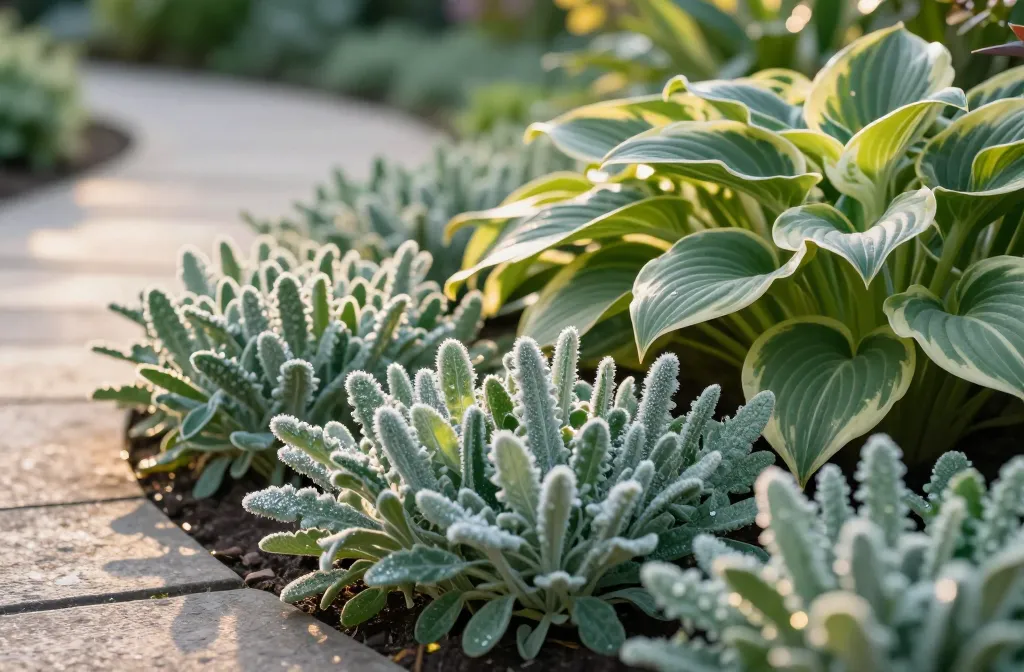
Sensory gardens should invite your hands to wander. The trick? Pair plants with contrasting textures so every reach feels like a mini adventure. These five pairings deliver silky, fuzzy, spiky (safe!), and springy sensations you’ll want to brush every time you pass. Ready to turn your beds into a hands-on playground?
1. Velvet Meets Gloss: Lamb’s Ear + Hosta
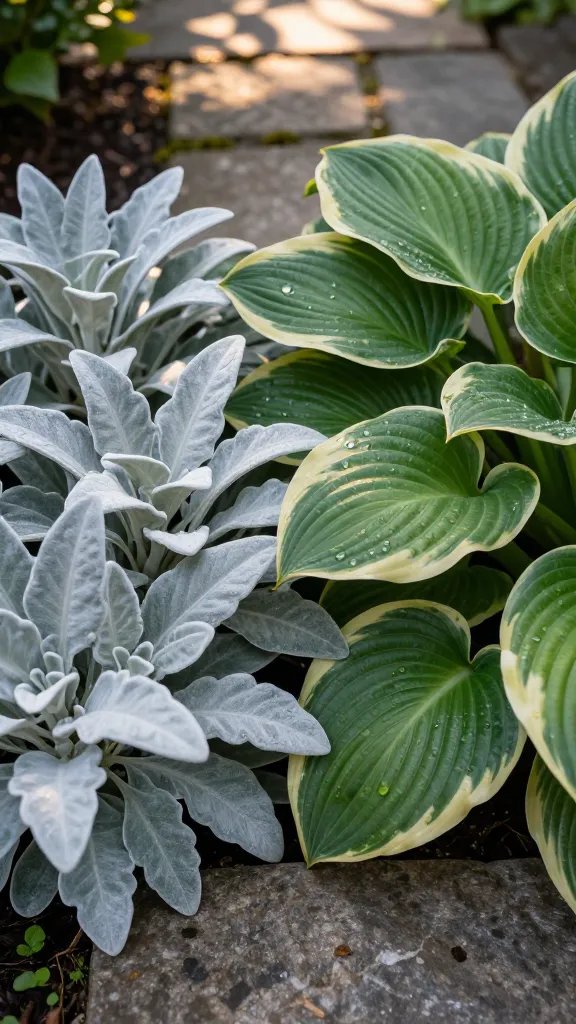
Few combos beg for a touch like the buttery-soft leaves of Lamb’s Ear (Stachys byzantina) next to the shiny, substantial foliage of Hostas. You get a fuzzy blanket on one side and a cool, sleek counterpart on the other. It’s like a tactile yin and yang right along your path.
Why It Works
- Texture contrast: Lamb’s Ear feels like a suede glove; hosta leaves feel like satin plates.
- Visual clarity: Silvery gray meets deep green or variegation for easy navigation.
- Low-drama maintenance: Both thrive in partial shade with consistent moisture.
Tips
- Plant Lamb’s Ear at the front so fingers find the fuzzy leaves first.
- Pick slug-resistant hosta varieties (e.g., ‘Sum and Substance’ or thick-leaved types) to keep the leaves pristine.
- Mulch lightly so Lamb’s Ear doesn’t rot; it likes good drainage.
Use this pairing along shady walkways, near seating areas, or by kid-friendly zones. The tactile contrast helps ground the space and invites gentle exploration.
2. Feather and Cushion: Asparagus Fern + Moss

Want that soft-focus, woodland feel? Pair the airy fronds of Asparagus Fern (A. densiflorus ‘Sprengeri’ or ‘Myers’) with a cushion of moss or a mossy look-alike groundcover. You’ll get a feathery bounce when you brush the fern and a pillowy landing when your hands drift down.
Key Points
- Fine vs. plush: Fern fronds tickle; moss pads soothe and cool.
- Microclimate magic: Moss thrives in consistent moisture and shade, which ferns also appreciate.
- Year-round interest: Many mosses stay lush even in cooler months, keeping the tactile vibe alive.
Placement & Care
- Nest the fern behind mossy stones or pavers for a natural touch-stop.
- Water regularly; neither enjoys drying out completely.
- Choose a safe moss: cushion moss (Leucobryum), haircap moss (Polytrichum), or use Irish moss (Sagina subulata) for a similar feel in sunnier spots.
This duo works beautifully in shaded courtyards or around water features. You’ll create a calm, tactile nook that feels like a tiny forest floor—seriously soothing.
3. Silky Plumes and Sun-Warmed Beads: Mexican Feather Grass + Creeping Thyme

For sunny beds, pair the whisper-soft sway of Mexican Feather Grass (Nassella tenuissima) with the bouncy, bead-like texture of Creeping Thyme (Thymus serpyllum or T. praecox). Run your fingers through the grass, then glide them over thyme’s tiny leaves that warm and release scent in the sun.
Why It Slaps (Botanically Speaking)
- Motion + micro-texture: Feather grass moves at a whisper; thyme forms a dense, tactile mat.
- Scent bonus: Brush thyme and enjoy that herb-y aroma—multisensory win.
- Drought-friendly: Both handle lean soils and full sun.
Pro Tips
- Line paths with feather grass in small clumps so it brushes your knees without flopping.
- Use thyme between stepping stones—soft under fingers, resilient underfoot.
- Cut feather grass lightly in late winter to keep it fresh; don’t scalp it.
Use this combo in Mediterranean-style borders or gravel gardens. You’ll get texture, movement, and a built-in aromatherapy moment every time you pass.
4. Quilted Meets Cushy: Coral Bells + Creeping Jenny
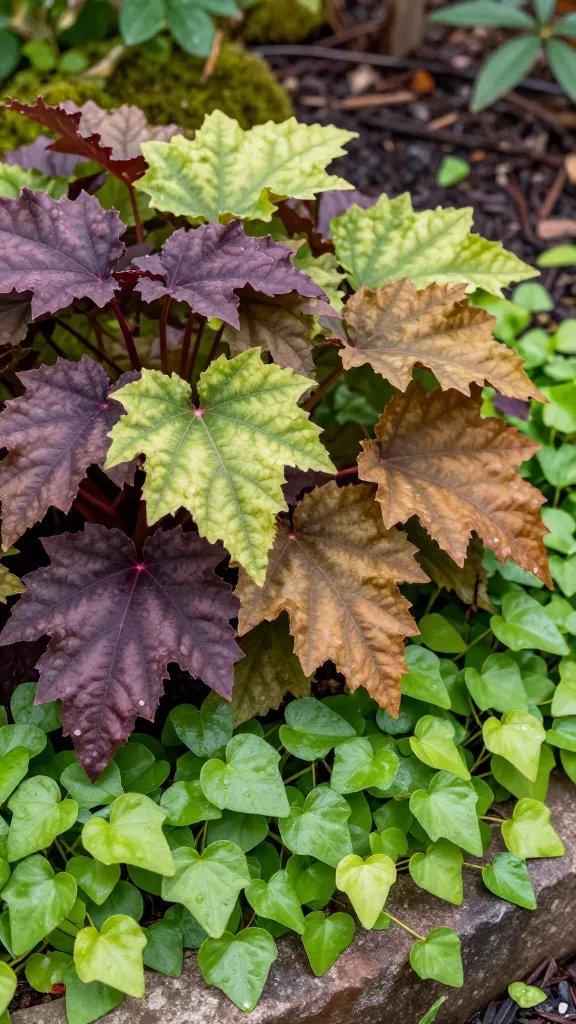
Contrast matters, and this pairing delivers: the quilted leaves of Coral Bells (Heuchera) next to the cool, rubbery strands of Creeping Jenny (Lysimachia nummularia). Heuchera offers scalloped edges and faint veins; Jenny adds a slick, coin-shaped cascade that begs to be stroked.
Texture & Color Play
- Leaf feel: Heuchera is slightly firm and patterned; Creeping Jenny feels smooth and stretchy.
- Palette: Heuchera comes in plums, limes, and caramel tones; Jenny glows chartreuse.
- Layering: Jenny wraps around stones and drips over edges, framing Heuchera like a velvet stage.
Care Notes
- Give them part shade and moisture; both suffer in dry, blazing spots.
- Choose heuchera with thicker leaves for durability: ‘Obsidian’, ‘Caramel’, or ‘Lime Marmalade’.
- Contain Creeping Jenny with edging if you don’t want it everywhere—cute, but ambitious.
Great for containers, raised beds, and front-of-border edges. You’ll get a tactile ribbon effect that makes every reach feel deliberate and kind of addictive, IMO.
5. Soft Spikes Without Ouch: Blue Fescue + Sedum ‘Angelina’
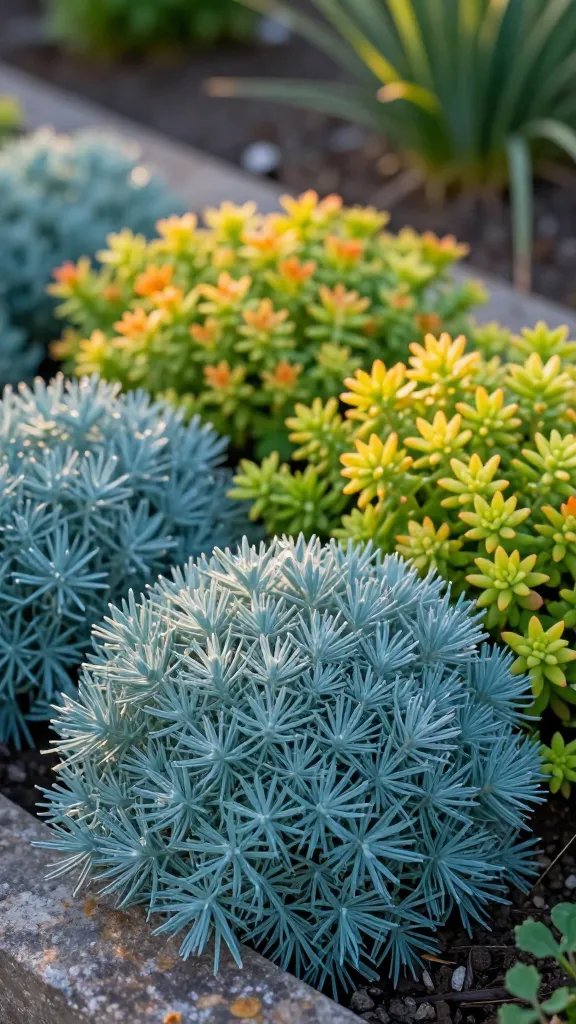
Want a spiky look without needles? Pair the gentle, hairbrush-like clumps of Blue Fescue (Festuca glauca) with the cushy, rubberized fronds of Sedum ‘Angelina’ (Sedum rupestre). It reads dynamic and edgy, but your fingertips stay happy.
Standout Features
- Touch-safe spikes: Blue fescue’s blades resist pokes while still feeling bristly.
- Springy succulence: ‘Angelina’ compresses under light pressure and rebounds—oddly satisfying.
- Color contrast: Icy blue vs. lime-chartreuse that blushes orange in cold weather.
How To Place It
- Tuck fescue in small mounds along a border; weave ‘Angelina’ between for a textured carpet.
- Use gritty, well-drained soil; both hate wet feet.
- Shear fescue lightly in late winter; pinch ‘Angelina’ to keep it dense and touchable.
Perfect for sunny rock gardens, curb strips, or low-planters you can reach from a bench. You’ll get year-round texture that stays neat, hardy, and totally pettable—FYI, it’s a crowd-pleaser.
Ready to build a garden you can’t stop touching? Mix these pairings across paths, around seats, and near doorways so your hands meet new textures every few steps. Start with one combo, then layer more—trust me, your inner kid (and your grown-up stress levels) will thank you.