
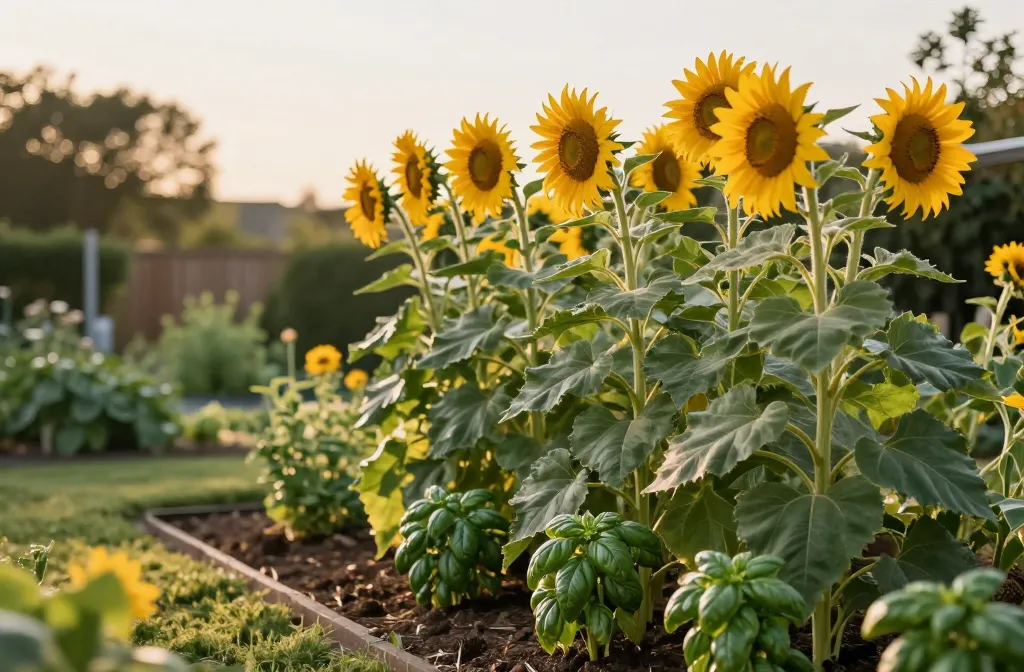
Your garden can beat the heat without ugly shade cloths. Pair the right plants and you’ll create living shade that cools the soil, protects tender crops, and saves you from constant watering. These combos look stunning, grow fast, and make your yard feel like a tiny oasis. Ready to plant smarter, not harder?
1. Canopy Queens: Sunflowers + Cucumbers (With Bonus Basil)
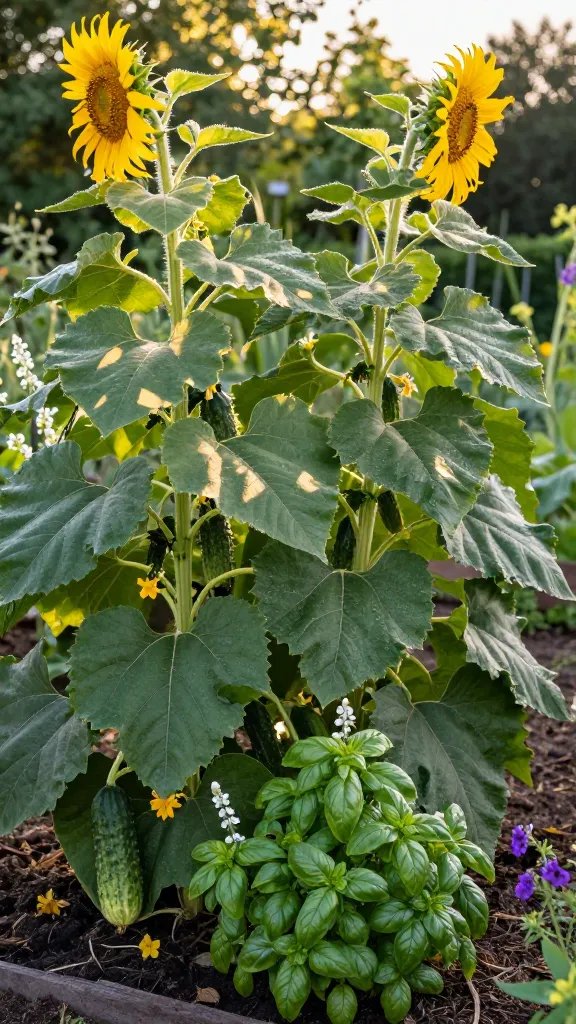
Sunflowers throw tall, dappled shade right when summer gets mean. Cucumbers love that filtered light and will happily climb the sturdy stalks. Add basil at the base to perfume the party and deter pests.
Why It Works
- Sunflower canopy cuts harsh afternoon rays and reduces leaf scorch on cukes.
- Cucumber vines use the sunflower stalks as natural trellises—no hardware needed.
- Basil boosts airflow, attracts pollinators, and adds pest confusion aromatics.
Plant sunflowers 18–24 inches apart on the west side of your bed so they cast afternoon shade. Direct-sow cucumbers 12 inches from sunflower bases once the stalks hit 2 feet tall. Tuck basil between them every 10–12 inches.
Pro Tips
- Choose branching sunflowers (like ‘Autumn Beauty’) for longer-lasting shade.
- Mulch deeply—sunflowers drink like they mean it.
- Prune cucumber tendrils lightly so they climb the stalks instead of strangling leaves.
Use this combo when mid-summer sun cooks your cucumbers and you’re sick of rearranging trellises. The shade keeps cucumbers tender and less bitter—seriously.
2. Desert Dream Team: Corn + Pumpkins + Pole Beans (The “Three Sisters” Remix)
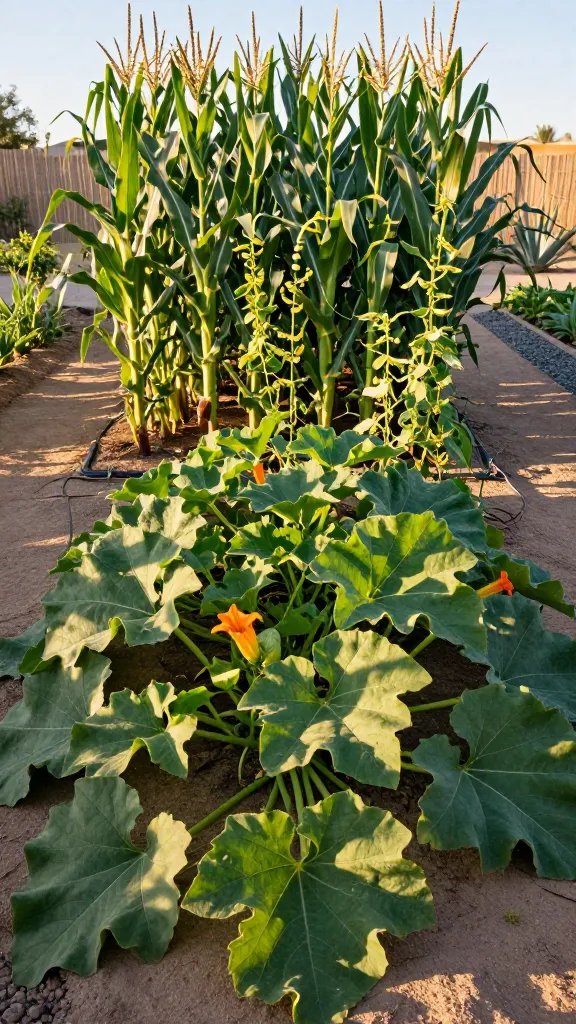
This classic trio isn’t just folklore—it’s climate-savvy. Corn becomes the living shade pole, pumpkins spread as a groundcover sunscreen, and pole beans thread through the corn for vertical harmony. It’s a heat-beating polyculture that feeds you and your soil.
How To Set It Up
- Corn ring: Sow in a block (not a row) for wind stability—4×4 minimum.
- Beans: Add 2–3 seeds around each corn plant once corn hits 8–10 inches.
- Pumpkins: Plant on the south or west side to sprawl under the canopy.
As corn rises, it casts light shade that cools the pumpkin leaves. Pumpkins mulch the soil and squash weeds—plus they bounce heat back up, making a cozy microclimate for beans.
Key Points
- Spacing: 12 inches for corn; beans right at the base; pumpkins 3–4 feet out.
- Varieties: Choose sturdy corn, twining pole beans, and compact “pumpkin” or winter squash if you’re space-limited.
- Water: Deep, infrequent waterings to drive roots down and keep everyone chill.
Use this when you want a self-supporting, low-weed patch that shrugs off heatwaves. FYI, it also looks lush and a little wild—in a good way.
3. Mediterranean Shade Club: Olive or Bay Laurel + Lavender + Lettuce
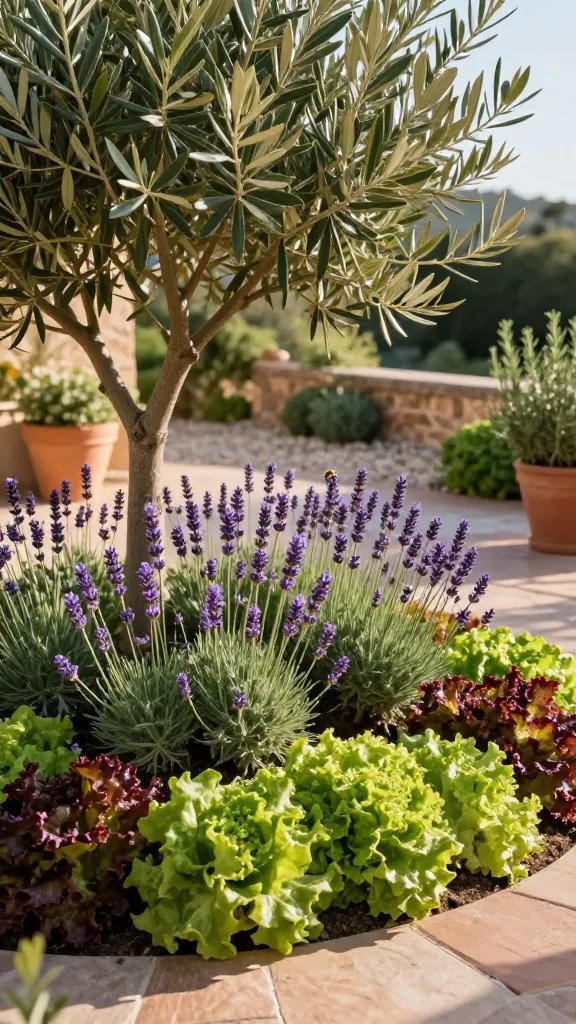
Hot patio? Mediterranean plants laugh at it. A young olive or bay laurel tree casts light, silvery shade that keeps lavender happy and shields tender lettuces during scorchy afternoons. It’s drought-smart and gorgeous.
Planting Layout
- Tree anchor: Plant a dwarf olive or bay laurel as your canopy—choose a sunny corner with drainage.
- Lavender ring: Space plants 18 inches apart around the tree for fragrance and pollinators.
- Cool crops: Tuck cut-and-come-again lettuces in the lavender’s partial shade.
The tree filters sun, lavender buffers wind and dries foliage fast, and lettuces enjoy cooler soil under the fragrant skirt. You get salad greens longer into summer, IMO a win.
Care Notes
- Soil: Gritty, well-drained mix—raised beds or mounded plantings help.
- Pruning: Lift the tree canopy slightly to control where the shade falls.
- Water: Deep soak the tree, lighter drinks for lavender; mist lettuce in heat spikes.
Use this combo for patios, courtyards, or narrow beds where you want beauty, bees, and shade that doesn’t feel heavy. Bonus: zero plastic shade cloths ruining your vibe.
4. Tropic-Lite Tiers: Banana or Canna + Ginger + Spinach
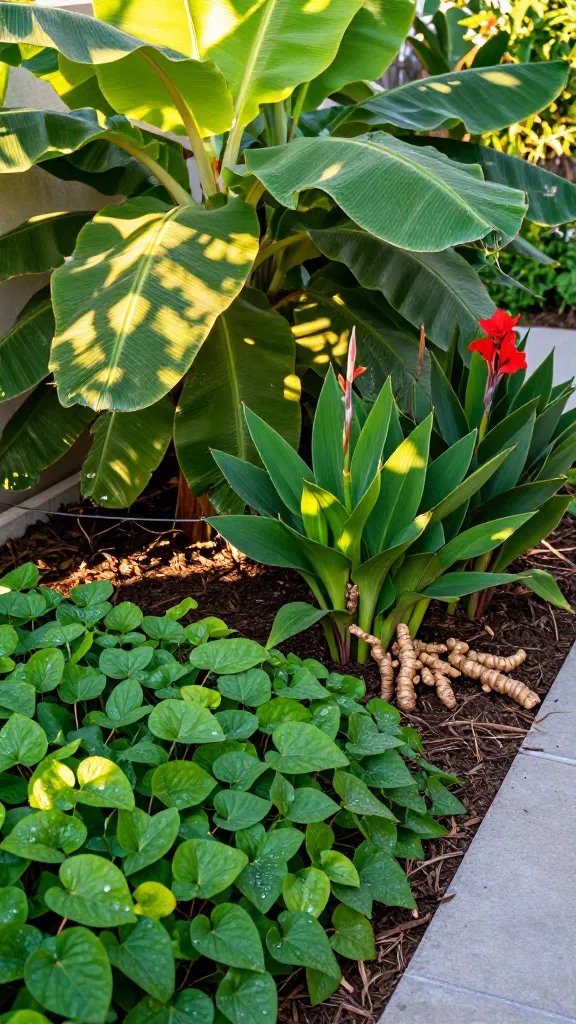
If you crave lush jungle energy without the drama, layer heights that love heat but give shade where it counts. Bananas or cannas create a quick canopy, edible gingers fill mid-level, and heat-tolerant spinach chills underneath. It’s the plant version of sunscreen with a side of style.
Build The Layers
- Canopy: Dwarf banana (e.g., ‘Dwarf Cavendish’) or red canna for fast leaves and filtered light.
- Mid-story: Turmeric or galangal—pretty and practical edible rhizomes.
- Understory: Malabar spinach or New Zealand spinach for summer-hardy greens.
Big leaves shade the soil, reduce evaporation, and cut sun scorch on tender greens. Gingers love the humid microclimate the canopy creates—everyone wins.
Tips For Success
- Soil & water: Rich compost and consistent moisture—mulch like a boss.
- Placement: West or south exposure where you need afternoon shade.
- Containers: Totally viable—use big pots and cluster them to make instant shade pockets.
Use this when you want edible drama and reliable summer greens. Plus, it makes your yard feel like a vacation—no airfare required.
5. Woodland Edge Magic: Serviceberry + Black-Eyed Susan + Cilantro/Coriander
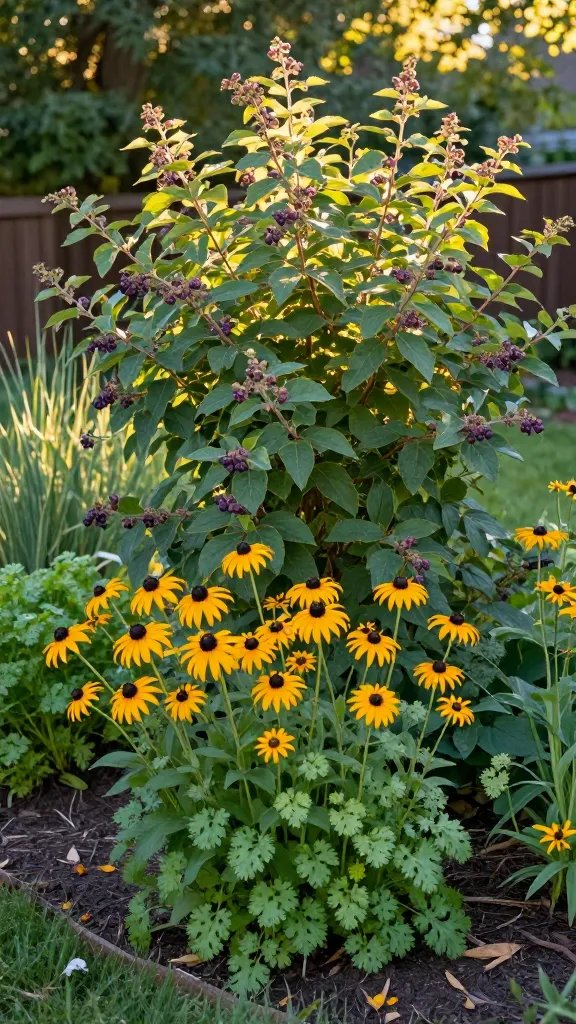
You don’t need a forest to get woodland benefits. A small fruiting shrub like serviceberry throws gentle shade, while black-eyed Susans bring pollinators and bright color. Cilantro steals the cool shade to stay leafy longer before bolting.
Why This Trio Slaps
- Serviceberry (Amelanchier): Spring flowers, summer fruit, and a perfect dappled canopy.
- Rudbeckia: Heat-tolerant, sturdy stems, and pollinator magnets that thrive in light shade.
- Cilantro: Stays edible longer with afternoon shade, then bolts for beneficial insects later.
Plant serviceberry on the western edge to cast shade over the herb bed. Slot Rudbeckia in a sunny arc where it still gets strong morning light. Sow cilantro on the shaded side every 2–3 weeks for a steady harvest.
Smart Moves
- Watering: Deep soak the shrub, light to moderate for flowers and herbs.
- Pruning: Thin a few interior branches of serviceberry to manage shade density.
- Succession: Keep cilantro coming with fresh sowings—heat happens.
Use this combo when you want a pretty border that multitasks: blooms, fruit, herbs, and built-in sun protection for tender greens. It’s low-fuss and high-reward, trust me.
Ready to build your living shade squad? Mix heights, think about where the afternoon sun hits hardest, and let tall plants do the heavy lifting. With these combos, you’ll protect delicate crops, save water, and make your garden look like it knows exactly what it’s doing—because it does.