
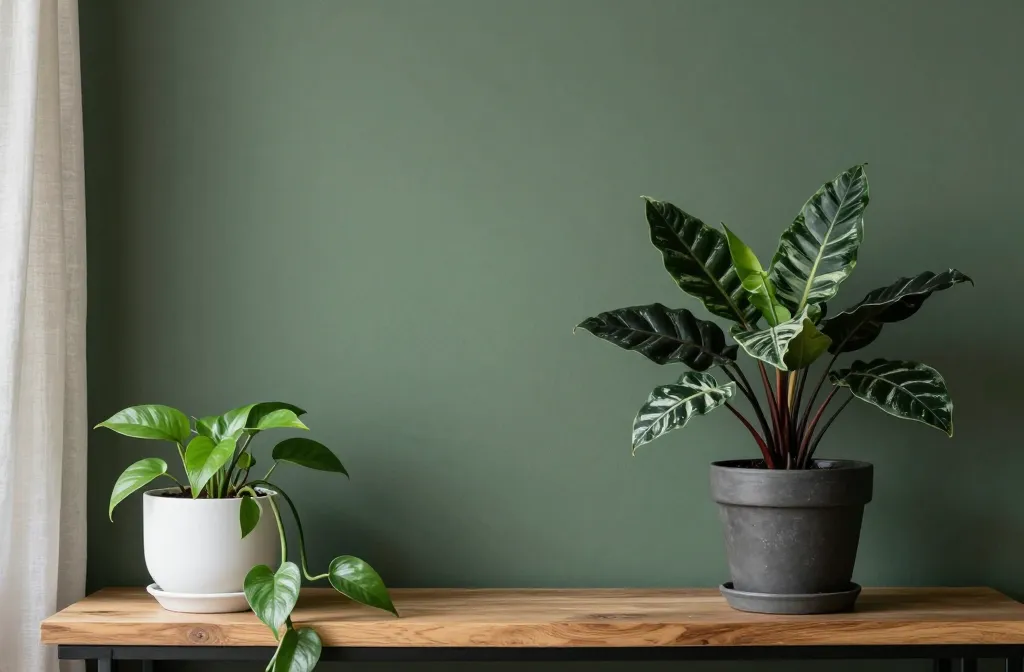
Love plants but want more drama than plain green? Pair variegated beauties and you’ll get instant pattern play, contrast, and texture that looks curated—without trying too hard. These combos highlight stripes, splashes, and marbling so your shelf or border looks like a mini botanical runway. Ready to turn your house jungle into a high-fashion foliage moment?
1. Marble And Velvet Magic
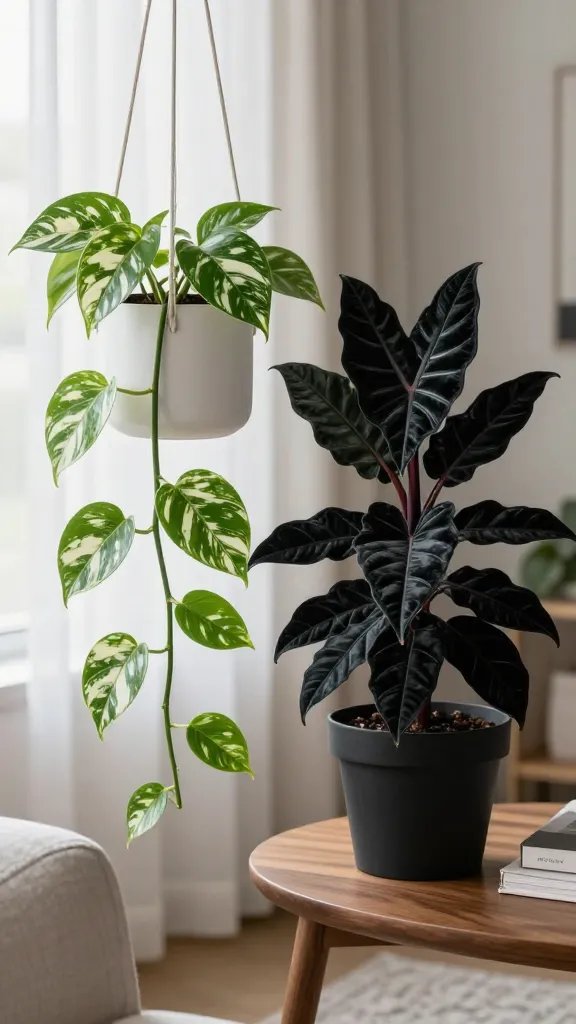
Classic contrast never fails. Pair the glossy, marbled white of a ‘Marble Queen’ Pothos with the deep, velvety sheen of a ‘Black Velvet’ Alocasia and you’ll get a light/dark balance that snaps in any room.
The pothos sprawls and trails, while the alocasia stands upright with architectural leaves. Together they read as effortless and luxe.
Why It Works
- Contrast in finish: glossy variegation versus plush matte velvet
- Opposite forms: trailing vs. upright for visual rhythm
- Shared care: bright indirect light, moderate humidity
Tips
- Use a pedestal or stack of books to lift the alocasia so the pothos can drape.
- Keep soil evenly moist for the alocasia; let the pothos dry slightly—use separate pots, same tray.
- Rotate weekly so both sides catch light and the pothos doesn’t hog all the space.
Best for accent corners where you want drama without a ton of plants. IMO, this duo looks like moody art.
2. Jungle Stripes With Polka-Dot Pop
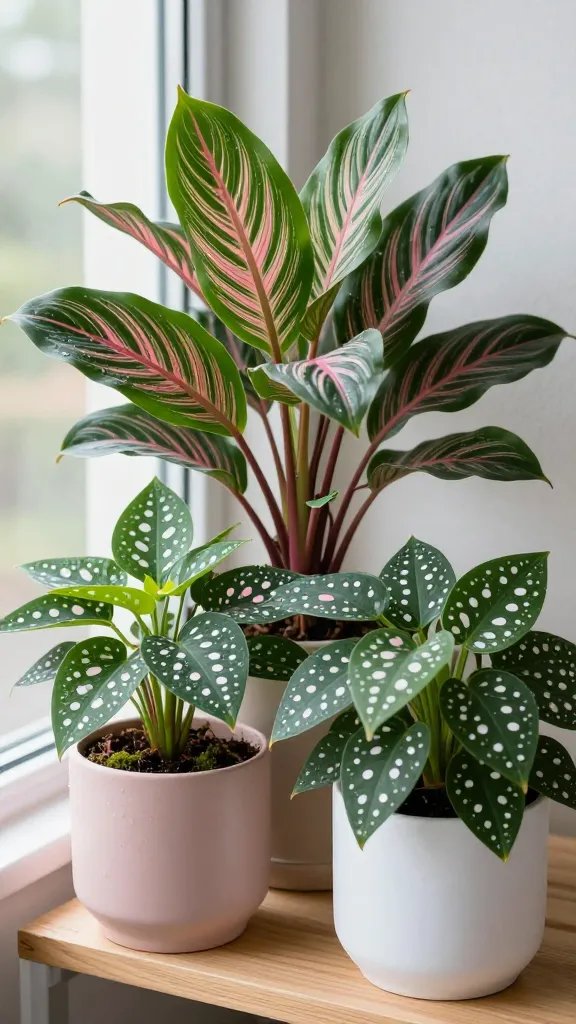
If you love pattern-on-pattern, this is the moment. Combine the zebra-like stripes of a Calathea ornata (pink pinstripes!) with the playful speckles of Hypoestes phyllostachya (polka dot plant) in white or pink variegation.
It’s cheerful and weirdly cohesive. The stripes lead your eye, the dots add personality, and both love humidity.
Key Points
- Pattern pairing: lines + dots keep the eye moving
- Color echo: pick polka dots that echo the calathea’s pink or white
- Shared microclimate: warm temps, high humidity, and filtered light
How To Style
- Layer in a shallow trough planter for a mini “pattern bed.”
- Add a small moss pole or stake for structure behind the calathea.
- Place near a north or east window to avoid crispy edges.
Use this combo for bathroom shelves or kitchen windows where steam keeps leaves lush. Trust me, the polka dots steal every selfie.
3. Bold White Borders With Silver Engineered Calm
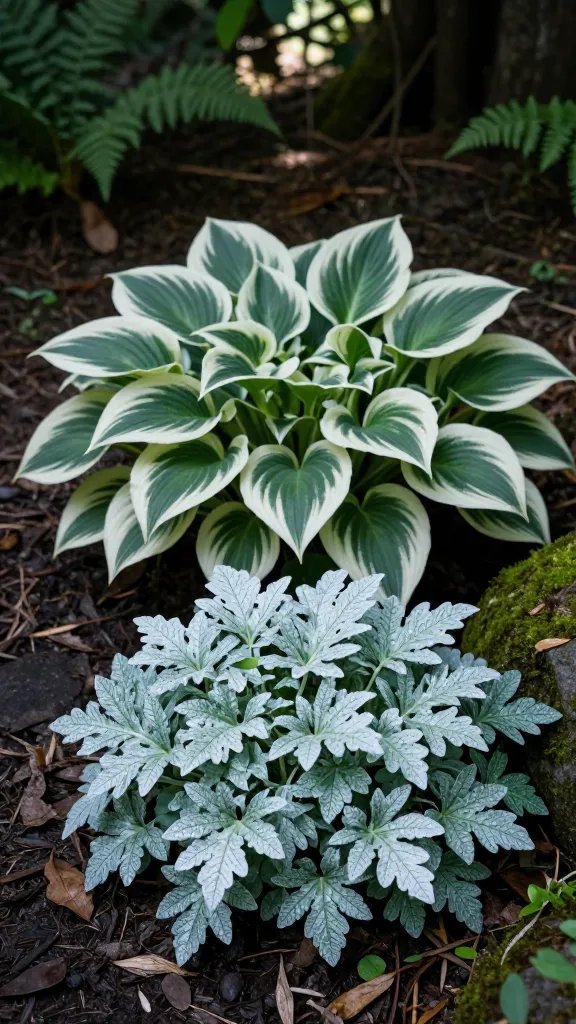
Go cool-toned and clean with a ‘White Variegated’ Hosta (think broad leaves with creamy edges) next to Brunnera macrophylla ‘Jack Frost’ (silvered leaves with green veining). It screams woodland chic on a budget.
The hosta grounds the scene with wide, domed foliage. Brunnera weaves silvery light through the shade like a mirror for your garden floor.
Why It Slaps Outdoors
- Shade synergy: both thrive in partial to full shade
- Texture contrast: hosta’s bold leaves vs. brunnera’s delicate heart-shape and fine veining
- Seasonal perk: brunnera sends up airy blue blooms in spring
Planting Tips
- Keep soil consistently moist with organic mulch—it protects those variegated edges.
- Stagger planting: hosta in back, brunnera front for layered depth.
- Watch slugs; use copper tape or iron phosphate pellets, not salt (your soil will thank you).
Great for shady entries or under trees where you want brightness without flowers overshadowing everything.
4. Tropical Graph Paper Meets Brushstrokes
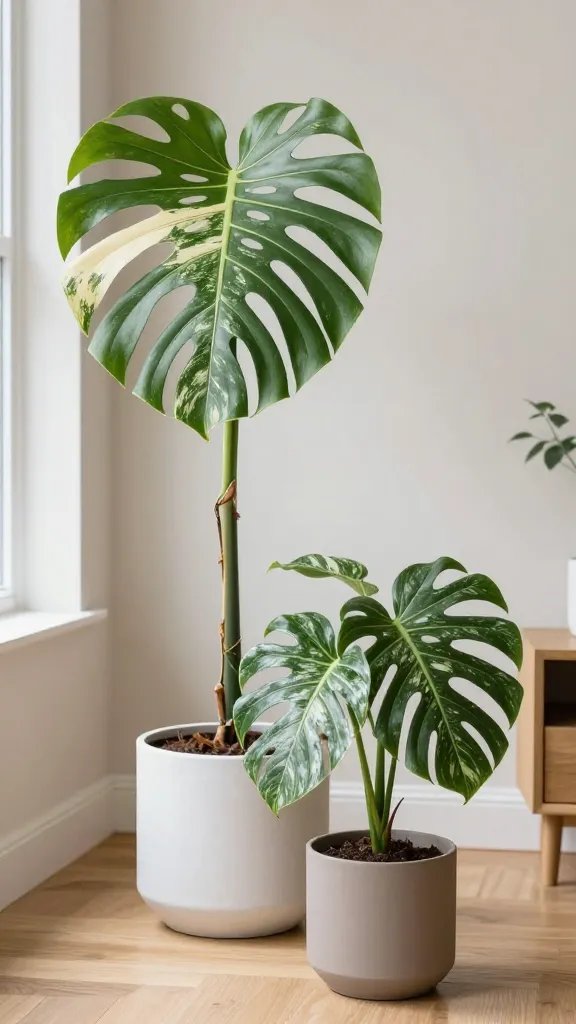
If you like precise patterns, pair a ‘Birkin’ Philodendron (fine white pinstripes) with a Variegated Monstera deliciosa (splashed cream and green). Stripes + brushstrokes = gallery-worthy foliage mashup.
‘Birkin’ behaves and stays compact. Variegated monstera brings the “wow” with fenestrations and big, painterly blotches.
Display Ideas
- Use a tall pot for monstera with a moss pole; keep ‘Birkin’ in a lower, wider pot for balance.
- Choose neutral planters—white cement or matte taupe—so patterns shine.
- Bright indirect light is non-negotiable for variegation intensity.
Care Sync
- Water rhythm: let top inch dry for both; don’t drown the ‘Birkin’
- Humidity: 50–60% keeps leaves crisp without drama
- Feeding: half-strength balanced fertilizer every 4–6 weeks in growing season
Use this duo as a focal point by a large window. It reads refined, not chaotic—seriously, even plant skeptics will comment.
5. Sun-Kissed Edges With Copper Confetti
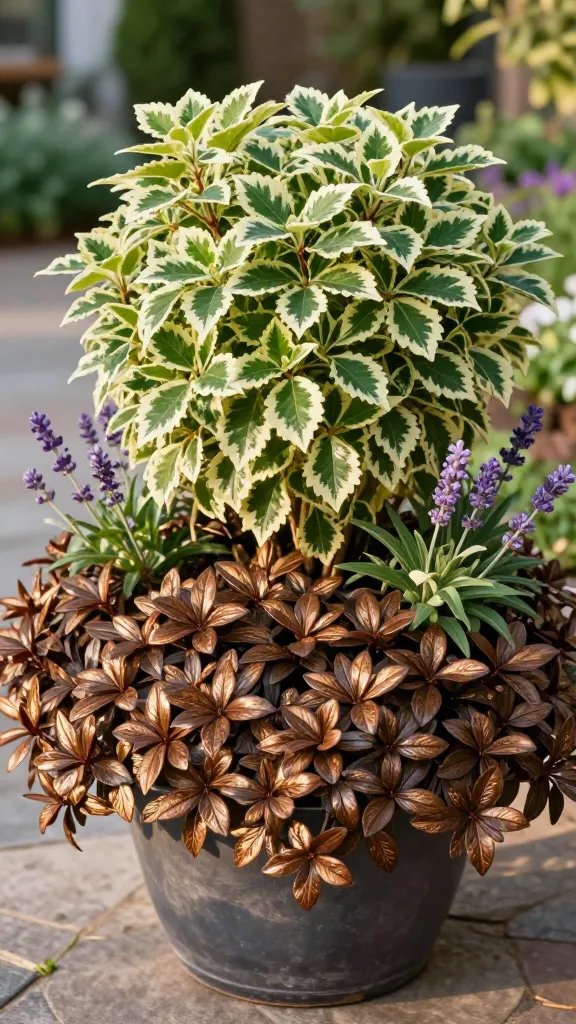
For outdoor containers that stop people mid-walk, marry the creamy margins of Euonymus fortunei ‘Emerald Gaiety’ with the freckled bronze-splashed leaves of Ajuga reptans ‘Chocolate Chip’ or a variegated ajuga. You get tidy structure up top and a living rug below.
Euonymus gives year-round presence. Ajuga fills gaps fast, adds purple-blue blooms in spring, and flashes metallic tones that make the euonymus pop.
Container Formula
- Thriller: Euonymus ‘Emerald Gaiety’
- Filler/Spiller: Ajuga ‘Chocolate Chip’ or variegated cultivar
- Optional Spark: Calibrachoa in white or soft pink to echo the variegation
Practical Notes
- Full sun to part shade; more sun sharpens euonymus edges, part shade keeps ajuga glossy.
- Use well-draining mix; don’t overwater ajuga in containers.
- Trim euonymus lightly in late spring to keep a compact silhouette.
Perfect for porches and patios where you want low-maintenance color that still looks intentional. FYI, bees love the ajuga blooms—bonus points.
Bonus Pairing Ideas To Swap Into Any Section
- Tradescantia ‘Nanouk’ + Variegated Peperomia obtusifolia: candy stripes with chunky gloss.
- Sansevieria ‘Moonshine’ + Variegated ZZ ‘Raven’ sport: sculptural silhouettes with subtle variegation for low light.
- Caladium ‘White Christmas’ + Variegated Japanese Forest Grass (Hakonechloa): airy movement meets graphic leaves for shade borders.
Mix and match depending on your light and vibe. Patterns play nice when you keep one element consistent—color, form, or texture.
General Variegated Care Cheat Sheet
- Light: Bright, indirect light keeps variegation crisp; too little turns leaves green.
- Water: Variegates often grow slower; water less aggressively than all-green counterparts.
- Feeding: Light but regular feeding supports new patterned growth.
- Pruning: Cut fully green reversions ASAP to maintain pattern.
- Cleaning: Dust leaves monthly so patterns shine and photosynthesis stays efficient.
Ready to play foliage matchmaker? Start with one duo from above, then add a third plant that echoes a color or leaf shape and watch the whole arrangement click. Your home (or garden) will look curated, not crowded—and you’ll get that delicious “how did you do that?” from guests. Go make those variegated leaves the main character.