
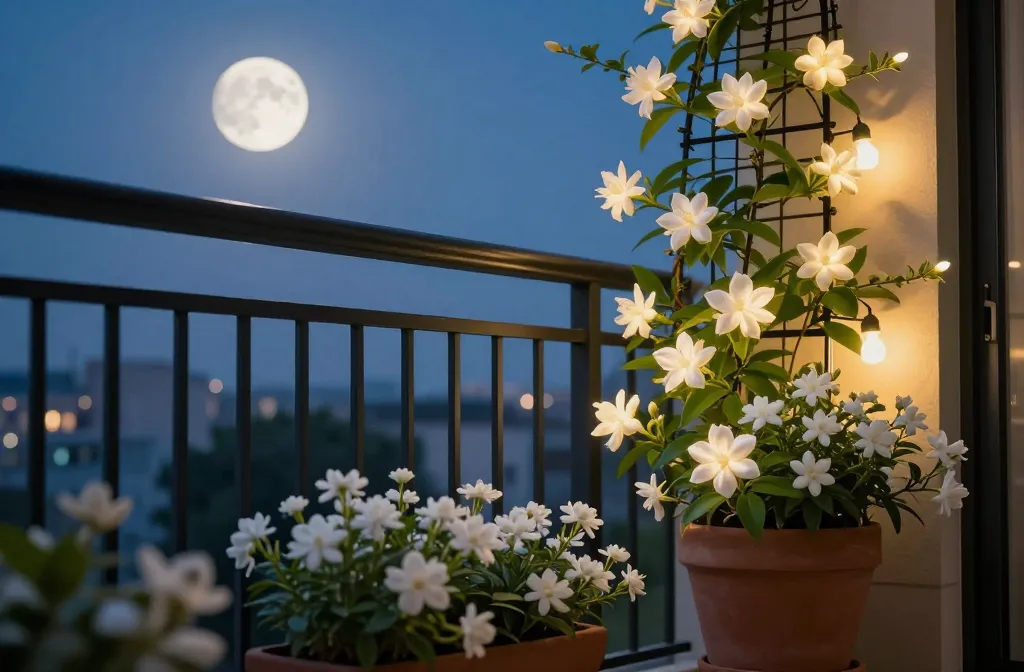
Your balcony can look good at noon, sure—but what about when the sun clocks out? Night-blooming plants wake up when the air cools, perfuming the evening and glowing in low light. Pair them right and you’ll get layered fragrance, contrasting forms, and blooms that look electric under moonlight. Ready to turn your balcony into a twilight retreat? Let’s build combos that seriously deliver after dark.
1. Jasmine + Moonflower + Sweet Alyssum: The Scent-Layered Glow Trio
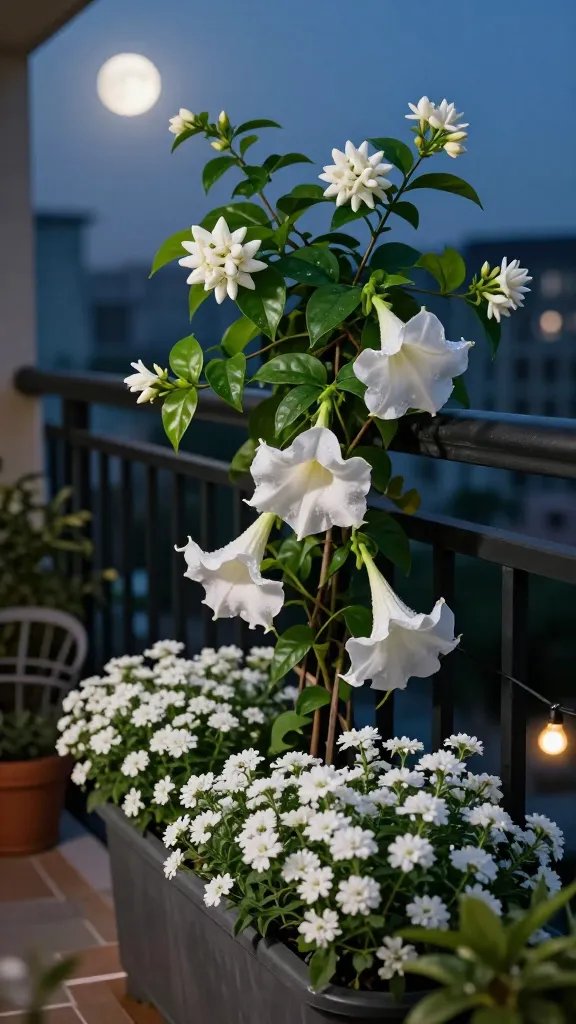
Want a balcony that smells like a summer evening in a romantic movie? This combo stacks fragrance from waist level to eye level, with blooms that pop against the dark. It’s easy to keep tidy in containers and looks stunning wrapped around railings.
Why It Works
- Star Jasmine (Trachelospermum jasminoides) or night-blooming jasmine (Cestrum nocturnum) climbs and perfumes the air after dusk.
- Moonflower (Ipomoea alba) opens huge white flowers at night—like soft lanterns you didn’t have to plug in.
- Sweet Alyssum (Lobularia maritima) spills over pot edges with honey-scented clusters that glow in low light.
Tips
- Use a tall trellis for jasmine and moonflower together; train them in opposite spirals.
- Choose white-flowering alyssum for maximum “moonlit” vibe.
- Water consistently; moonflower sulks if soil dries out completely.
Use this when you want instant romance with minimal fuss. It’s peak balcony date-night energy, IMO.
2. Evening Primrose + Nicotiana + Silver Dust: The Soft-Lit, Pollinator-Friendly Mix
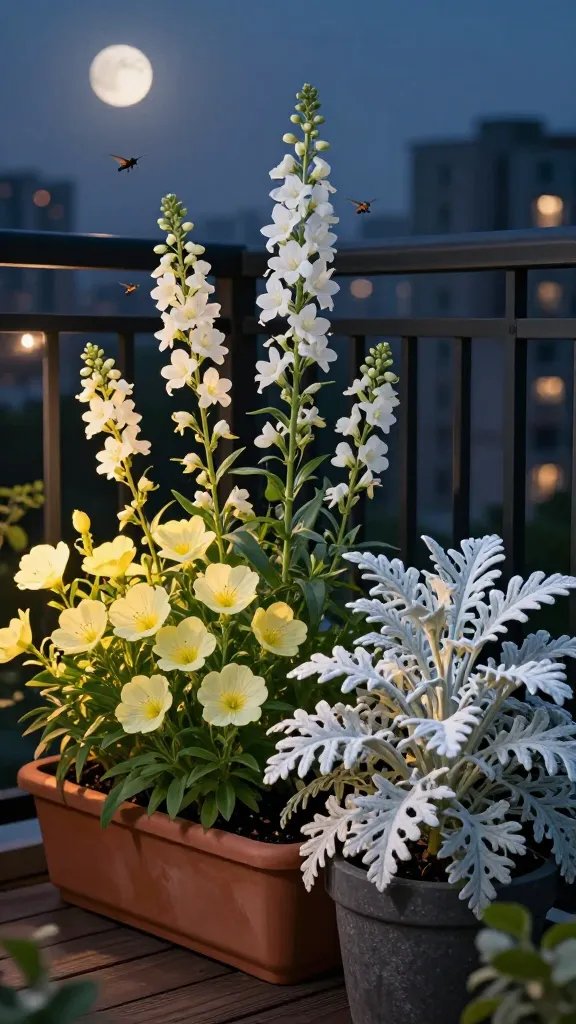
If you love watching moths and night pollinators, this combo is your front-row seat. It blends buttery and lime-white blooms with silvery foliage that reflects every speck of moonlight. Bonus: it’s drought-tolerant once rooted in decent containers.
Why It Works
- Evening Primrose (Oenothera biennis or O. speciosa) opens at dusk and shines like tiny lanterns.
- Flowering tobacco (Nicotiana alata or N. sylvestris) releases a sweet scent in the evening with elegant trumpet blooms.
- Dusty Miller (Senecio cineraria) or ‘Silver Dust’ adds frosty leaves that catch light even in the shadows.
Planting Notes
- Use a medium-deep container (at least 12 inches) with well-draining mix.
- Deadhead nicotiana for steady bloom; evening primrose reseeds, FYI, so clip spent stems if needed.
- Place dusty miller at the container edge for that glowing halo effect.
Perfect if you want a low-light focal point that invites night life—literally. Great for warm climates and compact porches.
3. Tuberose + Night Phlox + Variegated Vinca Vine: The Luxe Perfume Corner
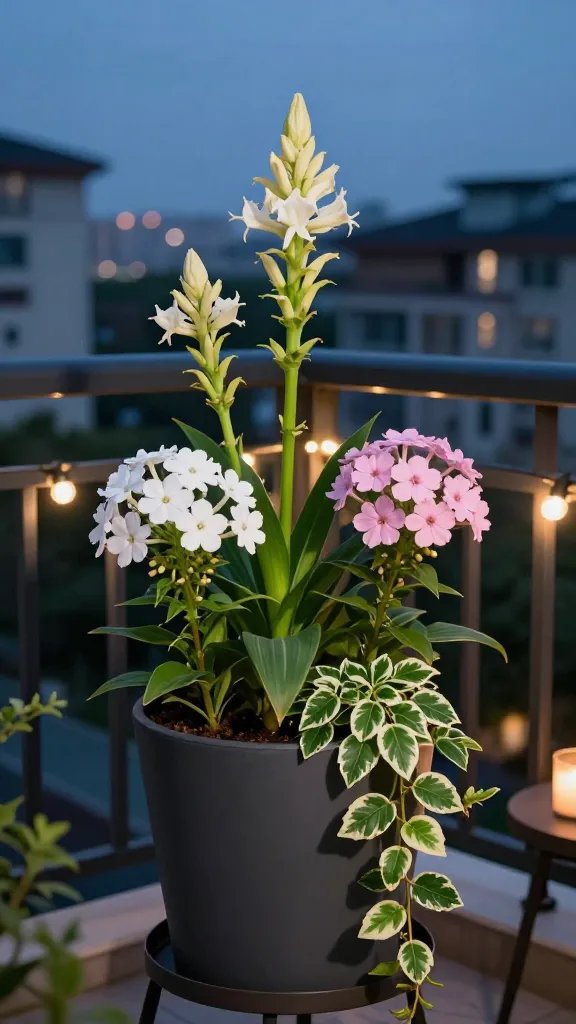
You want drama? This one brings luxury fragrance and sleek structure in a compact footprint. It’s the blend that makes guests ask, “What is that smell?”—in the best way.
Why It Works
- Tuberose (Polianthes tuberosa) delivers creamy, heady perfume that intensifies at night—classic for a reason.
- Night Phlox (Zaluzianskya capensis), nicknamed “midnight candy,” smells like vanilla and honey when the sun sets.
- Variegated vinca vine (Vinca major ‘Variegata’) spills with pale edges that read bright at dusk.
Grower Tips
- Plant tuberose bulbs in a deep pot (14–16 inches) with full sun, then enjoy evening scent as temperatures drop.
- Give night phlox front-row placement; blooms are small but luminous.
- Pinch vinca to keep it graceful, not unruly; it frames the pot without hogging the show.
Use this when you crave a signature scent for your balcony lounge. It’s a small-space powerhouse—seriously luxurious after dark.
4. Night-Blooming Cereus + Queen of the Night Cactus + White Calibrachoa: The One-Night Wonders (Worth The Hype)
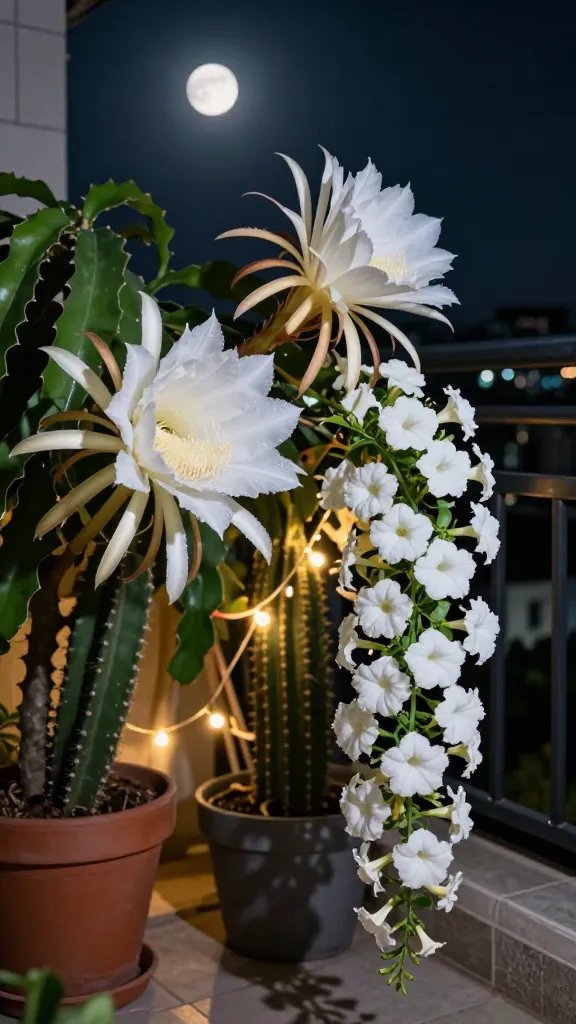
If you live for those “blink and you’ll miss it” moments, lean into cacti that throw legendary nighttime blooms. Pair them with a steady white bloomer to keep the show going between dramatic events. Think of it as your balcony’s surprise party.
Why It Works
- Night-Blooming Cereus (Epiphyllum oxypetalum) unfurls giant, fragrant flowers—sometimes only once or twice a season.
- Queen of the Night (Selenicereus grandiflorus) does similar fireworks with even larger blooms in optimal conditions.
- White calibrachoa (aka mini petunias) fills in nightly brightness and attracts beneficials at twilight.
Care Basics
- Use a chunky orchid/cactus mix for cereus; they’re epiphytic and hate soggy soil.
- Bright indirect light to morning sun is ideal; protect from harsh afternoon scorch.
- Feed lightly during warm months; prune calibrachoa to keep it blooming hard.
When to use? If you love anticipation. These blooms are event TV for plant people—set an alarm so you don’t miss the opening.
5. Four O’Clocks + Brugmansia + White Gaura: The Majestic Balcony Showstopper
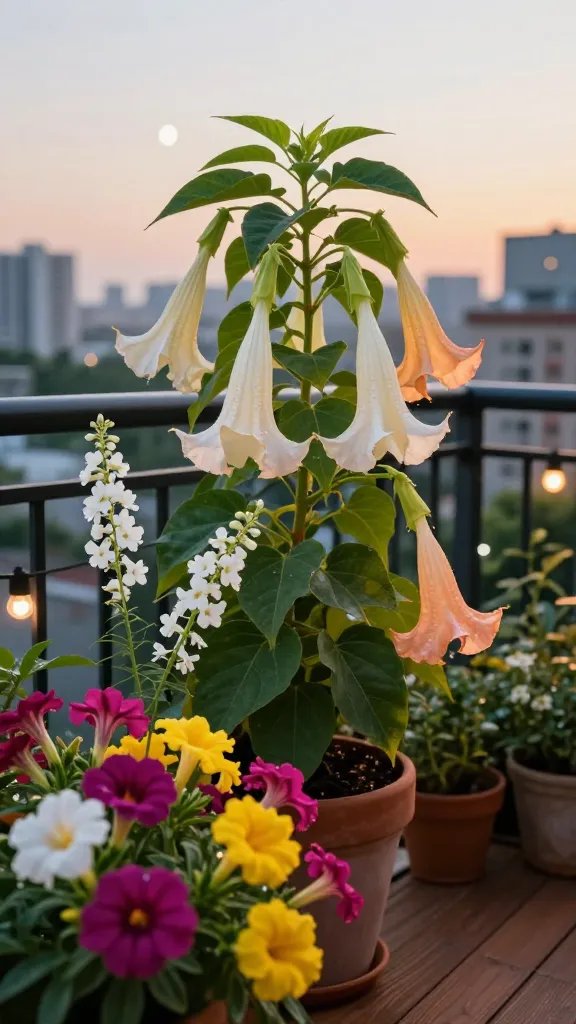
Go big or go inside—this is your bold, architectural combo for medium-to-large balconies. You get trumpet blooms, swaying wands, and late-day openers that keep the party going till bedtime.
Why It Works
- Four O’Clocks (Mirabilis jalapa) open in the late afternoon and release a fruity, spicy scent all evening.
- Brugmansia (Angel’s trumpet) delivers massive hanging bells with intoxicating fragrance—like a chandelier that smells incredible.
- White gaura (Oenothera lindheimeri) adds airy “butterflies” that move with every breeze and glow at dusk.
Container Strategy
- Brugmansia wants a big pot (at least 18–20 inches) and regular water; add a slow-release fertilizer.
- Place four o’clocks in a separate container to control reseeding; they’re enthusiastic.
- Gaura handles heat and wind well—perfect for balcony edges.
Pick this when you want maximum “wow” with fragrance that floats. Great for evening gatherings and balconies with some wind protection.
Ready to build your moonlight garden? Start with one combo you love and scale up as you learn how your balcony microclimate behaves. Choose whites, creams, and silvers to catch the glow, then layer scents so every evening feels a little different. Trust me: once you get used to that nighttime perfume drifting in, you’ll never skip the sunset watering ritual again.