
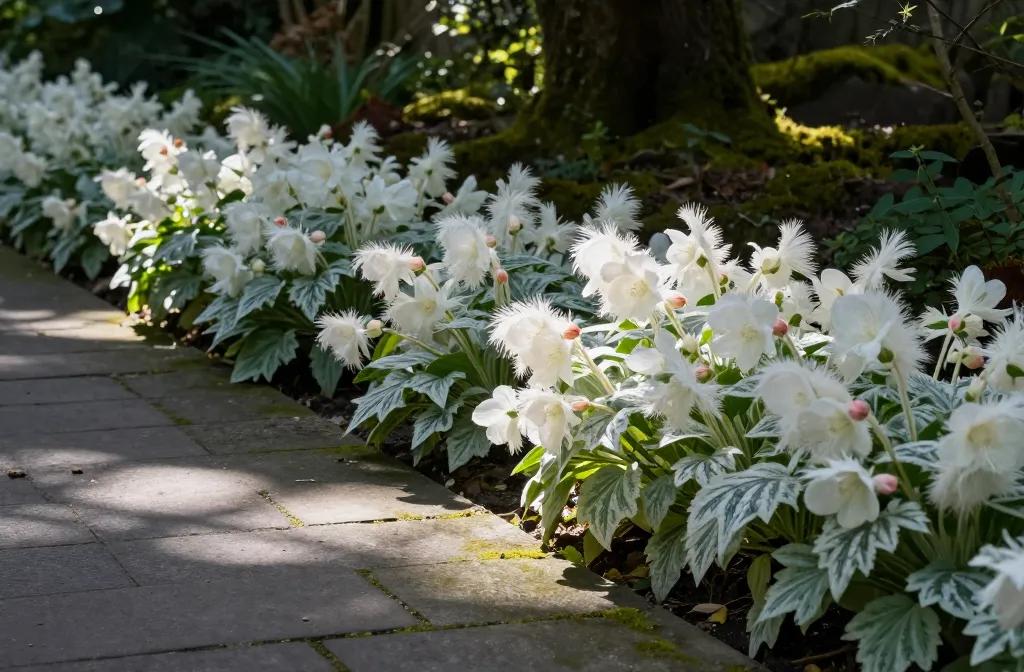
Shady edges feel tricky until you meet foamflower. These feathery, spark-like sprays brighten dim corners, soften hard transitions, and look amazing with almost zero drama. If your path-to-woodland gap or deck-to-garden seam feels meh, these picks turn it into a quiet showstopper. Ready to make the shade your secret flex?
1. Tiarella ‘Spring Symphony’—The Early Crowd-Pleaser
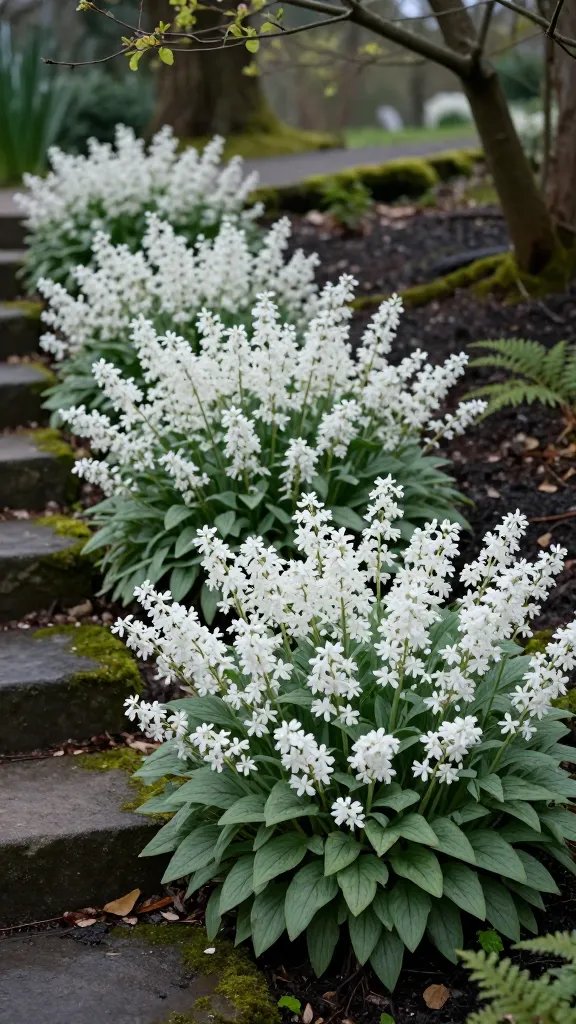
This variety wakes up fast, tossing up clouds of fine white wands right as your garden yawns into spring. The foliage brings extra interest with subtle lobes and a neat, compact habit that keeps paths tidy.
Why It Works
- Blooms early to bridge bare spring soil and summer height
- Compact size fits tight transition strips
- Clean white sprays pop in low light
Use ‘Spring Symphony’ where you need quick energy right off the bat—like between shady steps and a larger bed. The early bloom sets the tone for the season.
2. Tiarella ‘Sugar And Spice’—Fragrant Flickers For Path Edges
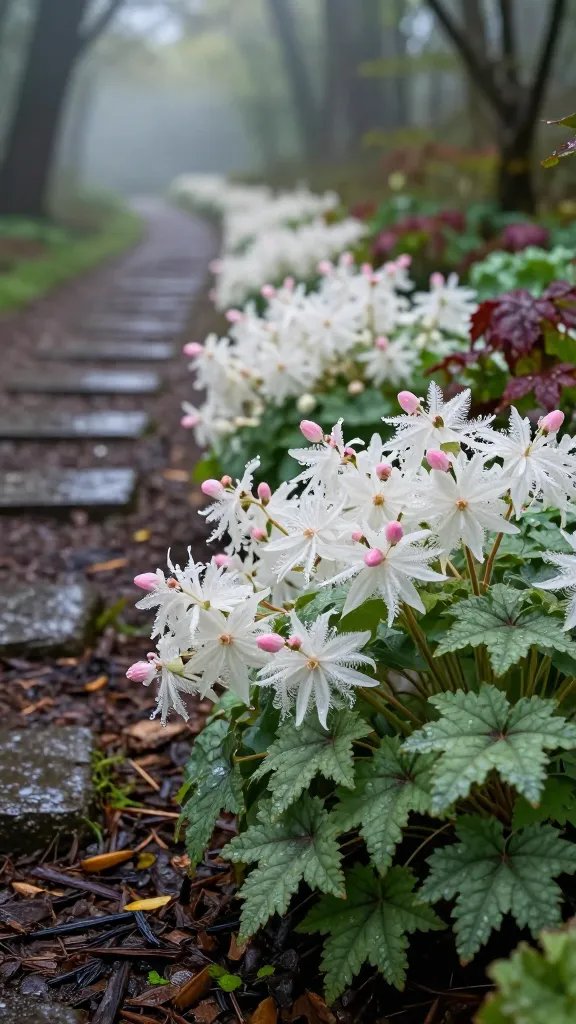
Want a little scent with your sparkle? These blush-pink buds open to white sprays that read like a soft halo along shady paths. The foliage sports dark central markings for extra drama.
Tips
- Plant in drifts of 5–7 for a glowing ribbon
- Mix with heuchera for color echo and contrast
- Keep soil evenly moist for the best bloom flush
Great where you walk by often—those fragrant sprays reward everyday routes. FYI: this one photographs like a dream after rain.
3. Tiarella ‘Iron Butterfly’—Textured Leaves, Airy Spires
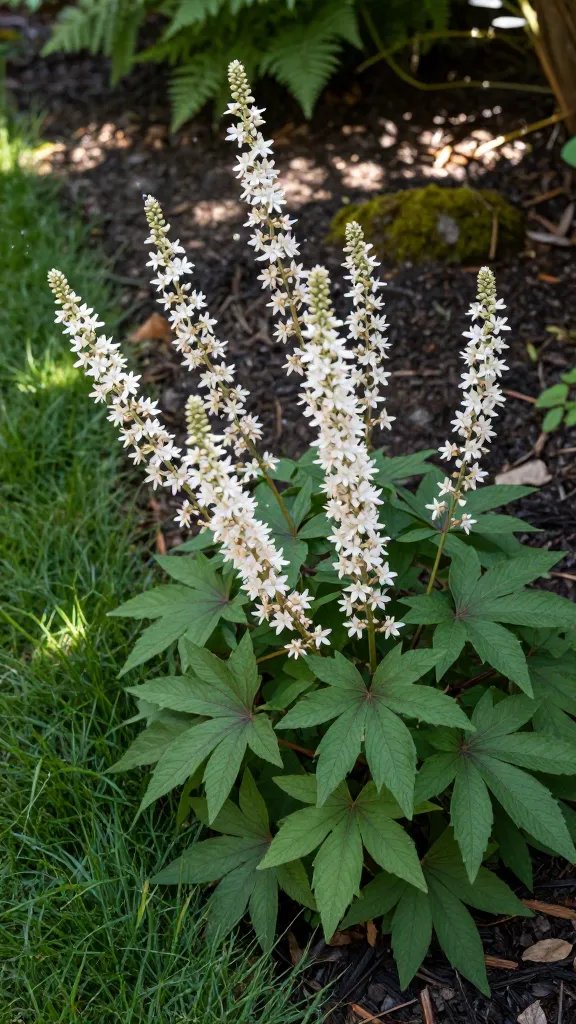
Deeply cut foliage brings lacy texture, then the plant throws up tall sprays that float like tiny sparklers. It nails that “wild yet tidy” woodland vibe.
Key Points
- More leaf drama than most varieties
- Taller sprays give vertical pop in shade
- Handles dappled sun without sulking
Place it where you want movement and texture between a lawn edge and a shade bed. It pulls your eye up and softens the handoff.
4. Tiarella ‘Pink Skyrocket’—A Subtle Blush That Reads Luxe
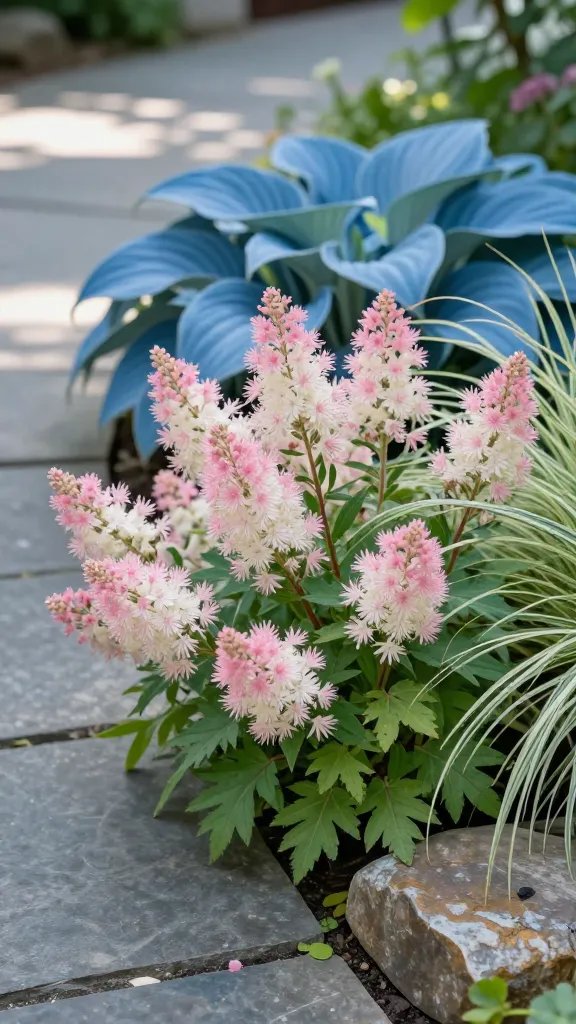
If pure white feels too stark, try the cool-girl cousin with rosy-pink tints. The sprays keep the foamflower charm but lean a bit warmer in tone.
Materials To Pair
- Blue hostas to cool the pinks
- Soft variegated sedge for movement
- Weathered stone to ground the pastels
Use it where a hardscape meets shade—like beside a slate path. The blush tone warms up gray stone without shouting.
5. Tiarella ‘Crow Feather’—Leaf Markings With Moody Energy
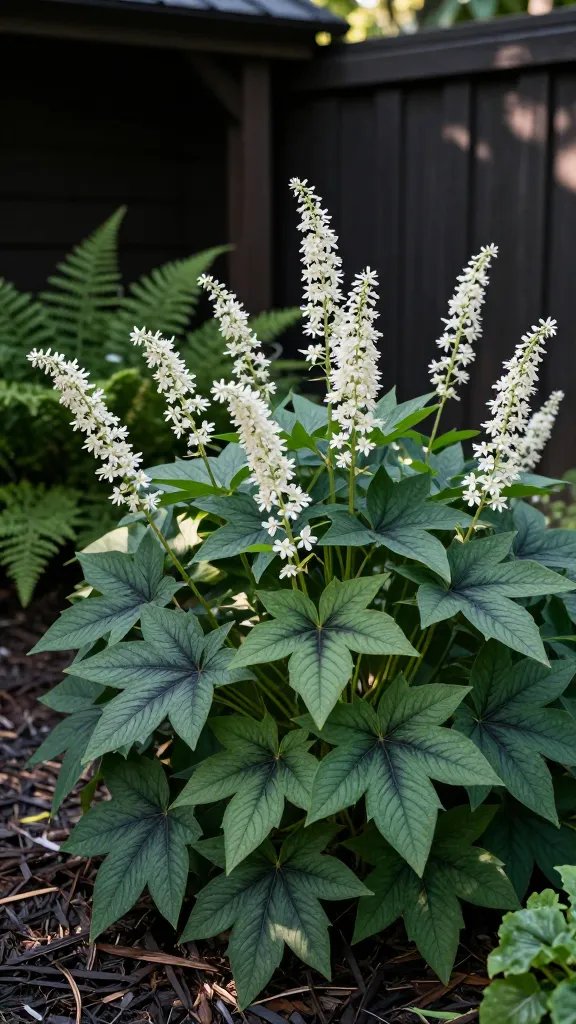
Those inky central veins? Chef’s kiss. Add airy white sprays, and suddenly you have contrast that looks intentional, not fussy.
Tips For Success
- Provide morning light or bright shade for crisp markings
- Mulch lightly to keep roots cool
- Fertilize sparingly—too much = floppy growth
Perfect for transitions near dark fences or shadowy shed corners. The foliage stakes its claim, the sprays keep it light.
6. Tiarella ‘Running Tapestry’—The Gentle Spreader For Soft Edges
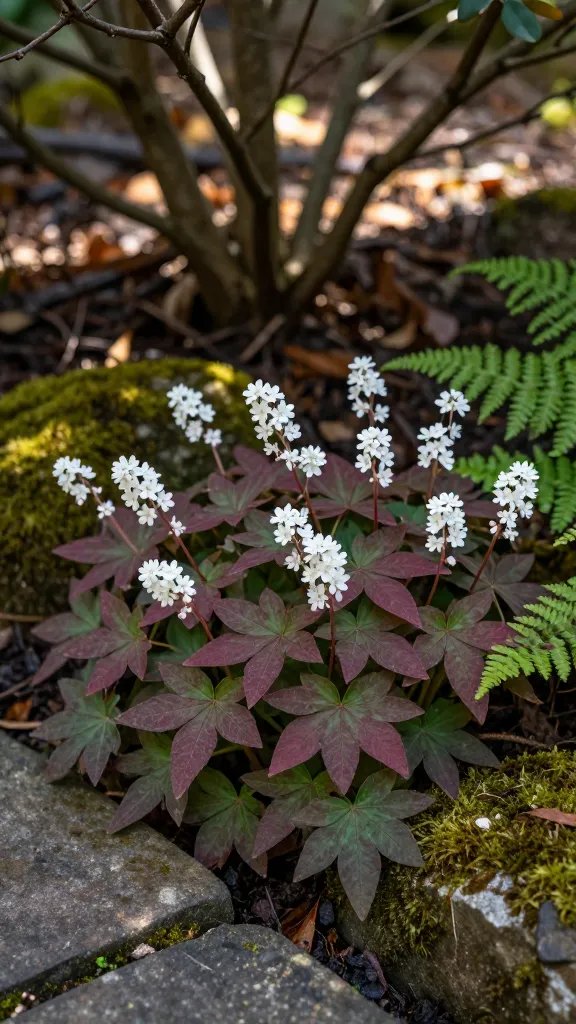
Need to stitch two spaces together? This one spreads politely, weaving between rocks and roots with foam-white blooms sprinkled on top.
Where It Shines
- Under deciduous shrubs where light shifts seasonally
- Along flagstone joints for a lived-in look
- At the toes of ferns to connect textures
Use it to erase awkward soil gaps and create that natural, “it’s always been here” transition. Seriously, it’s a vibe.
7. Tiarella ‘Oakleaf’—Classic Shape, Timeless Spray
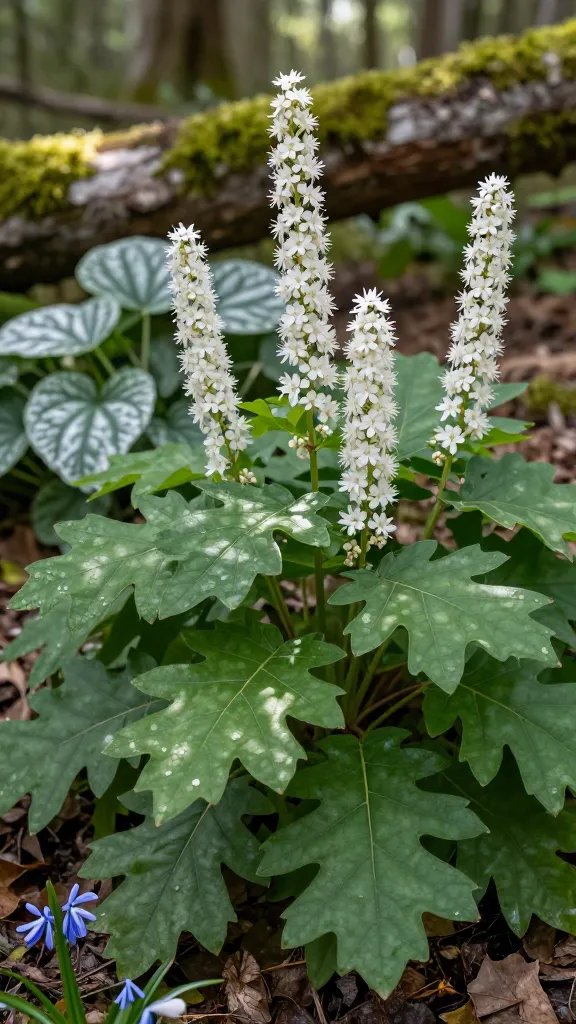
Oak-shaped leaves bring woodland credibility, while the flower wands stay elegant and bright. It’s the dependable friend that still surprises you.
Key Points
- Sturdy leaves fill space without smothering neighbors
- Shade-tolerant and unfussy about soil, as long as it drains
- Plays well with spring ephemerals
Use near big-leaf companions like brunnera to contrast shapes. The sprays add lift when everything else lies low.
8. Tiarella ‘Mystic Mist’—Speckled Leaves, Starry Sprays
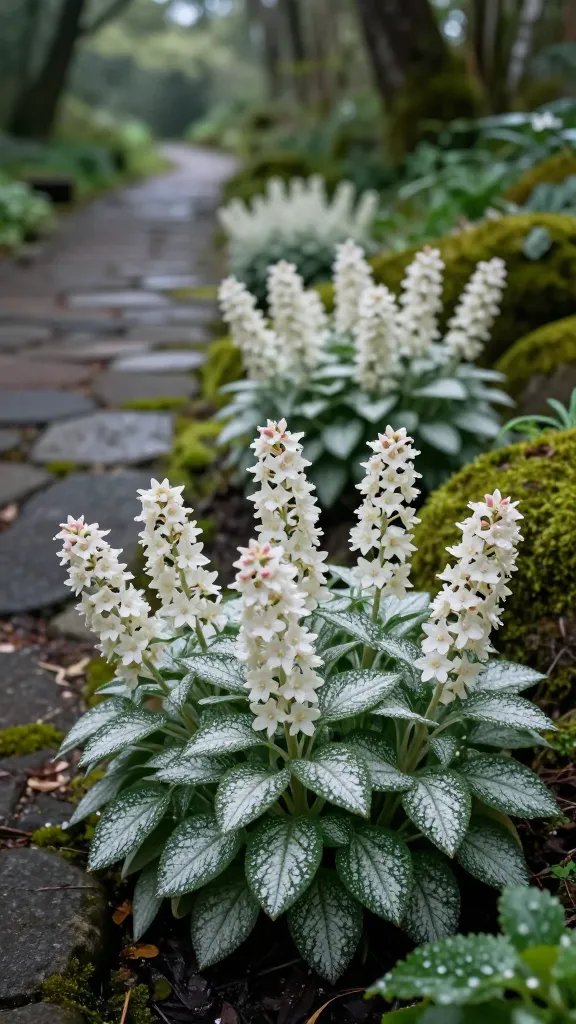
Speckling across the foliage looks like sunlight shimmer even on cloudy days. Then the blooms arrive and layer more sparkle on top.
Design Moves
- Echo the speckles with variegated lungwort
- Repeat in three clusters for rhythm along a walkway
- Edge with mossy stones for an enchanted finish
Ideal for those half-lit nooks where you crave brightness but not glare. The effect reads magical, not kitschy—IMO, a win.
9. Tiarella ‘Jeepers Creepers’—Low And Showy For Tight Transitions
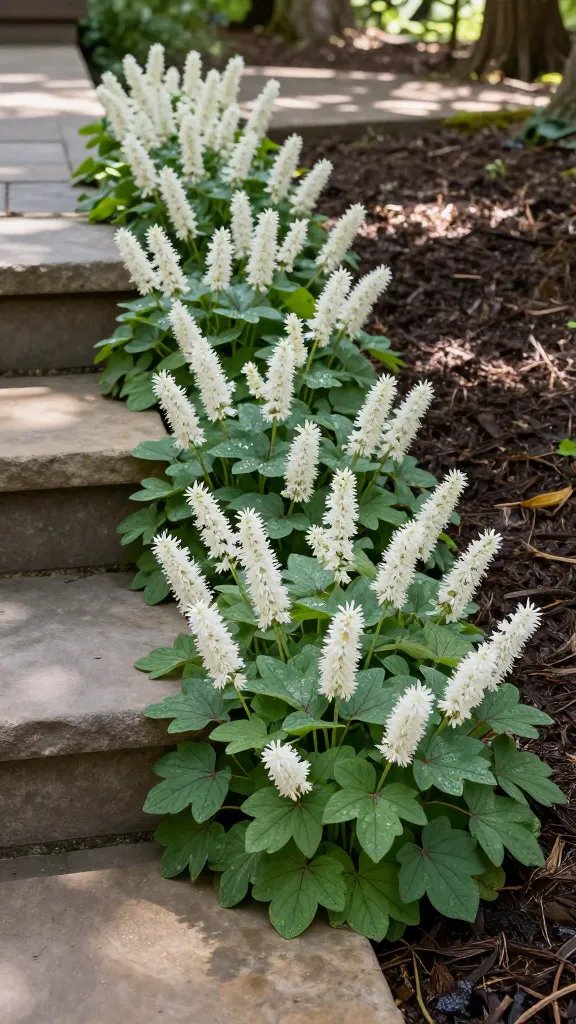
This compact ground-hugger gives a frothy bloom layer without tall stems in your way. It keeps sightlines open along steps and low borders.
Tips
- Plant near risers or patio edges where height matters
- Aerate soil lightly each spring to keep it perky
- Water during dry spells; shallow roots hate drought
Reach for it when you need a neat, bloom-forward look that won’t flop into walkways. It’s your clutter-free foamflower.
10. Native Foamflower (Tiarella cordifolia)—The Woodland Workhorse
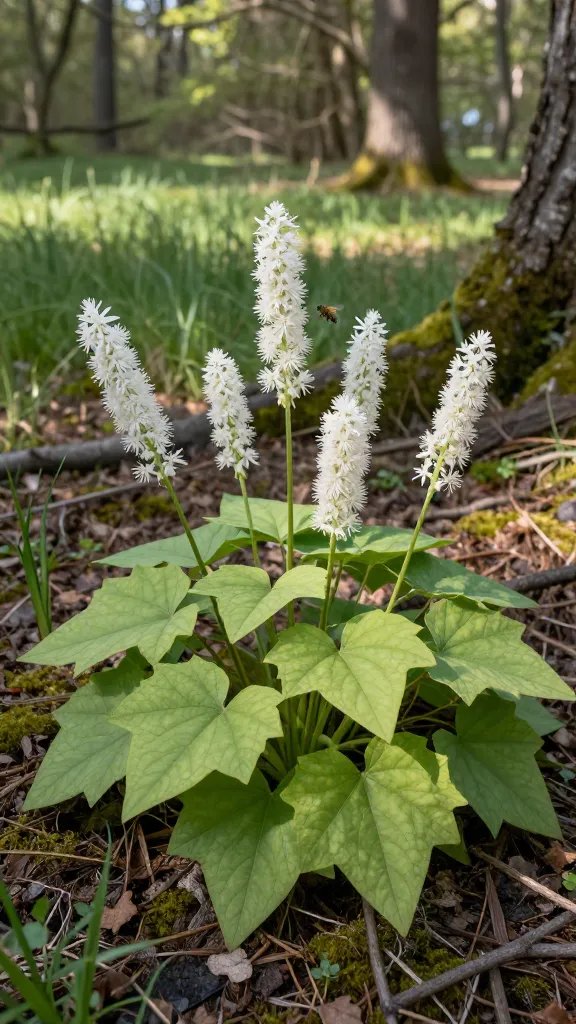
Sometimes the straight species just nails it. Heart-shaped leaves form gentle colonies, then burst with airy white sprays that read like tiny fireworks in shade.
Why Gardeners Love It
- Native to many eastern North American woodlands—pollinator friendly
- Excellent for large shady transitions: lawn-to-woods, path-to-thicket
- Handles leaf litter and tree-root competition with grace
Use the species when you want ecological value plus classic foamflower charm. It stitches big spaces together without a ton of hand-holding—trust me.
How To Make Foamflower Sprays Thrive In Shady Transitions
Foamflowers don’t demand much, but they have opinions. Get the basics right and the sprays will absolutely glow.
Site And Soil
- Light: Dappled shade to bright shade; morning sun okay if afternoons stay cool
- Soil: Humus-rich, consistently moist, well-drained
- pH: Slightly acidic to neutral works best
Think woodland edge vibes: leaf mold, mulch, and no standing water. If your soil compacts, top-dress with compost each spring.
Companion Plants That Make Sprays Pop
Contrast sells the look. Pair foamflower with textures and tones that amplify those airy wands.
Great Pairings
- Hosta (blue or variegated) for bold leaves
- Japanese forest grass for soft movement
- Brunnera and lungwort for spring sparkle
- Heuchera for moody foliage echoes
- Ferns for vertical fronds behind the foam
Layer taller textures behind and groundcovers in front. The sprays become the floating highlight through it all.
Planting And Spacing For Seamless Transitions
Close spacing creates that misty, continuous effect. You want the sprays to read as a group, not random exclamation points.
Quick Guide
- Spacing: 12–15 inches on center for most varieties
- Small drifts: 5–7 plants; larger bands: 12–20+
- Plant high in the hole—don’t bury the crown
Edge with rocks or a low mow strip if you need crispness. Or let them feather casually into lawn for a softer fade.
Care: Keep The Foam, Lose The Fuss
Maintenance stays chill when you set expectations. Foamflower wants consistency, not perfection.
Routine
- Water: Deeply once a week during dry spells
- Mulch: 1–2 inches of shredded leaves or bark—keep off crowns
- Feed: Light spring compost; skip heavy fertilizers
- Groom: Shear spent sprays to encourage fresh foliage
Divide clumps every 3–4 years if they thin in the center. You’ll get free plants and fresher bloom shows.
Design Tricks That Make Sprays Look Intentional
Shady transitions can feel accidental. A few moves make them look designed on purpose.
Smart Moves
- Repeat varieties in odd-numbered groups for rhythm
- Echo foliage markings elsewhere for unity
- Stagger heights: low foamflower, mid fern, taller shrub
- Add a single accent boulder or stump as an anchor
These touches frame the foamflower so the sprays read as part of a bigger story, not a random flourish.
Troubleshooting: When The Sparkle Fades
Not seeing the froth you expected? No panic—shade divas just need tweaks.
Common Issues
- Floppy sprays: Too rich soil or deep shade—ease off fertilizer, add morning light
- Scorched leaves: Afternoon sun—add a taller companion for dapple
- Thin bloom: Dry roots—boost mulch and consistent watering
- Ragged edges: Slugs—use iron phosphate bait and tidy mulch
Dial in moisture and light first. Most foamflower drama ends right there.
Seasonal Flow: Keeping Interest Beyond The Bloom
The sprays steal spring, but the foliage carries the rest. Play the long game with leaf color and texture.
Extend The Show
- Choose marked or variegated leaves for summer interest
- Let seedheads stand briefly for a wild, subtle texture
- Layer fall color from nearby shrubs to shift the palette
That way the transition keeps earning its keep even when the foam fades. Quiet garden flex achieved.
Shade spots don’t have to feel like a compromise. With the right foamflower sprays, your transition zones turn soft, bright, and effortlessly cohesive. Pick a few from this list, plant them in drifts, and watch that in-between space become your favorite view.