
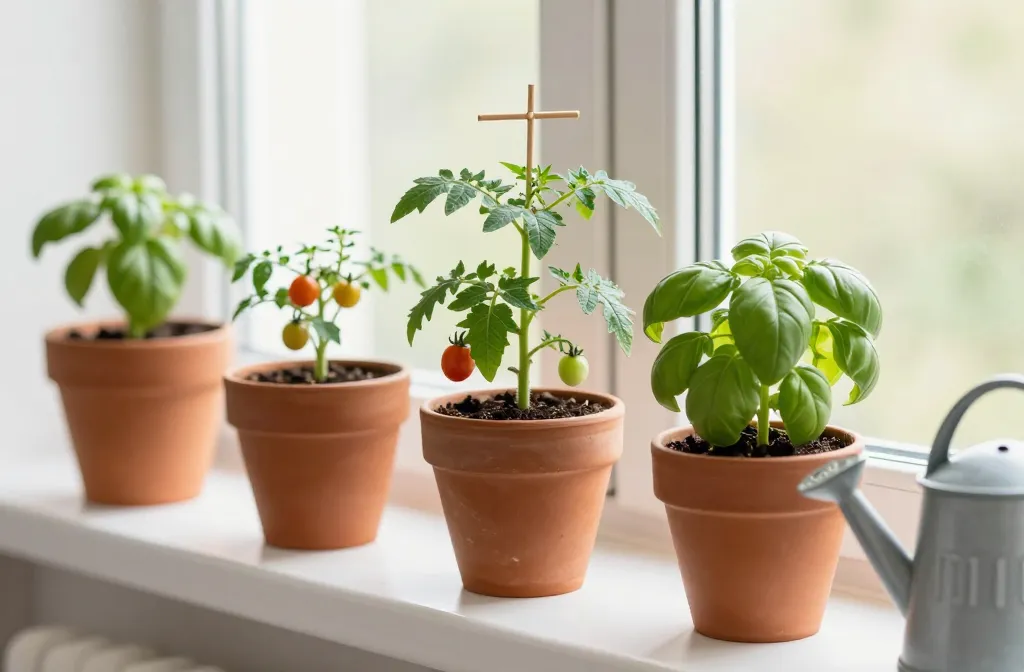
You don’t need a backyard jungle to grow gorgeous, productive plants. With the right buddy system, a tiny 6–8 inch pot can pull off some serious plant magic. These pairings save space, boost flavor, and keep pests guessing. Ready to turn your windowsill into a mini powerhouse?
We’re diving into five small-but-mighty combos that thrive together in tight quarters. Each pair shares light, water, and root space like good roommates. You’ll get edible leaves, flowers, and fruit without a patio takeover. Let’s plant smarter, not bigger.
1. Basil + Cherry Tomatoes = Italian Happy Hour
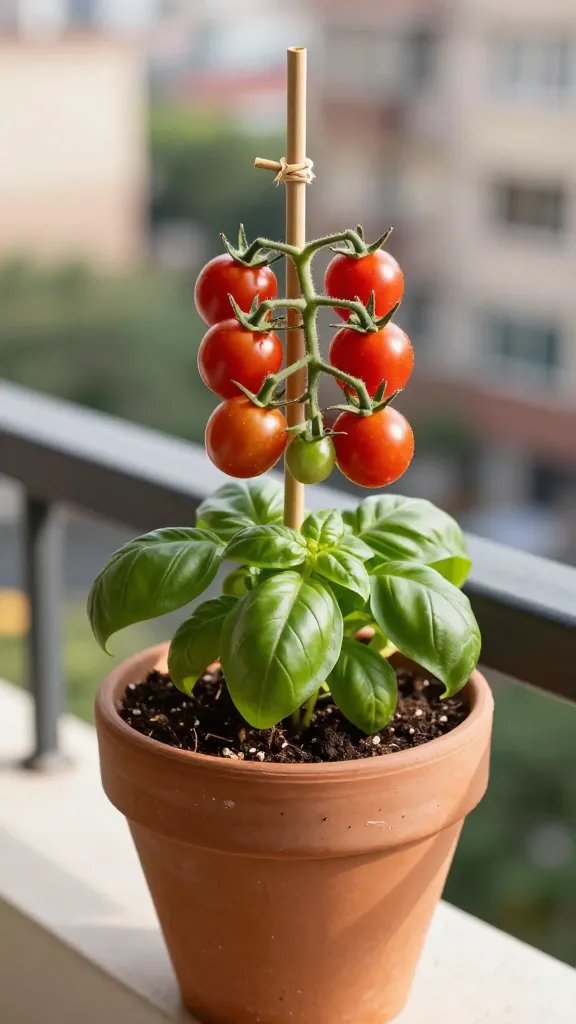
This classic duo keeps things delicious and compact. Basil repels certain pests, while tomatoes give basil just enough dappled shade once they bush up. Together, they smell like pizza and taste like summer—what else do you need?
How To Plant
- Container: 6–8 inch pot with drainage. Use a sturdy stake or small trellis for the tomato.
- Soil: High-quality potting mix with compost blended in (about 10–20%).
- Varieties: Choose a dwarf or micro cherry tomato (like ‘Micro Tom’ or ‘Tiny Tim’) and a compact basil (like ‘Spicy Globe’ or ‘Greek Basil’).
Planting Layout
- Tomato slightly off-center for support access.
- One basil tucked on the “sunny side” to soak heat and deter aphids.
Care Tips
- Sun: 6–8 hours of direct light. Indoors, use a grow light 6–8 inches above the canopy.
- Water: Keep evenly moist, not soggy. Tomatoes hate wet feet—drainage matters.
- Pruning: Pinch basil often to prevent flowering and thicken the plant. Snip tomato suckers if they crowd.
- Feeding: Light tomato-focused fertilizer every 10–14 days once fruit sets.
Why it works: Basil can improve tomato flavor, and the scent confuses pests. You also harvest both constantly—fresh caprese in a pot, FYI.
2. Nasturtium + Chives = Edible Flowers With Built-In Pest Control
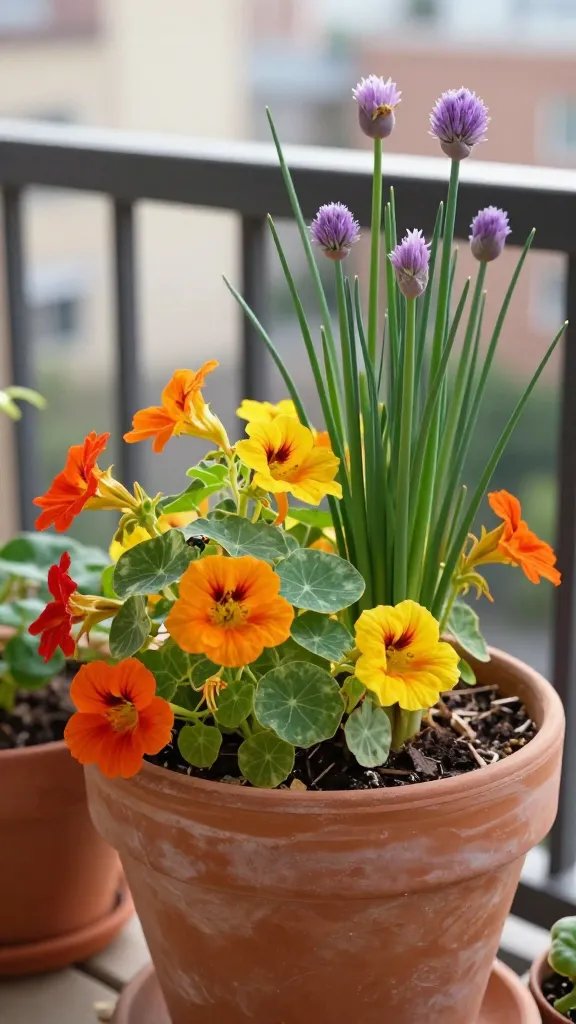
Nasturtiums trail and bloom like confetti, while chives stand upright and minded-their-own-business. They share space gracefully and don’t hoard nutrients. Plus, they both taste amazing—peppery petals and oniony snips? Yes, chef.
How To Plant
- Container: 6–8 inch pot, ideally shallow-to-medium depth.
- Soil: Well-draining, slightly lean soil. Too rich and nasturtium goes leafy with fewer blooms.
- Varieties: Any dwarf nasturtium (like ‘Alaska’ or ‘Jewel Mix’) and common chives or garlic chives.
Planting Layout
- Chives in the center for vertical structure.
- Nasturtium seeds or seedling around the edge to spill and soften the rim.
Care Tips
- Sun: 4–6 hours minimum; they bloom better with more light.
- Water: Moderate. Let the top inch dry between waterings.
- Feeding: Minimal fertilizer—once a month at half strength is plenty.
- Harvest: Snip chive leaves regularly; pick nasturtium flowers for salads and sandwiches.
Why it works: Nasturtium acts as a trap crop for aphids while chives deter munchers with their oniony vibe. It’s ornamental, tasty, and low-maintenance—seriously, this pair is almost too easy.
3. Dwarf Pepper + Oregano = Taco Night In One Pot
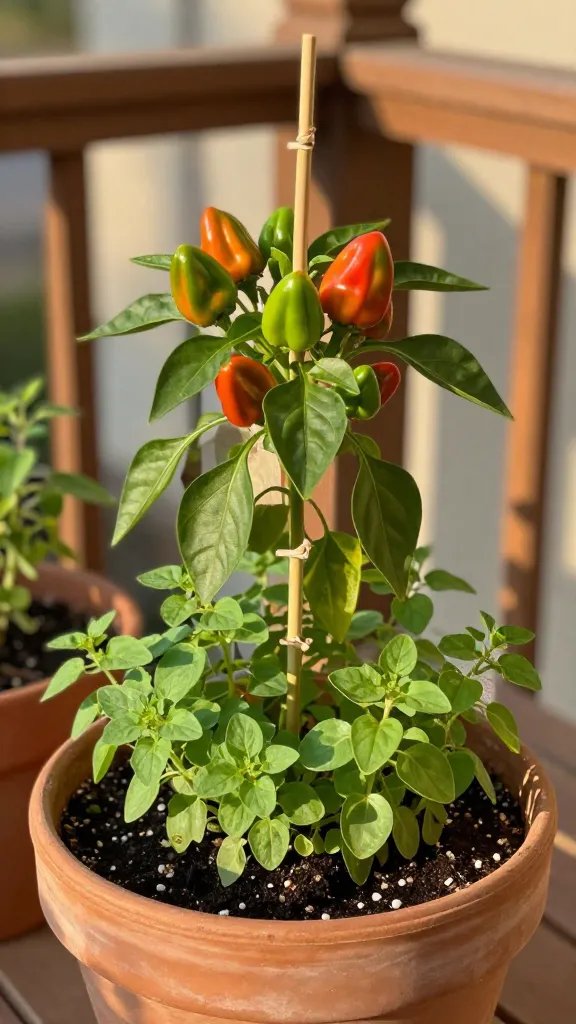
Peppers love warm feet and sunshine. Oregano sprawls, shades soil, and helps lock in moisture. Together, they look lush and deliver flavor like a tiny Mediterranean garden.
How To Plant
- Container: 6–8 inch pot; go 8 inches if you can for pepper root comfort.
- Soil: Rich potting mix with perlite for drainage.
- Varieties: A compact pepper like ‘Hot Burrito,’ ‘Mini Bell,’ or ‘Mohawk’; choose Greek or Italian oregano.
Planting Layout
- Pepper centered with a chopstick or thin stake for support.
- Oregano near the edge to cascade slightly and act as living mulch.
Care Tips
- Sun: 6–8+ hours. More sun, more peppers.
- Water: Keep consistent; don’t let peppers swing from drought to flood.
- Feeding: Balanced liquid feed every 2–3 weeks; switch to bloom/fruit formula when buds form.
- Pruning: Lightly tip oregano if it crowds the pepper stems.
Why it works: Oregano’s aromatic oils may deter pests, while its mat-like growth reduces evaporation. Application? Instant tacos, omelets, and pizza toppings—IMO, peak weeknight win.
4. Baby Lettuce Mix + Radish = Speedy Salad Bowl
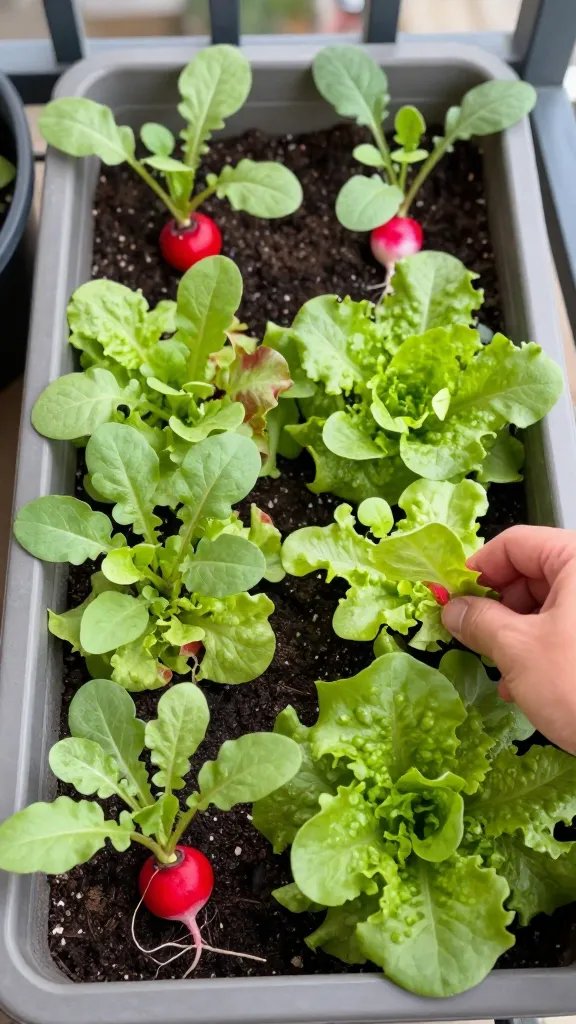
Short on patience? This combo rockets from seed to plate. Radishes grow taproots while lettuces skim the surface, so they don’t elbow each other in tight pots. You harvest in waves and keep the container productive.
How To Plant
- Container: 6–8 inch pot, at least 6 inches deep.
- Soil: Loose, fluffy potting mix—roots need easy digging.
- Varieties: Cut-and-come-again lettuce mix; fast radishes like ‘Cherry Belle’ or ‘French Breakfast.’
Planting Layout
- Broadcast lettuce seed lightly over the surface.
- Press 3–4 radish seeds evenly spaced around the rim or in a triangle pattern around center.
Care Tips
- Sun: 4–6 hours; in hot climates, give afternoon shade.
- Water: Keep evenly moist for crisp leaves and non-spicy radishes.
- Feeding: A mild, nitrogen-lean feed once after germination is enough.
- Harvest: Start cutting lettuce leaves when 3–4 inches tall. Pull radishes at 3–4 weeks before they get pithy.
Why it works: Radishes finish fast and open space for lettuce to fill in. It’s the ultimate snackable garden: sow, snip, repeat. FYI, you can succession sow radishes for continuous crunch.
5. Thyme + Strawberries = Sweet Groundcover Meets Aromatic Armor
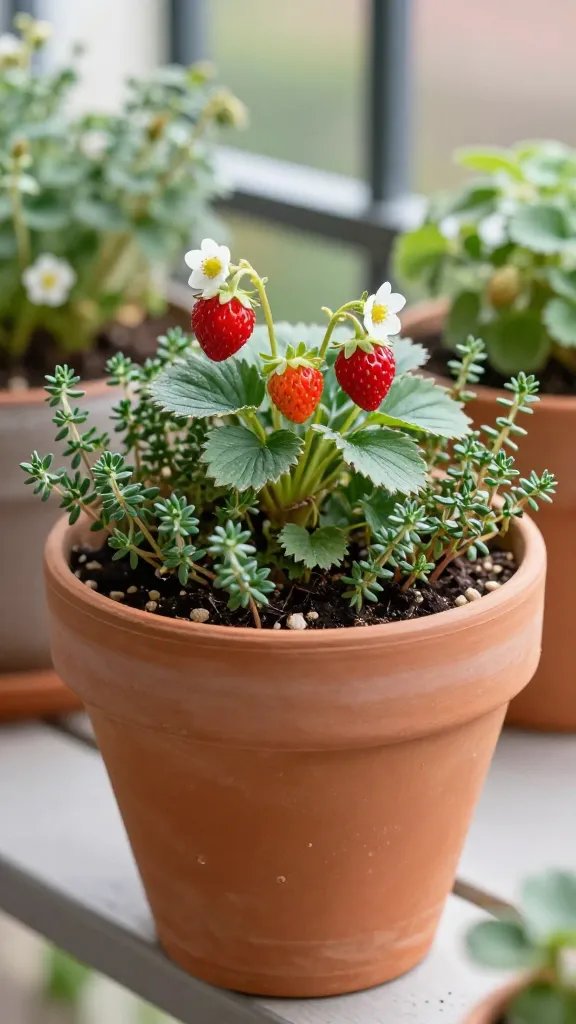
Strawberries love a buddy that keeps soil dry on top and discourages pests. Enter thyme: fragrant, shallow-rooted, and drought-tolerant. This pairing looks adorable and tastes like a fancy brunch.
How To Plant
- Container: 6–8 inch pot; shallow-but-wide works great.
- Soil: Well-draining mix with a bit of sand or perlite; strawberries hate soggy crowns.
- Varieties: Alpine strawberries (‘Mignonette,’ ‘Alexandria’) or a compact everbearing type; common thyme or creeping thyme.
Planting Layout
- Strawberry slightly off-center so runners have room.
- Thyme along the edge to drape and act as living mulch.
Care Tips
- Sun: 6 hours minimum for fruiting; more sun equals sweeter berries.
- Water: Deep, infrequent watering; let the top layer dry a bit between sessions.
- Feeding: Monthly, gentle fertilizer—don’t overdo nitrogen or you’ll get leaves, not berries.
- Grooming: Remove spent strawberry leaves; trim thyme lightly to keep airflow.
Why it works: Thyme’s aromatic oils can confuse pests, while its mat reduces splash-back that spreads disease. Applications? Patio parfaits and smug weekend waffles, trust me.
Potting Mix And Setup Basics (Quick Reference)
- Drainage first: Always cover the pot’s drainage hole with a mesh or coffee filter to keep soil in and let water out.
- Right soil: Use a peat-free or peat-reduced potting mix with perlite for airflow. Garden soil compacts in pots—hard pass.
- Starter size: Begin with small transplants for tomatoes, peppers, and strawberries; direct-sow radish, lettuce, and nasturtium.
- Mulch smart: In tiny pots, use living mulch (oregano, thyme) or a thin layer of fine bark to reduce evaporation.
Watering And Light (Because This Makes Or Breaks It)
- Finger test: Water when the top inch feels dry. Don’t guess—poke.
- Morning > evening: Water early to prevent fungal drama and sun-scalded leaves.
- Rotate weekly: Turn pots a quarter turn for even growth and no lopsided divas.
- Grow lights: Aim for 12–14 hours under LEDs if your window light stinks.
Fertilizer And Pruning (Minimal, But Mighty)
- Less is more: Tiny pots salt up fast. Dilute liquid fertilizer to half strength.
- Schedule: Leafy pairs (lettuce, chives, basil) every 2 weeks; fruiting pairs (tomato, pepper, strawberry) every 10–14 days once budding.
- Pinch and snip: Regularly pinch basil and thyme; tidy oregano; remove tomato and pepper suckers that hog space.
Pest Patrol (Without Chemicals)
- Inspect often: Flip leaves, check stems, and catch issues early.
- Deter naturally: A gentle neem or insecticidal soap works if aphids crash the party.
- Airflow: Don’t pack pots like a subway car—space equals fewer mildew problems.
Seasonal Swaps And Successions
- Cool weather: Lettuce + radish thrive spring and fall.
- Heat lovers: Tomato + basil; pepper + oregano kick during summer.
- All-season cuteness: Strawberries + thyme; nasturtium + chives rotate indoors with bright light.
Ready to play plant matchmaker? These five mini pairings prove you don’t need a big garden to harvest big flavor. Grab a couple of 6–8 inch pots, mix the right roommates, and start snipping your way to fresher meals. Your windowsill is about to become your favorite farmer’s market—no car required.