
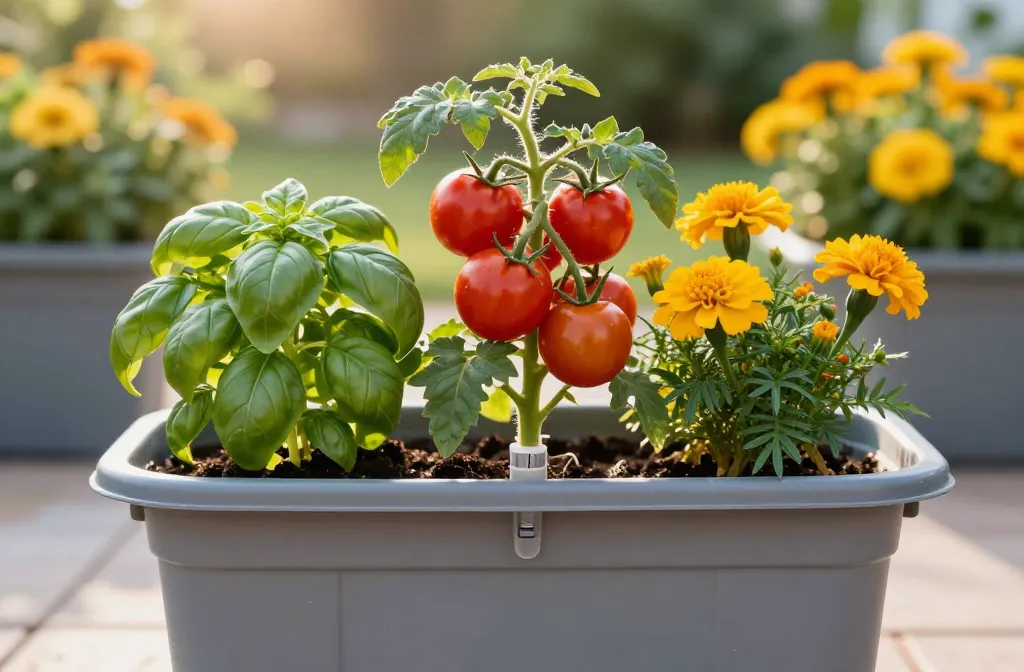
Your self-watering container isn’t just smart—it’s a cheat code for lush, low-effort plants. Pair the right buddies together and they’ll share space, nutrients, and vibes without drama. These five themed groupings pack in 13 companion plants that thrive with steady moisture and minimal fuss. Ready to build containers that basically maintain themselves? Let’s go.
1. The Caprese Crowd-Pleaser: Tomato, Basil, and Marigold
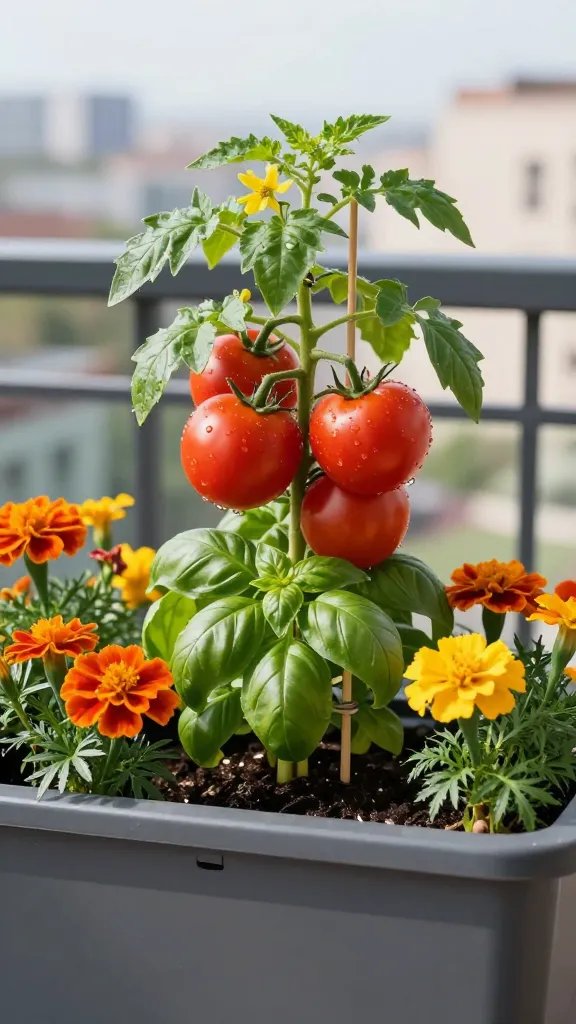
This classic trio loves a consistent sip, which self-watering containers deliver perfectly. Tomato gets the spotlight, basil boosts flavor and growth, and marigold keeps the chaos (ahem, pests) in check. It’s simple, fragrant, and ridiculously productive.
Key Plants:
- Determinate Tomato (like ‘Roma’ or ‘Bush Early Girl’)
- Basil (Genovese or Sweet Basil)
- Marigold (French marigold for compact size)
Use a 12–18 inch deep container with a generous reservoir. Tomatoes in self-watering setups avoid blossom end rot better with steady moisture—just add a calcium-rich fertilizer. Basil shades the soil, reduces evaporation, and tastes like summer. Marigolds deter some soil nematodes and confuse pests with their scent.
Tips:
- Choose compact tomato varieties to avoid a tangled jungle.
- Top-dress with a thin layer of compost every 4–6 weeks.
- Prune basil regularly to keep it bushy and productive.
Use this when you want one container to deliver sandwich toppers, salad magic, and color. Seriously, it’s the happiest food garden you can grow on a balcony.
2. Salad Bar That Never Quits: Lettuce, Chives, Parsley, and Nasturtium
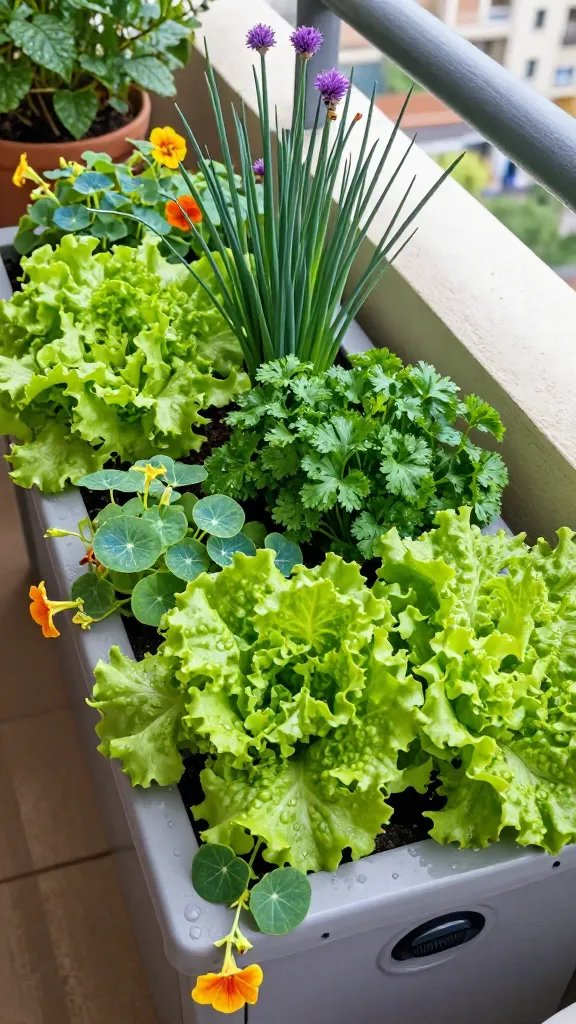
If you love fresh greens, meet your new favorite squad. This combo thrives on even moisture and cooler roots, which self-watering containers provide like champs. You’ll snip something almost daily without fuss.
Key Plants:
- Leaf Lettuce (cut-and-come-again types like ‘Salad Bowl’)
- Chives (garlic or common chives)
- Flat-Leaf Parsley
- Nasturtium (trailing variety to drape over edges)
Lettuce bolts slower when the soil stays consistently damp. Chives add oniony punch and attract pollinators when they bloom. Parsley hangs tight for months and appreciates steady moisture. Nasturtiums bring peppery leaves and edible flowers, plus they help divert aphids—think of them as sacrificial glam.
Layout & Care:
- Plant lettuce in the center, ring with parsley and chives, let nasturtium spill over the rim.
- Harvest outer lettuce leaves weekly to keep growth rolling.
- Keep the reservoir filled; avoid waterlogging by ensuring the wicking system isn’t overpacked.
Perfect for cooks who want instant garnishes and salad bases. FYI, this looks gorgeous on a patio and smells like a fancy market garden.
3. Citrus-Scented Pest Patrol: Lemon Balm, Thyme, Oregano, and Calendula
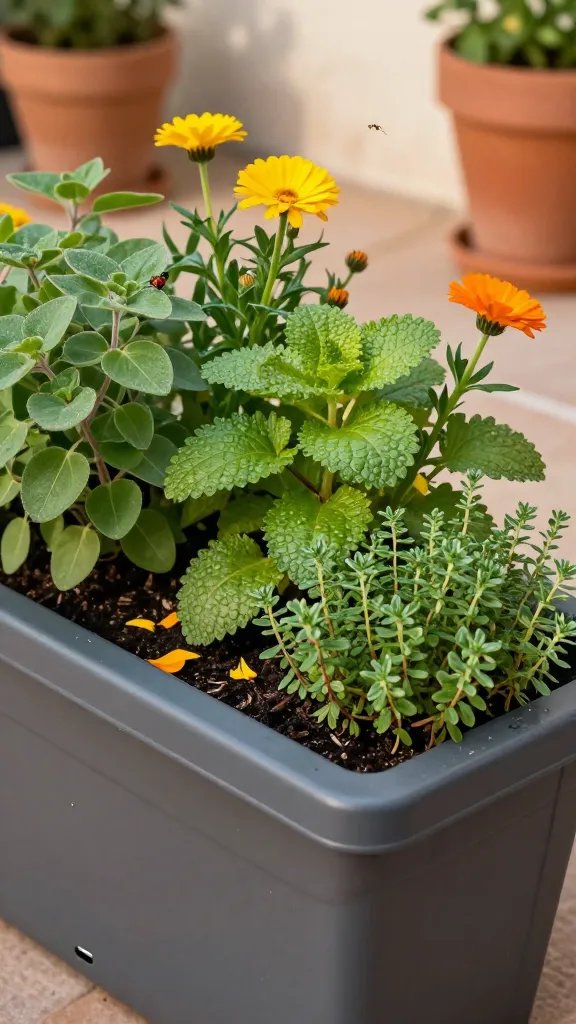
Want a container that smells like a Mediterranean breeze and shrugs off pests? This aromatic mix loves consistent moisture without wet feet, and self-watering setups nail that balance. You get flavor, flowers, and fewer nibblers.
Key Plants:
- Lemon Balm (vigorous but behaves in containers)
- Thyme (lemon or English thyme)
- Oregano (Greek oregano for bold flavor)
- Calendula (edible petals and cheerful color)
Herbs with aromatic oils deter some pests and attract beneficial insects. Lemon balm’s citrus scent is mood-lifting and makes epic tea. Calendula blooms like crazy with steady moisture and brings pollinators to the party.
Care & Setup:
- Use a fast-draining potting mix with perlite; herbs hate soggy roots.
- Pinch lemon balm to keep it compact and delay flowering.
- Shear thyme and oregano lightly after blooms to encourage fresh growth.
Use this when you want a fragrant, low-effort container that multitasks—tea, seasoning, and natural charm. IMO, it’s the most chill maintenance schedule you’ll ever keep.
4. Pollinator Power Bowl: Dwarf Zinnia, Alyssum, Mini Dahlia, and Strawberry
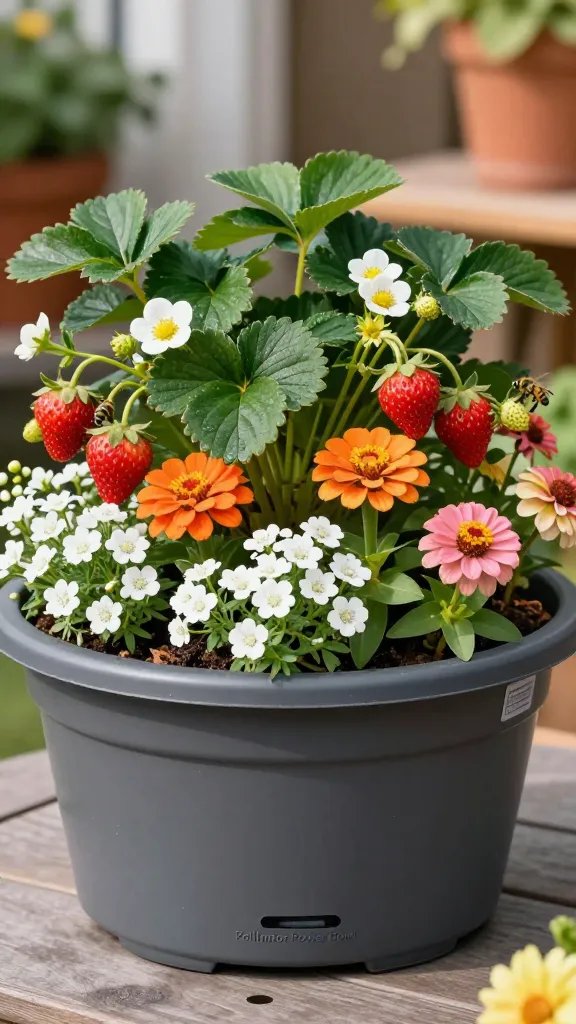
Yes, you can have flowers and fruit in one container without drama. This combo trades nectar and color while strawberries enjoy consistent moisture for plump berries. It’s a micro ecosystem that feeds bees and your snack habit.
Key Plants:
- Day-Neutral Strawberry (like ‘Albion’ or ‘Seascape’)
- Dwarf Zinnia (‘Profusion’ series thrives in containers)
- Sweet Alyssum (pollinator magnet with honey scent)
- Mini Dahlia (compact, continuous blooms)
Strawberries in self-watering containers stay evenly moist, which means fewer dry spells and better fruit set. Zinnias and dahlias pump out blooms that attract pollinators, which can help fruiting. Alyssum fills gaps, suppresses weeds, and spills prettily over the edges.
Planting Game Plan:
- Center the mini dahlia, flank with strawberries, dot zinnias between, edge with alyssum.
- Fertilize lightly every 3–4 weeks; strawberries don’t love heavy nitrogen.
- Rotate the container a quarter turn weekly for even growth if sun hits from one side.
Choose this when you want an all-season showpiece that also delivers snacks. It’s patio eye-candy with benefits—trust me, neighbors will ask.
5. Pepper Party With Heat And Sweet: Bell Pepper, Chili Pepper, Cilantro, and Green Onion
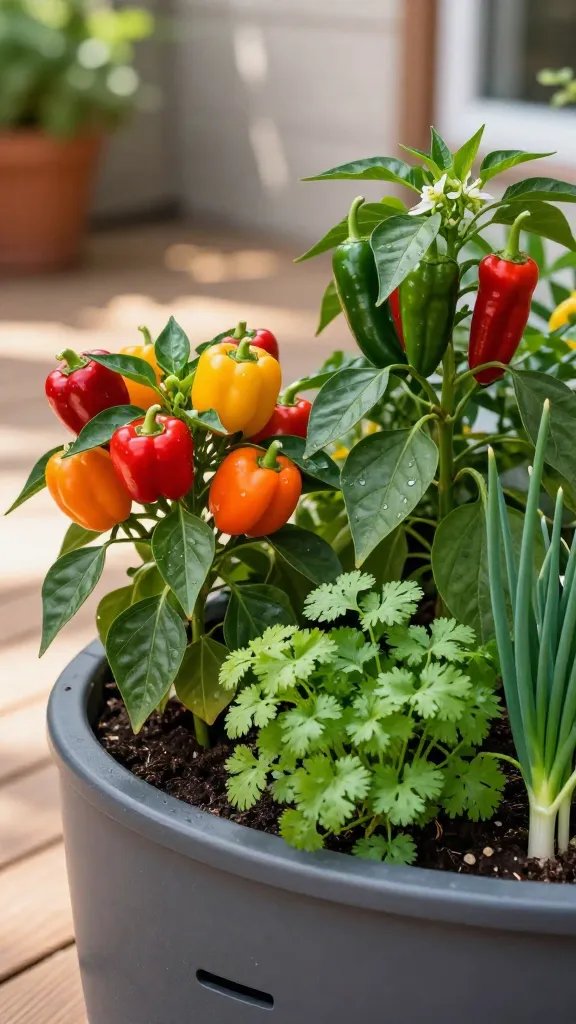
If you like flavor fireworks, this container brings the heat and the crunch. Peppers adore consistent moisture during fruit set, and self-watering designs keep the soil steady. Add cilantro for fresh pop and green onions for instant garnishes.
Key Plants:
- Compact Bell Pepper (like ‘Lunchbox’ or ‘Gypsy’)
- Chili Pepper (jalapeño or cayenne—pick your spice level)
- Cilantro (fast-growing; sow in succession)
- Green Onion (scallions from seed or starts)
Peppers set more fruit with stable moisture and warm roots. Cilantro appreciates moisture too, and you can re-sow every few weeks for a constant supply. Green onions tuck into corners and don’t hog nutrients.
Success Tips:
- Use a darker container to keep the root zone warm in spring.
- Stake peppers early to prevent stem splits when fruits load up.
- Bottom-fill the reservoir consistently; avoid overfilling so roots still breathe.
- Succession-sow cilantro every 3 weeks as it bolts in heat.
Great for taco nights, stir-fries, and hot sauce experiments. It’s a compact flavor factory that basically waters itself—seriously, what’s not to love?
Ready to build your easiest containers ever? Pick a theme, grab a self-watering pot, and let these plant squads do the heavy lifting. Keep that reservoir topped up, give them sun, and you’ll harvest more with less effort. Your future self (and your dinner) will thank you.