
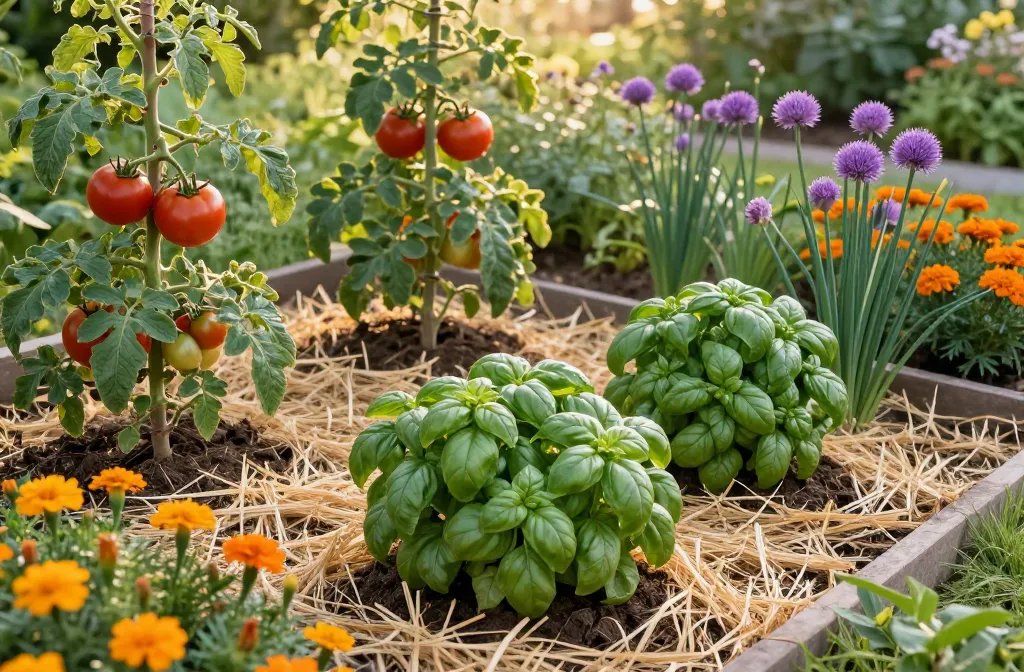
Want a garden that basically runs itself while you sip iced tea and brag to your neighbors? These self-sufficient companion plant ecosystems stack functions: pest control, soil health, moisture retention, and continuous harvests, all in one bed. Think of them as tiny, balanced communities that save you time and drama. Ready to grow smarter, not harder?
1. Tomato, Basil, Marigold, And Alliums: The Classic Flavor Fortress
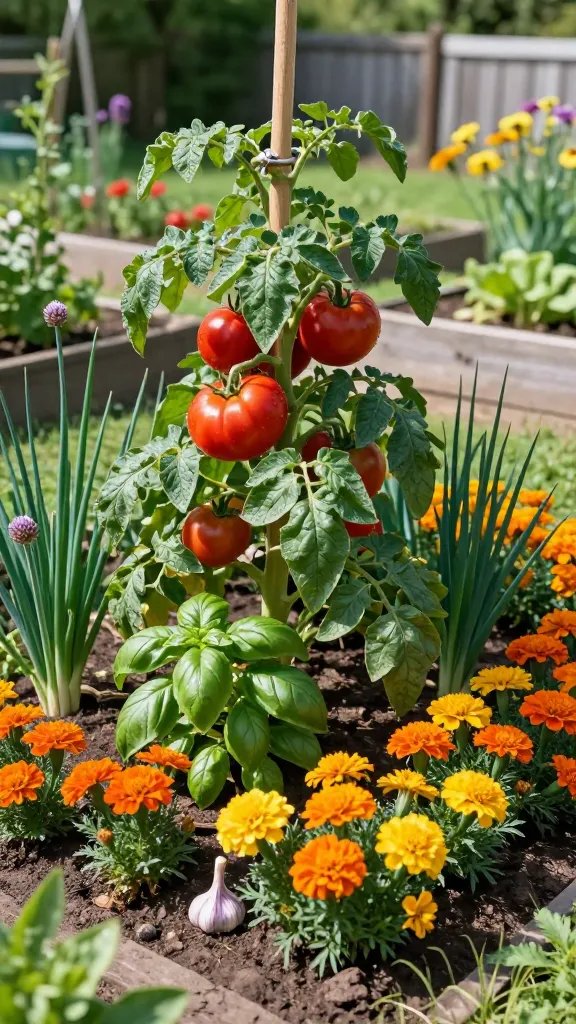
This combo hits like a summer anthem. Tomatoes get bodyguards, basil gets a boost, and marigolds patrol the soil line like tiny bouncers. Alliums (garlic, chives, green onions) round things out with serious pest pressure relief.
Why It Works
- Basil masks tomato scent and may improve vigor and flavor.
- French marigolds deter root-knot nematodes and distract aphids.
- Alliums repel thrips, mites, and some beetles while staying compact.
- Tomatoes provide partial shade underneath for basil during heat spikes.
Planting Tips
- Spacing: Tomato every 18–24 inches; basil between plants; marigolds along edges; chives as a short border.
- Pruning: Keep tomato foliage off basil to prevent mildew. Stake or cage tomatoes early.
- Watering: Deep, infrequent watering to push roots down. Mulch thickly (straw or shredded leaves).
- Sun: Full sun, but basil appreciates slight afternoon shade from tomato foliage in hot zones.
Harvest rhythm: Pinch basil weekly, pick tomatoes as they blush, and snip chives often to keep regrowth coming. Use this when you want culinary synergy and low-key pest suppression with minimal inputs.
2. The Three Sisters Remix: Corn, Pole Beans, Squash, Plus Sunflowers And Nasturtiums
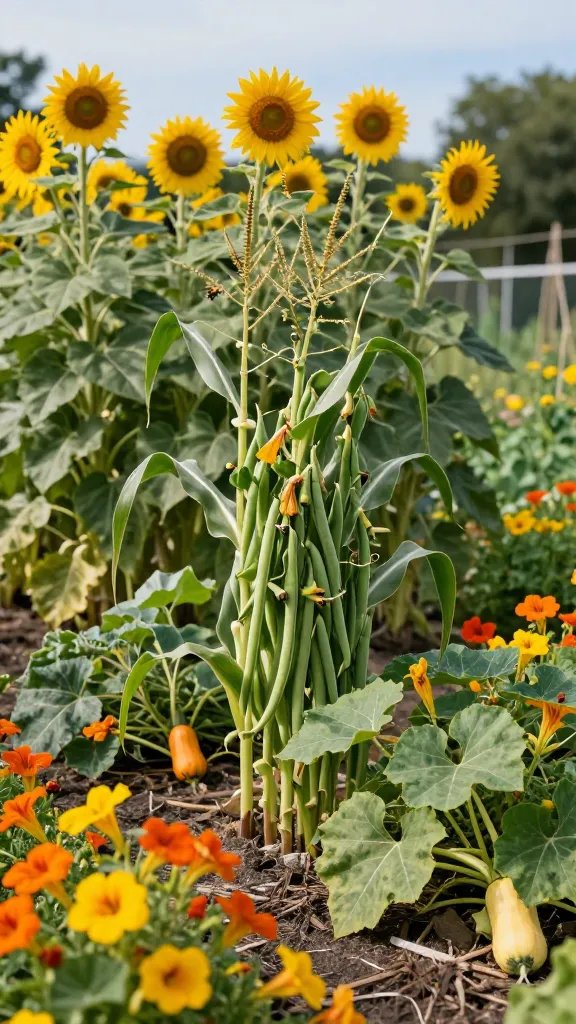
The OG North American polyculture gets a glow-up. Tall corn hosts beans, beans feed the soil, and squash smothers weeds. Adding sunflowers and nasturtiums ups the pollinator traffic and bug control, IMO.
Why It Works
- Corn acts as living trellis for pole beans.
- Pole beans fix atmospheric nitrogen to support heavy-feeding corn and squash.
- Winter squash or pumpkins shade soil to reduce evaporation and block weeds.
- Sunflowers draw in pollinators and beneficials, and they add a windbreak.
- Nasturtiums act as a sacrificial aphid magnet and provide edible flowers.
Planting Tips
- Layout: Plant corn in blocks (not rows) for pollination. Add beans 2–3 weeks later once corn hits 6–8 inches. Tuck squash at the perimeter to roam.
- Spacing: Corn 12 inches apart in a 3×3 or larger block; one bean per corn; squash every 3–4 feet; sunflowers on the north side; nasturtiums around edges.
- Soil: Rich and well-drained. Incorporate compost before planting. Mulch heavy—squash loves moist feet.
Bonus: You get seed, protein, and storage crops from the same bed. Use this setup for a productive, low-weeding, drought-resistant plot that looks wildly impressive.
3. Brassica And Bug Buffet: Kale/Cabbage With Dill, Calendula, Clover, And Onions
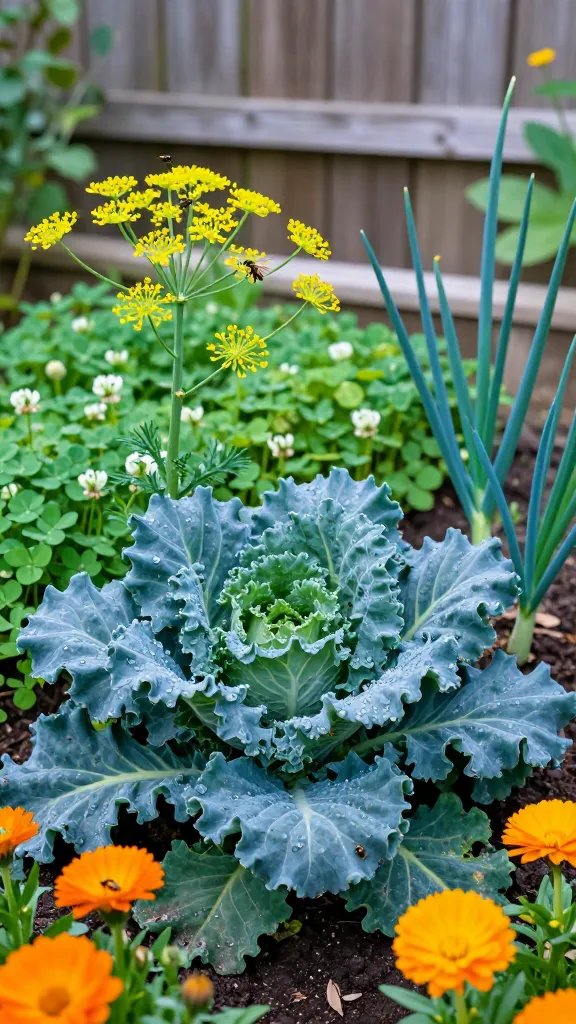
Brassicas invite pests like they’re hosting a free buffet. So, stack the odds. You’ll surround kale, cabbage, or broccoli with herbs and flowers that lure in lacewings, hoverflies, and parasitic wasps—the good guys.
Why It Works
- Dill provides umbrella-shaped blooms that feed predatory insects. Also tasty for you.
- Calendula traps aphids and draws pollinators; petals are edible.
- White clover spreads as a living mulch, fixes nitrogen, and suppresses weeds.
- Onions or leeks throw off sulfur compounds that discourage cabbage moths and thrips.
Planting Tips
- Staggering: Start brassicas early. Sow dill and calendula around them. Overseed clover in pathways and between rows once plants establish.
- Spacing: Brassicas 18 inches apart; onions between them at 6–8 inches; clover kept trimmed so it doesn’t crowd the stems.
- Monitoring: Check undersides of leaves for cabbage worm eggs. FYI, handpicking daily beats spraying.
- Mulch: Use chopped leaves or straw around brassica roots; let clover fill gaps elsewhere.
Result: Fewer holes, bigger heads, and a busier insect food web. Use this when brassicas are your staple and you’d like to stop losing them to green confetti worms.
4. Mediterranean Guild: Eggplant, Peppers, Oregano, Thyme, Nasturtium, And Buckwheat
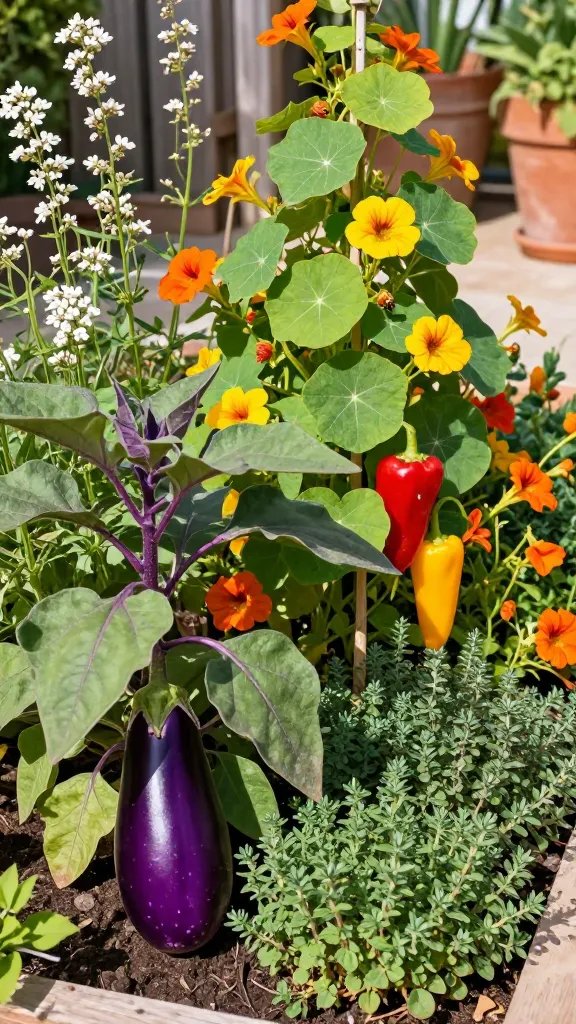
Hot, sunny bed? Build a mini Med-scape that laughs at heat and still stays productive. Eggplant and peppers thrive with low-growing herbs that keep soil cooler and confuse pests.
Why It Works
- Oregano and thyme spread as fragrant groundcovers, reduce evaporation, and deter small pests.
- Nasturtiums climb or sprawl, attract pollinators, and draw aphids away from peppers.
- Buckwheat is a fast-blooming nectar bomb that feeds beneficials and scavenges phosphorus with its roots.
- Eggplant and peppers appreciate the heat sink and airflow created by the layered canopy.
Planting Tips
- Timing: Start buckwheat once soil warms; chop-and-drop it before it sets seed to add mulch.
- Spacing: Peppers and eggplants 18 inches apart; tuck thyme and oregano at edges; nasturtiums at corners to trail.
- Water: Deep soak once or twice weekly; herbs help shade the soil so it holds moisture.
- Airflow: Prune lower leaves on eggplant and peppers to reduce fungal issues, especially over herbs.
When to use: Hot climates, raised beds that dry out fast, or anyone who wants fewer hornworm issues and more flowers for the vibe.
5. Root And Leaf Harmony: Carrots, Radishes, Lettuce, Cilantro, And Parsnips
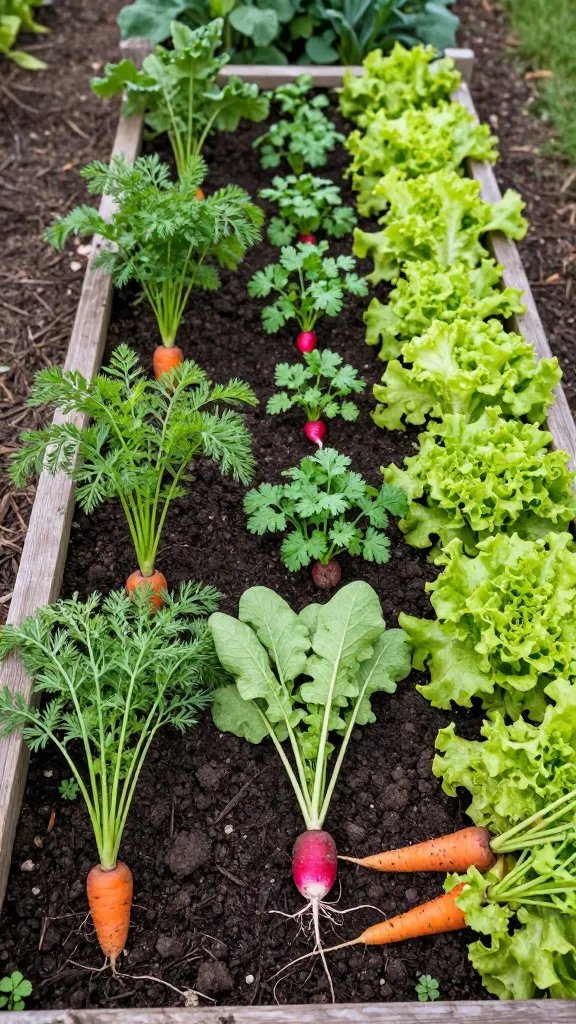
This is the “no wasted space” salad bar. Fast radishes mark the row and loosen soil for slow carrots and parsnips. Lettuce and cilantro shade the soil, keep moisture high, and give you continuous picks while roots develop underneath.
Why It Works
- Radishes germinate fast, break crusty soil, and finish before carrots bulk up.
- Carrots and parsnips share the bed for staggered harvests; parsnips benefit from longer, cooler growth.
- Lettuce provides a living mulch and helps prevent carrot bitterness during hot spells.
- Cilantro cools the bed with feathery shade and, if you let it bolt, draws beneficial insects to its flowers.
Planting Tips
- Seeding pattern: Mix carrot seed with a bit of sand for even spacing. Interplant radish every 3–4 inches as “nurse” plants.
- Thinning: Thin carrots to 1–2 inches apart after radish harvest. Harvest lettuce outer leaves weekly to keep it compact.
- Moisture: Keep the top inch of soil consistently moist for carrot germination. Use boards or burlap for 3–5 days, then remove.
- Soil: Loose, stone-free bed at least 10–12 inches deep for straighter roots.
Payoff: You get salads now and hearty roots later in the same square footage. Perfect for small spaces and anyone who hates empty soil doing nothing.
Pro Moves For All Pairings
- Mulch everything: Less watering, cooler roots, happier soil microbes.
- Rotate families: Move nightshades, brassicas, and cucurbits yearly to dodge disease buildup.
- Let some herbs flower: Dill, cilantro, basil, and buckwheat blossoms supercharge beneficial insect populations—seriously, it’s like opening a pollinator café.
- Stack maturity times: Pair quick crops (radish, lettuce) with slow ones (tomatoes, parsnips) to harvest constantly.
- Observe and tweak: If a plant sulks, swap in a similar role. Oregano unhappy? Try savory or creeping rosemary.
These five ecosystems don’t just look good—they work hard so you don’t have to. Start with one bed, watch the mini-ecosystem kick in, then scale it across your garden. Trust me, once you see how balanced pairings save time and boost yields, you’ll never go back to boring single rows.