
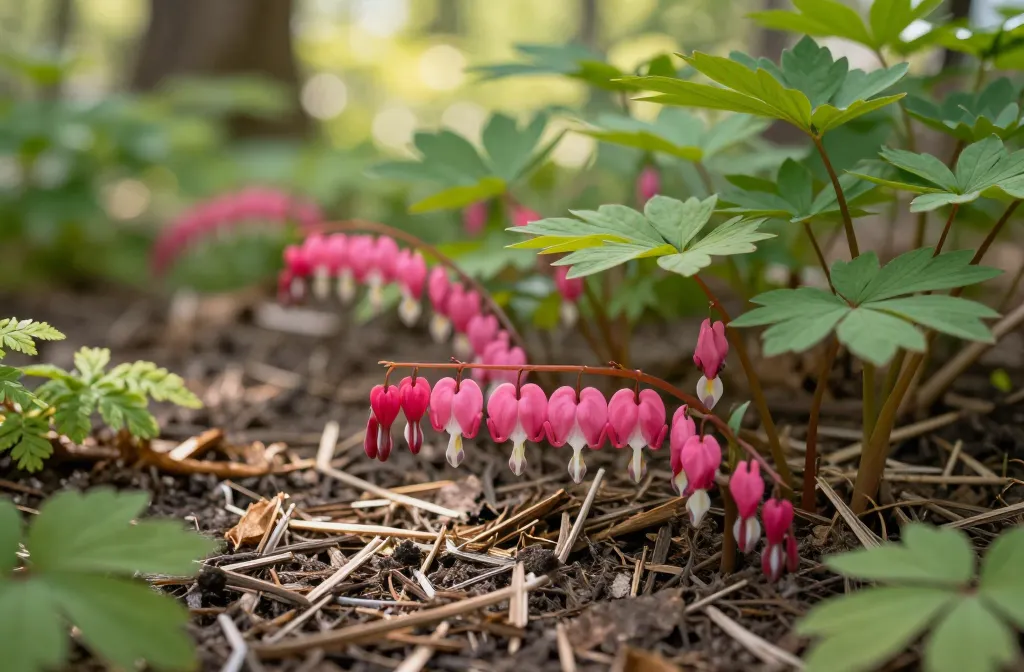
Think your bleeding hearts are toast after they flop in summer? Not so fast. These shade-loving charmers bounce back with adorable new shoots if you treat their remnants right. Let’s turn those scraggly stems into a comeback you can brag about to your garden group chat.
From snipping techniques to cozy mulch blankets, here are 15 smart, simple moves that coax fresh growth from old bleeding heart remnants. Ready to give those hearts a second wind?
1. Spot the Pink-Red Nubs Early
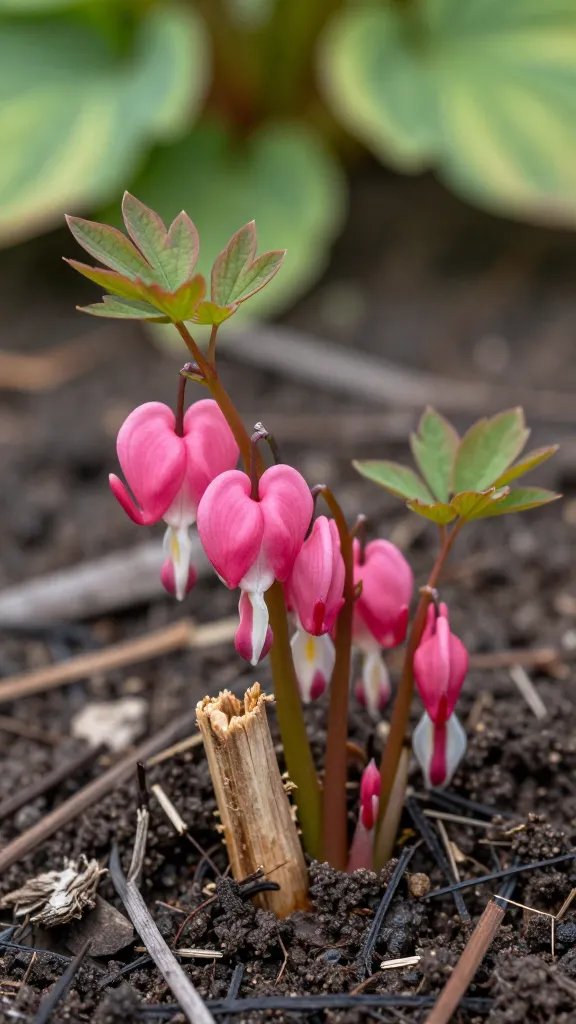
Bleeding heart crowns push out tiny pink or red nubs first. They look like baby asparagus tips with attitude. Catching them early helps you avoid accidental damage while weeding.
What To Look For
- Blush-pink or ruby bumps at soil level
- Firm, clustered buds near last year’s crown
- Emerging ferny leaves shortly after
Recognize these signs and you’ll know exactly where to clear space. Benefit: better survival and stronger shoots right from the start.
2. Clean Up Last Year’s Foliage (But Gently)
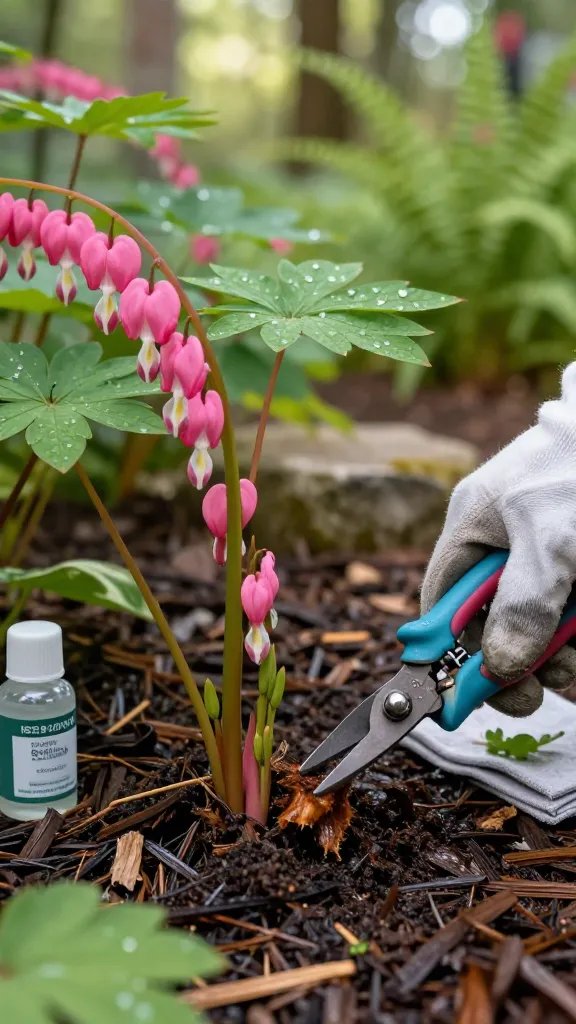
Old, mushy stems invite pests and disease. Remove them, but don’t yank—crowns bruise easily. Snip at the base with clean pruners.
Tips
- Sterilize blades with isopropyl alcohol
- Cut at a slight angle for fast drying
- Leave any new nubs untouched
This quick tidy-up clears the runway for fresh growth. Bonus: fewer slugs throwing a party in your shade bed.
3. Give Them Dappled Light, Not Direct Sun
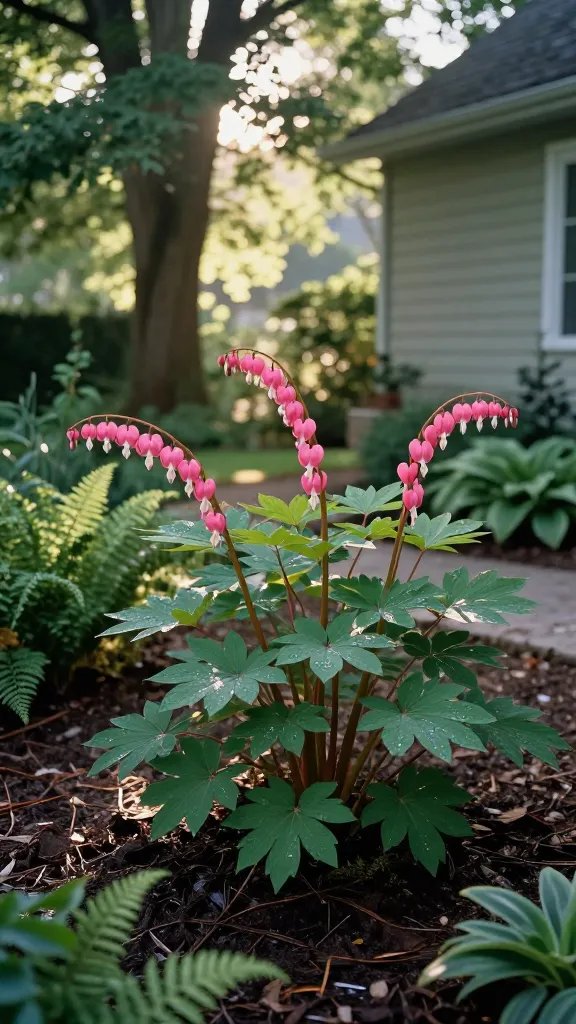
Bleeding hearts crave morning sun and afternoon shade. New growth fries fast under harsh light. Think woodland window, not beach umbrella.
- Morning ray exposure: yes, please
- Midday scorch: hard no
- Filtered under deciduous trees: chef’s kiss
Dial in the light and you’ll get lush, arching stems instead of crispy heartbreak. Great for north or east sides of the house.
4. Refresh Mulch Like a Cozy Blanket
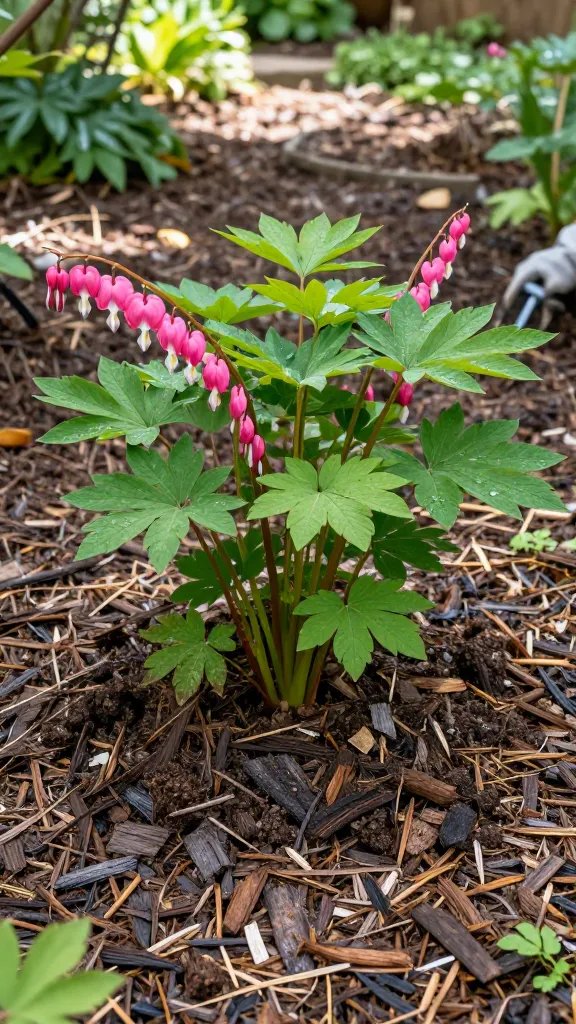
Mulch is their weighted blanket: it keeps roots cool and moisture steady. Aim for a fresh 2-inch layer in spring.
Best Mulch Choices
- Shredded leaves (free and fabulous)
- Fine bark or composted wood chips
- Compost blend around, not on, the crown
Mulch conserves water and suppresses weeds. Use it when temps swing or rain gets stingy. Seriously, it’s low effort, high reward.
5. Water Deep, Then Let Them Breathe
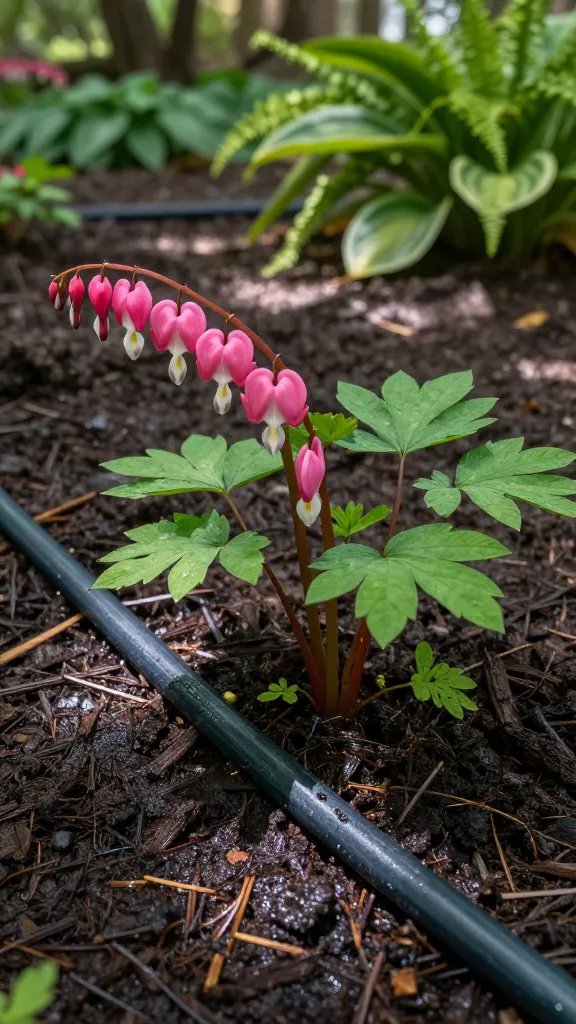
New bleeding heart shoots love consistent moisture—but not wet feet. Think deep soak, then a breather.
- 1 inch of water weekly in spring
- Drip irrigation or slow hose soak works best
- Check soil: damp like a wrung sponge
This rhythm fuels steady growth and fewer fungal dramas. Perfect for early growth spurts and dry spells.
6. Feed Lightly With a Spring Snack
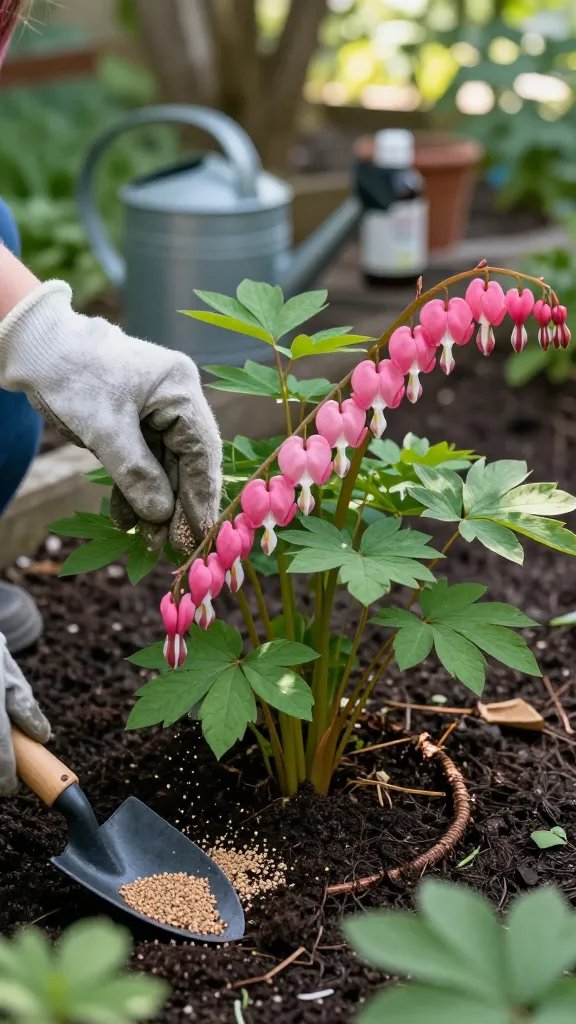
They don’t need a buffet. A light organic feed wakes the crown without pushing weak, leggy growth.
Good Options
- Balanced organic granular (e.g., 5-5-5)
- Compost top-dress around drip line
- Liquid seaweed for a gentle boost
Apply once when shoots appear. You’ll see sturdier stems and better blooms. FYI: overfeeding equals flops.
7. Divide Crowded Clumps for Fresh Energy
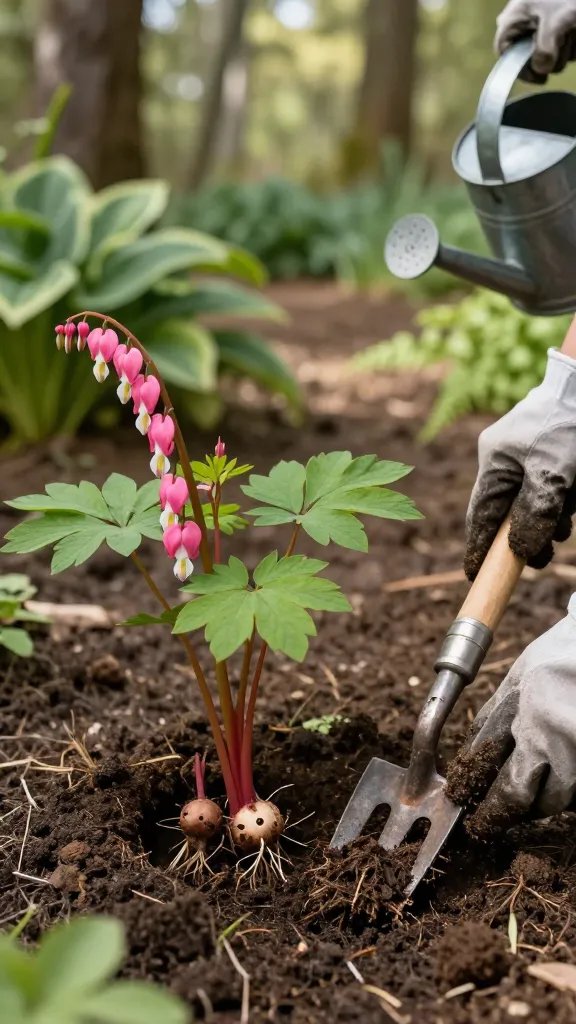
Old clumps can sulk. Division gives them pep again and multiplies your plants—two birds, one shovel.
How-To
- Time it for early spring nub stage
- Lift with a fork, tease apart into 2–3 eye sections
- Replant at same depth, water well
Division reduces competition and sparks new growth. Use this when your center looks tired or bloom count dips.
8. Pair With Sympathetic Shade Buddies
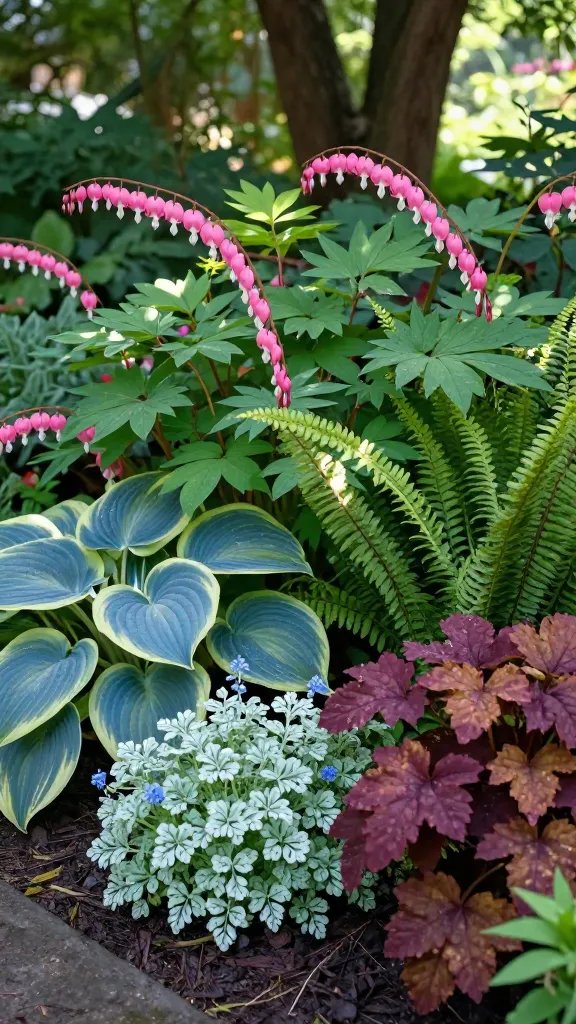
Smart companions protect new growth and keep the show going after bleeding hearts fade. They also look ridiculously good together.
- Hostas for bold leaves
- Ferns for feathery texture
- Brunnera or heuchera for color pop
Companions shade roots and hide gaps in midsummer. Ideal when your bleeding hearts go dormant and you still want a pretty scene.
9. Stake Early, Not After the Flop
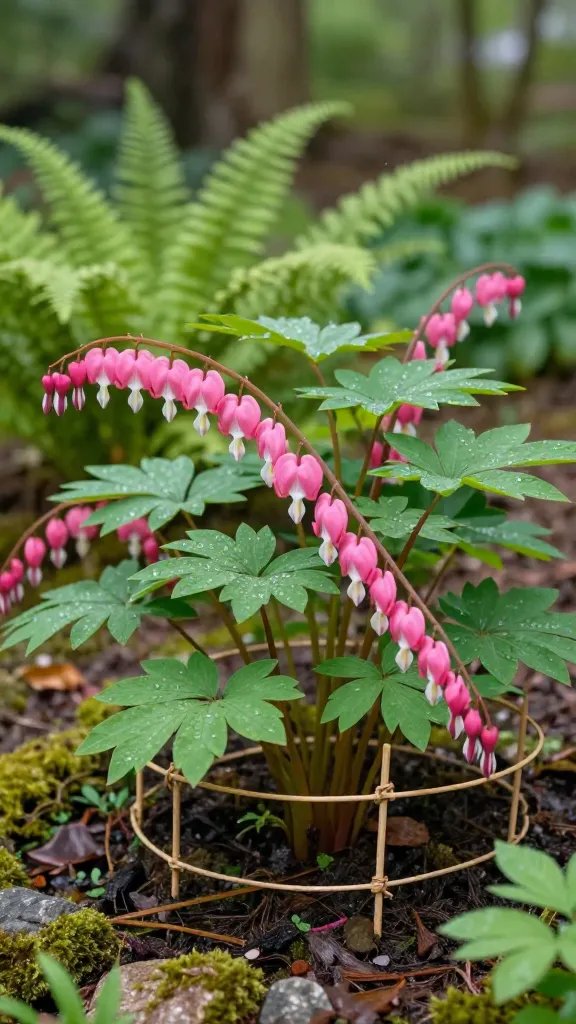
Arching stems look romantic until they collapse. Give subtle support while shoots stay small and pliable.
Low-Key Supports
- Half-moon border hoops
- Pea sticks woven invisibly
- Discreet twine corral around the clump
Early staking keeps stems tidy and blooms front-and-center. Use this in breezy spots or after heavy spring rains.
10. Trim Seed Pods to Channel Energy
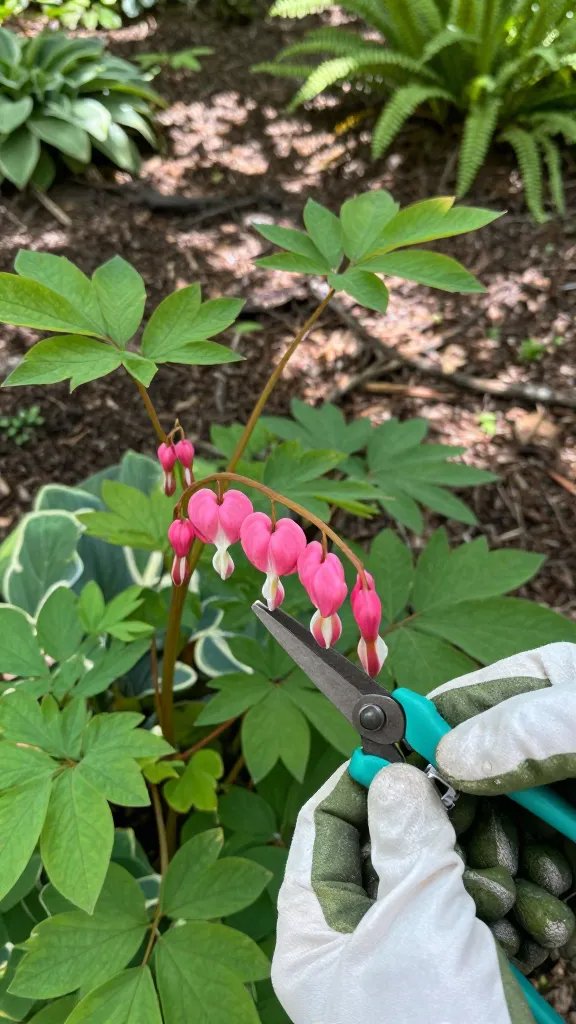
If you don’t need seeds, snip pods. The plant redirects energy into roots and fresh foliage.
- Cut pods once petals drop
- Leave a few if you enjoy volunteers
- Deadhead lightly to avoid shocking the plant
This keeps the plant vigorous and prolongs the pretty phase. Great for smaller gardens where you want zero self-seeding chaos.
11. Protect From Slugs and Snails (They Love Tender Shoots)
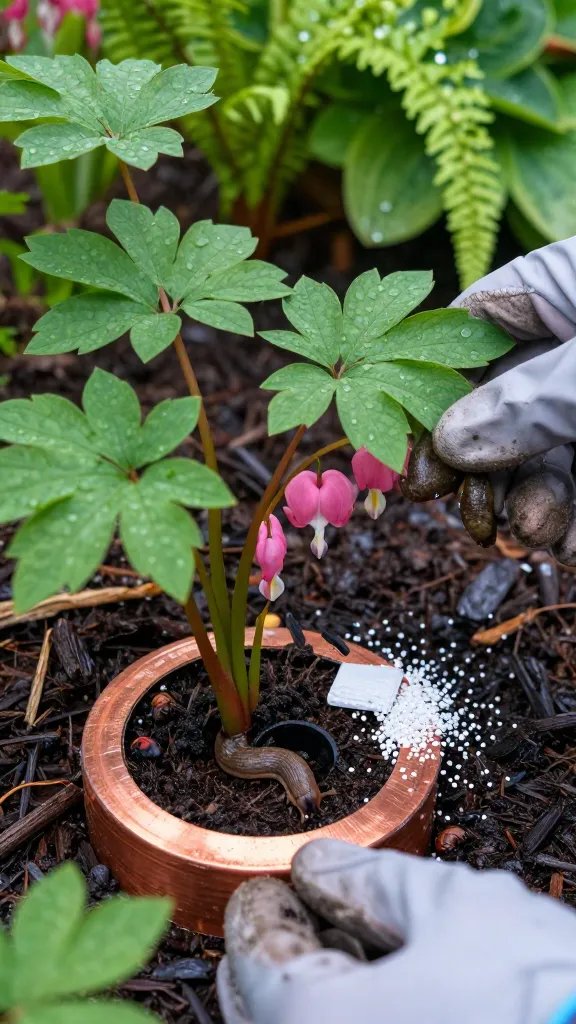
New growth equals slug buffet. Guard the crown before damage shows up as lacework leaves.
Quick Defenses
- Beer traps or iron phosphate pellets
- Copper tape around containers
- Evening patrols for hand-picking (we salute you)
Preventative action saves weeks of recovery. Handy during soggy springs when slugs throw wild raves.
12. Choose the Right Type: Old-School vs. Fernleaf
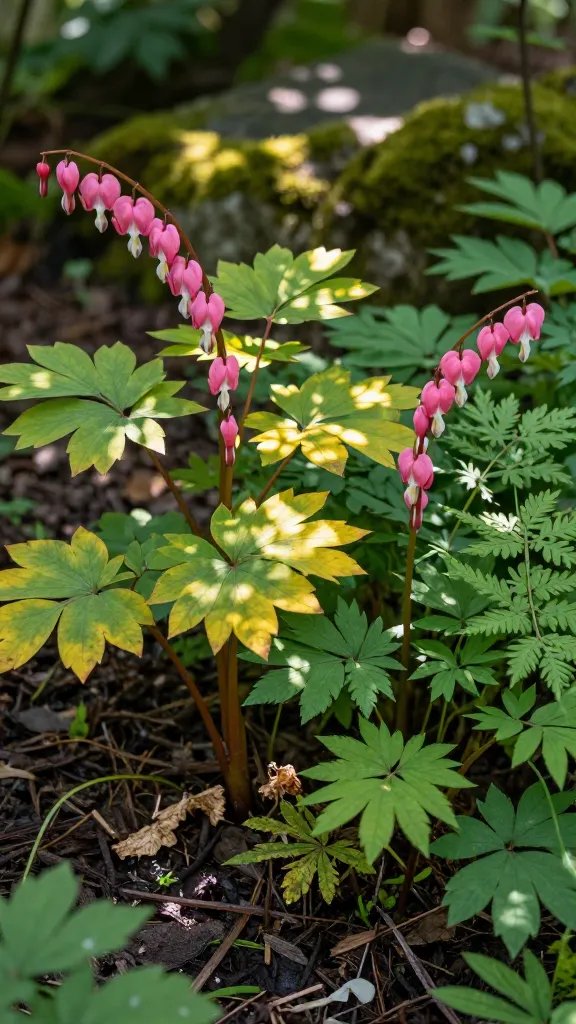
Dicentra spectabilis (classic) dies back earlier, while fernleaf types like D. formosa and hybrids hang around longer. New growth timing and habit differ.
- Spectabilis: big hearts, dramatic exit mid-summer
- Formosa/Luxuriant: airy, reblooms, more heat-tolerant
- Gold-leaf varieties brighten shade but need gentler light
Pick the right type for your climate and patience level. IMO, mixing both gives you steady interest and fewer gaps.
13. Cool the Soil When Heat Hits
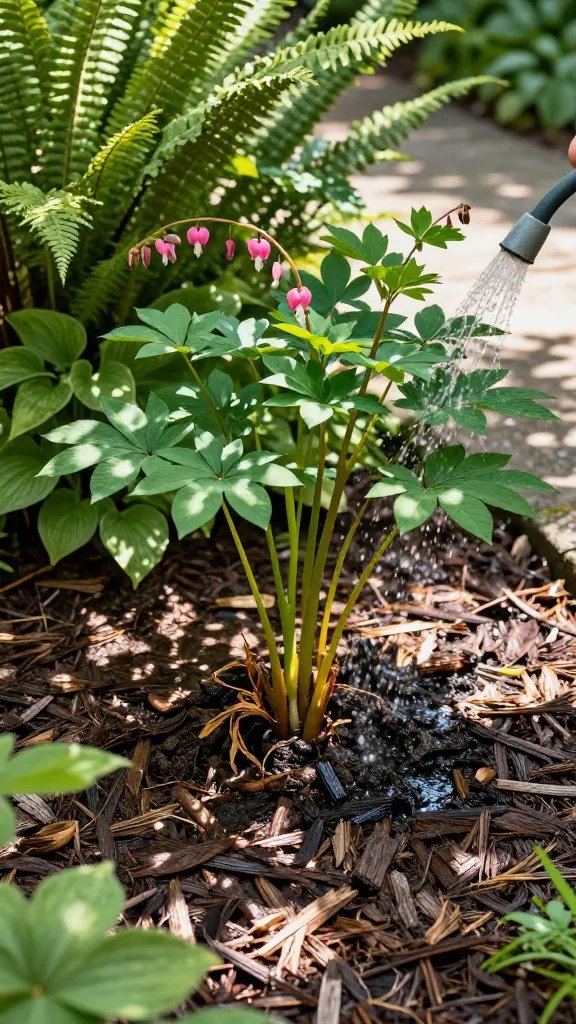
Summer arrives and classic bleeding hearts ghost you. That’s normal dormancy, not drama. Keep crowns cool so they rebound next spring.
Chill Tactics
- Thicker mulch after bloom
- Extra companion foliage cover
- Water during heat waves, then let dry slightly
Maintaining a cool root zone protects next year’s buds. Use this in zones with hot summers or heat islands near pavement.
14. Propagate From Pieces You Already Have
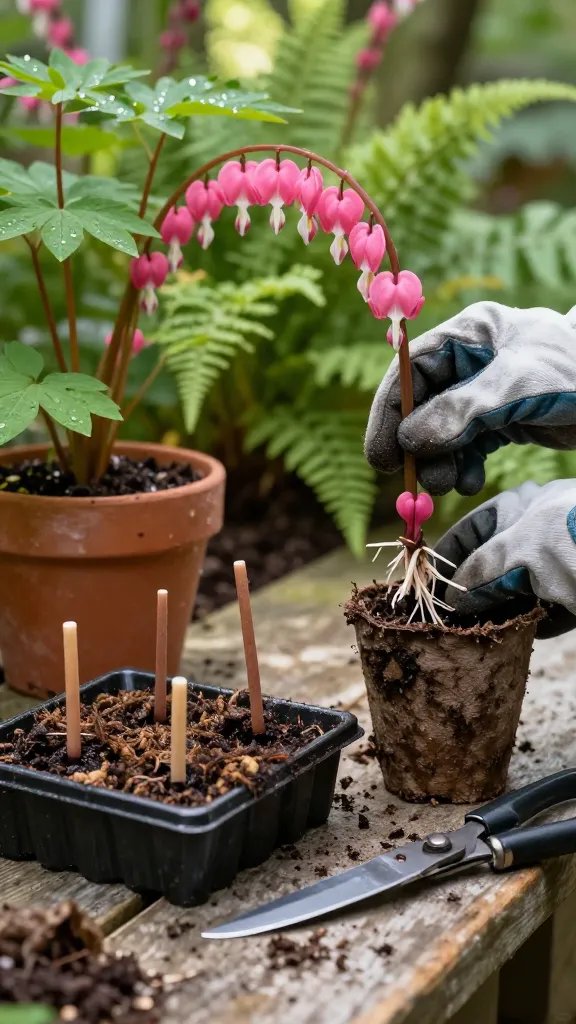
Feeling bold? You can create more plants from remnants. Quick root cuttings or crown divisions turn scraps into stars.
Simple Methods
- Root cuttings: pencil-thick roots in moist mix, vertical orientation
- Crown splits: at least one eye per piece
- Keep evenly moist, bright shade
Propagation saves money and expands your shade glen fast. Trust me, it’s addictive once you nail it.
15. Track Their Rhythm and Lean Into It
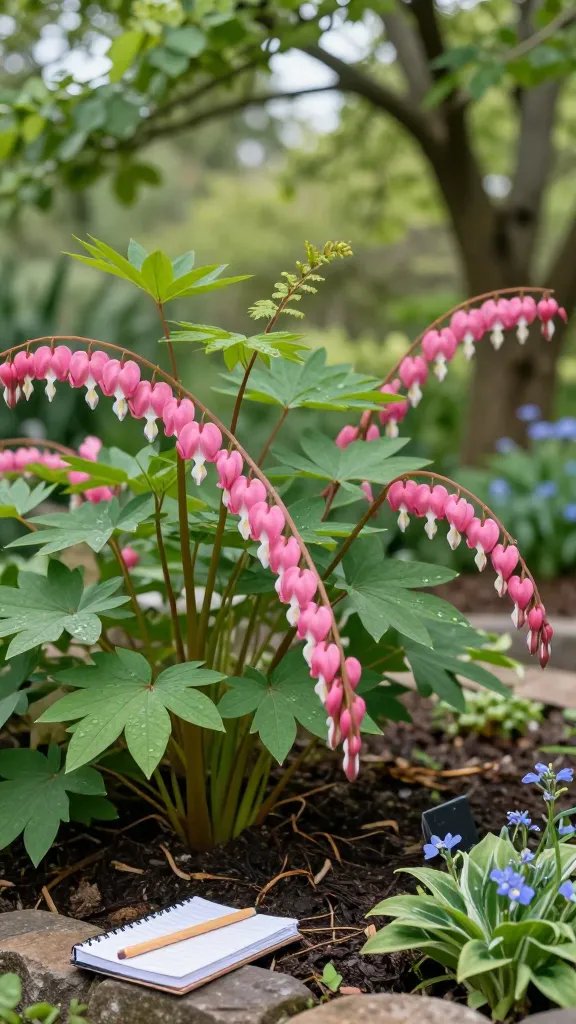
Bleeding hearts follow a rhythm: surge in cool spring, chill in midsummer, regroup for next year. Work with it, not against it.
- Log first sprout dates and bloom times
- Note sun changes as trees leaf out
- Plan seasonal swaps to fill gaps
When you plan around their natural cycle, your garden looks intentional year-round. It’s the secret sauce for effortless shade beauty.
Ready to give those bleeding heart remnants a glow-up? A few smart tweaks now mean lush arches, adorable hearts, and zero heartbreak later. Go spot those pink nubs and start the comeback tour today.