
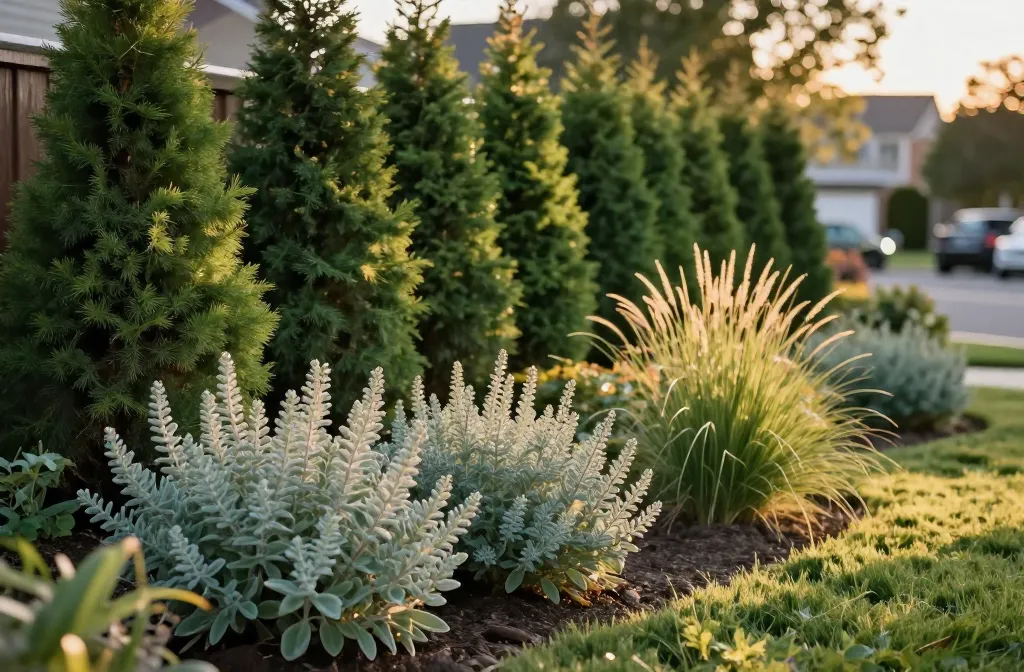
Tired of traffic hum ruining your backyard chill? Plants can fix more than bad soil—they can hush the noise, too. These five combo strategies use smart layers, textures, and plant buddies to muffle sound while making your yard look lush. Grab a shovel, because your garden is about to double as a natural sound studio.
We’ll pair tough evergreens with fluffy fillers, weave in edible screens, and use fragrance as a “bonus perk.” Ready to quiet things down without building a fortress? Let’s plant for peace.
1. The Evergreen Wall + Fuzzy Filler Duo
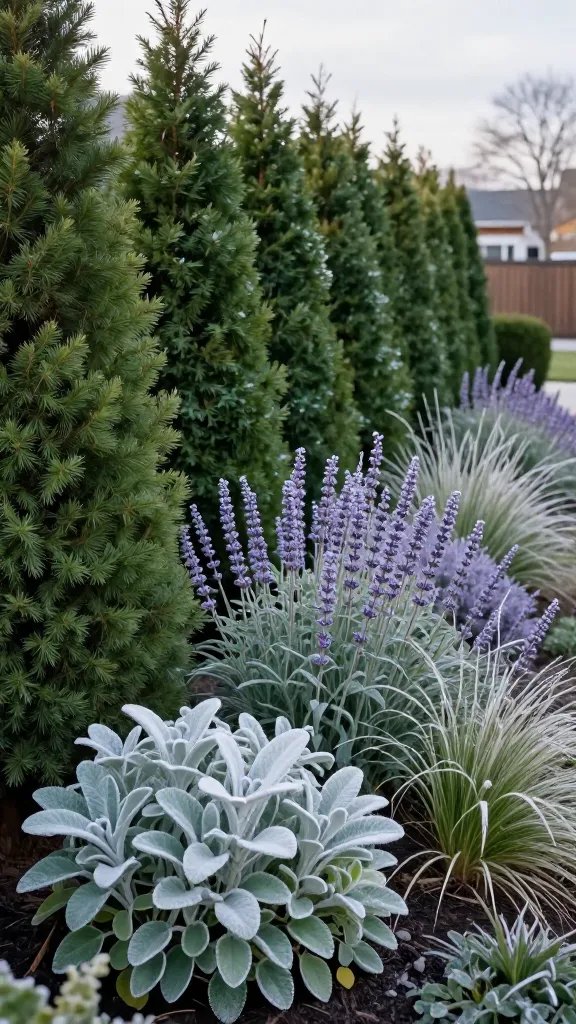
Want dependable year-round noise control? Build a dense evergreen spine, then pack the front with soft, fuzzy textures that scatter sound. This combo blocks, diffuses, and looks good even in January.
Key Pairing:
- Backbone: Arborvitae (Thuja ‘Green Giant’) or Eastern Red Cedar
- Frontline Diffusers: Lamb’s ear, Russian sage, or ornamental grasses (e.g., switchgrass)
Evergreens create a solid barrier that knocks down direct noise. The fuzzy, airy foliage of companion plants breaks up sound waves further, like throwing a blanket over speakers. FYI, you need mass, not just height.
Tips:
- Stagger evergreen spacing 4–6 feet apart to avoid gaps.
- Layer grasses 2–3 feet in front to create turbulence—sound hates irregular surfaces.
- Mulch thickly to absorb extra noise and suppress weeds.
Use this along property lines and driveways where you need year-round coverage. Bonus: pollinators love Russian sage, and the whole combo looks polished with minimal fuss.
2. Bamboo Screen + Broadleaf Buffer
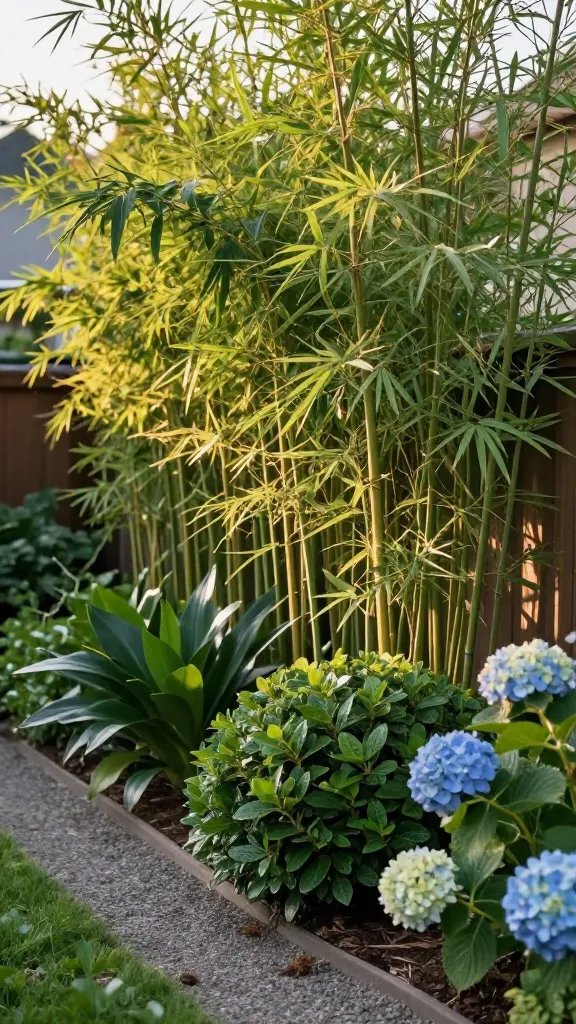
Crave quick results? Bamboo grows like it drinks espresso, giving you a tall, lush screen fast. Pair it with broadleaf shrubs to catch and muffle sound that sneaks through the canes.
Key Pairing:
- Screen: Clumping bamboo (Fargesia or Bambusa varieties)
- Buffer: Viburnum, hydrangea, or laurel
Clumping bamboo sways and breaks up noise, while the dense shrub layer absorbs mid-to-high frequencies. The mix of vertical canes and broad leaves works like a natural equalizer.
Tips:
- Choose clumping bamboo only—running bamboo will take over your life, your neighbor’s life, and the sidewalk.
- Plant shrubs 2–3 feet in front of bamboo to create a double wall.
- Prune lightly to maintain density; gaps let sound leak through.
Perfect for patios and urban fences where you need height fast. IMO, this is the best blend of speed and style—lush privacy with a gentle rustle that actually feels calming.
3. Mixed Hedge Symphony: Conifers + Flowering Shrubs + Grasses
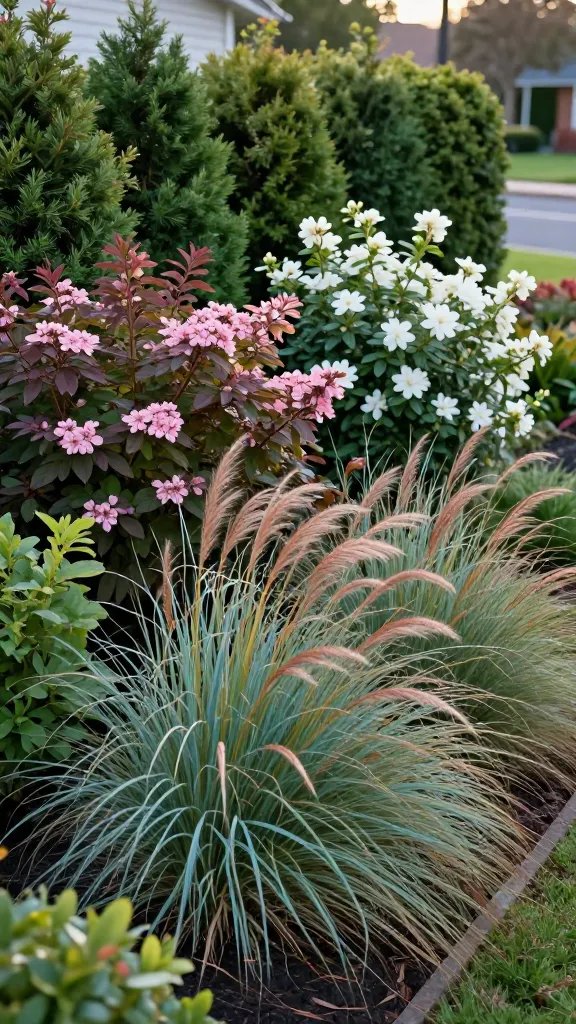
Variety wins for sound absorption. A mixed hedge gives you different leaf shapes, densities, and heights—aka multiple chances to break up noise. It also looks way better than a one-note row of shrubs.
Key Pairing:
- Conifers: Yew, Japanese cedar, or dwarf spruce
- Flowering Shrubs: Ninebark, spirea, or mock orange
- Grasses: Miscanthus, feather reed grass, or little bluestem
Conifers handle low-frequency rumble. Flowering shrubs catch mid-range chatter. Grasses diffuse high-end sound and add movement. Together, they create a full-spectrum hush.
Planting Strategy:
- Layer in tiers: tall at the back, medium in the middle, grasses up front.
- Use a zig-zag layout, not a straight line—sound slips through straight lines.
- Repeat plants in groups of 3–5 for visual rhythm and thicker coverage.
Use this along wide borders where you want a “garden that happens to be quiet.” Seriously, it’s stunning in all four seasons and attracts birds like crazy.
Maintenance Cheats:
- Shear conifers lightly in late spring to keep density.
- Cut back grasses in late winter; leave them standing for winter sound baffling.
- Mulch with wood chips for extra absorption and moisture control.
Great for bigger lots or anyone who wants a habitat-rich hedge that earns its space beyond just noise control.
4. Fruitful Silence: Espaliered Trees + Herb Understory
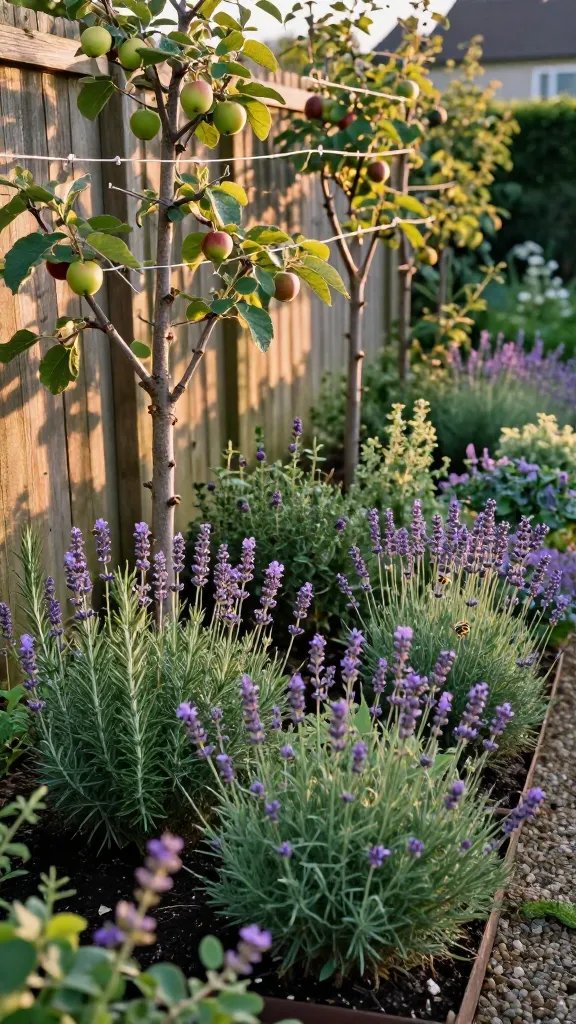
Want sound control that feeds you? Train fruit trees flat against a fence, then stuff the base with dense herbs. You get a living acoustic panel that also smells incredible and looks insanely charming.
Key Pairing:
- Espalier Trees: Apple, pear, or fig
- Herb Understory: Rosemary, lavender, thyme, oregano
Espaliered branches create branching density right where you need it. Herbs form a thick, aromatic cushion that absorbs and diffuses sound grazing along the ground plane. Bees will send thank-you notes.
How-To Basics:
- Install horizontal wires along a fence (18, 36, 54 inches high).
- Train young branches along the wires to build a tight lattice.
- Plant herbs 12–18 inches apart to form a seamless carpet.
This shines in narrow side yards, tiny patios, or along a noisy path. Bonus: prune days equal free fruit and better airflow. Trust me, this combo pulls serious double duty.
Pro Moves:
- Choose disease-resistant apple/pear varieties for less fuss.
- Mix woody herbs (rosemary) with soft herbs (oregano) for a balanced texture.
- Drip irrigation keeps everything happy without wasting water.
Use it if you want practical beauty and subtle sound softening in tight spaces without building a bulky hedge.
5. Moisture Magic: Water Feature + Bog-Loving Plants
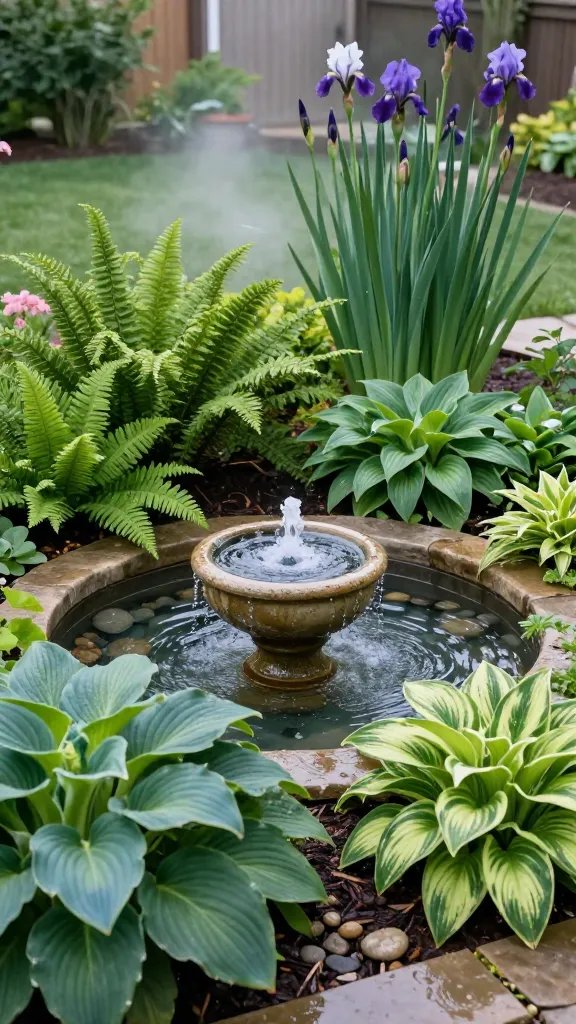
Want to disguise noise you can’t fully block? Layer pleasant sound over the unpleasant stuff. A small water feature plus dense, moisture-loving plants both mask and absorb noise.
Key Pairing:
- Sound Source: Bubbling urn, rill, or sheet waterfall (not a splashing geyser)
- Plant Buffer: Sweet flag, iris, cattails (in large spaces), hosta, and ferns
Moving water masks mid-range sounds like conversation and tire hiss. Thick, broad leaves and reed-like foliage trap and scatter remaining noise. The combo calms the vibe instantly.
Placement Tips:
- Put the water feature between the noise source and your seating area.
- Choose a steady, low, burbling tone—not too loud or you’ll trade one problem for another.
- Plant generously around the edges to prevent sound reflections off stone or water surfaces.
Great for courtyards and patios near roads. It’s functional, meditative, and gorgeous—like turning your backyard into a spa, minus the robe.
Bonus Enhancements:
- Use rough rock and stacked edges to break up echoes.
- Add moss, sedges, and creeping jenny for soft, sound-absorbing groundcover.
- Install a variable-speed pump so you can tune the sound to the scene.
Choose this if you prefer masking over heavy screening and you want year-round ambience.
Quick Planting Principles That Make Any Combo Quieter
- Go Thick, Not Just Tall: Depth absorbs sound. Aim for 3–6 feet of layered planting.
- Mix Textures: Needles, broad leaves, and plumes scatter different frequencies.
- Stagger Everything: Zig-zags beat straight lines for blocking gaps.
- Mind The Gaps: Sound beelines through holes—fill them with mid-height plants.
- Add Hardscape Wisely: Fences reflect; soften with vines or trellised plants.
- Water + Mulch: Healthy, leafy plants absorb more. Keep them thriving.
Smart Vine Add-Ons (If You Need Extra Help)
- On Fences: Boston ivy or star jasmine adds a leafy sound blanket.
- On Pergolas: Wisteria or hops creates an overhead baffle—great above seating.
- On Railings: Evergreen clematis keeps winter interest and coverage.
Use vines to soften “hard edges” that bounce sound back at you. Just don’t let them swallow your gutters. Seriously.
When To Use Each Strategy
- Evergreen + Fuzzy Filler: Year-round privacy and steady noise from roads.
- Bamboo + Broadleaf: Fast height where space is narrow.
- Mixed Hedge Symphony: Big borders that deserve to look amazing.
- Espalier + Herbs: Small spaces where food + function matters.
- Water + Bog Plants: Urban patios where masking beats walling off.
Plant Size and Spacing Cheatsheet
- Arborvitae: 4–6 feet apart, staggered rows for dense screens.
- Clumping Bamboo: 3–5 feet apart; check mature spread on the tag.
- Grasses: 18–30 inches apart depending on variety.
- Shrubs: 3–5 feet apart; prune to encourage branching.
- Espalier Trees: 8–10 feet apart along wires or trellis.
Common Mistakes To Avoid
- Planting in a single line: Depth beats height every time.
- Choosing sparse species: Open habits let sound sail through.
- Ignoring the ground plane: Add groundcovers and low shrubs to block bounce-back.
- Overwatering bamboo: Leads to weak growth and sad screens.
- Skipping maintenance: Thin hedges leak sound—light pruning keeps them dense.
Low-Maintenance Stars
- Thuja ‘Green Giant’: Fast, hardy, and forgiving.
- Switchgrass (Panicum): Upright, drought-tolerant, great rustle factor.
- Viburnum: Versatile, dense, with spring flowers and berries.
- Lavender + Rosemary: Fragrant, evergreen (in many zones), and tidy.
Climate Considerations
- Cold Climates: Favor spruce, yew, feather reed grass, and hardy viburnum.
- Hot/Dry: Juniper, rosemary, lavender, olive, and muhly grass.
- Humid: Camellia, tea olive, hollies, loropetalum, and miscanthus.
Always match plants to your USDA zone and exposure. Right plant, right place, quiet life.
Ready to turn down the volume and turn up the greenery? Pick one of these five combos and plant thick, layer smart, and stagger like a pro. Your future self will thank you when your backyard sounds like a soft breeze instead of a freeway—trust me.