
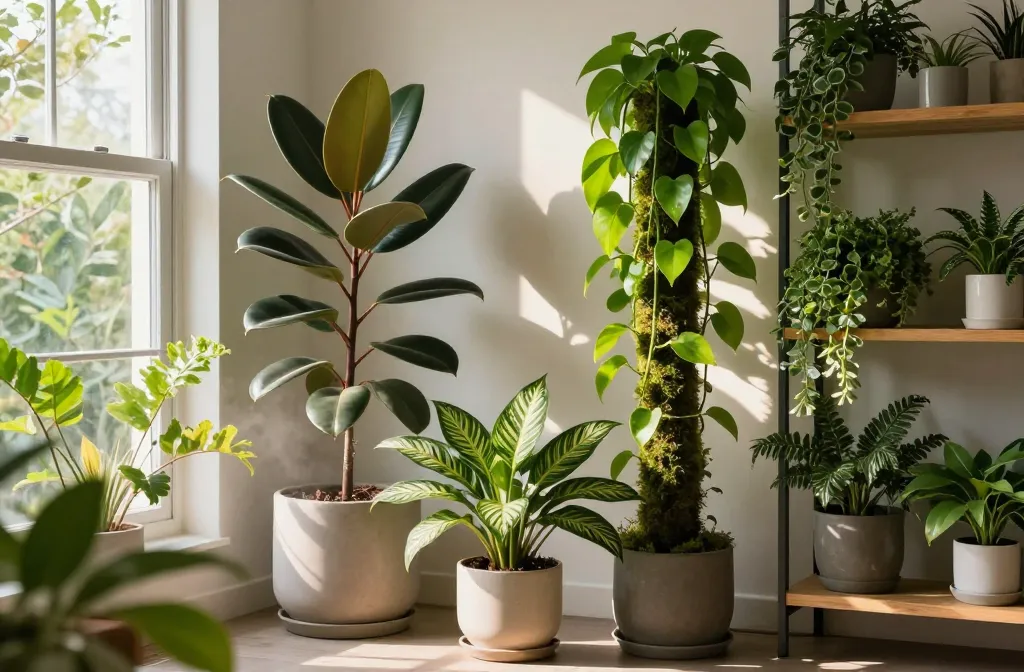
Your apartment jungle can do more than just sit there looking cute. Pair plants strategically and you’ll unlock richer texture, fuller growth, and a vibe that screams “green abundance.” You’ll also save space and make maintenance easier—because clever combos share light, humidity, and watering needs. Ready to design a lush, layered ecosystem that thrives on extra?
1. Moody Jungle Corners: Rubber Plant + Calathea + Moss Pole Pothos
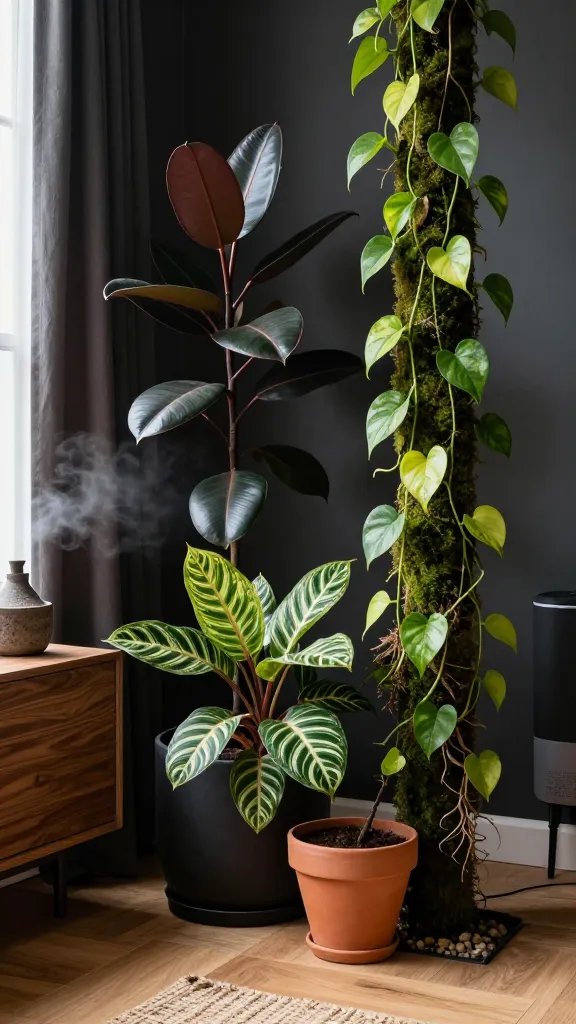
This trio turns a dim-ish corner into a dramatic, high-contrast pocket of green. The rubber plant brings glossy height, the calathea adds patterned drama, and a pothos wrapped up a moss pole fills vertical space fast. Together, they read luxe and intentional—like you meant to build a jungle in your living room (because you did).
Why It Works
- Light harmony: All three handle bright indirect light and tolerate lower light better than divas like fiddle-leafs.
- Humidity synergy: Calatheas love humidity; pothos and rubber plant don’t mind the boost.
- Texture layering: Glossy rubber leaves, velvety calathea patterns, trailing pothos—chef’s kiss.
Setup Tips
- Put the rubber plant in a 10–12 inch pot as your anchor. Place the calathea slightly forward in a 6–8 inch pot.
- Train the pothos up a moss pole or coir totem for height; mist the pole so roots grip and climb.
- Use a pebble tray to raise humidity, especially in winter. Calathea says thanks by not crisping.
Best For: North-facing corners, statement nooks, and anyone who wants moody, maximalist drama without high-maintenance tears. FYI: rotate monthly for even growth.
2. Sun-Drenched Window Showstopper: String of Pearls + Burro’s Tail + Aloe ‘Black Gem’
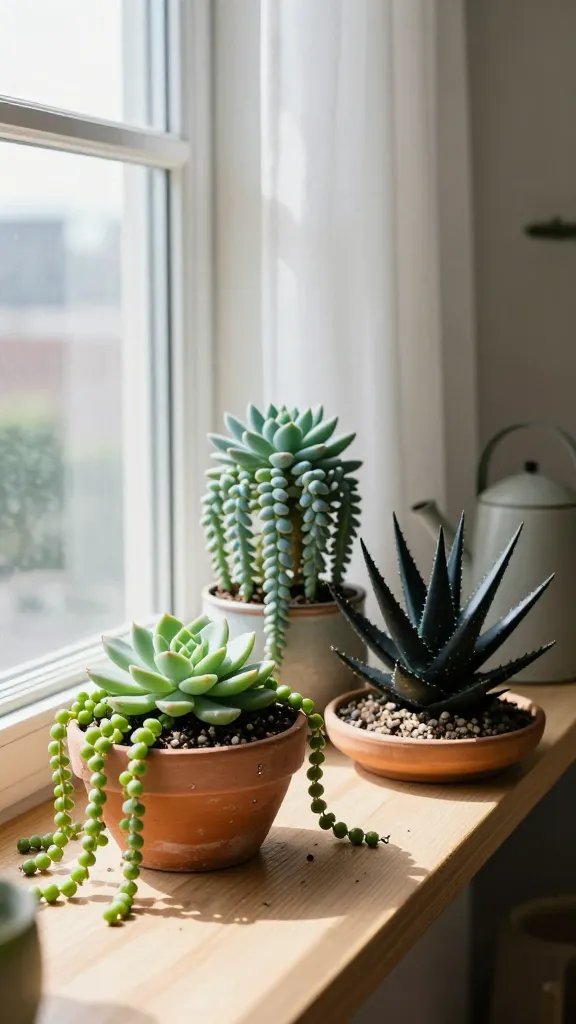
If your window gets bright light and you love a sculptural, cascading moment, this succulent trio slaps. Spheres from string of pearls, chunky tails from sedum, and architectural aloe spikes create maximal contrast with minimal watering. It’s the “no-fuss but make it extra” combo.
Key Points
- Light: Full sun to bright indirect; direct morning sun is perfect. Noon scorch? Diffuse with a sheer curtain.
- Water: Infrequent, deep watering. Let the soil go bone dry between sips.
- Containers: Shallow, wide planters with large drainage holes. Terra cotta keeps rot away.
Planting Layout
- Center the aloe slightly off to one side as the spiky focal point.
- Flank with string of pearls on one edge and burro’s tail on the other, letting them spill.
- Top-dress with pumice or gravel for that designer finish and extra airflow.
Best For: South or west windows, sunny kitchen ledges, and busy plant parents who sometimes forget the watering can. Seriously, low effort—high wow.
3. Soft, Humid Shelfscape: Ferns + Peperomia + Mini Monstera (Rhaphidophora Tetrasperma)
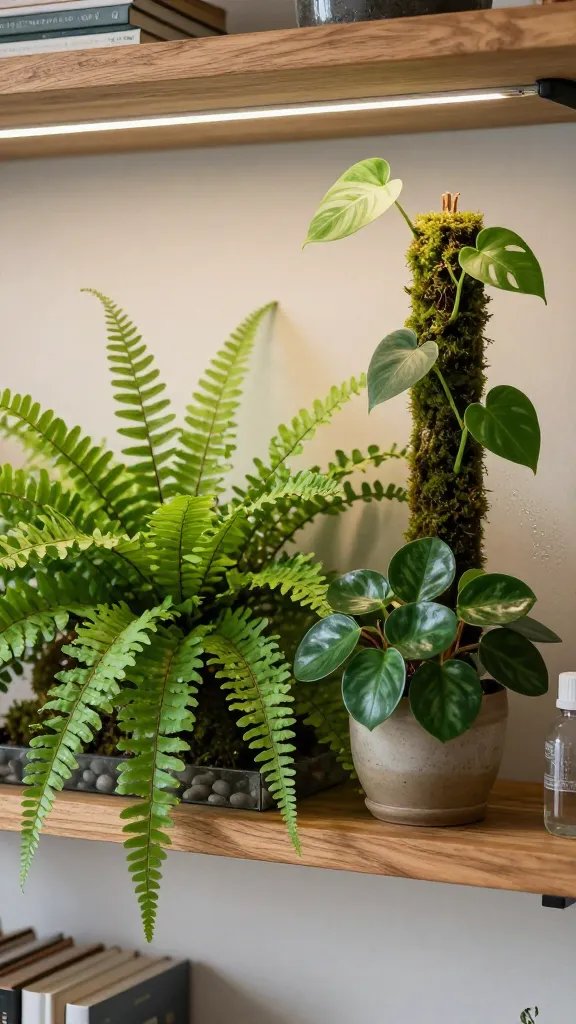
Want something lush and touchable that doesn’t need a whole window bay? Cluster a feathery fern, a chunky-leaved peperomia, and a mini monstera on a shelf with a grow light. You’ll get movement, texture, and dreamy vibes—no sprawling footprint needed.
Why It Works
- Humidity match: Ferns and mini monstera enjoy humidity; peperomia tolerates it and offers structure.
- Form variety: Fine, fluffy fronds vs. heartier leaves vs. cut, climbing foliage = visual rhythm.
- Scale: All thrive in smaller pots, so you can stack shelves without chaos.
Tips
- Pick a Boston fern or Button fern for soft fronds that don’t hog space.
- Use a grow light bar under the shelf above; run it 10–12 hours/day.
- Group pots on a tray with LECA or pebbles and water the tray (not the pots) for ambient moisture.
- Give the mini monstera a small trellis or command hooks so it climbs neatly upward.
Best For: Bookcase corners, bathroom shelves with decent light, and renters who want dramatic greenery without giant planters. IMO, this combo looks boutique-level.
4. Tropical Statement With Color Pops: Anthurium + Philodendron Brasil + Bromeliad
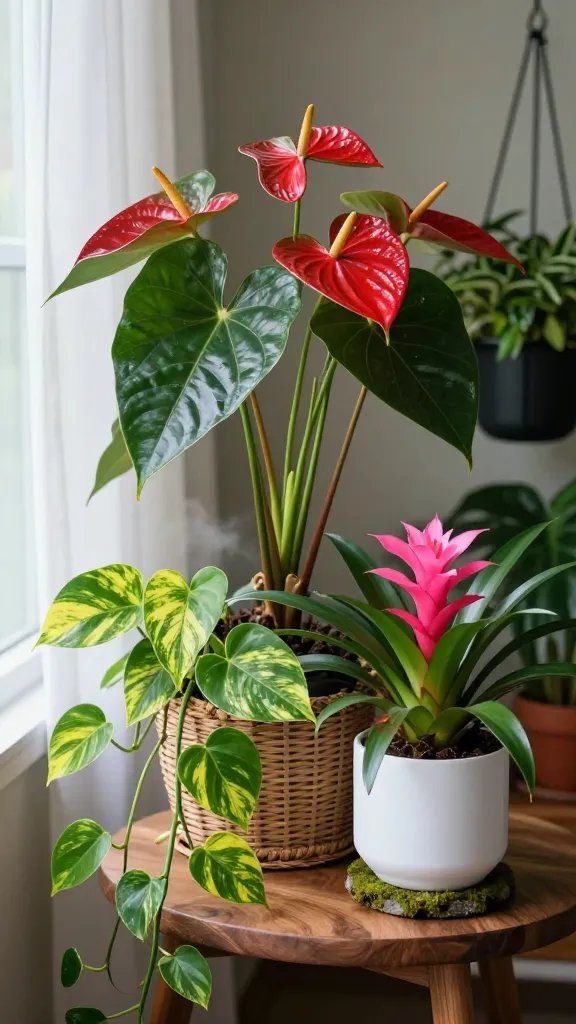
Maximalists, assemble. If you crave glossy leaves, splashes of color, and a bit of rainforest theater, this trio delivers. Anthurium’s long-lasting blooms, Brasil’s yellow-green variegation, and bromeliad’s neon rosette create a lively, layered, “I vacation in humidity” vibe.
Color and Texture Strategy
- Focal bloom: Anthurium’s spathes last weeks and anchor the whole scene.
- Trailing accent: Philodendron Brasil softens edges and adds a neon stripe.
- Architectural contrast: Bromeliad’s rosette shape breaks up all the leafy shapes.
Care Sync
- Light: Bright indirect; avoid harsh direct sun to prevent scorch.
- Water: Keep anthurium and philodendron gently moist; let bromeliad’s central cup hold filtered water (refresh weekly).
- Soil: Chunky aroid mix—add orchid bark and perlite for breathability.
- Fertilizer: Dilute balanced feed monthly in spring/summer; skip heavy feeding in winter.
Best For: Living room credenzas, coffee table centerpieces, or anywhere you want color without flowers dropping petals everywhere. Trust me, the bromeliad’s drama steals compliments.
5. Aromatic Kitchen Workhorses: Basil + Mint (Contained!) + Dwarf Citrus
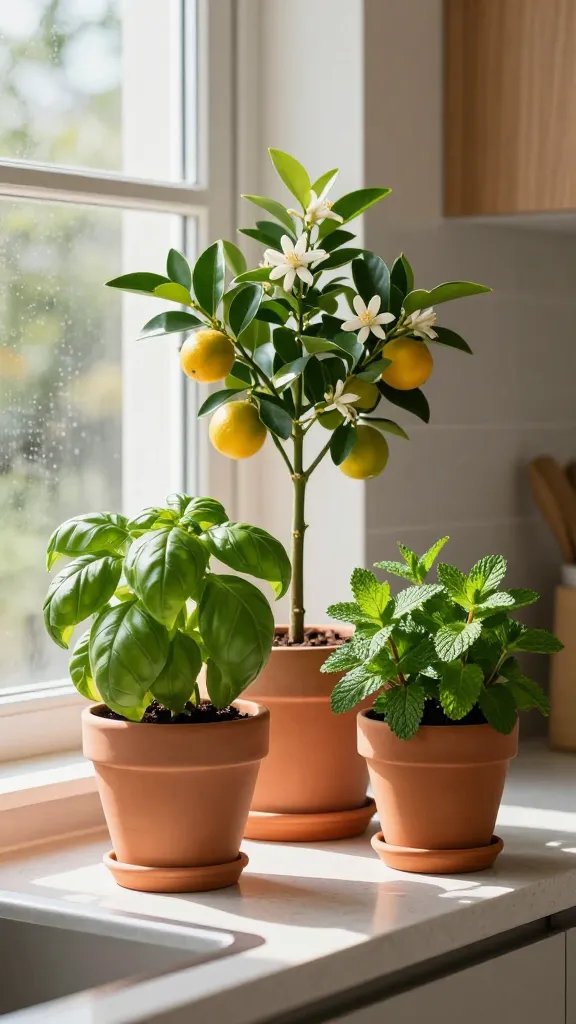
Yes, herbs can live glamorously next to a tiny citrus tree, and yes, your kitchen will smell like summer. Basil offers glossy green and sauces-on-demand, mint brings freshness (in its own pot, always), and dwarf citrus gives you fragrant blossoms and small fruits. It’s edible maximalism that still looks designer.
Placement and Light
- Light: A bright east or south window. Citrus craves sunshine; basil follows suit.
- Airflow: Good circulation prevents fungus gnats and mildew—tiny fan for the win.
Containers and Soil
- Basil: 6–8 inch pot, rich well-draining mix. Pinch regularly to bush out.
- Mint: Its own 8–10 inch pot or a long trough with a root barrier. It will take over, otherwise.
- Dwarf citrus: 10–14 inch pot with citrus or cactus mix plus extra perlite. Ensure top-notch drainage.
Watering and Feeding
- Water basil when the top inch dries; it sulks when too dry.
- Keep mint evenly moist and harvest often; it rebounds fast.
- Let citrus dry slightly between waterings; feed with citrus fertilizer monthly in growing season.
Best For: Cooks, cocktail lovers, and anyone who wants fragrance on demand. Bonus: citrus blossoms smell like a vacation you didn’t pay for.
Ready to greenlight your apartment jungle? Start small, pick a pairing you love, and build from there. Your space will feel fuller, calmer, and way more you—and the compliments won’t hurt either.