
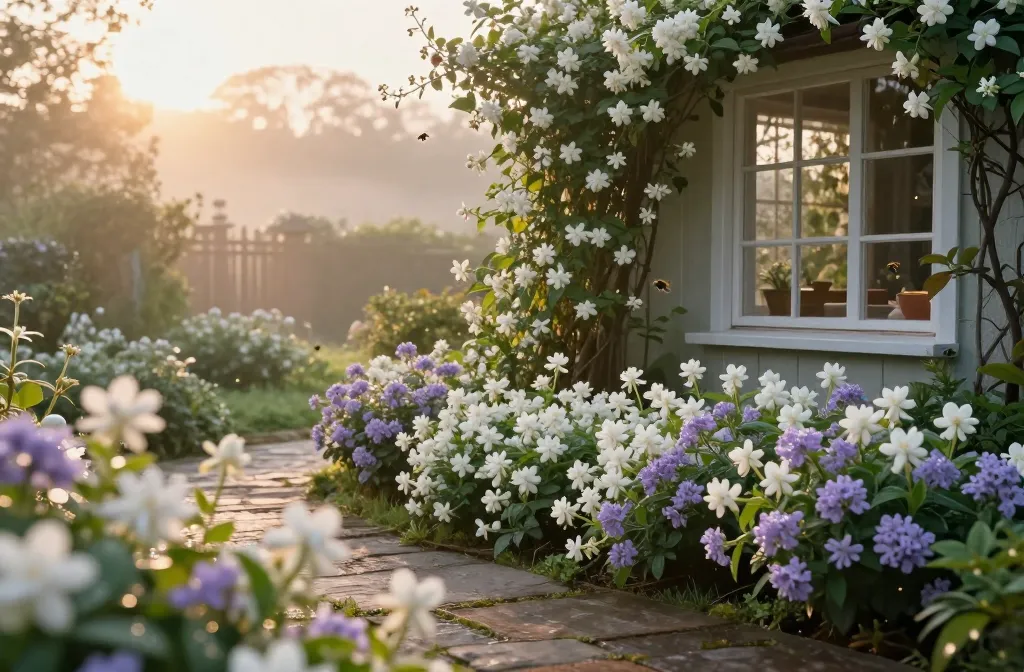
If your garden doesn’t smell like a dreamy bakery-meets-botanical-spa at sunrise, you’re missing out. Dawn-blooming pairings amp up fragrance when the air sits still and your coffee’s still hot. These combos bloom early, attract pollinators, and look ridiculously good together. Ready to make neighbors pause mid-jog and sniff the air like cartoon characters?
1. Jasmine & Sweet Alyssum: The Honeyed Wake-Up Call
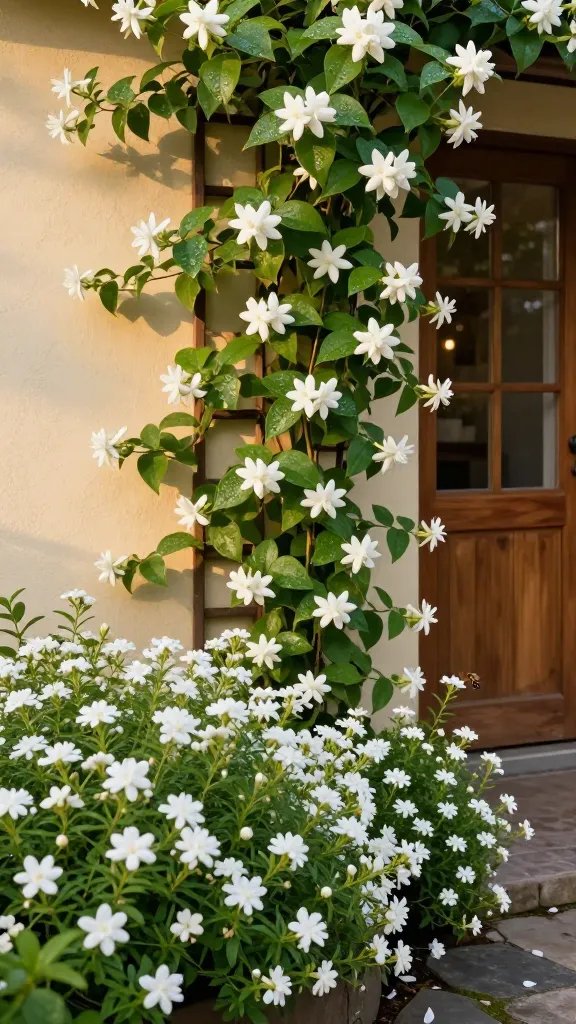
This duo turns your entryway into a soft, sugary cloud at sunrise. Jasmine delivers those classic floral notes, while sweet alyssum layers in warm honey. Plant them near paths or a breakfast nook window for an early scent reward.
Why It Works
- Complementary fragrance: Rich jasmine + airy honey keeps it balanced.
- Tiered height: Jasmine climbs; alyssum cascades and fills gaps.
- Pollinator magnet: Early bees show up for the sweet stuff, FYI.
Go with star jasmine (Trachelospermum jasminoides) on trellises or fences. Blanket the base with white or lavender sweet alyssum for a soft-edged look. Water consistently the first season, then ease up.
Tips
- Morning sun, light afternoon shade for gentler fragrance and longer bloom.
- Prune jasmine after flowering to keep it tidy.
- Deadhead alyssum monthly for nonstop fluff.
Use this combo where you linger in the morning: front stoop, patio, or under a kitchen window. It sets a calm mood without knocking you over.
2. Night Phlox & Angel’s Trumpet: The Twilight-To-Dawn Drama Duo
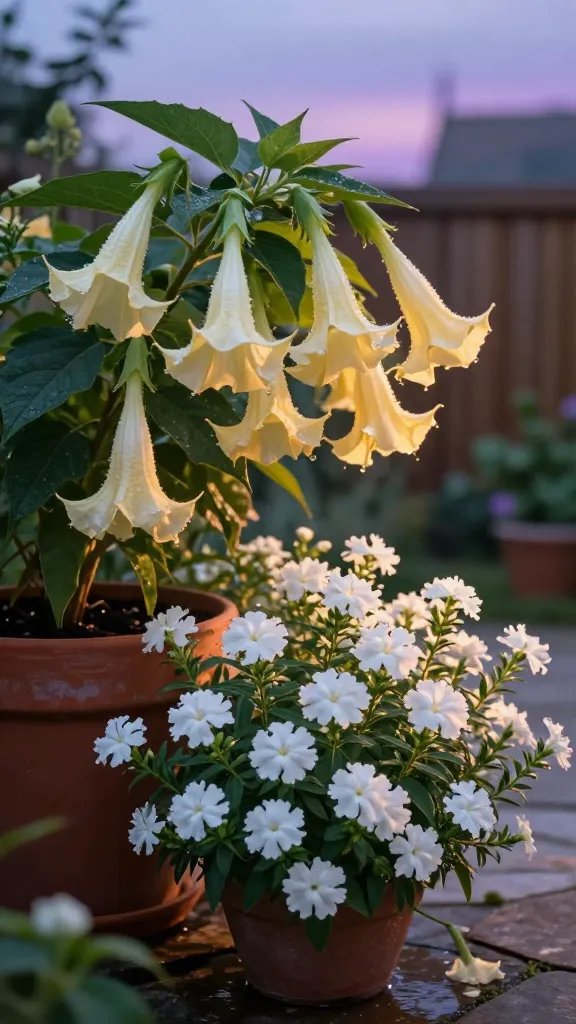
These two clock in as the party winds down and keep perfuming until morning. Night phlox smells like vanilla-marshmallow (yes, really), while angel’s trumpet brings a bold, heady note that hangs in the cool air. Together, they create a twilight-into-dawn scent show.
Key Points
- Extended fragrance window: Opens at dusk, strongest at sunrise.
- Big-meets-delicate: Large, pendant angel’s trumpets + airy phlox mounds.
- Container friendly: Great on patios for close-up scent-catching.
Grow angel’s trumpet (Brugmansia) in a large pot you can roll into shelter in cold zones. Plant night phlox (Zaluzianskya capensis) in front or spill it over the container edge. Water evenly and feed lightly for steady bloom.
Safety Note
- Angel’s trumpet is toxic. Don’t plant where pets or kids nibble, seriously.
- Wear gloves when pruning.
Use this when you want a lush, romantic vibe for evenings and breakfast hours. It’s dramatic, photogenic, and a little bit glamorous—IMO, a patio showstopper.
3. Mock Orange & Dianthus: Citrus Spark With Spicy Undertones
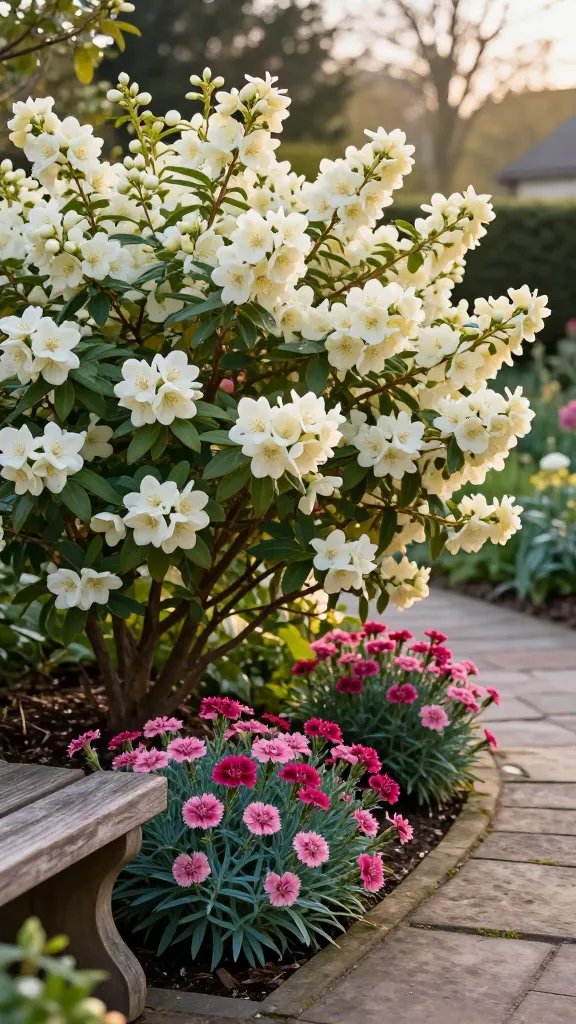
Mock orange smells like an orange grove at daybreak—bright and nostalgic. Add dianthus for a clove-like spice that nudges the citrus into something more interesting. It’s like a fancy pastry and fresh-squeezed juice in plant form.
Planting Plan
- Mock orange (Philadelphus): Shrub backbone with white, citrusy blooms in late spring.
- Dianthus (pinks): Low mounds with spiky petals and spicy scent.
- Spacing: Give mock orange room—5–8 feet wide depending on variety.
Place the shrub along a path or near a seating area. Tuck dianthus along the border to edge the bed and catch the morning sun. Both appreciate good drainage; no soggy soils, please.
Care Essentials
- Prune mock orange right after flowering; it blooms on old wood.
- Deadhead dianthus for repeat flowers.
- Mulch lightly to keep roots cool.
Perfect for cottage gardens and classic front-yard borders. You’ll get a short, intense burst from mock orange, then steady pops of dianthus to keep the fragrance story going.
4. Tuberose & Heliotrope: Creamy, Vanilla, And Just A Little Extra
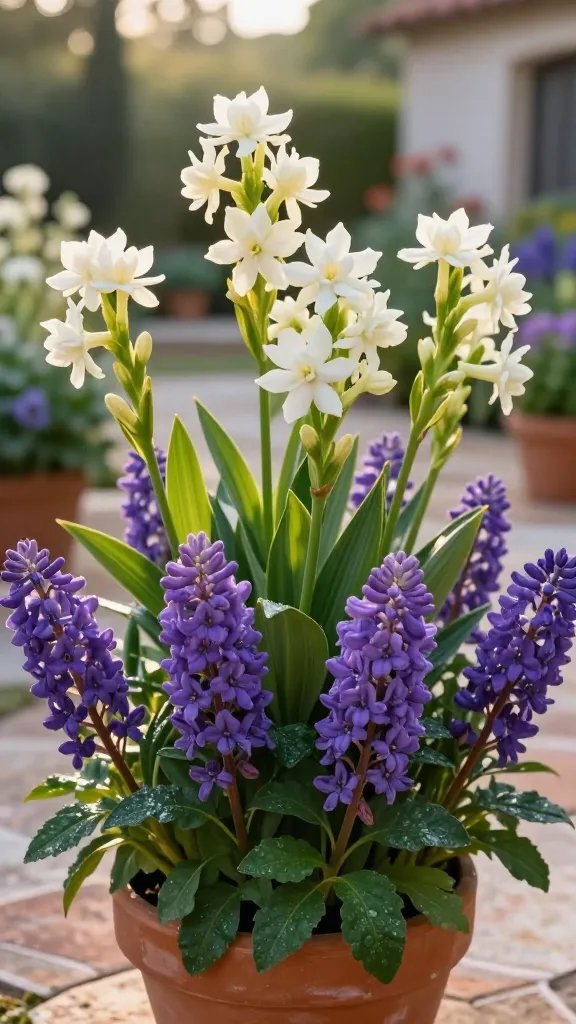
If you like your morning scents rich and decadent, meet your new obsession. Tuberose delivers a creamy, tropical perfume that feels luxurious. Heliotrope adds almond-vanilla notes that play so well it feels curated.
Design Move
- Layered scent profile: Creamy-sweet tuberose + powdery vanilla heliotrope.
- Height contrast: Tuberose spikes anchor; heliotrope mounds soften the base.
- Container or bed: Both excel in pots where you can sniff up close.
Plant tuberose bulbs (Polianthes/Agave amica) in late spring in a warm, sunny spot. Surround with heliotrope where it can bask in morning light and get a bit of afternoon shade. Keep soil evenly moist but never waterlogged.
Pro Tips
- Stagger tuberose plantings every 2–3 weeks for a longer season.
- Use a rich, well-draining mix with compost for heliotrope.
- Pinch heliotrope early to keep it bushy and floriferous.
This pairing shines on balconies, near lounge chairs, or beside a breakfast terrace. It screams “vacation morning,” even on a Tuesday.
5. Honeysuckle & Lemon Thyme: The Fresh-From-The-Garden Breakfast Blend
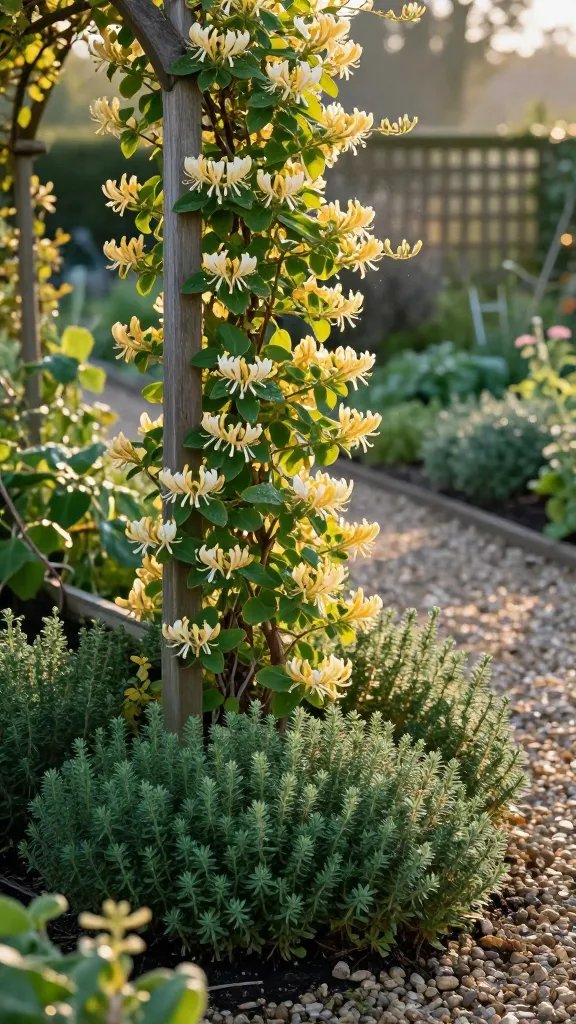
Want fragrance that wakes you up without clobbering your senses? Honeysuckle brings nectar sweetness, while lemon thyme throws in a zesty herbal twist. Together they smell like a citrusy tea with a floral drizzle.
How To Arrange
- Honeysuckle (Lonicera): Train on an arch, trellis, or fence for vertical perfume.
- Lemon thyme (Thymus x citriodorus): Groundcover or border that releases scent when brushed.
- Sun: Full morning sun, light afternoon shade works in hot climates.
Choose a non-invasive honeysuckle like Lonicera periclymenum varieties, or L. sempervirens for hummingbirds. Let lemon thyme edge paths so you catch a zesty puff with each step. Both appreciate decent drainage and moderate water.
Extra Perks
- Edible bonus: Snip thyme for eggs, potatoes, or tea.
- Pollinator-approved: Bees and hummers clock in early.
- Low maintenance: Trim honeysuckle after bloom; shear thyme lightly mid-season.
Use this combo by the kitchen door or along morning walkways. It’s practical, fragrant, and charming—your garden’s version of a good breakfast playlist.
Ready to wake up your garden—and your senses? Mix one or two of these pairings where you drink your first coffee and watch the magic happen. Go plant them now and thank yourself tomorrow morning when the air smells like a boutique perfumery.