
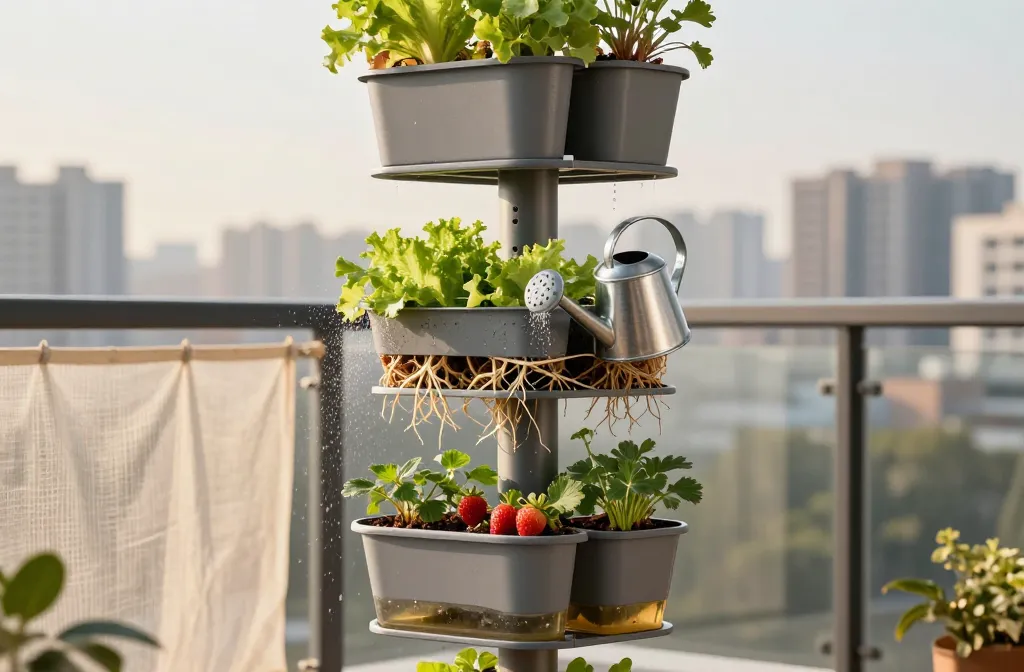
I built my first balcony vertical tower because I ran out of floor space — then watched lettuce bolt, strawberries sulk, and the bottom row stay soggy while the top crisped up. None of that was random. Once I understood how water moves, how roots share space, and how wind and light behave on a balcony, yields jumped and maintenance dropped. In this guide I’ll show you exactly how vertical systems really function in small outdoor spaces and what to adjust so plants thrive.
Gravity Drives Water — And It Rarely Splits Evenly

Every vertical system turns one pour or one drip line at the top into a slow descent through tiers. Gravity speeds water past the top layers and pools it at the bottom unless you slow it down and spread it out.
Stacked planters and towers often have a central channel. Without a flow spreader — even a simple perforated saucer or a ring of coco coir — the top pockets stay dry at the edges while the middle gets a flash flood. The bottom pockets become a sump.
Action today: Water from the top with a 1-litre watering can fitted with a fine rose and time it. If the first pockets drip through in under 10 seconds, add a thin layer of coco coir or a scrap of landscape fabric under the top module to slow and spread the flow.
Root Sharing Is Real — And It Changes Feeding And Spacing

In vertical systems, roots from different pockets meet and compete inside shared columns or stacked modules. That shared root zone evens out moisture for the plants but also means one hungry crop can starve its neighbors.
Leafy greens and herbs play nicely because their roots stay fine and shallow. Fruiting plants like tomatoes, peppers, and strawberries demand more water and nutrients and will outcompete salad mixes if you place them above.
Plant placement that works
- Top tiers: light feeders and quick growers — lettuce, basil, cilantro.
- Middle tiers: moderate feeders — spinach, chard, thyme, oregano.
- Bottom tiers: thirstier or heat-sensitive — mint, parsley, strawberries.
Takeaway: Group similar feeders on the same level and keep heavy feeders to the lower half so runoff favors them instead of starving the top.
Potting Mix Must Drain Fast But Hold Just Enough

Balcony wind and sun dry vertical pockets quickly, but the lower tiers still risk waterlogging. A standard garden soil compacts and suffocates roots in columns.
Use a good quality potting mix from the garden centre labeled for containers, then blend in one part perlite or coarse bark to three parts mix for towers. This keeps pores open so water can pass through each pocket without turning the bottom into a swamp.
Warning signs and quick fixes
- Top tiers wilt by late afternoon: mix is too airy or irrigation too fast — add a handful of coco coir to the top tier pockets.
- Bottom tiers smell earthy-sour and feel cold: mix is holding too much water — poke 6–8 pencil-sized holes down the side of the bottom modules to vent and drain.
Action today: Squeeze a handful of your current mix after watering. If water streams out, lighten with perlite; if it forms a hard lump, add bark or coco coir to fluff it.
Balcony Light And Wind Create Uneven Microclimates

On a balcony, the wall side stays shaded and protected while the railing side bakes and gets wind burn. In a vertical stack that means two climates in one square metre.
Rotate the tower a quarter turn every week so each side gets the bright exposure. On fixed wall planters, place sun-tolerant herbs like rosemary and thyme on the outer edge and keep tender greens tucked toward the wall.
Simple wind buffering
- Clip-on mesh or a sheet of shade cloth on the railing side cuts wind scorch without blocking all light.
- Use the largest container or base reservoir at the bottom as ballast to prevent tipping during gusts.
Takeaway: Mark one pocket with tape and rotate the system weekly; your greens will stop leaning and grow more evenly.
Water Delivery Needs A Throttle, Not Just A Source

More water does not equal even water. A gentle, frequent trickle beats a weekly deluge in vertical setups. Balcony gardeners succeed with two simple options from a garden centre: a basic drip kit or a self-watering reservoir base.
For drip, run a single line up the back and use two small drippers at the top feeding a loop of 6 mm tubing that circles the tower’s top tier. Tiny holes in the loop spread flow so each pocket gets a fair sip before gravity takes over. For reservoir bases, keep the wicking contact thin — a strip of felt or a braid of cotton — so the column drinks slowly instead of soaking.
Quick setup without special tools
- Attach a battery timer to your outdoor tap.
- Run micro-tubing to the top, secure with two zip ties.
- Set 2–4 minute runs, twice daily in summer; once every 2–3 days in spring/autumn.
Action today: If you hand-water, split one watering into two smaller rounds, 30 minutes apart. You’ll see fewer wilt-and-surge cycles within a week.
Nutrients Travel Downward — Dose Little And Often

Liquid feed rides with the water, so the bottom tiers accumulate salts over time. Overfeeding shows up first as burnt leaf edges below while the top looks fine.
Use a balanced liquid fertiliser for edibles at half the label rate every 10–14 days during active growth. Once a month, run clear water through until it drips freely for two minutes to rinse the column and reset salt levels.
Feeding cues
- Pale new growth top to bottom: increase frequency, not concentration.
- Only bottom leaves show crisp brown tips: skip feed next cycle and flush thoroughly.
Takeaway: Mark your calendar for a monthly flush; it prevents 80% of nutrient-burn issues in vertical systems.
Maintenance Is About Flow, Not Just Pruning

Most vertical failures come from hidden blockages — roots clogging channels, algae mats in clear tubing, or compacted top pockets. I treat the system like guttering: keep the pathways open and everything else relaxes.
Every four weeks, lift the top module and check the spreader layer. Replace clogged fabric, shake out roots that invaded the channel, and wipe algae from any clear parts. Trim runners from strawberries and pinch herbs to keep foliage from shading lower pockets.
Action today: Run water and watch the first 60 seconds. If flow appears from only one side or shoots straight down the middle, open the top and reset your spreader layer.
Frequently Asked Questions
Can I run a vertical system without a water tap on the balcony?
Yes. Use a 10–20 litre storage container as a gravity-fed reservoir set on a stool above the tower. Fit a basic drip kit with a manual inline valve to control flow. Refill the container every 2–4 days in warm weather and once a week in cool seasons. Keep the lid on to block mosquitoes and algae.
What plants actually thrive in vertical towers outside?
Leafy greens and compact herbs do best: lettuce, arugula, spinach, chives, basil, thyme, and oregano. Strawberries work well on lower tiers where runoff keeps them moist. Avoid large tomatoes and cucumbers unless the system is designed for them; use dwarf cherry tomatoes or bush beans if you want fruiting plants. Always check mature size listed on the plant tag.
How do I stop soil from washing out of the pockets?
Line each planting hole with a palm-sized piece of landscape fabric or a coffee filter before adding mix. Water gently with a fine rose the first week so roots knit the mix together. Top off with a 1–2 cm layer of bark fines or coco chips to protect the surface. If your tower has large slots, add a plastic mesh insert from the hardware store.
Why do my top plants bolt while the bottom stays small?
The top gets more heat and light while the bottom gets more water and nutrients. Place heat-tolerant herbs like thyme and rosemary up top, and keep cool-loving greens and strawberries below. Shorten watering duration slightly and increase frequency to cool the top layer. Rotate the tower weekly so no side hogs the afternoon sun.
Do I need special meters to manage pH or EC?
No. Use clean tap water that tastes neutral and not salty. If your tap water leaves white crusts on pots, buy inexpensive distilled or filtered water for feeding every second week to reduce salt buildup. Rinse the system monthly with plain water until runoff tastes neutral rather than bitter. Your plants will show you when they’re happy with lush, steady growth.
Conclusion
Vertical growing on a balcony works when you treat it like a controlled waterfall shared by many small root zones. Start by smoothing the flow at the top, match plants to tiers by thirst and light, and feed little and often with a monthly flush. If you take one next step today, install a simple spreader layer under your top module and split your watering into two short sessions — you’ll feel the system settle into balance within a week.