
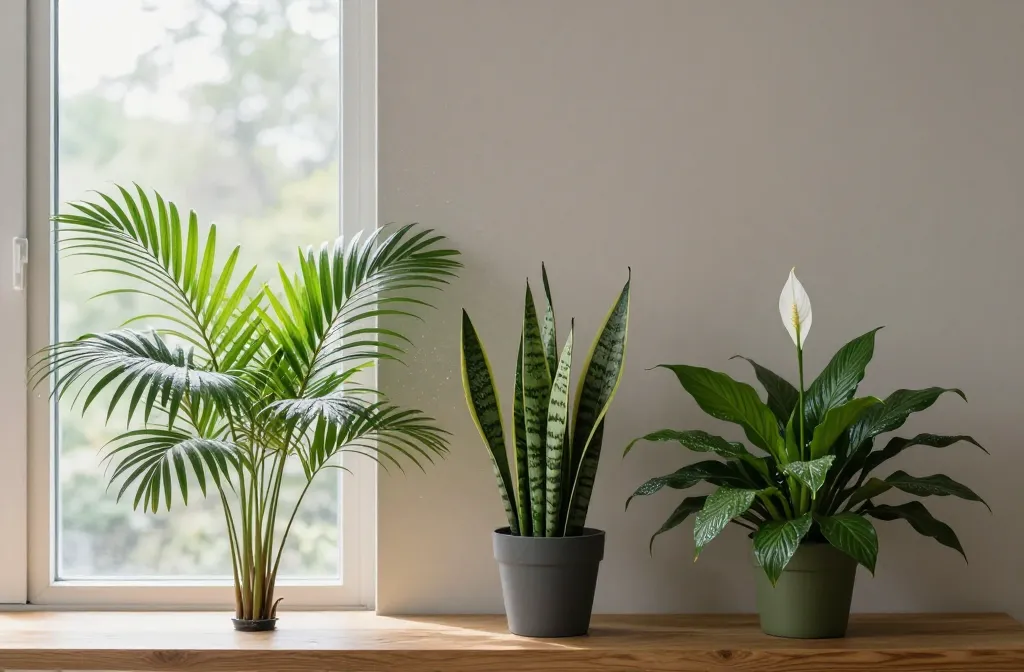
Want cleaner air without buying another gadget that hums all night? Grow it. Strategic plant pairings don’t just look lush—they trap dust, absorb VOCs, and boost humidity in a way single plants can’t match. These combos work harder together, and they’re beginner-friendly. Ready to build a mini forest that actually earns its keep?
1. The “Morning Breath” Combo: Snake Plant + Areca Palm + Peace Lily
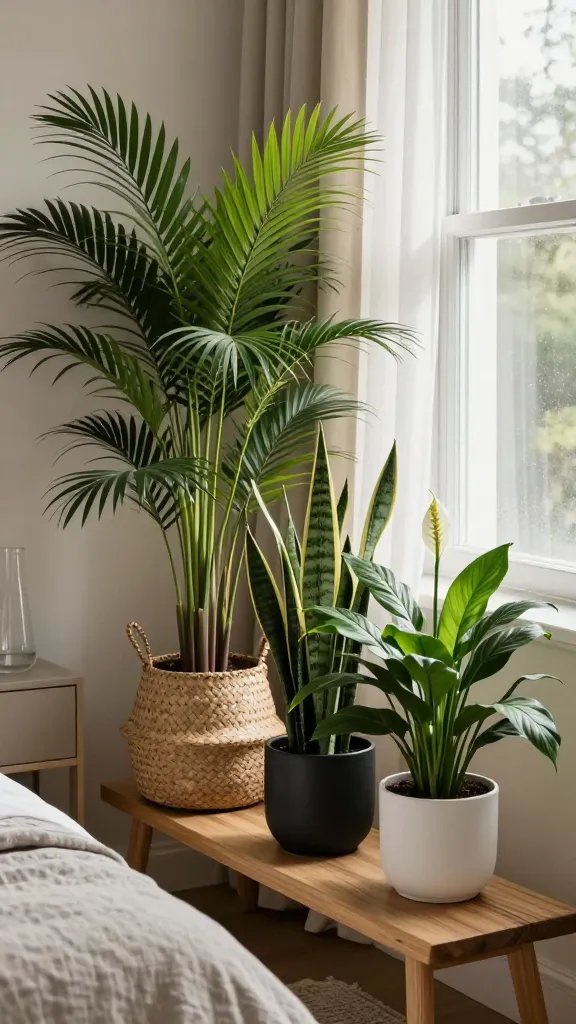
This trio shines in bedrooms and living rooms where you want calm vibes and fresher air. Each plant tackles different nasties, and together they pull a serious shift against dry air and lingering odors.
Why It Works
- Snake Plant (Sansevieria): Nighttime oxygen boost; tolerates low light; sips water.
- Areca Palm: Humidifies like a champ; filters indoor pollutants; loves bright indirect light.
- Peace Lily: Handles benzene and formaldehyde; signals thirst by drooping (helpful, IMO).
Group them on a low bench near a window with filtered light. Use breathable, peat-free mix and pots with drainage—no swamp zones.
Tips
- Water weekly-ish: palms like slightly moist; snake plant prefers dry; peace lily sits in the middle.
- Dust leaves monthly so pores can breathe and actually filter air.
- Keep lilies away from pets—mildly toxic.
Use this combo when you want a low-maintenance, high-reward setup that makes the air feel softer and your space look spa-level serene.
2. The Kitchen Clean-Up Crew: Spider Plant + English Ivy + Pothos
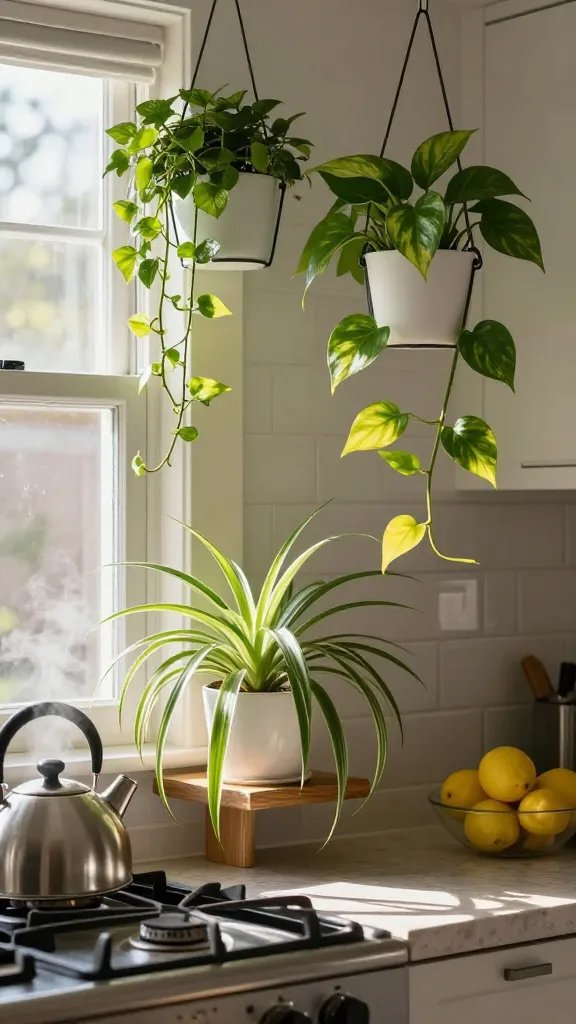
Kitchens collect fumes, grease, and mystery smells. This trio shrugs at all that and goes to work. Plus, they forgive you when you forget to water after a long weekend.
Why It Works
- Spider Plant: Great at tackling carbon monoxide from gas stoves; tough and fast-growing.
- English Ivy: Helps reduce airborne mold and particulates; loves to trail or climb.
- Pothos (Epipremnum): Handles VOCs; thrives in medium light; basically indestructible.
Mount a simple shelf or use hanging planters to keep vines off the counter. Aim for bright, indirect light away from direct heat from the stove.
Setup Ideas
- Combine pothos and ivy in a long trough planter for lush spillover.
- Keep spider plants in small pots to propagate “pups” and fill empty corners.
- Add a small fan nearby to circulate air through leaves for better filtration.
Bring this combo into any kitchen or entryway where traffic and fumes live. It freshens the air and adds just a bit of jungle drama. FYI: Ivy is toxic to pets, so hang it high.
3. The Desk Detox Duo (Plus One): ZZ Plant + Rubber Plant + Chinese Evergreen
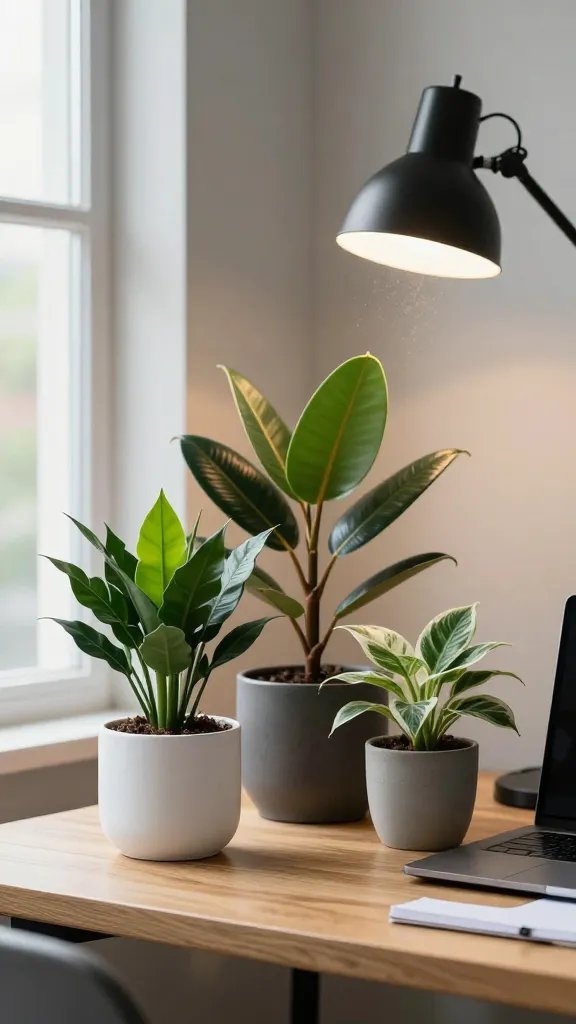
Workspaces trap stale air, off-gassing from furniture, and printer funk. This trio quietly handles that while staying tidy and modern. No fussy watering schedules. No plant guilt.
Why It Works
- ZZ Plant (Zamioculcas): Thrives in low light; stores water; dust-resistant leaves.
- Rubber Plant (Ficus elastica): Big glossy leaves trap dust and reduce VOCs.
- Chinese Evergreen (Aglaonema): Filters air and tolerates forgetful waterers.
Cluster them near your desk lamp for a soft light boost. Wipe rubber plant leaves often—they do the heavy lifting for particulate capture.
Key Points
- Use a chunky potting mix to prevent soggy roots—especially for ZZ and rubber plant.
- Turn the pots every two weeks to keep symmetrical growth.
- Choose darker-leaf aglaonemas for lower light, variegated for brighter spots.
Ideal for home offices and studios where you want a sculptural, low-effort setup that quietly filters while you grind. Looks sleek, feels fresh—win-win.
4. The Humidity Heroes: Boston Fern + Bamboo Palm + Calathea
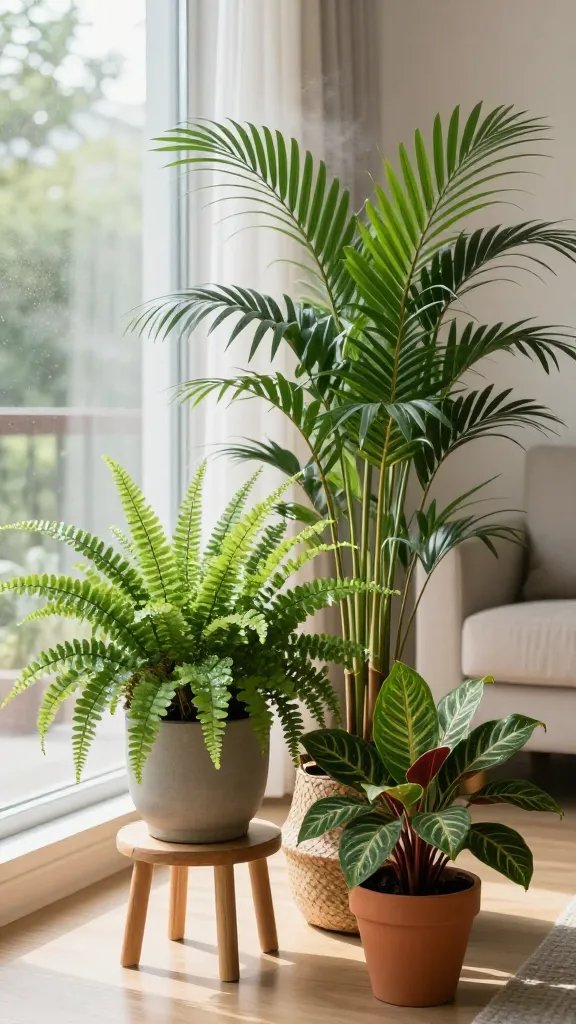
Dry air makes noses cranky and dust float around like confetti. This moisture-loving trio elevates humidity, tames particles, and looks like a tropical postcard. Seriously, this group just screams “lush.”
Why It Works
- Boston Fern: Top-tier humidifier; traps fine dust; loves consistent moisture.
- Bamboo Palm (Chamaedorea): Filters benzene and trichloroethylene; elegant fronds for surface area.
- Calathea: Adds humidity and movement; filters mild pollutants; stunning foliage.
Park them together to create a microclimate. Grouping increases humidity around leaf surfaces, which improves filtration and plant happiness.
Care Cheats
- Mist lightly or use a pebble tray; don’t soak the calathea—moderation is key.
- Bright, indirect light only. No direct sun unless crispy edges are your vibe.
- Fertilize lightly during spring and summer for steady foliage growth.
Use this combo in living rooms, reading nooks, or near radiators that dry the air. Your skin and sinuses will send thank-you notes.
5. The Entryway Defense Squad: Rubber Plant (Alt Variety) + Dracaena + Philodendron Heartleaf
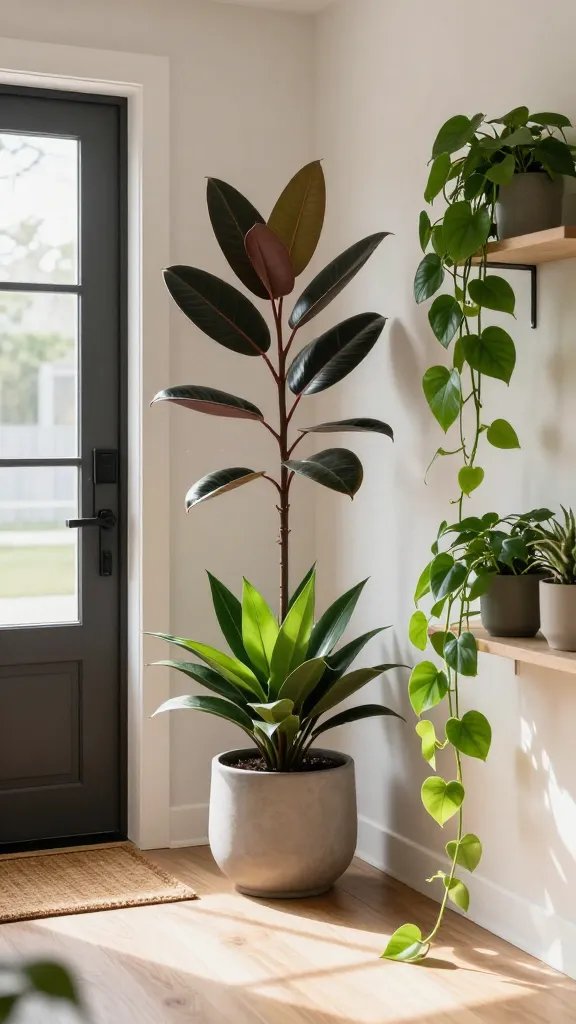
Front doors drag in dust, pollen, and outdoor pollution. Station this squad at the entrance like a velvet rope for airborne gunk. They catch particles, gobble VOCs, and set a welcoming tone.
Why It Works
- Rubber Plant (Burgundy or Tineke): Large leaves act like dust magnets; great vertical anchor.
- Dracaena (e.g., ‘Janet Craig’ or ‘Warneckii’): Targets formaldehyde and other VOCs from paints and cleaners.
- Philodendron Heartleaf: Trails softly; filters air; easy to shape along a wall or shelf.
Place the rubber plant closest to the door to catch incoming dust. Set dracaena at mid-height and let philodendron spill over a console for that effortless “I-care-but-not-too-much” look.
Tips
- Vacuum around the pots weekly—filtered dust falls onto the floor. Gross but true.
- Keep soil tidy and avoid overwatering to prevent fungus gnats.
- Rotate the philodendron to prevent lopsided growth toward the light source.
Perfect for lobbies, hallways, and anywhere street air sneaks in. You’ll notice less dust on surfaces and a fresher vibe fast.
Quick Placement Guide
- Bright Indirect Light: Areca palm, bamboo palm, calathea, rubber plant, dracaena.
- Low to Medium Light: ZZ plant, snake plant, pothos, philodendron, spider plant, peace lily, English ivy, Chinese evergreen, Boston fern.
- Dry-Tolerant: Snake plant, ZZ plant, pothos (to a point).
- Humidity Lovers: Boston fern, calathea, areca palm, bamboo palm, peace lily.
Care Routine That Keeps Them Filtering
- Dust leaves monthly with a damp cloth—clean leaves filter better.
- Refresh top 1 inch of soil every 6 months; repot yearly if roots circle.
- Open windows when weather allows to increase airflow through foliage.
- Group plants to boost humidity and filtration efficiency.
- Use balanced, diluted fertilizer during growing season for steady leaf production.
Common Pitfalls (And Fixes)
- Brown Tips on Ferns/Calathea: Increase humidity, reduce direct sun, check water quality.
- Yellowing Leaves on Peace Lily or Pothos: Ease up on watering; improve drainage.
- Dull, Dusty Rubber Plant Leaves: Wipe with a microfiber cloth; skip leaf shine products.
- Stretchy, Leggy Vines: Add more light or rotate plants weekly.
These 13 plants, paired into five hardworking squads, do more than look pretty. They trap dust, sip VOCs, and help your rooms feel clearer and calmer. Start with one combo, then build your green filtration army—your lungs (and your decor) will love you for it.