
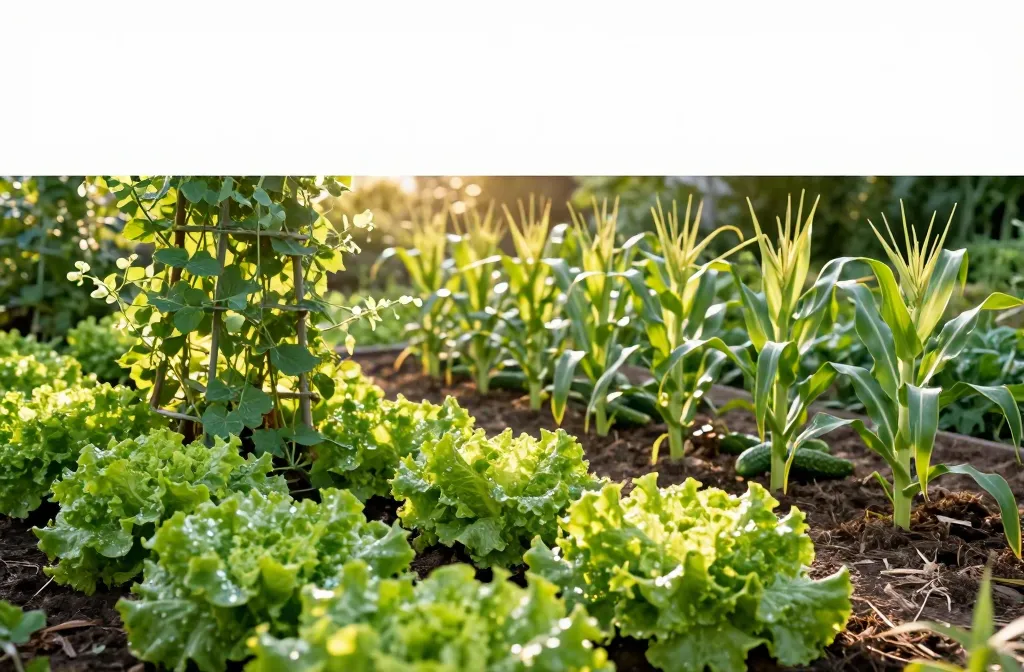
Want more harvests without building a greenhouse? Companion planting can sneak you extra weeks on both ends of the season. These pairings protect tender seedlings, shade cool-loving crops, and keep soil active long after your neighbors quit. Grab a trowel—your garden’s about to outlast the calendar.
1. Cloak And Cradle: Peas Over Lettuce For Spring Jumpstarts
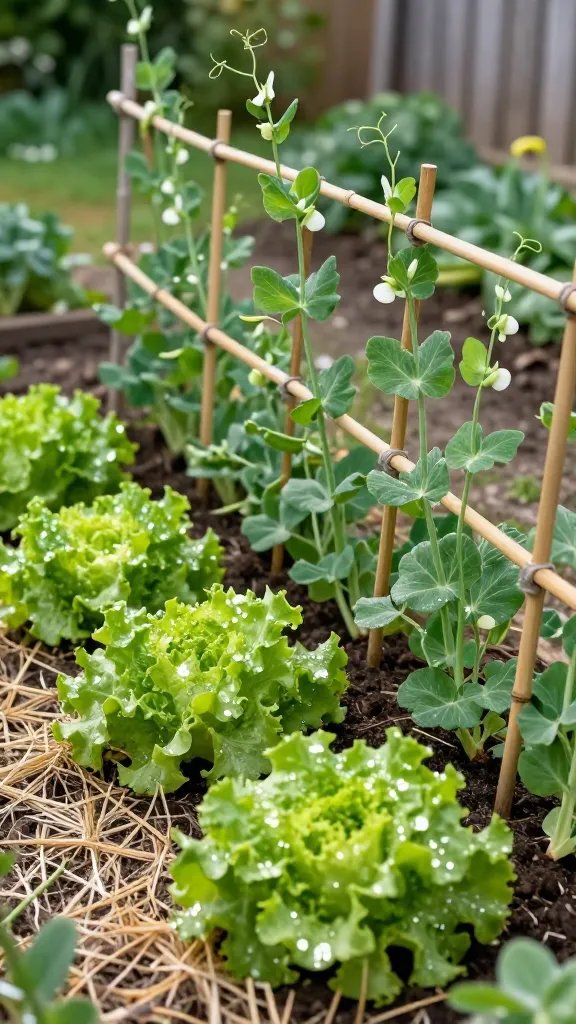
Cool-loving lettuce bolts fast once heat hits, while peas shoot up early and love crisp weather. Put them together and you get shade, wind protection, and a steady microclimate that nudges your salad season forward. The peas act like living row cover—only tastier.
How To Plant
- Sow snap or shelling peas in a tight double row on a small trellis.
- Transplant lettuce 6–8 inches in front, staggered so the pea vines cast dappled shade.
- Mulch lightly to keep roots cool and damp.
As spring warms, the peas rise and create a gentle canopy. Lettuce stays tender longer and shrugs off late frosts thanks to the pea “windbreak.”
Quick Tips
- Choose compact peas like ‘Sugar Ann’ if space runs tight.
- Harvest peas regularly to keep shade light, not smothering.
- Water in the morning to prevent mildew in the snug microclimate.
Use this when you want earlier salads and zero sunburned baby greens. Bonus: you’ll snack while you weed. Win-win.
2. Living Sunscreen: Corn And Cucumbers For Heat-Rolling Momentum
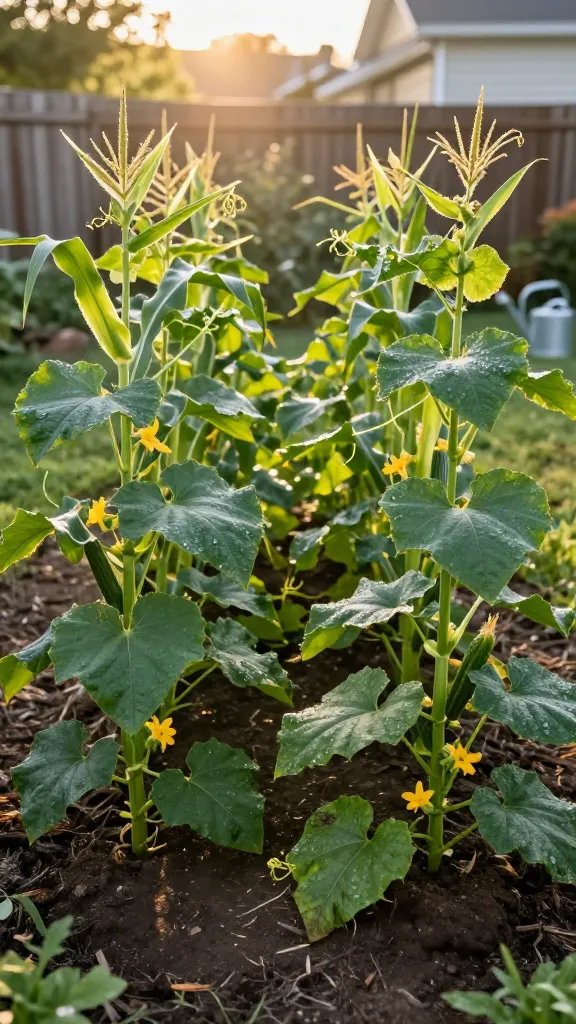
Once heat arrives, bare soil cooks and moisture vanishes. Corn throws high shade, and cucumbers sprawl like a living mulch—together they create a humid bubble that stretches harvests right through heat spikes. Think of it as a backyard swamp—but in a good way.
Planting Blueprint
- Block-plant corn in a 3×3 or 4×4 grid for sturdy wind support.
- Direct-sow cucumbers at the corn’s base after the corn hits 8–10 inches.
- Thin cucumbers so each corn stalk hosts no more than one vigorous vine.
The cucumbers shade soil and curb evaporation, which keeps the corn chugging. The corn lifts leaves above hot ground air and creates dappled light that prevents cucumber bitterness late in summer.
FYI: Variety Matters
- Pick shorter corn (like ‘Honey Select’ or ‘Early Sunglow’) to avoid smothering the cukes.
- Choose disease-resistant cucumbers (e.g., ‘Marketmore 76’) to handle humidity.
Use this pairing to keep cucumbers fruiting into late summer and to stabilize corn through heat waves. It’s like a microclimate hack—minus the utility bill.
3. Cold-Frame Vibes, No Frame: Radishes, Carrots, And Spinach As a Spring-Fall Relay
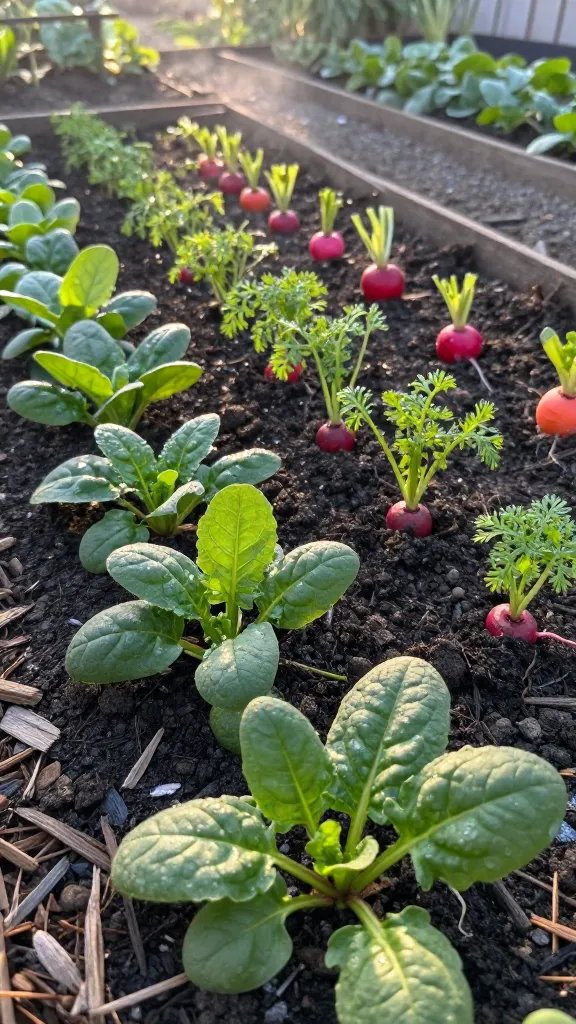
You can cheat the season with three cool-crop all-stars. Spinach loves chilly soil, radishes race to maturity, and carrots take their time. Plant all three together and you get quick harvests, gentle shading, and loose soil for the slowpoke carrots.
Spacing And Timing
- Early spring: Sow spinach in rows 8–10 inches apart.
- Between spinach rows, sprinkle radish seed lightly.
- Under everything, sow carrot seed in a thin band—yes, same bed.
Radishes pop up first and act like little thermal pillows, breaking wind and shading carrot seedlings. Spinach broadens and shelters the soil, slowing moisture loss. By the time heat creeps in, you’ve already harvested radishes and some spinach, leaving airy room for carrots to power on.
Maintenance
- Keep the seedbed evenly moist until carrots establish—use a board or burlap for germination, then remove.
- Harvest radishes at baby size to avoid crowding.
- Cut spinach leaves instead of pulling whole plants to keep shade a bit longer.
Use this when you want early greens, crunchy snacks, and carrots that don’t stall. Seriously, it feels like gardening on easy mode.
4. Heat Shield And Frost Guard: Basil With Tomatoes For Early And Late Gains
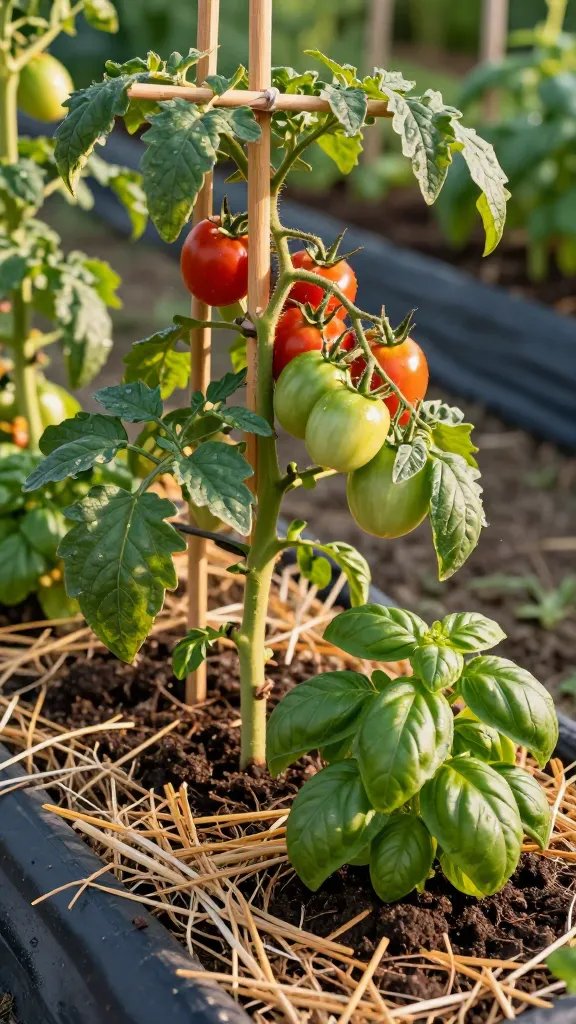
Tomatoes hate cold feet, and basil adores warmth but needs wind protection early. Pair them and each plant plays bodyguard for the other at different times. Basil warms soil and deters pests; tomatoes throw shade that keeps basil sweet and slows bolt in peak summer.
Planting Setup
- Warm your tomato bed with dark mulch or fabric a week before planting.
- Transplant tomatoes, then tuck basil 10–12 inches off the stem on the south or west side.
- Mulch with straw to buffer nighttime temps.
Early on, basil’s smaller canopy lets sun heat the bed and reduces cold sink around tomato roots. Later, a beefy tomato casts soft shade that prevents basil from turning bitter and extends leaf harvests into late summer.
Pro Moves
- Stagger basil plantings every 3 weeks to keep fresh growth rolling.
- Pinch basil tips often to thicken plants and boost the shading effect.
- Avoid overcrowding—airflow matters to dodge blight city.
Use this duo for tastier basil longer and tomatoes that settle in faster after transplant shock. IMO, it’s the pizza garden dream team.
5. Fall Fortress: Kale Under Sunflowers For Shoulder-Season Staying Power
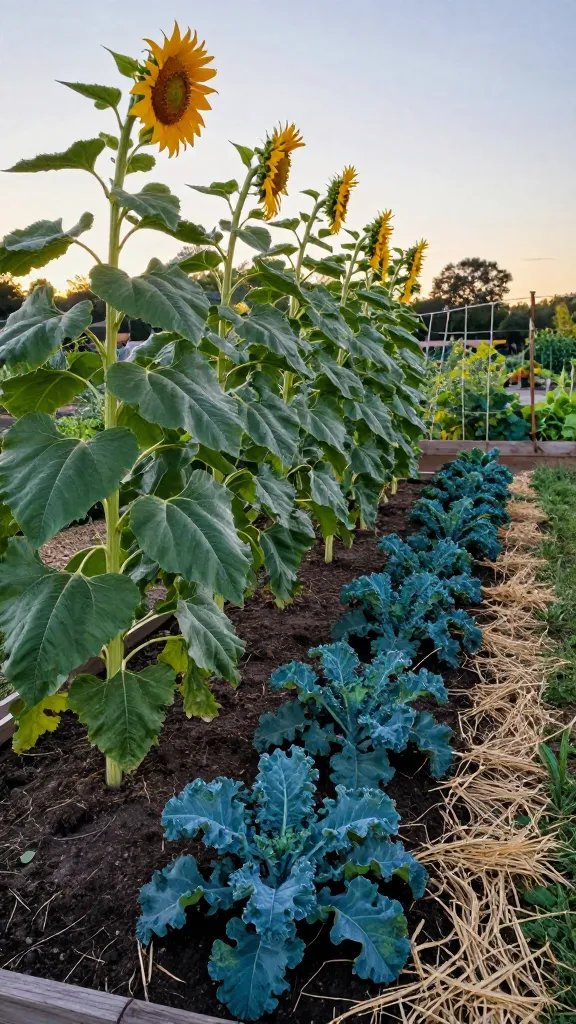
Summer sun can cook fall transplants, and early frosts can nip tender leaves. Sunflowers fix both. Their tall stalks create late-season shade and wind protection so your kale transplants can root, chill, and then surge once nights cool.
Staging The Bed
- Plant sunflowers midsummer in a north-south line to throw afternoon shade.
- When sunflowers hit 5–6 feet, tuck kale seedlings 12–16 inches away on the east side.
- Top-dress with compost and mulch to lock in moisture during late summer heat.
The sunflower canopy eases transplant shock and reduces sun scald on baby kale. As the days shorten, the sun angle softens and the kale grabs more light—right when it loves it. Early frosts? Those towering stems slice the wind and trap a touch of warmth near the ground.
Extra Credit
- Choose branching sunflowers (e.g., ‘Autumn Beauty’) for longer bloom and staggered shade.
- Plant a low border of calendula or alyssum to pull in beneficial insects and extend the whole bed’s vigor.
- After sunflower seed heads mature, leave a few for birds—built-in pest patrol next year.
Use this when you want buttery-sweet fall kale and a bed that doesn’t crash the minute September rolls in. Trust me, it’s the coziest microclimate you can grow.
Ready to stretch that season and flex on frost dates? Pick one pairing and try it in a single bed first—you’ll see the difference fast. Then scale up and enjoy harvests while everyone else is packing up their tools.