
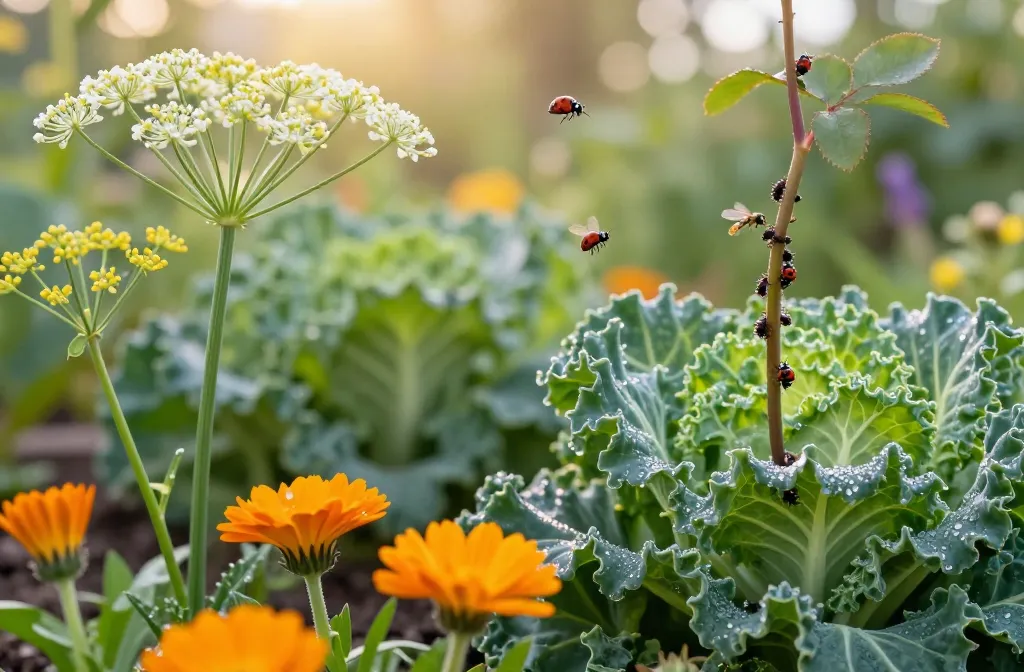
Want fewer pests without spraying mystery goo? Pair the right plants and invite hungry bug bodyguards. These combos lure ladybugs, lacewings, hoverflies, and parasitic wasps that feast on aphids, caterpillars, and more. Set them up once, then let nature do the dirty work—seriously, it’s like hiring tiny hitmen with wings.
We’ll keep it practical, pretty, and powerful. Five sections, twelve smart pairings, zero guilt. Ready to build your garden’s defense squad?
1. The Aphid Assassins: Dill, Fennel, and Calendula Around Roses and Brassicas
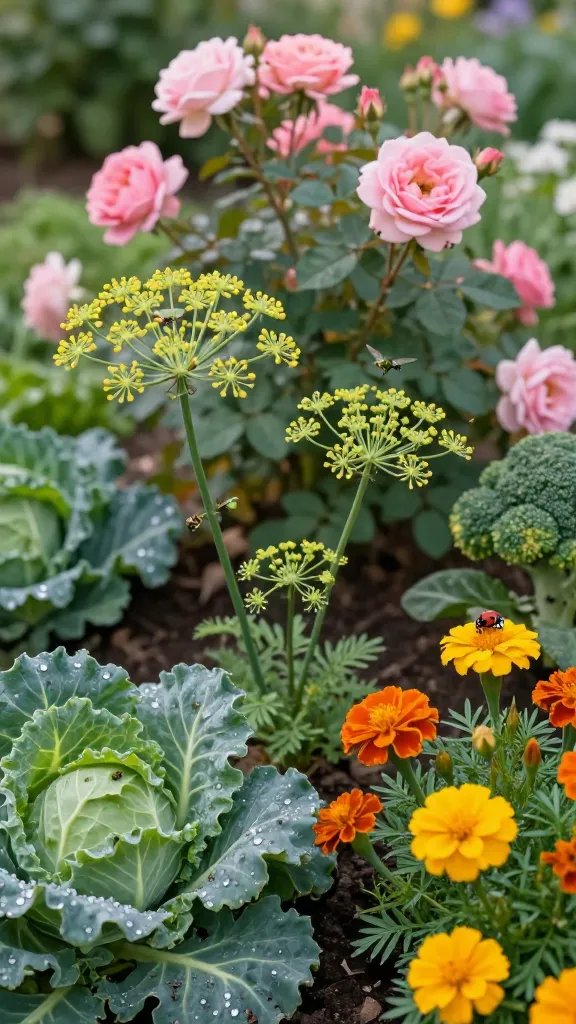
Aphids throw parties on roses, kale, cabbage, and broccoli. You crash those parties with fragrant umbels and bright marigold-like blooms that predators can’t resist. Think of dill and fennel as neon signs for beneficial insects, while calendula keeps pests distracted.
Key Players
- Dill + Fennel: Attract lacewings, hoverflies, and tiny parasitic wasps with their umbrella-shaped flowers.
- Calendula: Acts as a trap and nectar source; draws ladybugs and hoverflies.
- Target crops: Roses, kale, cabbage, broccoli, Brussels sprouts.
Plant dill and fennel a short distance from brassicas so they don’t overshadow them, and tuck calendula at the front for color and easy deadheading. Keep blooms coming by staggering sowings every few weeks.
Tips
- Let a few dill and fennel plants bolt—they’re better bug magnets in flower.
- Deadhead calendula weekly to keep it blooming and buzzing.
- Skip broad-spectrum sprays; they nuke your bodyguards too.
Use this combo when aphids show up—or better yet, a couple weeks before. Your roses will thank you, and your kale will stay hole-free longer.
2. Tomato Troubleshooters: Sweet Alyssum, Basil, and Buckwheat Flanking Tomatoes and Peppers
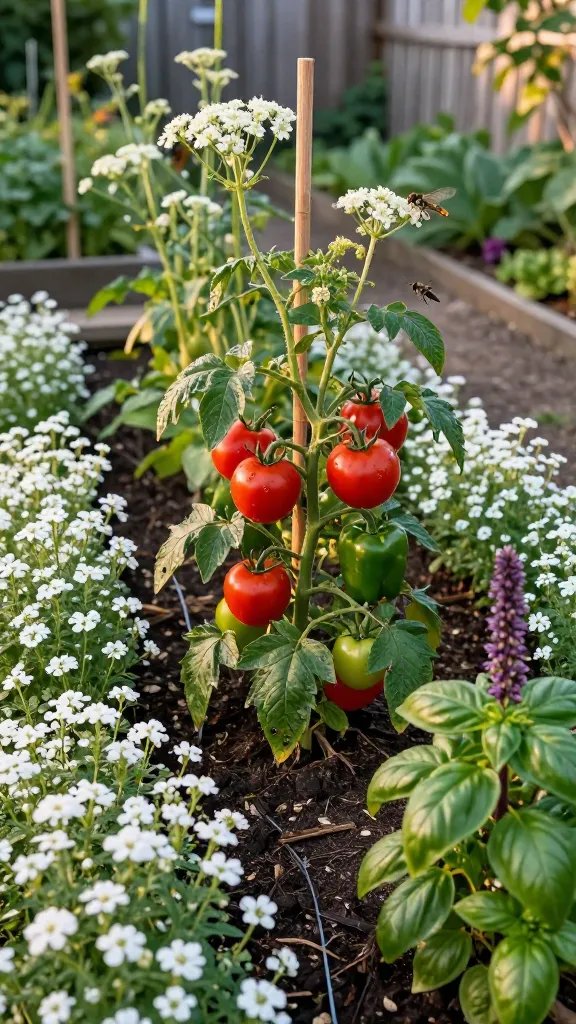
Tomatoes and peppers attract whiteflies, aphids, and thrips. You could panic, or you could plant a buffet for their enemies. Alyssum and buckwheat pump out nectar nonstop, while basil supports natural enemies and boosts flavor—IMO, a two-for-one win.
Key Players
- Sweet Alyssum: Continuous flowers that lure hoverflies and parasitic wasps.
- Buckwheat: Super-fast flowering; ideal early-season nectar for lacewings.
- Basil: Aromatic oils confuse pests and feed beneficials when it flowers.
- Target crops: Tomatoes, peppers, eggplant.
Interplant alyssum every 2–3 feet along tomato rows. Use buckwheat in nearby patches for early nectar, then chop-and-drop before it sets seed. Let a few basil plants flower once fruit sets to keep the beneficial parade going.
Pro Moves
- Stagger buckwheat plantings every 3–4 weeks for rolling bloom.
- Keep air circulation around tomatoes; dense humidity invites pests.
- Choose compact alyssum for containers and raised beds.
Perfect for organic tomato lovers who want fewer sprays and more caprese. Predictable pests, predictable fix—FYI, this one’s a keeper.
3. Cucumber and Squash Bodyguards: Nasturtium, Borage, and Tansy With Cucurbits
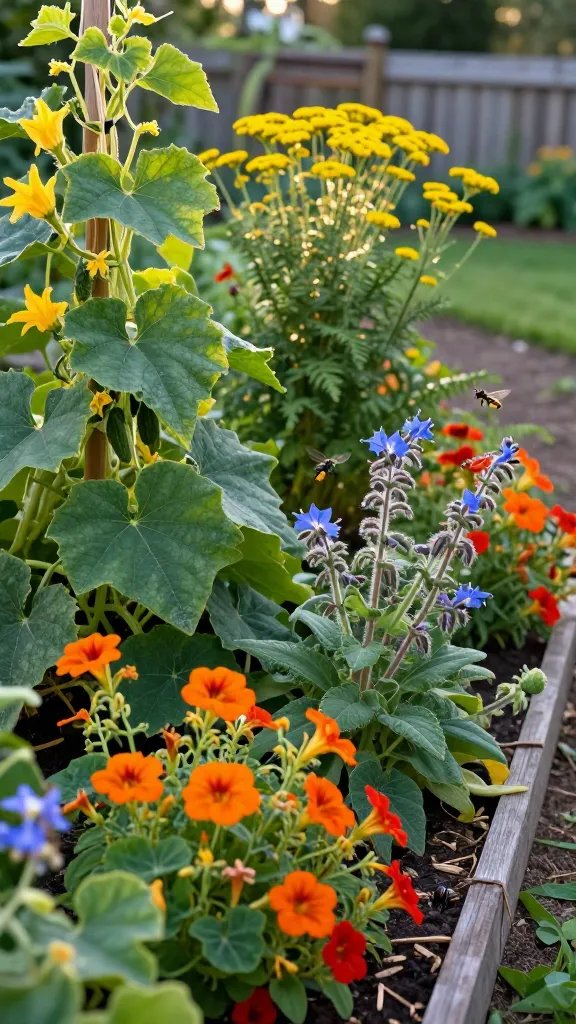
Cucumber beetles and squash bugs can wreck vines fast. You’ll slow them down with peppery nasturtiums, bee-beloved borage, and the old-school defensive powerhouse, tansy. This trio brings in predatory wasps and ground beetles and distracts pests from your main crop.
Key Players
- Nasturtium: Acts as a trap crop and feeds hoverflies; drapes beautifully around beds.
- Borage: Starry blue flowers attract predatory insects and boost pollination.
- Tansy: Strong scent deters some pests and invites predatory wasps and tachinid flies.
- Target crops: Cucumbers, zucchini, pumpkins, melons.
Ring cucumbers with nasturtiums and borage at the edges, and place tansy a few feet away—it gets tall and can be assertive. Clip off heavily infested nasturtium leaves and toss them; your cucumbers stay spared.
Notes and Cautions
- Tansy can spread. Plant in containers or cut flowers to control it.
- Keep soil evenly moist; stressed vines attract more pests.
- Use floating row covers early, then remove when flowers appear for pollination and predator access.
Use this combo when you want vining beds that look lush and fight back naturally. More pollinators, fewer beetles—yes please.
4. Brassica Bodyguards 2.0: Yarrow, Cilantro/Coriander, and Mustard as a Decoy Wall
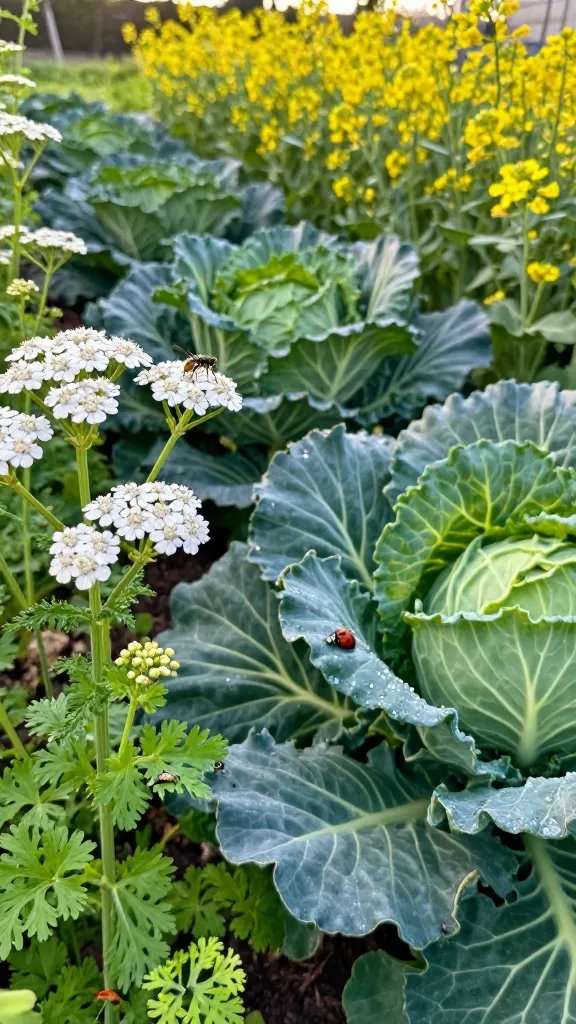
Cabbage worms, loopers, and flea beetles see brassicas as an all-you-can-eat buffet. We put a stop to that with a decoy mustard border and a nectar network that powers parasitic wasps and ladybugs. Yarrow and cilantro bring in winged allies before the pests settle in.
Key Players
- Yarrow: Flat flower clusters attract tiny wasps and hoverflies; drought-tough and tidy.
- Cilantro/Coriander: Let it bloom; umbel flowers are predator gold.
- Mustard: Trap crop for flea beetles and aphids; monitor and remove infested leaves.
- Target crops: Cauliflower, broccoli, cabbage, kale, bok choy.
Plant yarrow in sunny corners or borders and let cilantro bolt near brassicas once heads form. Sow a thin line of mustard between paths and beds, then watch for pests and clip away hotspots.
How to Use It
- Start cilantro succession plantings for continuous bloom.
- Space yarrow clumps 12–18 inches apart; they spread slowly.
- Rotate trap mustard to new spots to break pest cycles.
Great when caterpillars show up every season like clockwork. Your broccoli will look photo-ready, and the wasps will do the heavy lifting.
5. The Night Shift and Ground Crew: Marigold, Catnip, and Caraway With Leafy Greens and Beans
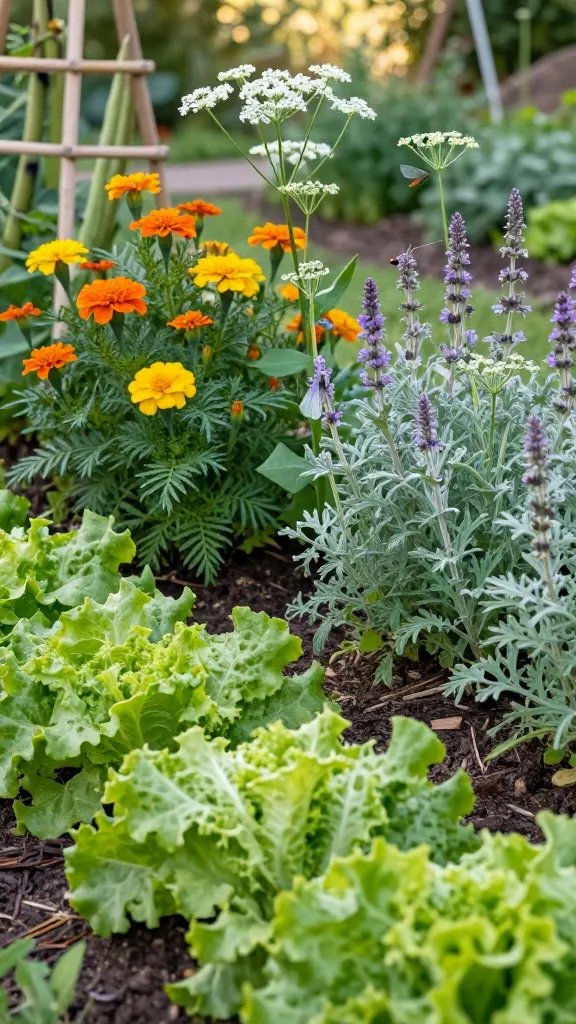
Some predators hunt at night or right at soil level. You can support that underground army while blocking daytime pests on lettuce and beans. This trio targets leaf miners, aphids, and even some beetles while boosting biodiversity big time.
Key Players
- Marigold (Tagetes): Roots can suppress certain soil nematodes; flowers feed natural enemies.
- Catnip (Nepeta cataria): Strong scent confuses aphids and draws lacewings; also, cats—plan accordingly.
- Caraway: Umbel flowers for parasitic wasps; seeds spice your baking, bonus.
- Target crops: Lettuce, spinach, chard, bush beans, pole beans.
Edge beds with marigolds and tuck catnip at corners where it won’t sprawl into walkways. Let caraway flower in a sunny patch nearby; predators need those accessible pollen platforms.
Quick Tips
- Choose compact marigold varieties for small beds; deadhead to extend bloom.
- Harvest catnip regularly to keep it bushy and contained.
- Allow some caraway and dill to self-seed for a perennial-ish support crew.
Use this when greens and beans attract aphids or leaf miners. Your salads look better, your bean leaves stay intact, and you get fewer “what’s chewing this?” moments—trust me.
Planting and Maintenance Basics (Applies to All Combos)
- Diversity wins: Mix bloom shapes and heights so predators can feed and hide.
- Continuous flowers: Plan overlapping bloom times from early to late season.
- Water wisely: Even moisture keeps crops resilient and less attractive to pests.
- Go easy on nitrogen: Overfed plants attract aphids; aim for steady, moderate growth.
- Observation = power: Check undersides of leaves and note which combos work best in your microclimate.
When to Start and How to Space
- Sow quick bloomers like buckwheat and alyssum at transplant time.
- Start dill, cilantro, and caraway a couple weeks before pest season for early nectar.
- Keep nectar plants within 3–6 feet of target crops; closer is usually better.
One last PSA: Avoid chemical sprays when you run this playbook. You’ll undercut your own army. If you need a spot treatment, use precise options like insecticidal soap on off-hours and keep it targeted.
Ready to try it? Pick one combo and test it on a single bed. You’ll see more ladybugs, fewer pests, and a garden that practically runs itself. Natural pest control that looks gorgeous—seriously, what’s not to love?