
Your plants can do more than just sit there and look pretty. Pair them right, and they’ll crank out oxygen, scrub indoor air, and grow faster than your last impulse-buy herb kit. We’re talking layouts that boost photosynthesis, reduce stress, and up your home’s comfort—all without turning your living room into a jungle gym. Ready to breathe easier and get that lush, Insta-worthy vibe?
1. The Sunroom Power Duo: Areca Palm + Snake Plant
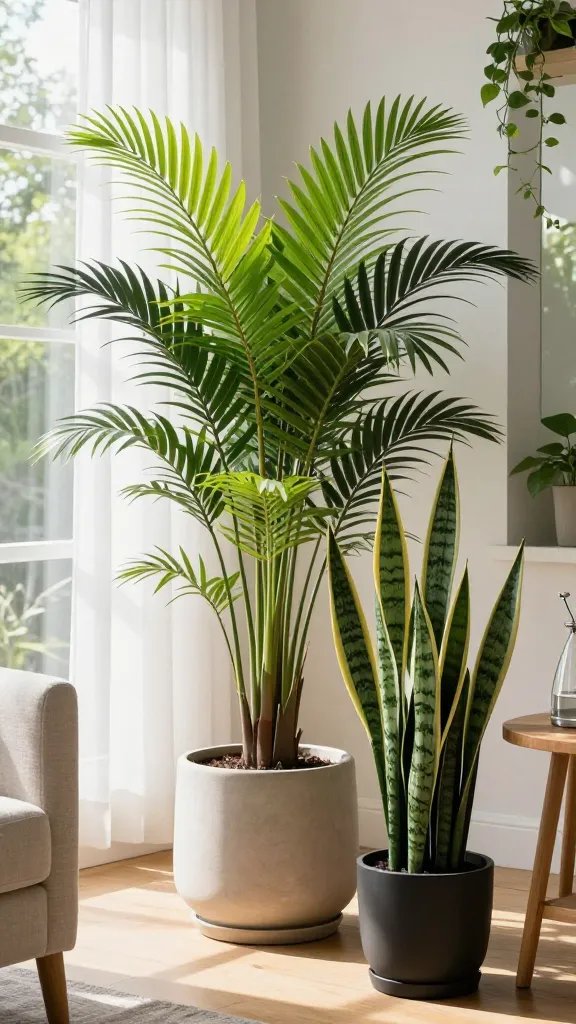
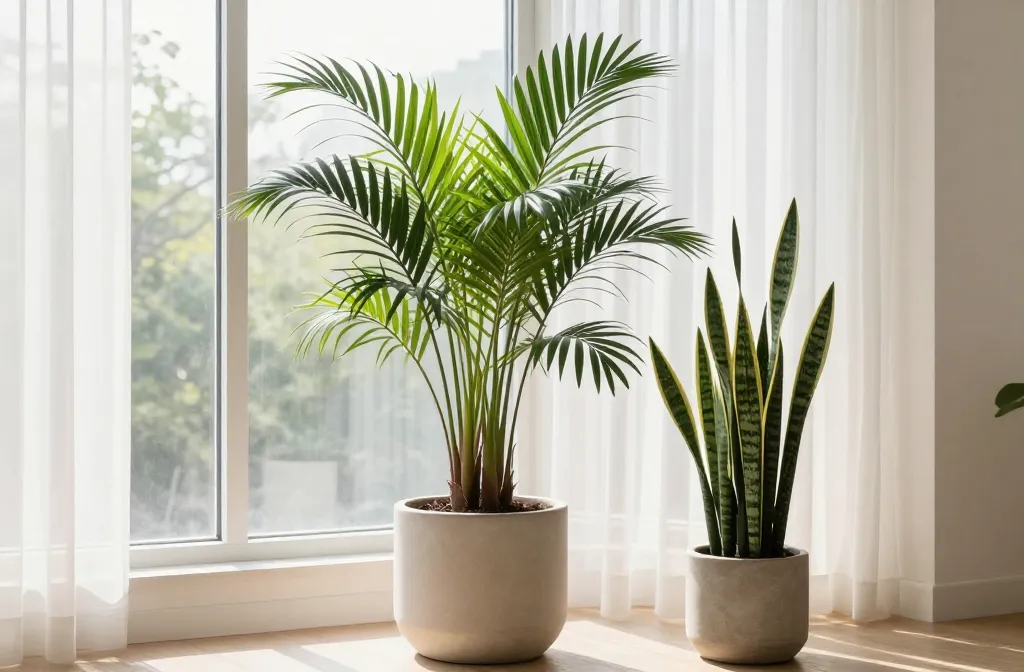
Want a set-it-and-forget-it combo that pumps oxygen day and night? This duo nails it. Areca palm throws huge leaf surface area for maximum photosynthesis, while snake plant keeps the oxygen trickling even in low light conditions thanks to its CAM metabolism.
Why It Works
- Areca palm (Dypsis lutescens) thrives in bright, indirect light and high humidity, pushing serious leaf growth.
- Snake plant (Sansevieria trifasciata) converts CO2 at night, giving your room a 24/7 oxygen boost.
- Both clean common indoor pollutants, which keeps stomata happy and photosynthesis efficient.
Place the areca near a bright window and tuck the snake plant nearer the interior. Water the palm regularly; let the snake plant dry out. FYI, don’t overdo the pots—tight roots help snake plants stand tall and resist rot.
Quick Tips
- Rotate the palm monthly to prevent lopsided growth.
- Wipe both plants’ leaves every few weeks for better light absorption.
- Group them within 2–3 feet to create a shared humidity pocket.
Use this pairing for living rooms or sunrooms where you want a big visual statement with real air-refreshing benefits.
2. The Sleep Sanctuary Stack: Peace Lily + Aloe Vera
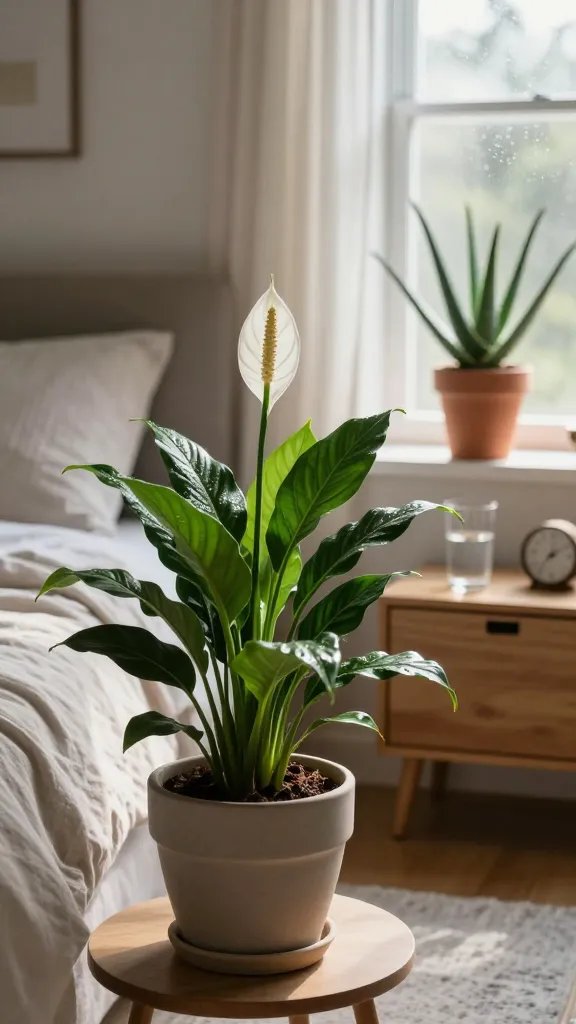
Dreaming of cleaner air while you sleep? This combination shines in bedrooms where you can’t flood the space with bright light. Peace lily thrives in low-to-medium light, while aloe handles bright windows and adds slow, steady oxygen and moisture regulation.
Why It Works
- Peace lily (Spathiphyllum) maintains high transpiration, boosting humidity slightly for easier breathing.
- Aloe vera stores water and opens stomata efficiently, aiding oxygen exchange in bright light conditions.
- Together they balance moisture and purification, which supports consistent photosynthesis.
Keep peace lily a few feet from a window; it doesn’t need sunbathing. Park aloe right on the sill. Water peace lily when the top inch dries; water aloe every 2–3 weeks. Seriously, don’t drown the aloe—it’s not a fish.
Placement & Care
- Use a pebble tray under peace lily if your air runs dry.
- Give aloe a gritty, fast-draining mix to prevent soggy roots.
- Dust both plants gently. Cleaner leaves = better oxygen output.
Ideal for bedrooms or home offices where you want a calm vibe, gentle humidity bump, and a clean look without high maintenance.
3. The Kitchen Fresh-Air Trio: Spider Plant + Pothos + Herbs
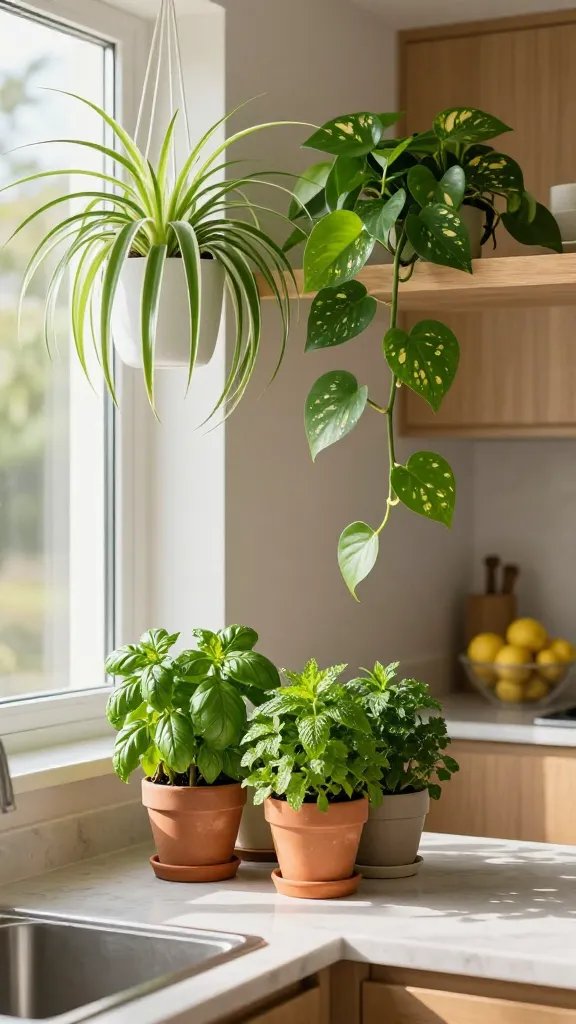
Your kitchen traps odors and fumes, so you need a team that grows fast and bounces back from chaos. Spider plant and pothos turbocharge leaf growth in mixed light, while herbs add edible leaves that churn out oxygen and make dinner taste better.
Why It Works
- Spider plant (Chlorophytum comosum) shoots out runners—more leaves, more photosynthesis, more oxygen.
- Pothos (Epipremnum aureum) tolerates lower light and keeps pumping growth with minimal fuss.
- Herbs like basil, mint, or parsley drink up bright light and add fast green mass.
Hang spider plants to let babies cascade, trail pothos on a shelf, and keep herbs right by the sunniest window. Clip herbs often—that pruning triggers new growth, which means more oxygen factory floor space (aka leaves).
Key Moves
- Use a self-watering trough for herbs to avoid the “oops I forgot” problem.
- Fertilize spider plant and pothos lightly in spring and summer for maximum leaf production.
- Open a window occasionally so fresh CO2 feeds the whole crew.
Great for busy cooks who want clean, fresh air and snip-able flavor within arm’s reach. IMO, this combo makes your kitchen feel alive.
4. The Desk Job Dream Team: Rubber Plant + ZZ Plant
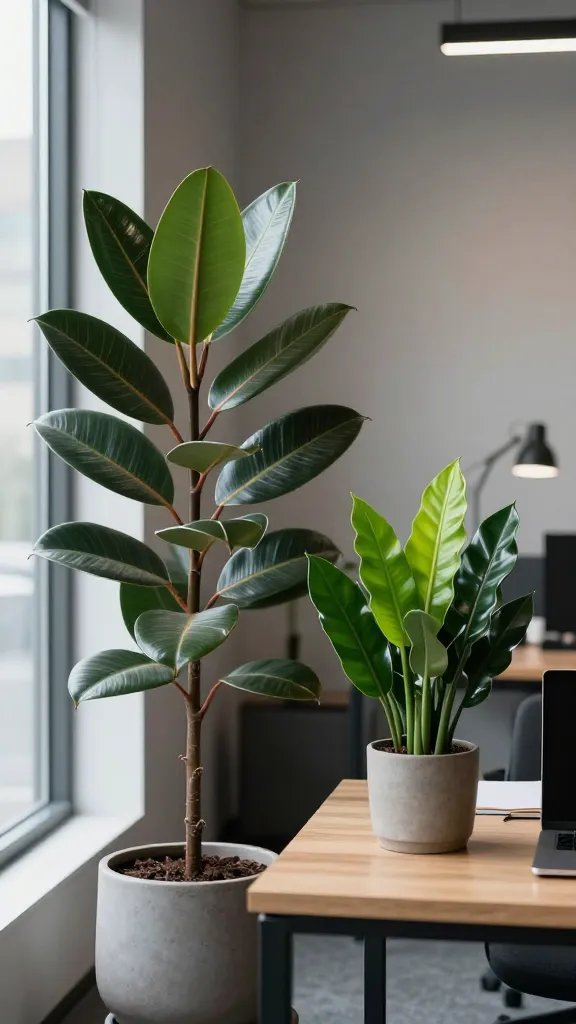
Working long hours under questionable office lighting? This pair stays unbothered. Rubber plant brings big, glossy leaf area for serious oxygen output, while ZZ plant excels in low light and neglect—perfect for deadlines and back-to-back calls.
Why It Works
- Rubber plant (Ficus elastica) packs dense foliage that ramps up photosynthetic surface area.
- ZZ plant (Zamioculcas zamiifolia) uses water efficiently and tolerates dim corners, adding steady green mass.
- Different light tolerances let you spread plants across your workspace for whole-room benefits.
Give rubber plant bright, indirect light near a window. Park the ZZ a few feet away where light fades. Water both sparingly—rubber plant likes evenly moist, ZZ wants to dry out. Overwatering equals sadness, trust me.
Productivity Boosters
- Place the rubber plant on the window’s north or east side to avoid scorching.
- Use a broad, stable pot so tall rubber stems don’t wobble.
- Wipe leaves with a damp cloth; office dust kills efficiency fast.
Perfect for home offices or studios where you want a lush look, less maintenance, and a measurable bump in fresher air while you work.
5. The Humidity-Loving Showcase: Boston Fern + Monstera + Philodendron
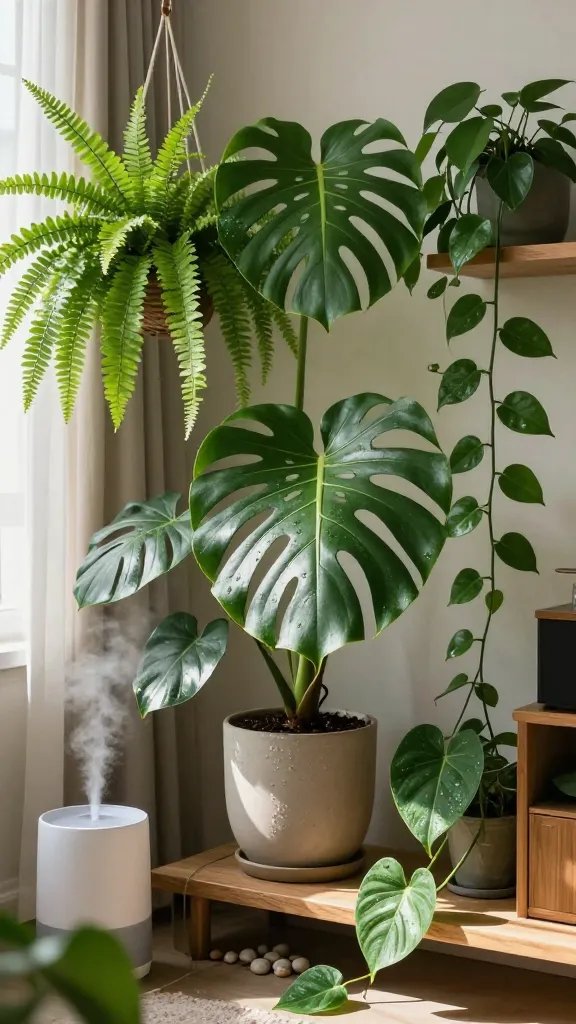
Go big or go home? This jungle-inspired group thrives in bright, indirect light with higher humidity. You’ll get massive leaf surface area and a steady flow of oxygen that makes your space feel like a spa—without the eucalyptus soundtrack.
Why It Works
- Boston fern (Nephrolepis exaltata) pumps humidity and grows fast when well-watered.
- Monstera deliciosa expands huge leaves that capture lots of light, even indoors.
- Heartleaf philodendron (Philodendron hederaceum) trails and fills gaps to maximize green coverage.
Cluster them within a few feet of each other to create a mini microclimate. Use a humidifier or pebble trays, and water more frequently than your desert-dwellers. Rotate the monstera so it doesn’t lean like it’s trying to escape.
Setup Tips
- Bright, indirect light is non-negotiable for big leaves and high oxygen output.
- Feed lightly every 4–6 weeks during spring/summer for vigorous growth.
- Prune philodendron vines to encourage fuller foliage density.
Choose this trio for living areas or bathrooms with windows, where lushness meets legit air-refreshing oomph.
Ready to build your oxygen oasis? Start with one pairing and watch your space breathe easier within weeks. Mix and match as your confidence grows, and soon you’ll have a home that looks gorgeous and literally feels lighter. Go plant your ecosystem—your lungs will send thank-you notes.