
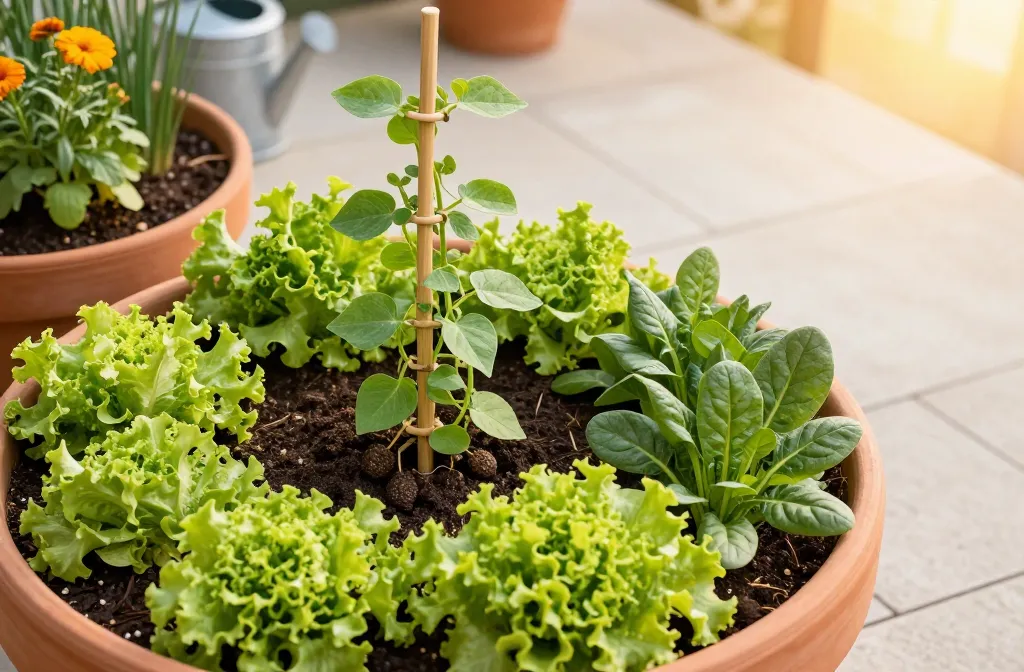
Your containers can do more than just look cute—they can quietly build rich, living soil while they grow dinner. Ready for plants that boost nutrients, feed microbes, and reduce fertilizer runs? These pairings act like tiny compost factories with flowers. Let’s turn pots into powerhouses, fast.
You’ll get nitrogen-fixers, dynamic accumulators, and root partners that share resources. Less guesswork, more lush leaves. Sound good? Let’s dig in.
1. Legume Dream Team: Bush Beans + Leafy Greens
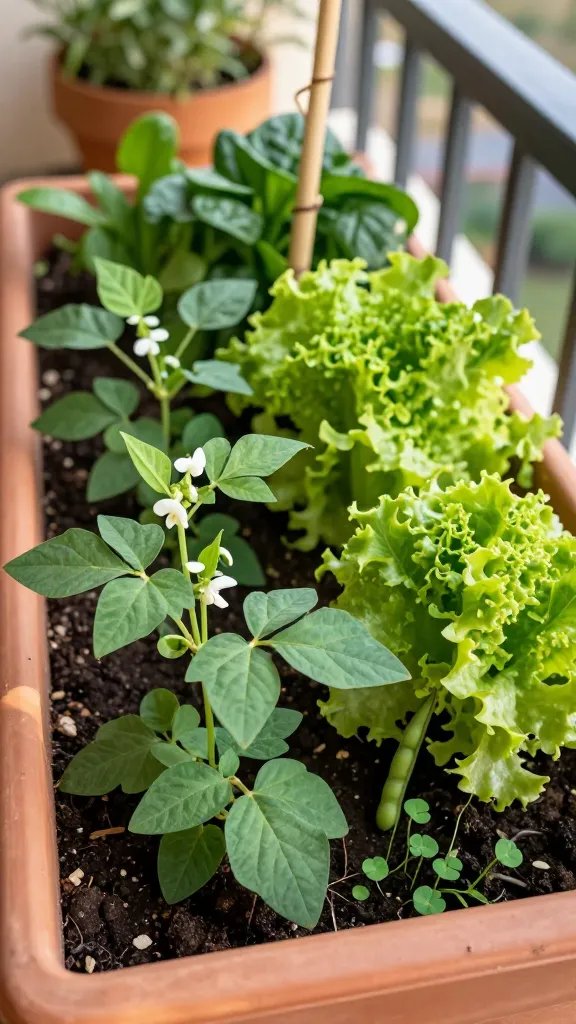
Beans pull nitrogen from the air and stash it in the soil—perfect for hungry lettuces, spinach, and arugula. In containers, this combo keeps greens tender and reduces your fertilizer habit. Plus, beans give you vertical interest without hogging space.
Why It Works
- Nitrogen fixation: Beans host rhizobia bacteria that turn atmospheric nitrogen into plant food.
- Shaded soil: Greens cover the soil surface, reducing evaporation and heat stress.
- Fast turnover: You can succession-plant greens while beans keep enriching.
How To Plant
- Container size: 12–16 inches wide, 12 inches deep minimum.
- Spacing: 1 bush bean in the center; 3–5 greens circling the rim.
- Soil: High-quality potting mix with 10–20% compost, inoculate beans with rhizobia if you have it.
Care Tips
- Water evenly—beans hate drought swings.
- Harvest greens often to keep them sweet and compact.
- At season’s end, chop bean roots in place to release stored nitrogen.
Use this when you want repeat harvests of tender greens with minimal feeding. FYI, it’s a stellar spring and fall combo.
2. Sunny Soil Boosters: Dwarf Tomatoes + Basil + Marigold
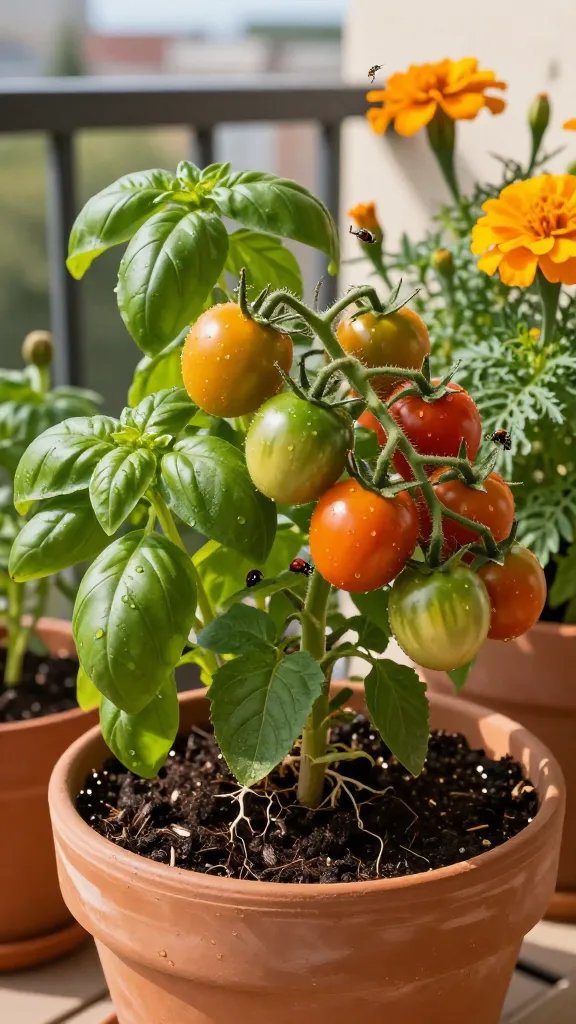
Yes, it’s the classic pizza pot—but smarter. Basil and marigolds don’t just smell great; they attract beneficials, deter pests, and help cycle nutrients. Tomatoes get a microbe-rich root zone and better overall vigor.
Why It Works
- Basil: Exudes root compounds that support microbial activity; can slightly improve tomato flavor (IMO).
- Marigold (Tagetes): Certain varieties help suppress root-knot nematodes and attract pollinators.
- Tomato roots: Exude sugars that feed microbes, which unlock nutrients for the whole pot.
How To Plant
- Container size: 18–20 inches wide for a determinate or dwarf tomato.
- Spacing: 1 dwarf tomato center, 1–2 basil plants, 1 compact marigold at the edge.
- Soil: Rich potting mix with added compost and slow-release organic fertilizer.
Care Tips
- Prune lower tomato leaves for airflow.
- Pinch basil tips to keep it bushy and productive.
- Deadhead marigolds to keep blooms (and beneficials) coming.
Great for balconies with strong sun where you want performance and scent. The trio keeps soil life lively and tomato feeding more efficient.
3. Root-Boost Repair: Carrots + Radishes + Dill
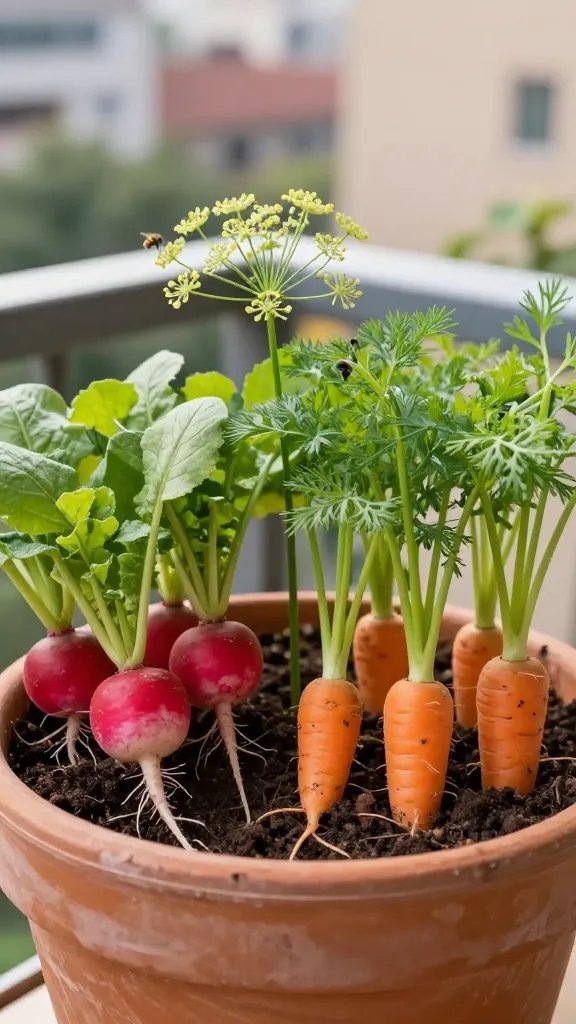
This is a sneaky soil builder with taproots and “nurse” plants. Radishes break up soil fast, carrots follow those pathways, and dill calls in beneficial wasps and hoverflies. The result? Better drainage, nutrient access, and less compaction in your pot.
Why It Works
- Taproot synergy: Radish roots loosen the mix; carrots glide through afterward.
- Dill: Umbel flowers attract predators that keep aphids in check; roots stimulate microbial diversity.
- Residue cycling: After harvest, leftover roots decompose into organic matter.
How To Plant
- Container size: 12 inches deep minimum; 14–16 inches wide.
- Sow pattern: Broadcast a thin layer of carrot seed; interplant radish seed every 3–4 inches; 1 dill at the edge.
- Timing: Harvest radishes in 25–35 days; carrots fill in afterward.
Care Tips
- Keep the top inch consistently moist for germination.
- Thin carrots aggressively for straight roots (seriously, don’t skip this).
- Let some dill flower for maximum beneficials.
Use this when your container mix feels dense or tired. It’s a quick way to “till” with roots and feed soil life.
4. Pollinator Powerhouse: Strawberries + White Clover + Alyssum
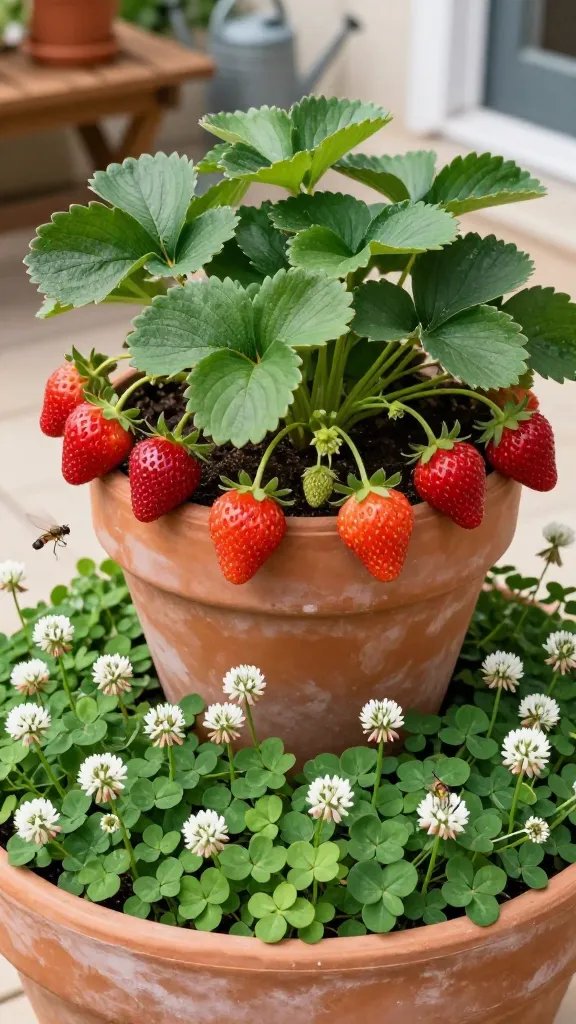
Strawberries crave steady, gentle nutrition and moisture. Enter white clover, a low-growing nitrogen fixer, and alyssum, a beneficial magnet with a sweet honey scent. Together they knit a living mulch that keeps the pot cool and alive.
Why It Works
- White clover: Fixes nitrogen and forms a living carpet that prevents erosion and evaporation.
- Alyssum: Attracts tiny predatory wasps and syrphid flies that snack on aphids.
- Strawberries: Enjoy consistent moisture and a microbially active root zone for better fruiting.
How To Plant
- Container size: 16–20 inches wide, shallow but broad works well.
- Spacing: 3–4 strawberry crowns; overseed clover lightly between; 1–2 alyssum near edges.
- Soil: Airy, moisture-retentive potting mix; add worm castings for microbe oomph.
Care Tips
- Trim clover if it crowds crowns; leave trimmings as green mulch.
- Fertilize lightly; clover does heavy lifting.
- Snip runners if you want bigger berries; let a few root if you want more plants.
Perfect for pretty patio planters that also function like mini eco-systems. Expect sweeter berries and fewer pest dramas.
5. Dynamic Nutrient Cycling: Peppers + Chives + Calendula
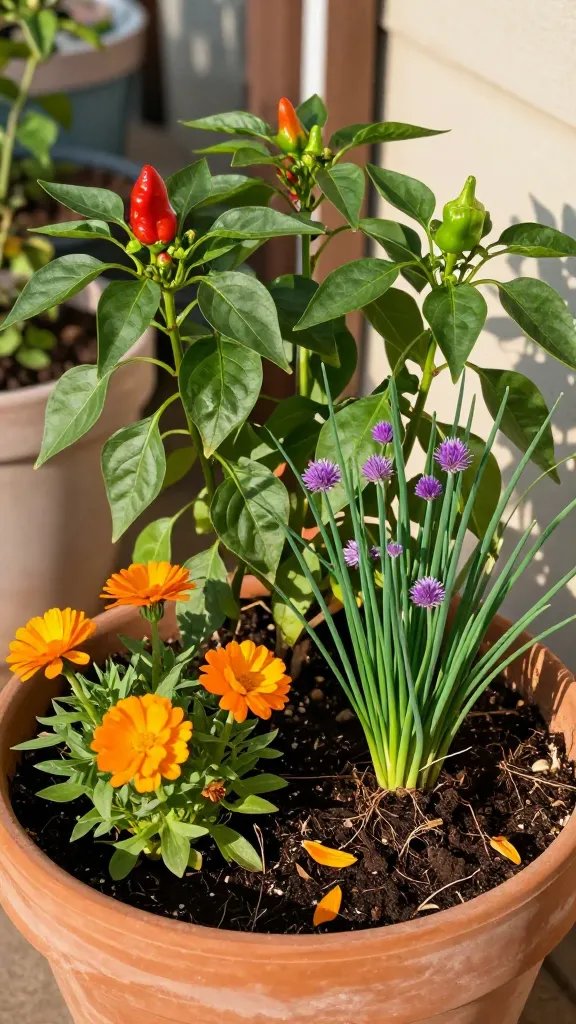
Peppers love warmth and well-fed roots. Chives repel some pests and bring mild antibacterial benefits to the rhizosphere, while calendula mines nutrients and turns spent petals into compost gold. This trio builds soil while delivering color and heat.
Why It Works
- Chives: Mild allium scent can confuse pests; roots help structure the mix.
- Calendula: Deep-ish roots pull up minerals; petals and leaves make great chop-and-drop.
- Peppers: Steady feeders that respond well to microbially active soils.
How To Plant
- Container size: 14–16 inches wide for a single pepper plant.
- Spacing: 1 pepper center; 1 clump of chives; 1–2 compact calendulas around the rim.
- Soil: Well-drained potting mix with biochar or perlite for airflow; add slow-release organic fertilizer at planting.
Care Tips
- Deadhead calendula or let it self-sow lightly in the pot—your call.
- Divide chives each season to keep them vigorous.
- Top-dress midseason with compost; water deeply, not constantly.
Use this in hot spots where peppers thrive. You’ll get vibrant blooms, fewer pests, and a pot that only improves with time.
Bonus Pairings (All Fit Within The Above Five Themes)
- Peas + Kale: Spring into early nitrogen, then let kale ride the wave.
- Buckwheat + Young Tomatoes: Fast cover crop that feeds beneficials and unlocks phosphorus; chop before tomatoes sprawl.
- Borage + Strawberries: Extra pollination, silica, and a bee magnet. Chop-and-drop spent stems.
- Nasturtium + Cucumbers: Living mulch, aphid trap, and edible flowers. Great drape over the pot edge.
- Oregano + Eggplant: Ground-hugging herb that suppresses weeds and keeps soil moist; flavor bonus in the kitchen.
- Sorrel + Fava Beans: Favas fix nitrogen; sorrel loves the boost and adds tang to salads.
These bonus combos plug into the same soil-building logic: fix nitrogen, feed microbes, mine minerals, and chop-and-drop the good stuff back in.
General Container Soil-Building Tips
- Go bigger: Larger pots buffer moisture and temperature, which keeps microbes happy.
- Add biology: A handful of finished compost or worm castings inoculates your pot with life.
- Mulch matters: Use shredded leaves, straw, or living mulches like clover or nasturtium.
- Chop-and-drop: Don’t yank roots; cut plants at soil level and let roots decompose in place.
- Water wisely: Deep, less frequent watering promotes resilient roots and better nutrient flow.
- Rotate themes: Swap heavy feeders with legumes or dynamic accumulators each cycle.
Ready to turn pots into tiny, thriving ecosystems? Start with one combo and watch your soil come alive, season after season. You’ll spend less on fertilizer, harvest more, and—trust me—your plants will flex.
Now grab a trowel, mix and match a pairing, and let those roots do the heavy lifting. Your future self (and your compost bin) will be very pleased.