
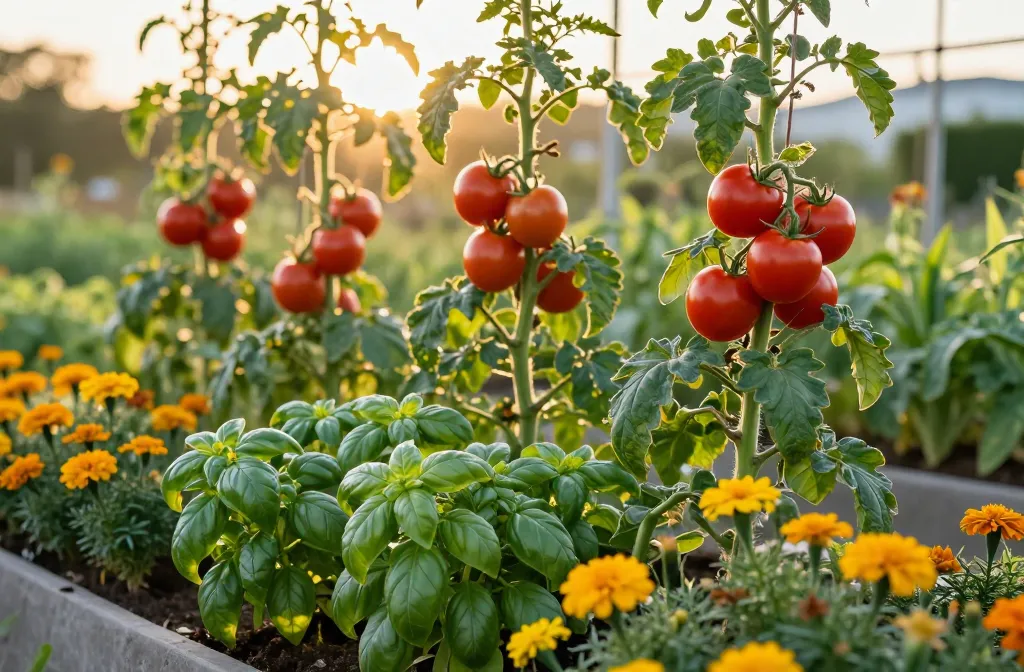
Tomatoes climb high, but they don’t like going solo. The right companions can turbocharge growth, improve flavor, and cut down on pests without chemical drama. If you’re growing vertically in towers, cages, or trellises, these strategic pairings will turn your tomato lane into a thriving, low-maintenance jungle. Ready to stack plants like a pro and harvest sweeter, juicier fruit?
1. Basil + Marigold Power Strip
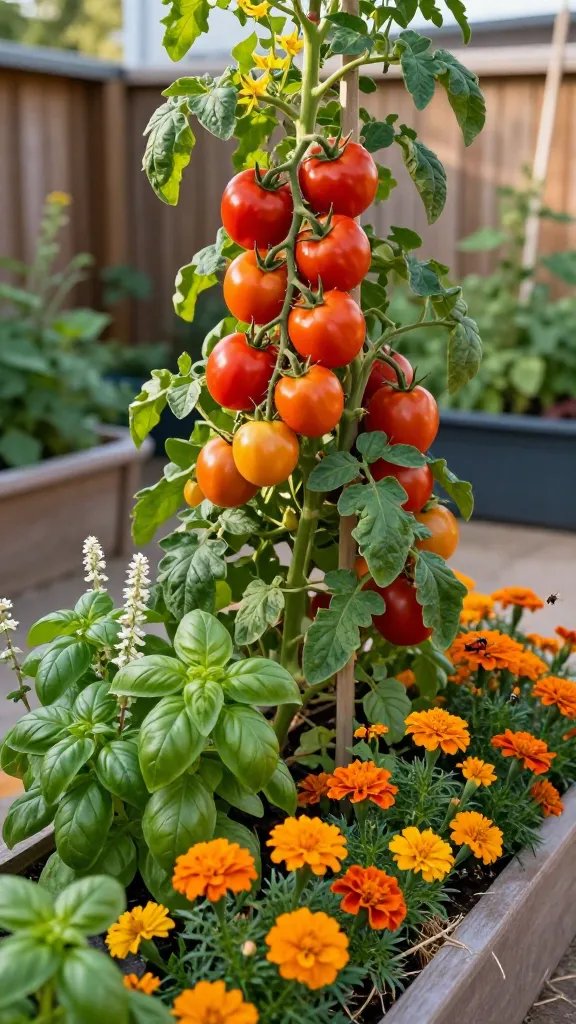
This duo is the tomato world’s celebrity bodyguard and hype man. Basil boosts flavor and attracts pollinators, while marigolds reduce nematodes and fend off aphids. Together under a vertical setup, they fill the base and edges with scent and color while tomatoes climb to the spotlight.
Why It Works
- Basil releases aromatic oils that may enhance tomato flavor and deter flies and thrips.
- Marigolds (French varieties especially) help suppress soil nematodes and draw in predatory insects.
- Both stay compact at the base, perfect for vertical spacing and airflow.
How To Plant
- Place basil 8–12 inches from stems on the sunny side for easy harvests.
- Ring each tomato with 2–3 French marigolds; keep them just off the main root zone.
- Prune basil lightly and often to prevent bolting and keep scent strong.
Best for: Flavor-forward gardeners who want fewer pests and a steady supply of pesto. FYI, this combo looks gorgeous, too.
2. Allium Shield: Chives, Green Onions, And Garlic Chives
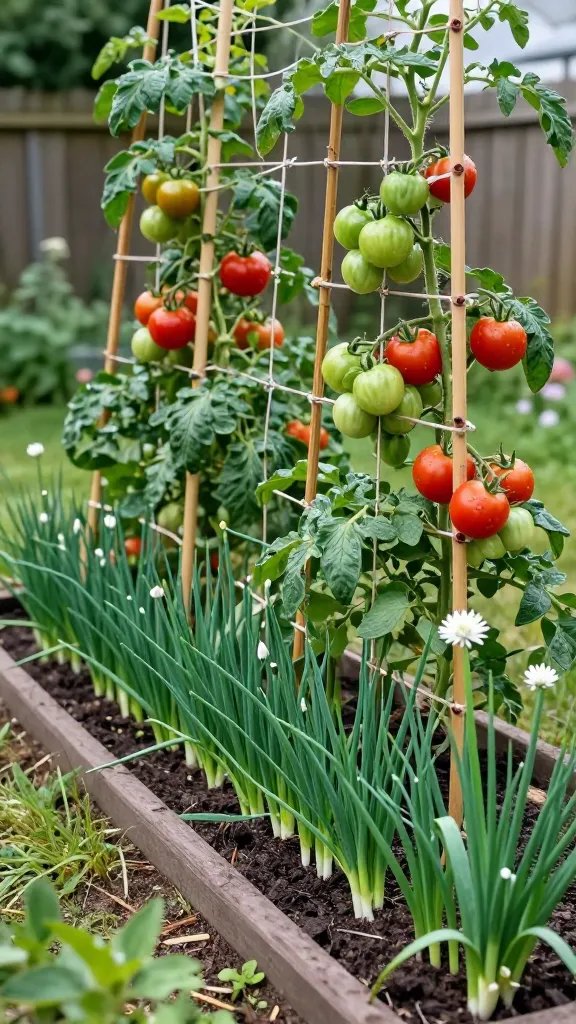
Want a natural pest moat around your vertical tomatoes? Alliums bring the funk in the best way. Their sulfurous scent helps deter aphids, spider mites, and even curious critters, all while fitting neatly under trellises.
Key Pairings
- Chives: Dense clumps at the base act like a living barrier.
- Green onions: Quick to maturity and easy to tuck between tomato supports.
- Garlic chives: Wider, flat leaves and edible blossoms that pollinators love.
Planting Tips
- Stagger in a zigzag along the front of vertical towers to maximize airflow.
- Trim flower heads on chives if you want more vegetative growth (or let them bloom for bees).
- Avoid heavy feeding; alliums thrive with moderate fertility and regular sun.
Benefit: Subtle pest reduction and an endless garnish bar. Also: no sprawling—your vertical tomatoes keep center stage.
3. Aromatic Air Support: Thyme, Oregano, And Lemon Balm
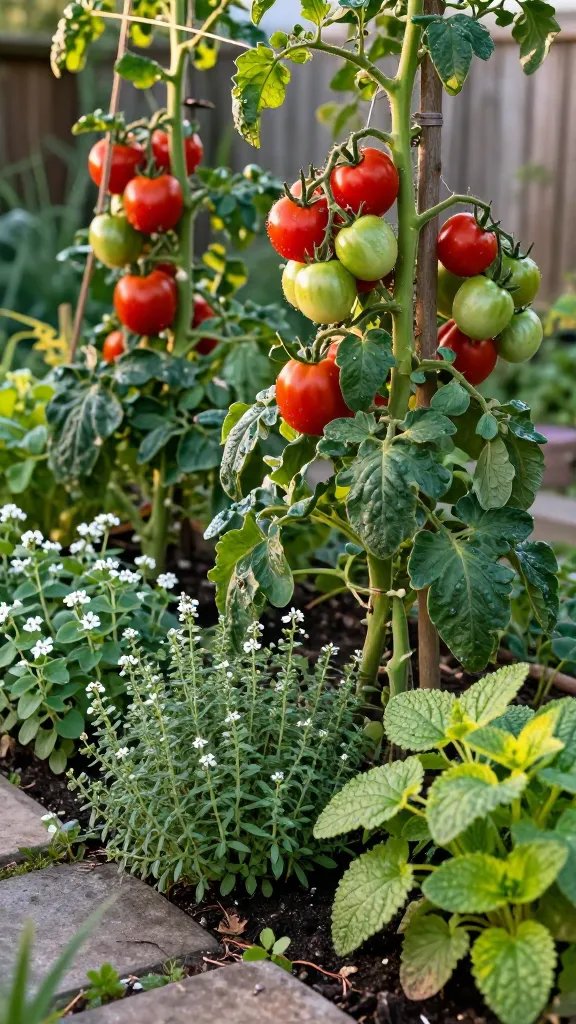
Think of these as the fragrant floor crew under your climbing tomatoes. They spill a little, they smell amazing, and they lure beneficial insects while stressing out the bad guys. Plus, they create a soft understory that helps keep soil splash (and disease) down.
Best Choices
- Thyme: Low, drought-tolerant, and great as a living mulch along the base.
- Oregano: Slightly taller, fills gaps and draws hoverflies and lacewings.
- Lemon balm: Strong scent confuses pests; trim aggressively to prevent takeover.
Spacing & Care
- Plant thyme within 6–8 inches of the tomato base; let it creep but not crowd.
- Keep oregano 12 inches away so it doesn’t compete too hard for nutrients.
- Contain lemon balm in pots set near the trellis to control spread (seriously, it’s enthusiastic).
When To Use: If your garden gets hot and splashy. These herbs reduce soil evaporation and keep leaves drier—key for disease prevention.
4. The Pest Patrol: Nasturtiums, Calendula, And Alyssum
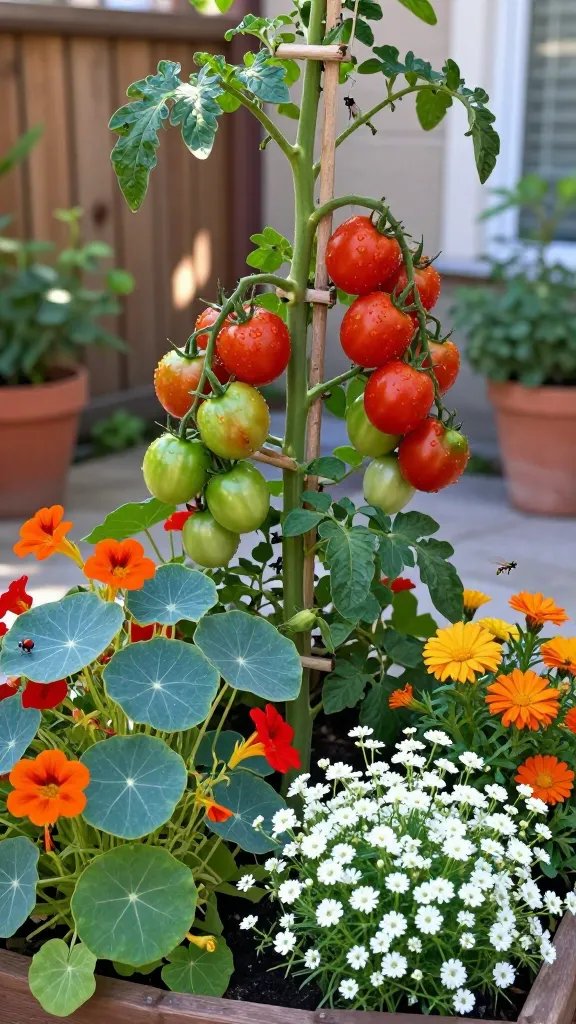
Want a living security system with bonus flowers? These annuals trap pests, attract predatory insects, and look like you meant to make everything that pretty. They trail beautifully around tomato bases and don’t hog vertical space.
Standout Roles
- Nasturtiums: Act as a magnet for aphids—better them than your tomatoes. Edible leaves and flowers taste peppery.
- Calendula: Bright blooms draw beneficials and can deter certain leaf-chewers.
- Sweet alyssum: Small flowers, big service—brings in hoverflies that munch aphids.
Planting Layout
- Let nasturtiums trail from the edge of containers or beds to avoid crowding stems.
- Space calendula 10–12 inches from the main stalks; deadhead to keep blooms coming.
- Tuck alyssum between supports every 12–18 inches as a low, fragrant carpet.
Benefit: A visually lush base that actively manages pests and keeps pollinators buzzing around your tomato flowers. IMO, it’s the most satisfying “set it and forget it” combo.
5. Soil Builders And Shade Buddies: Borage, Dill, And Lettuce
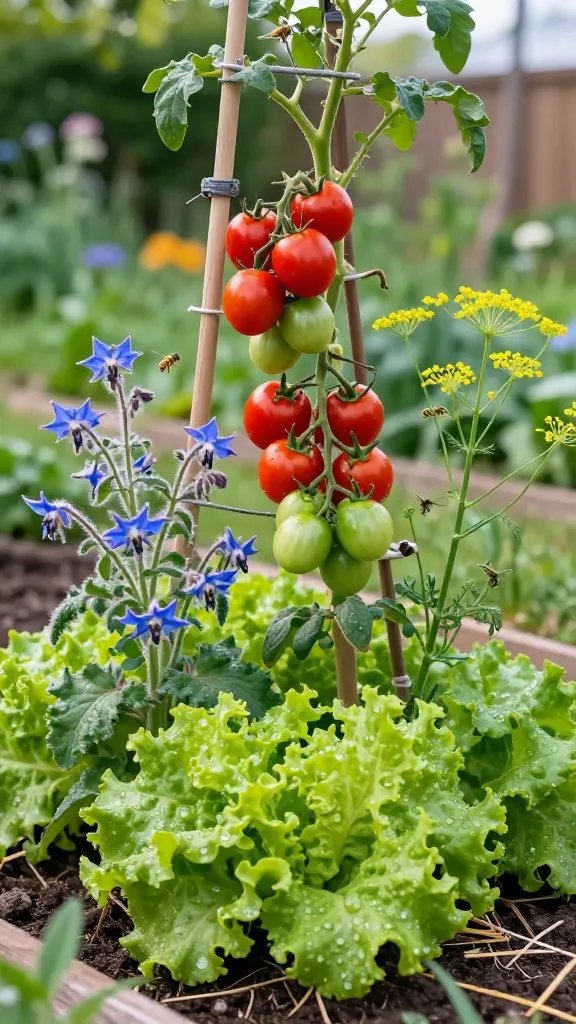
This trio upgrades your soil, your harvest variety, and your tomato’s stress levels. Borage feeds pollinators and supports fruit set. Dill draws beneficial insects, and lettuce uses the shady real estate under vining tomatoes like a champ.
Why They Shine Together
- Borage: Deep roots mine minerals and bring bees; some gardeners swear it improves tomato vigor.
- Dill: Early flowers attract parasitoid wasps that target hornworm eggs and other pests.
- Lettuce: Thrives under partial shade from vertical foliage—no bitter bolting drama.
Planting Strategy
- Plant borage 18–24 inches away; it gets big. Stake lightly if windy.
- Sow dill in small patches near the trellis feet; succession sow every 3–4 weeks.
- Underplant leaf lettuce varieties 6–8 inches from the stem; harvest outer leaves regularly.
Best Use: When you want to squeeze more harvests from the same vertical footprint while boosting pollination and soil health.
Quick Reference: The 12 Proven Pairings
- Basil + Tomatoes
- Marigold + Tomatoes
- Chives + Tomatoes
- Green Onions + Tomatoes
- Garlic Chives + Tomatoes
- Thyme + Tomatoes
- Oregano + Tomatoes
- Lemon Balm + Tomatoes
- Nasturtium + Tomatoes
- Calendula + Tomatoes
- Sweet Alyssum + Tomatoes
- Borage + Dill + Lettuce + Tomatoes (multi-plant synergy)
Vertical Garden Pro Tips
- Airflow Matters: Prune lower tomato leaves and keep companions just outside the drip line to reduce blight.
- Water Smart: Drip lines or soaker hoses under mulch keep moisture steady without splashing leaves.
- Feed In Layers: Tomatoes want richer compost; herbs prefer leaner soil. Amend tomato holes more than the edges.
- Height Stacking: Tall tomatoes, mid-height flowers/herbs, ground-hugging thyme/alyssum. No shade wars.
- Avoid Fennel Near Tomatoes: It can inhibit growth—give it its own corner, far away.
Planting Calendar Snapshot
- Early Spring: Start dill and alyssum; set marigolds after last frost.
- Mid Spring: Transplant tomatoes, tuck in chives/green onions, sow lettuce under trellises.
- Late Spring: Add basil, oregano, thyme; plant borage once nights warm.
- Summer: Succession-sow dill and lettuce; deadhead calendula and alyssum for nonstop blooms.
Common Mistakes To Dodge
- Overcrowding the Base: Give tomatoes breathing room; pack companions at the edges, not right on the stem.
- One-Size-Fits-All Watering: Herbs hate soggy feet. Keep them slightly drier than tomatoes.
- Skipping Pruning: Vertical gardens need discipline. Remove suckers, tidy herbs, and trim nasturtiums.
- Ignoring Mulch: A 2–3 inch mulch layer prevents splash-up and locks in moisture.
Container and Small-Space Layout Ideas
- Tomato Tower Pot: Tomato center, basil at north side, marigold trio around rim, alyssum to spill.
- Wall Trellis Bed: Tomatoes in a back row, thyme/oregano front, dill pockets between supports.
- Hanging Rail Planters: Nasturtiums and lettuce cascade while tomatoes climb behind on strings.
Watering And Feeding Cheatsheet
- Tomatoes: Deep water 1–2 times weekly; feed with balanced organic fertilizer, then switch to a bloom/fruit mix.
- Herbs: Light feeding only; too much nitrogen makes them leggy and bland.
- Flowers: Monthly compost tea keeps blooms and beneficials coming.
Pest And Disease Notes
- Hornworms: Dill and alyssum invite natural enemies—leave a few parasitized worms alone.
- Blight: Space, prune, and mulch. Companions help, but good hygiene wins.
- Aphids: Welcome them to nasturtiums, then blast with water or introduce ladybugs.
Harvest Harmony
- Grab basil and oregano right before tomato harvest for peak flavor pairings.
- Snip chives and green onions weekly to encourage fresh growth.
- Pick lettuce often while tomatoes provide shade—no bitterness, just crunch.
There you go—five powerhouse companion planting strategies that keep your vertical tomatoes thriving and your garden looking like a tiny edible resort. Mix and match based on your space, sun, and vibe. Trust me, once you see how much healthier and tastier your tomatoes get, you’ll never plant them alone again.