
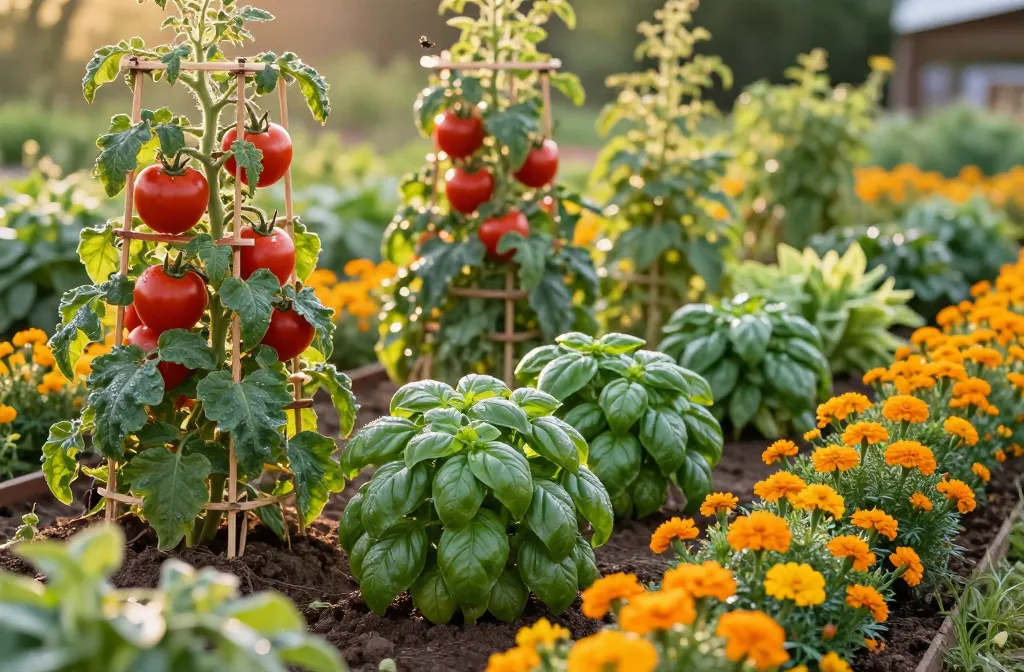
Want a garden that practically takes care of itself? Companion planting stacks the odds in your favor with natural pest control, bigger yields, and happier plants. These pairings don’t just coexist—they hustle together like best buds. Ready to mix and match smarter, not harder?
1. Tomatoes + Basil + Marigolds: The Classic Power Trio
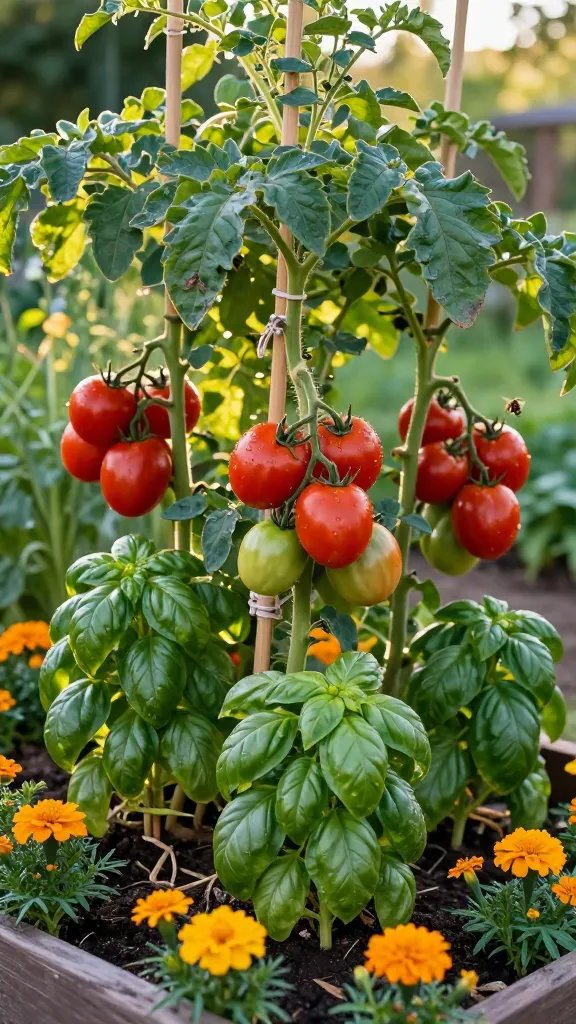
This combo slaps, IMO. Basil amps up tomato flavor and helps repel pests, while marigolds discourage nematodes and nuisance insects. Together, they make your tomato patch smell like a summer dream and perform like a champ.
Why It Works
- Basil masks tomato scent and attracts pollinators.
- French marigolds deter soil nematodes and whiteflies.
- Tomatoes provide dappled shade, which basil enjoys during heat spikes.
Plant basil around tomato bases, one plant every 12–18 inches. Tuck French marigolds along the bed edges or between tomato cages. Water consistently, prune tomatoes lightly, and harvest basil often to keep it bushy.
Pro Tips
- Go for French marigolds (Tagetes patula), not scented calendula—different plant, different effect.
- Pinch basil flowers to keep the oils concentrated in the leaves.
- Space tomatoes widely for airflow; mildew hates a breeze.
Use this trio in small raised beds or patio containers. Expect richer tomato flavor and fewer pest headaches—seriously.
2. Cucumbers + Dill + Nasturtiums: The Vining Vibes Squad
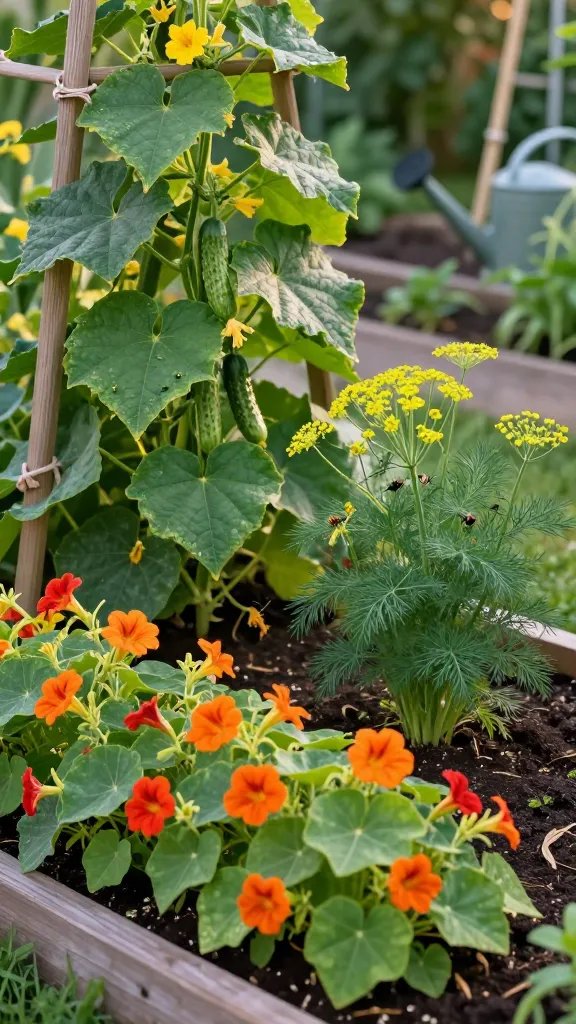
Think of this as your cucumber’s personal entourage. Dill brings in beneficial insects that feast on aphids, while nasturtiums act like a sacrificial buffet for pests. Meanwhile, cucumbers climb and keep things tidy when you trellis them right.
Planting Layout
- Cucumbers on a trellis at the back for airflow and clean fruit.
- Dill sprinkled nearby to bloom and attract lacewings and parasitic wasps.
- Nasturtiums trailing at the front as pest magnets and edible garnish.
Let dill flower—those umbel blooms are bee magnets. Nasturtiums like poorer soil, so don’t overfertilize or they’ll just make leaves. Keep cucumbers evenly watered to avoid bitterness.
Quick Wins
- Pick bush nasturtiums for containers; trailing types for borders.
- Succession sow dill every 3–4 weeks for constant blooms.
- Trellis cucumbers ASAP to dodge powdery mildew on crowded leaves.
This trio shines in small spaces and vertical gardens. You’ll get cleaner cucumbers, prettier beds, and fewer aphids. Win-win-win.
3. Carrots + Onions + Rosemary: The Root-Guardian Guild
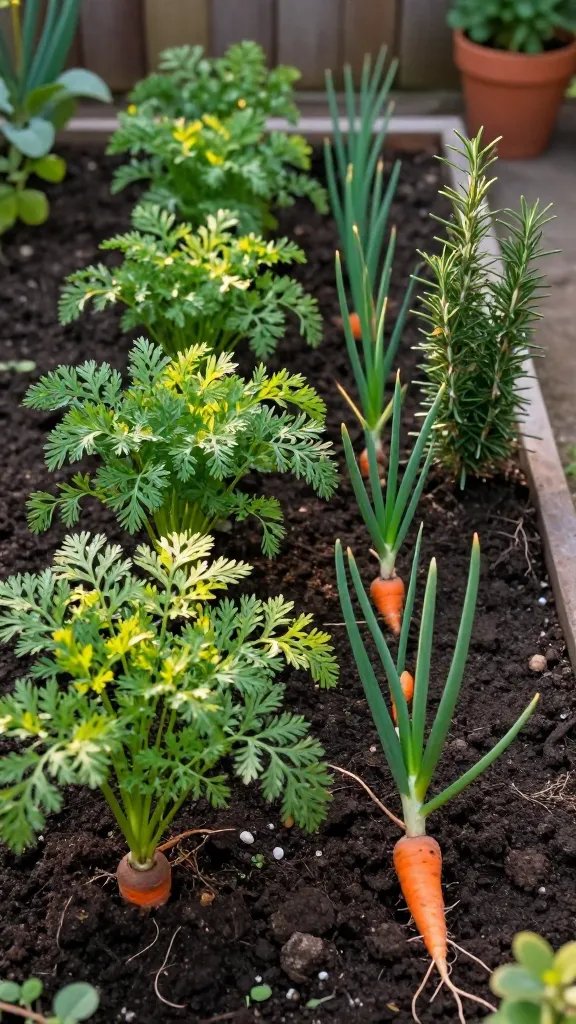
Carrots hate carrot flies, onions hate onion flies, and rosemary stands like a fragrant bodyguard. Their scents confuse pests and their roots share space without drama. It’s like a polite dinner party underground.
How to Arrange
- Carrots in tight rows or bands—thin seedlings early.
- Onions interplanted between carrot rows at 6–8 inch spacing.
- Rosemary at row ends or bed corners to cast scent and attract pollinators.
Keep soil loose for carrots—no rocks unless you like forked roots. Water lightly but consistently so carrots don’t split. Mulch once seedlings establish to cool the soil and sweat less over watering.
Smart Moves
- Use floating row covers right after sowing to block root-fly egg laying.
- Don’t overfeed—too much nitrogen makes leafy tops and sad roots.
- Grow a dwarf rosemary if space runs tight.
Use this trio in narrow beds or along pathways. Expect straighter carrots, fewer fly problems, and a kitchen that smells amazing.
4. Peppers + Oregano + Alyssum: The Pollinator Party Patch
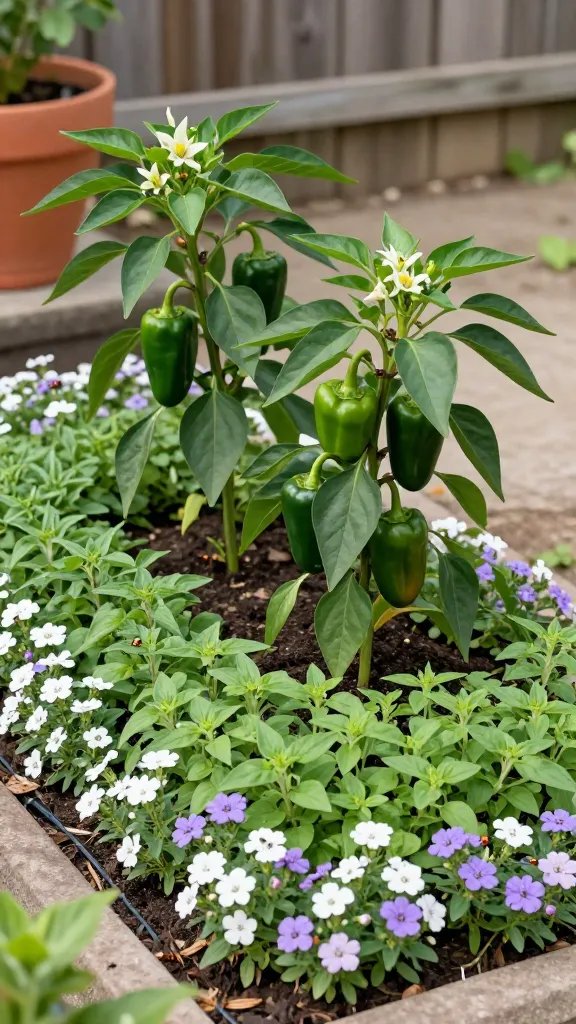
Peppers need consistent pollination and protection from aphids. Oregano forms a fragrant living mulch, while sweet alyssum draws ladybugs and hoverflies that handle pests for you. It’s low-effort, high-reward—my favorite kind of gardening, FYI.
Layout & Care
- Peppers spaced 18 inches apart—don’t crowd, they sulk.
- Oregano planted as a groundcover around peppers—trim often to keep tidy.
- Sweet alyssum dotted along the border for nonstop nectar.
Peppers love steady moisture and warmth, so mulch and stake early. Snip oregano aggressively or it will try to run the show. Let alyssum reseed—free plants next season never hurt.
Extra Perks
- Oregano edges out weeds and conserves moisture.
- Alyssum thrives in cooler shoulders of the season, giving you early and late blooms.
- Peppers ripen cleaner with better airflow and a soft herb mulch.
Perfect for patio pots and small beds. You’ll see fewer aphids, better fruit set, and a pretty border that smells like pizza night.
5. Kale + Beans + Calendula: The Keep-It-Coming Combo
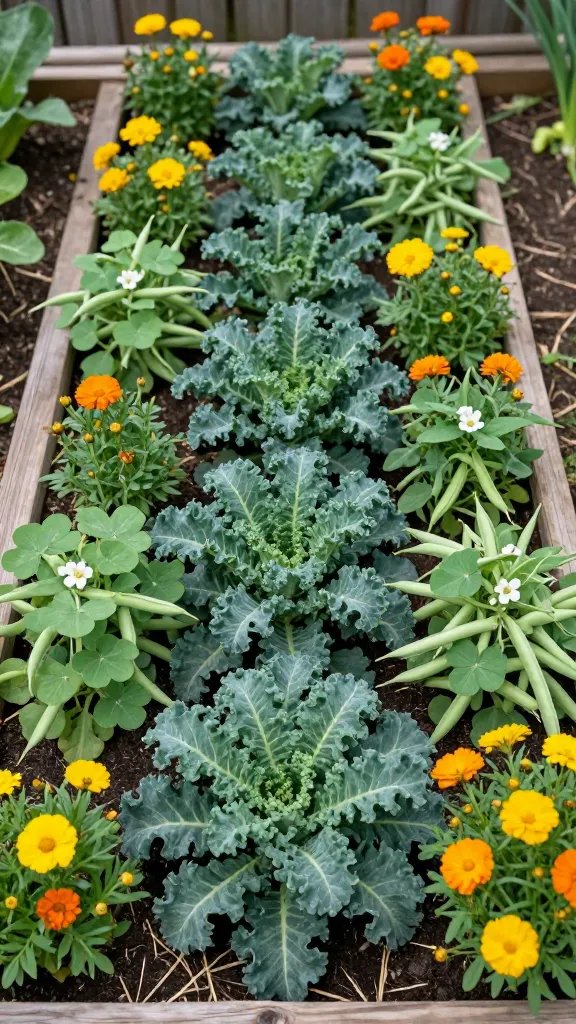
Kale gives you constant leaves, beans fix nitrogen for hungry greens, and calendula lures pollinators while distracting pests. Together they turn basic beds into steady producers. Plus, calendula petals look gorgeous in salads—low effort, high wow.
Planting Strategy
- Kale at the center or back, spaced 12–18 inches for those big frilly leaves.
- Bush beans in a ring around kale—no trellis needed.
- Calendula scattered as bright, sticky pest-traps and beneficial magnets.
Beans add a nitrogen bump when their roots decompose, so rotate smartly or chop-and-drop at season’s end. Pick kale often for tender growth. Deadhead calendula to keep blooms coming, or let some go to seed for self-sown freebies.
Care Notes
- Cover young kale with mesh to block cabbage moths until plants toughen up.
- Keep beans evenly moist to avoid flower drop.
- Remove yellowed kale leaves fast—don’t feed flea beetles a buffet.
This trio shines in spring and fall beds when temps run cooler. Expect lush greens, steady bean harvests, and a vibrant, pollinator-friendly plot—trust me, you’ll feel like a garden wizard.
Ready to play matchmaker? Mix these combos across your beds and containers, and you’ll see faster growth, fewer pests, and prettier harvests. Start with one trio this week, then stack another next month—you’ll build a resilient garden before you can say “where’d all the aphids go?”