
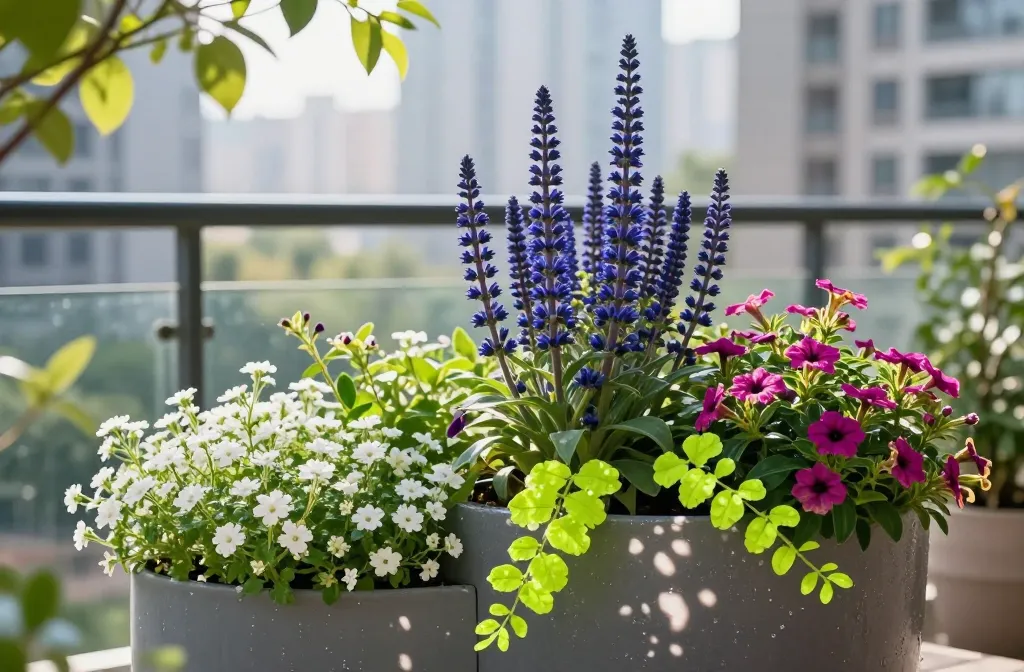
Your balcony gets gentle, filtered light and you’re wondering what actually thrives there? You’re in the sweet spot—dappled shade is plant paradise if you pick smart companions. These pairings pack color, texture, and pollinator love without demanding full sun or constant babysitting. Ready to build lush, low-drama containers that bloom from spring to frost?
1. The Pollinator Power Couple: Salvia ‘Mystic Spires’ + Calibrachoa + Sweet Alyssum
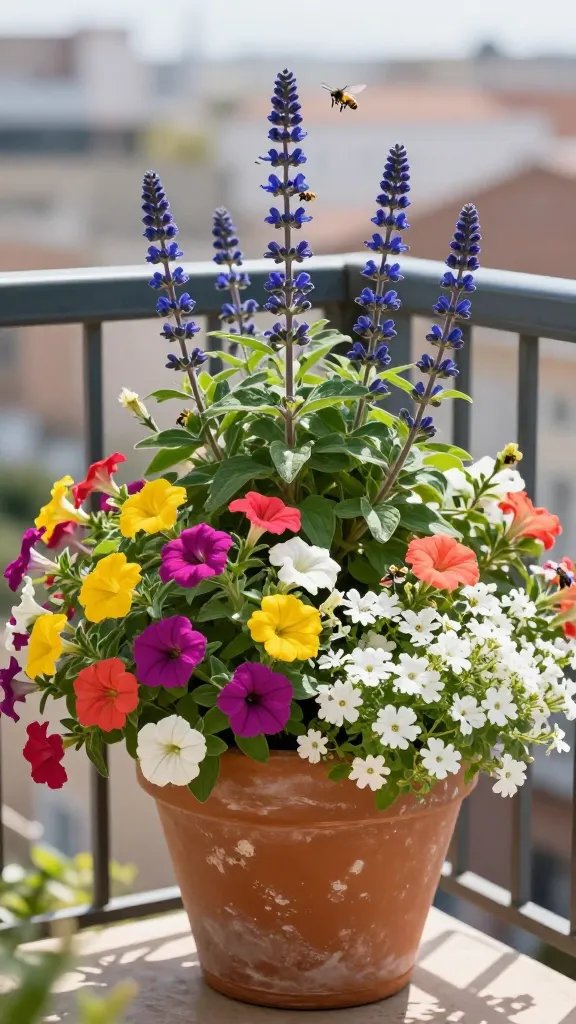
Want a flower trio that just won’t quit? This combo throws nonstop blooms, smells great, and brings in bees and butterflies even on a part-sun balcony. The salvia stands tall, calibrachoa spills, and alyssum ties everything together like a fragrant cloud.
Why It Works
- Salvia ‘Mystic Spires’ handles part sun and blooms for ages.
- Calibrachoa (aka million bells) cascades in bright colors without deadheading.
- Sweet alyssum fills gaps and perfumes the air.
Plant salvia in the center or back of a container, tuck calibrachoa around the edges, and plug gaps with alyssum. Water consistently, and feed lightly every 2–3 weeks with a balanced liquid fertilizer.
Tips
- Choose a 14–16 inch wide pot with excellent drainage.
- Morning sun plus afternoon dapple = happy flowers.
- Deadhead salvia spikes when they fade to keep the show going.
Use this trio when you want color that never looks tired. It’s low-maintenance and crowd-pleasing—seriously, even your postal carrier will comment.
2. The Velvet-Foliage Dream Team: Heuchera + Japanese Forest Grass + Lamium
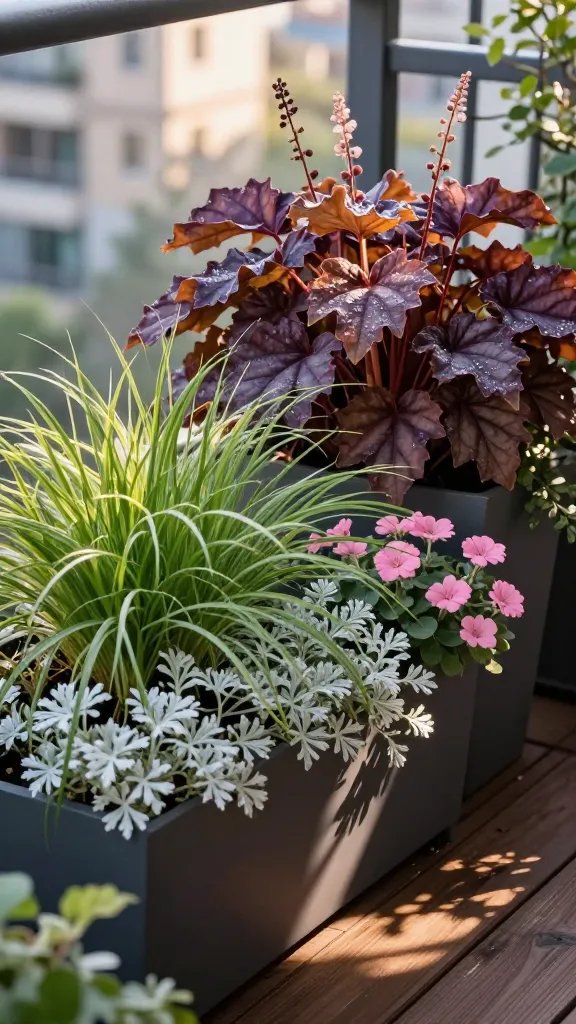
If flowers come and go, foliage stays fabulous. This textural mix gives you moody leaves, graceful movement, and silver shine from spring to frost. It’s a chic, woodland vibe that loves dappled shade.
Why It Works
- Heuchera (coral bells) brings rich colors—plum, caramel, or lime—plus tiny flower wands for pollinators.
- Hakonechloa macra (Japanese forest grass) adds flowing, chartreuse strands that glow in part sun.
- Lamium maculatum (dead nettle) carpets with silver-variegated leaves and soft pink or white flowers.
Use heuchera as the anchor, the grass as a soft skirt, and lamium as the living mulch that spills elegantly. Keep soil evenly moist and choose a well-draining, peat-free mix with added compost for long-term vigor.
Key Points
- Partial morning sun helps bring out heuchera and hakonechloa color.
- Snip lamium runners to keep it tidy in containers.
- Mulch lightly to buffer moisture on breezy balconies.
When to use it? When you want a “designer” planter that looks expensive without trying too hard. FYI, it pairs beautifully with modern railings and warm wood furniture.
3. The Edible-Meet-Flower Aesthetic: Dwarf Blueberry + Violas + Thyme
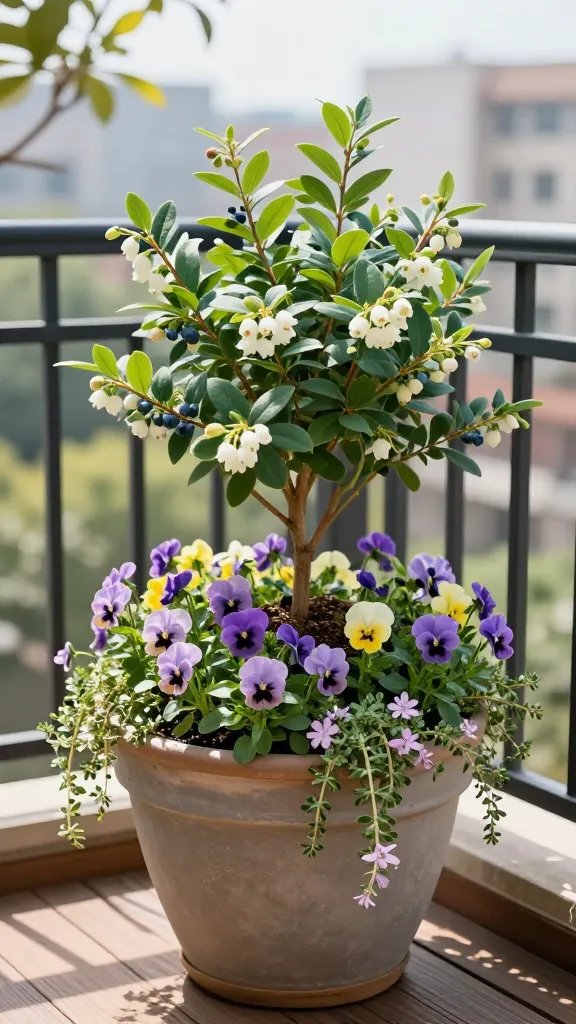
Yes, you can eat from your shade-leaning balcony. This combo delivers spring flowers, summer berries, and year-round texture with minimal fuss. Plus, it looks adorable and smells amazing.
Why It Works
- Dwarf blueberry cultivars like ‘Jelly Bean’ or ‘Top Hat’ enjoy part sun and give sweet fruit.
- Violas bloom happily in cooler temps and light shade; their flowers are edible.
- Creeping thyme trails and releases scent every time you brush it.
Use an 18-inch container with acidic potting mix (aim for pH 4.5–5.5). Place the blueberry as the centerpiece, tuck violas around it, and let thyme spill over the rim. Water with rainwater if you can, and use an acid-loving fertilizer once a month during active growth.
Tips
- Morning sun boosts berry production; dappled afternoons prevent leaf scorch.
- Trim violas lightly in midsummer to refresh blooms.
- Protect ripening berries with a mesh cloche if local birds discover your buffet.
Perfect for foodies who want beauty and snacks in one container. IMO, it’s the most charming “little kitchen garden” you can squeeze onto a balcony.
4. The Mediterranean Spill & Thrill: Hardy Geranium + Ferns + Bacopa
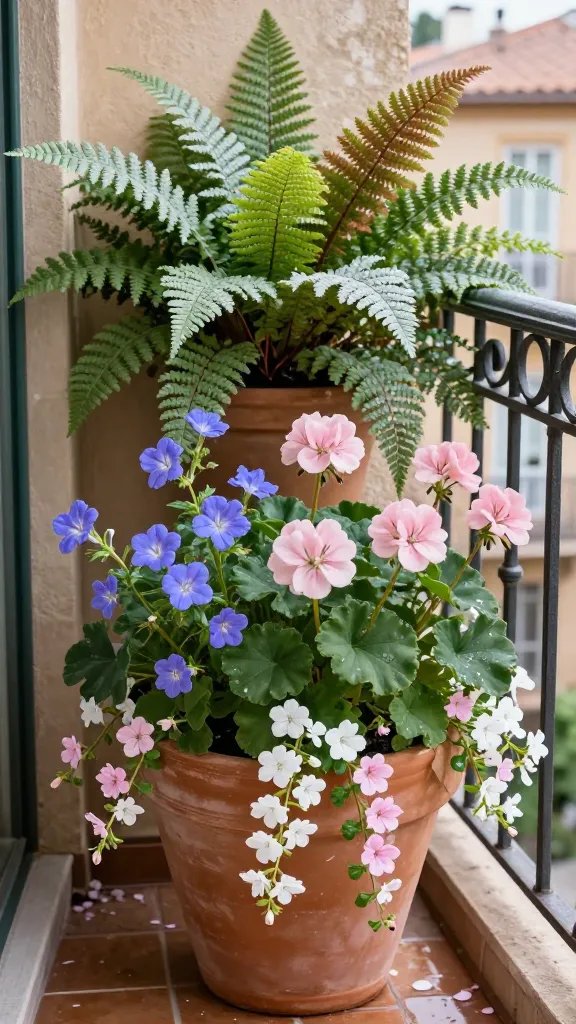
Want soft, romantic textures with flowers that don’t need spotlight sun? This trio paints your balcony with airy movement and delicate blossoms. It handles light wind and bright shade like a champ.
Why It Works
- Hardy geranium (cranesbill, not the zonal kind) such as ‘Rozanne’ or ‘Biokovo’ flowers for months in part sun.
- Ferns like Japanese painted or autumn fern add sculptural fronds and drama.
- Bacopa trails with white or pink blooms that love cool, dappled conditions.
Use the geranium as a mid-height fountain, tuck ferns behind or alongside for height and texture, and let bacopa spill. Keep soil consistently moist but never soggy, and pinch bacopa stems if they get leggy.
Key Points
- Choose a breathable container (ceramic or wood) to moderate roots.
- Feed lightly—too much nitrogen makes bacopa leafy, not flowery.
- Rotate the pot monthly so ferns don’t lean toward the brightest side.
Use this when you want a “cottage garden” feel with zero direct midday scorch. It turns tiny balconies into secret garden corners—trust me, it’s a vibe.
5. The Scented Shade Symphony: Hosta + Fragrant Begonia + Creeping Jenny
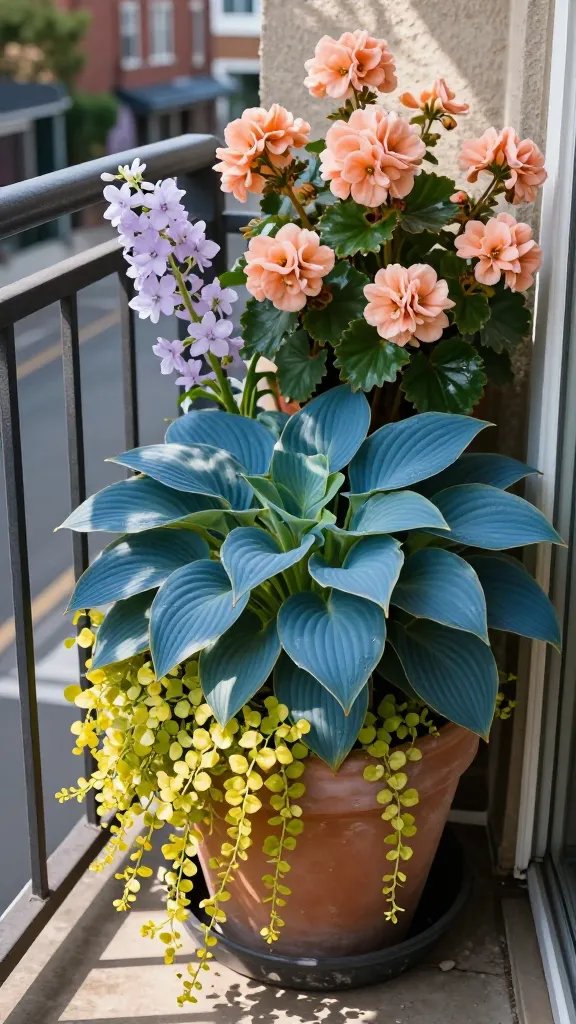
If you think shade can’t smell fabulous, think again. This mix brings big, plush leaves, scented blooms, and that golden cascade everyone notices from the street. It’s drama and fragrance without the maintenance meltdown.
Why It Works
- Hosta varieties with thicker leaves resist slugs in containers and look lush in part shade.
- Fragrant begonias (like ‘Scentiment’ or fragrant tuberous types) offer perfume and showy blooms.
- Creeping Jenny (Lysimachia nummularia ‘Aurea’) spills lime-gold foliage for instant brightness.
Center a medium hosta, nestle begonias around it, and ring the edge with creeping Jenny. Use a moisture-retentive potting mix and water deeply when the top inch dries. Snip any spent begonia blooms to keep the plant blooming hard.
Tips
- Morning or late-day sun intensifies hosta variegation without frying leaves.
- Top-dress with compost each spring to feed slowly.
- If slugs show up, use copper tape on pot rims or switch to coarser bark mulch.
Use this combo when you want lush luxury and a whiff of fragrance during evening balcony hangs. It’s your “spa day in a pot.”
Bonus Care Notes For Dappled Shade Balconies
- Light Reality Check: Dappled shade often equals 2–4 hours of direct morning sun plus bright indirect light. Track your light for a week to choose the right combos.
- Soil Mix Matters: Use high-quality potting mix, not garden soil. Add 10–20% compost and a handful of perlite for drainage.
- Water Wisely: Containers dry out faster on breezy balconies. Water in the morning and consider self-watering pots if you travel.
- Fertilizer Rhythm: Light, regular feeding beats feast-or-famine. A half-strength liquid every 2–3 weeks keeps blooms chugging.
- Right Pot, Right Place: Dark pots heat up—use lighter colors if you get hot afternoons. Always elevate pots on feet for airflow.
Seasonal Swap Ideas
- Spring: Violas, alyssum, bacopa shine in cool temps.
- Summer: Calibrachoa, salvia, begonias hit their stride.
- Fall: Swap in ornamental kale, heuchera-heavy mixes, and late-blooming hardy geraniums.
You don’t need a full-sun terrace to get a lush, blooming balcony—dappled shade plants just need the right partners. Mix heights, play with foliage color, and pick a fragrant element for instant luxury. Go plant it up and enjoy your new “I live in a botanical boutique” energy.