
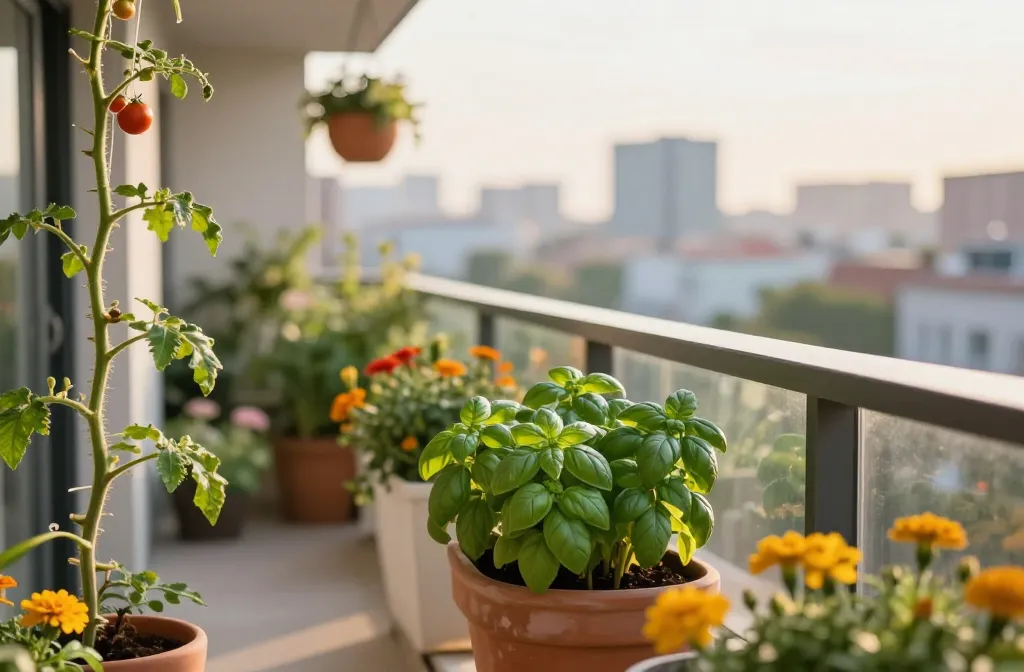
Got a balcony and big dreams? Companion planting turns cramped spaces into productive, pest-savvy jungles. Vertical setups let you stack flavor, color, and function without sacrificing a single square foot. Ready to grow smarter instead of wider? Let’s build a sky-high garden that feeds you and looks stunning while doing it.
1. Stack The Stars: Tomatoes, Basil, And Marigolds In A Vertical Trio
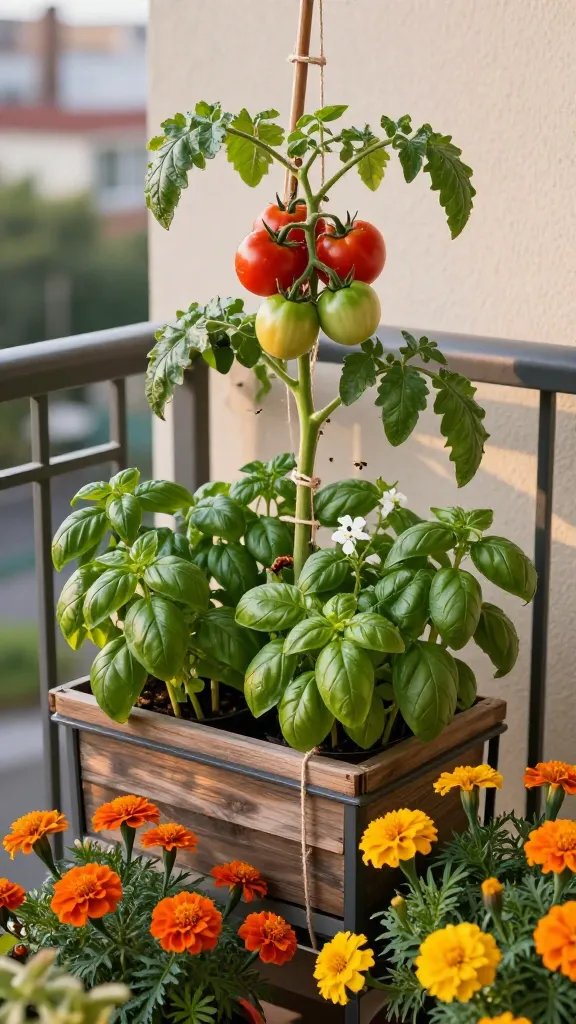
This classic combo shines on a balcony trellis or string system. Tomatoes climb, basil fills the sunny pockets, and marigolds bring pest control and color. It’s the garden equivalent of a power couple—plus the fun third wheel who scares off aphids.
Why It Works
- Tomatoes love support and airflow; vertical training reduces disease.
- Basil boosts tomato flavor (debated, but IMO it’s real) and lures pollinators.
- Marigolds help deter nematodes and aphids while attracting beneficial insects.
How To Set It Up
- Use a slim 10–15 gallon grow bag or tall planter against a wall.
- Install a sturdy trellis or two vertical strings for the tomato stem.
- Plant basil at the front edge (2–3 plants), marigolds at corners for a pop of color.
- Prune lower tomato leaves as vines climb to keep airflow strong.
Benefits: High yield in a small footprint, fewer pests, and pizza night on demand.
2. The Scented Shield: Cucumbers, Dill, And Nasturtiums On A Mesh Wall
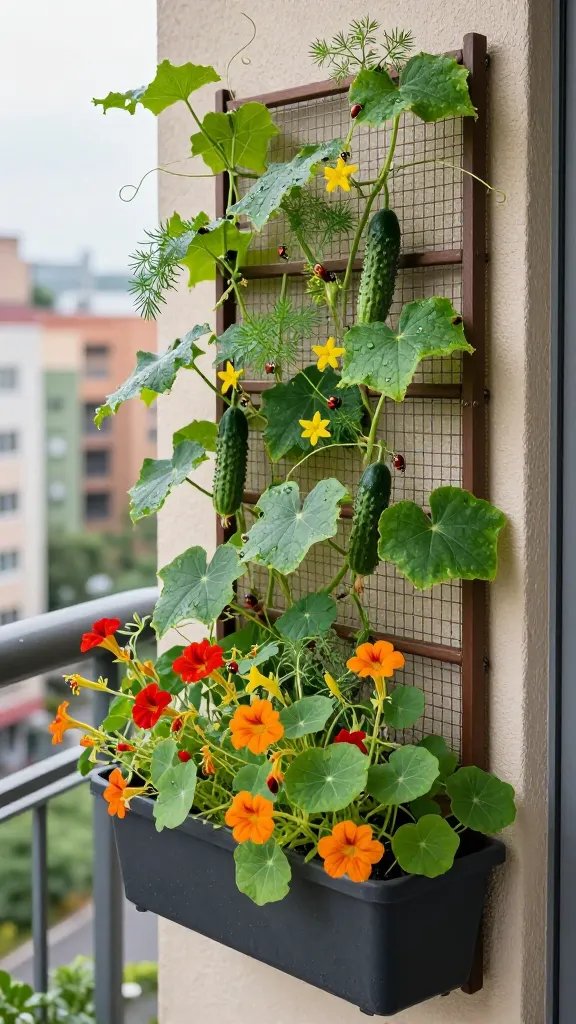
Think crunchy cucumbers cascading down a trellis with edible nasturtium flowers spilling over the edge. Dill threads through as a feathery decoy for pests and a magnet for ladybugs. This combo looks fancy but takes almost zero fuss.
Key Moves
- Cucumbers climb a mesh panel or ladder-style trellis to free up floor space.
- Dill brings in predatory insects that feast on aphids and caterpillars.
- Nasturtiums trail and “trap” aphids so they leave your cukes alone. Also: peppery salads!
Setup Tips
- Choose compact cucumber varieties like ‘Bush Champion’ or ‘Spacemaster’ for containers.
- Use a 12–15 inch deep container; cucumbers get thirsty—water consistently.
- Plant nasturtiums near the front rim so they spill down instead of shading the cukes.
- Stagger sow dill every 3–4 weeks to keep the beneficial insects visiting.
Best For: Balconies with bright afternoon light and gardeners who love edible flowers.
3. Leafy Tower Power: Lettuce, Scallions, And Radishes In Vertical Pockets
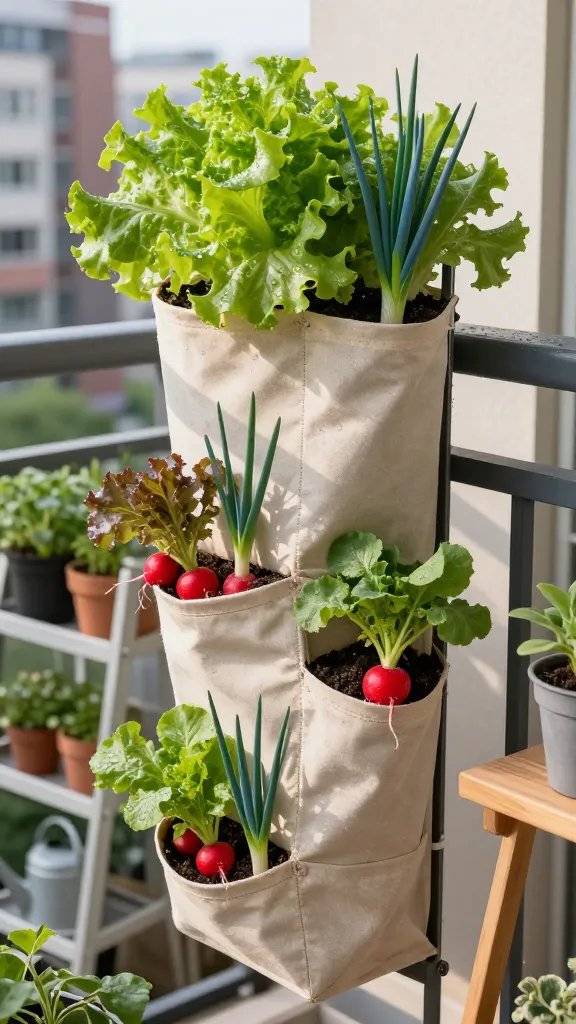
Don’t sleep on salad gardens. Pocket planters, ladder shelves, or stacked crates let you tuck in fast-growing greens for non-stop harvests. This trio loves tight quarters and keeps the soil busy all season.
Why This Trio Wins
- Lettuce thrives in partial shade—perfect for balconies with shifting sun.
- Scallions take up almost no room and deter some pests with their oniony scent.
- Radishes grow fast, break up soil, and make room for follow-up sowings.
Planting Blueprint
- Use a vertical pocket planter or stacked containers with at least 6–8 inches of soil depth.
- Top pockets: loose-leaf lettuce for easy cut-and-come-again harvesting.
- Middle pockets: scallions every 2 inches; harvest as needed.
- Bottom pockets: radishes for a 25–35 day crop; re-seed biweekly.
Benefits: Quick harvests, great for beginners, and zero heavy trellising. Seriously, it’s foolproof.
4. Pollinator Penthouse: Strawberries, Thyme, And Chives In A Hanging Cascade
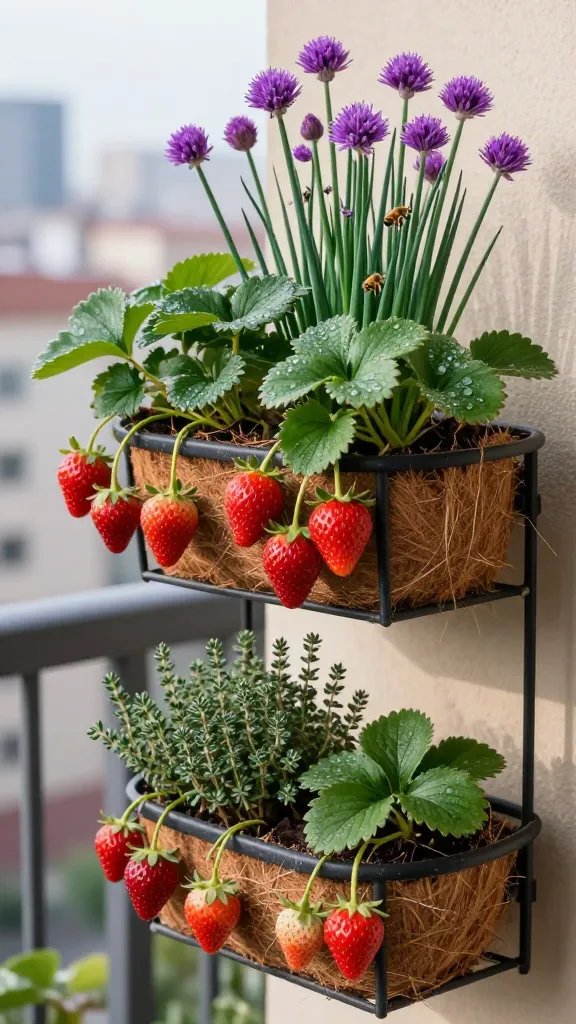
Want fruit on a balcony without the drama? Strawberries cascade beautifully from hanging planters while thyme and chives fill in as fragrant pollinator bait. The result: more berries, fewer pests, and herb sprinkles for everything.
What Makes It Click
- Strawberries spill over edges, keeping fruit clean and reducing slug issues.
- Thyme acts like a fragrant groundcover in shallow pockets.
- Chives bring purple flowers that bees adore and can help deter aphids.
Container Strategy
- Use a tiered hanging basket or vertical strawberry tower with side openings.
- Fill with a high-quality potting mix and mix in slow-release organic fertilizer.
- Plant strawberries in the side pockets, thyme on top for a sunny cushion, chives in top or mid-levels.
- Water deeply but avoid soggy roots; balconies dry fast—add a moisture-retaining mulch like straw or coco coir.
Best For: Sunny balconies where you want edible decor that doubles as dessert.
5. Shade-Hack Wall: Peas, Mint (Contained!), And Spinach On A Railing Rack
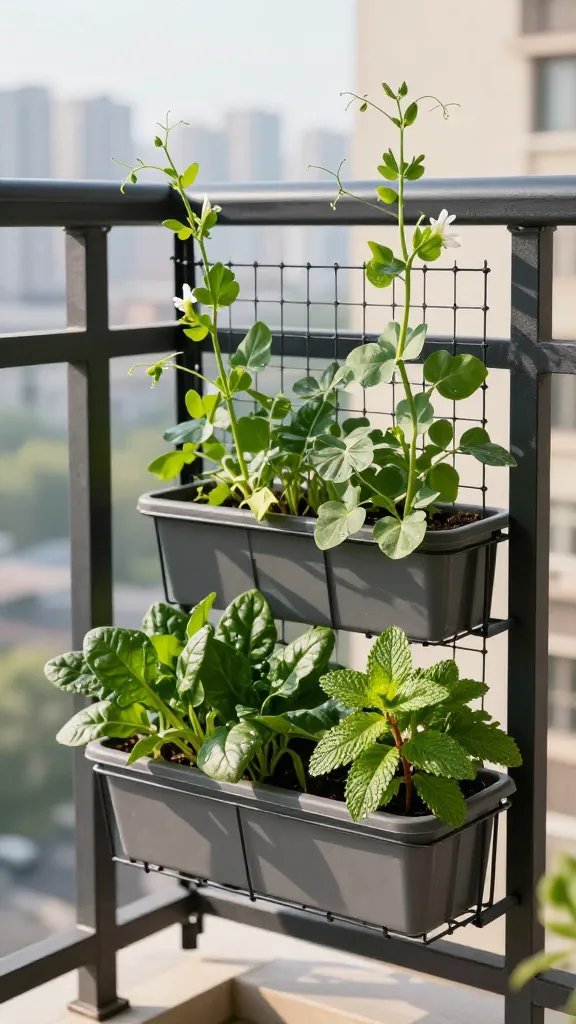
Got bright mornings and afternoon scorch? Use peas as living shade for tender greens. Add mint—tightly contained—to distract pests and give you mojitos on command. FYI: mint spreads like gossip, so we trap it.
Smart Pairing Rationale
- Peas climb netting and cast dappled shade, protecting spinach from bolting.
- Spinach loves cooler roots and partial shade, especially in spring and fall.
- Mint confuses pests with its strong aroma and provides endless garnish.
How To Implement
- Mount a railing planter rack with two tiers or set a tall narrow pot behind a low, wide one.
- Back row: peas on netting or a lightweight trellis.
- Front row: spinach tucked in rows; succession sow every 2–3 weeks.
- Mint in its own pot (nest it inside a larger container if needed) to prevent root takeover.
Benefits: Uses microclimates to your advantage and turns hot balconies into productive nooks. Trust me, your spinach will thank you.
Ready to grow up—literally? These companion combos deliver bigger harvests, fewer pests, and prettier balconies without extra square footage. Start with one section, then stack more as your confidence climbs. Your future self (and your dinner) will be very, very happy.