
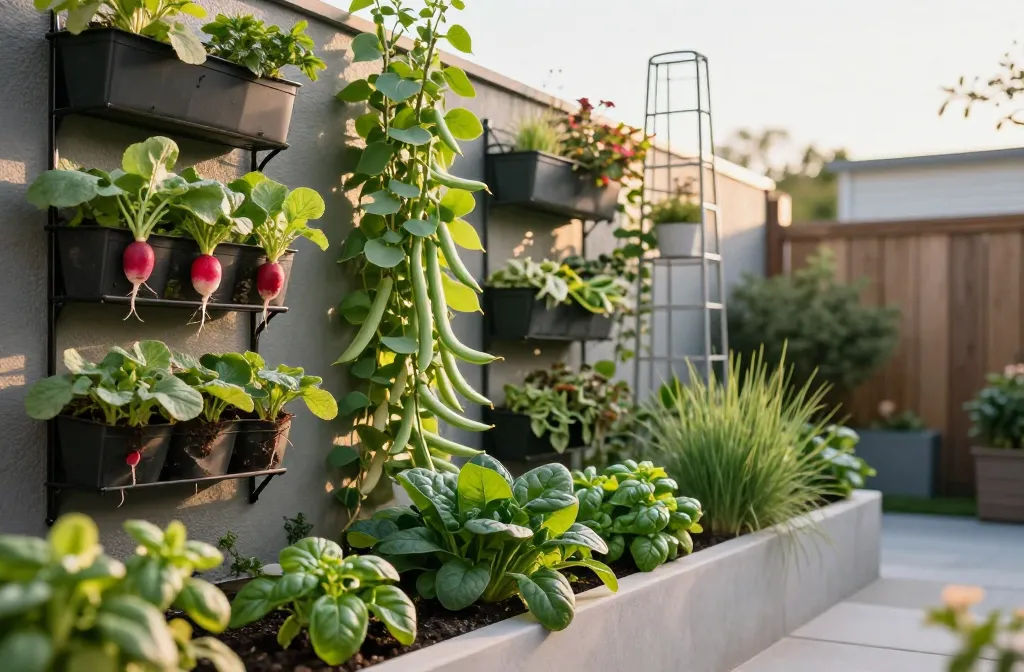
Ready to turn your vertical garden into a nonstop snack bar? Succession planting + companion pairings keep your walls, trellises, and towers pumping out produce week after week. No wasted space, fewer pests, and smarter harvests. Let’s stack plants like Tetris and eat like royalty.
Below you’ll find five power-packed sections, each with three strategies (yep, that’s 15 total) built for vertical setups. You’ll get timing tips, plant combos, and clever tweaks that keep the good stuff coming.
1. The Quick-Start Ladder: Fast Crops, Smart Swaps, Zero Lulls
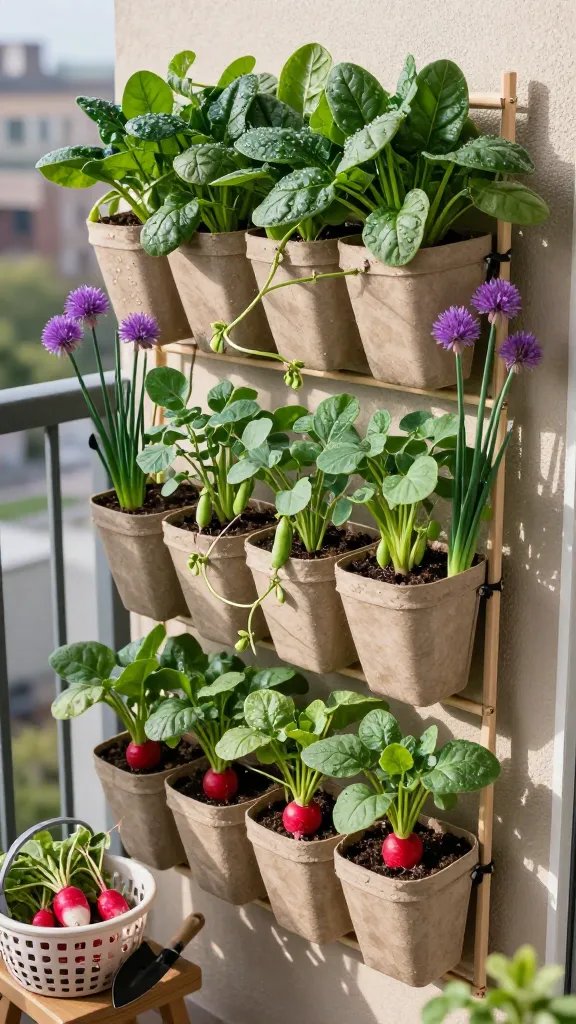
Kick off your vertical garden with crops that sprint from seed to plate. As soon as you harvest, slide in the next player—no downtime. This rhythm keeps your upward space churning with fresh growth.
Strategy 1: Radish → Bush Bean → Spinach
Radishes wrap up in 25–35 days. Harvest them from pockets or wall planters under a trellis. Then tuck in compact bush beans, and finish the season with cool-loving spinach.
- Companions: Edge with chives to deter aphids and add mild onion vibes.
- Timing: Radish early spring; beans late spring; spinach late summer for fall.
- Vertical tip: Use pocket planters so beans can dangle; shade spinach under bean foliage.
Perfect if you want fast wins and minimal fuss.
Strategy 2: Baby Lettuce → Basil → Arugula
Harvest baby lettuce in 25 days. Swap to basil for summer, then restart with arugula for a peppery fall finale.
- Companions: Basil boosts flavor and helps repel pests near greens.
- Spacing: Cut-and-come-again baby greens in tight rows; basil every 6–8 inches.
- Vertical tip: Top pockets for basil (loves heat), lower pockets for greens (enjoys cooler airflow).
Use this when you crave constant salad action, FYI.
Strategy 3: Pea Shoots → Cucumbers (Mini) → Mustards
Pea shoots offer quick snips in 14–21 days. Follow with mini cucumbers on a trellis, then finish the year with mustard greens as temps drop.
- Companions: Dill attracts beneficials for cucumbers and tastes great with them.
- Training: Guide cukes up twine; prune side shoots for airflow.
- Vertical tip: Let mustard catch the filtered light under the cucumber canopy late season.
Ideal for snackers who love crisp cucumbers and spicy fall greens.
2. The Shade Cascade: Use Tall Climbers To Protect Tender Crops

Vertical gardening creates microclimates. You can cool fussy greens under sun-loving climbers and stretch their season. Think of it as nature’s AC that you grow.
Strategy 4: Pole Beans + Understory Lettuce
Pole beans rocket up strings and sling light shade. That shade lets lettuce stay sweeter, longer.
- Companions: Marigold at the base to deter nematodes and lure pollinators.
- Watering: Beans deep soak; lettuce frequent light drinks.
- Succession: Re-seed lettuce every 10–14 days under the bean canopy.
Use this during hot spells when lettuce usually taps out early.
Strategy 5: Cucumbers Overhead + Mint On Edges
Cucumber leaves create dappled shade. Edge planters with mint to confuse pests and keep the air fresh.
- Containment: Keep mint in its own pocket modules so it doesn’t take over.
- Understory choices: Spinach or cilantro enjoy the cooler microclimate.
- Harvest rhythm: Pick cucumbers often to keep vines productive.
Great for balconies that get baking sun at midday.
Strategy 6: Malabar Spinach Arch + Heat-Blocked Arugula
Malabar spinach climbs like a champ and loves heat. Grow it over an arch or trellis to shade arugula below.
- Companions: Nasturtium trails for edible flowers and aphid decoys.
- Timing: Start arugula early; sow again once Malabar creates canopy.
- Pruning: Trim Malabar tips to keep airflow and tender leaves.
Perfect if you want lush greens even when summer misbehaves.
3. Triple-Threat Towers: Stack Roots, Climbers, And Herbs
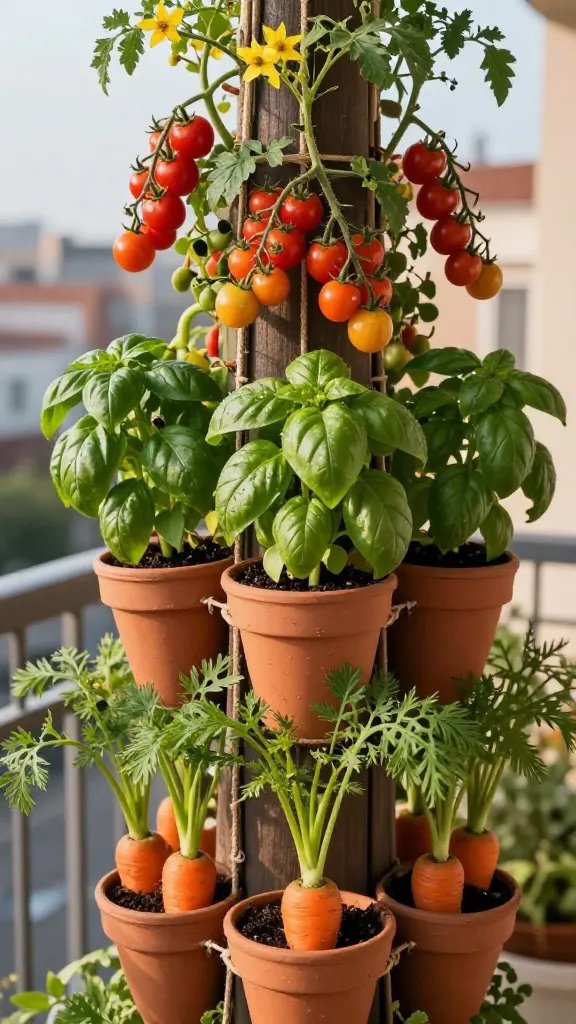
Vertical towers shine when you layer plant types with different root zones and appetites. Let climbers go up, roots go down, herbs fill the gaps. Zero drama, maximum yield.
Strategy 7: Carrot Pockets + Trellised Tomatoes + Basil
Tomatoes hog the spotlight, but carrots quietly thrive in deeper pockets below. Basil snuggles near tomatoes to boost flavor and invite pollinators.
- Varieties: Choose small-fruited tomatoes (cherry or grape) for vertical vigor.
- Carrot tip: Go for short types (Parisian, Thumbelina) in shallow modules.
- Fertilizer: Tomatoes need more; keep carrots light on nitrogen for better roots.
Use this for pasta nights that taste like a summer garden.
Strategy 8: Beet Greens → Dwarf Peppers + Oregano
Harvest baby beet greens early, then let dwarf peppers take center stage. Oregano sprawls gently and keeps pests guessing.
- Succession: Cut the first round of beet greens, then thin to allow bulbs to form or swap to peppers.
- Companions: Oregano’s scent helps deter pests and fills bare spots.
- Vertical tip: Place peppers mid-height for warmth and easy picking.
Perfect when you want color, spice, and herbaceous vibes in one column.
Strategy 9: Strawberry Runners + Snap Peas + Thyme
Strawberries trail beautifully from upper pockets. Snap peas climb nearby supports in spring, then thyme slides into gaps for long-season aroma.
- Timing: Peas in early spring; strawberries all season; thyme anytime.
- Companion magic: Thyme attracts beneficials and tolerates dry edges.
- Maintenance: Clip strawberry runners to focus energy on fruit.
Great for small spaces that need beauty and snacks, stat.
4. Pest-Savvy Pairings: Companions That Protect While You Succession Plant
Companions can block pests and boost yields, which matters even more in tight vertical spaces. Plant defenders now, then reseed harvest crops around them without losing protection.
Strategy 10: Brassicas + Dill + Nasturtium
Grow kale, broccoli, or pak choi in sturdy pockets. Add dill to attract beneficial wasps and nasturtium as an aphid trap.
- Succession: After early pak choi harvest, plug in another brassica or switch to chard.
- Spacing: Keep nasturtiums at edges to trail and distract pests.
- Vertical tip: Brassicas prefer cooler slots; save sunny tops for dill blooms.
Use when cabbage moths keep ruining your mood (and your kale).
Strategy 11: Tomatoes + Basil + Calendula
The classic trio just works. Calendula lures pollinators, basil repels certain pests, tomatoes deliver the goods.
- Succession: After early basil cuttings, replant fresh basil starts midseason to maintain vigor.
- Pruning: Remove tomato suckers to keep vertical airflow clean.
- Harvest tip: Snip basil constantly to delay flowering and keep flavors bold.
Ideal for anyone who loves caprese and hates hornworms.
Strategy 12: Cucurbits + Tansy/Mint Border + Scallions
Cucumbers or mini squash climb up; a border of mint or tansy muddles pest scent trails. Slip scallions into gaps for quick harvests and added pest confusion.
- Caution: Keep mint contained in separate modules (seriously).
- Succession: Replant scallions every 2–3 weeks for constant supply.
- Support: Use netting or clips to keep vines tight to the frame.
Great when you want crunchy cukes and fewer bug meltdowns.
5. Year-Round Rhythm: Timing, Soil Health, And Smart Water For Endless Harvests
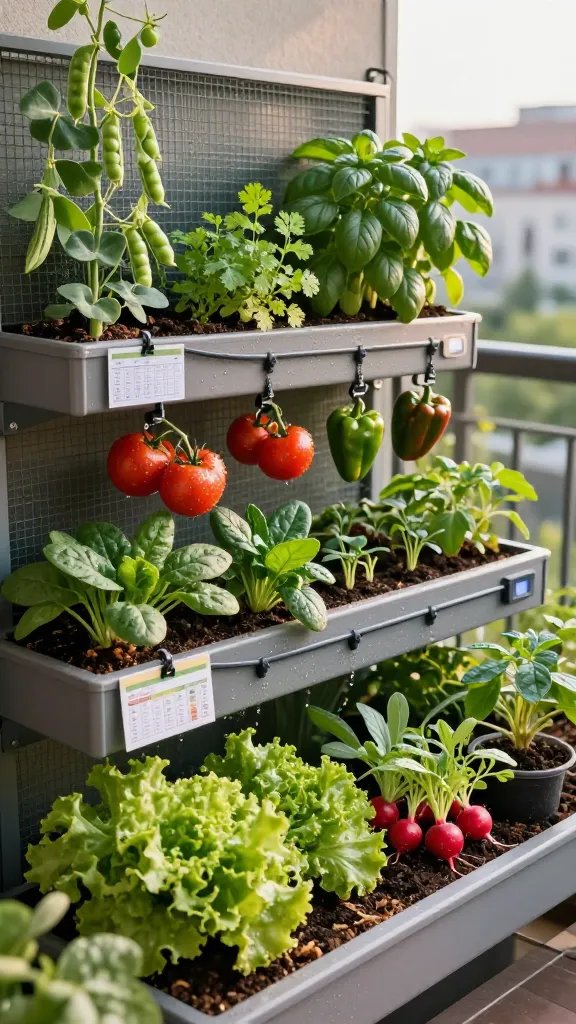
Succession wins or fails on timing and maintenance. Dial in a schedule, keep soil fresh, and water like a pro. Your vertical system will basically farm itself—almost.
Strategy 13: Staggered Planting Calendar (Every 2–3 Weeks)
Plant in waves so something always matures. Use a simple calendar for each vertical zone: top, mid, bottom.
- Cool-season rotations: Lettuce, peas, radish, spinach, cilantro.
- Warm-season rotations: Tomatoes, basil, beans, cucumbers, peppers.
- Fall resets: Arugula, mustards, mache, chard.
Use this if you want a harvest every weekend, not every once in a while.
Strategy 14: Soil Refresh Cycle Between Swaps
Vertical pockets tire fast. Recharge them between successions so yields don’t slump.
- Add-ins: Handful of compost, pinch of slow-release organic fertilizer, and a sprinkle of worm castings.
- pH check: Aim for 6.0–7.0 for most veggies; adjust with lime or sulfur as needed.
- Root hygiene: Pull spent roots cleanly to prevent rot and fungus gnats.
Best for long-running setups where soil gets a workout, IMO.
Strategy 15: Drip Lines + Mulch + Morning Harvests
Consistent moisture equals steady growth, especially in shallow modules. Drip irrigation or microtubes keep pockets even, while mulch reduces evaporation.
- Watering: Short, frequent cycles in heat; deeper, less frequent in cool weather.
- Mulches: Shredded leaves, coco coir chips, or straw cut short for tidy pockets.
- Harvest time: Morning picks keep greens crisp and reduce plant stress.
Use this to keep everything happy and avoid crispy, thirsty plants.
Ready to stack these strategies and eat like a vertical-garden legend? Start with one section, get the rhythm, then layer in more combos as you go. You’ll harvest constantly, waste less space, and—trust me—make your neighbors nosy in the best way.