
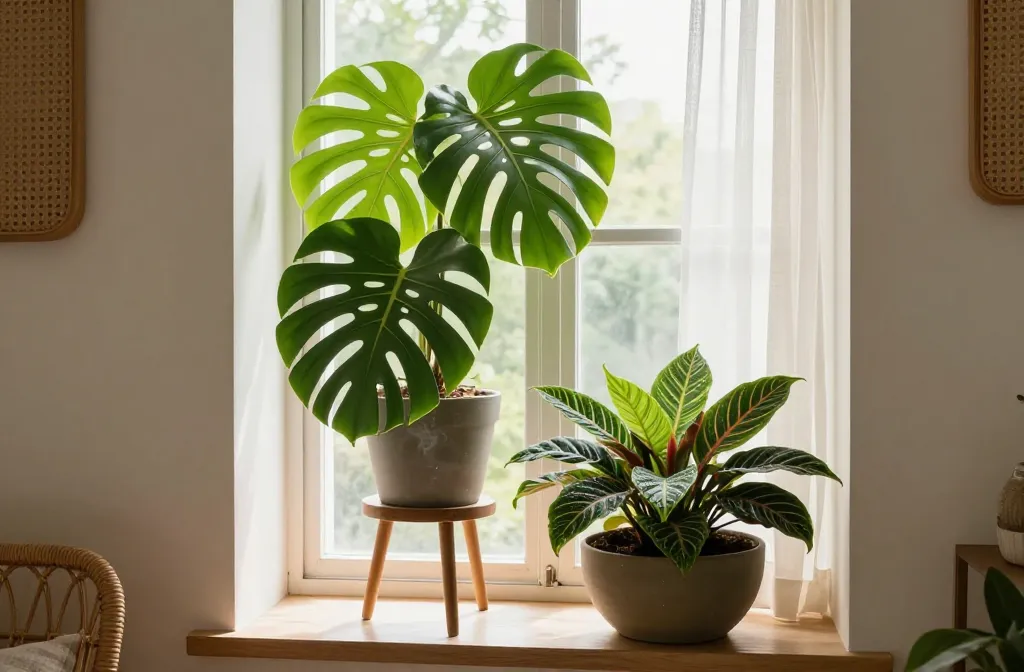
Your windowsill can absolutely look like a mini rainforest. The trick? Smart companion planting: pairing tropicals that thrive together, save you effort, and look ridiculously good. These combos boost humidity, share light needs, and keep pests in check. Ready to turn your apartment into a leafy retreat without moving to Bali?
1. Big Drama + Velvet Underscore: Monstera Deliciosa With Calathea (Prayer Plant)
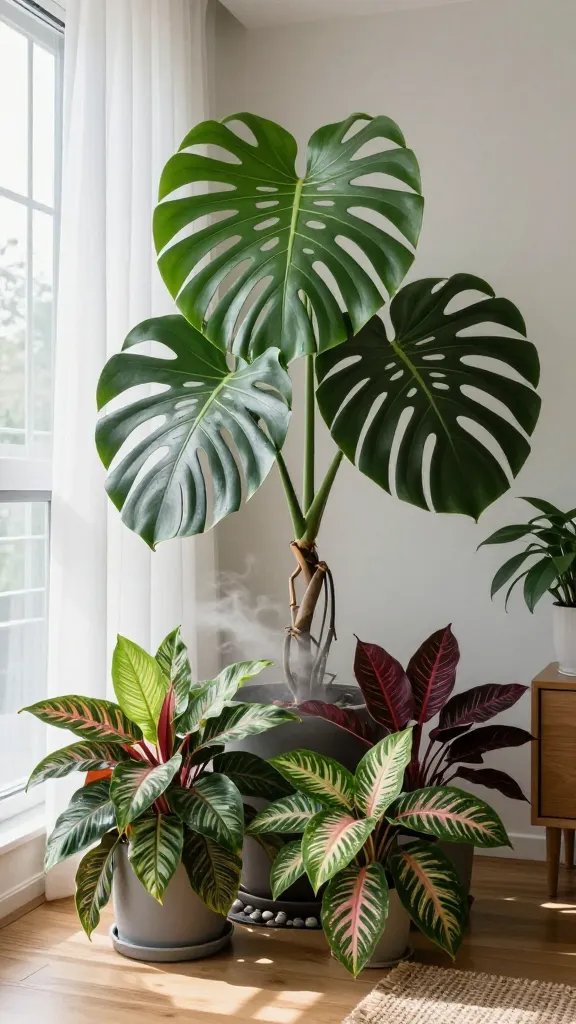
Go bold with a towering Monstera anchoring the scene while a plush Calathea spills texture below. They both love bright, indirect light and high humidity, so they basically share a skincare routine. The Monstera gives structure; the Calathea brings patterns and motion.
Why This Pair Works:
- Light synergy: Monstera tolerates a touch more light, lightly filtering it for Calathea beneath.
- Humidity harmony: Calathea’s frequent misting and higher water needs boost ambient moisture, which Monstera adores.
- Visual balance: Large fenestrated leaves + velvety, patterned foliage = instant indoor jungle vibes.
Use a tall pot or plant stand for Monstera and a wide, shallow pot for Calathea nearby. Keep their soils different: Monstera in chunky aroid mix; Calathea in a finer, moisture-retentive blend.
Tips:
- Place 1–2 feet from a bright window with sheer curtain.
- Water Calathea more consistently; let Monstera dry the top inch between drinks.
- If edges crisp on Calathea, add a pebble tray or small humidifier.
Best for living rooms and bedrooms where you want a focal plant plus plush understory drama.
2. Tropical Texture Party: Bird of Paradise With ZZ Raven and Philodendron Micans
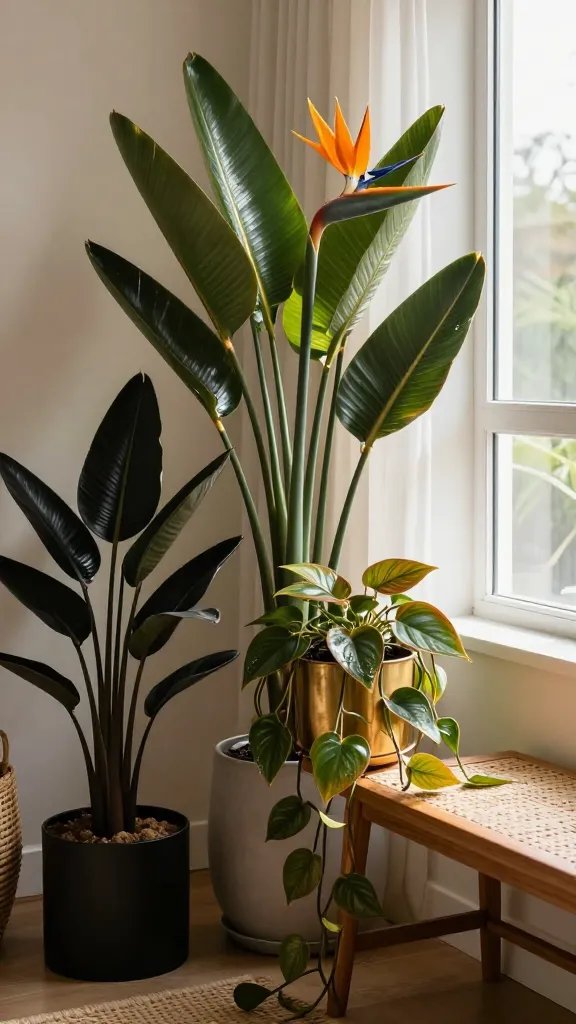
Want lush but low-maintenance? Pair the upright, architectural Bird of Paradise with moody ZZ Raven and trailing Philodendron micans. You get glossy spears, inky sheen, and velvety vines—aka a full texture buffet.
Key Points:
- Light needs: Bird of Paradise craves bright, indirect light (even some gentle direct morning sun). ZZ Raven tolerates a range, but place it off to the side. Micans stays happiest in bright, indirect conditions.
- Water rhythm: Keep the Bird evenly moist in growing season, slightly drier in winter. ZZ likes to dry out more. Micans enjoys consistent but not soggy moisture.
- Container strategy: Use a floor pot for the Bird, a medium pot for ZZ, and a hanging or shelf pot for Micans to cascade.
Stagger heights so the Bird’s leaves catch the light, ZZ fills the midline, and micans trails to soften edges. It looks curated without trying too hard, seriously.
When To Use:
- Rooms with a bright window or glass door.
- Spaces where you want height but zero fuss.
- Great for renters—pots move easily and look designed.
Expect a modern, sculptural vibe with just enough jungle romance to feel lush but not chaotic.
3. Jungle Shelfie Goals: Pothos N’Joy, Neon Pothos, and Bromeliads
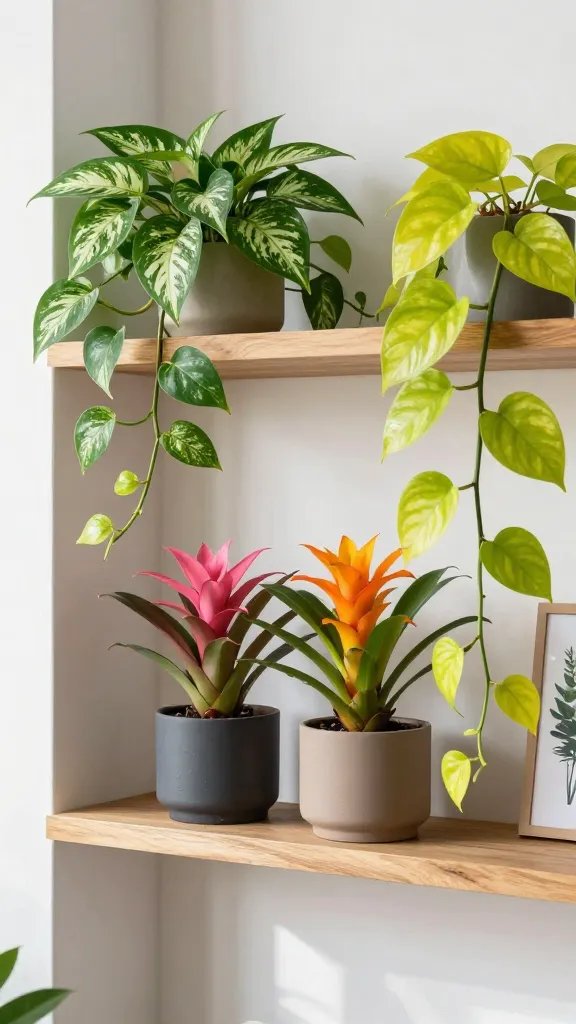
Shelf space begging for color? Mix two easygoing pothos with a pop of tropical drama from bromeliads. The pothos trail and purify while bromeliads flex a center rosette and neon bracts. It’s like confetti for your shelves—minus the vacuuming.
Why This Trio Slaps (IMO):
- Light flexibility: Bright, indirect is ideal, but pothos tolerate medium light. Bromeliads want brighter conditions to keep color vivid.
- Humidity bump: Bromeliad cups hold water, gently elevating local humidity for pothos neighbors.
- Color + shape contrast: Variegated N’Joy, chartreuse Neon, spiky bromeliads—instant depth.
Setup Tips:
- Keep bromeliad tanks filled with clean, room-temp water; flush monthly to prevent funk.
- Use a well-draining mix for pothos; water when top 1–2 inches feel dry.
- Let vines drape down while bromeliads sit at eye level for maximum “wow.”
This pairing turns any bookcase or kitchen shelf into a tropical vignette. Bonus: pothos forgive occasional neglect—FYI, travel people love this combo.
4. Steamy Corner Retreat: Alocasia Polly With Ferns and Fittonia (Nerve Plant)
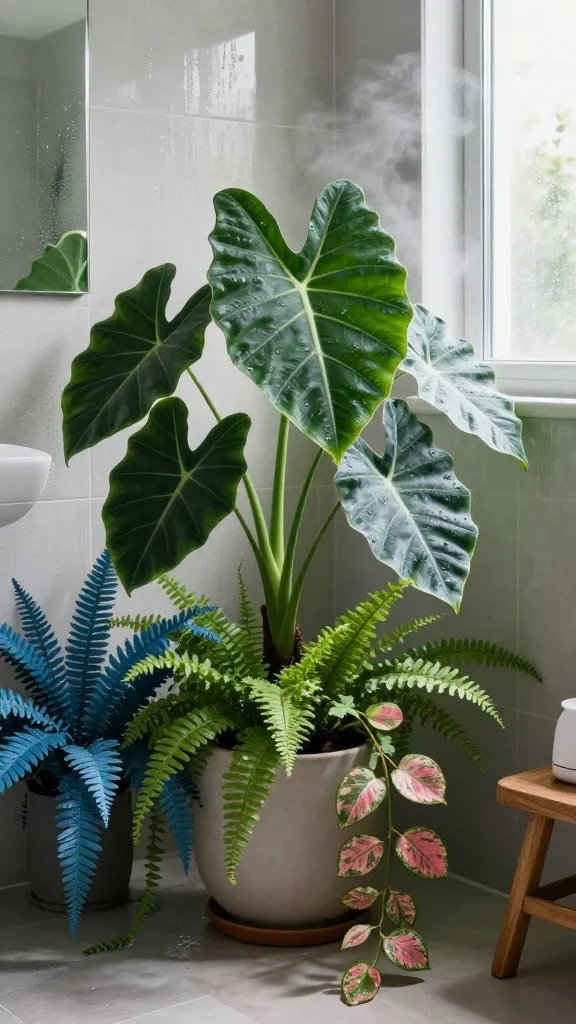
Got a steamy bathroom or humid kitchen corner? Build a lush cluster with sculptural Alocasia Polly, feathery Boston or Blue Star ferns, and colorful Fittonia. They all drink humidity like iced tea on a hot day.
Companion Logic:
- Moisture match: Alocasia likes a consistent, lightly moist substrate. Ferns enjoy the same. Fittonia loves it moist and sulks when dry.
- Light sweet spot: Bright, indirect light keeps Alocasia upright and prevents fern frizz. Avoid harsh midday sun.
- Pest management: Higher humidity helps discourage spider mites that target Alocasia, while airflow from a small fan keeps fungal issues in check.
Planting Layout:
- Alocasia as the focal in a medium pot.
- Ferns flanking in slightly wider pots for volume.
- Fittonia as underplanting or in a shallow bowl for a color splash.
Use a peat-free, airy blend with perlite and fine bark. Water when top inch is just barely dry; never let Fittonia crisp. Add a tray of LECA with water to bump humidity without soggy roots.
Use this trio when you want spa energy and gentle motion. The textures calm your brain after a chaotic day, trust me.
5. Sunset Balcony Oasis: Croton, Dwarf Areca Palm, and Tradescantia Zebrina
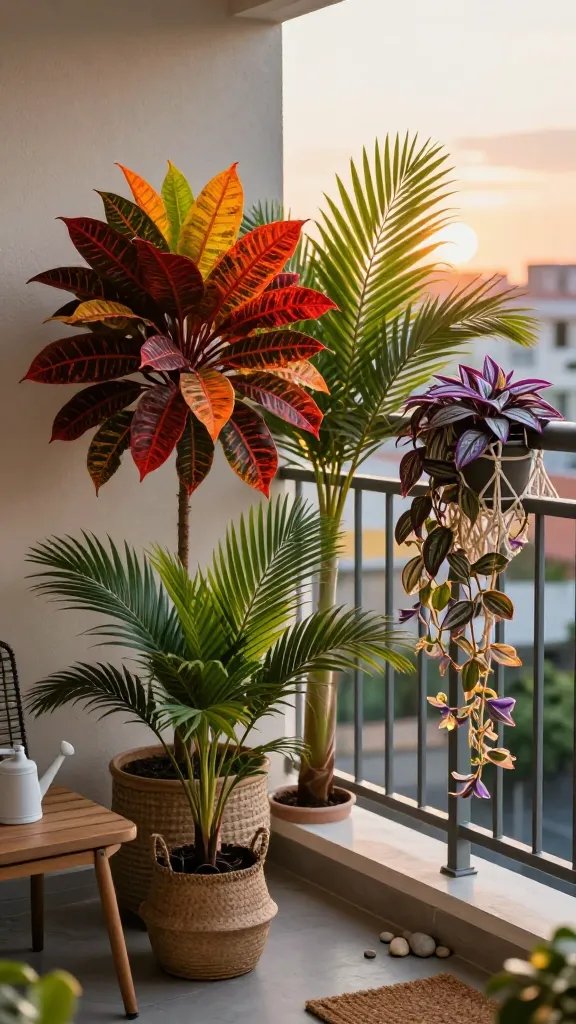
Need a small balcony or bright window to scream “tropical holiday”? Pair a color-splashed Croton with a breezy dwarf Areca palm and trailing Tradescantia zebrina. You’ll get fiery leaves, soft fronds, and metallic stripes in one glance.
Why It Works:
- Light appetite: Croton and Tradescantia thrive with brighter light, even an hour of gentle direct sun. Areca enjoys bright, indirect light but tolerates a touch of morning rays.
- Watering rhythm: Keep Croton evenly moist to maintain color and leaf retention. Areca prefers consistent moisture but never soggy. Tradescantia likes to dry the top inch between waterings.
- Growth balance: Areca adds height and softness, Croton provides the color punch, and zebrina spills to break hard lines of railings or shelves.
Care Hacks:
- Rotate Croton weekly for even color; it leans toward the light like a drama queen.
- Mist Areca fronds lightly to reduce leaf tip browning.
- Pinch back Tradescantia for dense, cascading growth; re-root cuttings easily for free plants.
Great for sunny spots where you entertain or sip coffee. The combo reads tropical resort without needing a boarding pass.
Bonus Mini-Pairings You Can Swap In:
- Anthurium + Hoya: Bright, indirect light; glossy flowers meet waxy vines.
- Snake Plant + Peace Lily: Low to medium light; purifying duo with contrasting forms.
- Peperomia Watermelon + Rhipsalis: Compact textures; ideal for small desks or shelves.
Use these as alternates to fine-tune light, space, or vibes. Mix and match but keep light and water needs aligned.
General Tropical Companion Planting Tips
- Match microclimates: Group plants by light and humidity, not just looks.
- Stagger heights: Tall statement plant, mid-height filler, trailing softener.
- Use the right soil: Aroids love chunky mixes; ferns and fittonia prefer finer, moisture-holding blends.
- Water smart: Water thoroughly, then let the right amount of drying happen. Overwatering is enthusiasm, not care.
- Boost humidity: Bowls of water, pebble trays, or a small humidifier work wonders in winter.
- Pest checks: Wipe leaves monthly. Neem or insecticidal soap at first sign of trouble.
- Fertilize lightly: Half-strength during spring/summer. Ease off in fall/winter.
Ready to play plant matchmaker? Start with one pairing that fits your light, then add a trailing or textural buddy for instant depth. With these combos, your apartment turns into a lush, exotic retreat—and your friends will absolutely ask for your “secret.” Go on, flex that jungle.