
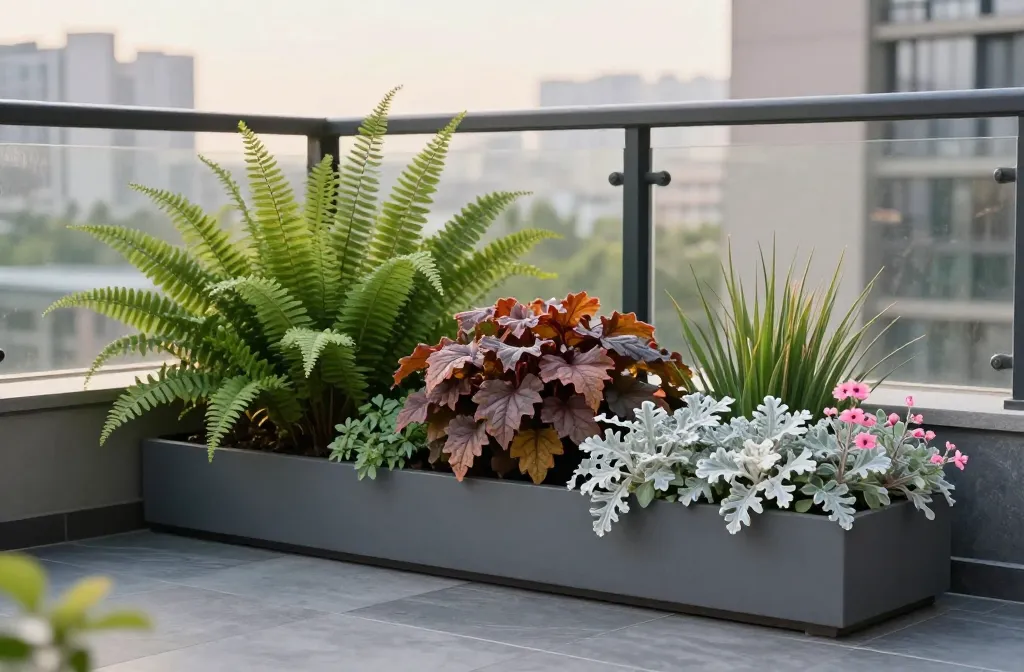
Think a north-facing balcony means boring plants? Nope. Shade-loving stunners thrive in cool corners, and the right combos can turn your balcony into a lush, low-maintenance retreat. These five groupings pair plants that genuinely help each other—same light needs, similar watering, and complementary looks. You’ll get color, texture, fragrance, and pollinator action without begging the sun to show up.
1. The Woodland Glow-Up: Ferns, Heuchera, and Lamium
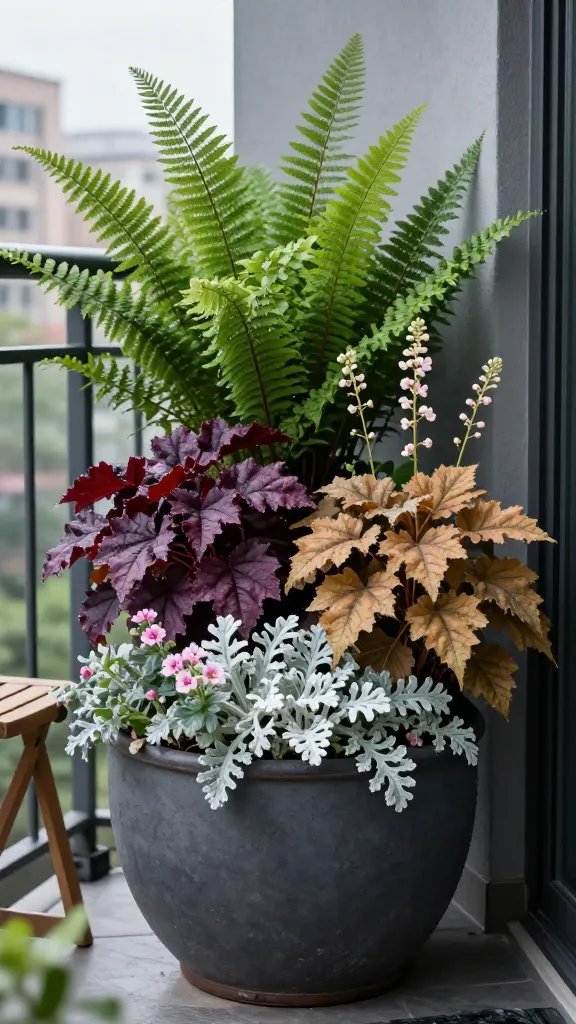
Want a moody, romantic vibe that looks expensive with zero fuss? Pair graceful ferns with colorful heuchera (coral bells) and silvery lamium (deadnettle). This trio loves shade, stays compact in containers, and brings nonstop texture.
Why It Works
- Ferns bring height and soft fronds that instantly read “lush.”
- Heuchera adds colorful foliage—plum, lime, caramel—plus dainty spring flowers.
- Lamium trails over the pot edge with silver-splashed leaves and pink or white blooms.
All three prefer evenly moist, well-draining soil and dappled light—exactly what a north balcony offers. Pick a wide, shallow container to let lamium spill and ferns fan out.
Tips
- Use a humus-rich potting mix with added compost for moisture retention.
- Water when the top inch dries; ferns sulk when parched.
- Choose contrasting heuchera foliage (e.g., dark purple with chartreuse lamium) for drama.
Use this when you want a “mini-forest” feel that looks good year-round. It’s a classy backdrop for a small café table, IMO.
2. The Scented Shade Set: Hosta, Sweet Woodruff, and Lily of the Valley
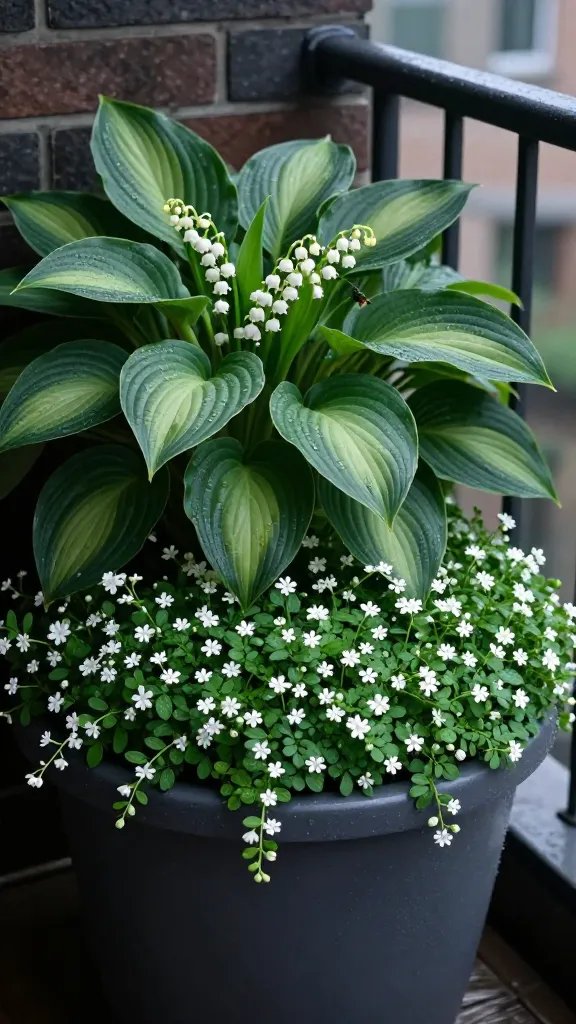
Craving fragrance without full sun? This combo smells dreamy and stays serene. Big-leaf hostas anchor the pot, sweet woodruff carpets the base, and lily of the valley brings bells of perfume in spring.
Why It Works
- Hosta provides structure and bold texture, plus summer flowers for pollinators.
- Sweet Woodruff forms a delicate, starry underplanting that suppresses weeds.
- Lily of the Valley pops in with iconic, fragrant spring blooms.
They all thrive in cool, moist shade. On a balcony, use containers with generous depth and water retention—think ceramic or double-walled planters.
Care Notes
- Keep soil evenly moist—mulch with fine bark to lock in water.
- Feed lightly in spring; these aren’t heavy eaters.
- If summers get hot, tuck this arrangement further from heat-reflective glass.
Best for anyone who loves understated elegance and spring fragrance without fuss. FYI: lily of the valley is toxic if ingested—place away from curious pets or kids.
3. The Color Pop Crew: Impatiens, Begonias, and Caladium
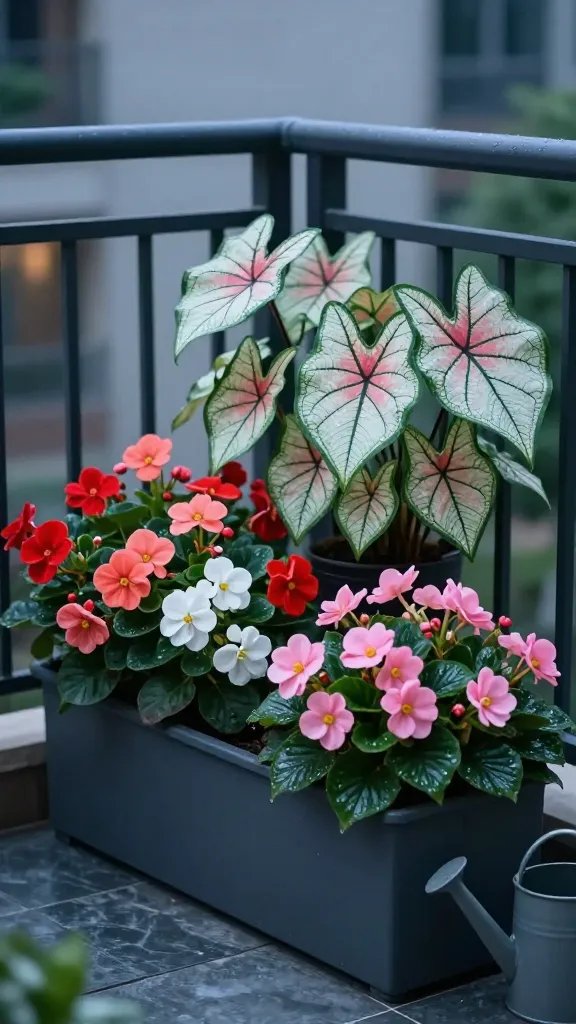
You want bold color in the shade? Say no more. This trio delivers flowers, foliage, and wow-factor without sunburn.
Why It Works
- Impatiens bloom like crazy in shade—reds, pinks, whites, corals.
- Begonias (fibrous or wax types) add glossy leaves and nonstop blooms.
- Caladium brings big-leaf drama—white, pink, and red veining that glows in low light.
All three enjoy consistent moisture and protection from harsh rays. North-facing spots keep their foliage crisp and colors saturated.
Planting Formula
- Use impatiens as the filler for a carpet of blooms.
- Pop a begonia or two as accent mounds.
- Center a caladium as the thriller for height and contrast.
Water regularly and avoid soggy soil—add perlite for drainage. Pinch dead flowers on impatiens to keep the party going. This combo shines from late spring to fall and works fabulously in window boxes or railing planters. Seriously, your neighbors will stare.
4. The Edible Shade Nook: Mint, Chives, and Woodland Strawberries
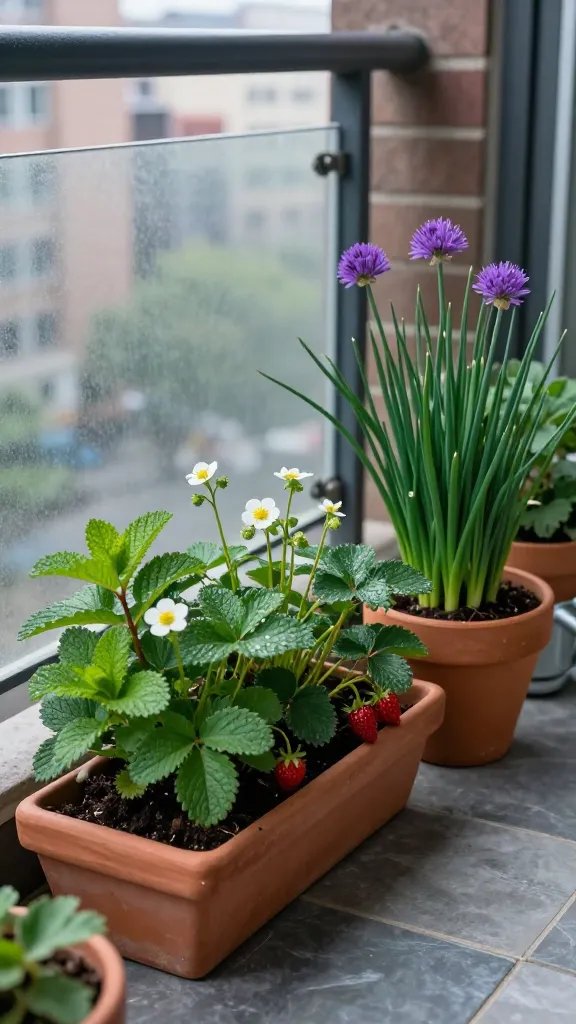
Edibles on a north balcony? Absolutely. Some culinary herbs and fruit actually prefer cool shade, and they look adorable while earning their keep.
Why It Works
- Mint thrives in partial to full shade and delivers constant leaves for tea and cocktails.
- Chives handle low light, add grassy texture, and produce edible purple pom-pom flowers.
- Woodland Strawberries (Fragaria vesca) tolerate shade and reward you with tiny, intensely sweet berries.
These plants enjoy evenly moist soil and similar watering rhythms. They don’t need blazing sun to taste good, which makes them perfect for shaded balconies.
Setup Tips
- Grow mint in its own pot or use a root barrier—mint spreads like gossip.
- Use a rich potting mix and feed lightly every 4–6 weeks in the growing season.
- Harvest often to keep growth fresh and compact.
Use this combo if you want practical, beautiful plants that end up in your kitchen. Bonus: chive flowers attract pollinators, and strawberries trail charmingly over edges. Trust me, this is low-effort happiness.
5. The Ever-Pretty Evergreen Mix: Boxwood, Japanese Forest Grass, and Creeping Jenny
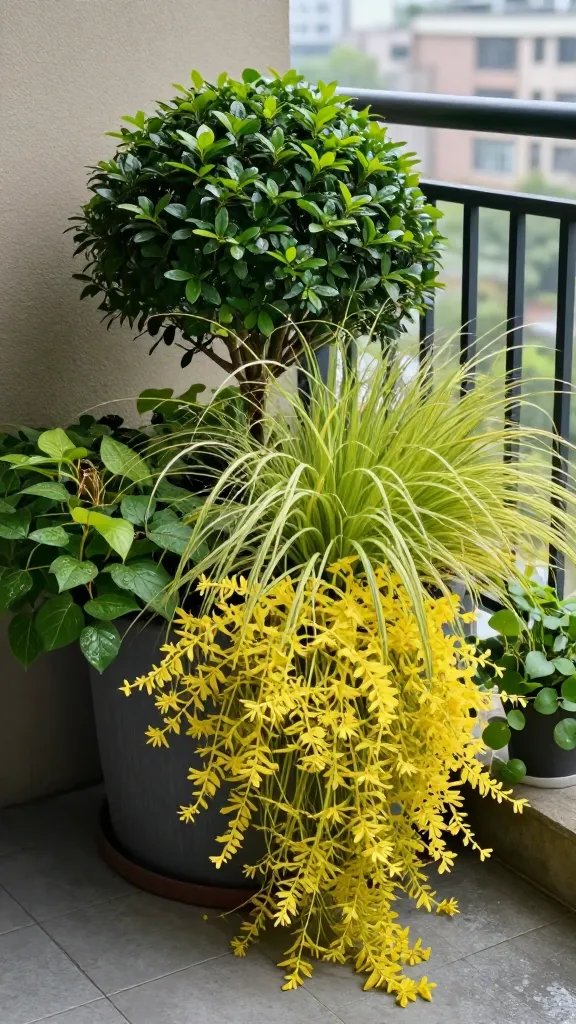
Want year-round structure with soft movement? This combo marries tidy form with flowing edges—great for small spaces that need a “finished” look in every season.
Why It Works
- Boxwood or dwarf euonymus provides evergreen structure and a sculpted anchor.
- Japanese Forest Grass (Hakonechloa) adds graceful, arching blades that shimmer in shade.
- Creeping Jenny (Lysimachia nummularia ‘Aurea’) spills bright chartreuse over edges like liquid gold.
All tolerate shade, especially in cooler climates. The textural contrast makes your balcony look thoughtfully designed with minimal effort.
Care & Styling
- Choose a tall planter for the boxwood and layer the grass and Jenny around it.
- Keep soil moist but not wet; ensure excellent drainage to avoid root rot.
- Lightly shear boxwood once a year to keep its shape.
Perfect if you want something you’ll love in January as much as July. It pairs beautifully with modern furniture and string lights for that cozy, curated vibe.
Bonus Mini-Combos To Mix And Match (If You Want More Variety)
- Astilbe + Tiarella + Brunnera: Feathery plumes, foamy blooms, and silver heart-shaped leaves.
- Hellebores + Evergreen Ferns: Late winter flowers and year-round fronds—ultimate low-light elegance.
- Hydrangea (Macrophylla) + Carex Grass: Big blooms with fine-textured contrast in bright shade.
- Coleus (Shade Varieties) + Torenia: Electric foliage plus cute, snapdragon-like flowers.
- Fuchsia + Lobelia: Dangling jewels and trailing blue clouds for cool summers.
- Heucherella + Ajuga: Colorful foliage duo that knits together beautifully.
Mix one or two of these with the main sets above if you’ve got extra railing boxes or corner pots begging for attention.
General Care Cheatsheet For North-Facing Balconies
- Containers: Use bigger pots than you think. More soil means steadier moisture.
- Potting Mix: High-quality, peat-free mix with compost and perlite. Add bark fines for structure.
- Watering: Aim for “evenly moist.” Stick a finger in—if the top inch is dry, water.
- Feeding: Slow-release fertilizer in spring; supplement with diluted liquid feed mid-season.
- Light Reality Check: North-facing still gets ambient brightness. If it’s super dark, choose the toughest shade lovers (ferns, heuchera, hosta).
- Wind: Tall buildings make sneaky drafts. Group pots together to create a microclimate.
- Pests: Watch for slugs on hostas and aphids on tender shoots. A quick rinse or neem usually sorts it.
You don’t need sun-drenched real estate to grow a killer balcony garden. With these shade-savvy combos, you’ll get color, scent, and texture that thrive in cool, calm corners. Start with one container, then build your little forest—your morning coffee spot just got an upgrade.