
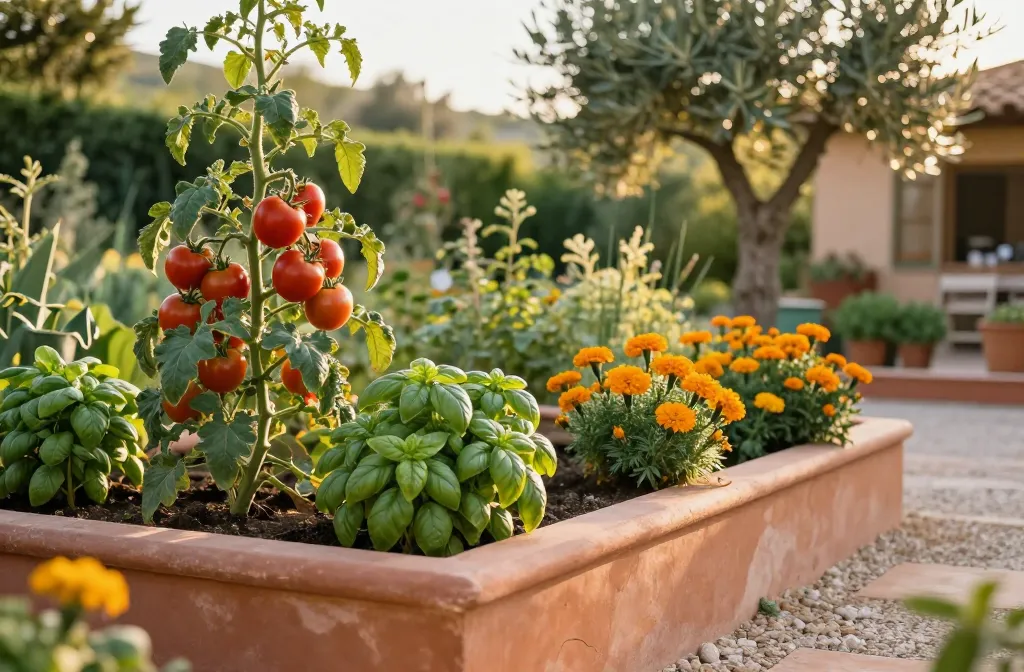
Ready to make your garden feel like a long weekend on a Greek island? Mediterranean companion planting turns blazing sun and lean soil into flavor, flowers, and fewer pests. These pairings aren’t just pretty—they boost growth, cut disease, and save you watering time. Grab your sunhat and let’s stack plants like a chef stacks tapas.
1. Tomatoes, Basil, And Marigolds: The Classic Sun-Triad That Never Quits
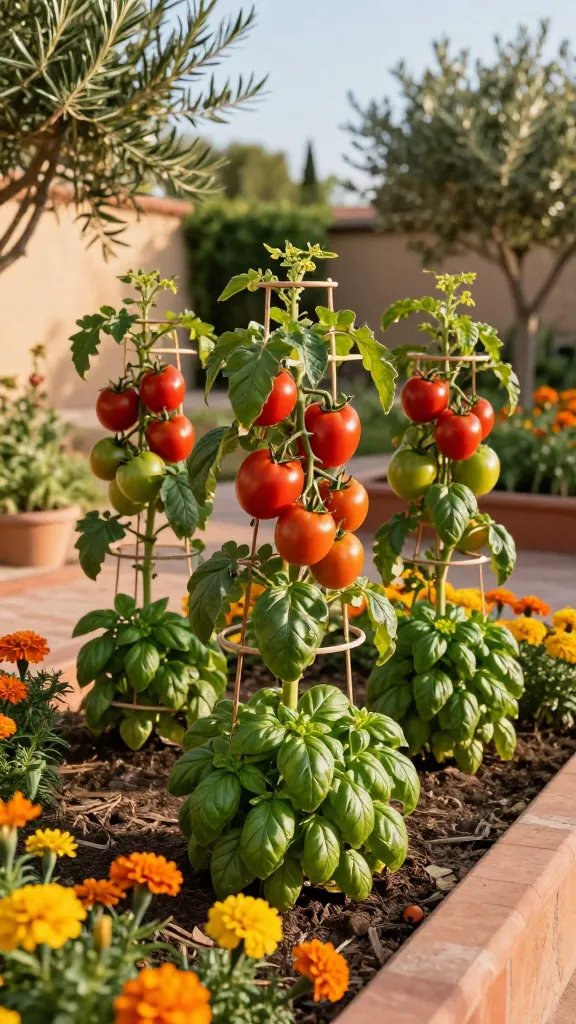
This trio is the backyard equivalent of a perfect summer playlist. Tomatoes love heat and airflow, basil intensifies flavor and attracts pollinators, and marigolds help deter nematodes and aphids. Plant them together and you’ll score juicy fruit, fewer pests, and a garden that smells like pizza night.
How To Plant It
- Give tomatoes sturdy support (cage or trellis) and 18–24 inches of space.
- Tuck basil at the tomato’s drip line—about 10–12 inches away.
- Dot marigolds around the bed edges to create a pest-deterring border.
Prune lower tomato leaves for airflow. Harvest basil often to keep it bushy and stop it from overshadowing seedlings.
Why It Works
- Basil may help repel thrips and hornworms while drawing pollinators.
- Marigolds exude compounds that deter some soil pests and distract aphids.
- Together they create a living mulch that shades soil and reduces evaporation.
Use this combo for summer-long sauce and caprese dreams. FYI: choose French or signet marigolds for a longer bloom show.
2. Eggplant, Thyme, And Oregano: Heat-Loving Flavor Squad
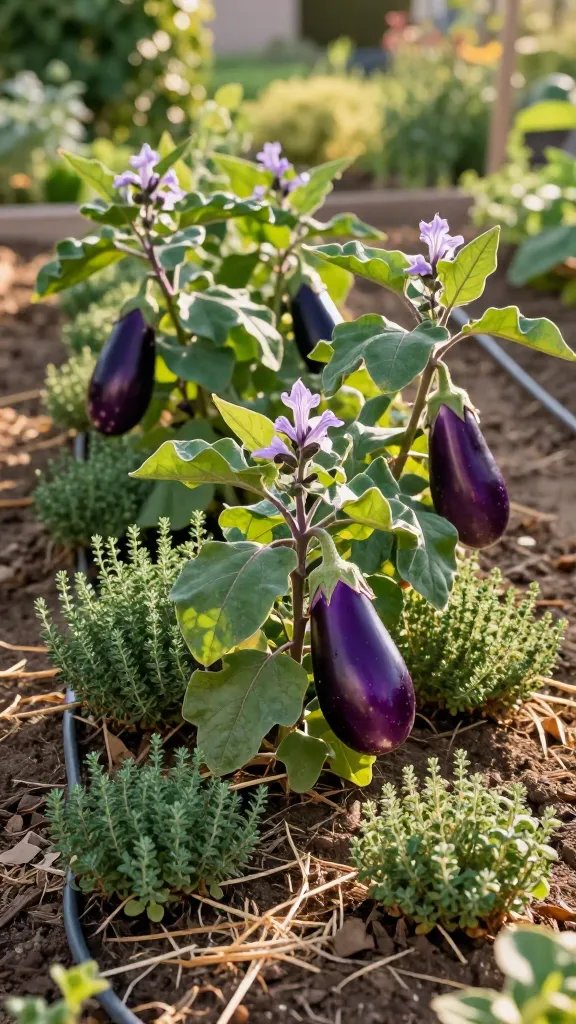
When the sun’s relentless, eggplants thrive. Pair them with low, woody herbs like thyme and oregano and you get fewer flea beetles and a fragrant underplanting that keeps soil cool. It’s tidy, tough, and wildly productive.
Planting Layout
- Space eggplants 18–24 inches apart in a grid or single row.
- Carpet the soil with thyme between plants; tuck oregano at corners.
- Mulch lightly with shredded leaves or straw to hold moisture.
Eggplants want consistently warm soil and regular moisture. The herbs help by acting like a living mulch without hogging nutrients.
Pro Tips
- Use floating row cover early to keep flea beetles off young plants.
- Pinch oregano to prevent a takeover and to keep flavors concentrated.
- Choose compact eggplant varieties (like ‘Little Fingers’ or ‘Fairy Tale’) if space is tight.
When to use it? Hot patios, raised beds, and water-wise gardens where you still want lush yields and zero fuss.
3. Peppers, Onions, And Basil (With Nasturtiums As Decoy): Spice, Scent, And Smart Defense
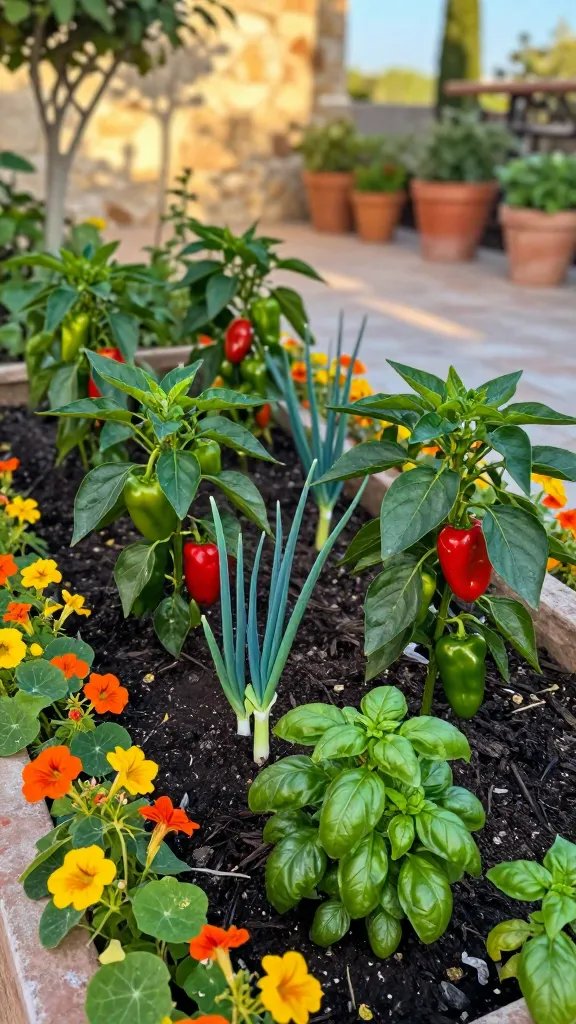
Peppers shine in blazing sun and warm nights. Add onions for root-level pest discouragement and basil for pollinator magnetism. Then toss in nasturtiums as an aphid trap crop—seriously, they’ll eat the damage so your peppers don’t have to.
Layout That Works
- Row of peppers (18 inches apart), stagger onions between or just in front.
- Basil every 2–3 pepper plants for airflow and easy harvesting.
- Nasturtiums along the outside edge to lure pests and drape beautifully.
Water deeply but infrequently to push roots down. Keep foliage dry in the evening to avoid fungal drama.
Quick Wins
- Onions help confuse pests with their strong scent.
- Nasturtiums attract aphids away from pepper tips and bring in hoverflies.
- Basil enhances pepper flavor (IMO) and keeps beds buzzing with bees.
Use this combo when you want color, fragrance, and a steady stream of peppers for grilling and salsa nights.
4. Zucchini, Calendula, And Borage: Sun-Drenched Pollinator Party
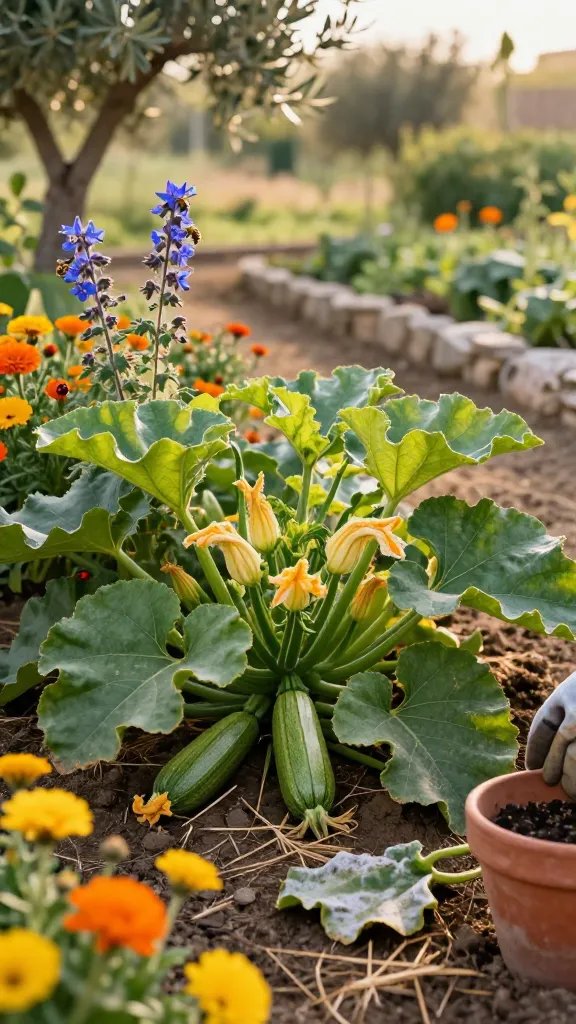
Big leaves, big flowers, big harvests—zucchini brings the drama. Pair it with calendula for mild pest management and borage to skyrocket pollination. You’ll get fuller fruit set and fewer sad, misshapen squash.
Planting Blueprint
- Give each zucchini 3–4 feet of elbow room (yes, really).
- Plant calendula in pockets around the mound to attract beneficials.
- Sow borage a foot or two away; it grows tall and brings bees like crazy.
Train leaves gently to keep pathways clear. Remove the odd mildewed leaf to maintain airflow once the season heats up.
Why Gardeners Swear By It
- Borage draws pollinators, which boosts female flower fertilization.
- Calendula attracts lacewings and lady beetles—aka your tiny security guards.
- Extra blossoms = edible petals for salads and pretty garnishes.
Use this when you want high-octane yields and a riot of color that still feels Mediterranean and drought-resilient.
5. Olives Or Figs With Rosemary, Lavender, And Sage: Dry Garden Chic That Actually Works
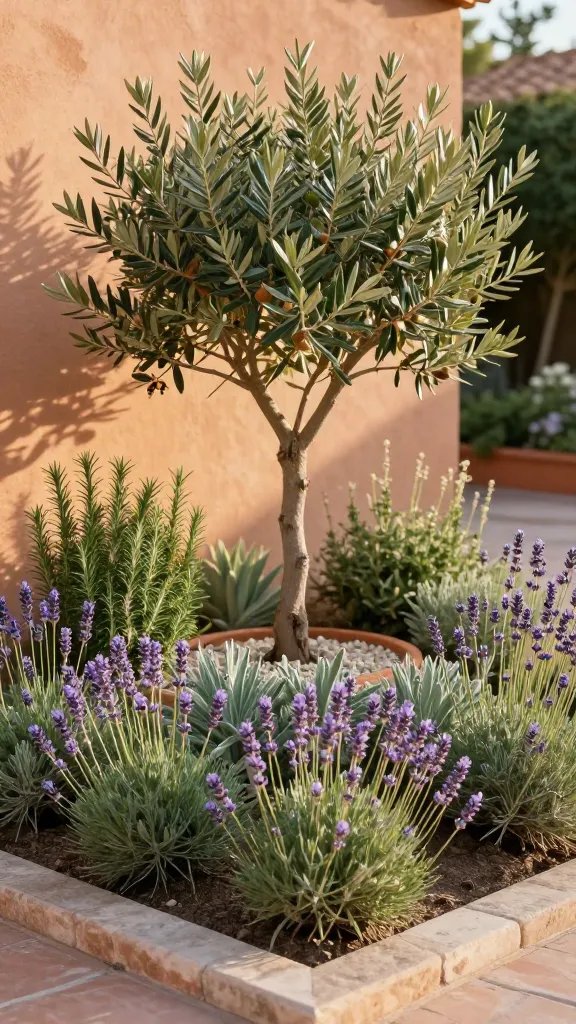
Going full Mediterranean? Plant a small olive or fig as a focal point and underplant with tough aromatics: rosemary, lavender, and sage. The result: a low-water guild that laughs at heat, perfumes the air, and supports beneficial insects.
Design And Spacing
- Choose a compact olive (like ‘Arbequina’) or fig (like ‘Petite Negra’) for small spaces.
- Ring the base with lavender (front), sage (mid), and rosemary (back or sides).
- Keep the tree’s root flare clear and mulch lightly with gravel for a true Mediterranean vibe.
These herbs prefer lean, well-drained soil. Overfertilizing makes them floppy and less fragrant—don’t do it.
Benefits You’ll Notice
- Lavender lures pollinators; rosemary and sage deter some pests with intense oils.
- Evergreen structure looks good year-round and reduces weeding.
- Edible leaves and fruit with basically vacation-level maintenance—trust me, you’ll feel smug about this one.
Use this combo where you want architectural beauty, fragrance, and reliable drought tolerance without babysitting.
Ready to try a few? Start with one bed, watch the pollinators move in, then scale up once you see the magic. Companion planting isn’t woo—it’s smart design that lets the sun work for you. Go plant it and send pics when your basil tries to photobomb your tomatoes, seriously.