
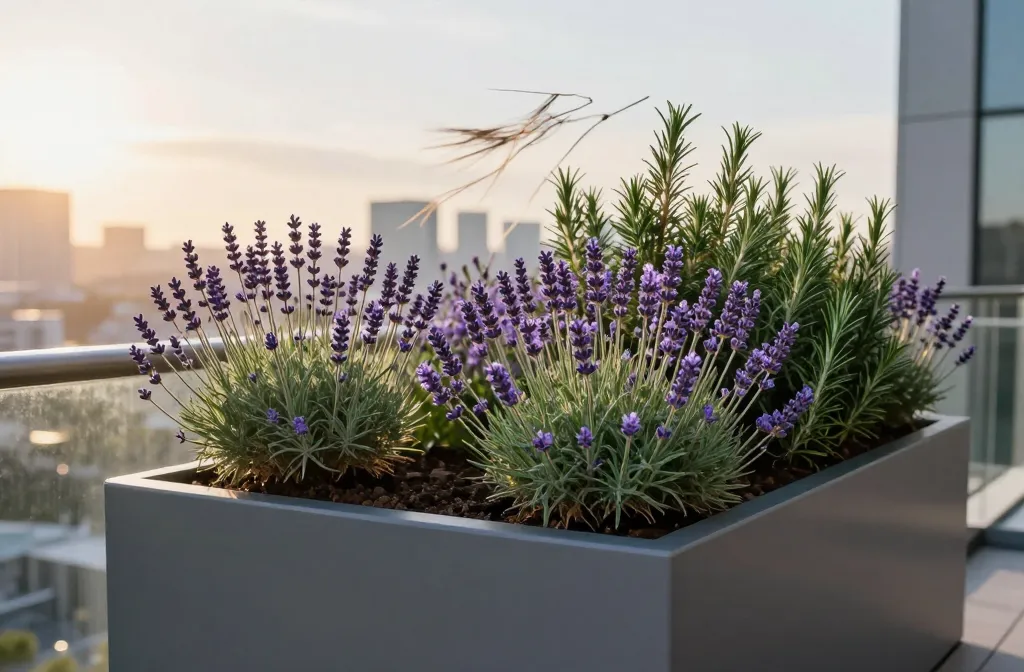
Windy balcony? Tiny footprint? Zero problem. These plant pairings handle gusts, glare, and height like they trained for a marathon. You’ll get color, fragrance, pollinators, and herbs without babying anything. Ready to turn your sky perch into a vibe? Let’s build combos that thrive where most plants nope out.
1. Salt-And-Pepper Survivors: Lavender + Rosemary
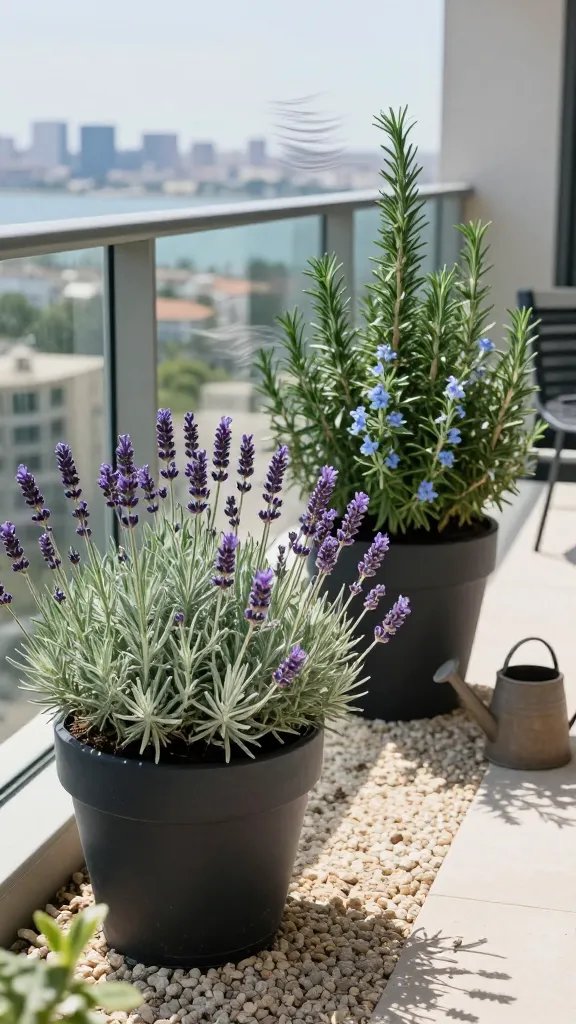
These two Mediterranean icons laugh at wind and forget about drought like it never happened. They love bright light, drain fast, and bring that “did someone just cook?” aroma even when you didn’t. As structural evergreens, they hold your balcony’s bones year-round.
Why This Combo Works
- Shared origins: Both evolved in sunny, windy cliffs. Your balcony feels like home.
- Similar needs: Full sun, lean soil, light pruning. Easy mode.
- Form contrast: Lavender’s soft mounds pair with rosemary’s upright sprigs for texture.
Plant them in a rectangular trough with at least 12 inches of depth. Use a gritty mix: potting soil cut with coarse sand or perlite 1:1. Elevate the container feet for drainage and airflow.
Tips
- Choose Lavandula angustifolia or ‘Hidcote’ for compact shape, and upright rosemary (not creeping) for structure.
- Water deeply, then let the top 2 inches dry. Overwatering kills, wind doesn’t.
- Snip sprigs regularly to keep them bushy and yield kitchen herbs.
Bonus: Pollinators still find you on the 20th floor. Also, your neighbors will smell the good life and wonder how you got so fancy.
2. Tropical Tough-Love: Cordyline + Lantana
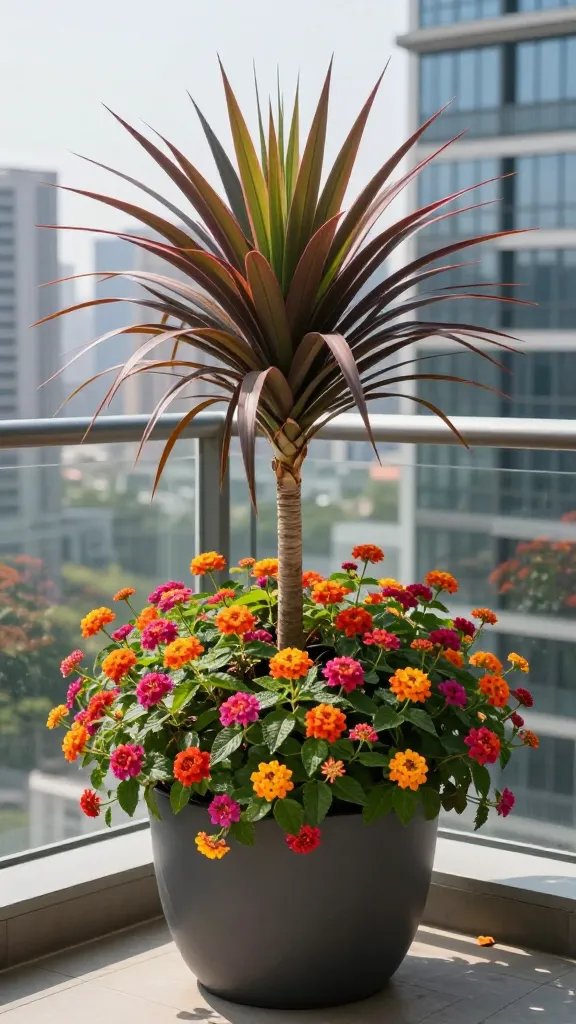
Want color that doesn’t quit and doesn’t panic when the wind howls? Cordyline brings dramatic spiky leaves that stay bold in gusts. Lantana drapes neon pom-poms all summer with zero fuss, even when you “forget” to water (FYI: don’t forget too long).
Why This Combo Works
- Form + floof: Cordyline’s spires anchor the pot; lantana billows around the base.
- Wind tolerance: Flexible leaves and woody stems resist shredding.
- Heat lovers: They revel in reflected heat from glass and concrete.
Use a 14–18 inch wide pot with a heavy base to prevent tipping. Aim for 6–8 hours of sun. Mix slow-release fertilizer into the planting medium at the start of the season.
Color Pairing Ideas
- ‘Red Star’ cordyline + orange/yellow lantana for a warm, sunset palette
- Green cordyline + pink/purple lantana for playful contrast
Deadhead lantana lightly if you want more flowers, but you can’t really mess this up. Use this combo if you host friends after work and want instant “whoa” without constant maintenance.
3. The Bee Balcony: Sedum ‘Autumn Joy’ + Russian Sage (Perovskia)
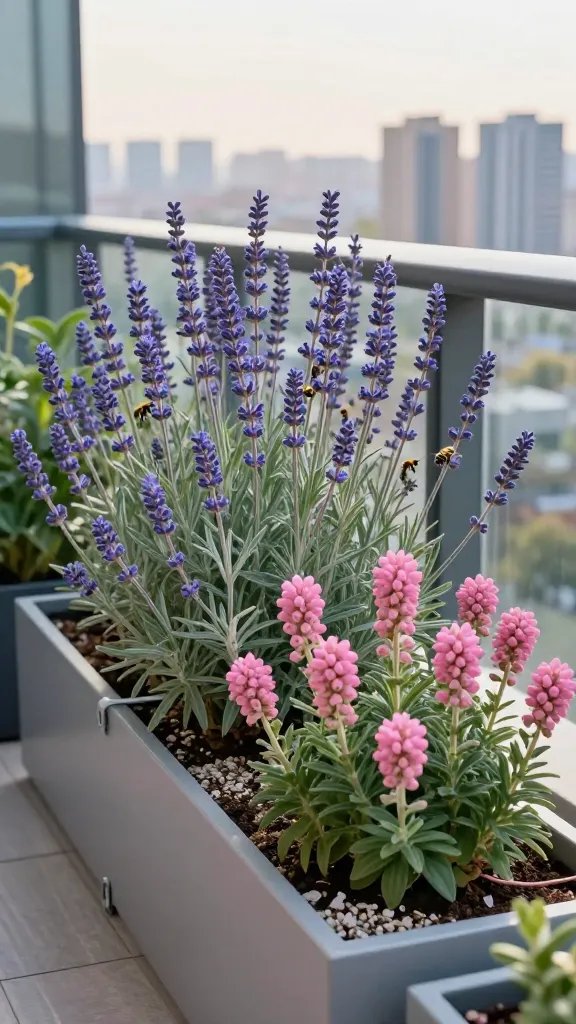
Lightweight, drought-loving, and insanely windproof, this duo turns your balcony into a late-summer pollinator buffet. Sedum brings chunky succulent stems and rosy flower domes. Russian sage adds a cloud of lavender-blue haze that dances in every breeze.
Why This Combo Works
- Roots that cope: Both store water and prefer lean soil; they don’t flop after gusts.
- Height play: Russian sage gets airy and tall; sedum stays mid-height and sturdy.
- Minimal water: Perfect for high-rise aridity.
Use a long, shallow trough (10–12 inches deep) or a pair of pots, placing Russian sage at the windward edge to break gusts for the sedum. Add pea gravel mulch to reduce evaporation and keep the look sleek.
Care Cheats
- Cut Russian sage back hard in late winter to 6–8 inches. It rebounds fast.
- Leave sedum flower heads through winter for sculptural frost catching, then trim in early spring.
- Fertilizer? Minimal. Too rich and they get floppy. Resist the urge.
Use this combo if you want an urban meadow vibe with almost no upkeep. Seriously, it looks designer with a fraction of the work.
4. Edible Evergreen Edge: Bay Laurel + Thyme
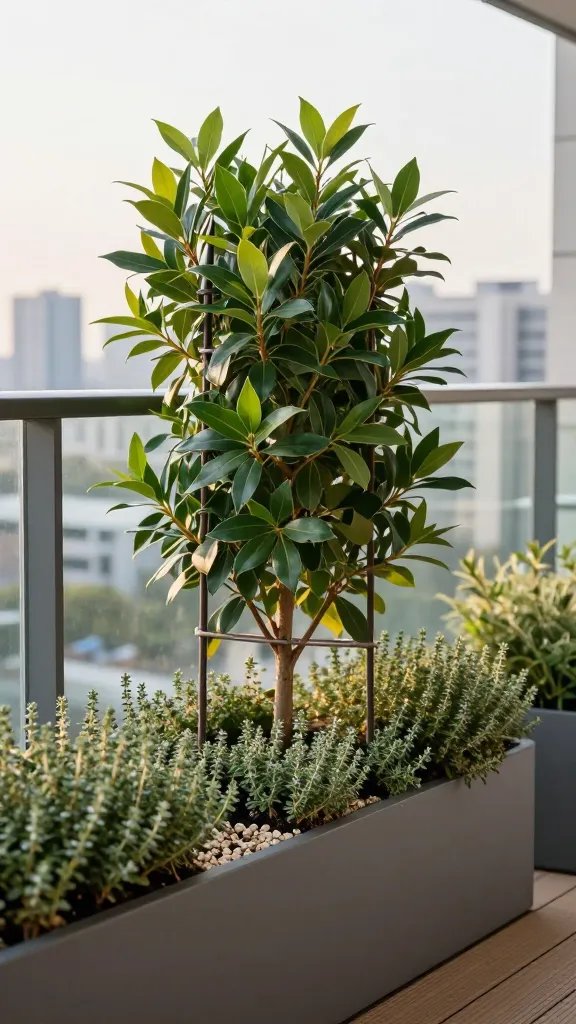
Grow a mini kitchen hedge, even 25 floors up. Bay laurel gives you a compact, glossy shrub that shrugs off wind when properly staked early. Thyme spills around the base like a fragrant carpet and tolerates almost anything you throw at it.
Why This Combo Works
- Hardy aromatics: Oils in leaves reduce water loss and discourage pests.
- Vertical + trailing: Bay creates a living screen; thyme softens edges and suppresses weeds.
- Similar soil needs: Well-draining, slightly alkaline, low to moderate water.
Plant in a 14–16 inch pot with a central bay and 3–4 thyme plants around. Add a discreet stake to support the bay’s trunk during the first windy months. Rotate the pot monthly for even growth.
Varieties That Behave
- Laurus nobilis (true bay) for classic flavor
- Thymus vulgaris (common thyme) or ‘Silver Posie’ for variegation
Snip leaves and sprigs year-round. This combo suits cooks, minimalists, and anyone who prefers evergreen structure with bonus soup magic.
5. Coastal Calm In The Clouds: New Zealand Flax (Phormium) + Sea Thrift (Armeria) + Creeping Jenny
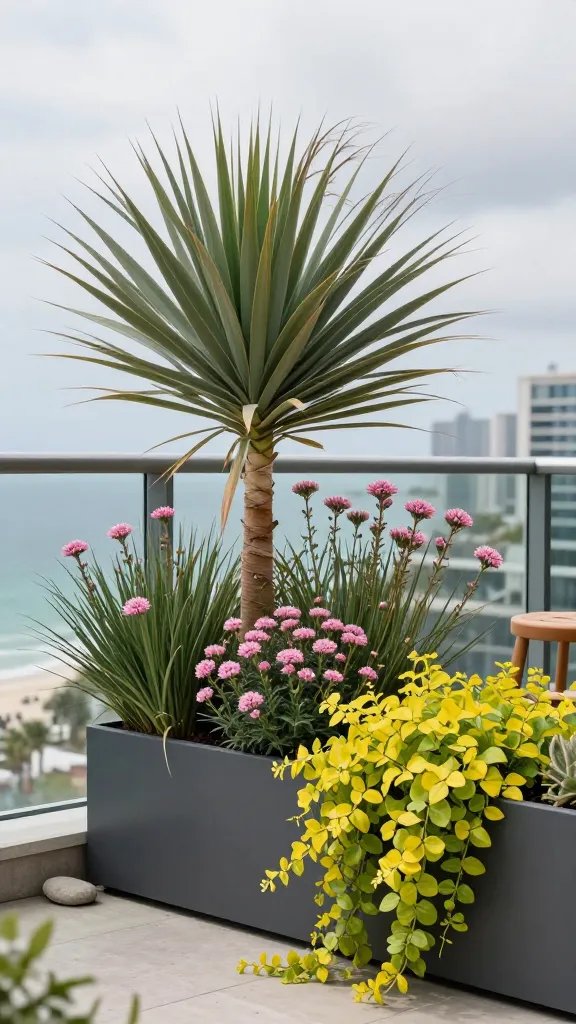
Want that windswept seaside look without, you know, living by the sea? This trio nails it. Phormium’s strappy leaves handle gusts like champs. Sea thrift pops button blooms, and creeping Jenny spills chartreuse like sunshine.
Why This Combo Works
- Wind-adapted forms: Narrow, flexible leaves resist tearing; low rosettes hug the soil.
- All-weather interest: Structure from Phormium, spring blooms from thrift, year-round glow from creeping Jenny.
- Balanced moisture: Phormium likes steady moisture; thrift likes it lean; creeping Jenny bridges the gap when you water thoughtfully.
Use a wide, low bowl (at least 16 inches) to stabilize the tall leaves. Place Phormium off-center as the “sail,” sea thrift in clusters toward the front, and creeping Jenny along the rim to cascade. Top-dress with small pebbles to hold soil in wind.
Care + Placement
- Morning sun with afternoon bright shade works best on blazing balconies.
- Water when the top inch dries; don’t let it stay soggy.
- Trim creeping Jenny lightly to prevent takeover and keep the silhouette crisp.
Use this trio if you want movement, color, and a grounded, coastal feel. It makes a small balcony read bigger and calmer—like a tiny zen park in the sky.
Extras That Make Any High-Rise Combo Work
- Weight & stability: Choose ceramic, fiberglass with weighted bottoms, or add bricks inside to defeat wind gusts.
- Wind baffles: A perforated screen or mesh reduces turbulence without blocking light.
- Soil science: Always use a well-draining mix. Add 30–50% perlite, pumice, or coarse sand for drought-tolerant combos.
- Watering routine: Deep, infrequent water builds resilient roots. Morning watering reduces stress.
- Feeding: Slow-release pellets in spring; supplement with a mild liquid feed monthly in peak growth if foliage fades.
- Sun mapping: Track your balcony’s sun for a week. West-facing? Prioritize heat lovers. North-facing? Pick the toughest shade-tolerant versions of the above.
- Safety check: Secure pots, avoid heavy items on flimsy railings, and never let loose gravel sit where it can blow off.
That’s your playbook. Pick a combo, grab a sturdy pot, and start small. IMO, the hardest part is choosing which vibe you want first. Once your balcony starts thriving, trust me, you’ll invent reasons to “step outside” every hour—just to admire your sky garden.