
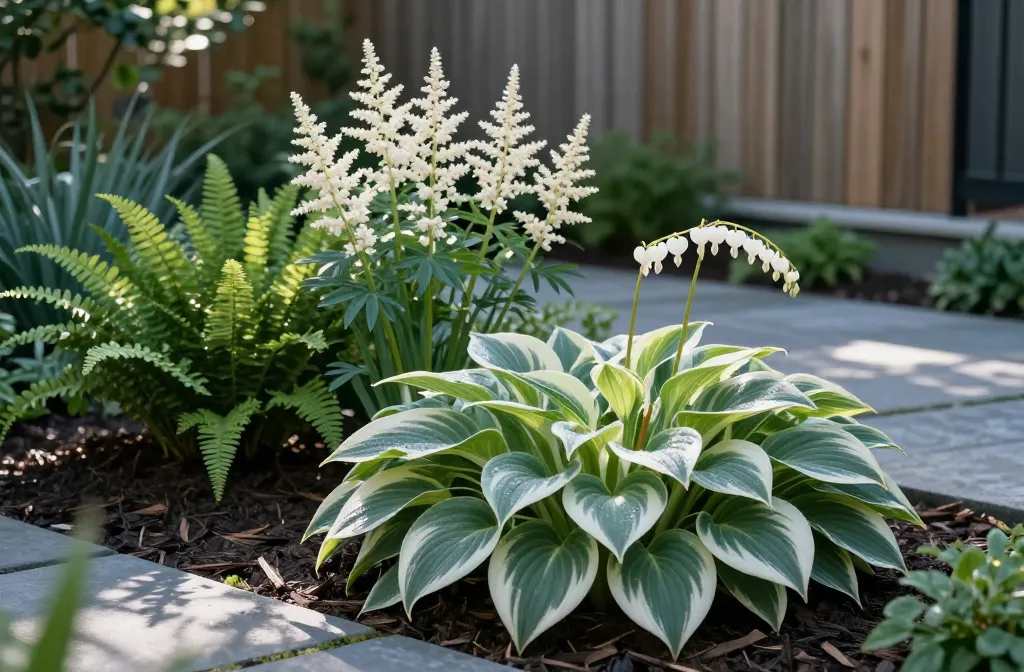
Want a garden that looks designer and basically runs itself? Pairing green and white plants can deliver crisp contrast, fewer pests, and fewer headaches. These combos look chic, thrive together, and make your neighbors suspicious of how you suddenly got this good. Ready to steal 12 stunning pairings wrapped into five foolproof garden plans?
1. The Shade-Lover’s Glow-Up
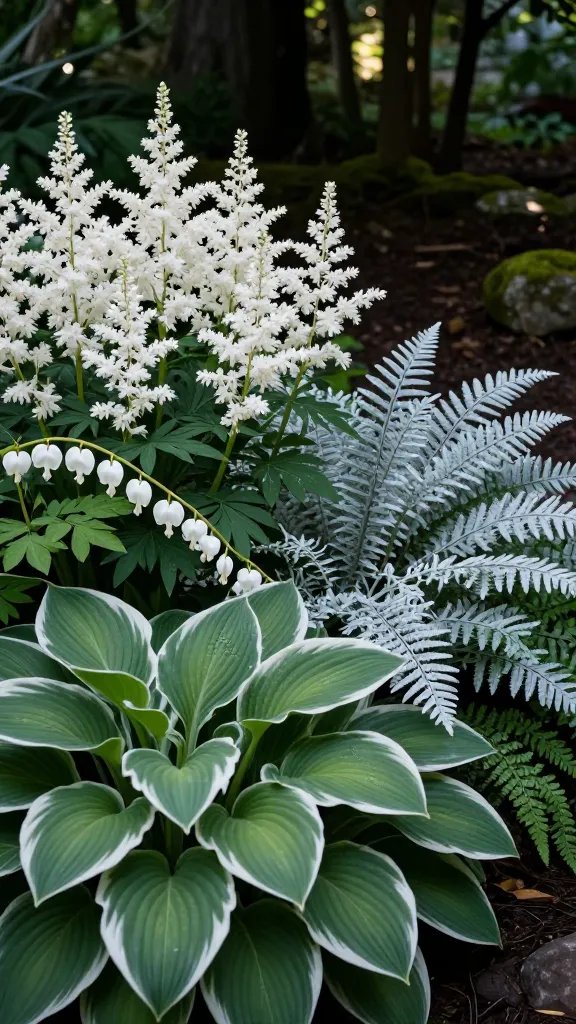
Shade doesn’t mean boring. This combo turns dim corners into luminous vignettes with bold foliage and pops of pure white. You’ll score drama, texture, and reliable blooms even where the sun plays hard to get.
Combinations Inside This Look:
- Hosta ‘Patriot’ + White Astilbe — Variegated hosta edges glow; feathery white astilbe plumes float above.
- Japanese Painted Fern + White Bleeding Heart — Silvery fronds meet nodding heart-shaped blooms. It’s moody-romantic, in a good way.
Why It Works
- Light: Dappled shade keeps foliage crisp and prevents burn.
- Moisture: Astilbe and bleeding heart thrive in evenly moist soil that hostas also love.
- Texture Play: Big leaves + airy flowers = high-contrast elegance.
Tips
- Layer the tallest plants in back. Let astilbe plumes peek over hosta domes.
- Add a thin mulch layer to lock in moisture and keep leaves mud-free.
- Clip spent astilbe blooms to extend the clean, white look.
Use this where grass refuses to grow. You’ll get four-season structure and spring-to-summer bloom waves without chasing the sun.
2. Pollinator Chic (Without The Chaos)
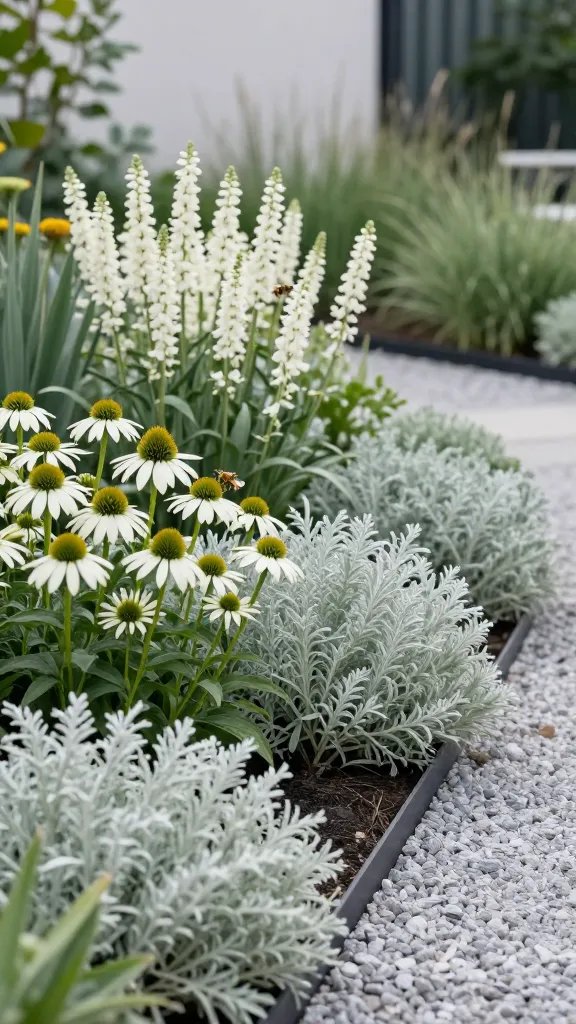
Who said pollinator gardens can’t look curated? These green-and-white pairings feed bees and butterflies while keeping a sleek palette. The result: movement, scent, and nectar, all dressed like a capsule wardrobe.
Combinations Inside This Look:
- White Coneflower (Echinacea) + Lamb’s Ear — Upright daisies with fuzzy, silver-green leaves. Bees go wild; you get minimalist drama.
- White Salvia ‘Snowhill’ + Artemisia ‘Silver Mound’ — Spires of white with cloud-like foliage that never looks messy.
Why It Works
- Bloom Staging: Coneflower hits mid-summer; salvia often reblooms if deadheaded.
- Drought-Friendly: These thrive in well-drained soil and full sun.
- Contrast: Vertical blooms + cushiony mounds keep the eye moving.
Tips
- Deadhead salvia for bonus blooms. Seriously, it’s worth the 3-minute snip.
- Divide lamb’s ear and Artemisia every couple years to refresh the fluff.
- Keep spacing generous to avoid mildew in humid climates.
Perfect for sunny borders and pollinator strips along driveways. FYI, the restrained palette makes everything look intentional, not wild.
3. Crisp Edibles That Actually Belong In Your Front Yard
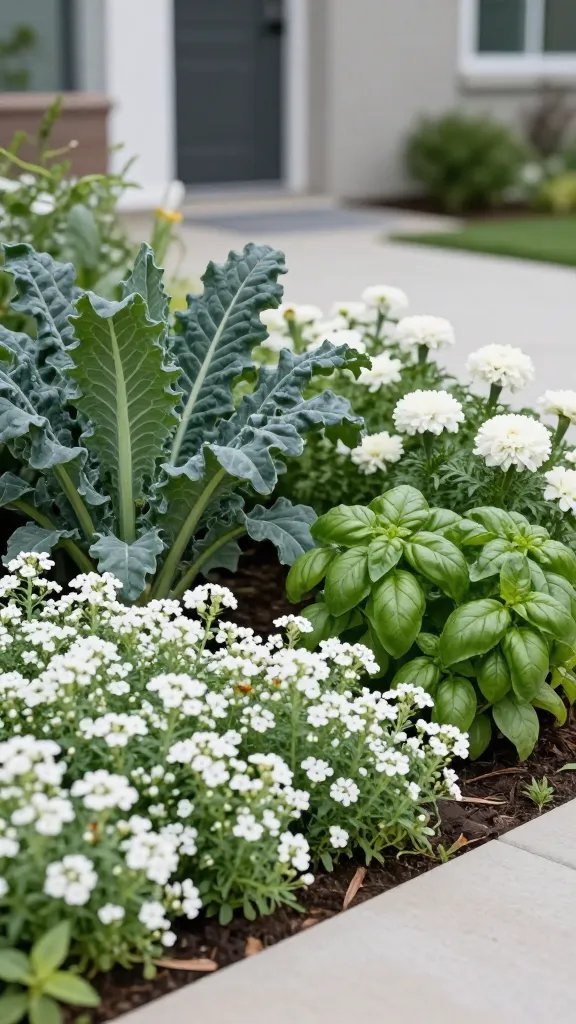
Edible beds can look refined when you skip the rainbow and lean into green and white. These combos taste great and look even better, so your “vegetable patch” becomes a showpiece instead of an eyesore.
Combinations Inside This Look:
- Dinosaur Kale + White Alyssum — Tall, slate-green leaves with a skirt of honey-scented white flowers that attract beneficials.
- Basil (Greek or Genovese) + White Marigold ‘Snowball’ — Tight green mounds with clean white marigolds to deter pests and boost cheer.
Why It Works
- Companion Perks: Alyssum attracts hoverflies that prey on aphids near kale.
- Pest Management: Marigolds can help distract or deter unwanted critters around basil.
- Form + Function: Edibles gain a “border plant” vibe that reads high-end.
Tips
- Succession sow alyssum to keep the white edging consistent all season.
- Pinch basil for bushier growth and more harvests.
- Give kale consistent water so leaves stay tender and camera-ready.
Ideal for raised beds or along front paths. You’ll snack while you stroll and your garden will look restaurant-plated all season.
4. Coastal-Cool Containers And Patios
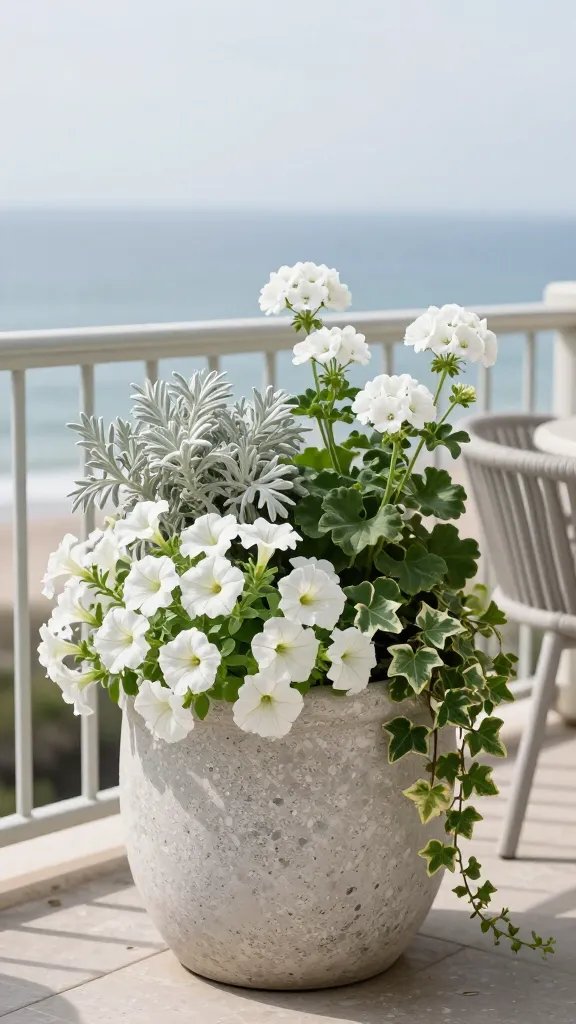
Containers let you curate mini ecosystems that travel with the sun and the party. These green-and-white mixes bring airy, beachy energy to balconies, stoops, and patios without demanding constant babysitting.
Combinations Inside This Look:
- White Petunia + Variegated Ivy — Cascading white blooms with trailing green-and-cream vines. Classic, easy, photogenic.
- Dusty Miller + White Geranium — Silvery foliage plus punchy white clusters for a crisp, modern container.
Why It Works
- Spiller-Thriller-Filler: Petunias spill, geraniums thrill, ivy/dusty miller fill the gaps with style.
- Sun Lovers: All four enjoy bright light and good drainage.
- Low-Maintenance: A weekly deadhead and they keep giving.
Tips
- Use high-quality potting mix and a slow-release fertilizer. Your blooms need snacks too.
- Water deeply, then let the top inch dry. No soggy drama.
- Rotate pots every week for even growth and fewer leggy stems.
Deploy these on steps, patios, or as table centerpieces. They read coastal-cool without needing an ocean view, IMO.
5. Evergreen Structure With Seasonal Sparkle
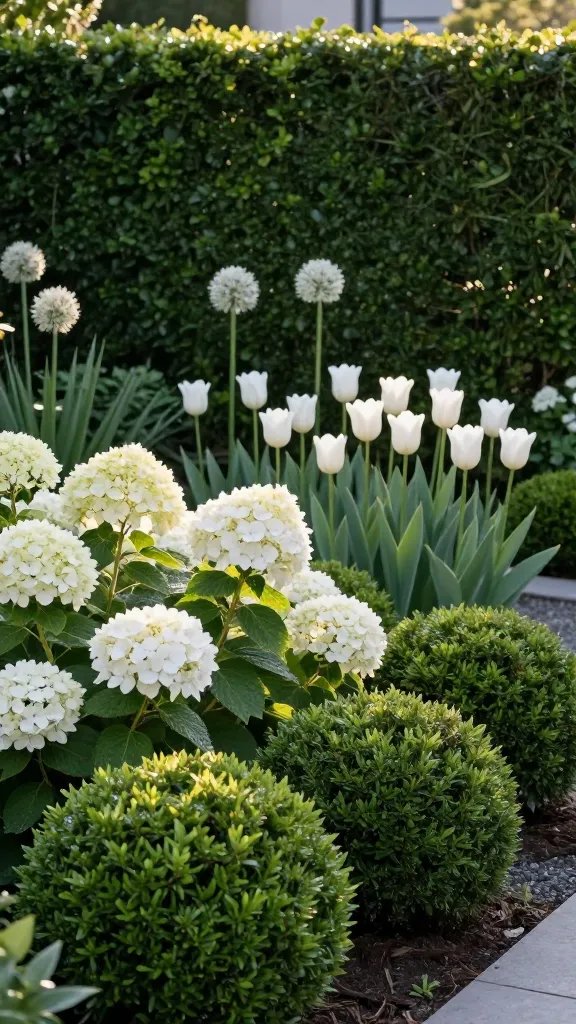
Build the bones of your garden with green architecture, then layer white accents that ebb and flow through the seasons. The effect looks curated year-round and never feels flat.
Combinations Inside This Look:
- Boxwood + White Hydrangea (‘Annabelle’ or ‘Incrediball’) — Tight evergreen spheres anchor billowy summer snowballs.
- Yew Hedge + White Tulips (Spring) + White Alliums (Late Spring) — Dark green backdrop with clean white punctuation marks.
Why It Works
- Four-Season Interest: Evergreens carry winter; hydrangeas and bulbs add seasonal drama.
- Form Contrast: Trimmed shapes vs. loose blooms feels designer without trying.
- Color Discipline: Green and white keeps it elegant even when flowers peak.
Tips
- Plant bulbs in clusters of 7–15 for impact. Singletons get lost.
- Prune boxwood lightly for health and shape—don’t over-sculpt into plant origami.
- Stake hydrangeas early if you’re in wind-prone spots; those heads get heavy.
Use this near entries and along main sightlines. It’s the “little black dress” of gardens—timeless, flattering, and always appropriate.
There you go: five flexible garden plans, twelve green-and-white pairings, and a whole lot of easy elegance. Start with one section, then mix and match as your space (and confidence) grows. Plant them this season and, trust me, you’ll wonder why you didn’t go chic monochrome sooner.