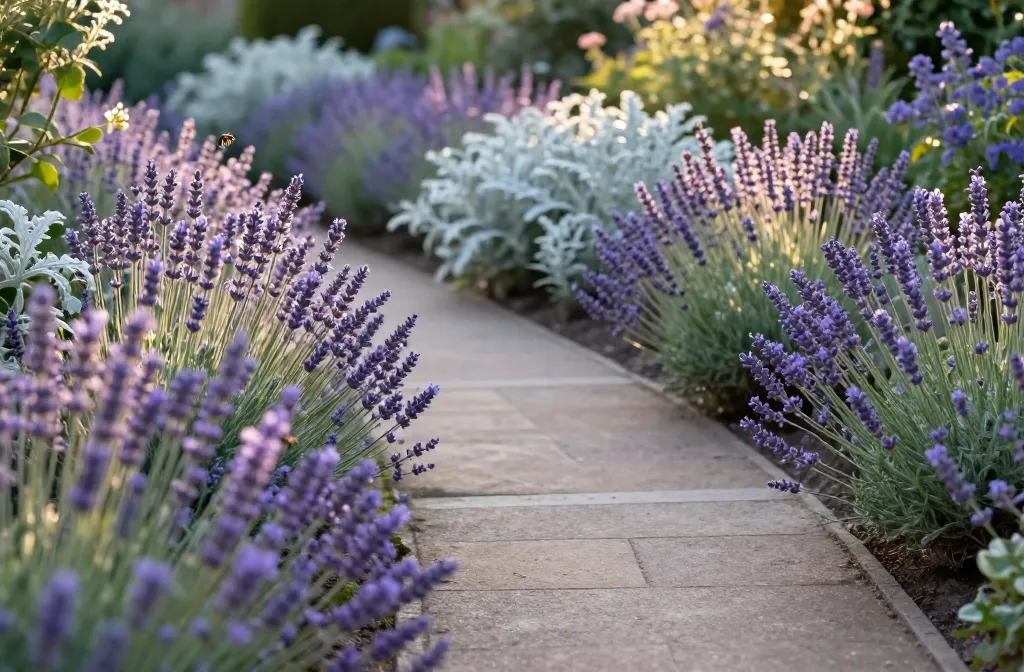
Silver foliage sets the stage, and English lavender brings the drama. Put them together and you get movement, fragrance, and that dreamy soft-focus look your neighbors will low-key copy. These 12 “waves” show exactly how to design, plant, and style English lavender so the silver tones shimmer. Ready to build a garden that hums with bees and looks good even in harsh light? Let’s roll.
1. Border Ripples Along The Walk
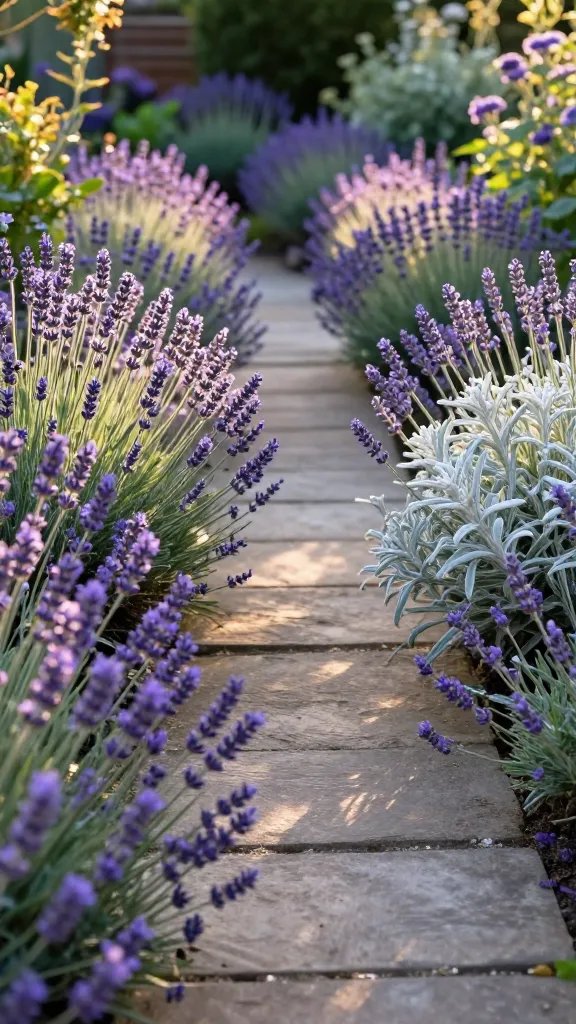
Line a path with English lavender and watch it create gentle, moving “waves” every time the breeze picks up. The cool-toned flower spikes play beautifully against silver foliage like artemisia or dusty miller, turning a simple walkway into a scene.
Why It Works
- Repetition forms rhythm and makes small spaces feel intentional.
- Contrast between lavender’s purple-blue and silver foliage looks crisp in bright sun.
- Fragrance greets guests and discourages pests.
Use this along straight or curved paths to soften edges and guide the eye. Perfect for entryways where first impressions count.
2. Drift Planting On A Slope
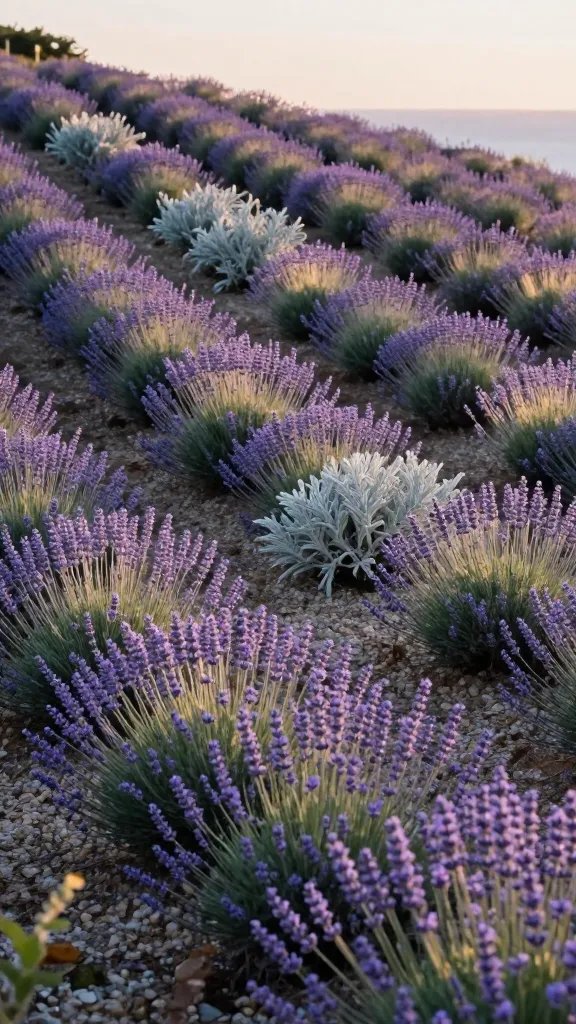
Plant lavender in long, irregular drifts across a slope for a coastal, rolling effect. Mix in silver-leaved companions like lamb’s ear and teucrium to amplify that moonlit shimmer.
Tips
- Plant in triangles, not rows, for a natural flow.
- Vary spacing slightly (16–24 inches) for depth.
- Top-dress with gravel to keep crowns dry and reflect light.
Great for erosion control with style. You’ll get layered color, movement, and less mowing (win-win).
3. Gravel Garden Waves
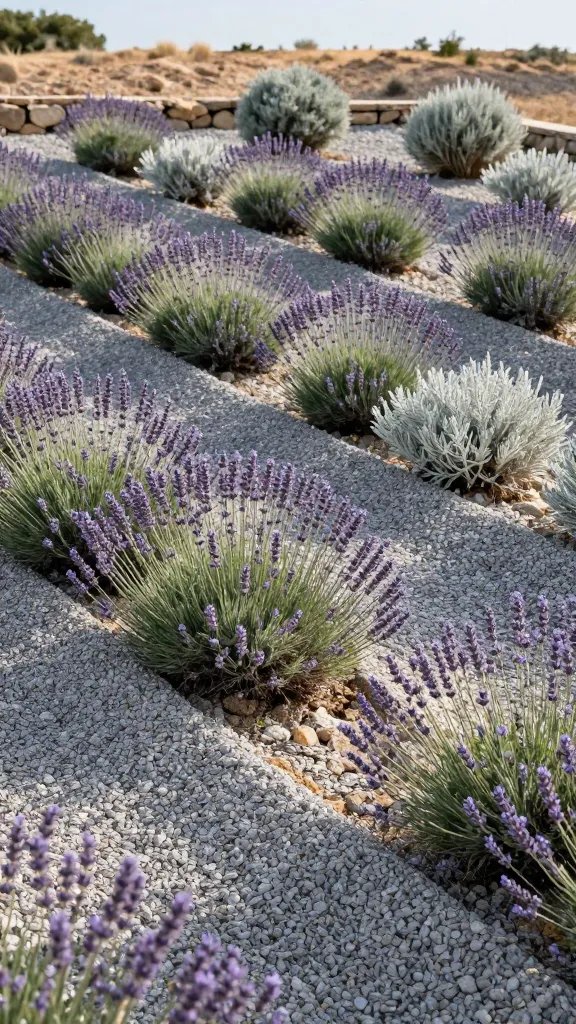
Lavender and silver foliage thrive in lean, rocky soil that most plants side-eye. A gravel garden gives you that Mediterranean vibe without the jealousy-inducing airfare.
Key Elements
- Base: 3–4 inches of washed gravel over well-drained soil.
- Plant Palette: Lavandula angustifolia, santolina, artemisia, thyme.
- Shape: Create subtle berms for shadow and visual “waves.”
Use where water is scarce and sun is generous. It’s low maintenance and high style, IMO.
4. Silver Sea Edging For Raised Beds
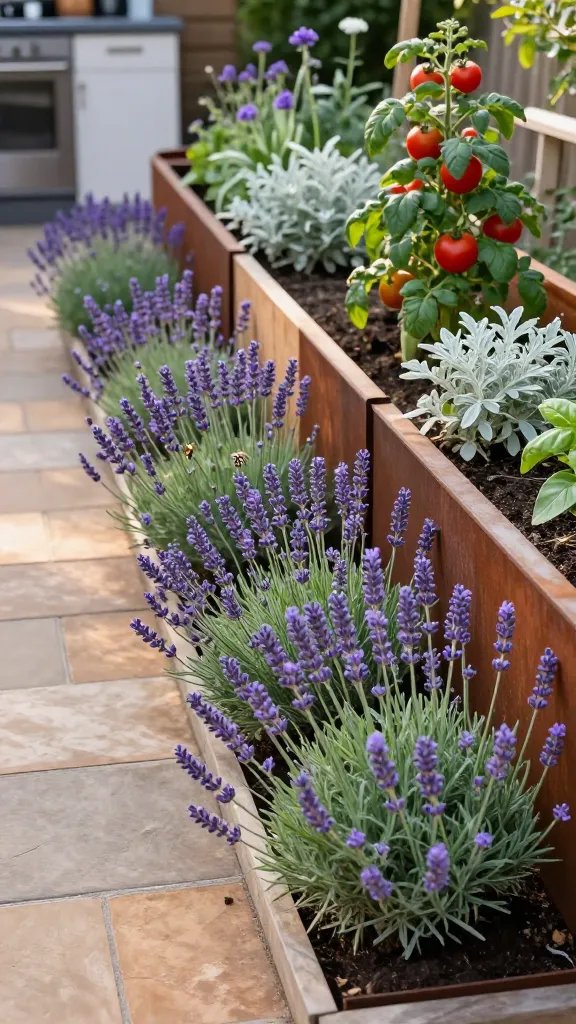
Frame raised beds with lavender and silver-leaved allies to make your veggies look like runway models. The edging contains soil visually and scents the air while you harvest tomatoes like a boss.
Materials
- Pressure-treated or steel bed walls (8–12 inches tall).
- Lavender compact cultivars (e.g., ‘Munstead’, ‘Hidcote’).
- Companions: dusty miller, snow-in-summer, helichrysum.
Ideal near kitchens and patios. You get beauty, pollinator traffic, and fewer nibbling pests around edibles.
5. Monochrome Moon Garden
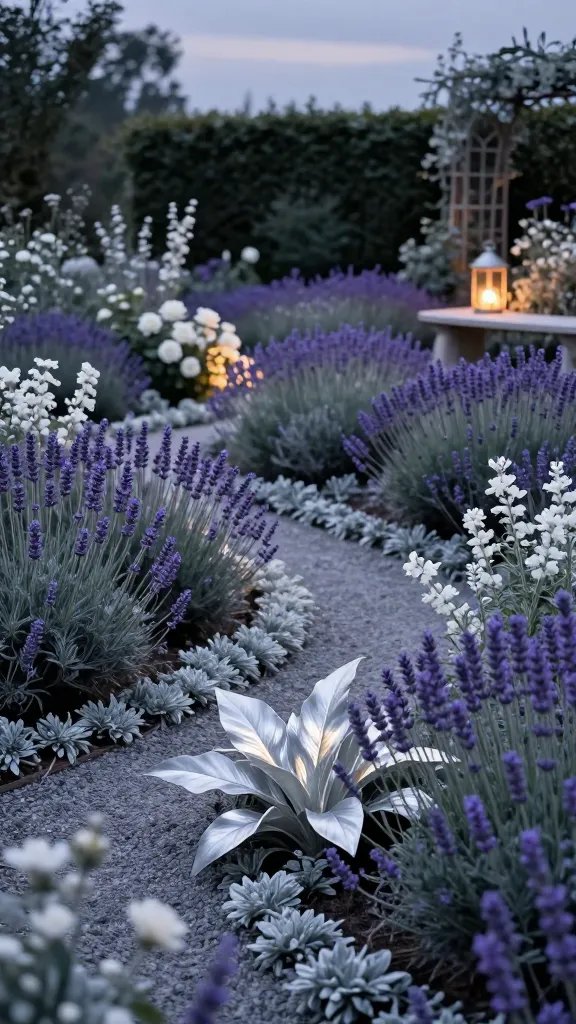
Go high-drama with a palette of purples, whites, and silvers that glows at dusk. Lavender forms the undulating structure while silver foliage bounces ambient light like a reflector.
Design Moves
- Choose lavender with cooler purple tones.
- Layer silvers: Stachys byzantina, Artemisia ‘Powis Castle’, Senecio ‘Angel Wings’.
- Add white bloomers: gaura, verbena, and white roses.
Use this where you host evenings. The result? Soft, romantic, and seriously photogenic.
6. Patio Planter Swells
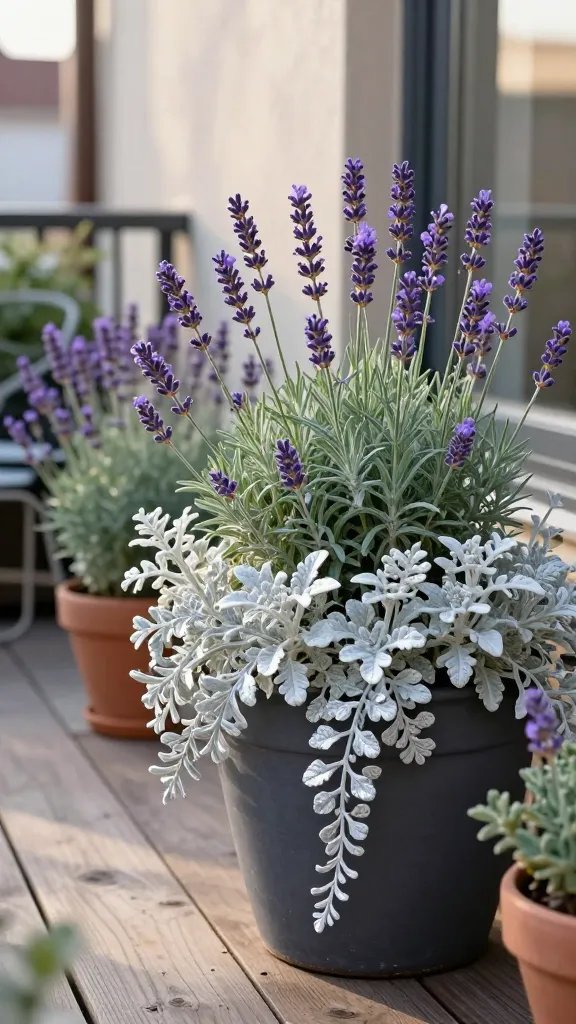
Containers let you sculpt lavender waves even on tiny patios. Pair compact English lavender with silver trailers to spill over the edge and blur hard lines.
Container Recipe
- Thriller: English lavender ‘Hidcote’ or ‘SuperBlue’ (center).
- Filler: Helichrysum ‘Icicles’ or artemisia ‘Valerie Finnis’.
- Spiller: Dichondra ‘Silver Falls’.
Perfect for renters or small spaces. Move pots to chase the sun and the compliments.
7. Ribbon Waves Across A Lawn
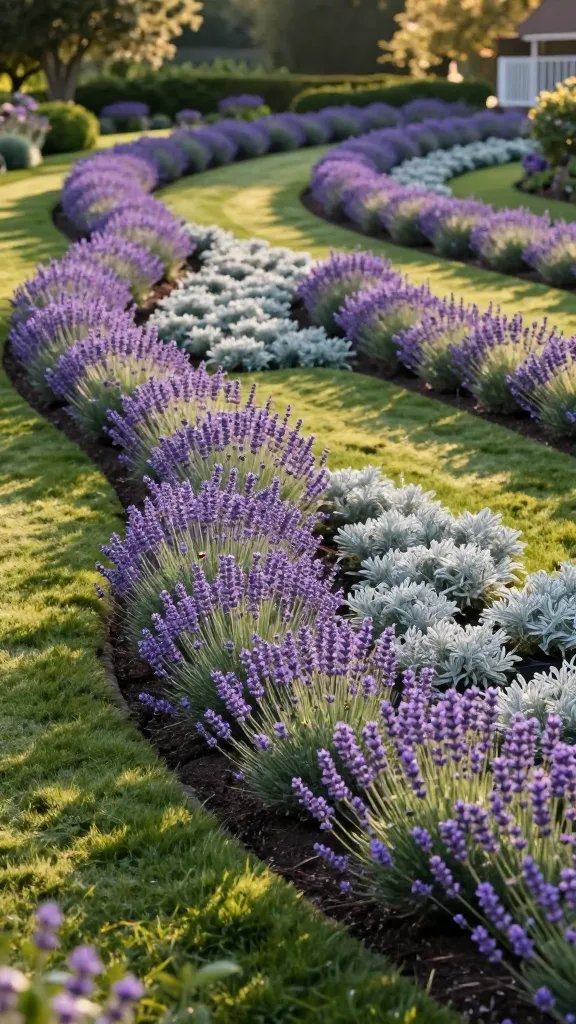
Carve sinuous beds through boring turf and fill them with lavender and silver foliage. The ribbons guide the eye and break up the monotony faster than you can say “goodbye, mower lines.”
How-To
- Mark a flowing shape with a hose, then edge cleanly.
- Plant lavender in offset rows to read as a single wave.
- Underplant with silvery thyme to knit the ground.
Great for big yards that need structure without feeling stiff. Adds movement, scent, and pollinator corridors.
8. Cottage-Core Meets Cool-Tone Contrast
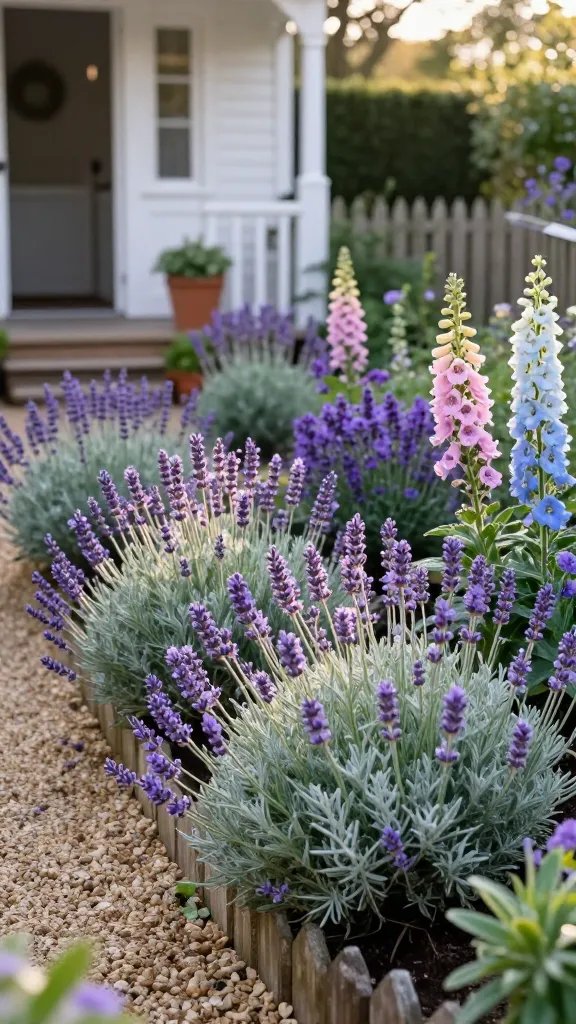
Love cottage gardens but hate visual chaos? Balance the florals with disciplined cool tones: lavender blooms plus a backbone of silver leaves keep things cohesive.
Key Pairings
- English lavender with silvery artemisia and santolina.
- Accent with pastel foxgloves, nepeta, and pale delphiniums.
- Repeat in clumps for rhythm, not randomness.
Use this near porches and entry beds where you want charm without clutter. It photographs beautifully, trust me.
9. Low Hedge, High Impact
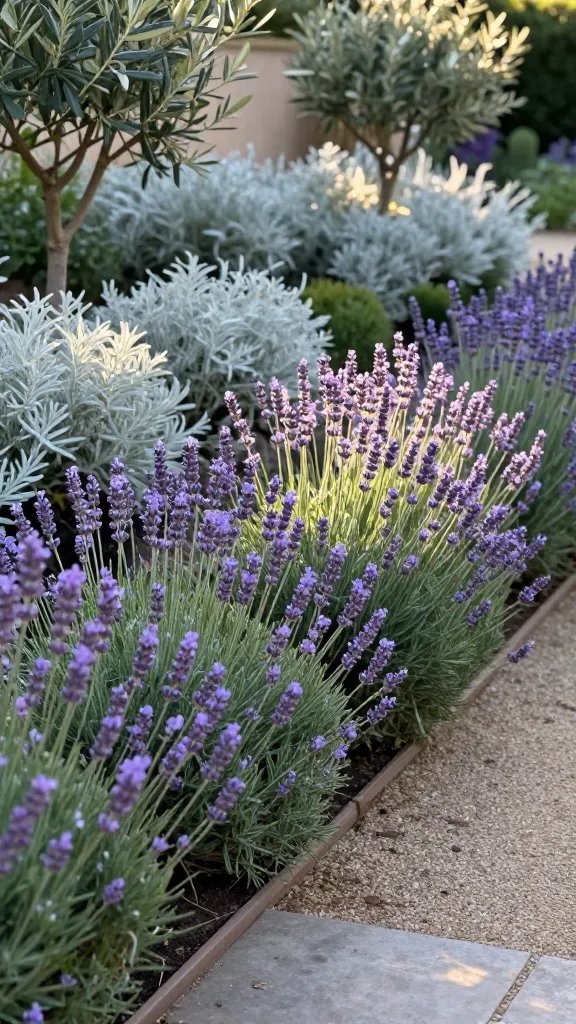
Swap boxwood for a lavender hedge and add silver partners behind it for layered texture. You still get structure, but it smells better and needs less fussing.
Planting Notes
- Choose varieties with tidy habits: ‘Munstead’, ‘Melissa Lilac’.
- Space 14–18 inches for a dense line.
- Back with taller silver forms like Olea europaea (where climate allows) or artemisia standards.
Ideal for framing beds, patios, or driveways. It’s formal-meets-free-spirited, which is kind of the dream.
10. Silver Undercurrent In Pollinator Strips
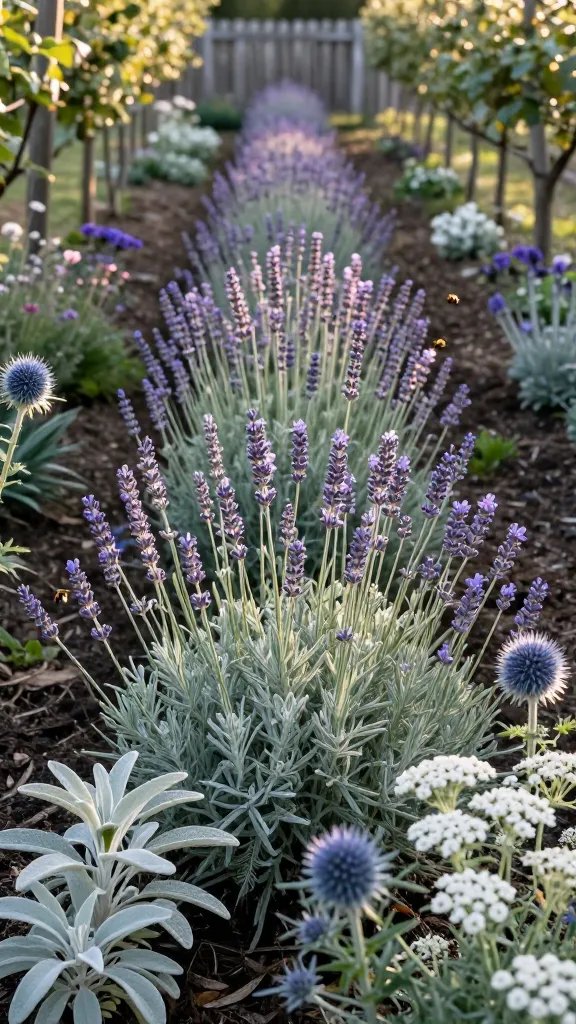
Build living runways for bees with lavender anchors and a silvery undercurrent. The pale foliage acts like a landing light while the blooms deliver nectar on tap.
Pollinator-Friendly Mix
- Lavender (stagger bloomers for a long season).
- Silvery herbs: sage, thyme, oregano (all edible, FYI).
- Extras: echinops, eryngium, and white yarrow.
Run it along fences or orchard rows. You’ll boost biodiversity and your garden’s vibe in one move.
11. Coastal Breeze Belt
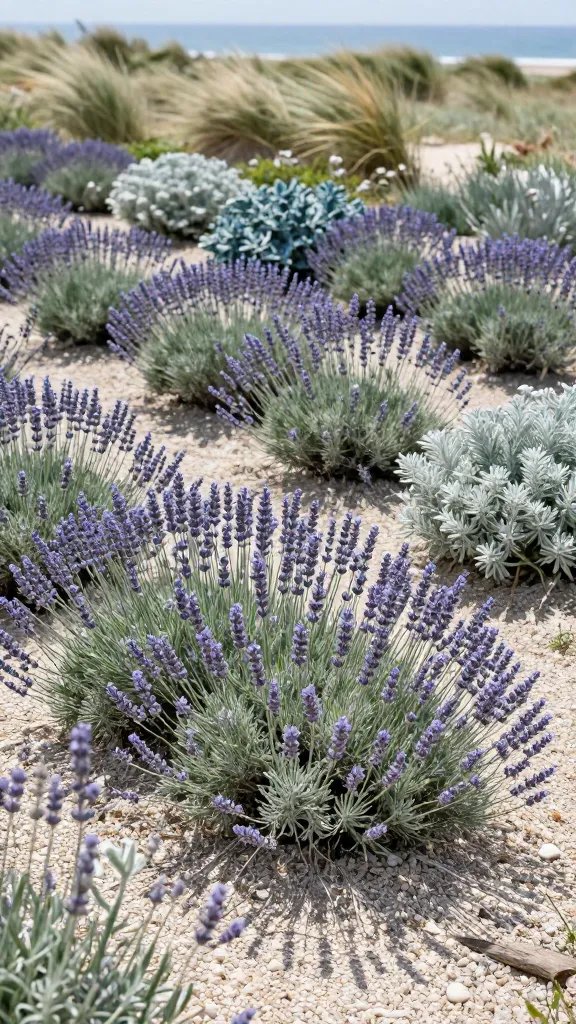
Wind, salt spray, and blazing sun? Lavender plus hardy silver foliage can handle it with a flip of their sun shades. The textures riff off dune grass energy and look effortless.
Best Choices
- English lavender cultivars known for cold/wind tolerance.
- Companions: sea kale, artemisia, santolina, and cotton lavender.
- Mulch with pale gravel to reflect heat and light.
Perfect for seaside plots or exposed hillsides. You’ll get movement, resilience, and minimal maintenance.
12. Minimalist Silver Wave With Lavender Accents
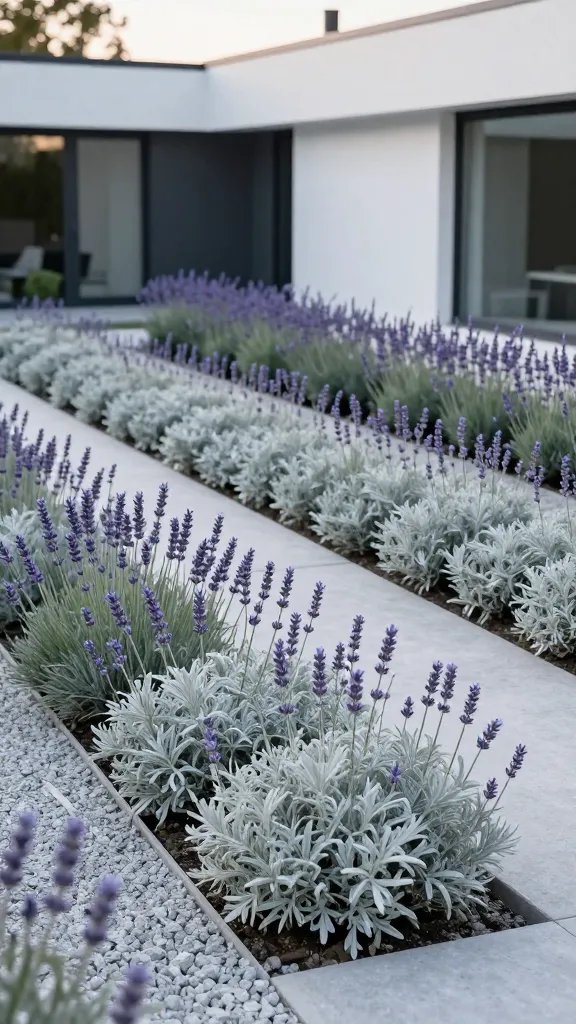
Prefer clean lines? Lead with big sweeps of silver foliage and drop lavender in rhythmic pulses. The result feels curated, calm, and super modern without going cold.
Design Rules
- Limit the palette to 3–4 plants tops.
- Use massed blocks of artemisia or helichrysum as the “sea.”
- Insert lavender in repeating intervals to read like beats in a song.
Use this for front yards with contemporary architecture. It’s low-key luxe and ridiculously photogenic.
Care And Styling Essentials You’ll Actually Use
English lavender and silver foliage love sun, sharp drainage, and tough love. Baby them less, and they’ll reward you more. Sounds backwards, but it works.
Key Points
- Sun: 6–8 hours minimum for sturdy growth and blooms.
- Soil: Fast-draining, slightly alkaline; amend heavy clay with grit and compost.
- Water: Deep but infrequent once established; soggy roots = sad lavender.
- Pruning: Shear lightly after bloom; never cut into old wood.
- Spacing: Give air flow to avoid fungal drama.
Stick to these and your silver waves will look fresh, not fried. Seriously, drainage is everything.
Favorite English Lavender Cultivars For Silver Pairings
Not all lavenders bring the same vibe. Choose forms that hold a neat mound and deliver that saturated purple-blue punch against silver tones.
Standouts
- ‘Hidcote’: Compact, deep violet, tight habit—great for edging.
- ‘Munstead’: Early bloomer, soft purple, adaptable and forgiving.
- ‘Melissa Lilac’: Pastel-lilac spikes, elegant in moon gardens.
- ‘SuperBlue’: Short, chunky spikes, container friendly.
Pick one and repeat for cohesion. Your design will look pro without trying too hard.
Silver Foliage All-Stars To Make Lavender Pop
Silver leaves aren’t background noise—they’re the lighting crew. They make colors richer and textures sharper, even at noon.
MVPs
- Artemisia ‘Powis Castle’: Feathery, drought-hardy, big impact.
- Stachys byzantina (Lamb’s Ear): Fuzzy ground ripple, kid-approved.
- Helichrysum italicum (Curry Plant): Fine texture, spicy scent.
- Santolina chamaecyparissus: Button blooms, tight mounds.
- Dichondra ‘Silver Falls’: Cascading sparkle for edges and pots.
Mix fine and bold textures for depth. Your borders will look layered even before bloom.
Seasonal Wave Management
Want those waves to stay shapely? A tiny bit of timing keeps everything crisp and fragrant.
Calendar
- Early Spring: Light prune to shape; feed with low-nitrogen mix.
- Mid–Late Summer: Deadhead to extend bloom; shear lightly after peak.
- Autumn: Stop fertilizing; ensure crowns sit high for winter.
- Winter: Good drainage, no wet feet; skip heavy mulches on crowns.
Dial this in and your lavender keeps its dome, your silver stays perky, and your design looks intentional year-round.
Smells Like A Good Idea: Practical Perks
Beyond the looks, lavender and silver foliage bring real-world benefits. They attract pollinators, shrug off heat, and ask for fewer resources than thirsty lawns.
Bonus Points
- Wildlife: Bees and butterflies love it; deer and rabbits usually don’t.
- Cutting: Fresh or dried lavender for bouquets and sachets.
- Low Maintenance: Less water, less fuss, more chill afternoons.
Use them to green your space smarter, not harder. Your future self will thank you.
Putting It All Together: Quick Starter Plan
Ready to start today? Try this 10-by-4-foot bed that delivers instant waves.
Layout
- Front edge: 6–8 ‘Hidcote’ lavender spaced 14–16 inches.
- Middle: Drift of lamb’s ear weaving behind.
- Back: 3 clumps artemisia ‘Powis Castle’ for height and sway.
- Ground: Silver thyme to stitch gaps.
- Top-dress: Pale gravel mulch for light and drainage.
In one weekend, you’ll have fragrance, texture, and movement. It only gets better each season.
That’s your playbook for 12 English lavender waves that make silver foliage shine. Start small, repeat your favorites, and let the wind do the rest. Your garden will smell amazing and look like a breeze styled it—because, well, it did.