
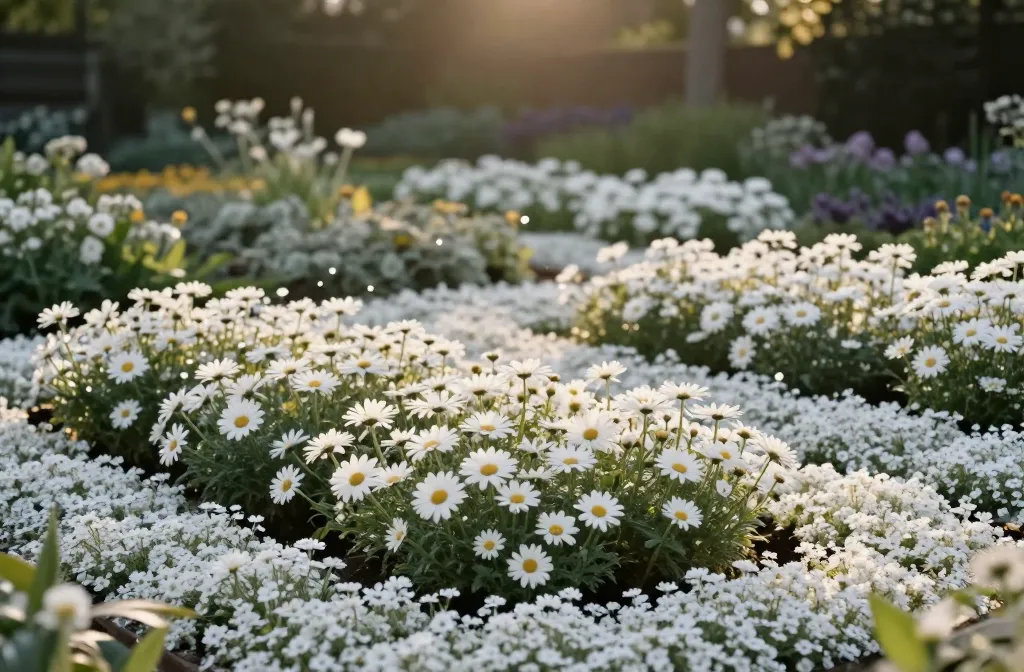
Color isn’t just pretty—it’s strategic. Grouping plants by shade can supercharge pollination, fool pests, and make your garden look ridiculously intentional. These five color-themed combos pack 15 gorgeous plant pairings into easy, high-impact garden recipes. Ready to make your neighbors wonder if you secretly hired a designer?
1. Snowy Whites That Glow at Dusk
White gardens look like moonlight fell onto your beds and refused to leave. They pop in shade, glow at golden hour, and calm everything down when summer gets extra. Bonus: white blooms often smell amazing, so your evening stroll turns into a fragrance tour.
The Trio: Clean, Cool, And Cohesive
- Shasta Daisy (Leucanthemum × superbum): Pollinator magnet with classic daisy faces.
- White Alyssum (Lobularia maritima): Low, cloud-like edging that attracts beneficials.
- White Gaura (Gaura lindheimeri): Airy “butterfly” blooms that dance in the breeze.
These three bring height contrast, nectar, and motion. Daisies anchor, alyssum carpets, and gaura flutters above like confetti you don’t have to sweep.
Companion Perks
- Beneficial insects love alyssum, which helps manage aphids on daisies.
- Staggered bloom times extend the white show from late spring to fall.
- Low-maintenance once established; just deadhead daisies.
Use this combo along paths and patios where you spend evenings. The glow is real, trust me.
2. Fiery Reds That Bring Drama And Pollinators
Red is not shy. If you want hummingbirds, energy, and a garden that low-key flexes, go with crimson and scarlet tones. This set turns up the heat without burning out your eyes.
The Trio: Bold, Nectar-Rich, And Structured
- Monarda (Bee Balm): Tubular red blooms hummingbirds can’t resist.
- Red Salvia (Salvia splendens or microphylla): Continuous color and easy care.
- Crocosmia ‘Lucifer’: Sword-like foliage and flaming blooms for height and drama.
Bee balm and salvia churn out nectar like a soda fountain. Crocosmia adds architecture so the whole thing doesn’t look like a messy fireworks accident.
Companion Perks
- Hummingbirds patrol daily, which also discourages some insects.
- Aromatic foliage from salvia and monarda can confuse deer and rabbits.
- Airflow matters: space monarda to prevent mildew. FYI, morning sun helps.
Plant this near a seating area if you like live-action bird TV. It’s spicy, but in a classy way.
3. Soothing Blues And Purples For A Chill Oasis
Cool tones calm the eye and pull your garden together like a well-styled capsule wardrobe. Blues and purples also entice bees and butterflies while looking fabulous in every light. IMO, this palette makes small spaces feel bigger.
The Trio: Pollinator Heaven With Layers
- Lavender (Lavandula angustifolia or intermedia): Fragrance, drought tolerance, and bee traffic.
- Catmint (Nepeta): Soft mounds, long bloom season, and tough-as-nails vibes.
- Salvia ‘Caradonna’ or ‘May Night’: Deep violet spires for vertical rhythm.
Set lavender as your star, then weave catmint around edges for flow. Drop in salvia clumps to punctuate the scene and give the bees a buffet line.
Companion Perks
- Aromatic defenses from lavender and catmint can deter mosquitos and nibblers.
- Drought-friendly once established—great for full sun and lean soil.
- Extended bloom window from late spring into midsummer with light deadheading.
Use this combo along driveways or hot borders where you want beauty with basically zero drama. Purple haze? Absolutely.
4. Sunny Yellows For Cheer And Predator Power
Yellow reads happy from across the street. It signals “healthy ecosystem” to beneficial insects while matching summer’s whole mood. This trio brightens veggie beds and pollinator patches alike.
The Trio: Happy Faces, Useful Allies
- Calendula (Pot Marigold): Edible petals and trap-crop potential for aphids.
- Coreopsis: Long-lasting blooms that bring in hoverflies and lacewings.
- Achillea (Yarrow) ‘Moonshine’: Flat umbels that serve as landing pads for tiny predators.
Calendula spreads the cheer close to the soil, coreopsis sprinkles sunshine at mid-height, and yarrow lifts the whole display with soft chartreuse-yellow plates.
Companion Perks
- Integrated pest management MVPs: hoverflies, lady beetles, and parasitic wasps love this set.
- Cut-flower friendly with long vase life—snip freely to keep blooms coming.
- Tolerant of average soils and heat with moderate water.
Pop this combo near tomatoes, peppers, or squash to boost beneficials while keeping the bed cheerful. It’s sunshine with a side of pest control—seriously.
5. Luxe Pinks And Magentas For Romance And Buzz
Pink can be soft, bold, or both in one bed. This palette runs from blush to fuchsia for a layered, monochrome look that still feels dynamic. Bees adore it, and you’ll adore how easy it is to coordinate.
The Trio: Fluffy, Spiky, And Flowing
- Echinacea ‘PowWow Wild Berry’: Saturated magenta cones with sturdy stems.
- Pink Cosmos (Cosmos bipinnatus): Feathery foliage and nonstop blooms.
- Astilbe (Pink Varieties): Plumes for part shade and moist spots.
Echinacea provides the backbone and winter seed heads for birds. Cosmos brings the party with continuous color. Astilbe adds lush texture where it’s cooler or damper.
Companion Perks
- Pollinator parade: bees, butterflies, and even goldfinches for the seed heads.
- Flexible siting: sun-lovers (echinacea, cosmos) mix with part-shade astilbe along edges.
- Cut-and-come-again blooms keep vases full all summer.
Use this in cottage borders or around patios for a romantic vibe that still reads modern. It’s like wearing pink on purpose and pulling it off.
Quick Planting Tips For All Five Palettes
- Group in threes or fives for each plant to avoid a spotty look.
- Layer heights: tall in back, mid in middle, low at the front. Classic because it works.
- Match water needs within each palette. Don’t mix drought divas with thirsty queens.
- Repeat colors across the bed to guide the eye and make it feel cohesive.
- Mulch smart with compost or fine bark to keep the color show consistent and weeds down.
Seasonal Care Cliff Notes
- Spring: Prep beds, amend soil, and install supports for tall bloomers.
- Summer: Deadhead for more flowers, watch spacing for airflow, water deeply but less often.
- Fall: Leave some seed heads (echinacea, salvia) for birds and winter interest.
- Winter: Cut back perennials late winter, not fall, to protect crowns and feed wildlife.
Where To Use Each Palette
- Whites: Shade edges, moon gardens, high-traffic evening zones.
- Reds: Sunny focal beds, near outdoor seating for hummingbird viewing.
- Blues/Purples: Hot, dry borders; Mediterranean-style plantings; curbside strips.
- Yellows: Veggie beds, pollinator patches, kid-friendly gardens.
- Pinks: Cottage borders, patio planters, entryways where you want an instant welcome.
You don’t need a horticulture degree to make a color-driven garden sing—just pick a palette and go. These five combos deliver beauty and ecological benefits without micromanaging every leaf. Start with one bed, repeat what you love, and enjoy the compliments when your garden starts looking dangerously professional.