
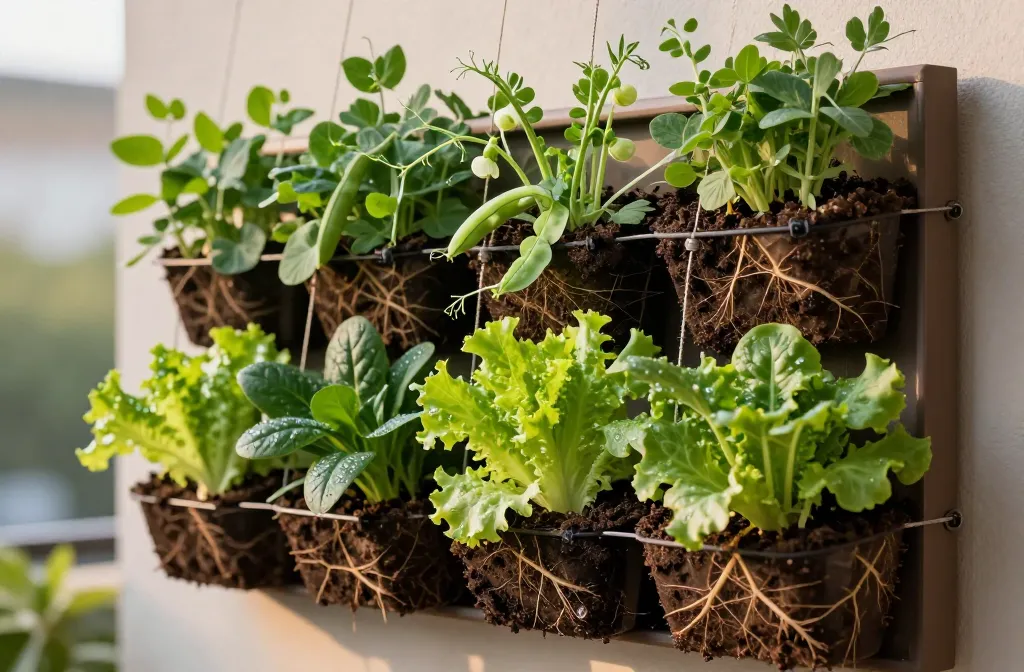
Vertical garden looking lush up top but tired in the soil department? You can fix that with smart companion planting that feeds your mix, balances moisture, and keeps pests in check. These pairings work with gravity, microbes, and plant chemistry to build richer, livelier soil in tight spaces. Ready to upgrade your wall of greens without buying fancy additives? Let’s plant smarter.
1. Nitrogen Ninjas: Peas And Runner Beans With Leafy Greens
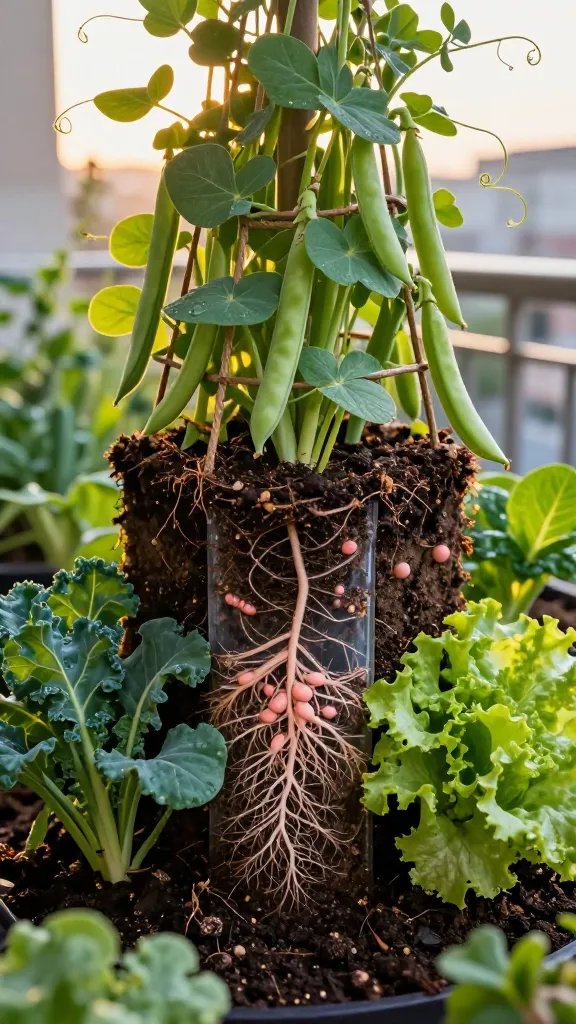
Legumes act like quiet overachievers in a vertical setup. They grab nitrogen from the air and, with help from rhizobia bacteria, tuck it into root nodules—free fertilizer for everyone nearby. Pair them beneath or beside hungry leafy greens and watch your soil vitality climb.
Why It Works
- Biological nitrogen fixation: Roots host bacteria that convert atmospheric nitrogen into plant-friendly forms.
- Gentle shade + cooling: Vines temper heat on towers, reducing water stress and microbial burnout.
- Fine root turnover: As tiny roots die back, they feed soil life and improve structure in pocket planters.
Set sugar snap peas, snow peas, or dwarf runner beans at vertical supports, then tuck in lettuces, spinach, or Asian greens around them. In modular systems, alternate columns—one legume, one leafy—to share the nitrogen love.
Tips
- Inoculate seeds with rhizobium if your mix is brand new or sterile—FYI, container mixes often lack these buddies.
- Use lightweight netting for vines; keep greens at mid to lower tiers for spillover fertility.
- Harvest regularly to keep vines productive and airflow clean.
Use this when your soil mix feels “tired” or you notice lettuce stalling. Legumes recharge the bed while greens soak up the benefits—seriously efficient.
2. Microbe Magnets: Calendula, Borage, And Nasturtium With Fruiting Crops
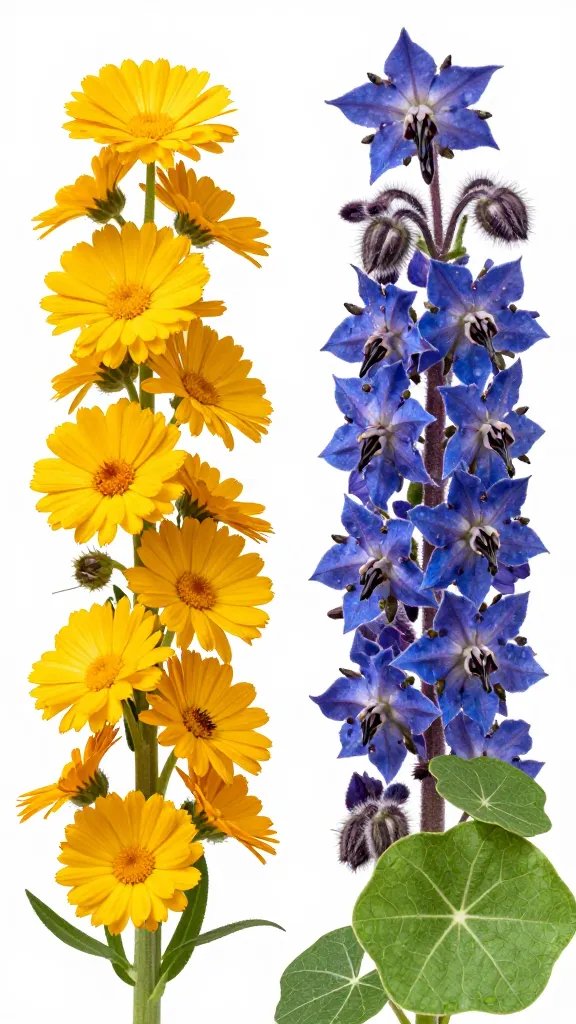
If you want living soil, you need insects and microbes to party in your planters. Flowering companions bait pollinators, invite predatory insects, and drop petals and roots that microbes devour. The result? Better fruit set and a more dynamic soil food web.
Why It Works
- Exudate fireworks: Flower roots leak sugars that wake up beneficial bacteria and fungi.
- Pest push-pull: Nasturtium distracts aphids, borage attracts pollinators, calendula lures hoverflies that eat pests.
- Leaf litter mulch: Tender petals and leaves become micro-mulch, locking moisture into small pockets.
Plant borage near strawberries or peppers; slot nasturtiums to cascade from pockets and shade the soil; keep calendula dotted between tiered tomatoes or cucumbers. You’ll get blossoms, better yields, and softer, richer media as petals and fine roots cycle.
Quick Pairings
- Borage + Strawberries: Boosts pollination and yields; leaves feed soil when trimmed.
- Nasturtium + Cucumbers: Trailing habit covers exposed media; traps aphids away from cukes.
- Calendula + Tomatoes: Encourages beneficials and supplies gentle self-mulching.
Use this when fruiting crops look stressed or pollinators ignore your vertical wall. Flowers flip the switch on soil biology and crop vigor—IMO, it’s the prettiest soil improvement strategy.
3. Root Architects: Radishes, Carrots, And Daikon To Loosen And Aerate Mix
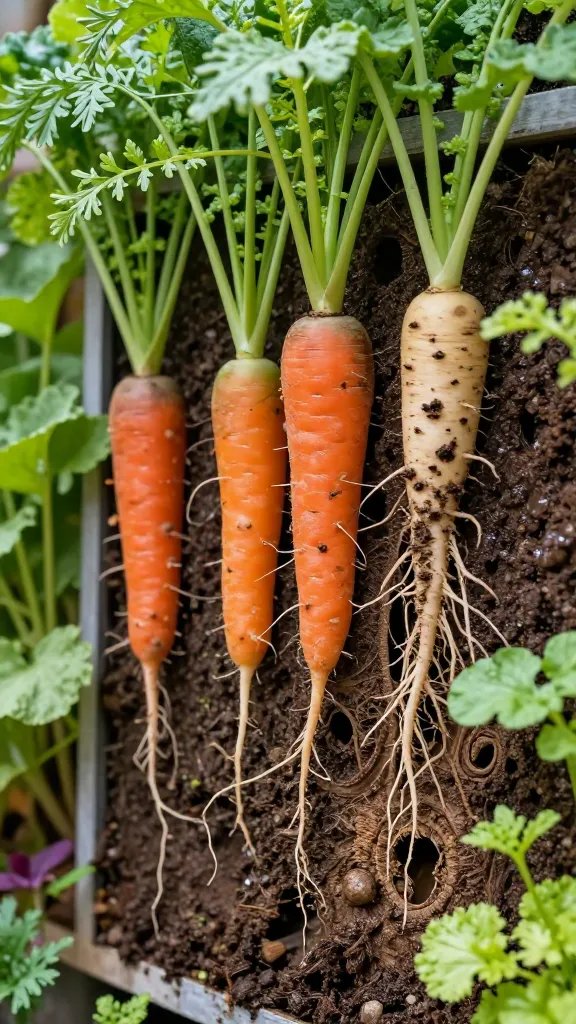
Compaction kills vertical gardens fast. Taproots drill air channels and create pockets for water to move instead of pooling or rushing out. When you harvest or chop-and-drop, those empty tunnels become condo space for microbes and fine feeder roots.
Why It Works
- Physical aeration: Roots push aside particles in tight media blends, improving drainage and oxygen.
- Organic scaffolding: Decaying root cores add stable carbon and hold channels open longer.
- Nutrient mining: Deep taps pull minerals into the upper root zone for neighbors.
Sow fast radishes between basil or kale in pocket planters. In deeper towers, run daikon or slender carrots on lower tiers so gravity helps water reach those channels. Harvest some, leave some to rot in place for the soil crew.
Tips
- Blend in coarse perlite or rice hulls with your mix to support the channels radishes make.
- Water deeply on planting days to encourage strong tap formation.
- Chop-and-drop the tops as a surface mulch; let a few roots decompose in place.
Use this when drainage feels sluggish or roots look starved of air. Root crops act like tiny augers, then donate their bodies to soil health—dark, but effective.
4. Dynamic Accumulators: Comfrey, Yarrow, And Lemon Balm As Nutrient Banks
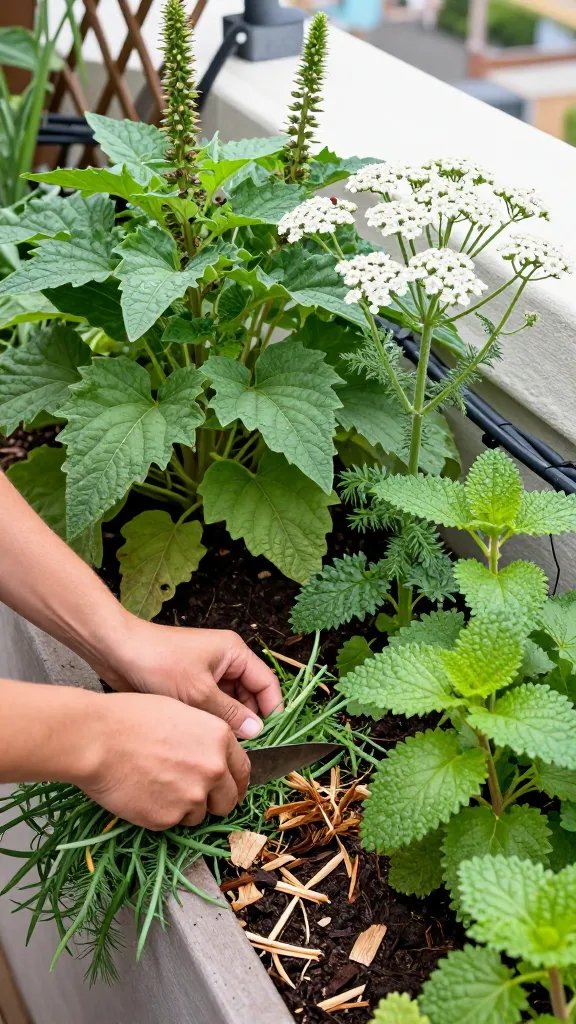
Limited soil volume means nutrients vanish fast in vertical systems. Dynamic accumulators pull minerals from deeper or stubborn reserves and store them in lush leaves. You harvest, chop, and return those nutrients as instant, gentle fertilizer.
Why It Works
- Mineral cycling: Comfrey and yarrow concentrate potassium, calcium, and micronutrients.
- Rapid biomass: Frequent cuttings yield constant mulch that feeds fungi and improves moisture.
- Aroma advantage: Lemon balm deters some pests and calms the scent profile around delicate crops.
Park dwarf or sterile comfrey in a nearby pot and “feed” your vertical garden with its leaves. Tuck yarrow in sunnier edges to attract beneficials and stockpile minerals. Use lemon balm in partial shade tiers for light pest deterrence and steady mulch supply.
How To Use The Harvest
- Chop-and-drop: Tear leaves and lay around bases; keep 1–2 inches from stems to avoid rot.
- Compost tea (simple version): Soak chopped leaves in water for a few days, then dilute 1:10 and drench.
- Layered pockets: Place a thin leaf layer under new transplants as a slow-release pad.
Use this when your media tests low in potassium or when fruiting crops look weak. Accumulators keep nutrients cycling without synthetic inputs—trust me, your peppers will notice.
5. Soil-Guard Squad: Alliums, Basils, And Marigolds For Clean, Resilient Mix
Your soil needs bodyguards. Some plants exude compounds that suppress harmful microbes and nematodes, while others deter pests that drain plant energy. In small vertical containers, that defense can make or break your season.
Why It Works
- Alliums (chives, green onions): Sulfur-rich exudates discourage fungal issues; roots are slender and tidy.
- Basils: Aromatic oils confuse pests and attract pollinators; shallow roots play nice in tight quarters.
- Marigolds (Tagetes spp.): Certain varieties suppress root-knot nematodes and improve soil outcomes over time.
Dot chives between strawberries or tomatoes in higher tiers for airflow and disease suppression. Slide basils next to peppers or cherry tomatoes for flavor and pest pressure relief. Plant marigolds in the lowest tiers or adjacent boxes so their root chemistry benefits shared recirculating media or drip lines.
Smart Mixing
- Choose Tagetes patula or specific nematode-suppressing cultivars for best soil effects.
- Stagger basils: genovese for yields, lemon or cinnamon for insect confusion.
- Trim chives lightly and leave some trimmings as micro-mulch.
Use this when pathogens start creeping in or you’ve had nematode trouble in past seasons. The soil-guard squad fortifies your mix while keeping the vibe edible and fragrant.
Putting It All Together: A Sample Vertical Plan
- Top tiers: Tomatoes or cucumbers with basil and calendula for pollinators and protection.
- Mid tiers: Lettuce and spinach flanked by peas; nasturtiums spilling for cover.
- Lower tiers: Carrots or radishes to aerate and guide water; marigolds at the edges.
- Support pot nearby: Comfrey and yarrow for steady chop-and-drop feedings.
Bottom line: companion plants do more than look cute. They fix nitrogen, open airways in the mix, feed microbes, and set up natural defense systems—all in the tight real estate of a vertical garden. Start with one combo this week and build from there; your wall of greens will get happier, tastier, and way easier to maintain. Go plant the dream, then brag about it later.