
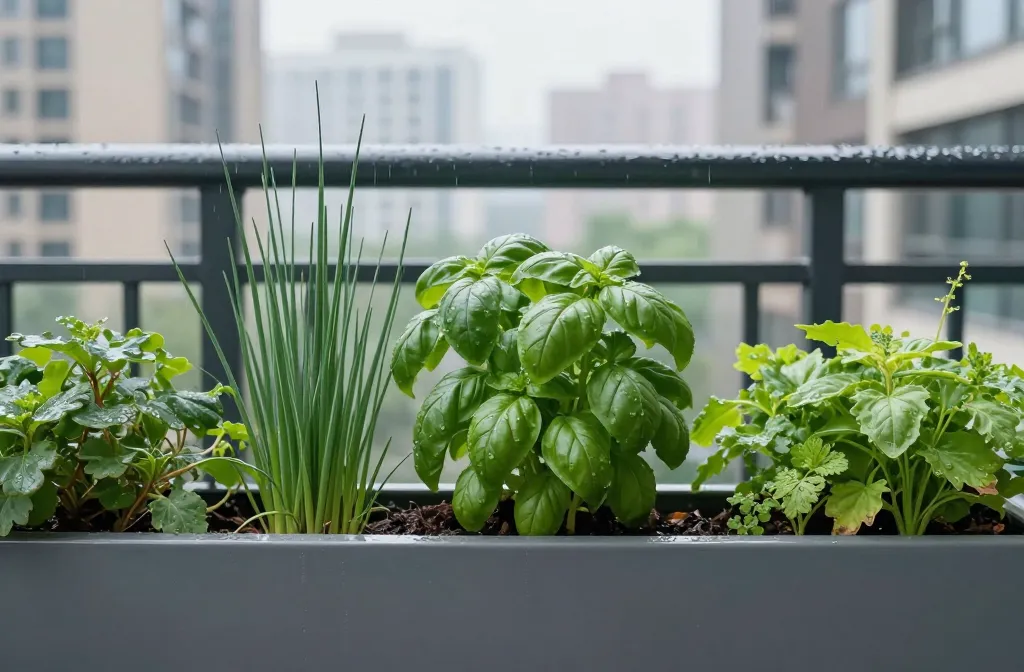
Rain happens. Your balcony or windowsill gets soaked, containers stay damp, and fungus parties like it’s Saturday night. Good news: you can make that moisture work for you with smart plant pairings that thrive in the wet. These combos love humidity, handle drizzle, and deliver herbs, greens, and blooms without constant drama. Ready to build a tiny jungle that feeds you and looks cute? Let’s go.
1. Basil + Chives: Scented Shield Meets Perky Pest Patrol
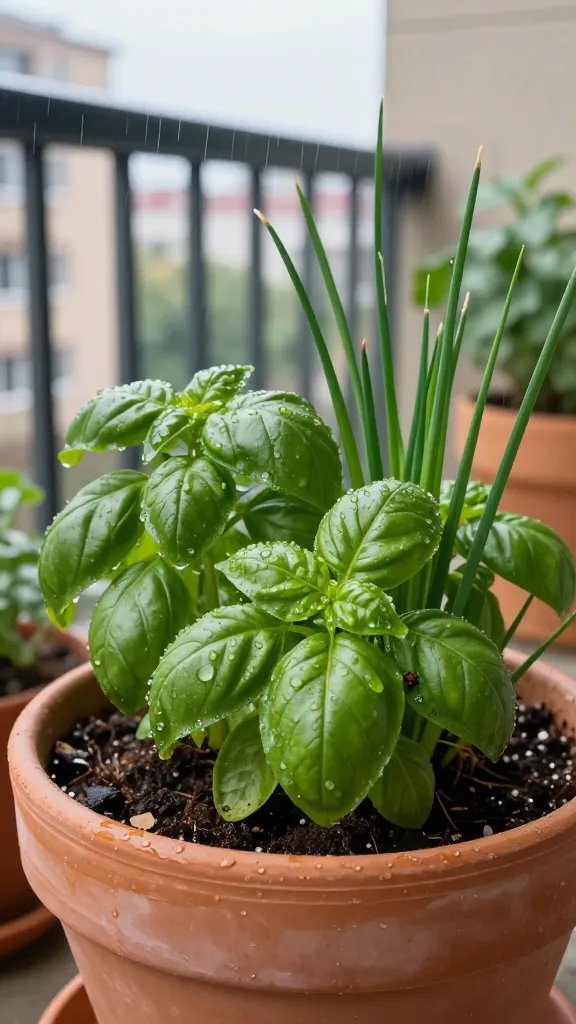
This duo thrives in steady moisture and bright, indirect light. Chives repel aphids and onion-loving pests, while basil fills the air with that peppery perfume you want on everything. Together, they keep fungal issues in check through better airflow and less leaf crowding.
Why It Works
- Basil loves humidity but hates soggy roots, so it needs a buddy that stays slim and upright.
- Chives grow like little green straws, which helps air move and moisture evaporate after rain.
- Both snip-and-come-again herbs give you regular harvests without stressing the plants.
Plant basil in the center of a 12-inch pot and tuck chives around the rim. Use a moisture-retentive mix with added perlite. Give morning sun and afternoon shade, especially if your balcony turns into a reflective oven.
Quick Tips
- Pinch basil blooms to keep flavor sweet.
- Cut chives down to 2 inches when they flop; they bounce back fast.
- Water early so leaves dry before evening. Rainy climate or not, that’s your anti-mildew insurance.
Use this combo for easy pasta tosses and omelets. You’ll harvest often, which keeps plants compact and happy—win-win.
2. Mint + Lemon Balm: The Fragrant, Moisture-Happy Power Couple
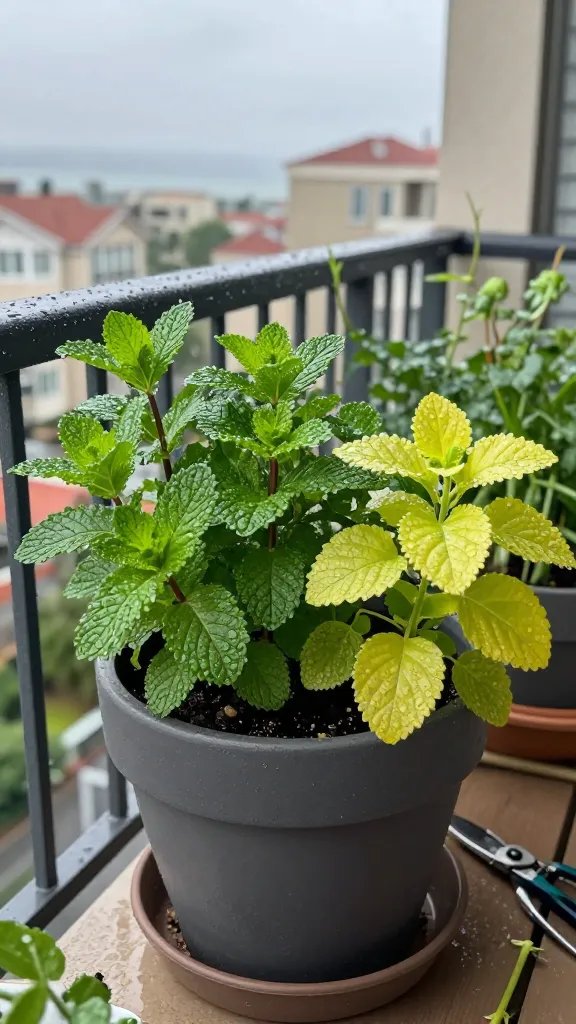
Some plants actually crave that constantly damp vibe. Enter mint and lemon balm—two aromatic bullies that laugh at drizzle and sprawl like they pay rent. Pair them in one large container for a lush, edible scent garden you can snip daily.
Contain The Chaos (Seriously)
- Mint grows fast and drinks a lot; it keeps soil oxygenated with quick root turnover.
- Lemon balm adds lemony brightness and handles shade like a champ.
- Together they reduce gnats and some pests thanks to their strong volatile oils.
Use a wide, shallow trough or 14–16 inch pot with drainage holes. Mix compost-rich soil with coco coir for moisture retention. Give bright shade to partial sun; direct downpours won’t faze them.
Maintenance Moves
- Trim hard every couple of weeks to prevent root binding.
- Rotate the pot so both plants get equal light—no one-sided jungle, please.
- Top-dress with fine bark or straw to reduce splashback that causes leaf spots.
Perfect for tea, mocktails, and quick desserts. IMO, this is the easiest “lush” you can grow in an apartment with frequent rain.
3. Nasturtium + Lettuce: Peppery Bouquet Meets Tender Greens
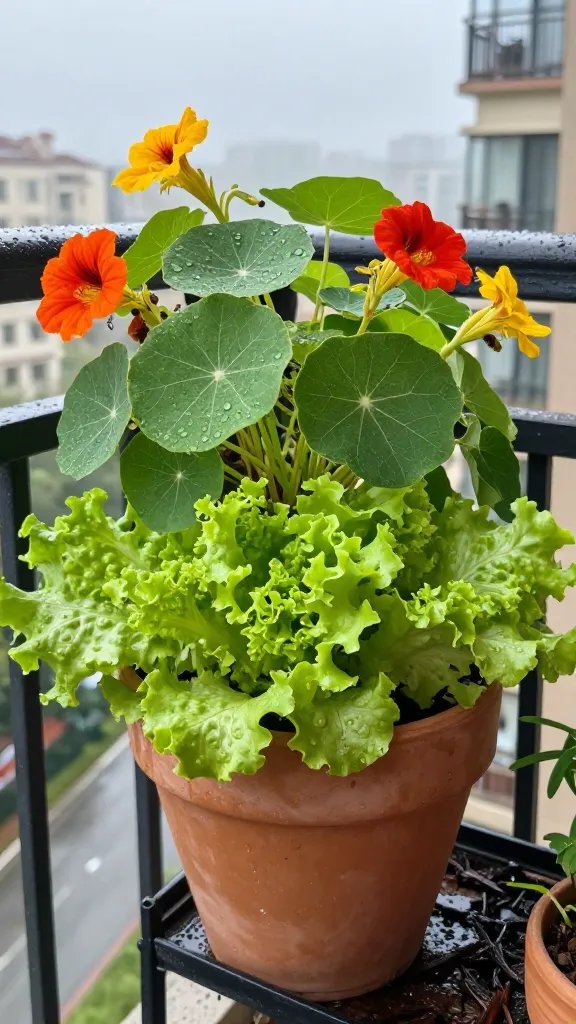
You want edible flowers and salad leaves? This is your balcony showstopper. Nasturtiums drink up moisture but prefer good drainage, while lettuce stays crisp in cool, damp conditions.
Companion Magic
- Nasturtiums attract aphids away from your greens (a textbook trap crop).
- Lettuce benefits from the nasturtium’s umbrella leaves that reduce soil splash on salad leaves.
- Both tolerate drizzle and mild chill, which rainy climates often bring.
Plant a trailing nasturtium near the edge of a 12–14 inch pot with 3–4 heads of loose-leaf lettuce in the center. Use a well-drained mix: half potting soil, quarter compost, quarter perlite or pumice. Position where it gets morning sun and afternoon shade.
Pro Moves
- Harvest outer lettuce leaves regularly to keep air moving between plants.
- Pick nasturtium leaves and flowers often; that keeps vines tidy and blooming.
- If aphids gather on nasturtiums, blast with water or prune off the worst bits—don’t nuke your lettuce.
This combo brings color and crunch to your kitchen. It shines in spring and fall when cool rains roll in—and it looks ridiculously cheerful, FYI.
4. Kale + Dill: Sturdy Greens With Built-In Bodyguard
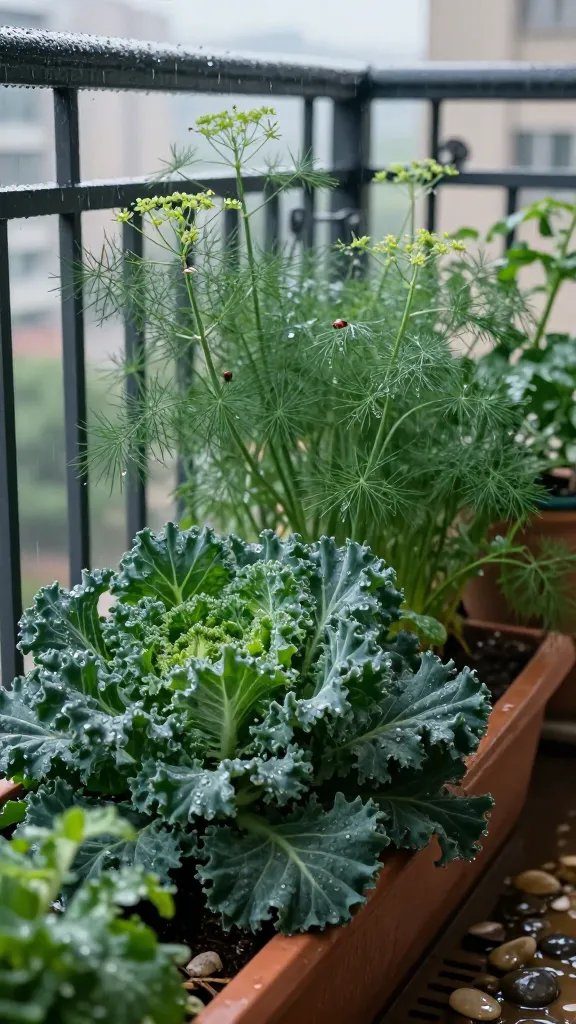
Kale doesn’t mind wet feet as long as drainage works and air flows. Dill loves the same cool, moist air but grows tall and airy, which helps keep kale leaves dry after rain. Bonus: dill attracts beneficial insects that snack on the bad ones.
Why They’re Besties
- Kale tolerates cool and damp, and its big leaves appreciate dill’s windbreak effect without heavy shading.
- Dill draws ladybugs and lacewings—perfect for aphid control on brassicas.
- The feathery dill canopy reduces splash while improving circulation around kale stems.
Use a 14–16 inch pot with a deep profile. Plant one kale in the center and two dill plants at the back. Add crushed gravel at the bottom of the pot (not as a false drainage layer, just to prevent clogging) and ensure the mix includes perlite. Place in bright light—5–6 hours of sun helps, but some shade is fine on wet days.
Care Checklist
- Snap off lower kale leaves once they crowd; that’s dinner and disease prevention.
- Stake dill if winds get rowdy; rainy balconies can mean gusty corners.
- Side-dress with compost monthly for steady growth.
Use when you want near-constant greens through a long, damp season. It’s sturdy, forgiving, and tasty—trust me, this one pays rent.
5. Vietnamese Coriander + Watercress: The Rain-Loving Flavor Bomb
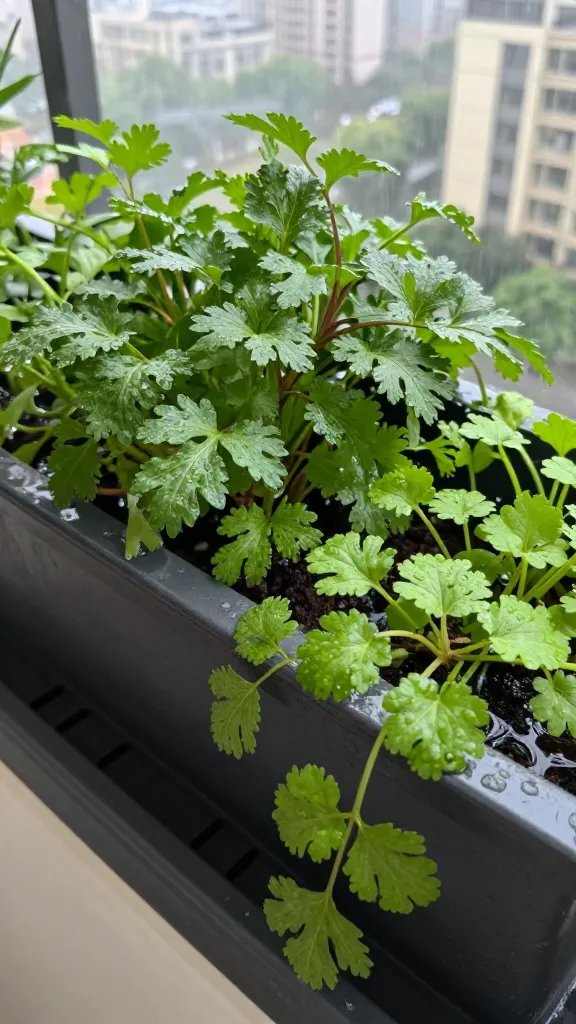
When the sky won’t stop leaking, lean into it. Vietnamese coriander (also called rau răm) thrives in humid heat, and watercress loves wet conditions with moving air. Pair them for an herb bed that stays lush even when everything else sulks.
Moisture Masters
- Vietnamese coriander tolerates constant moisture better than regular cilantro and keeps its flavor in warm, wet weather.
- Watercress prefers cool, clean, consistently damp soil or shallow water trays.
- Together they turn rainy days into free irrigation.
Use a wide, low container with excellent drainage and set it in a shallow tray you can fill after heavy rains. Plant Vietnamese coriander in the main potting mix and position watercress in a mesh nursery pot nested near one edge, where you can keep its roots wet without waterlogging everything else.
How To Keep It Thriving
- Change the tray water every couple of days to avoid stagnation and gnats.
- Clip watercress often; frequent harvests keep it tender and clean.
- Give partial shade to prevent heat stress and bitter flavors after storms.
You get punchy, citrusy-herbal notes from rau răm and peppery snaps from watercress—amazing for soups, rice bowls, and sandwiches. It’s a rainy-climate superstar, especially on breezy balconies where air dries leaves quickly after showers.
Container Setup Essentials (Use Across All Combos)
- Soil Mix: Potting soil + compost + perlite or pumice. Aim for spongy but fast-draining.
- Drainage: Real holes. Elevate pots on feet so water exits after downpours.
- Mulch: Fine bark, straw, or coco chips to prevent splash and keep soil evenly moist.
- Spacing: Keep 2–3 inches between plant crowns for airflow. Crowding = mildew central.
- Watering: Check before adding more. Rain can hide dry pockets or create soggy zones.
- Fungal Prevention: Morning watering, clean pruners, remove yellow leaves quickly.
Quick Troubleshooting
- Powdery Mildew? Thin leaves, increase airflow, remove affected parts. A skim milk spray (1:9 with water) can help.
- Fungus Gnats? Let top inch dry, add a thin sand layer, use yellow sticky traps.
- Leggy Growth? Move to brighter light or prune to encourage branching.
Ready to make the rain work for you? These five combos turn drizzle into delicious. Start with one pot, harvest often, and tweak the light and spacing as you learn your balcony’s microclimate. Your future self—eating minty salads under gray skies—will say thanks, seriously.