
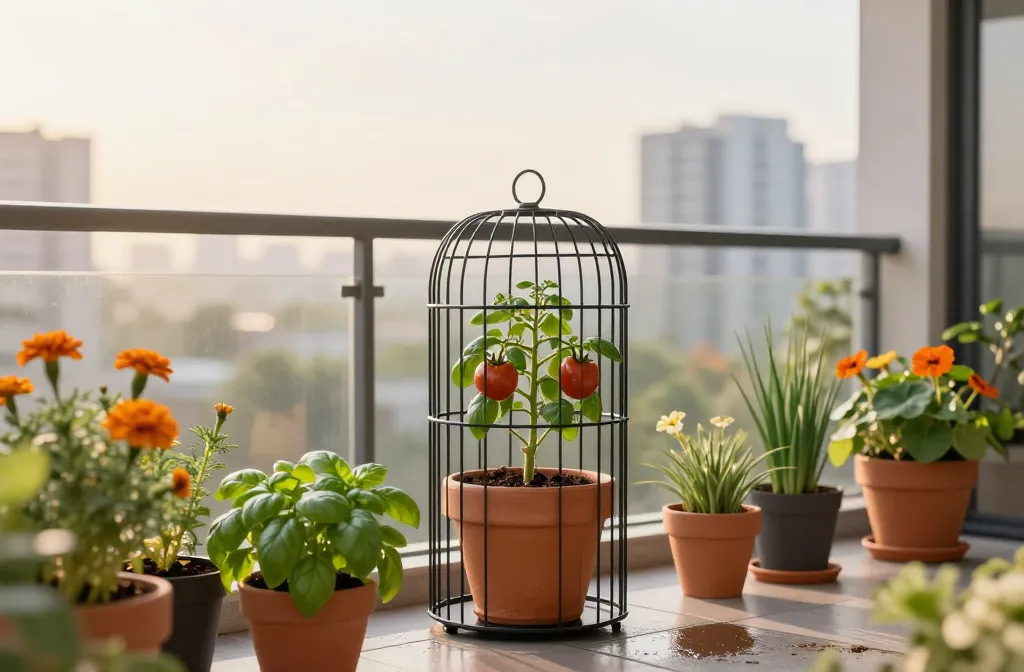
No yard? No problem. You can grow a tiny jungle that basically takes care of itself while you doomscroll. These companion plant pairings fit small balconies, sunny windowsills, and even that awkward fire escape ledge you never use. Ready to get herbs, greens, and blooms working together like roommates who actually wash their dishes?
1. Basil + Tomatoes: The Classic Balcony Power Couple
This duo earns legend status for a reason. Basil boosts tomato flavor, confuses pests with its scent, and looks cute doing it. Tomatoes get the sunlight, basil plays bodyguard—everybody wins.
Why It Works
- Aroma shield: Basil’s strong scent helps deter aphids and whiteflies.
- Flavor boost: Anecdotally, basil grown near tomatoes tastes better. Chefs swear by it; IMO, they’re right.
- Space-smart: One deep pot supports a compact tomato with basil tucked around the base.
Quick Setup
- Choose a compact tomato like ‘Tiny Tim’ or ‘Patio’ for containers.
- Use a 5–7 gallon pot with drainage and a tomato cage or stake.
- Plant 2–3 basil seedlings around the tomato, 6–8 inches away.
Low-Maintenance Tips
- Water deeply 2–3 times a week; tomatoes hate soggy soil.
- Pinch basil tips weekly to keep it bushy and delay flowering.
- Feed monthly with a balanced liquid fertilizer. Easy.
Bonus: You’ll harvest caprese salads on autopilot. Ideal for sunny balconies or bright south-facing windows.
2. Mint + Nasturtium: The Edible Pest Patrol
Want a set-it-and-forget-it combo that still looks adorable? Pair mint’s relentless growth with nasturtium’s trailing flowers. They attract good bugs, repel annoying ones, and ask for almost no attention.
Why It Works
- Trapping and distracting: Nasturtiums lure aphids away from everything else.
- Scent strategy: Mint’s aroma confuses pests like ants and flea beetles.
- Edible bonus: Nasturtium leaves and flowers taste peppery; mint keeps drinks interesting.
Quick Setup
- Use a wide 12–14 inch pot with a trellis or let nasturtium trail over the edge.
- Plant mint in a separate nursery pot and sink it into the bigger container to prevent it from taking over.
- Choose a trailing nasturtium variety for max spill-over drama.
Low-Maintenance Tips
- Partial sun works great—perfect for balconies that get morning light.
- Water when the top inch feels dry. They bounce back fast even if you forget. Seriously.
- Harvest mint often to keep it compact; snip nasturtium blooms to keep them coming.
Great for apartment gardeners who want color, edible perks, and fewer pests with minimal effort.
3. Chives + Strawberries: Small-Space Sweet Tooth Savior
Strawberries are adorable, but pests love them as much as you do. Enter chives. Their oniony scent helps deter critters while you get berries and herb confetti for eggs and salads.
Why It Works
- Pest deterrent: Chives help ward off aphids and mites around strawberries.
- Pollinator magnet: Strawberry flowers bring bees; chive blossoms keep them around.
- Compact footprint: Perfect for a rail planter or 12-inch pot.
Quick Setup
- Plant 3–4 strawberry plants around the edges of a wide container.
- Pop a small clump of chives in the center or at a corner.
- Use high-quality potting mix with added compost for better fruiting.
Low-Maintenance Tips
- Give them 6+ hours of sun. More sun, sweeter berries—science and snack time unite.
- Mulch with straw or coco coir to keep fruit clean and reduce watering needs.
- Snip chives regularly to prevent tough leaves and to encourage fresh growth.
Perfect for folks who want dessert-level rewards without a yard. Great starter combo for kids, too—instant motivation to water.
4. Rosemary + Lavender: The Drought-Tolerant Mood Booster
Some plants act like succulents but smell like a spa. Rosemary and lavender share similar needs: sun, airflow, and not too much water. They look chic together and give your balcony instant Mediterranean vacation vibes.
Why It Works
- Similar care: Both thrive in gritty, well-drained soil and bright, direct light.
- Pest resistance: Their essential oils deter moths and mosquitoes. FYI, they also make your hands smell amazing after pruning.
- Container-friendly: Compact varieties like ‘Prostratus’ rosemary and ‘Hidcote’ lavender stay neat.
Quick Setup
- Use a terracotta pot for better drainage (10–12 inches).
- Mix potting soil with perlite or coarse sand (about 70/30) to keep roots dry.
- Plant one rosemary and one lavender slightly apart; add pebbles on top for a clean look.
Low-Maintenance Tips
- Water when soil is dry 2 inches down. Overwatering kills faster than underwatering.
- Prune lightly after flowering to maintain shape and encourage bushiness.
- Rotate the pot every couple of weeks for even growth.
If you forget to water for a week, they forgive you. Ideal for sunny sills, warm balconies, and anyone who loves low-effort, high-scent plants.
5. Lettuce + Radishes + Marigolds: The Easy Salad Box That Fights For Itself
Want a little raised bed vibe in one planter? This trio delivers greens, crunch, and natural pest control. It also grows fast, so you get quick wins—very motivating when you’re busy.
Why It Works
- Different root depths: Radishes grow down, lettuce stays shallow—no turf wars.
- Fast turnover: Radishes mature in 25–35 days; you’ll harvest before you get bored.
- Pest deterrent: Marigolds help repel gnats and beetles while drawing pollinators.
Quick Setup
- Grab a long window box or 12–16 inch wide pot.
- Sow cut-and-come-again lettuce seeds in a strip, then dot radish seeds every few inches.
- Pop in 2 dwarf marigold starts at the ends for color and pest help.
Low-Maintenance Tips
- Water consistently; lettuce wilts when thirsty but perks back up quickly.
- Harvest lettuce by snipping outer leaves. Pull radishes as soon as shoulders show.
- Fertilize lightly with a nitrogen-lean blend so radishes bulb instead of making leafy tantrums.
Use this combo when you want reliable, frequent harvests with almost no fuss. It’s the salad bar that fits on your railing, no membership required.
Bonus Hints For All Pairings (Because You’re Busy)
- Choose the right light: South and west windows = sun lovers. East = leafy greens. North = low-light herbs like mint.
- Self-watering planters save time. Add a layer of perlite at the bottom for even wicking.
- Fertilizer schedule: Every 3–4 weeks with a diluted liquid feed. Set a calendar reminder and forget about it.
- Airflow matters: Crack windows or add a tiny fan near crowded setups to prevent mildew.
- Go compact: Look for words like “patio,” “bush,” “dwarf,” or “mini” on plant labels.
Ready to create your mini Eden without adopting a second job? These five pairings do the heavy lifting while you get the glory—and the snacks. Start with one pot, watch it thrive, then scale up like the garden boss you are. Trust me, once you taste that first balcony tomato with basil, you’re not going back.