
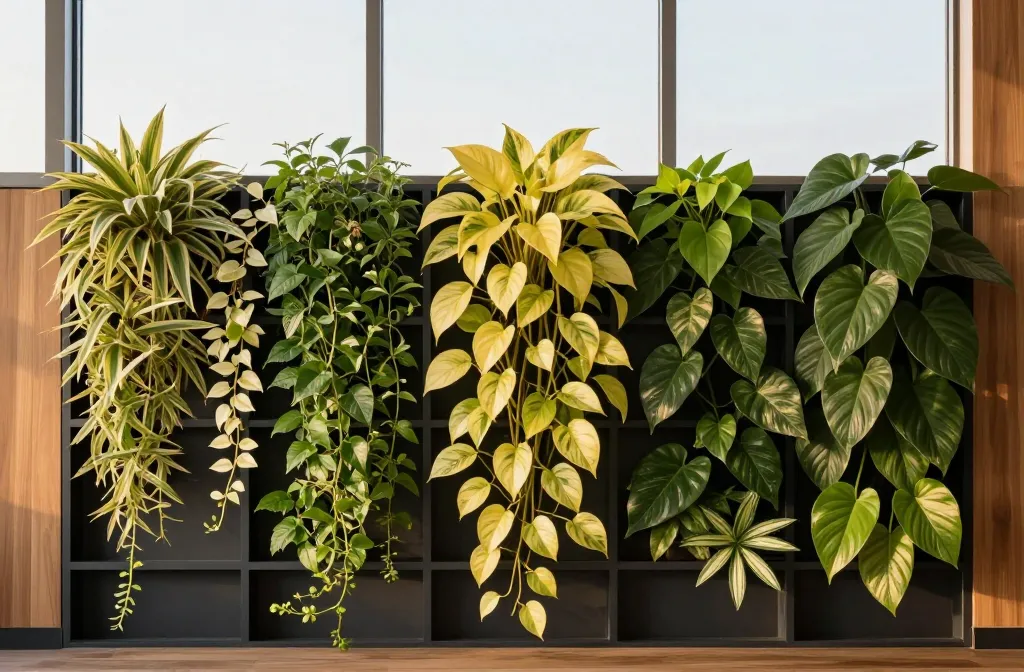
Vertical garden feeling a little flat? The right trailing companions turn a bare wall into a lush waterfall of texture and color. These nine plant pairings don’t just look gorgeous—they balance light needs, watering habits, and growth speed so everything plays nice. Ready to build a living curtain that actually behaves? Let’s stack those vines like a pro.
1. Lush & Low-Maintenance: Pothos + Heartleaf Philodendron
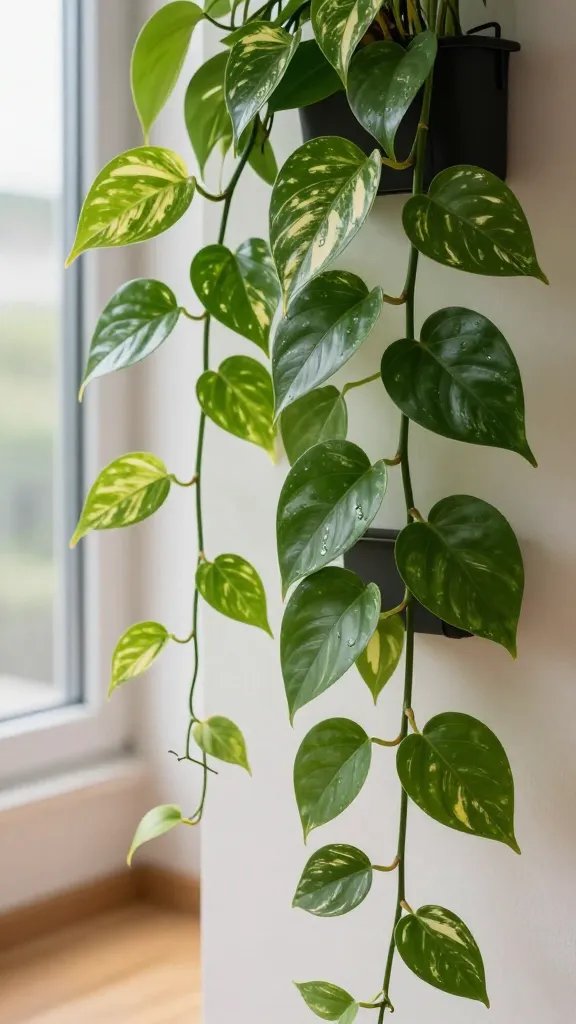
Want instant jungle vibes with minimal drama? Pair Pothos (Epipremnum aureum) and Heartleaf Philodendron (Philodendron hederaceum). Both thrive in bright, indirect light, tolerate low light, and forgive a missed watering or three.
Their leaf shapes create movement—pothos variegation pops while philodendron hearts soften the cascade. You’ll get fast growth without constant pruning panic.
Why It Works
- Matching thirst: Water when the top inch dries out.
- Same light range: Bright, indirect to medium light.
- Textural contrast: Variegation vs. soft green hearts.
Tips
- Stagger them vertically—pothos higher, philodendron mid-height.
- Snip and propagate tips to thicken the curtain effect.
- Rotate monthly to prevent one-sided growth.
Use this combo if you want reliable, forgiving greenery with a full, cascading look. FYI, it’s perfect for beginners or rental setups.
2. Sun-Kissed Drama: Sweet Potato Vine + Creeping Jenny
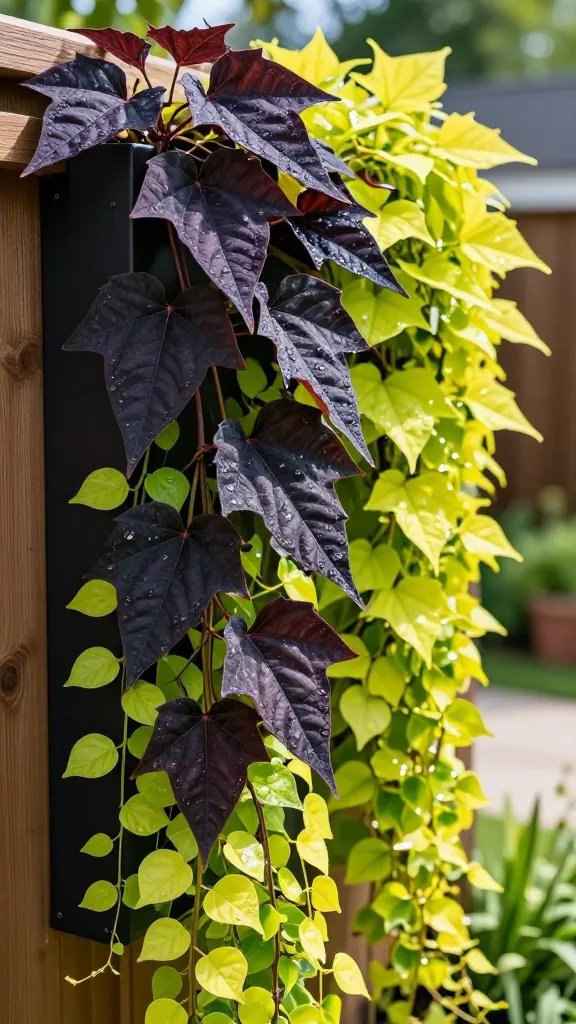
If your vertical garden gets serious sun, go bold with Ornamental Sweet Potato Vine (Ipomoea batatas) and Creeping Jenny (Lysimachia nummularia ‘Aurea’). This duo spills like a neon waterfall and laughs at long summer days.
Sweet potato vine brings larger, sculptural leaves in lime, black, or deep purple. Creeping Jenny threads golden coins through those big leaves for juicy contrast.
Key Points
- Full sun favorites that tolerate some afternoon scorch once established.
- Fast growers—expect quick coverage for trellises and living walls.
- Color contrast: Chartreuse Jenny vs. dark Ipomoea = instant pop.
Care Notes
- Keep soil consistently moist, not soggy.
- Fertilize lightly every 3–4 weeks during peak growth.
- Pinch vines to control length and encourage branching.
Use this when you want high-impact curb appeal. It’s a summer showstopper that photographs ridiculously well—seriously, your phone camera will freak out (in a good way).
3. Romantic Shade Cascade: English Ivy + Boston Fern
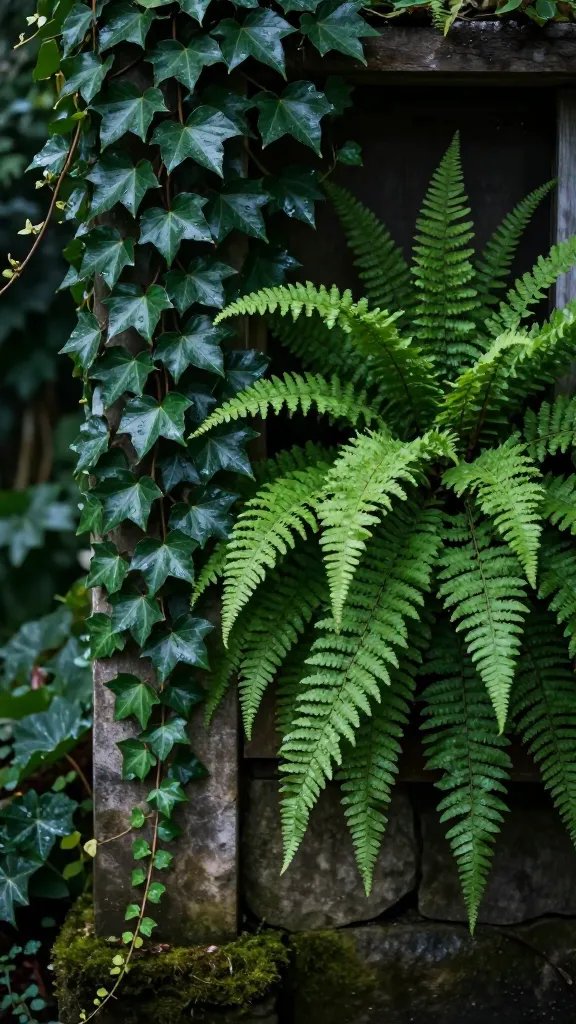
Need a moody, classic vibe for a shaded wall? Team English Ivy (Hedera helix) with a trailing Boston Fern (Nephrolepis exaltata). This combo layers glossy ivy streams with soft, feathery fronds.
It thrives in cooler, indirect light spots where other combos sulk. The textures look expensive and timeless—think secret garden energy with less maintenance than you’d expect.
Placement & Care
- Light: Bright, indirect to shade; keep out of harsh afternoon sun.
- Humidity: Ferns love moisture—mist or group plants to boost humidity.
- Watering: Ivy tolerates slight dryness; ferns prefer evenly moist soil.
Pro Tips
- Place the fern slightly higher so fronds drape over ivy stems.
- Trim ivy to prevent it from smothering the fern’s crown.
- Use a moisture-retentive mix: peat/coir + perlite with bark chips.
Use this combo for shaded patios, bathrooms with windows, or north-facing balconies. It brings instant depth and a little “old-world” charm—IMO, perfect for reading nooks outdoors.
4. Edible Meets Ornamental: Strawberry Runners + Thyme
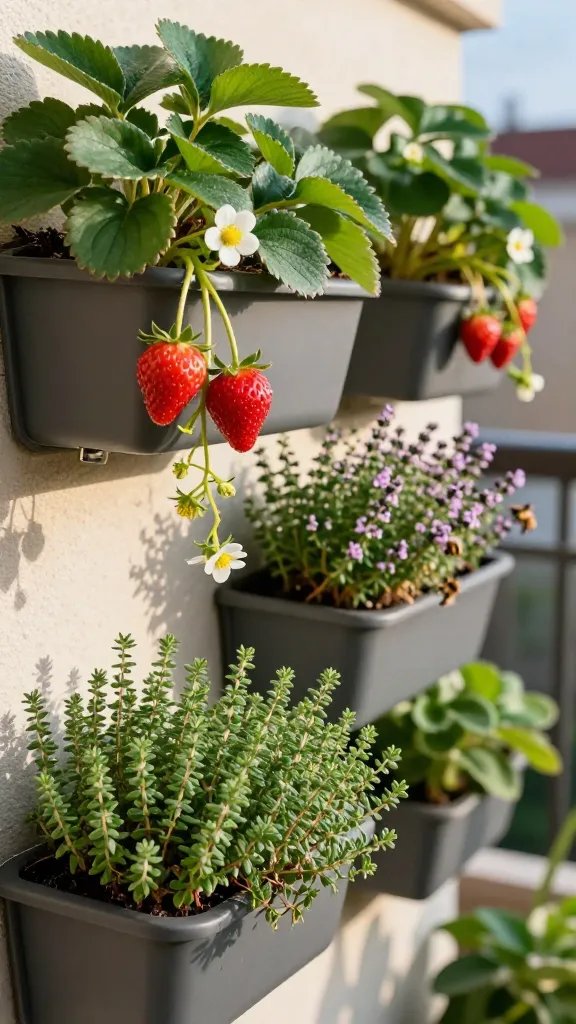
Want your vertical garden to look gorgeous and feed you? Pair everbearing strawberries (Fragaria × ananassa) with trailing or creeping thyme (Thymus vulgaris or T. serpyllum). The strawberries spill runners and fruit, while thyme weaves a fragrant carpet.
The combo suits containers, pocket planters, or wall-mounted troughs. Bonus: thyme attracts pollinators that help the strawberries set fruit—teamwork makes the berries work.
How To Set It Up
- Sun: 6–8 hours of direct light for best yields.
- Soil: Well-draining mix; add sand or grit to keep thyme happy.
- Water: Keep strawberries evenly moist; thyme tolerates slight dryness.
Smart Add-Ons
- Slip in a few trailing nasturtiums for edible flowers and extra spill.
- Mulch lightly to keep fruit clean and reduce splash-back.
- Choose compact berry varieties like ‘Albion’, ‘Seascape’, or ‘Tristan’ for vertical setups.
Use this when you want taste + texture. It’s perfect for balcony gardeners who snack while watering—trust me, the first ripe berry pays you back emotionally.
5. Drought-Tolerant Stunners: String Of Pearls + Donkey’s Tail Sedum
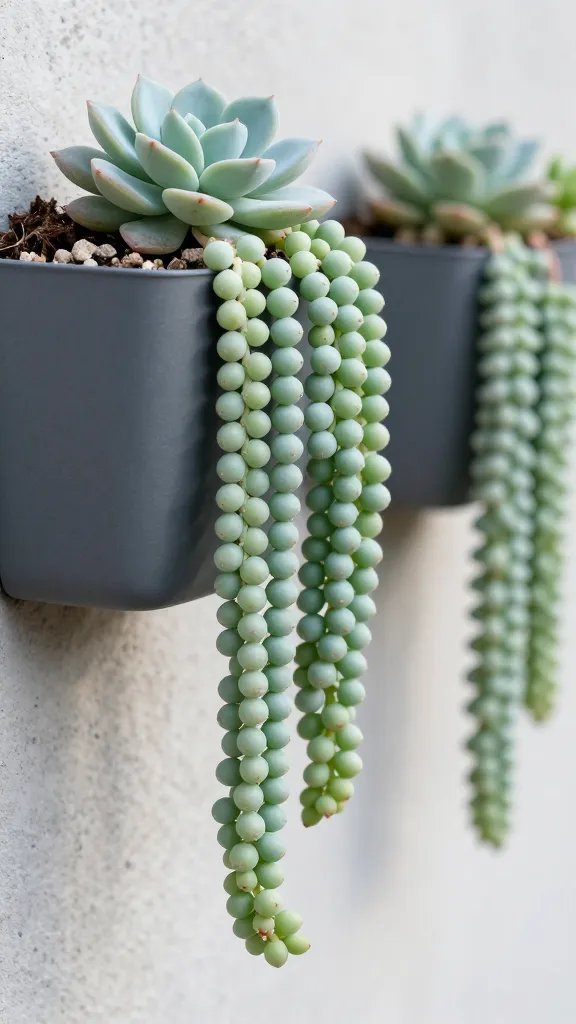
Hate watering schedules? Try a succulent cascade with String of Pearls (Senecio/Curio rowleyanus) and Burro’s Tail/Donkey’s Tail (Sedum morganianum). They deliver striking form—bead-like strands meet plump, trailing tails.
Both embrace bright light and thrive in lean, fast-draining soils. You’ll get sculptural detail that reads modern, minimal, and a little futuristic.
Care Essentials
- Light: Bright, indirect to some gentle morning sun; protect from harsh midday rays.
- Water: Deeply but infrequently—let soil dry thoroughly between waterings.
- Soil: Cactus/succulent mix with extra pumice or perlite.
Handling & Styling
- Handle burro’s tail gently—leaves drop if you breathe on them weird.
- Mount in wall pockets with drainage to prevent root rot.
- Add a third accent like String of Dolphins for quirky shapes.
Use this combo for sunny windows, covered patios, or minimalist living walls. It’s your low-effort, high-style option—FYI, overwatering is the only real way to fail here.
Quick Reference: Pairing Cheat Sheet
- Low Light, Low Drama: Pothos + Heartleaf Philodendron
- Full Sun, Big Color: Sweet Potato Vine + Creeping Jenny
- Shade, Classic Texture: English Ivy + Boston Fern
- Edible, Pretty: Strawberries + Thyme (plus nasturtiums if you’re extra)
- Drought-Tolerant, Sculptural: String of Pearls + Donkey’s Tail
General Vertical Garden Tips
- Match vibes: Pair plants with the same light and watering needs.
- Layer heights: Place faster growers higher to trail further.
- Feed lightly: Too much fertilizer = leggy vines and fewer blooms.
- Trim smart: Pinch tips to thicken; propagate cuttings to fill gaps.
- Drainage matters: Every pocket or planter needs a way to dry out.
Ready to build your cascade? Start with one combo and watch the wall transform. Mix textures, mind the light, and keep the watering can on a need-to-use basis. Your vertical garden is about to become the backdrop of every “OMG what’s that plant?” conversation—seriously, prepare for compliments.