
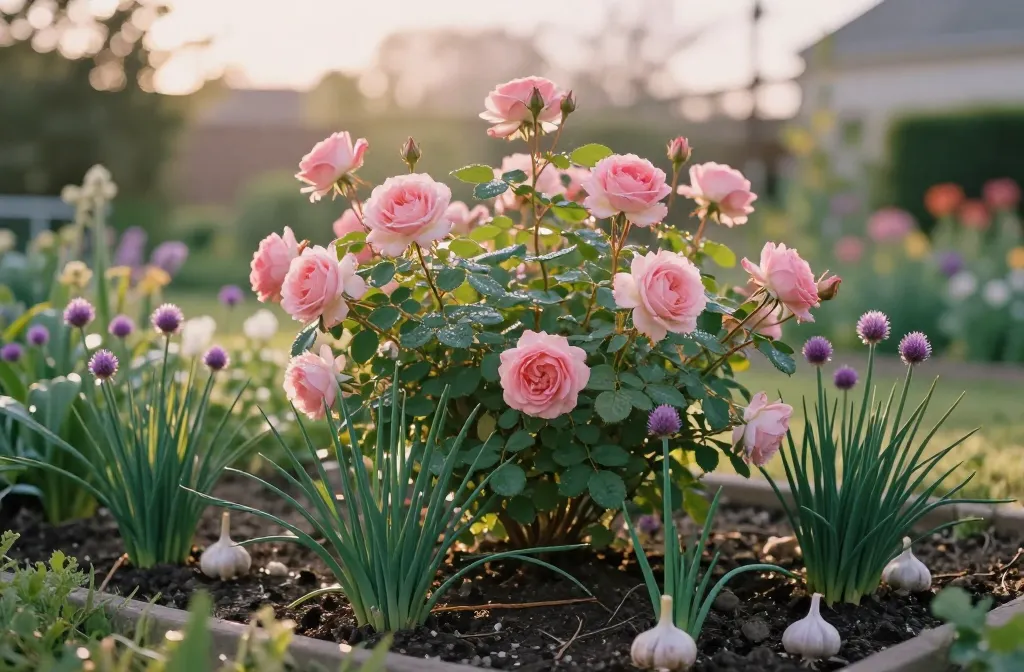
Craving a gorgeous garden you can dote on without leaving the house? These companion plant pairings deliver drama, fragrance, and harvests while keeping your hands happily busy. We’re talking high-attention combos—plants that reward your TLC with big payoffs. Ready to baby your beds and brag about the results?
1. Roses + Garlic And Chives: The Glam Squad With Built-In Bodyguards
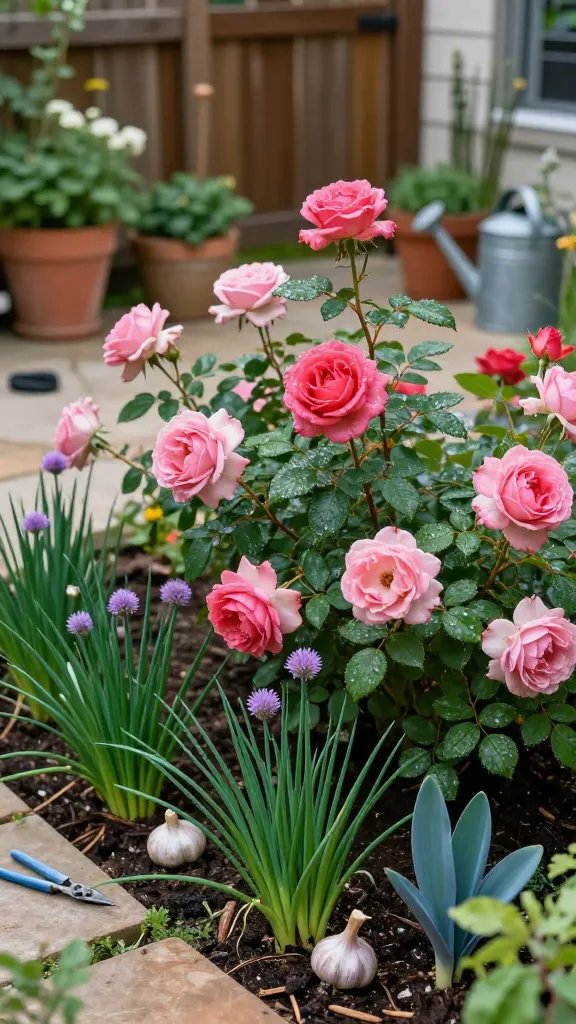
You want dazzling blooms and fewer pests? Pair your roses with alliums like garlic and chives. The sulfurous aroma helps deter aphids and black spot, while the rosy show keeps your patio feeling like a mini botanical garden.
Plant chives in small clumps around the base and tuck garlic bulbs between roses in fall. You’ll fuss with deadheading and pruning, but that attention pays off with cleaner foliage and healthier canes.
Why It Works
- Allium armor: Chives and garlic release compounds that repel aphids and thrips.
- Better bloom quality: Reduced disease pressure equals more buds.
- Bonus harvest: Snip chives for eggs and save garlic scapes for stir-fries.
How To Plant
- Spacing: Chives every 10–12 inches; garlic cloves 6 inches apart.
- Soil: Rich, well-draining, slightly acidic to neutral.
- Care: Mulch to keep roots cool; water deeply; remove spent blooms.
Use this if you love high-touch grooming and want a garden corner that looks like a perfume ad, minus the pests.
2. Tomatoes + Basil + Marigolds: The Kitchen-Tiered Power Couple (Okay, Trio)
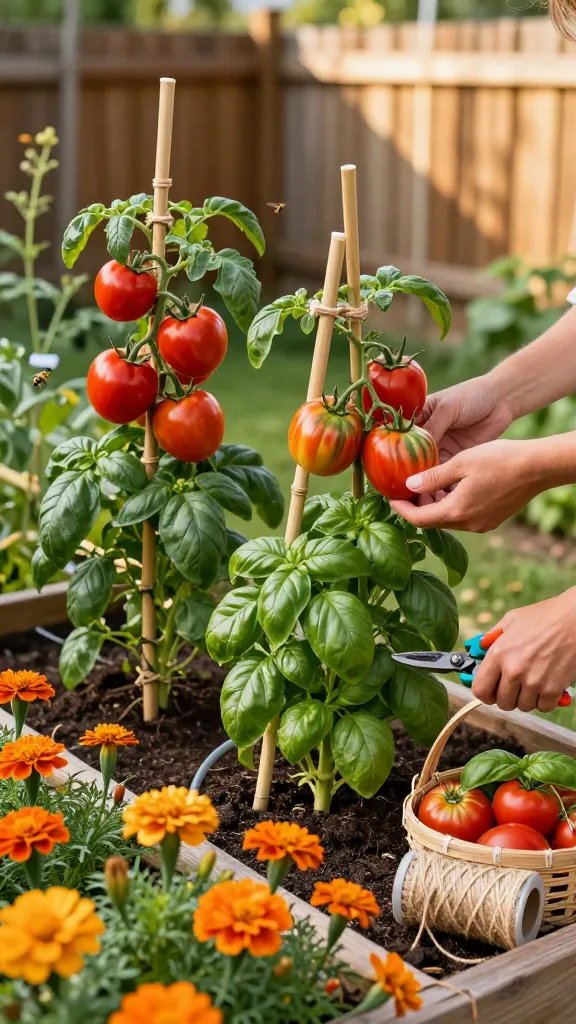
Tomatoes look good, smell good, and taste like summer. Add basil and marigolds for a one-stop pizza garden that also keeps pests guessing. High attention? Absolutely. But every pinch and tie-up gives you sweeter fruit and fewer headaches.
Basil boosts flavor and attracts pollinators, while French marigolds help discourage root-knot nematodes and distract pests. You’ll be out there pruning suckers, staking vines, and harvesting like a small-scale farmer—bliss, right?
Key Points
- Basil boosts: Plant 2–3 basil plants per tomato to create a fragrant, pollinator-friendly halo.
- Marigold moat: Ring beds with French marigolds to help with soil-borne nasties.
- Airflow is life: Prune for strong single or double leaders.
Tips
- Choose indeterminate tomatoes for continuous harvests.
- Use drip irrigation to keep leaves dry and prevent blight.
- Pinch basil often to prevent flowering and keep it bushy.
This combo hits if you love cooking as much as gardening and you don’t mind a daily lap through the vines. FYI, your caprese salad just DM’d “thank you.”
3. Cucumbers + Dill + Nasturtiums: The Crunchy, Tangy, Pest-Confusing Crew
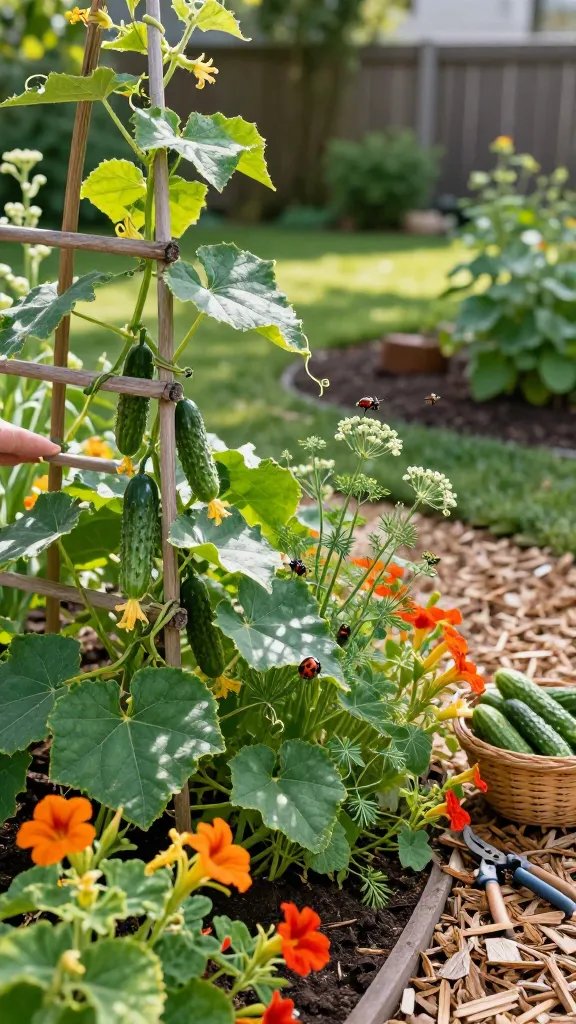
If you live for that first cold, crisp cuke from the vine, build a support system that hustles. Dill attracts hoverflies and parasitic wasps that target aphids and caterpillars. Nasturtiums act like adorable decoys, luring pests away while giving you edible flowers with a peppery kick.
Train cucumbers up a trellis to improve airflow and fruit shape. You’ll spend time guiding tendrils, checking leaves for cucumber beetles, and harvesting frequently—exactly the kind of attention cuddle your plants crave.
Planting Game Plan
- Trellis height: 5–6 feet for slicers; shorter for picklers.
- Dill placement: Scatter along the sunny side; let some plants bolt for beneficial insects.
- Nasturtiums: Trail along the bed edge to intercept pests and add color.
Care Essentials
- Feed with a balanced organic fertilizer every 2–3 weeks once vines run.
- Mulch to keep soil evenly moist and fruits clean.
- Harvest small and often to encourage continuous production.
Use this when you want patio snacking and DIY pickles, with a side of integrated pest management that actually looks pretty.
4. Peppers + Onions + Oregano: The Mediterranean Defense League
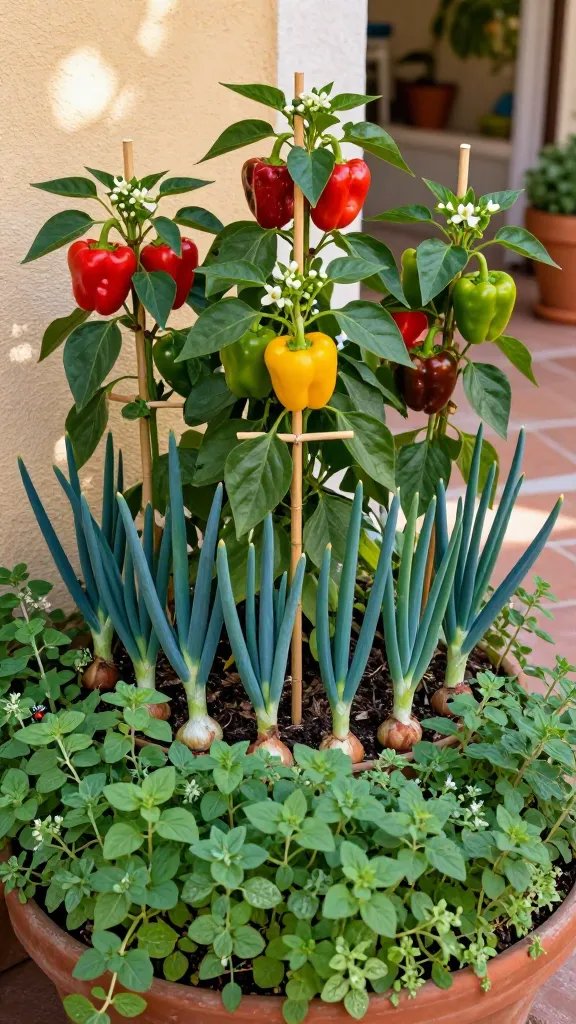
Peppers love warmth, attention, and a little entourage. Pair them with onions to repel pests and oregano to fill in the understory with a fragrant groundcover that hosts beneficials. You’ll stake, top, and fuss with them—and the plants will reward you with glossy fruits that actually taste like something.
Compact pepper varieties fit well in containers, too. Tuck onions between plants to make the most of space and let oregano spill toward the edges for weed suppression.
Why This Slaps, IMO
- Pest pressure drops: Onion scent helps deter aphids and fungus gnats.
- Flavor friends: Oregano brings pollinators and pairs with peppers in basically every recipe.
- Heat management: Oregano shades soil, reducing moisture swings.
Care Notes
- Top peppers at 8–10 inches to encourage branching if you want bushier plants.
- Stake or cage to prevent wind snap and keep fruit off soil.
- Fertilize lightly but often—peppers dislike big nitrogen spikes.
Use this if you love neat, fragrant beds and want a salsa garden that doubles as a pest-savvy mini-meadow.
5. Lavender + Sage + Strawberries: The Scented Pollinator Party With Dessert
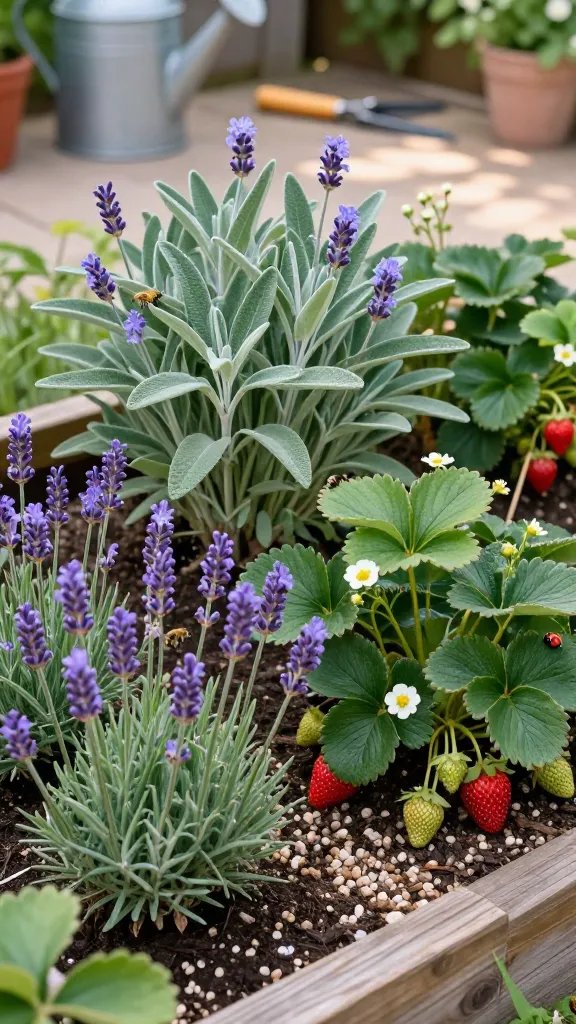
Want a bed that smells like summer and hands you snacks? Lavender and sage attract pollinators and predatory insects, while strawberries creep underneath like sweet, edible mulch. Yes, this combo asks for pruning, deadheading, and a little runner-wrangling—but the payoff tastes incredible.
Choose compact lavender varieties for borders and plant sage as a structural anchor. Let strawberries fill in the gaps, then steer runners where you want more berries next season.
Layout Ideas
- Lavender: Row or border for color and fragrance; full sun is non-negotiable.
- Sage: Mid-bed clumps for height and pollinator magnetism.
- Strawberries: Groundcover layer, spaced 12–18 inches apart.
Care To-Dos
- Shear lavender lightly after bloom to keep it compact.
- Prune woody sage in early spring to prevent legginess.
- Mulch around strawberries and remove old leaves after fruiting.
Use this when you want a low-ish hedge that smells divine and hands you bowls of berries. Seriously, breakfast will never be the same.
Bonus time! Since the title promises 16 high-attention combinations, here are the precise pairings baked into those five sections, grouped for quick planning and maximum fuss-friendly joy:
Roses + Alliums (4 combos)
- Roses + Garlic: Aromatic pest deterrent, fall-planted ally.
- Roses + Chives: Aphid distraction and edible garnish.
- Roses + Garlic + Chives: Layered defense for disease-prone varieties.
- Roses + Garlic + Chives + Mulch Roses (same bed combo, added cultural practice): Extra moisture regulation for cleaner foliage.
Tomato Guild (4 combos)
- Tomatoes + Basil: Flavor boost and pollinator pull.
- Tomatoes + Marigolds: Soil health and pest confusion.
- Tomatoes + Basil + Marigolds: The classic trifecta.
- Tomatoes (Indeterminate) + Basil (Genovese) + French Marigolds: Specific varieties for high-yield patios.
Cucumber Guild (3 combos)
- Cucumbers + Dill: Beneficial insect magnet.
- Cucumbers + Nasturtiums: Trap crop plus edible flowers.
- Cucumbers + Dill + Nasturtiums: Full pest-management package.
Pepper Guild (3 combos)
- Peppers + Onions: Smell-based deterrent near root zone.
- Peppers + Oregano: Groundcover and pollinator habitat.
- Peppers + Onions + Oregano: Compact Mediterranean synergy.
Fragrant Pollinator Bed (2 combos)
- Lavender + Sage: Drought-tolerant magnets for bees.
- Lavender + Sage + Strawberries: Scented bed with dessert underfoot.
Ready to get (happily) hands-on? Pick one combo, plant it this weekend, and give it the kind of attention your houseplants wish they got. Your garden will show off, your kitchen will cheer, and your future self will thank you with armfuls of blooms and bites.