
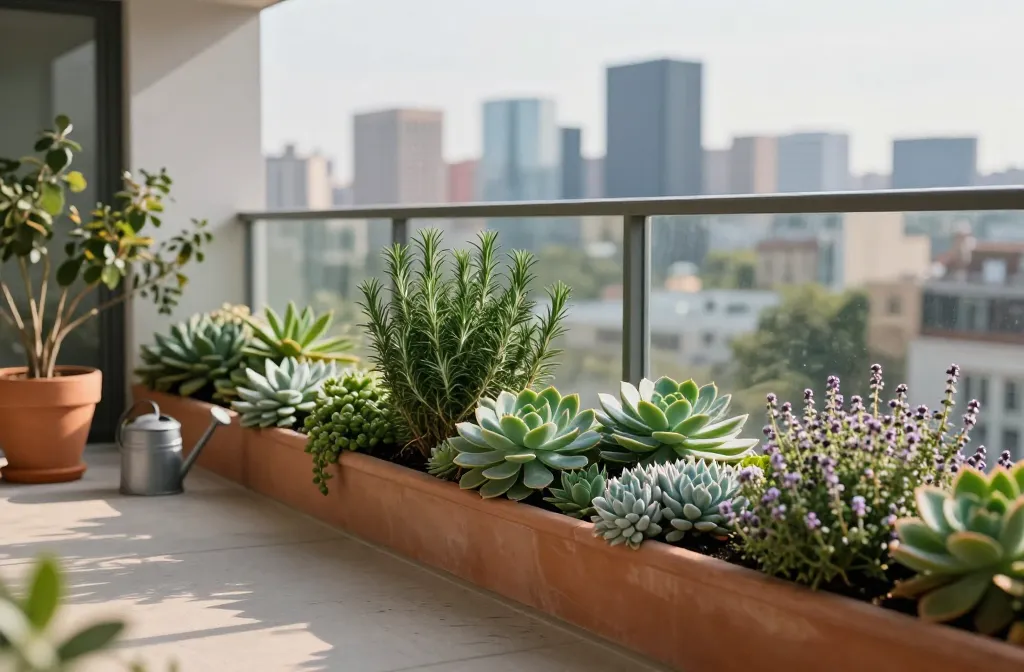
Your balcony gets crispy by noon and laughs at watering cans? Good news: some plant duos love that challenge. These drought-tolerant pairings sip water slowly, look gorgeous, and keep each other healthier. You’ll score color, fragrance, and pollinators without babysitting every day. Ready to build a balcony jungle that survives your weekend away?
1. Succulent Superstars + Spillover Herbs (Sedum & Echeveria With Rosemary & Thyme)
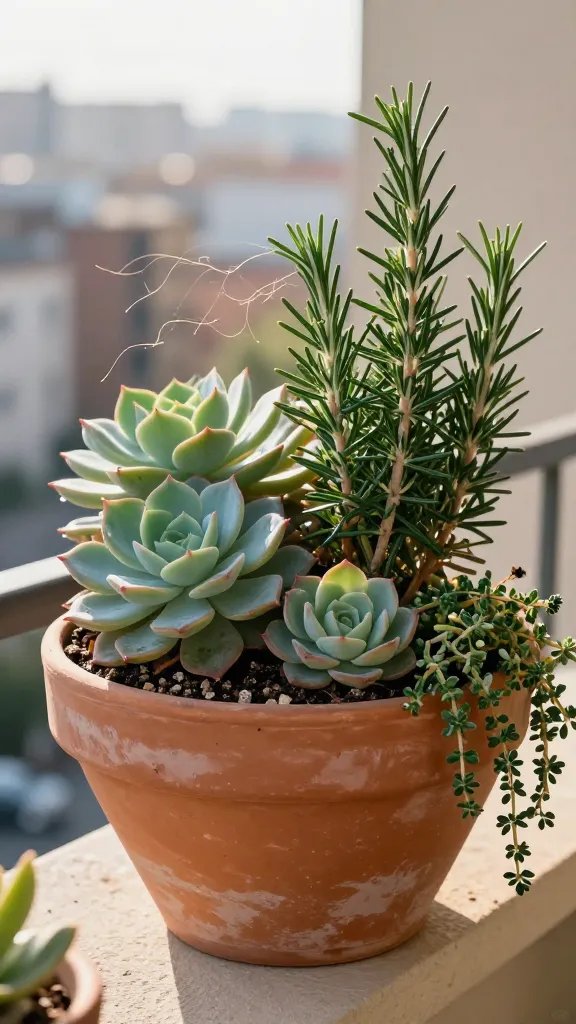
Succulents bring structure while Mediterranean herbs bring scent and flavor. Together they shrug off heat, wind, and missed waterings. Plus, you get edible bonuses without sacrificing style.
Why It Works
- Shared love of dry feet: All prefer gritty, fast-draining soil.
- Different heights and textures: Rosettes of echeveria nest under upright rosemary; thyme spills prettily.
- Fewer pests: Aromatic oils from rosemary and thyme deter some nibblers.
How To Plant
- Container: Shallow, wide terracotta or concrete trough for airflow.
- Soil: 60% cactus mix, 30% perlite or pumice, 10% compost for minimal nutrients.
- Light: 6–8 hours of direct sun. Morning sun with light afternoon shade if temps exceed 95°F.
- Water: Deep soak, then ignore until soil is bone-dry 2–3 inches down. FYI, rosemary hates wet ankles.
Smart Picks
- Echeveria ‘Perle von Nürnberg’ for soft purple tones.
- Sedum ‘Angelina’ for chartreuse contrast.
- Prostrate rosemary and creeping thyme for trailing edges.
Use this combo when you want instant texture that stays neat. It’s great for rail planters and low tables where you can brush thyme as you walk by.
2. Sunbaked Bee Bar: Lavender + Salvia + Yarrow (Lavandula, Salvia nemorosa, Achillea)
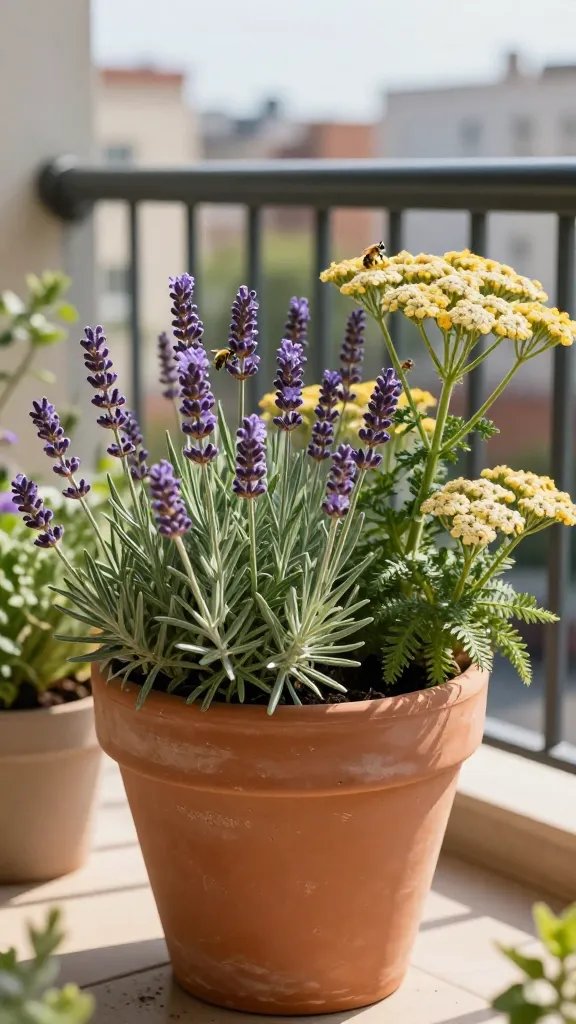
Want flowers that keep blooming while your balcony bakes? This trio delivers color waves, fragrance, and non-stop pollinators. It’s a mini meadow that doesn’t sulk in drought.
Why It Works
- Deep roots, shallow needs: Each species stores reserves, so they rebound after dry spells.
- Complementary bloom times: Salvias start early, lavender holds steady, yarrow carries the baton.
- Pollinator magnet: Expect bees, butterflies, and the occasional grateful neighbor.
Planting Setup
- Container: 14–18 inch pot minimum; bigger pot = bigger bloom show.
- Soil: Lean and draining; mix standard potting soil with 40% mineral grit (pumice or coarse sand).
- Light: Full sun. Rotate pot monthly to keep growth even.
- Water: In heat waves, water once weekly; otherwise every 10–14 days.
Care Tips
- Deadhead salvia spikes to trigger encore blooms.
- Shear lavender lightly after first flush, don’t cut into woody stems.
- Choose compact yarrow like Achillea ‘Little Moonshine’ to avoid flop.
Use this when you want a floral “wow” with minimal fuss. It’s especially strong as a focal container by a chair or bistro table.
3. Heat-Proof Herb Garden: Sage + Oregano + Chives (Salvia officinalis, Origanum vulgare, Allium schoenoprasum)
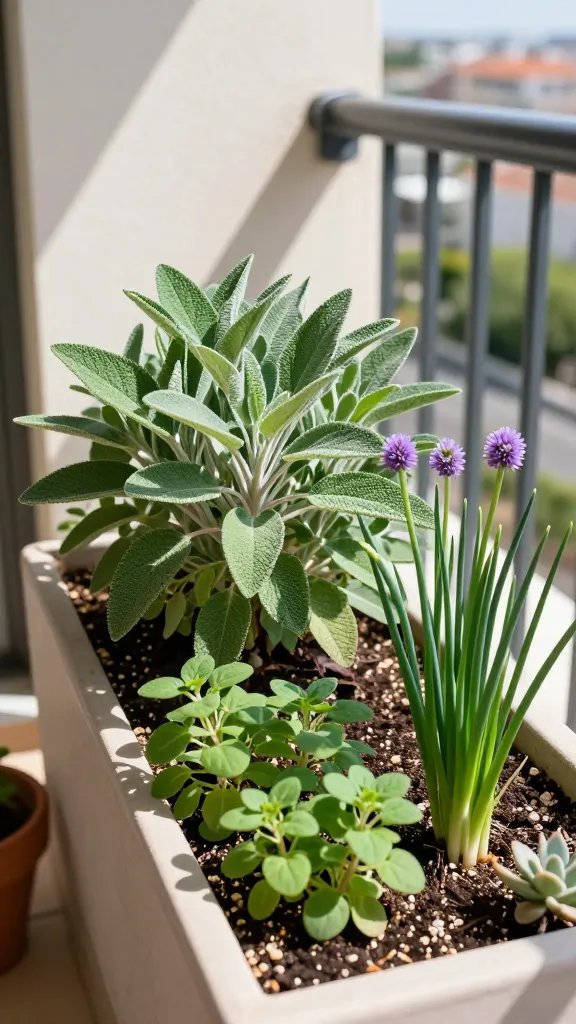
Herbs that taste better when slightly stressed? Yes please. Sage, oregano, and chives power through dry, sunny balconies and pack serious flavor.
Why It Works
- Shared Mediterranean DNA: They evolved for rocky soils and infrequent rain.
- Different root zones: Sage anchors, oregano creeps, chives clump—no turf wars.
- Continuous harvest: Snip-as-you-go encourages bushiness.
Container Recipe
- Container: Rectangular window box or 12–16 inch pot.
- Soil: 70% potting mix, 20% perlite, 10% compost.
- Light: 5–8 hours sun; chives forgive partial shade.
- Water: Every 7–12 days depending on heat; let top inch dry.
Flavor Upgrades
- Golden oregano for pop against gray-green sage.
- Purple sage adds moody color that looks wild chic.
- Garlic chives if you want a mild garlic kick.
Perfect if you cook a lot and forget to water, IMO. It’s edibles-meet-ornamentals without high maintenance.
4. Silver And Citrus: Artemisia + Santolina + Marigold (Artemisia ‘Powis Castle’, Santolina chamaecyparissus, Tagetes)
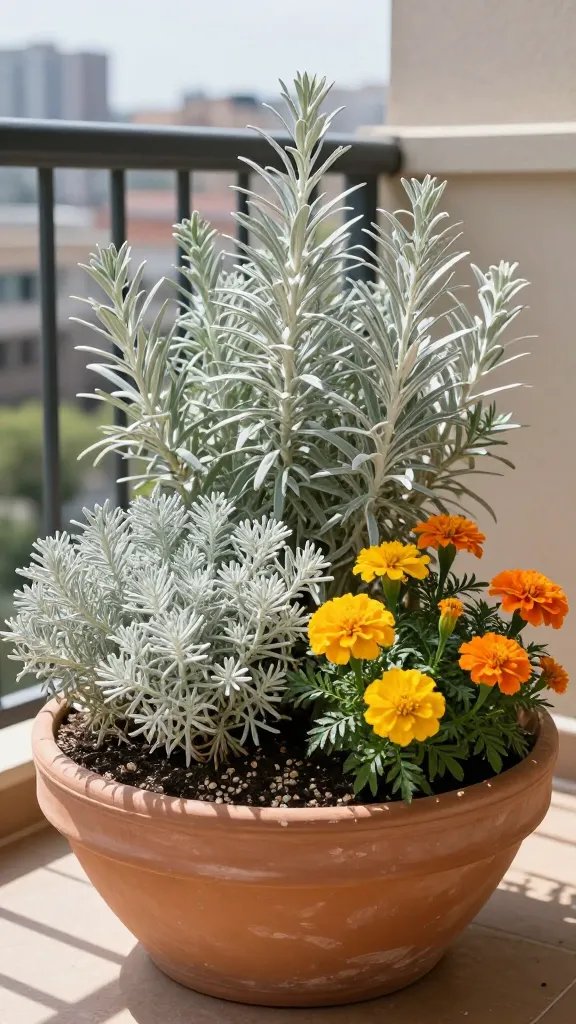
Silver foliage reflects heat while marigolds bring cheerful color and a bit of pest pushback. This trio looks like summer vacation in a pot and smells fantastic.
Why It Works
- Reflective foliage: Artemisia and santolina stay cool and conserve moisture.
- Contrasting forms: Feathery artemisia, tidy santolina mounds, bold marigold blooms.
- Resilience: All three take wind and sun without drama.
Design And Care
- Container: Low bowl or 16-inch pot for that soft, mounded look.
- Soil: Fast-draining, low fertility mix; don’t overdo the compost.
- Light: Full sun; afternoon sun okay.
- Water: Every 7–10 days; let the top 2 inches dry fully.
Pro Tips
- Pinch marigold spent blooms for nonstop color.
- Shear santolina lightly after flowering to keep it dense.
- Avoid wet winters—raise the pot on feet to boost drainage.
Use this combo for bold curb appeal on railings or near doors. It reads clean and modern but still playful.
5. Desert Drama: Hens-and-Chicks + Blue Fescue + Portulaca (Sempervivum, Festuca glauca, Moss Rose)
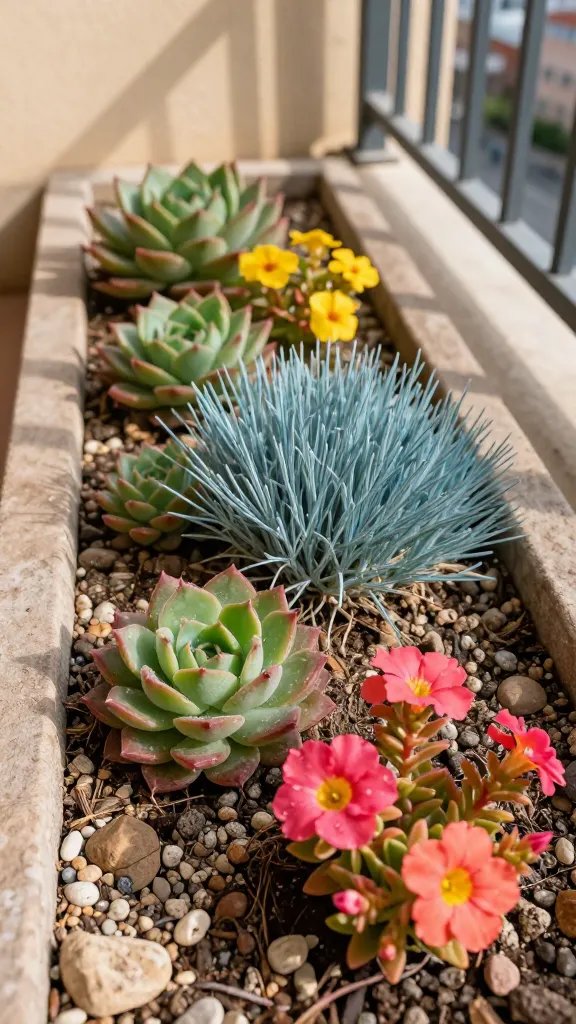
Crave color that doesn’t flop when you skip a watering? This combo blends juicy blooms with sculptural rosettes and airy grasses. It’s basically a tiny desert landscape in a bowl.
Why It Works
- Extreme drought tolerance: Sempervivum and portulaca handle long dry stretches.
- Texture party: Spiky rosettes, fine blue blades, and satiny flowers.
- Heat resilience: Perfect for south- or west-facing balconies that cook all afternoon.
Planting Guide
- Container: Shallow dish or hypertufa trough; width matters more than depth.
- Soil: 50% cactus mix, 30% pumice, 20% regular potting soil.
- Light: 6+ hours direct sun; more sun = more bloom on portulaca.
- Water: Infrequent but thorough; every 10–14 days in peak heat.
Nice-to-Haves
- Sempervivum ‘Ruby Heart’ for burgundy rosettes.
- Festuca ‘Elijah Blue’ for that icy, tufted glow.
- Portulaca ‘Sundance’ mix for vibrant, low-growing color.
Plant this when you want high-impact color with low effort. It’s especially great for sunny ledges and coffee-table planters outdoors—seriously, it’s that tough.
Ready to level up your balcony with plants that don’t guilt-trip you? Pick one of these pairings, grab gritty soil, and plant tight for instant style. Your sunbaked space can look lush and smell amazing—with way less watering than you think. Trust me, your weekend plans and your plants can finally be friends.