6 Herbs That Thrive in Vertical Pocket Planters
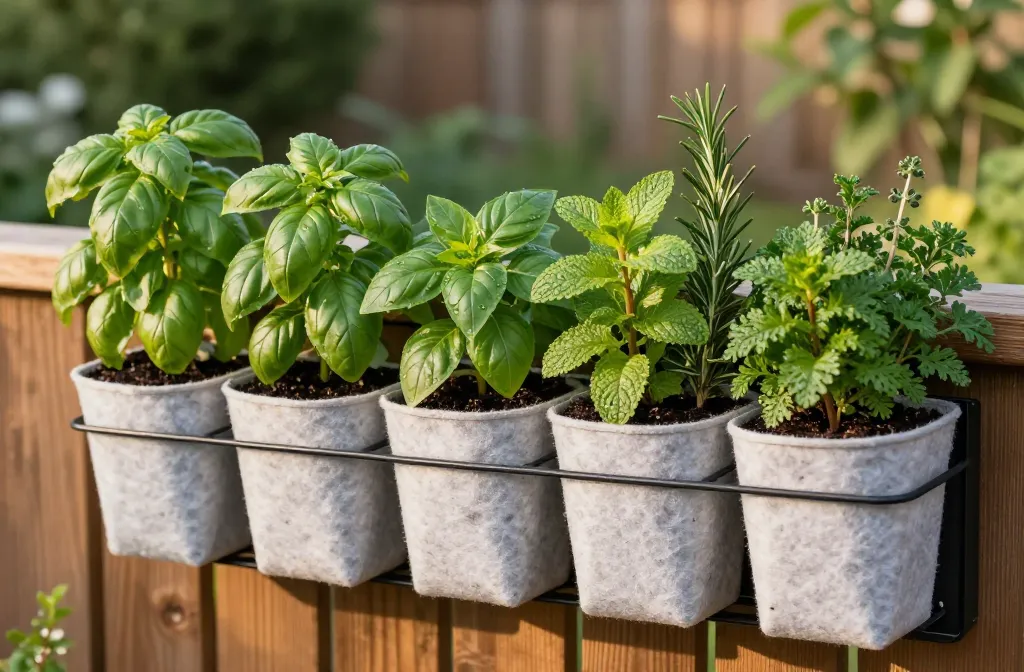
Short on space but big on flavor? Vertical pocket planters let you grow an entire herb garden on a wall, railing, or fence. They drain well, look gorgeous, and keep your favorite flavors at eye level. Ready to turn that blank wall into a snackable, sniffable herb bar? Let’s plant smart with herbs that actually love this setup.
1. Basil That Actually Bushes Up
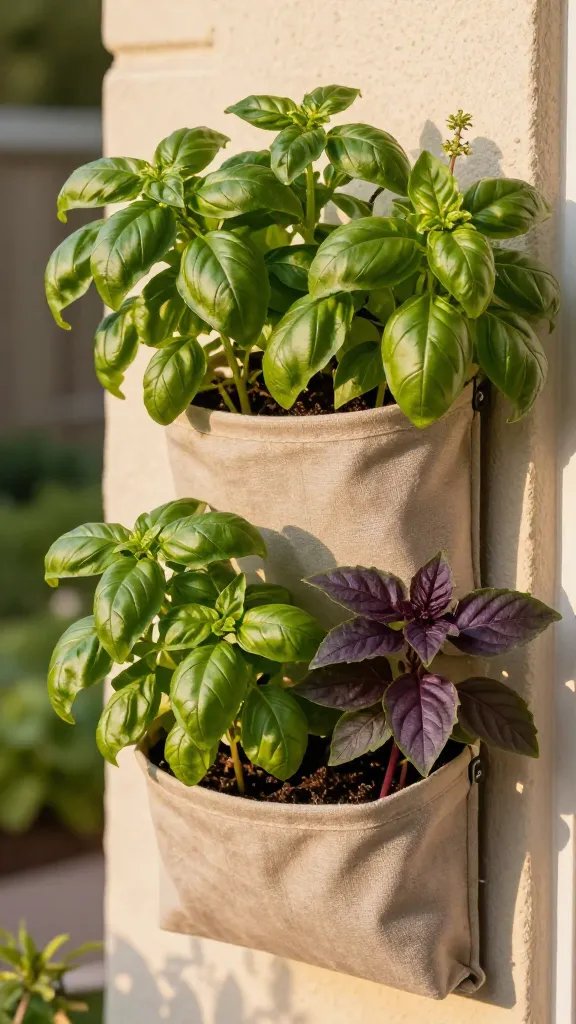
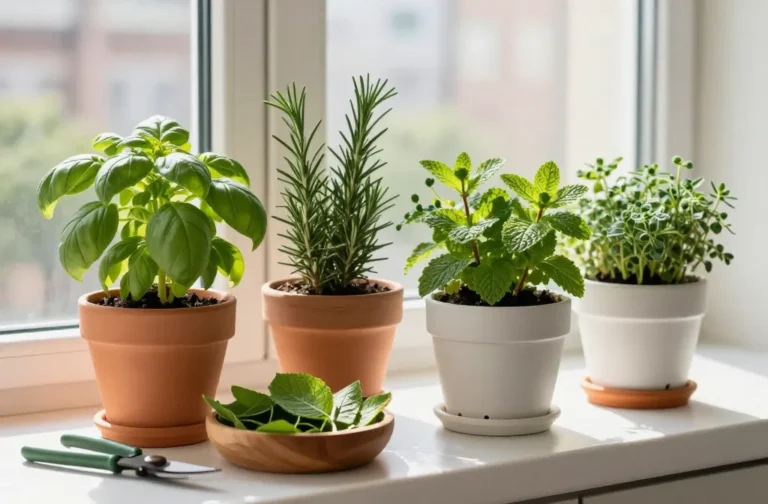
Basil loves the warmth of a sunny wall and rewards you with piles of fragrant leaves. In pockets, it stays compact and easy to shape, which means more pesto and fewer leggy stems. Choose varieties that handle containers, and you’ll harvest all season.
Best Varieties
- Genovese for classic pesto and big leaves
- Greek (Dwarf) for tight mounds in small pockets
- Thai basil for a licorice kick and sturdy stems
Give basil the top or middle pockets where it gets the most light. Pinch off flower buds the second you see them to keep flavor sweet and growth focused.
Tips
- Use a well-draining mix with perlite; soggy pockets = sad basil.
- Water when the top inch dries; vertical pockets dry fast on hot days.
- Feed lightly every 2–3 weeks with a diluted organic fertilizer.
Want caprese on repeat? Basil in a sunny pocket delivers fast, flavorful leaves for pizzas, salads, and sandwiches.
2. Mint That Won’t Take Over Your Life
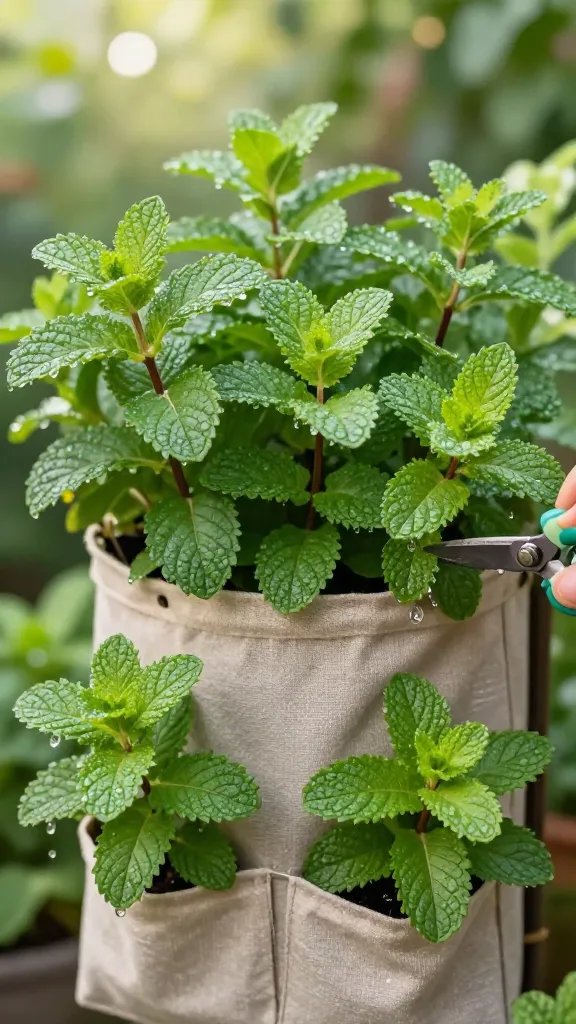
Mint grows like it has a personal vendetta against empty space. In the ground, it invades. In vertical pockets, containment is easy and growth stays lush. You’ll get fresh sprigs without the garden drama.
Smart Planting
- Place mint in lower pockets where it catches extra water runoff.
- Choose spearmint for mojitos or peppermint for tea and desserts.
- Try chocolate mint if you want dessert vibes without the calories (you’re welcome).
Mint tolerates partial shade and cooler spots, so it’s perfect for the side pockets that don’t roast at noon. Snip often to keep it dense and encourage fresh growth.
FYI
- Don’t mix multiple mints in one pocket; they cross and get weird flavors.
- Trim stems just above a leaf pair to encourage branching.
- Refresh soil each season to prevent root matting.
Use mint for iced teas, salads, and cocktails. It’s low effort, high reward, and seriously fresh.
3. Thyme That Cascades Like a Mini Waterfall
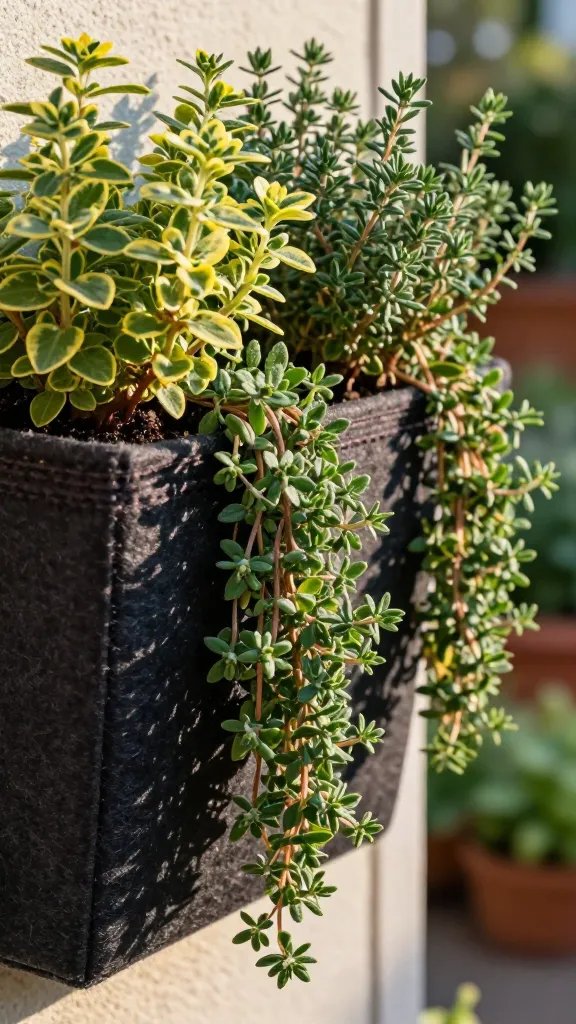
Thyme thrives in lean, well-draining soil and doesn’t need fuss. In vertical planters, it cascades over the pocket edges and looks designer-level chic. It’s also tough, aromatic, and ridiculously useful in the kitchen.
Varieties That Shine
- Lemon thyme for citrusy brightness on chicken and fish
- English thyme for classic savory dishes
- Creeping thyme for drapey, ornamental edges
Plant thyme near the top so it gets full sun and less moisture. It prefers to dry out between waterings, and that vertical airflow keeps it happy.
Care Notes
- Use a gritty mix (perlite or sand) to prevent root rot.
- Trim lightly after flowering to keep it neat and stimulate new shoots.
- Harvest by snipping entire sprigs; flavor concentrates in the leaves.
Thyme delivers big flavor in a small footprint. Use it for roasted veggies, marinades, and quick pan sauces.
4. Parsley That Pumps Out Garnishes
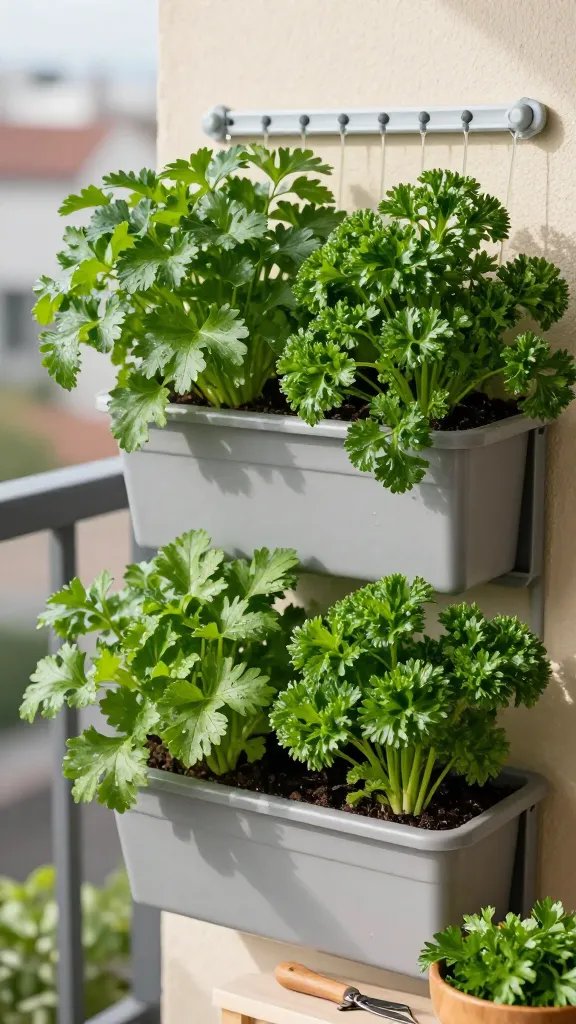
Parsley handles vertical life like a champ and gives you steady, cut-and-come-again harvests. It stays compact, looks lush, and brightens everything from eggs to grain bowls. The flavor is fresh, slightly peppery, and surprisingly addictive.
Flat vs. Curly
- Flat-leaf (Italian) for cooking—stronger flavor and easier chopping
- Curly for texture and garnish—great for visual pop
Parsley likes consistent moisture but hates wet feet. Middle pockets work best since they don’t dry out as fast as the top and don’t stay soggy like the bottom might.
Growing Tips
- Start from seedlings to skip the slow germination.
- Water evenly; droopy leaves bounce back fast after a drink.
- Feed monthly with a balanced, gentle fertilizer.
Chop it into chimichurri, tabbouleh, or omelets. It’s the herb that makes everything taste brighter.
5. Oregano That Loves the Sun-Baked Spots
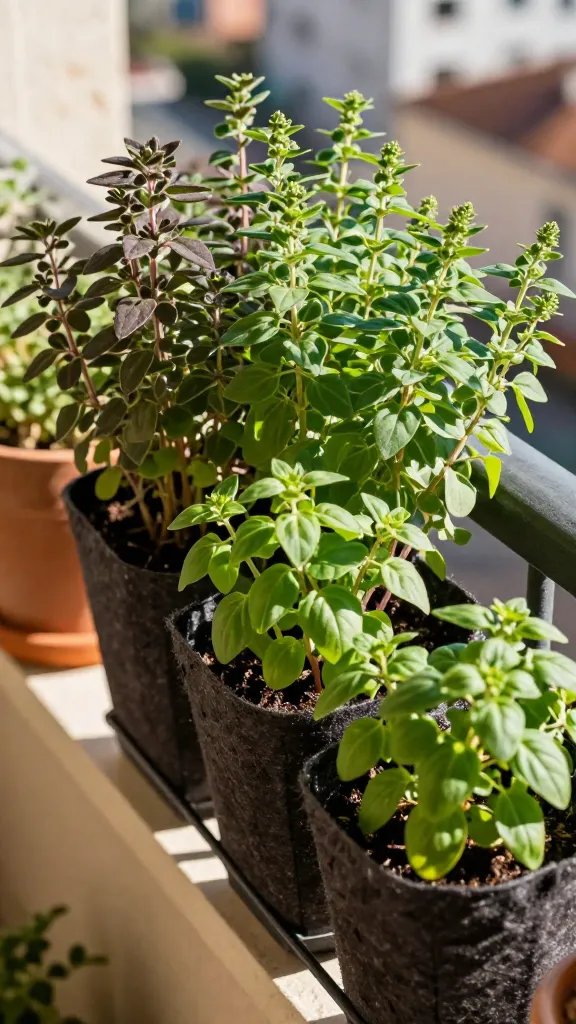
Oregano doesn’t flinch at heat and wind, which makes it perfect for the top row of a sunny vertical planter. It loves airy conditions and gives you that pizza-parlor aroma with almost zero effort. Plus, it’s a perennial in mild climates.
Top Picks
- Greek oregano for robust, authentic flavor
- Italian oregano for a slightly milder, versatile taste
- Hot & Spicy oregano for a kick (IMO, underrated)
Give oregano a sunny pocket with excellent drainage. It tolerates drought, so err on the dry side rather than drowning it. Snip often to keep it bushy.
Care Checklist
- Prune after flowering to prevent woodiness.
- Mix a little compost into the potting soil, but avoid heavy feeding.
- Harvest in the morning for max essential oils and flavor.
Use oregano in sauces, roasted potatoes, and grilled meats. It’s low maintenance and flavor-forward—seriously, what’s not to love?
6. Chives That Give You Flavor And Flowers
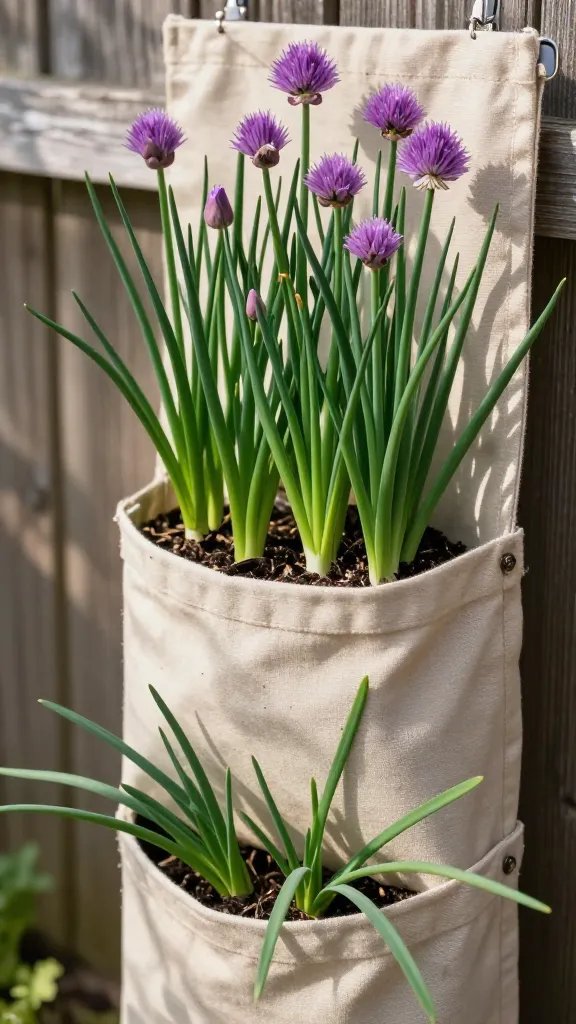
Chives grow upright and compact, which fits vertical pockets perfectly. They’re forgiving, cold-tolerant, and come back reliably in many zones. Bonus: the purple blossoms are edible and look fancy without trying.
Why They Work
- Scallion vibes without the bulk—snip and sprinkle for a mild onion hit.
- Garlic chives offer a garlicky note and flat leaves.
- Edible flowers double as garnish and pollinator bait.
Chives don’t mind a bit of shade, so tuck them in middle or lower pockets. Keep the soil lightly moist and trim regularly to encourage fresh, tender growth.
Pro Moves
- Cut a handful at once, leaving 1–2 inches to regrow.
- Divide clumps each year to keep them vigorous.
- Deadhead flowers if you don’t want reseeding.
Chives earn their spot with nonstop usefulness. Toss into dips, baked potatoes, omelets, and ramen for instant flavor.
Pocket Planter Setup Basics (Quick Reference)
- Sun: 5–7 hours for basil, oregano, and thyme; mint and chives handle partial shade.
- Soil: Light, well-draining potting mix with perlite; avoid heavy garden soil.
- Water: Top dries fastest; bottom stays wetter. Match herbs to pocket moisture.
- Spacing: One plant per pocket for airflow and lush growth.
- Fertilizer: Light, regular feeding beats heavy doses.
Pocket Placement Map (Easy Mode)
- Top Row: Basil, oregano, thyme (sun lovers, drier)
- Middle Row: Basil, parsley, chives (balanced moisture)
- Bottom Row: Mint, chives (catch more water, tolerate shade)
Harvesting Like A Pro
- Basil: Pinch stems above a leaf pair; never strip the top entirely.
- Mint: Take whole sprigs; frequent cutting keeps it lush.
- Thyme/Oregano: Cut sprigs; dry extras by hanging upside down.
- Parsley: Snip outer stems first; let the center keep growing.
- Chives: Shear a bunch; they bounce back fast.
That’s your six-pack of vertical herb heroes. They’re beautiful, hardworking, and incredibly forgiving—perfect for beginners and busy cooks. Set up your pockets, plant smart, and get ready to snip fresh flavor on demand. Your wall just became the best seat in the house, trust me.