
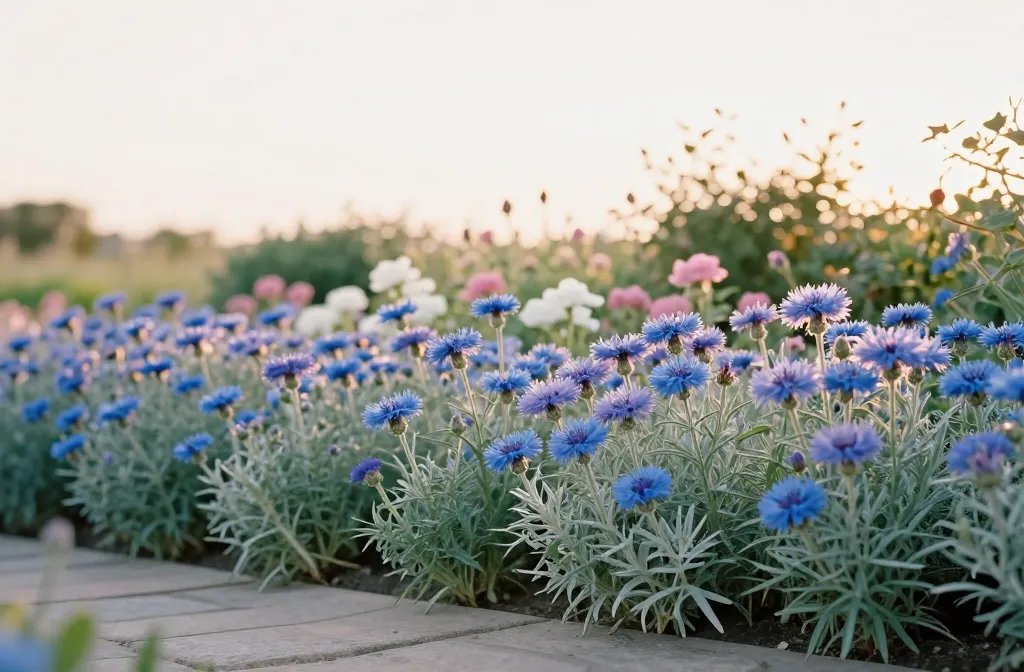
Ready to turn your borders from “meh” to mesmerizing? Centaurea blooms deliver feathery petals, dramatic buds, and that chic, wispy texture designers love. These beauties bridge seasons, soften hard edges, and make pollinators lose their minds. Let’s build those textured transitions like a pro—without overcomplicating your life.
1. Mountain Bluet: The Effortless Edge-Softener
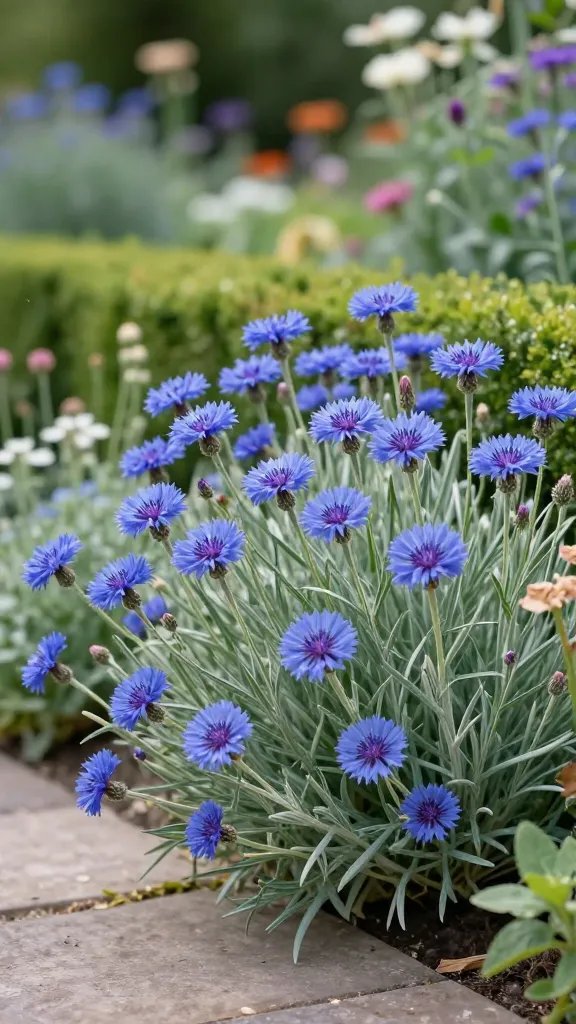
Meet Centaurea montana, the go-to for loose, fringed blooms and handsome blue-lilac tones. It flowers early and fills awkward spaces with airy movement that screams “intentional.” You’ll love how it drifts between shrubs and perennials without hogging attention.
Why It Works
- Fringed petals add delicate texture.
- Mounded habit covers bare patches fast.
- Reliable rebloom if you deadhead.
Use it to soften stone paths or transition from structured hedges to cottage-style beds. Instant charm, zero drama.
2. Classic Bachelor’s Button: The Wildflower That Plays Nice
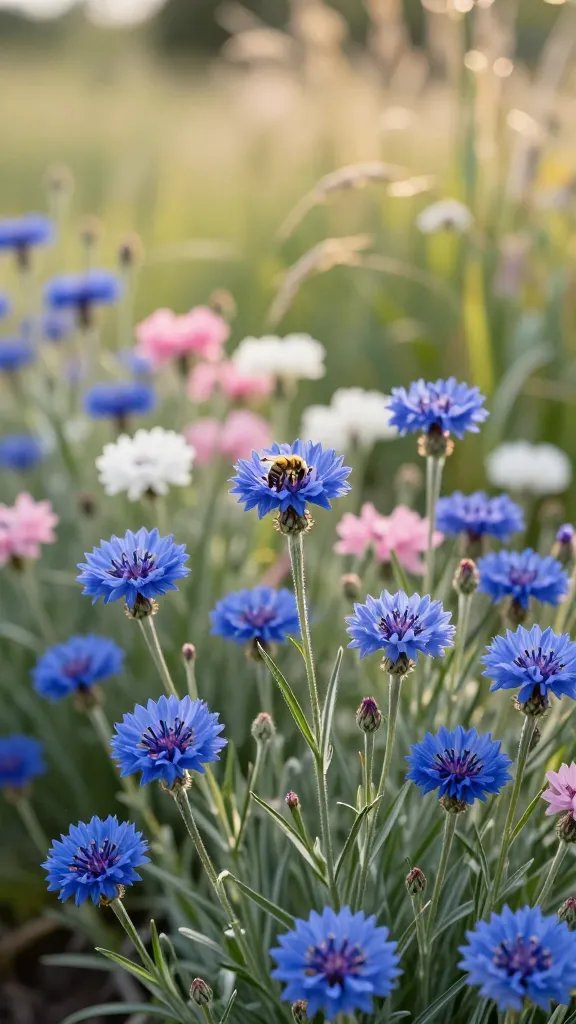
Centaurea cyanus brings those iconic cornflower-blue buttons with a meadow vibe. It self-sows just enough to feel natural without taking over (most of the time). Want movement and color without fuss? Done.
Tips
- Sow in fall or early spring for waves of bloom.
- Mix blue with pink and white forms for soft gradients.
- Cut often to encourage nonstop flowers.
Perfect for blending formal borders into looser areas. FYI, bees treat it like a floral buffet.
3. Amethyst In Snow: The Two-Tone Showoff
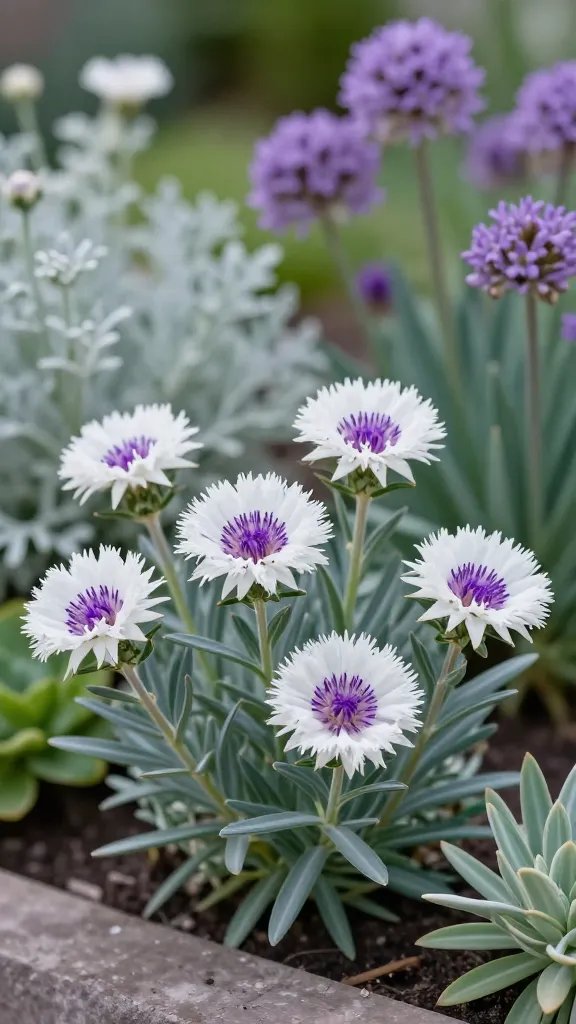
Centaurea montana ‘Amethyst in Snow’ sports white petals with a purple center—like a couture version of mountain bluet. It adds contrast without screaming for attention.
Key Points
- Compact habit suits front-of-border transitions.
- Cool tones pair well with silver foliage and mauves.
- Deadhead for a neater look and bonus blooms.
Use it where you need crisp edges that still feel soft. It’s the visual “exhale” between bold colors.
4. Black Sprite: Moody Texture With Major Drama
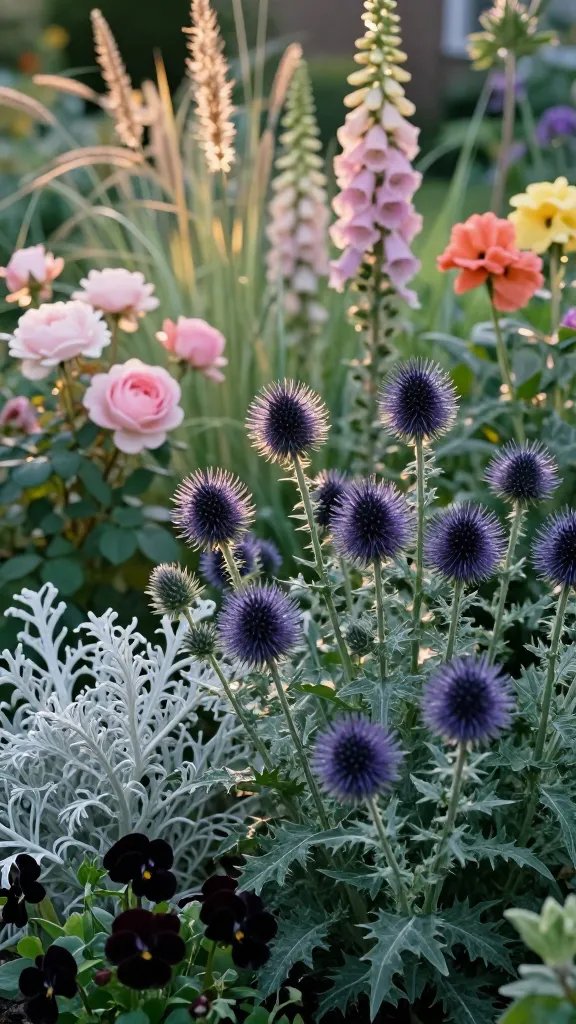
Centaurea montana ‘Black Sprite’ leans into inky-purple centers and fine, dark fringing. It’s moody in the best way and makes pale neighbors look extra luminous.
Best Pairings
- Dusky roses, black violas, and silver artemisia
- Soft grass seedheads for contrast
- Pastel foxgloves to balance the drama
Drop it between bright bloomers to create smooth tonal transitions. It’s like eyeliner for your border, seriously.
5. Parham: The Dusky-Lavender Crowd-Pleaser
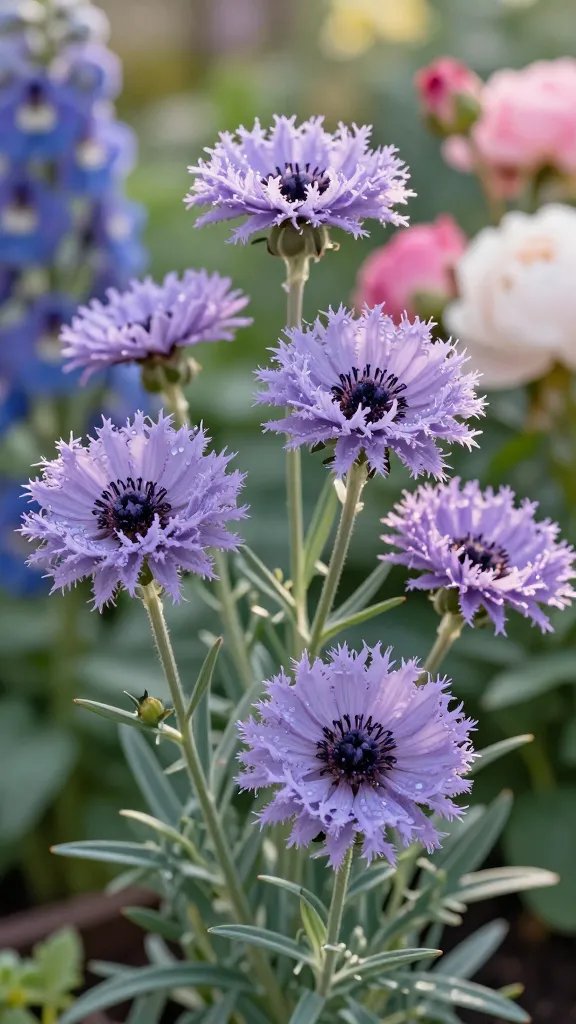
Centaurea montana ‘Parham’ brings soft, smoky lavender petals with tidy foliage. You get texture without chaos, and the color slides happily between blues and pinks.
Why Gardeners Love It
- Neater growth than some seed-grown forms
- Pastel-friendly, easy to coordinate
- Excellent cut for airy arrangements
Use it to blur the line between cool and warm palettes. Transitional goal: achieved.
6. Jordy: The Velvet-Purple Statement
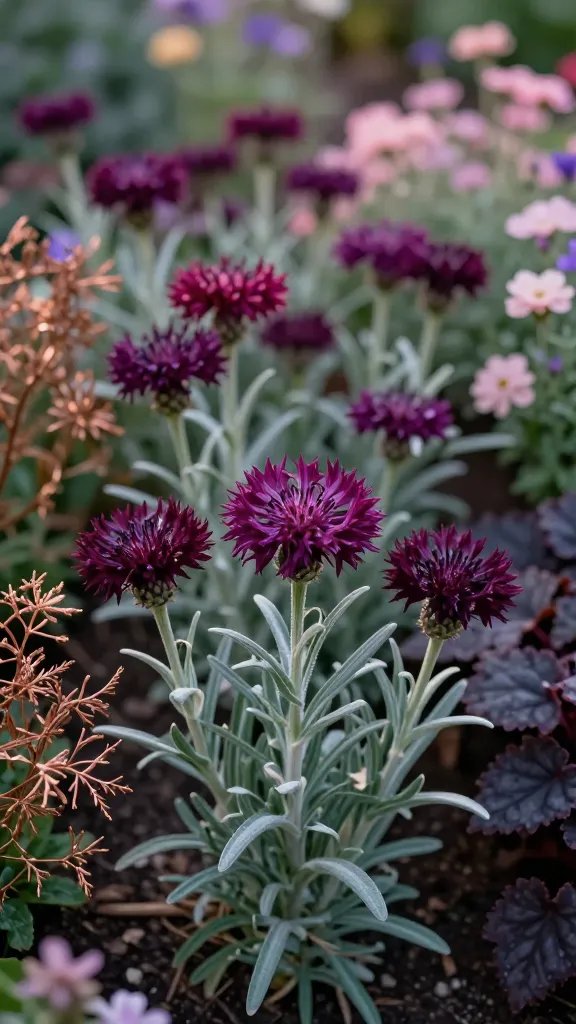
Centaurea ‘Jordy’ flaunts deep burgundy-purple petals and that signature tousled texture. It turns neutral borders luxe with one planting.
Placement Tips
- Tuck near bronze fennel or heuchera.
- Add to dusk gardens for color that glows low-light.
- Repeat in odd numbers to guide the eye.
Ideal for anchoring pastel-heavy beds with a bold but soft-textured anchor. Moody but friendly—IMO, perfect.
7. Black Ball: Cut-Flower Chic With Edge
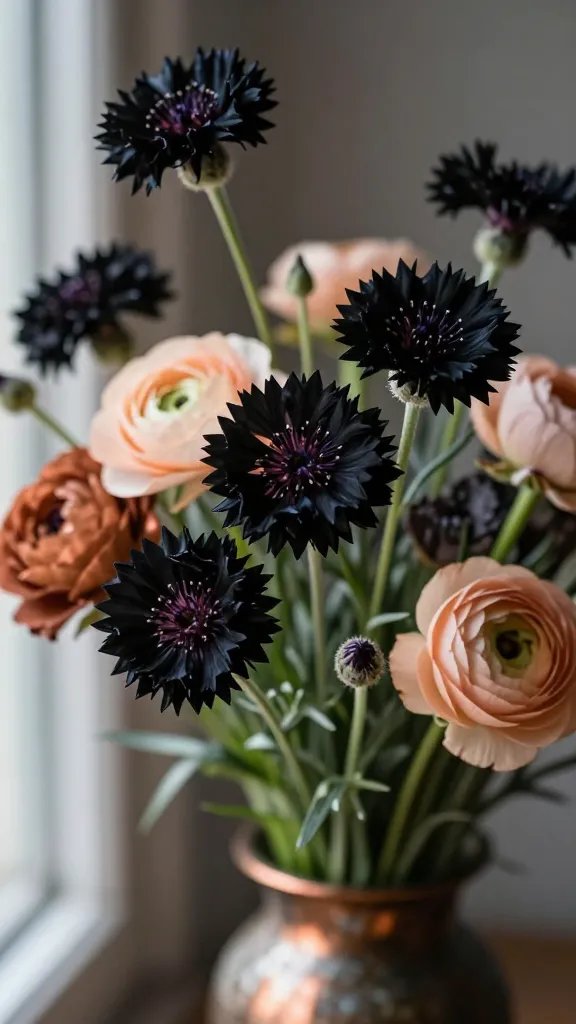
Centaurea cyanus ‘Black Ball’ brings near-black pompons from a classic wildflower. The texture reads plush up close and velvety from afar.
Grower Notes
- Direct sow; thin for sturdier stems.
- Fantastic with apricots, blush, and copper tones.
- Harvest in cool mornings for longer vase life.
Use it as a bridge from romantic pinks to metal accents or dark foliage. Studio-florist vibes at home.
8. White Classic: The Seamless Blender
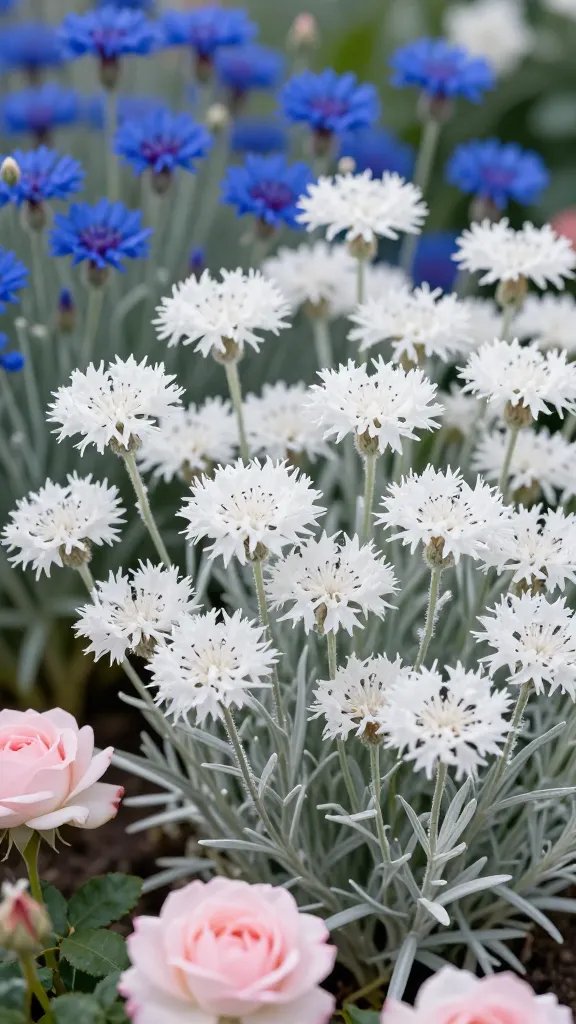
Centaurea cyanus ‘White’ is the minimalist’s dream. Snowy buttons soften bolder neighbors and cool down overheated color combos.
Best Uses
- Highlight silver foliage or deep blues.
- Buffer clashing colors with a calm mid-layer.
- Underplant roses for a floaty skirt effect.
When you don’t know what a space needs, try this. It behaves like visual primer between loud hues.
9. Red Boy: The Warm-Toned Bridge
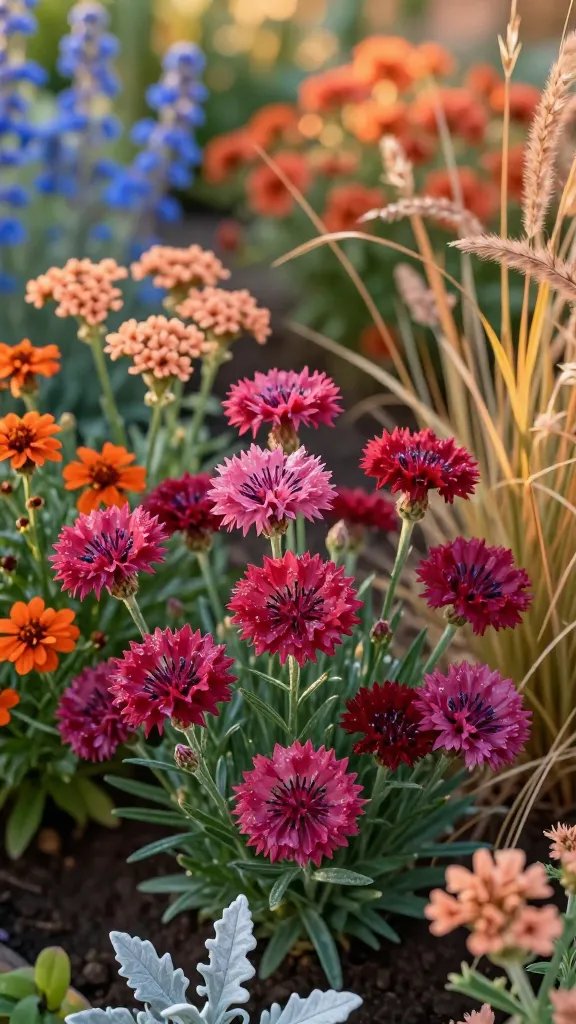
Centaurea cyanus ‘Red Boy’ pushes into cherry-raspberry tones, rare for cornflowers. It warms up borders and blends beautifully with terracotta and coral.
Companion Ideas
- Burnt-orange geum and peachy yarrow
- Soft grasses to diffuse the heat
- Dusty miller for cooling contrast
Perfect when you need to slide from cool blues to sunny warms without a hard line. Trust me, it’s smoother than it sounds.
10. Purple Heart: Petal Drama With Contrast
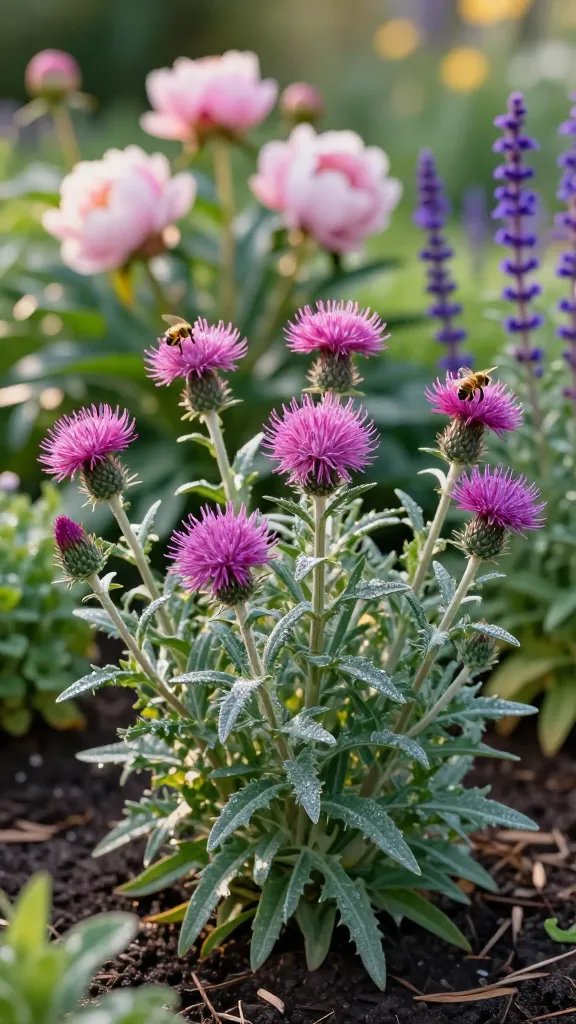
Centaurea dealbata ‘Purple Heart’ brings fringed magenta-pink petals with deeper centers. Silvery-green leaves add extra dimension even when not in bloom.
Why It Shines
- Clump-forming, not a garden bully
- Excellent mid-border filler
- Attracts bees and butterflies like crazy
Use it to carry color from peonies into summer perennials. Textural transitions and pollinator traffic? Yes, please.
11. Ruth: The Silky Pastel Peacemaker
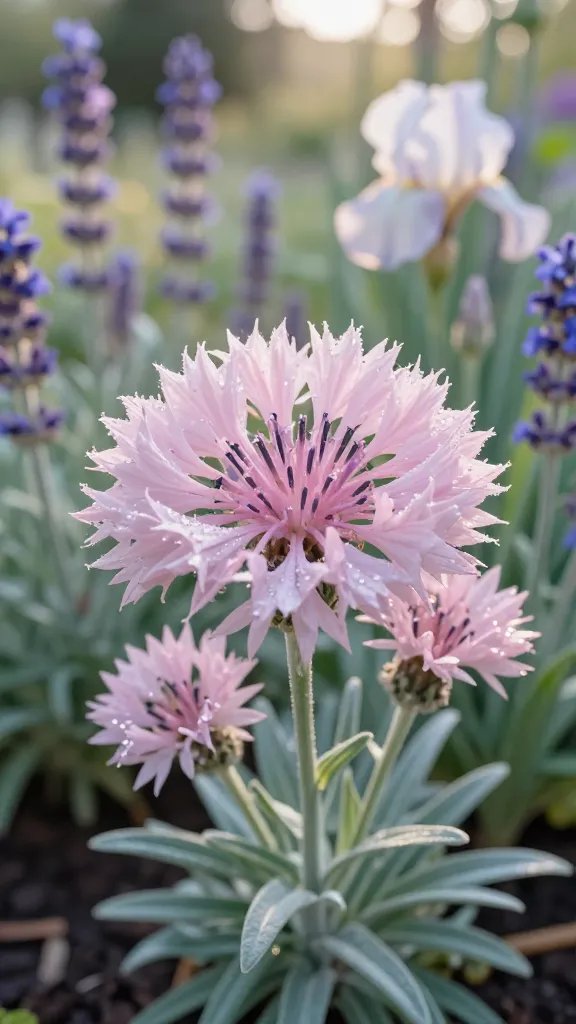
Centaurea dealbata ‘Ruth’ offers softer pinks with a silky, almost feathered finish. It reads refined without feeling precious.
Design Notes
- Pairs with nepeta, salvia, and pale iris
- Handles light shade better than you’d expect
- Deadhead for a tidy, extended season
Ideal for gluing late-spring and early-summer palettes together. It’s that friend who gets along with everyone.
12. Sweet Sultan: The Scented Wildcard
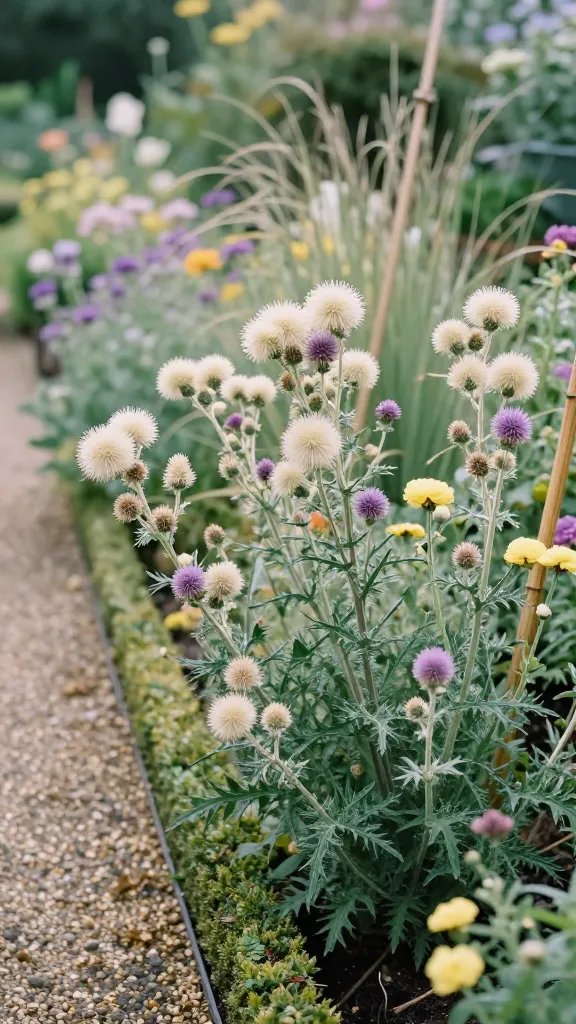
Centaurea moschata (aka Sweet Sultan) brings fluffy, thistle-like blooms in cream, mauve, and lemon with a soft fragrance. Old-fashioned in the best, Instagrammable way.
Grow It Like This
- Direct sow; it dislikes transplant sulks.
- Stake lightly in windy spots.
- Cut in bud for perfume-y arrangements.
Use it to transition from formal to cottage style. It whispers texture rather than shouting it.
13. Yellow Hardheads: Sunlit Texture For Wild Edges
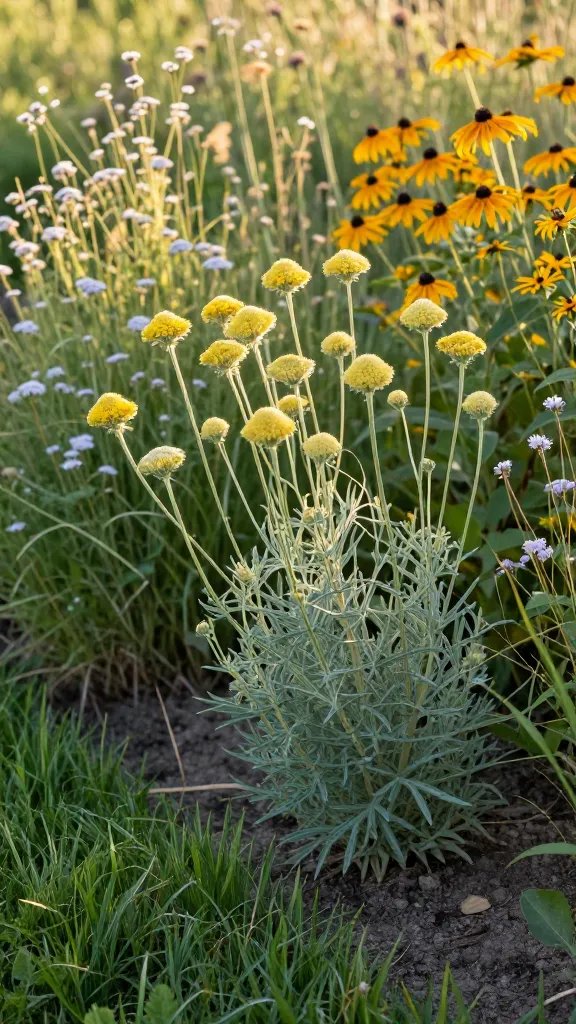
Centaurea scabiosa subsp. ochroleuca throws pale lemon pincushions on tall, branched stems. It lightens heavy plantings and adds a meadow note without chaos.
Where It Excels
- Prairie borders with rudbeckia and knautia
- Back-of-border height without heaviness
- Dry, lean soils where divas sulk
Great for transitioning from clipped lawns to wilder margins. It’s like sunshine on stilts.
14. Greater Knapweed: The Prairie Power-Mixer
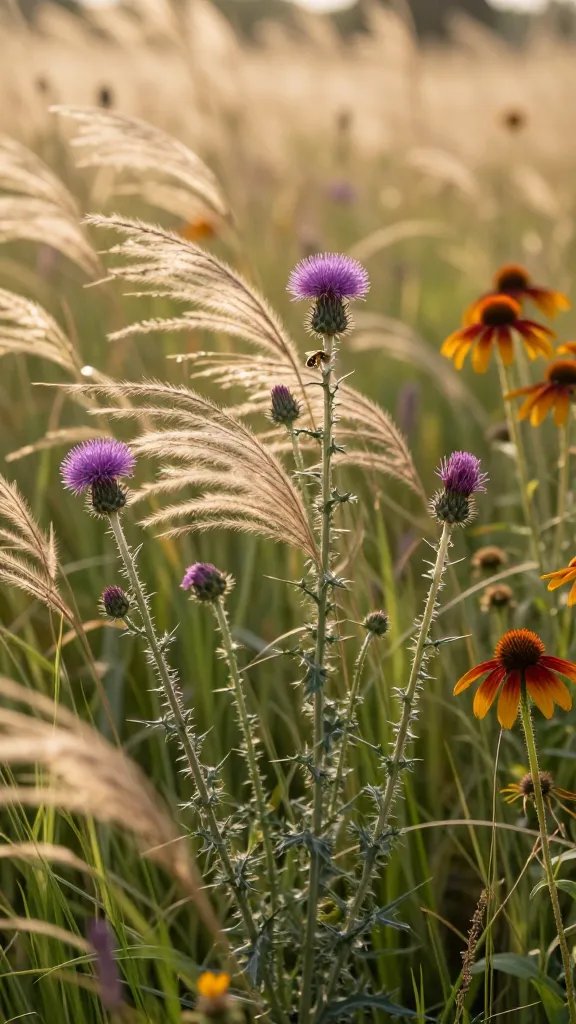
Centaurea scabiosa boasts large, fringed purple discs on tall stems that dance with the breeze. It’s a pollinator magnet and looks epic with grasses.
Key Points
- Tough, drought-tolerant once established
- Superb with Stipa and echinacea
- Strong verticals that still feel airy
Use it to bridge mounded perennials with upright grasses. Movement + texture = chef’s kiss.
15. Sweet Amber: Honeyed Glow For Soft Landings
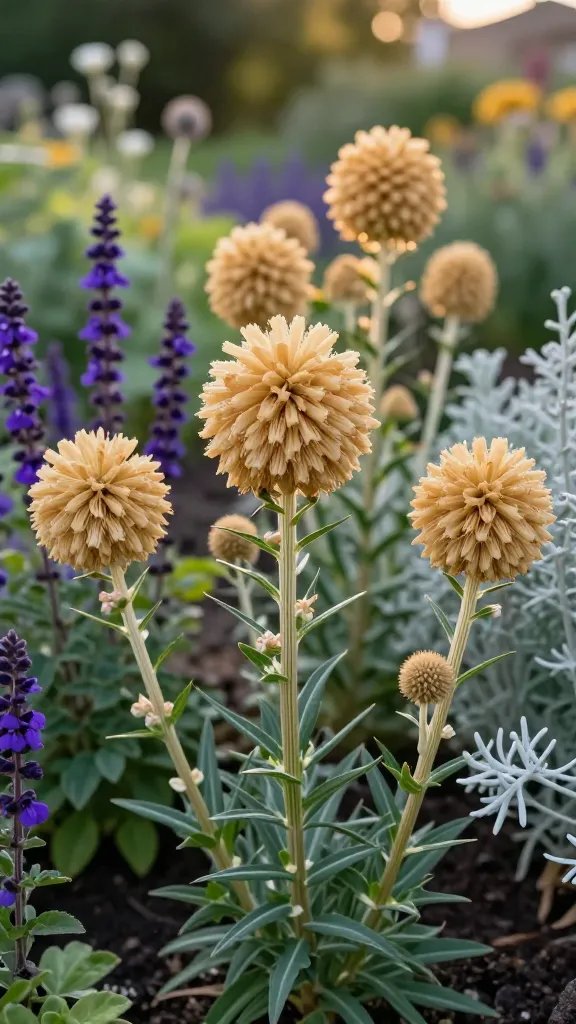
Centaurea macrocephala ‘Sweet Amber’ reimagines the classic globe centaurea with a gentler golden tone. Big buds open into sculptural, thistle-like spheres that add architecture and fluff at once.
How To Place It
- Mid-to-back border as warm focal repeats
- Pair with purples, plums, and silvers for contrast
- Let seedheads stand for off-season texture
It transitions bold summer schemes into fall tones seamlessly. Bonus: those seedheads look designer in dried arrangements, seriously.
Quick Care and Styling Cheat Sheet
- Soil: Lean to average, well-drained. Overfeeding = floppy plants.
- Sun: Full sun for best blooms; some tolerate light shade.
- Deadhead: Encourages rebloom and tidies texture transitions.
- Divide: Every 2–3 years for montana types to keep vigor.
- Water: Moderate; drought-tolerant once established.
- Design Move: Repeat 3–5 times down a border to “stitch” areas together.
Ready to stitch your borders with airy, feathery magic? These Centaurea picks turn color clashes into smooth transitions and make every path feel intentional. Grab a few, repeat them down the line, and watch your garden glow—no design degree required.