
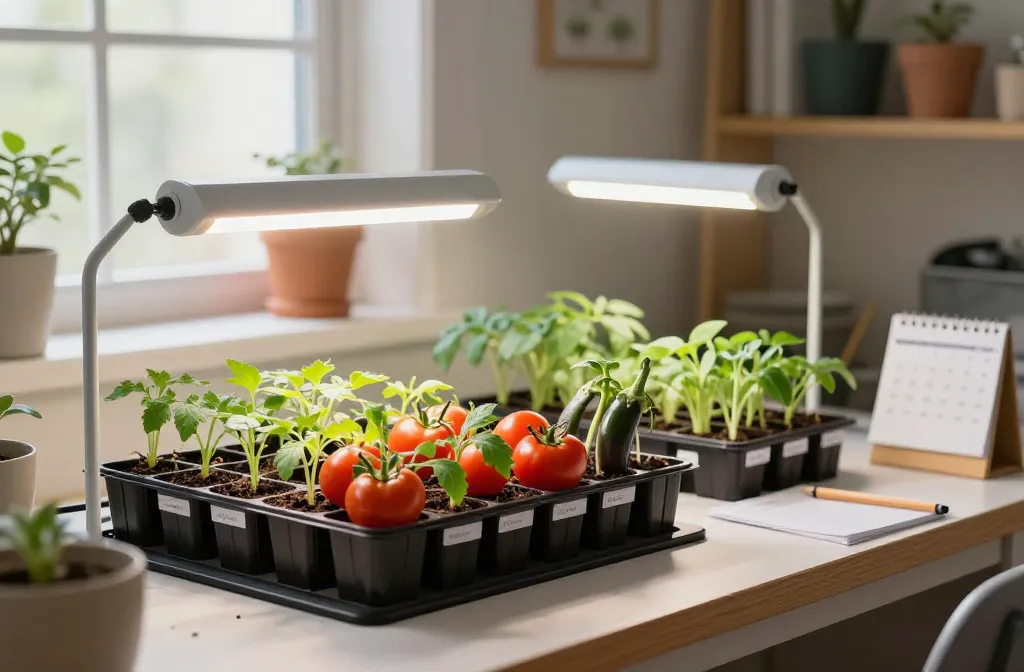
Want a garden that doesn’t ghost you halfway through? A smart seed starting timeline gets you from tiny sprout to plate-worthy harvest without the guesswork. We’re talking real dates, no fluff, and vegetables you’ll actually eat. Grab your calendar and let’s map out your most productive season yet.
1. Early-Bird Indoors: Get a Jump on Heat Lovers
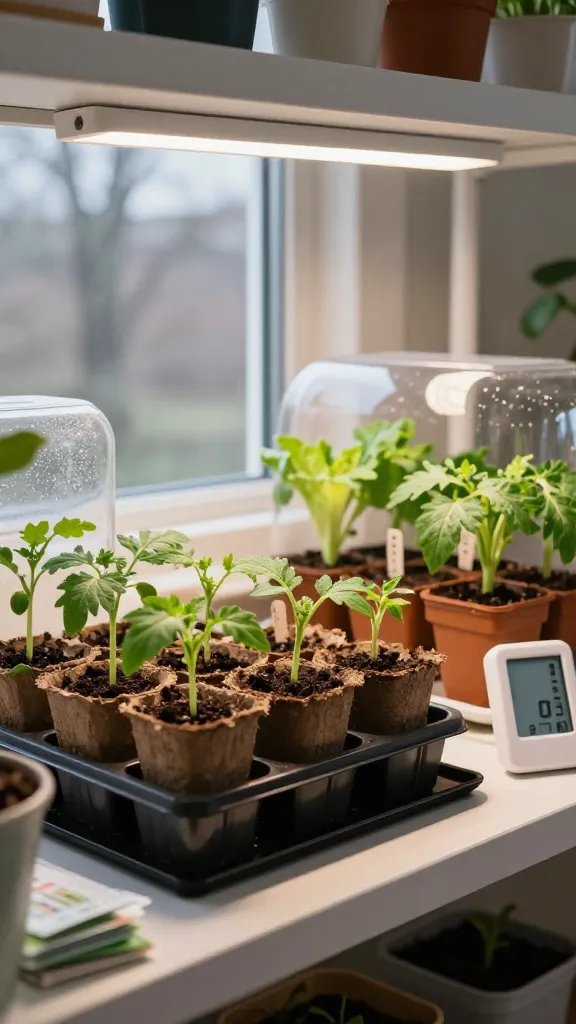
Start these inside while winter still yawns. You’ll transplant strong seedlings right when outside conditions turn friendly, which means earlier harvests and fewer garden heartbreaks. Bonus: you control light, warmth, and moisture—aka the trifecta for success.
What to Start 6–10 Weeks Before Your Last Frost
- Tomatoes (6–8 weeks): Germinate 5–10 days at 75–80°F. Transplant 1–2 weeks after last frost. Harvest 60–85 days after transplant.
- Peppers (8–10 weeks): Germinate 7–21 days at 80–85°F. Transplant 2 weeks after last frost. Harvest 70–90+ days after transplant.
- Eggplant (8–10 weeks): Germinate 7–14 days at 80–85°F. Transplant 2 weeks after last frost. Harvest 70–90 days after transplant.
- Tomatillos (6–8 weeks): Germinate 5–10 days at 75–80°F. Transplant after last frost. Harvest 60–80 days after transplant.
Seed Starting Tips
- Light matters: Use bright LEDs 14–16 hours/day. Keep lights 2–3 inches above seedlings.
- Bottom heat: A heat mat speeds germination for peppers and eggplant—seriously, it’s a game-changer.
- Pot up once: Move to 3–4 inch pots when roots fill the starter cell.
- Harden off: 7–10 days outside in dappled light before transplant. Don’t skip this—wind and sun are savage.
Perfect if you crave salsa, caponata, and early BLTs. Early indoor starts buy you weeks of flavor.
2. Cool-Season Champions: Sow Early, Eat Early
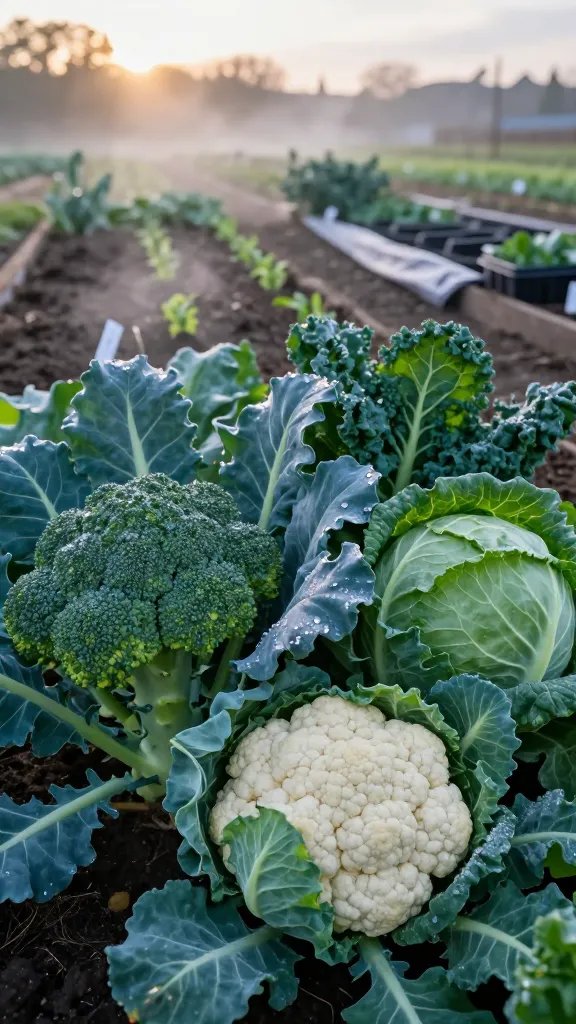
These vegetables love spring’s cool temps and shrug at light frost. You’ll sow many directly outdoors long before tomatoes even stretch.
Start Indoors (4–6 Weeks Before Last Frost)
- Broccoli: Germinate 5–10 days at 70–75°F. Transplant 2–4 weeks before last frost. Harvest 60–80 days from transplant.
- Cauliflower: Similar to broccoli, but pick promptly once heads tighten. 60–85 days from transplant.
- Cabbage: Transplant 2–4 weeks before last frost. Harvest 70–100 days from transplant.
- Kale: Transplant 2–4 weeks before last frost. Harvest baby leaves in 25–30 days; full leaves 50–70 days.
Direct Sow as Soon as Soil Is Workable
- Peas: Sow 4–6 weeks before last frost. Germinate 7–14 days at 45–65°F. Harvest 55–70 days.
- Spinach: Sow 4–6 weeks before last frost. Harvest 30–45 days; baby greens in 20–25.
- Radishes: Sow 4 weeks before last frost. Harvest 22–35 days—blink and they’re ready.
- Carrots: Sow 2–4 weeks before last frost. Germinate 7–21 days. Harvest 60–80 days.
Pro Moves
- Row cover: Use lightweight fabric to warm soil 2–4°F and block pests.
- Succession sowing: Plant small batches every 1–2 weeks for continuous harvests.
- Thinning: Ruthless thinning equals fat carrots and radishes. Crowding = spindly sadness.
Lean on these when you want fast wins and fresh greens before summer turns the oven on.
3. Direct-Sow Superstars: Low Effort, Big Harvest
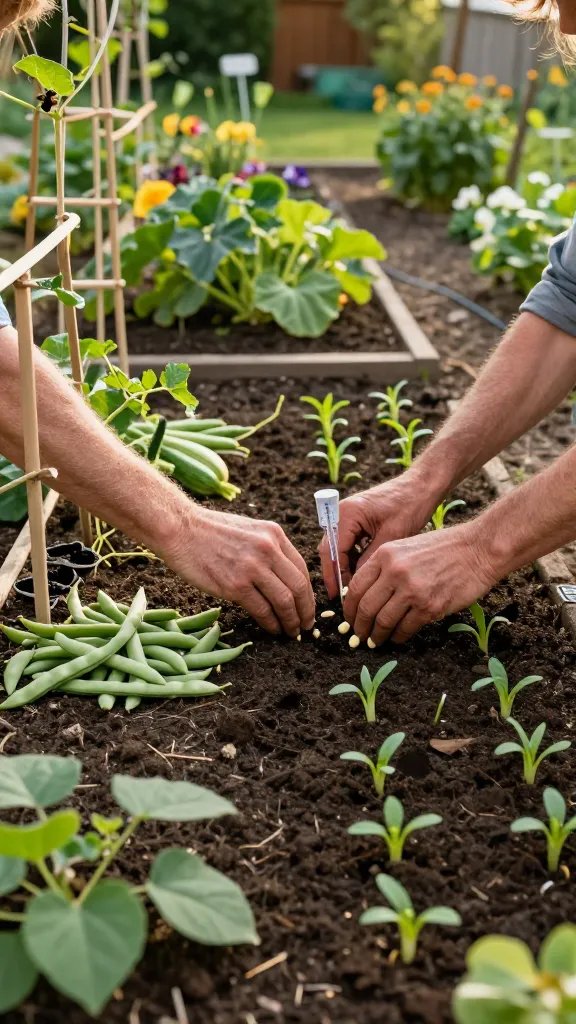
No indoor setup? No problem. These seeds prefer going straight into the ground once frost risk fades and soil warms up.
Warm-Soil Direct Sowers (After Last Frost, Soil 60–70°F+)
- Beans (bush or pole): Sow after last frost. Germinate 6–10 days. Harvest 50–65 days. Inoculate with rhizobia for higher yields, FYI.
- Corn: Sow after last frost in blocks for pollination. Germinate 5–10 days. Harvest 65–100 days.
- Cucumbers: Sow after last frost. Germinate 3–10 days. Harvest 50–70 days.
- Summer Squash/Zucchini: Sow after last frost. Germinate 5–10 days. Harvest 45–60 days. Get ready for zucchini bread season.
- Pumpkins/Winter Squash: Sow 1–2 weeks after last frost. Harvest 85–110+ days. Give them space—like, a lot.
- Watermelon: Sow 2 weeks after last frost. Germinate 5–10 days. Harvest 75–95+ days. Black plastic mulch = warmer soil and sweeter fruit.
Soil and Spacing Basics
- Warm soil wins: Use a soil thermometer. Plant when nights stay above 50°F.
- Mulch smart: Black plastic or landscape fabric boosts early heat and reduces weeds.
- Hills and mounds: For squash and melons, sow 3–4 seeds per mound, thin to 1–2 strongest.
- Trellis time: Pole beans and cucumbers climb. Trellises keep fruit clean and save space.
Use this crew when you want simplicity and volume. Minimal fuss, maximum baskets of food.
4. Transplant Timing & Calendar Math: Your Foolproof Schedule
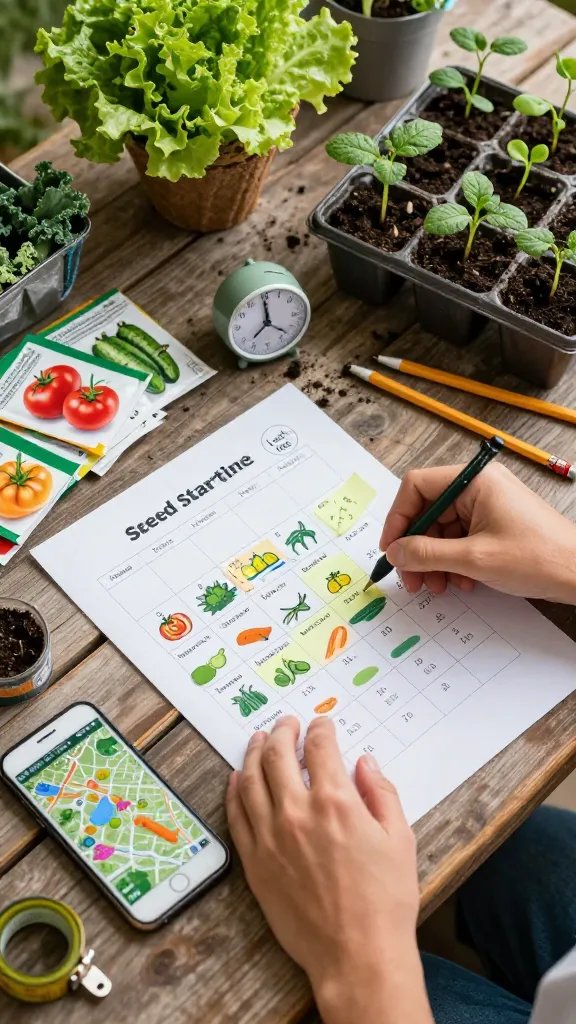
Here’s where we connect the dots from seed packet to dinner plate. We’ll anchor everything to your last spring frost date and count backward for indoor starts—or forward to predict harvests. Ready for the cheat sheet?
Find Your Dates
- Last frost date: Look up by ZIP code via a trusted gardening site or local extension.
- Count backwards: If tomatoes need 6–8 weeks indoors, and frost falls on May 10, start seeds mid–late March.
- Count forwards: Add “days to maturity” after transplant or sowing to estimate harvest windows.
Sample Timeline for 20 Vegetables
- 10–8 weeks before frost: Start peppers, eggplant.
- 8–6 weeks before frost: Start tomatoes, tomatillos.
- 6–4 weeks before frost: Start broccoli, cauliflower, cabbage, kale indoors; sow peas, spinach outdoors.
- 4–2 weeks before frost: Transplant brassicas, kale; sow radishes, carrots.
- Frost date to 2 weeks after: Transplant tomatoes, peppers, eggplant, tomatillos after hardening off.
- 1–2 weeks after frost: Direct sow beans, corn, cucumbers, summer squash, pumpkins/winter squash, watermelon.
Harvest Windows (From Transplant Or Direct Sow)
- Quick wins (20–45 days): Radishes, spinach (baby), some lettuces if you add them.
- Medium (50–80 days): Beans, cucumbers, zucchini, carrots, broccoli, tomatoes (early types).
- Long (80–110+ days): Peppers, eggplant, corn (late), pumpkins/winter squash, watermelon.
Dial this in once, and you’ll run a smooth season every time. It’s calendar magic that tastes like tomatoes.
5. Pro Success Tactics: From Strong Starts To Stellar Harvests
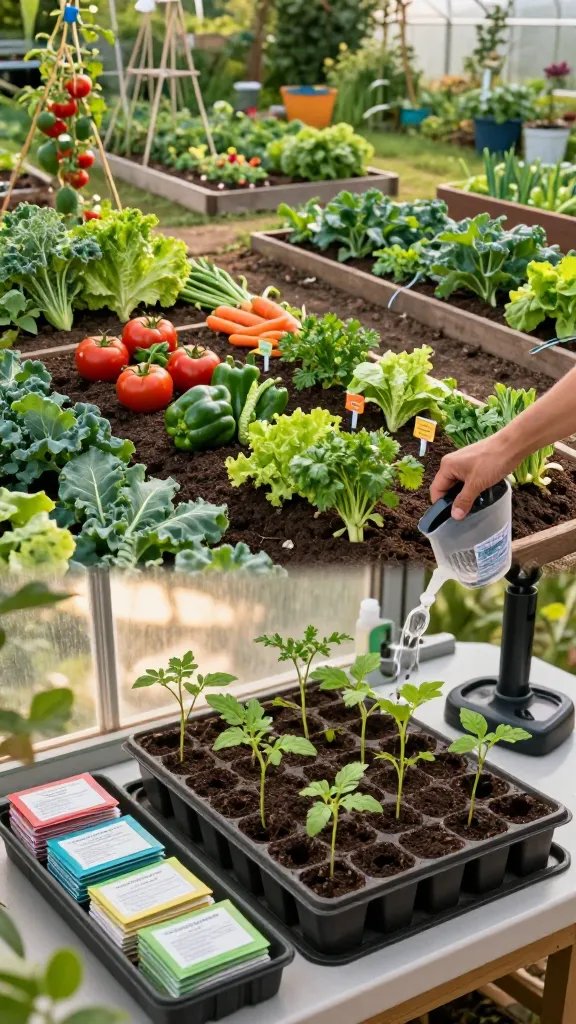
Want fewer fails and juicier wins? These tactics turn decent gardens into “neighbors are jealous” gardens. None of this is complicated—just thoughtful timing and care.
Germination & Seedling Health
- Fresh seed: Use current-year seed for peppers, carrots, and parsley-type slow pokes. Old seed = patchy germination.
- Airflow: A tiny fan builds stronger stems and reduces disease.
- Fertilizing: Start half-strength liquid feed once true leaves appear, every 7–10 days.
li>Moisture control: Keep seed-starting mix evenly damp, never soggy. Bottom-water to avoid damping off.
Transplant Like a Boss
- Tomato trick: Plant deep, burying part of the stem to grow extra roots.
- Peppers/eggplant: Plant at the same depth, not deeper. Warm soil only.
- Brassica collar: Cardboard or foil collars stop cutworms. Cheap, effective.
- Water in: Drench with a kelp/seaweed solution for shock reduction—IMO totally worth it.
Spacing, Support, and Mulch
- Right spacing: Tomatoes 18–24 inches, peppers 14–18, cucumbers 12 inches on a trellis. Crowding invites disease.
- Mulch: Straw or shredded leaves keep soil cool and reduce watering. Black plastic for heat-lovers early on.
- Supports: Cages or string trellis for tomatoes; poles for beans; nets for peas. Your back will thank you.
Pest And Disease Defense
- Row cover early: Block flea beetles on eggplant and cabbage worms on brassicas. Remove for pollination when flowering.
- Timing beats sprays: Sow squash early to harvest before vine borers peak, or very late after their party ends.
- Water strategy: Morning drip irrigation keeps leaves dry and disease low. Overhead at night? Hard pass.
Succession & Staggered Harvests
- Every 1–2 weeks: Re-sow radishes, spinach, and bush beans.
- Interplant: Grow radishes around slow crops like carrots and peppers. Radishes finish first.
- Fall encore: After early crops, replant beds with kale, carrots, and fall broccoli 10–12 weeks before first frost.
These habits compound over a season. Trust me, your garden will feel dialed-in instead of chaotic.
Ready to put seeds to work? Map your last frost date, start the early birds, and roll through the cool-to-warm handoff like a pro. Keep it simple, keep it fun, and pretty soon you’ll be “that person” handing out tomatoes at the block party.